
Review · TBILISI HISTORY TOURS
Mtskheta: Ancient Capital of Georgia Half-Day Tour
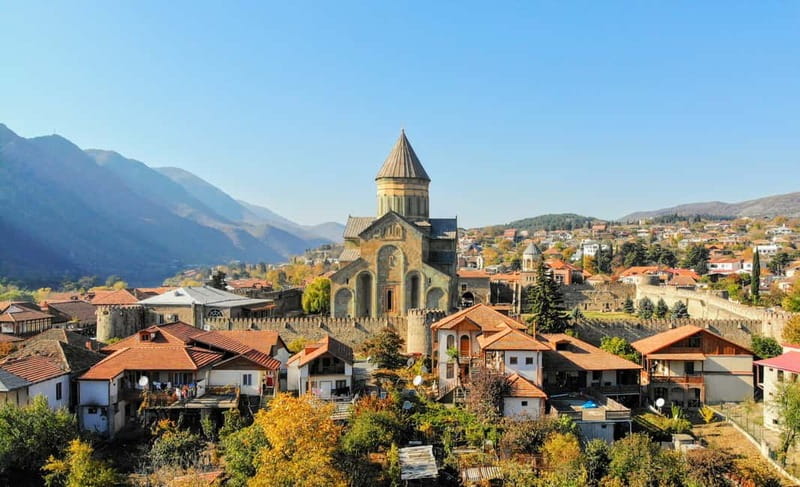
Mtskheta gives you Georgia’s story in a compact, easy-to-handle package. In four hours, you see the Chronicle of Georgia, the country’s old capital, Svetitskhoveli Cathedral, and hilltop Jvari Monastery, with a scenic drive through a limestone canyon along the way.
I like the flexible start time and the way this tour joins grand views with ordinary Georgian pleasures: cobblestone lanes, church traditions, local sweets, coffee, and even wine ice cream. I also like that guides such as Khatuna, Khato, Alexi, and Oksana are known for adjusting the pace and answering questions instead of rushing from one stop to the next.
The main caution is that Mtskheta is a restored historic town, not a field of untouched ruins. You will walk on uneven ground and uphill paths, and summer heat can reach 35°C. The tour information also gives conflicting notes about wheelchair access, so confirm this directly before booking.
Key points to know before booking
- See Georgia’s early capital in one morning or afternoon: The four-hour route covers Mtskheta’s major religious sites without committing a full day.
- Expect a personal guide, not a scripted bus tour: English and Russian-speaking guides set the pace and explain history, religion, food, and modern Georgia.
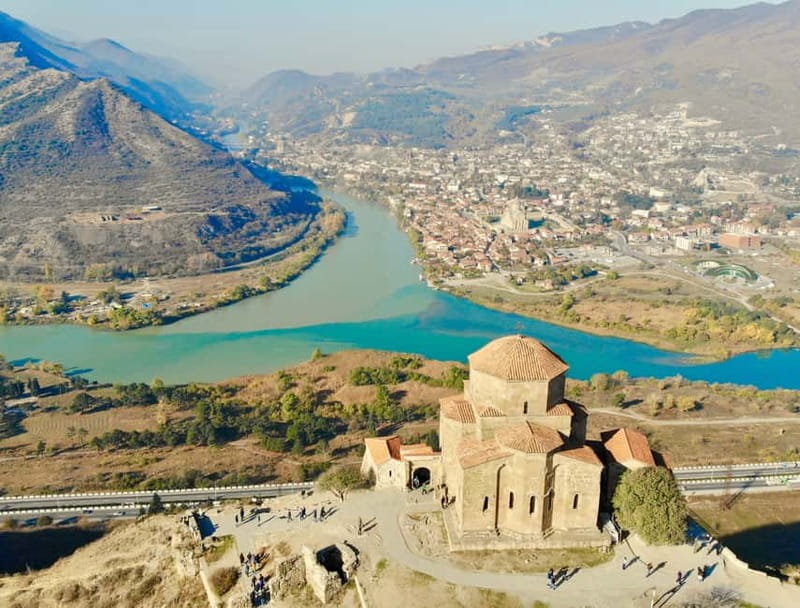
- Save the best river view for Jvari Monastery: The monastery looks over the meeting point of the Aragvi and Mtkvari rivers.
- Plan for church etiquette: Men should avoid shorts and sleeveless shirts. Women need clothing that covers the shoulders and knees, plus a headscarf inside Orthodox churches.
- Use the flexible timing to beat the heat: Morning or late afternoon is wiser than midday in summer.
- Treat the $48 price as a convenience purchase: Entrance fees and water are included, while lunch is not.
Why Mtskheta makes a smart first outing from Tbilisi
Mtskheta is only a short trip from Tbilisi, yet it feels like a change of chapter. This was Georgia’s first capital and remains one of the country’s key religious centers. The tour works well early in a Georgian visit because it gives you the basic building blocks: ancient kings, Orthodox Christianity, old capitals, monastery culture, and the shape of the country around the rivers.
I like the route because it does not spend four hours on the road. You move between a few substantial sights, with time to walk, take photographs, and ask questions. The guide’s stories are important here. Without context, a church can look like another stone building. With a good explanation, the carvings, icons, hilltop setting, and religious customs begin to make sense.
The group is private, and that matters. You can ask about Georgian history, wine, food, religion, or daily life without waiting for a large group to catch up. Past guide assignments have included Khatuna, Khato, Alexi or Aleksi, Oksana, Guram, and others. The strongest pattern is clear: guides are valued for friendly conversation, careful driving, good English, and the ability to adapt the pace.
More Ancient History Tours in the world:
- Colosseum: Underground and Ancient Rome Tour
★ 4.7 · 12,691 reviews - Colosseum & Ancient Rome with Arena Floor Option I Max 6 People
★ 5.0 · 3,306 reviews - Rome: Colosseum, Ancient Rome Tour or AudioGuided Tour
★ 4.4 · 2,879 reviews
The Chronicle of Georgia begins with a big visual statement
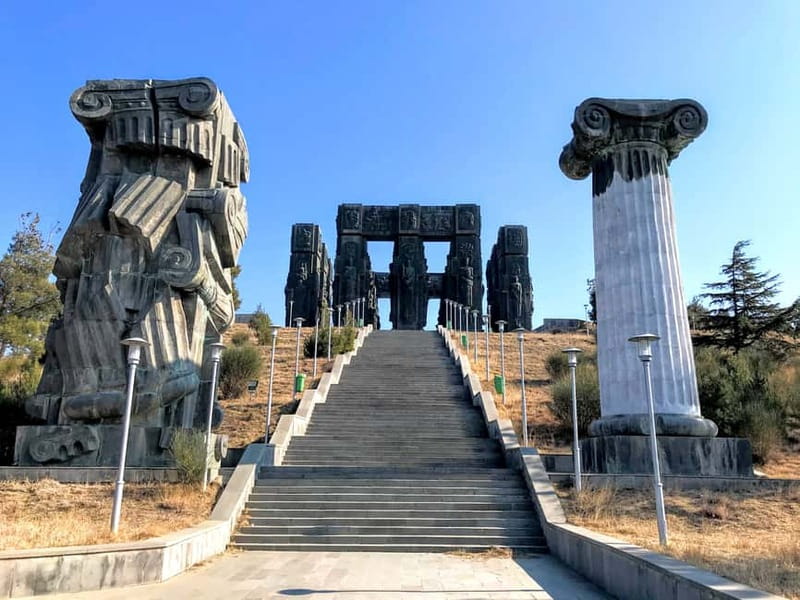
The first major stop is the Chronicle of Georgia, about 40 minutes from the advertised schedule. This huge monument is made of tall stone columns covered with scenes tied to Georgian history and religious tradition. It feels grand, stark, and somewhat unexpected above Tbilisi.
The location also gives you a broad view toward Tbilisi and the Tbilisi Sea. Bring sunglasses and a hat here, especially in warm weather. There is little point in hurrying through this stop. The monument rewards a slow look, and your guide can explain what the panels represent rather than leaving you to guess.
I consider this a good opening because it gives you scale. You first look across modern Tbilisi, then begin moving toward the old capital. It also offers some of the tour’s strongest photographs. If you are interested in architecture or city views, this may be your favorite stop.
The Chronicle is more about the monument and the panorama than about a long museum visit. If you prefer excavations, ruins, or indoor collections, keep your expectations in check. This is an outdoor photo and interpretation stop.
Svetitskhoveli Cathedral brings Mtskheta’s sacred center into focus
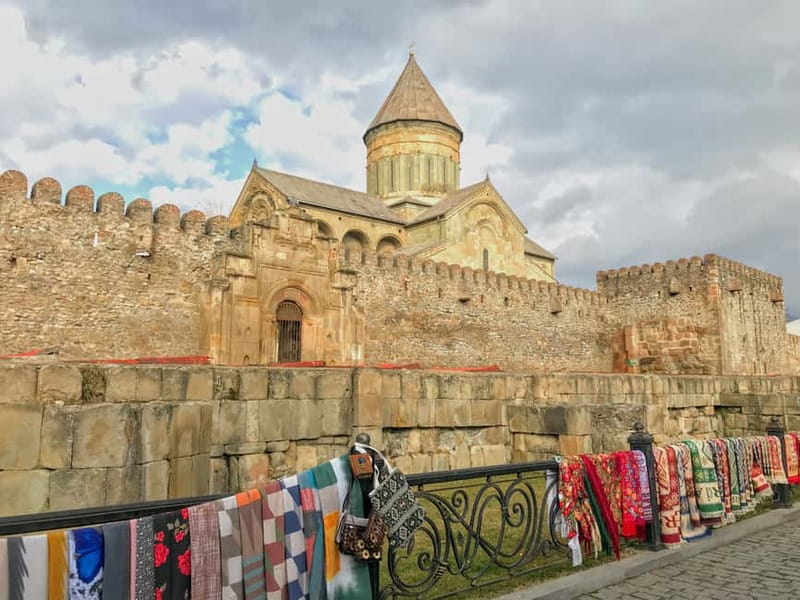
From the Chronicle of Georgia, the route continues to Svetitskhoveli Cathedral, with about an hour set aside for the visit. This is the central historical and religious stop in Mtskheta, and it deserves the most time.
The cathedral’s importance is tied to Georgian Christianity, saints, kings, and centuries of worship. Your guide explains the stories connected with the building and points out details in its architecture. The setting is solemn, but the visit is not only about religion. It is also a lesson in how Georgia’s identity has been shaped by faith and political power.
You should dress properly before arriving. Men should not wear shorts or sleeveless shirts. Women should avoid shorts and sleeveless tops and should carry a headscarf, although one is often available at the entrance. Religious services or holidays can limit access, so the normal visit may change on special dates.
The cathedral is reached on foot. Comfortable shoes are important, not optional. The route is manageable for many people, but this is not a vehicle-to-door sightseeing experience. You will walk through pedestrian areas and may encounter uneven paving.
The guide makes a real difference here. Khatuna and Khato have been especially well regarded for explaining both religious practice and the wider story of Georgia. Alexi is also praised for connecting historical facts with legends and modern life. Ask questions. This is the place where a personal guide earns the fee.
Mtskheta’s old streets are for tasting, browsing, and slowing down
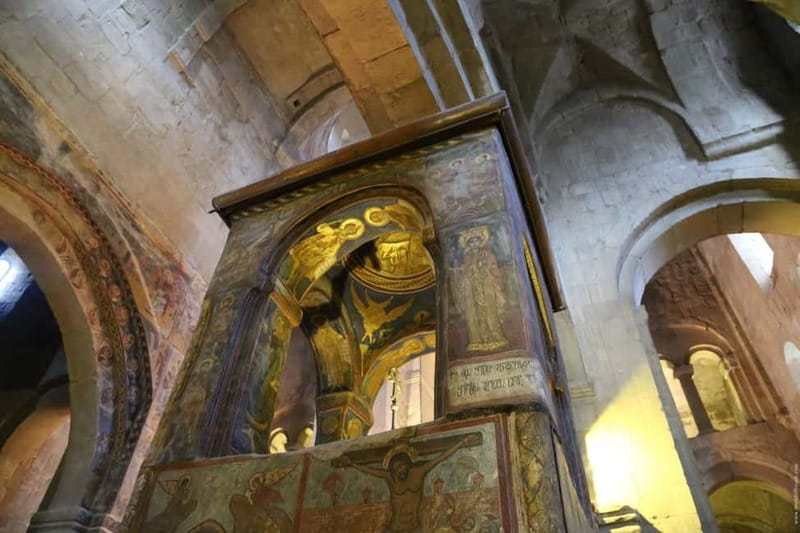
The stop in Mtskheta itself lasts about 30 minutes. That sounds brief, but it is enough for a short walk, a break, and some shopping if you keep your priorities simple.
The streets around the historic center are restored and arranged for visitors, so do not expect an untouched medieval town. One useful way to think of Mtskheta is as a living heritage center: its old appearance has been renewed, but people still come here for worship, food, shopping, and a day out.
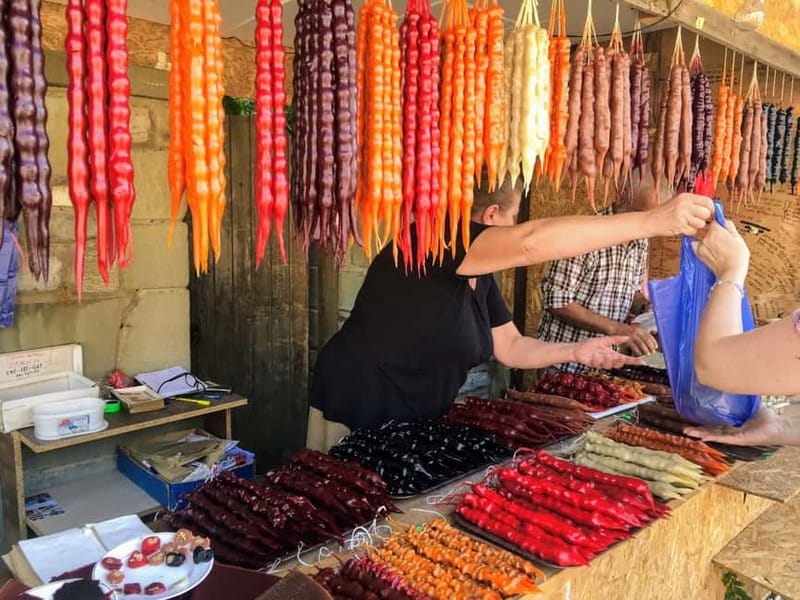
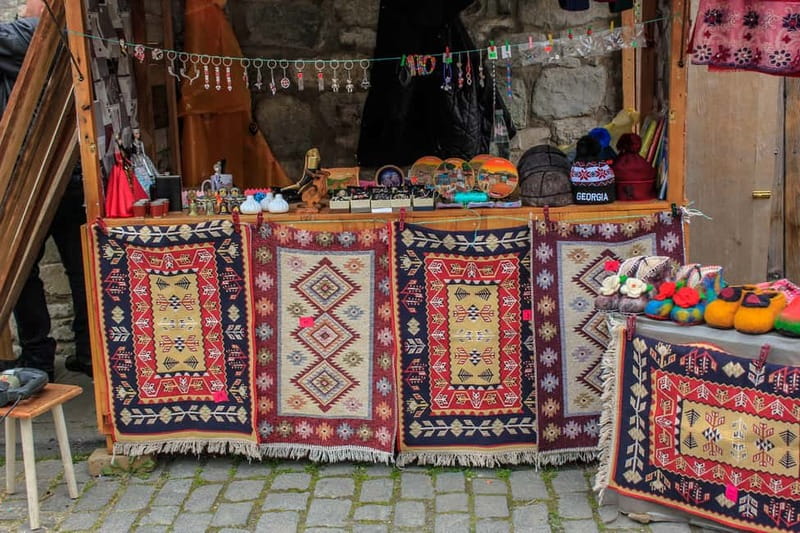
This is where you can try Georgian sweets such as churchkhela, browse traditional souvenirs, and stop for coffee. Wine ice cream is one of the more unusual treats associated with the visit. Some guides also introduce travelers to local wine producers or recommend places for wine and food. That extra conversation can turn a standard sightseeing stop into a more personal look at Georgian life.
I would not plan lunch here unless you have confirmed extra time. Lunch is not included, and the scheduled break is short. You may find time for a snack or a quick purchase, but the main meal belongs outside this four-hour plan.
More Half-Day Tours in the world:
- Lima’s Vibrant Heritage: Exploring the City’s Landmarks Half-day
★ 4.5 · 581 reviews - From Ho Chi Minh: Cu Chi Tunnels Half-Day History Tour with Guide
★ 5.0 · 480 reviews - Naxos: Half-Day Guided History and Culture Sightseeing Tour
★ 4.7 · 435 reviews - Historical Italica: Half-Day Guided Tour from Seville
★ 4.5 · 416 reviews
Jvari Monastery saves the strongest river view for last
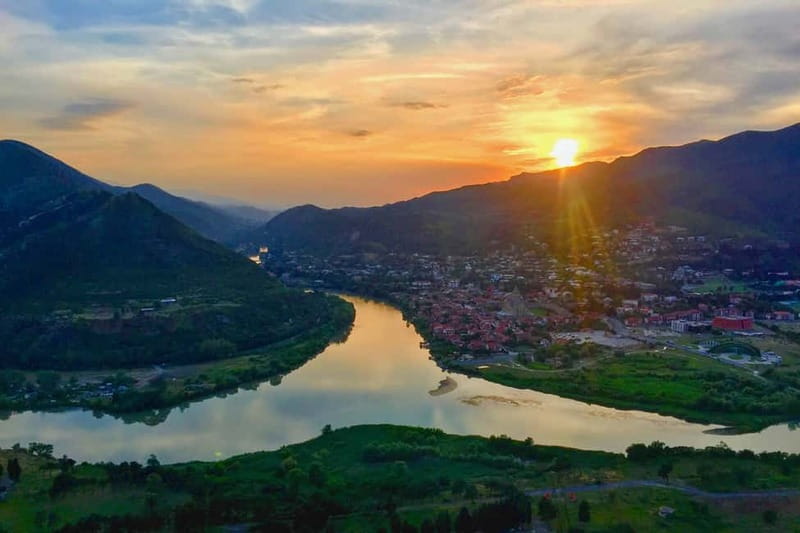
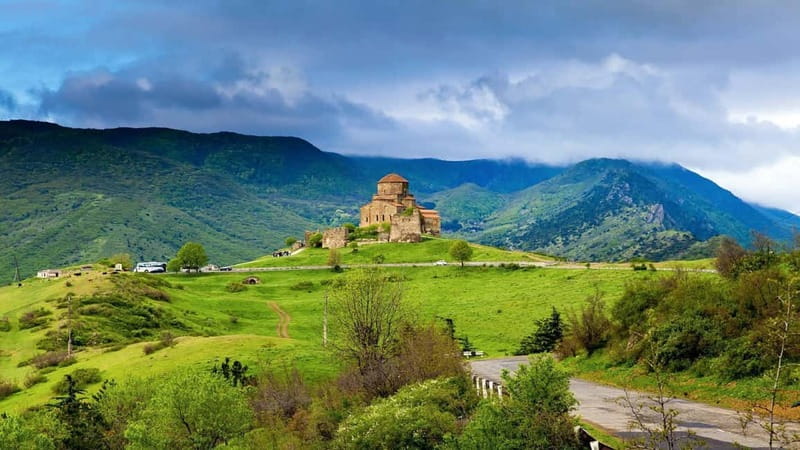
Jvari Monastery receives about 45 minutes and is reached by a scenic drive and a short walk. The monastery sits above Mtskheta, looking toward the confluence of the Aragvi and Mtkvari rivers. From this height, the town’s location becomes clear.
This is the stop I would protect if the schedule begins to slip. The view explains why Mtskheta mattered. Rivers, roads, hills, and the old capital come together in one frame. On a clear day, Mount Kazbeg may also be visible in the distance, though you should treat that as a weather bonus rather than a promise.
Jvari is a working religious site, not simply a viewpoint. The same clothing rules apply, and services may restrict entry. Take care on the walk and wear shoes with a firm sole. One past booking specifically noted a difficult return involving many steps, so ask the guide about the walking route if stairs are a concern.
Sunset can work well because the stops are outdoors and the river view takes on a softer light. Morning is better in the hottest part of summer. Your start time can usually be chosen to fit your day, subject to availability.
What the four-hour schedule feels like in practice
The listed sightseeing periods total just under three hours. The remaining time covers pickup, driving between sites, short walks, and drop-off. That makes the four-hour length realistic, but it is still a focused outing rather than a slow day in the region.
The route has three main sightseeing anchors:
- Chronicle of Georgia, about 40 minutes
- Svetitskhoveli Cathedral, about one hour
- Mtskheta town, about 30 minutes
- Jvari Monastery, about 45 minutes
You return to one of three listed drop-off points, including Europe Square and an address listed as 15, Tbilisi. The private option includes pickup and drop-off at your Tbilisi accommodation. If you are staying outside the stated pickup area, check before paying.
The driving is part of the experience, not dead time. You pass through a limestone canyon and get changing views on the way to the sites. Several guide accounts also praise the driving as smooth and safe, which is worth noting in Georgia, where road conditions and driving styles can make a difference to your comfort.
The $48 price: good value for a private half-day
At $48 per person, this tour is fairly priced if you want a guide, transport, entrance fees, and a compact route from Tbilisi. Water and entrance fees are included. Lunch is not.
The value improves for a small private group because the price buys flexibility. You can ask for more history at Svetitskhoveli, pause longer for photos at Jvari, or spend less time shopping in Mtskheta. The guide can also answer questions about the rest of your Georgia trip. Several guides have helped with restaurant suggestions, food recommendations, and broader sightseeing ideas.
The value is weaker if you only want transportation. Mtskheta is close enough to Tbilisi that an independent visit may cost less, but you would lose the explanations, cultural context, and help with church customs. I would pay for this tour if Georgia is new to you or if ancient religious sites are a main reason for your visit.
The published score is 4.9 from 105 ratings, and the praise centers on the guides rather than on luxury transport or elaborate extras. That is the right way to judge the experience. You are paying for a well-organized route and a person who can make sense of what you are seeing.
Heat, clothing, and walking matter more than the brochure suggests
In summer, Mtskheta can reach 35°C around midday. I would choose an early morning or late afternoon departure. You will be more comfortable at the Chronicle of Georgia, where shade may be limited, and on the open approach to Jvari.
Bring:
- Comfortable walking shoes
- Sunglasses
- A sun hat
- Weather-appropriate clothing
- A headscarf if you prefer to bring your own for church visits
The tour information calls the activity wheelchair accessible in one place but also lists it as unsuitable for wheelchair users. That contradiction should not be ignored. The churches and monuments are reached on foot, and some routes include uneven surfaces or steps. Contact the provider before booking if you use a wheelchair or have limited mobility.
Families can manage the route if children are comfortable with walking and short sightseeing talks. A guide has previously adjusted the pace for a family with a ten-month-old child. Still, the day has several outdoor stops, so plan around naps, sun, and feeding needs.
The kind of guide can shape the whole morning
The guide is the heart of this experience. Khatuna and Khato are frequently praised for detailed explanations, strong English, flexibility, and warm conversation. Alexi is known for linking historical events and legends in a way that makes Georgia easier to understand. Oksana and Guram have also been praised for clear stories and an easy pace.
The guides speak English or Russian. The exact guide depends on the date and assignment, so you cannot assume you will receive a particular person unless the provider confirms it. What you can reasonably expect is a private format, live narration, and room for questions.
I would tell the guide what interests you at the start. If you care about Orthodox Christianity, ask for more detail at the churches. If you are a photographer, ask for the best angles at the Chronicle and Jvari. If you want food and wine advice, say so before reaching Mtskheta.
Should you book this Mtskheta tour?
Book it if you want a compact introduction to Georgian history, religion, and scenery without giving up half a day to logistics. It is especially useful on your first day or two in Tbilisi, when a guide can give you context for the rest of the country.
I would also choose it for a private family outing, a photography-focused trip, or a visit timed for sunrise or sunset. The combination of flexible departure, hotel pickup with the private option, and guides who adjust their pace gives the tour more value than a simple transfer.
Skip it if your main goal is untouched ruins, a long archaeological visit, or a full day of food and wine. Mtskheta is restored, the shopping break is short, and lunch is not included. Also confirm mobility arrangements before booking.
For most first-time visitors to Tbilisi, this is a sensible half-day choice. The churches are important, the river views are memorable, and the guide can turn a series of old buildings into a readable story about Georgia.
FAQ
How long is the Mtskheta tour?
The tour lasts four hours, including transport, sightseeing, walking, pickup, and drop-off arrangements.
What sites are visited?
The route visits the Chronicle of Georgia, Svetitskhoveli Cathedral, Mtskheta town, and Jvari Monastery.
Is hotel pickup included?
Hotel pickup and drop-off are included if you choose the private option. Pickup is from accommodation in Tbilisi.
What languages does the guide speak?
Live guides are available in English and Russian.
Is the tour private?
Yes. The activity is organized as a private group experience.
Is lunch included?
No. Lunch is not included, although you have a short break in Mtskheta for food, coffee, sweets, or shopping.
Are entrance fees included?
Yes. Entrance fees and water are included in the tour price.
What should I wear to the churches?
Men should not wear shorts or sleeveless shirts. Women should avoid shorts and sleeveless tops and should wear a headscarf inside Orthodox churches.
Can I visit the churches during religious holidays?
Access may be restricted or unavailable during religious holidays and services.
Is the tour suitable for wheelchair users?
The information describes the activity as wheelchair accessible in one section but also says it is not suitable for wheelchair users. Since the sites require pedestrian access and may include uneven ground or steps, confirm your needs with the provider before booking.
Newest history tours we have reviewed in the world
- Bilbao Historical Tour in small group★ 4.7 · 52 reviews
- Bologna: Street Food Tour in the Historic Center★ 4.8 · 125 reviews
- CEBU: Cebu City Heritage and Uphill Guided Tour★ 4.2 · 31 reviews
- Bishkek : City Tour (History, Architects, Statues & Culture)★ 4.9 · 54 reviews
- Blenheim: Omaka Aviation Heritage Centre Admission Ticket★ 4.9 · 31 reviews
- Berlin: Nazi History Walking Tour★ 4.8 · 33 reviews
- Best of Baku: 4-Hour City Tour Historic and Modern Landmarks★ 4.7 · 63 reviews
- Belfast: Best of Belfast History, Culture & Art Walking Tour★ 4.9 · 158 reviews
Ancient History Tours, compared.
Colosseum: Underground and Ancient Rome Tour
Read our review →
Colosseum & Ancient Rome with Arena Floor Option I Max 6 People
Read our review →
Colosseum, Ancient Rome Tour or AudioGuided Tour
Read our review →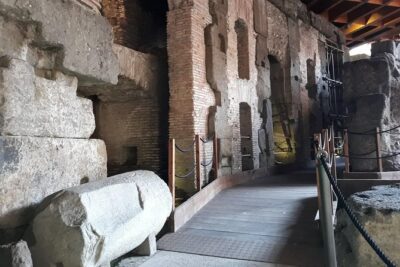
Colosseum Underground & Ancient Rome Guided Tour
Read our review →
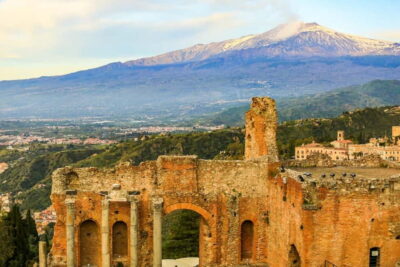
Taormina: Ancient Theater Skip-the-Line Ticket & Audio Guide
Read our review →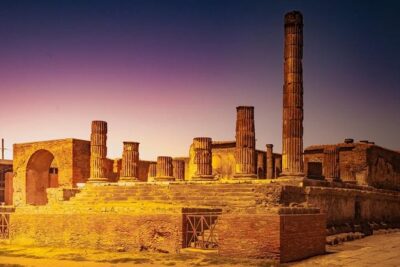
Discover the Ancient Ruins of Pompeii: Day Trip from Rome
Read our review →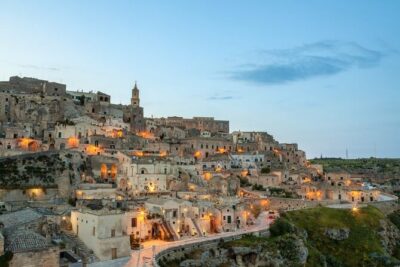
Discover Matera, the ancient city – English tour
Read our review →Browse the lists this tour appears in