
Review · TBILISI HISTORY TOURS
Tbilisi: Discover History on an Old Town Walking Tour
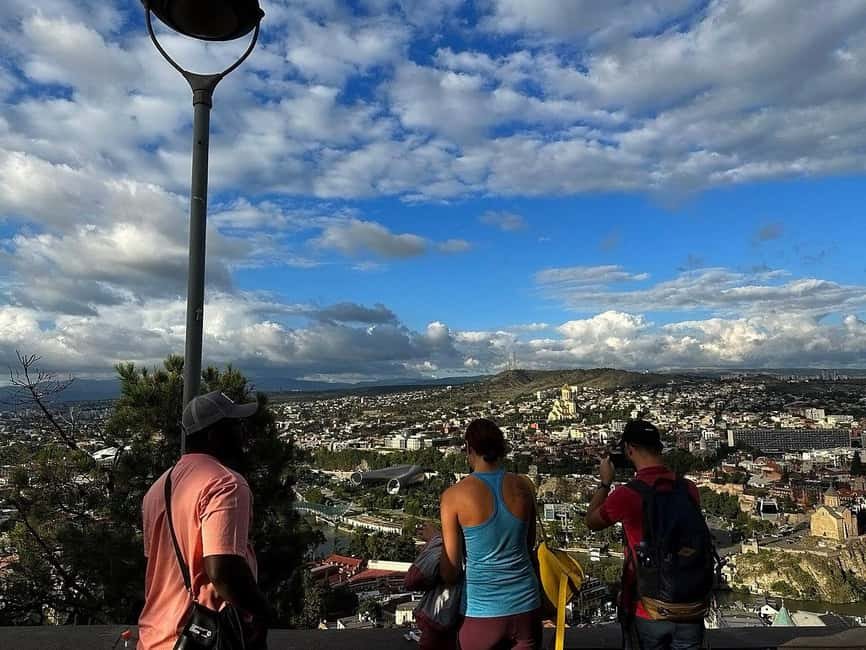
Tbilisi reveals itself best on foot, and this tour connects its most memorable sights in a tidy three-hour route. I like the mix of churches, synagogue, and mosque, which shows how several faiths have shaped the Old Town. I also like the cable-car ride to Mother of Georgia, since it gives you a clear view of the Mtkvari River, rooftops, and Narikala Fortress.
The main drawback is the pace. You cover many stops in a short time, with plenty of walking and some uphill terrain. The bakery visit costs extra, and the tour is not suited to people with mobility impairments. Still, for a first look at central Tbilisi, it packs in a useful amount of place and context.
Key points at a glance
- A strong first-day introduction: The route links major Old Town sights, religious buildings, food traditions, and city viewpoints.
- Three faiths in one walk: You visit an Orthodox cathedral, a synagogue, and Tbilisi Central Mosque.
- A guide can make the difference: Shmagi is noted for speaking excellent Spanish and offering practical suggestions for food and sightseeing.
- Cable car included: The ride from Rike Park to the hill gives you a pleasant change from walking and broad city views.
- Bring suitable clothing: Churches require women to cover their heads, and shorts are not allowed.
- Plan for a full three hours: Travel time is included, and the route is best for people comfortable walking on city streets and slopes.
Starting beside the Berikaoba monument
Your meeting point is at 17 Ioane Shavteli Street, beside the Berikaoba monument and near the Ambassadori Tbilisi Hotel. This is a useful central location, close to the Rezo Gabriadze Theater and the first Old Town sights.
Berikaoba refers to a Georgian folk theater tradition, so even the meeting point hints at the city’s love of performance and public storytelling. Arrive ready to walk rather than expecting a coach or hotel pickup. Transportation to the starting point and back to your hotel is not included.
The tour lasts three hours, and travel time is part of that window. That makes the route efficient, but it also means stops are focused. You will hear the main story and see the key feature of each place, rather than spending a long time inside every building.
More Old Town and Historic Centre Walks in the world:
- Madrid Essential: Historic Center, Plaza Mayor & Royal Palace
★ 5.0 · 6,416 reviews - Lisbon: Live Fado Show with Port Wine in Historic Center
★ 4.7 · 4,166 reviews - Valencia Old Town Tour with Wine & Tapas in 11th Century Historic Monument
★ 5.0 · 3,234 reviews
The Gabriadze Clock Tower sets the tone
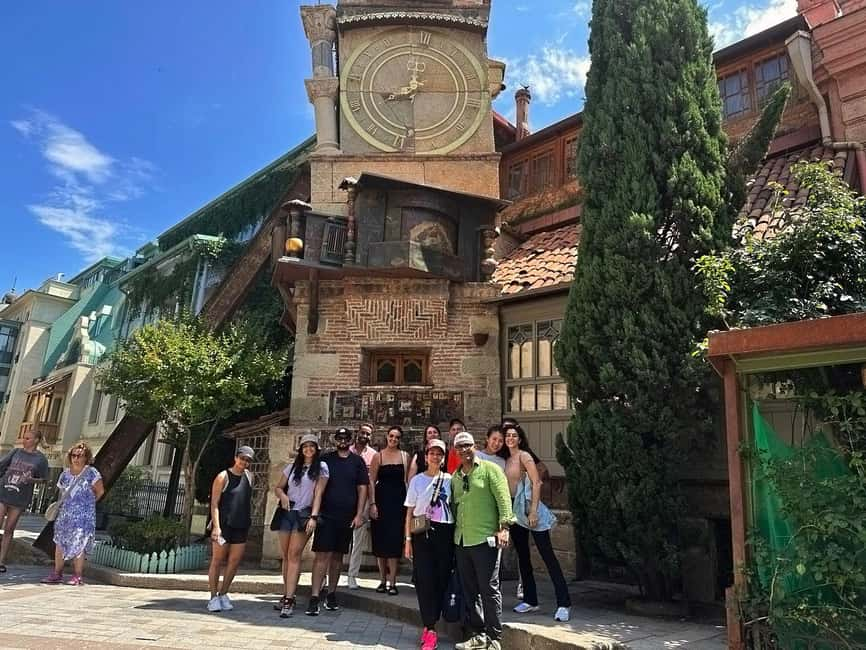
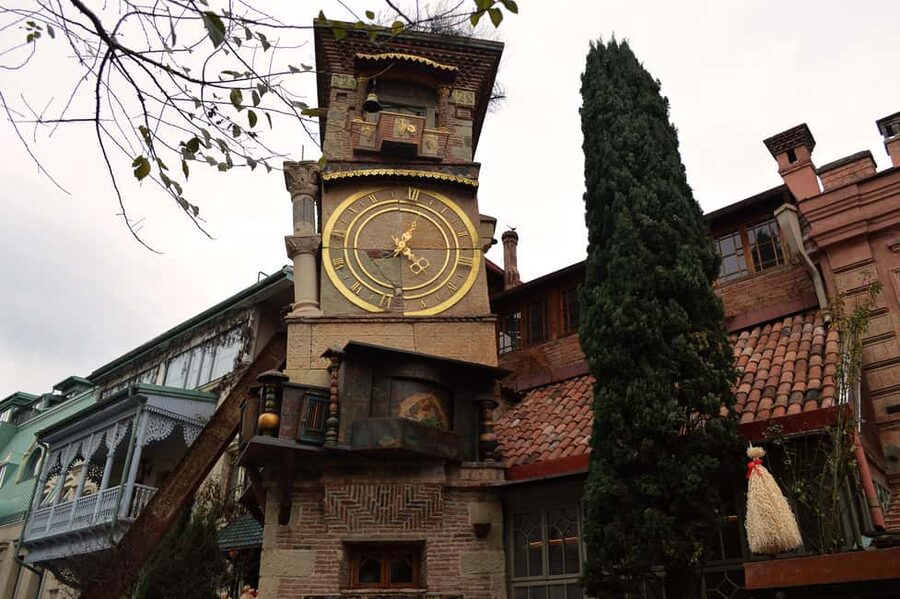
The first major stop is the Rezo Gabriadze Theater and its crooked clock tower. It is one of Tbilisi’s most playful landmarks, with a deliberately uneven design and a small puppet show associated with the tower.
This is a good opening because it introduces a side of Tbilisi that a standard monument tour can miss. The city is not only about fortresses and churches. It also has a strong creative streak, and the Gabriadze Theater brings that mood to life.
You get about 15 minutes here for a visit, photos, guided explanation, and nearby views. Keep your camera ready, but do not expect a long theater performance as part of the tour. The value is in seeing the landmark and understanding its place in Tbilisi’s modern cultural scene.
Anchiskhati Basilica and Georgian faith
From the theater, you walk to Anchiskhati Basilica, the oldest surviving church in Tbilisi, dating to the sixth century. This is one of the most meaningful stops because it gives you a direct link to the early Christian identity of Georgia.
The guide explains how Christianity became tied to Georgian culture and national identity. That context matters. Without it, the church can look like another old stone building. With it, you begin to see why religious sites carry such weight in Georgian life.
Plan for about 20 minutes here. Photography inside the church is not allowed, and you need to follow the dress code. Women should bring a head covering, and shorts are not permitted. A light scarf is an easy thing to pack and can also be useful at other churches.
Patriarchate, Bridge of Peace, and Sioni Cathedral
The walk continues to the Patriarchate of Georgia, an important center of the country’s Orthodox religious life. This is a short stop of about 10 minutes, so expect an explanation and a look at the setting rather than a long formal visit.
Next comes the Bridge of Peace, one of the city’s more modern landmarks. Its contemporary design creates a sharp contrast with the lanes, courtyards, churches, and older masonry around it. I like this part of the route because it keeps Tbilisi from being reduced to a museum of old buildings. You see the city as a place where old and new sit side by side.
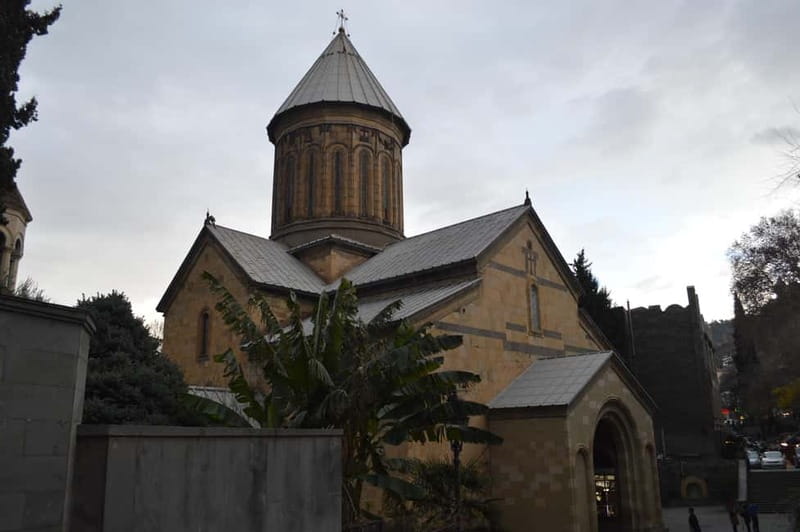
Sioni Cathedral follows, with about 15 minutes for a guided visit and photos. The cathedral is linked with old relics and local legends, and the tour also points out its connection with Joseph Stalin’s first marriage. That detail may surprise you, but it adds a human and political thread to the religious setting.
As with Anchiskhati, dress rules matter and photography inside is not allowed. Listen closely to the guide’s instructions before taking out your camera.
More History Walking Tours in the world:
- History and Hauntings of Salem Guided Walking Tour
★ 5.0 · 14,564 reviews - Lisbon: History, Stories and Lifestyle Walking Tour
★ 4.8 · 10,902 reviews - Boston: Freedom Trail History Small Group Walking Tour
★ 5.0 · 6,450 reviews - Historic Charleston Guided Sightseeing Walking Tour
★ 5.0 · 6,216 reviews
Georgian food, wine, and the Tamada
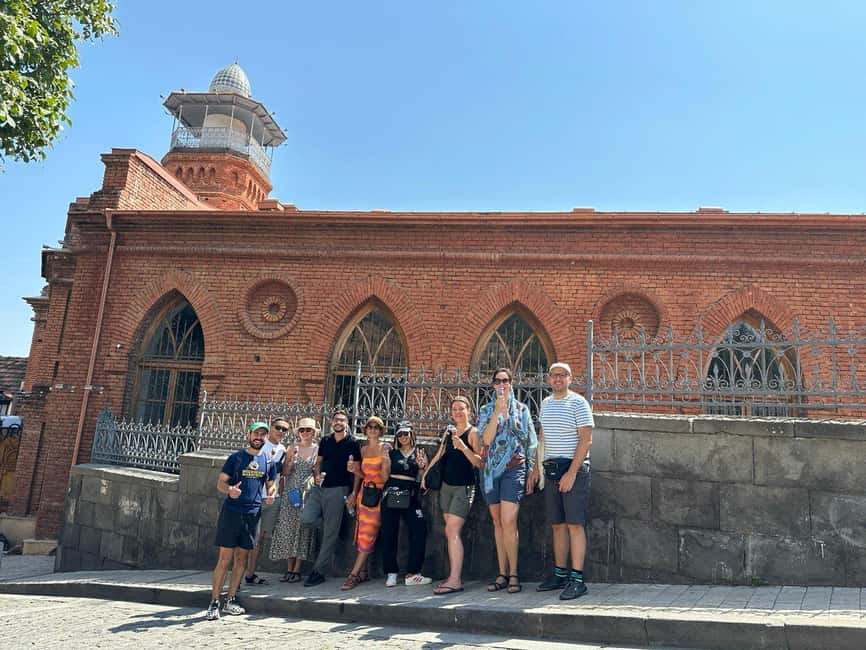
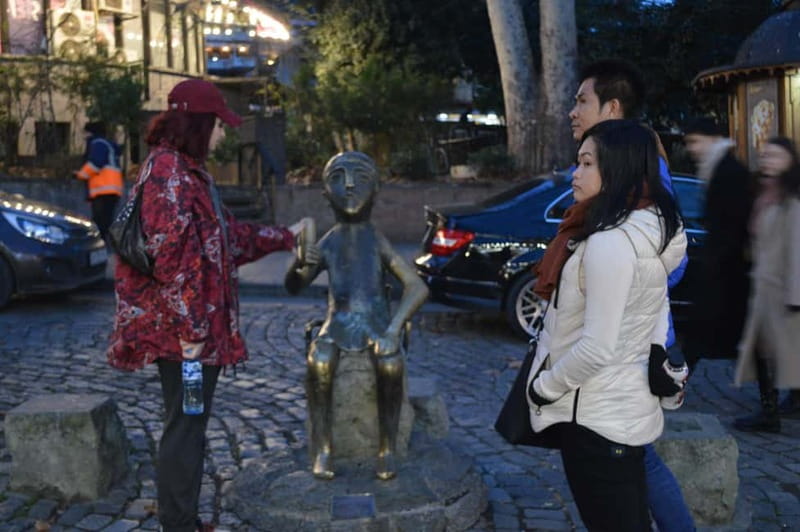
The Tamada Sculpture is a compact but useful stop. Tamada means toastmaster, the person who leads formal Georgian toasts at a feast. The bronze figure captures the country’s strong link between hospitality, friendship, food, wine, and long shared meals.
The statue gives your guide a natural opening to explain Georgian toasting customs. This is one of the more approachable cultural moments on the walk. You do not need specialist knowledge to understand the basic idea: in Georgia, a toast can carry wishes for family, peace, friendship, memory, or good fortune.
The route also includes a secret stop with a 20-minute wine tasting. The exact setting is not specified in the tour details, so consider it a small surprise rather than planning around a particular venue. Cash is worth carrying for this part of the walk and for any food or drinks you decide to buy.
There is also a traditional bakery stop where you might try khachapuri or lobiani. These are Georgian favorites, but the bakery food is not included in the price. Khachapuri is cheese-filled bread, while lobiani is filled with beans. If you want to taste them, budget separately and tell the guide about any food concerns.
The Great Synagogue and Tbilisi Central Mosque
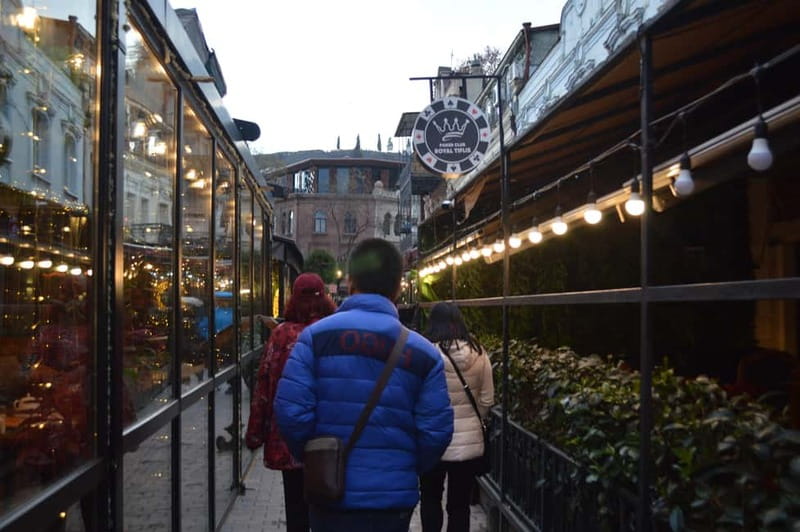
The Great Synagogue gives the tour another important angle. After the Orthodox churches, you encounter a Jewish place of worship in the same historic center. The stop lasts around 15 minutes and includes a guided visit.
You then reach Tbilisi Central Mosque, with time for photos and explanation. Together, the synagogue and mosque help you understand the religious variety of the Old Town. This is more useful than simply ticking off monuments. You see how different communities have contributed to the character of the city.
The religious stops also require respectful behavior. Dress modestly, listen to the guide, and follow the rules about photography. Because the tour includes active religious buildings, the exact access inside each place can depend on local conditions and worship schedules.
Rike Park and the cable car to the hill
Rike Park is the transition from street-level history to the city view. Here, you take the cable car toward the hill, with the ride listed as part of the tour and included in the price.
The cable car is a real advantage. It saves you from walking the full climb and gives you a different view of Tbilisi as you rise above the Old Town. You can look back across the river and see how the historic center fits into the wider city.
The ride itself is scheduled for about 10 minutes, so this is not a long transport segment. It works as a scenic break between the close streets below and the open view at the top.
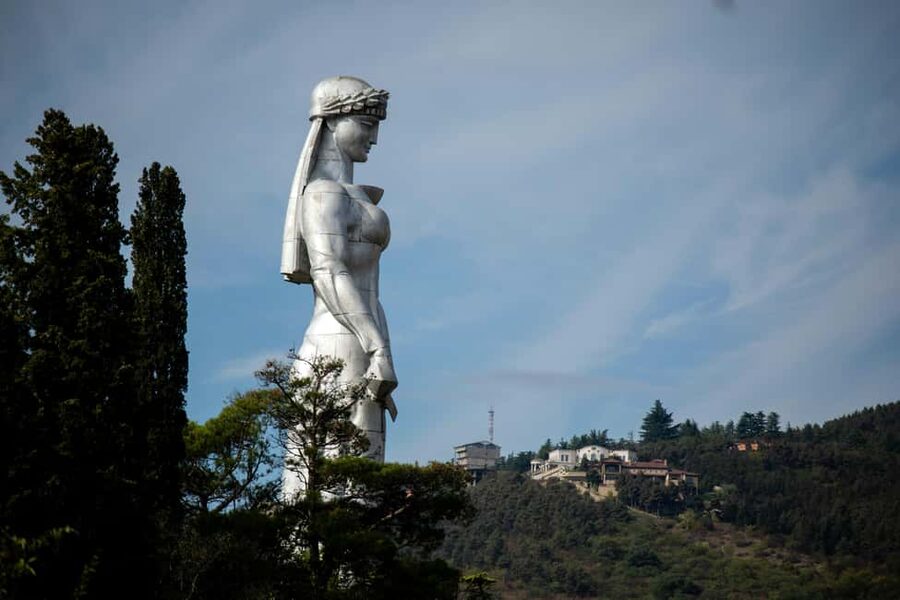
At the hill, the tour visits Kartlis Deda, better known as Mother of Georgia. The monument holds a sword in one hand and a bowl of wine in the other. The image expresses two ideas at once: Georgia can defend itself, but it also welcomes friends.
The guide also uses the monument to discuss the role of women in Georgian history. That makes this more than a photo stop. You get a chance to consider how a female national symbol represents strength, pride, and hospitality.
Views toward Narikala and the Mtkvari River
The final part of the tour gives you broad views over Tbilisi’s tiled roofs, the Mtkvari River, and Narikala Fortress. This is the payoff after the narrow streets and interior visits.
You can finally see the route in its setting. The Old Town below is not a separate attraction sitting in isolation. It is part of a city shaped by the river, the hills, fortress walls, religious buildings, and later urban growth.
The details describe the finish at Mother of Georgia, while the cable-car segment is described as a ride to Narikala mountain. Use that wording as a guide to the experience: the main reward is the hilltop view and the monument, with Narikala Fortress visible in the panorama. Do not assume the schedule includes a long fortress tour unless the guide confirms it.
The final stop is listed for about 15 minutes. That is enough for photos and a closing explanation, but not a long period of quiet sightseeing. If you want extra time at the viewpoint, you may need to return independently after the tour.
What $38 buys you
At $38 per person, this is a reasonable price if you want a guide to connect the sights rather than finding each one yourself. The fee includes the three-hour walking tour and the cable-car ride. Those are the core expenses clearly included.
The value comes from the route’s range. In one afternoon, you see the Gabriadze Clock Tower, two important churches, the Patriarchate, Bridge of Peace, Sioni Cathedral, Tamada, Great Synagogue, Central Mosque, the royal baths area, and Mother of Georgia. You also receive interpretation about faith, food, wine, hospitality, and women in Georgian history.
The price is less attractive if you only want long visits at one or two monuments. This is a broad orientation tour, not a slow architectural study. The bakery is extra, and the tour information does not list hotel transfers or a full meal.
A local guide can add practical value too. Shmagi is specifically praised for excellent Spanish, warm conversation, and useful suggestions about where to go, what to do, and where to eat. Spanish-speaking visitors should consider this a major reason to choose the Spanish departure when available. English is also offered.
Walking conditions and what to bring
Wear comfortable shoes. You will walk through Old Town streets, stop often, and handle the hilltop portion of the route. The tour is not suitable for people with mobility impairments, so consider the walking surface, stairs, slopes, and time on your feet before booking.
Bring water, a camera, and cash. Water matters because the schedule is active, while cash helps with bakery food, drinks, or other personal purchases. Take a scarf or other head covering for church visits, and avoid shorts.
Good weather is required. If poor weather cancels the tour, you can be offered another date or a full refund. Since the experience depends on walking and an outdoor viewpoint, this condition is sensible.
You can cancel up to 24 hours before the start for a full refund, and the reserve-now, pay-later option gives you some flexibility while planning. Check the available start times because the total duration is three hours and the route is described as an afternoon experience.
Who should book this Old Town walk?
I would recommend it to first-time visitors who want a quick but meaningful introduction to Tbilisi. It is especially useful early in your stay, when advice about food, neighborhoods, and further sightseeing can help shape the rest of your trip.
It also suits anyone interested in religious history and everyday culture. The synagogue, mosque, Orthodox churches, wine tasting, bakery option, Tamada, and Mother of Georgia create a wider picture than a tour focused only on fortresses.
Spanish speakers have an extra reason to consider it because Shmagi is described as a native Georgian who speaks Spanish perfectly. English speakers can also book, but the strongest specific guide feedback is connected to the Spanish-language experience.
I would skip it if you want a relaxed pace, extensive museum time, or a tour designed around accessibility. I would also avoid booking it in poor weather unless you are comfortable with the possibility of a change of date.
Should you book it?
Book this tour if you want to get your bearings fast while seeing the main Old Town sights, learning how Georgian faith and hospitality fit together, and ending with a fine city view. The included cable-car ride adds practical value, and the route offers more cultural variety than a simple monument walk.
Think of it as an introduction, not the final word on Tbilisi. You will see many places in three hours, but you may want to return later to the churches, baths, viewpoint, or fortress area at your own pace. For $38, it is a solid choice for a first afternoon, especially if you value a friendly local guide and useful advice for the rest of your visit.
FAQ
How long does the Tbilisi Old Town tour last?
The tour lasts three hours, and travel time is included in that duration.
Where does the tour meet?
You meet at 17 Ioane Shavteli Street, next to the Berikaoba monument near the Ambassadori Tbilisi Hotel.
Is the cable-car ride included?
Yes. The cable-car ride to the hill near Mother of Georgia is included.
Which languages are available?
The tour is offered with a live guide in English or Spanish.
Is food included in the price?
No. The bakery visit is not included. The route includes a stop where you can try khachapuri or lobiani, but you should pay separately for bakery items. A wine-tasting stop is also listed in the route.
What should I wear for the church visits?
Women need a head covering, and shorts are not allowed inside the church. Bring comfortable shoes for the walking route, along with water, a camera, and cash.
Newest history tours we have reviewed in the world
- Enjoy Ancient Mostar★ 4.0 · 45 reviews
- Private Dublin Historical and Heritage Tour by Bike★ 5.0 · 30 reviews
- Dubrovnik by Night, History, Wine & Bites★ 5.0 · 41 reviews
- Historical Walking Tour of Dublin★ 5.0 · 50 reviews
- DayTripper Dublin: A Guided City Walking Tour★ 5.0 · 90 reviews
- Ancient Old City– Finest tour of Dubrovnik★ 5.0 · 64 reviews
- Dublin LGBTQ Pride Historical and Cultural Walking Tour★ 5.0 · 91 reviews
- Interactive Living History in Dalkey Castle near Dublin City★ 5.0 · 133 reviews
Old Town & Historic Centre Walks, compared.

Madrid Essential: Historic Center, Plaza Mayor & Royal Palace
Read our review →
Live Fado Show with Port Wine in Historic Center
Read our review →
Valencia Old Town Tour with Wine & Tapas in 11th Century Historic Monument
Read our review →
Prague Old Town, Medieval Underground and Dungeon Historical Tour
Read our review →
Cartagena: Historic Center and Getsemaní Shared Walking Tour
Read our review →
Old Town Walking Tour History and Tales in Edinburgh
Read our review →
Philadelphia Old City Historic Walking Tour with 10+ Top Sites
Read our review →Browse the lists this tour appears in