

Review · GERMANY HISTORY TOURS
Frankfurt Self-Guided Historical Walking Tour
Frankfurt’s story unfolds nicely on foot here, from the Old Opera House to the Römer and Imperial Cathedral. You follow a 5.7 km route, hear short audio segments, and solve 10 riddles instead of simply trailing behind a guide with a flag.
I like the freedom to stop when you want and the two-day validity, which lets you split the walk or linger at a museum. I also like the low price, about $8 per person, and the easy Google Maps link to the next stop.
The main caution is depth. Some stops offer only two or three minutes of narration, and part of the route gives attention to Prada and Louis Vuitton rather than only Frankfurt’s political and cultural past.
Key points at a glance
- Start at the Alte Oper: Begin beside Frankfurt’s grand Old Opera House, a landmark dating from 1869.
- Walk 5.7 km through central Frankfurt: The route links major sights without requiring a live guide or fixed departure time.
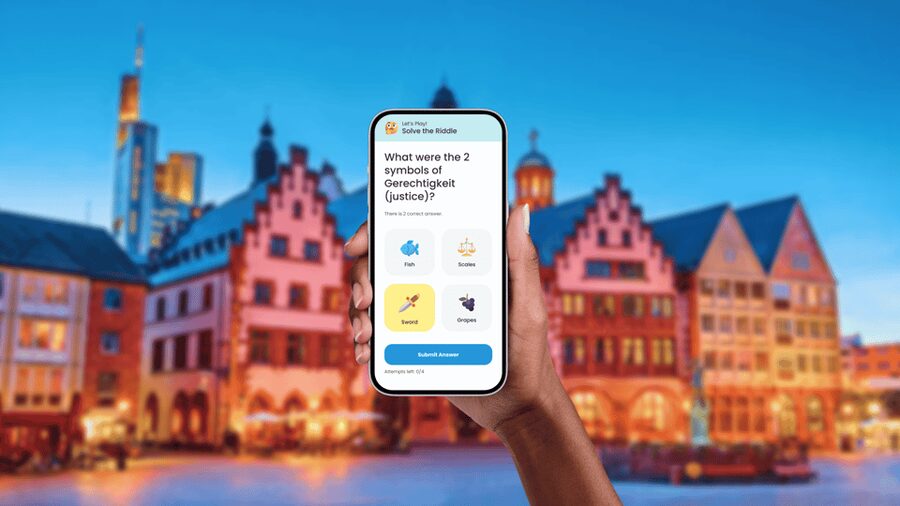
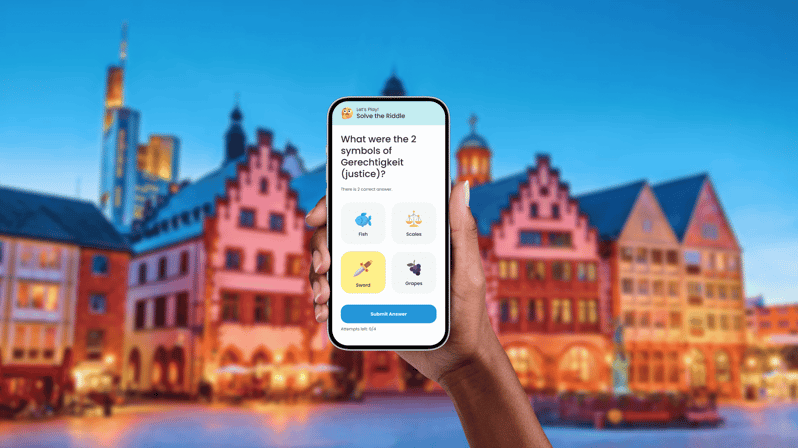
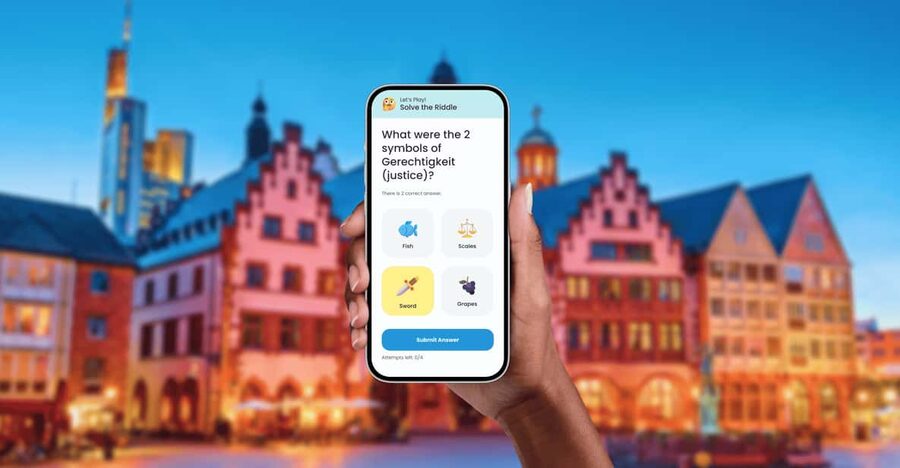
- Solve 10 historical riddles: The puzzles add a simple game element and give you a reason to look closely at each stop.
- Cross the Peace Bridge: Pause for city views and a connection to Frankfurt’s art scene.
- Finish at the Römer and Imperial Cathedral: End among the city’s best-known historic buildings, including the cathedral where emperors were crowned.
- Use it over two days: Your access lasts two days after activation, useful if you want to take breaks.
From the Alte Oper into Frankfurt’s past
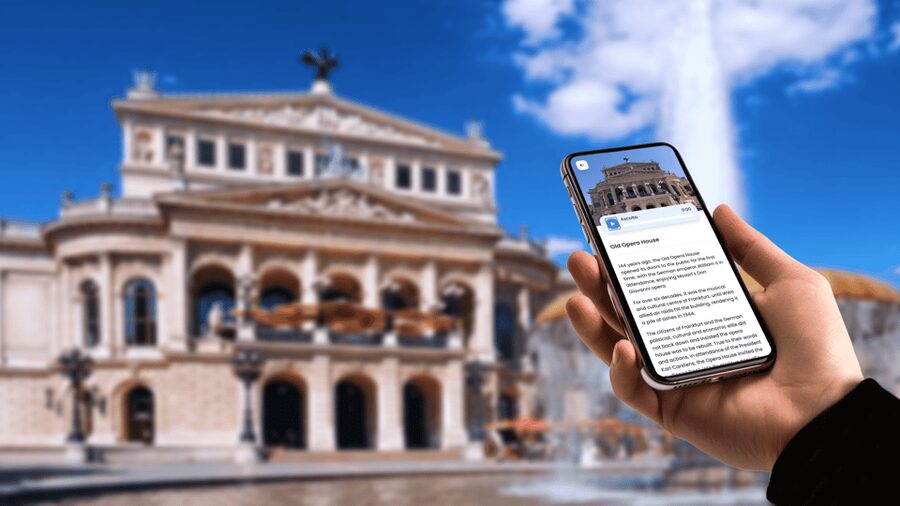
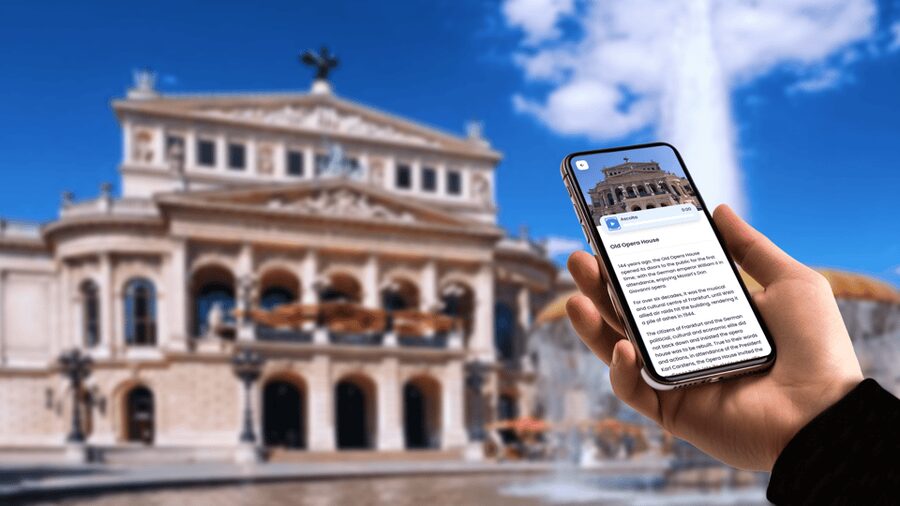
The tour begins at the Alte Oper Frankfurt, or Old Opera House. The building dates from 1869 and is presented as a symbol of Frankfurt’s architectural, political, and economic importance.
That makes it a good starting point. You are not beginning with a random street corner. You are beginning at a building tied to the city’s public life and changing fortunes. Take a few minutes here before starting the app, especially if you like to orient yourself with a landmark rather than a train station or hotel lobby.
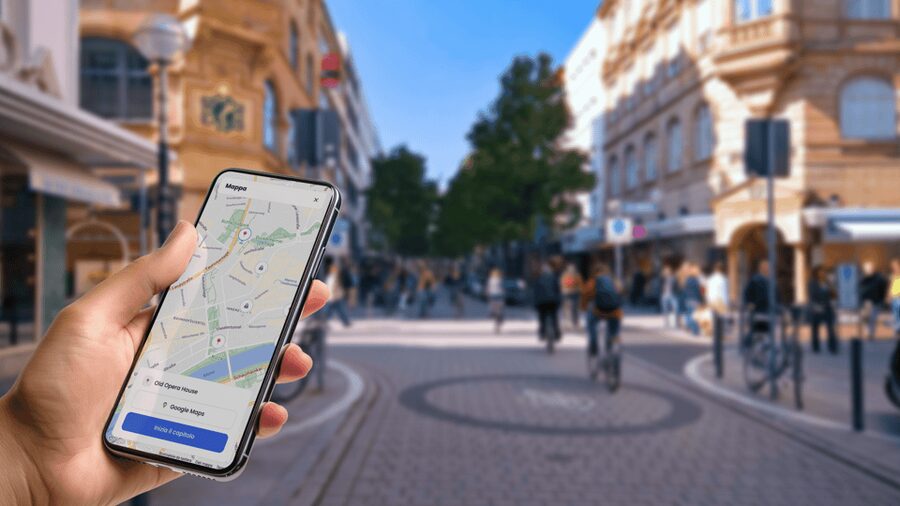
The activity is entirely self-guided. You open the web app in the area, follow the map, and move to the next point when ready. There is no meeting with a human guide, no set group, and no fixed clock to chase.
That freedom is the strongest part of the experience. I can imagine using it on a first morning in Frankfurt, when I want a broad sense of the center before choosing which sights deserve more time. You can also stop for coffee, enter a museum, or pause when the weather turns unpleasant, then continue later.
The app requires a charged smartphone and internet access. Bring both. A dead battery would leave you without the map, audio, and riddles that make the route work.
More History Walking Tours in Germany
- Leipzig: 1.5-Hour Historical Walking Tour in German
★ 4.7 · 2,217 reviews - Berlin: History of the Third Reich Guided Walking Tour
★ 4.7 · 791 reviews - Trier: Guided Old Town Highlights and History Walking Tour
★ 4.7 · 687 reviews
A city walk with a game attached
The 10 riddles are simple but useful. They turn the walk into more than a string of short audio clips. You have to pay attention to the buildings and details around you, and that can help children or puzzle-minded adults stay involved.
Do not expect a difficult historical challenge. The riddles are there to make the route active, not to replace a full museum visit or a serious history lecture. I see them as small prompts that encourage you to look up from your phone.
The audio is available in English, German, Italian, Spanish, French, Portuguese, and Chinese. That range is helpful if your strongest language is not English, and it lets people in the same group choose different language settings.
The commentary is brief. At some stops, you may hear only two or three minutes. That suits a casual orientation walk, but it will feel thin if you already know Frankfurt or want dates, political context, and detailed stories about every building.
You can make the most of the short explanations by treating them as introductions. Note the places that interest you, then return later with a museum visit or a longer local history source. The app gives you the route and the basic facts. It is not meant to be a complete substitute for a city guide.
Following fashion along Frankfurt’s shopping streets
One unusual feature is the route’s attention to haute couture and luxury labels. You will pass shops associated with names such as Prada and Louis Vuitton.
This section may appeal to you if you enjoy architecture, window displays, or the contrast between old civic buildings and modern retail. It also shows how Frankfurt’s center mixes finance, shopping, culture, and older landmarks in a relatively compact area.
If your main goal is historical context, this is the part most likely to feel off target. You may prefer a route focused on medieval Frankfurt, Jewish history, wartime destruction, or the city’s banking role. This experience does not promise that kind of specialist coverage.
I would think of the fashion material as one thread in the walk, not the reason to book it. The route gives you a picture of several sides of Frankfurt, though not all of them receive equal attention.
The mention of apple wine is another welcome local touch. Frankfurt is strongly associated with Apfelwein, the tart local cider, and the tour uses it as part of the city’s character. The activity does not include a tasting, so you will need to arrange that yourself. Still, the reference helps connect the walk to a local drink rather than presenting Frankfurt as only grand buildings and luxury stores.
Crossing the Peace Bridge for a change of view
The route continues across the Peace Bridge. This creates a useful change of pace after the central streets and shopping material.
The bridge offers views and links the walk with Frankfurt’s artistic side. The precise quality of the view will depend on weather, light, and the city around you, but the crossing gives you a chance to stop moving and take in the wider setting.
This is where the two-day validity can help. You do not need to rush across the bridge just to complete the app. Stop for photographs, listen again to a section, or pause before continuing toward the old center.
The route involves 5.7 km of walking, so comfortable shoes matter. That distance is manageable for many people, but it is not a quick ten-minute introduction. You will spend real time on city streets, and the walk may feel longer if you stop often or add museums.
The activity is described as suitable in any weather. That means you can technically use it in rain or cold, but you still need sensible clothing. A self-guided tour offers no guide to keep you moving and no vehicle between stops. In poor weather, the ability to split it across two days becomes especially useful.
More Self-Guided History Audio Tours in Germany:
- Taormina: Ancient Theater Skip-the-Line Ticket & Audio Guide
★ 4.5 · 2,412 reviews - Athens: Ancient Agora E-Ticket and Audio Tour
★ 3.9 · 413 reviews - Katakolo Port: Transfer to Ancient Olympia and VR Audio Tour
★ 4.1 · 403 reviews - Matera: Sassi di Matera Historical Self-Guided Audio Tour
★ 3.6 · 183 reviews
Arriving at the Römer and Imperial Cathedral
The route ends at the Römer and the Imperial Cathedral. This is the strongest historical finish.
The Römer is one of Frankfurt’s best-known civic landmarks, while the cathedral connects the city to the Holy Roman Empire. Emperors were crowned there from 852, giving the final section a clear link to European political history.
Ending here gives the walk a satisfying shape. You begin with the 19th-century Old Opera House, pass through modern shopping and city life, cross the Peace Bridge, and finish among buildings tied to Frankfurt’s older civic and imperial story.
The app can give you the basic meaning of these places, but you should adjust your expectations. If you want a long explanation of imperial elections, coronations, or the Römer’s changing role, this tour may leave you wanting more. I would use the final stop as a prompt to look around carefully and decide if you want to enter additional sights on your own.
The cathedral is also a natural point to pause after the route. Since the tour remains valid for two days, you do not have to treat the final stop as a finish line. You can complete the walking route on one day and return to the area with more time.
Museums and extra stops you can add
The route itself is the main product, but you can build a fuller day around it. One user specifically enjoyed the Städel Museum and Liebieghaus while using the activity, though the supplied route information does not confirm that either museum is a formal stop.
That distinction matters. Book this for the walking route, map, audio, and riddles. Treat museums as optional additions rather than promised inclusions.
The Städel Museum and Liebieghaus are useful examples of how you could extend the day if art interests you. The Peace Bridge section already points toward Frankfurt’s artistic side, so adding an art visit can give that part of the walk more weight. You will need to plan any admission or visit separately.
I like this flexible approach because it keeps the tour inexpensive. You pay for a short digital guide instead of a full-day package, then choose where to spend extra time. The tradeoff is that you must plan those additions yourself.
What $8 really buys you
At about $8 per person, this is a low-cost way to get a route through central Frankfurt. The price makes sense if you want structure but do not need a live guide.
You are paying for a web app with a map, historical facts, 10 riddles, and audio in seven languages. You are not paying for admission to the cathedral, museums, or other attractions. You also do not receive a guided group experience with questions answered on the spot.
The value depends on how much you use the flexibility. If you follow the route quickly and listen only to the shortest clips, the experience may feel light. If you stop for photos, add a museum, pause for apple wine, and spread the walk across two days, the same fee becomes easier to justify.
The low cost also softens the main weakness: the commentary can be basic. A more expensive private guide should offer deeper context and adapt to your interests. This app does not promise that. It is best viewed as a city orientation tool with a historical theme.
The booking terms add useful flexibility. You can cancel up to 24 hours before the activity for a full refund, and you can reserve now while paying later. Those details help if your Frankfurt plans are not fixed, though you still need internet access and a working phone when you start.
Who will like this walk most
I would recommend it to you if you want to explore independently and dislike fixed tour times. It also suits people who enjoy light puzzles, short audio clips, and the freedom to stop without holding up a group.
It can work well for a first visit because the route links several parts of central Frankfurt. The Old Opera House gives you a clear start, the Peace Bridge changes the setting, and the Römer and Imperial Cathedral provide a strong historical finish.
Families may appreciate the riddles, though the activity is still a 5.7 km urban walk. You should decide for yourself if that distance and the need to use a smartphone suit your group.
I would be more cautious if you want a detailed history seminar. The short explanations will not satisfy everyone, especially if you expect every stop to focus on major historical events. The fashion material may also disappoint you if luxury shopping does not interest you.
The tour is not suitable for people with mobility impairments or visual impairments. That is important here because the route depends on walking through the city and using a visual smartphone map.
My practical way to use the two-day validity
I would start early enough to avoid turning the walk into a race, but I would not plan the entire day around completing it in one stretch. The route is 5.7 km, and the best use of a self-guided activity is to leave room for pauses.
On day one, you could follow the route from the Alte Oper, listen at each stop, and solve the riddles without worrying about speed. Use the map link to move between points, and keep your phone charged from the start.
On day two, you could revisit the Römer and cathedral area, add a museum, or finish a section you skipped. The information only says the activity is valid for two days from first activation, so plan to complete your access within that period.
I would also bring weather protection. The tour can be used in any weather, but the city will not feel the same in steady rain as it does on a clear day. Good shoes, a charged phone, and internet access are the simple details that protect the experience from avoidable trouble.
Should you book the Frankfurt self-guided walk?
Book it if you want a cheap, flexible introduction to central Frankfurt and you are happy with short commentary. The route, map links, multilingual audio, and 10 riddles give you more structure than wandering without a plan.
Skip it if you want detailed historical storytelling, a live guide, or a tour devoted only to old Frankfurt. The focus on luxury shopping will not suit every history-minded visitor.
For about $8, I think the activity offers fair value when you treat it as a flexible orientation walk, not a full historical course. Use the two-day access, make time for the Römer and Imperial Cathedral, and add a museum or apple wine stop if those fit your interests.
FAQ
Where does the Frankfurt self-guided walking tour start?
The tour starts at the Alte Oper Frankfurt, also called the Old Opera House. You can open the app anywhere in the area to begin the game.
How long is the walking route?
The route covers 5.7 km through Frankfurt city center.
How long is the tour valid?
The activity is valid for two days from the time you first activate it. You can use that period to split the walk or take longer breaks.
What languages are available?
The web app and audio are available in English, German, Italian, Spanish, French, Portuguese, and Chinese.
What do I need to bring?
Bring a charged smartphone and internet access. The smartphone is needed for the web app, map, audio, and riddles.
Is the tour suitable for people with mobility or visual impairments?
The activity is not suitable for people with mobility impairments or visual impairments.
Newest history tours we have reviewed in Germany
- Historic Dresden Private Walking Tour★ 5.0 · 32 reviews
- Walking Through Dresden’s Past with Dr. Fraser Macdonald★ 5.0 · 72 reviews
- Berlin Food & Cultural Tour: Must-Try German & Berliner Classics★ 5.0 · 51 reviews
- Private Tour: Jewish Heritage Walking Tour of Berlin★ 5.0 · 29 reviews
- Small-Group Historical Bike Tour in Berlin★ 4.5 · 103 reviews
- Historic center of Berlin – Tour in Italian★ 5.0 · 143 reviews
- East Berlin Food & History Tour with Eating Europe★ 5.0 · 204 reviews
- Private Berlin WWII and Cold War History Tour with Local Expert Guide★ 5.0 · 28 reviews
Self-Guided History Audio Tours, compared.

Taormina: Ancient Theater Skip-the-Line Ticket & Audio Guide
Read our review →
Katakolo Port: Transfer to Ancient Olympia and VR Audio Tour
Read our review →
Matera: Sassi di Matera Historical Self-Guided Audio Tour
Read our review →
Self-Guided Ngilgi Cave Ancient Lands Experience
Read our review →
Hagia Sophia History Museum Entry with Audio Guide
Read our review →
Browse the lists this tour appears in