Review · ATHENS HISTORY TOURS
Athens: Ancient Agora E-Ticket and Audio Tour
Athens’ Ancient Agora is where democracy moved from bold idea to daily business, and this self-guided tour gives that story a clear path. I like the way it connects the Bouleuterion and Tholos to real political decisions, then adds human stories about Solon, Aristides the Just, Pericles, and Socrates.
I also like the offline audio format. You can pause for photos, linger in the museum, and walk at your own pace without following a group. The main drawback is navigation: some directions can feel vague where paths run side by side, and a phone audio tour cannot answer questions like a live guide.
Key points to know before you book
- Follow the birth of Athenian democracy: The commentary explains how Solon’s reforms, the council, and the popular assembly shaped civic life.
- See more than the Agora ruins: The route includes the Agora Museum, Pnyx, Mars Hill, Socrates’ prison, and the Theatre of Dionysus.
- Download everything first: There is no internet access inside the archaeological site, so your ticket and audio must be ready offline.
- Allow 90 minutes to two hours: You can move at your own speed, but the route includes several stops and some uphill walking.
- The museum adds welcome relief: Its displays explain voting, ostracism, and the practical tools used to protect or control Athenian democracy.
- Bring your own phone and headphones: Neither is supplied, and large bags are not allowed.
Why the Ancient Agora matters more than another pile of ruins
The Acropolis shows you Athens at its grandest. The Ancient Agora shows you Athens at work. This was the civic center where people met, traded, debated, passed laws, worshipped, and dealt with the ordinary business of city life.
That difference matters. Without an audio guide, you can see broken columns and foundations but miss why each building mattered. This tour gives the ruins a political storyline, beginning with the reforms that made public participation possible and continuing through the institutions that kept the city running.
I like that the focus is not only on famous monuments. The route explains how democracy depended on places such as the Bouleuterion, where 500 Athenians met to prepare laws and proposals for the popular assembly. That turns a distant political system into something physical and understandable.
The commentary also uses individual figures to keep the subject from becoming a dry civics lesson. Solon, Aristides the Just, Pericles, and Socrates appear as people with competing ideas, reputations, and problems. The result is a more rounded picture of classical Athens, including the uncomfortable methods used to defend democracy from perceived threats.
More Ancient History Tours in Athens
- Athens: Ancient Greek Theater Performance
★ 4.7 · 2,481 reviews - Historical Delphi One Day Tour with Arachova Stop & Expert Guide
★ 4.5 · 1,247 reviews - From Athens: Ancient Corinth Day Trip with Canal & VR Guide
★ 4.6 · 1,073 reviews
Starting near the Temple of Hephaestus
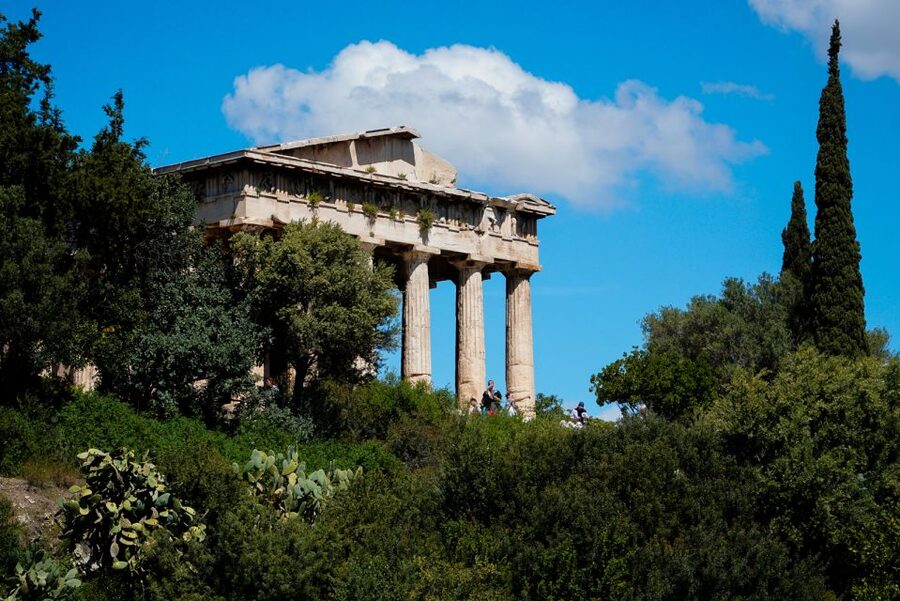
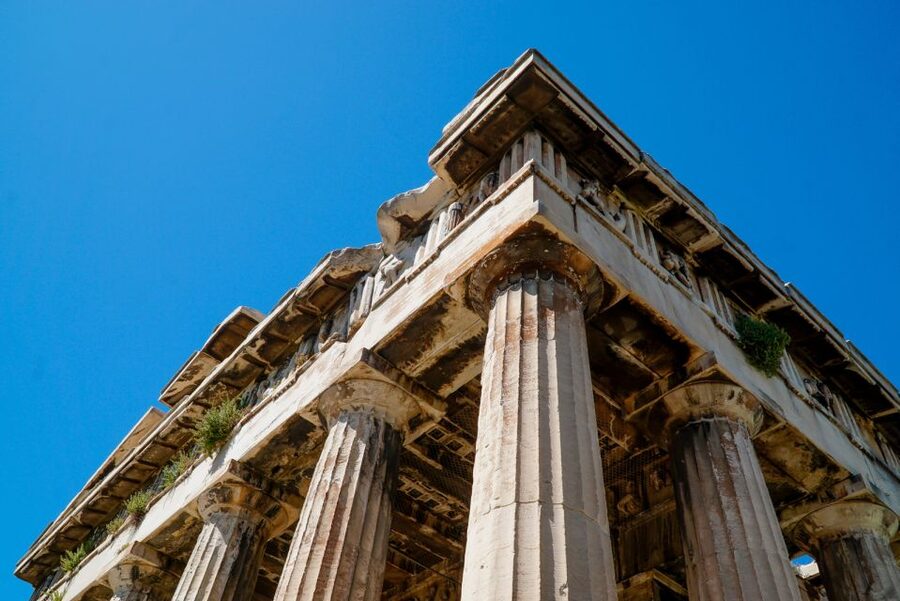
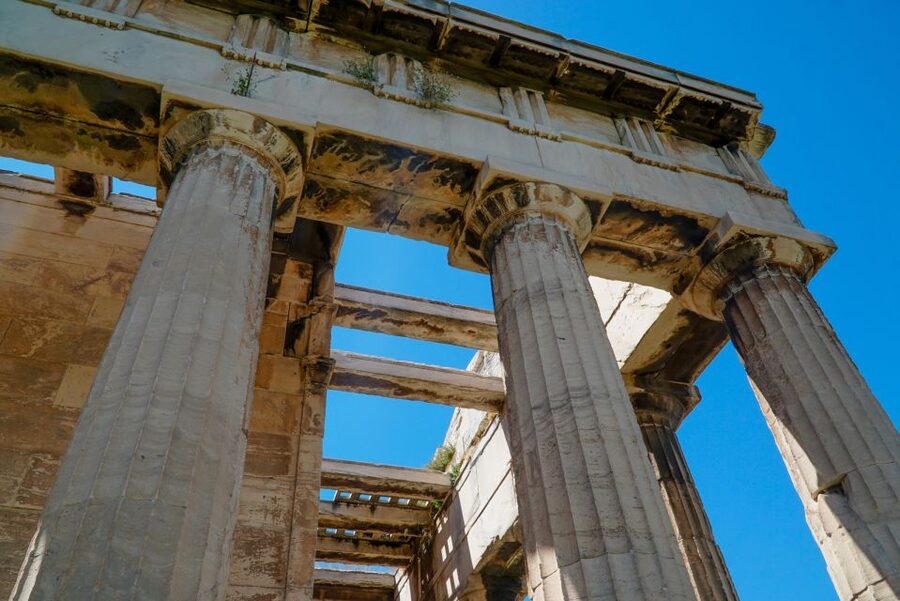
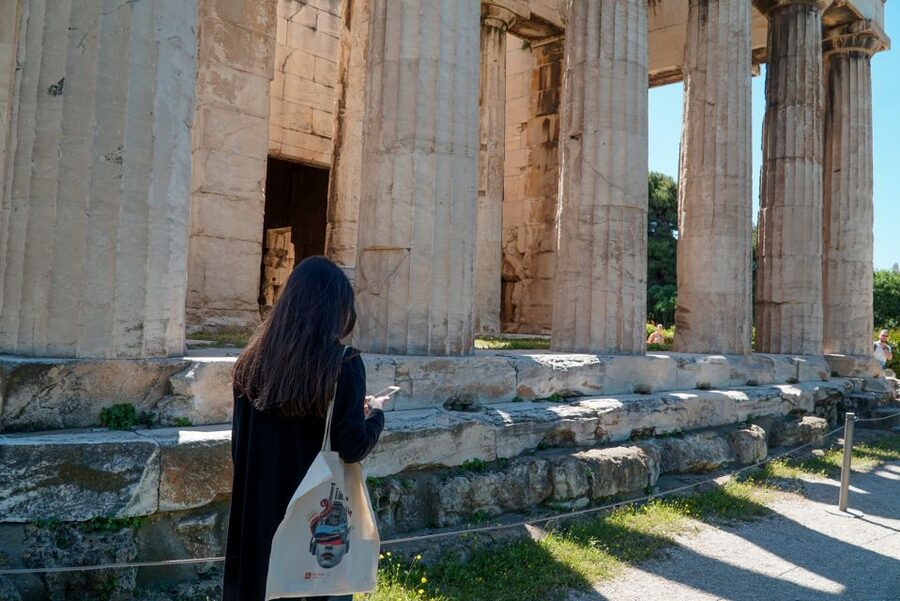
The Temple of Hephaestus is one of the most striking places in the Agora, and it gives the tour a strong opening point. It remains remarkably complete compared with many ancient buildings, so you get a clear sense of the proportions and design of a Greek temple.
The audio begins with the chain of changes that led toward Athenian democracy. Solon is central here. His legal reforms did not create the full democratic system familiar from later Athens, but they helped establish the civic framework that allowed wider participation to grow.
This is a good place to listen carefully rather than rush for photographs. The temple provides the visual anchor, while the narration supplies the political background. If you are new to Greek history, this opening helps explain why the Agora is more than a scenic ruin field.
The ground can be uneven, and some points require walking on sloped paths. Wear shoes with decent support. The attraction is not suitable for wheelchair users, and several points of interest are not wheelchair accessible.
The Tholos and Bouleuterion: democracy in daily practice
The Tholos was connected with the officials who handled the city’s day-to-day work. Nearby, the Bouleuterion housed the council of 500, whose members prepared proposals for the larger assembly.
The tour does a useful job of showing the difference between an idea and an institution. Democracy needed meeting places, procedures, officials, and rules. It was not simply a crowd gathering to shout opinions.
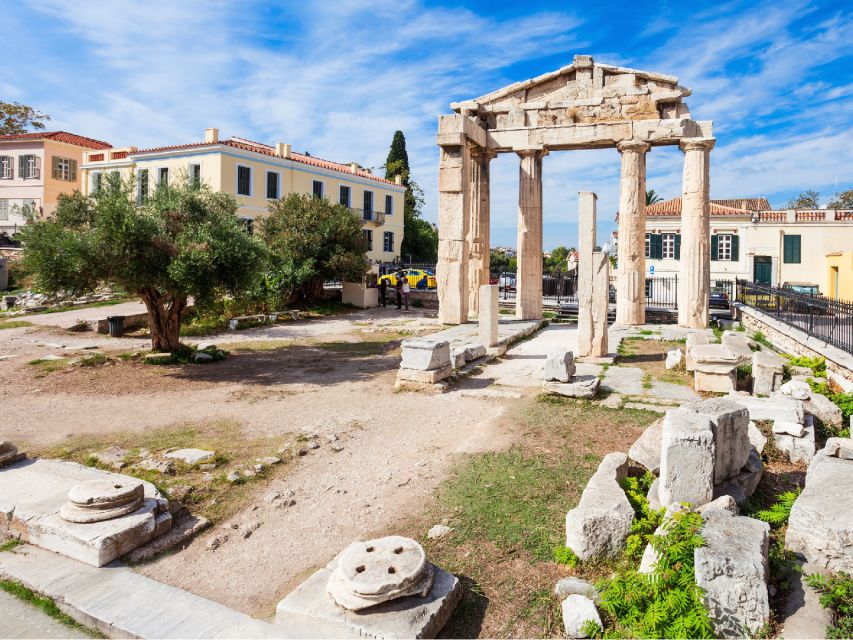
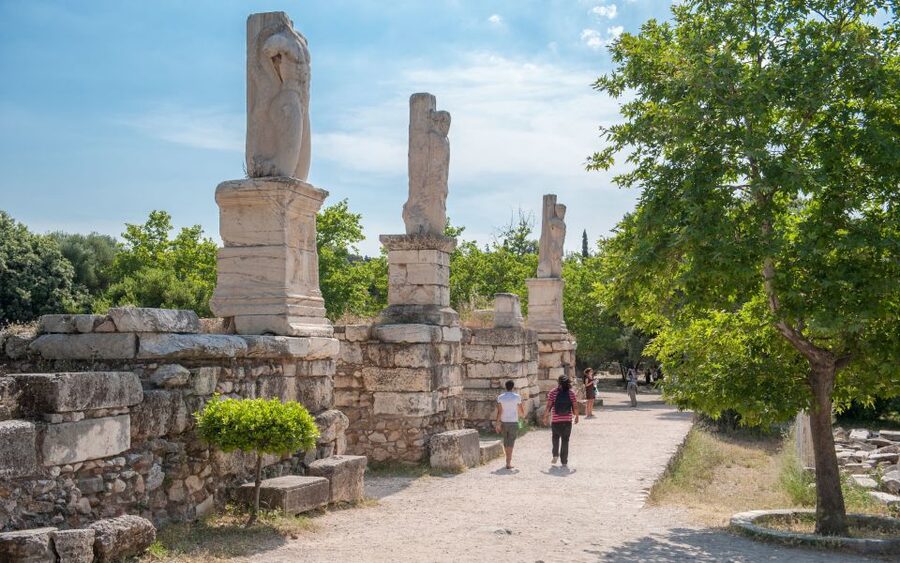
You will see mostly foundations and partial remains here, so the audio matters. The ruins alone do not announce which building had which role. Listen for the descriptions of how the council worked, then look across the site and picture public business taking place among these structures.
This section is especially useful if you want more than a quick photo stop. It explains the machinery behind Athenian politics, including the limits of participation. The story is about the first democratic citizens, but ancient citizenship was not open to everyone. The tour’s political focus gives you a chance to think about who had a voice and who did not.
The route is self-guided, so you can replay a section or pause when another group passes. That freedom is one of the strongest reasons to choose this format over a fixed walking tour.
Stories of Aristides, Pericles, and the people behind the stones
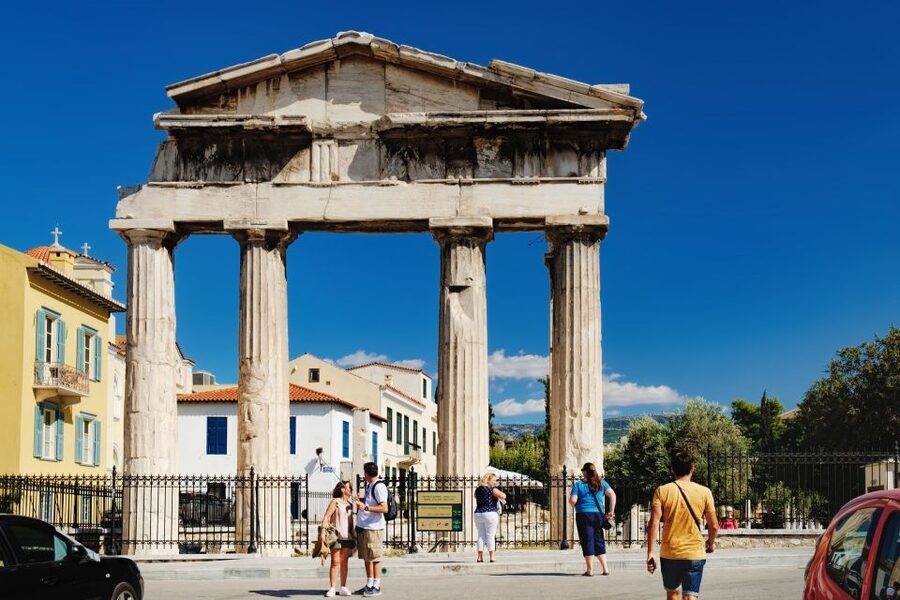
History becomes easier to remember when names have personality. The audio brings in Aristides the Just and Pericles, along with smaller human details from Athenian life.
Pericles is familiar to most people who have studied classical Athens, but the Agora helps place his public world in context. This was not just an age of marble temples and grand speeches. It was also a place of arguments, public decisions, alliances, punishments, and personal rivalries.
The tour’s anecdotal style is one of its better features. It keeps the commentary from sounding like a list of dates. One section about Samuel the Cobbler and his relationship with Socrates is particularly memorable, adding an everyday social angle to the philosopher’s life.
The narration is delivered through your phone rather than by a person on site. The audio is available in English, Italian, Greek, German, Spanish, and French. English content is clear and informative, though the material may feel fairly academic if you prefer only short, simple explanations.
More Ancient History Tours in Greece
- Acropolis, Parthenon & Athens Old City Heritage Walking Tour
★ 4.5 · 876 reviews - Private Biblical Tour Ancient Corinth & Isthmus Canal from Athens
★ 5.0 · 762 reviews - Athens: Ancient Corinth & Nafplio Full Day Trip with Swim
★ 4.8 · 531 reviews - Athens Skip the Line: Open Air Ancient Greek Theatre Performance
★ 4.5 · 520 reviews
The Agora Museum and the overlooked second floor

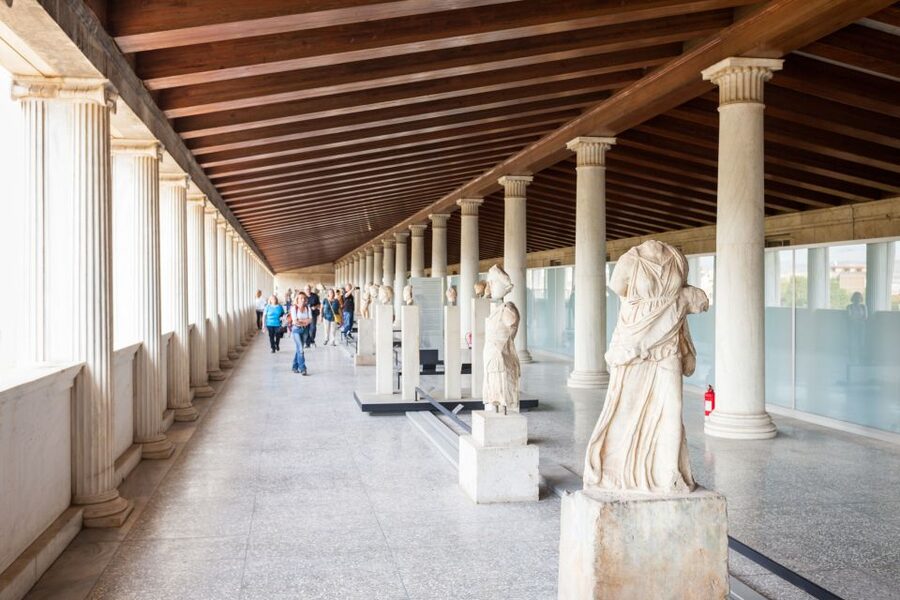
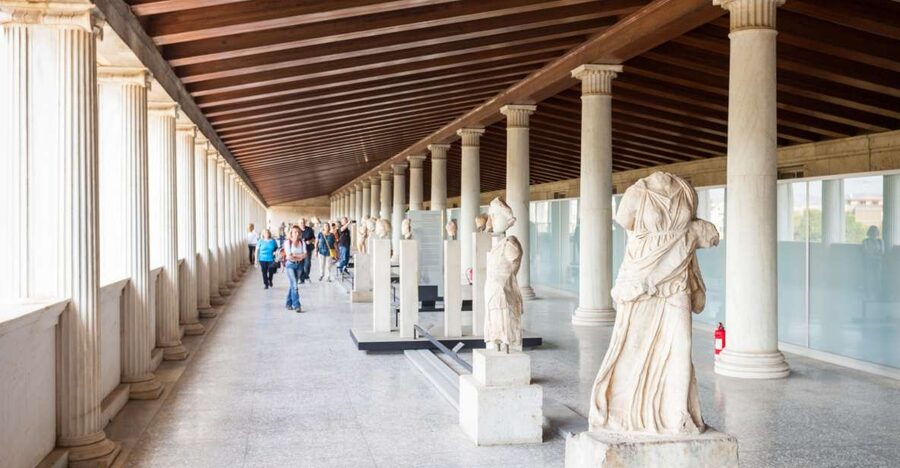
The Museum of the Ancient Agora is an essential stop, not an optional extra. It helps explain objects that would otherwise remain disconnected from the ruins outside.
The displays cover the practical side of Athenian democracy, including the methods used to protect the political system from people considered dangerous to it. You will encounter evidence of voting and ostracism, along with objects that show how public decisions were made.
The subject is not always comfortable. Democracy in Athens could be ingenious, but it could also be harsh. The museum helps you see both sides rather than treating the ancient system as a perfect model.
Give yourself time here, particularly if the heat outside is strong. The museum is air-conditioned, which makes it a pleasant pause during a hot day. The second floor is easy to overlook, but it provides a different view over the Panathenaic Way and the site. I would make a point of checking it before leaving.
The museum also gives you a chance to reset the audio. If you stop to read displays or take photographs, make sure the recording has not paused. One practical weakness is that the app may stop playing when you zoom in to take a picture. Check your screen before walking on.
Pnyx and Mars Hill for the best views
The route moves beyond the central Agora toward viewpoints associated with Athenian public life. At the Pnyx, you get an important connection between the political story and the physical setting. This was linked with the popular assembly, the body where citizens considered proposals and public matters.
The hill also gives you a picture-postcard view toward the Acropolis. Mars Hill, also called the Rock of Ares, offers another strong angle. These stops are valuable because they show how Athens was arranged around hills, open meeting places, and sacred sites.
The views are a welcome change after the museum and foundations, but the walking directions require attention. Several paths can run parallel, and signs do not always make the next stop obvious. I recommend checking the interactive map before setting off and listening for the next landmark rather than relying only on a vague turn instruction.
You should also plan around the heat. Early morning or late afternoon is more comfortable than the middle of the day. The route includes exposed areas and uphill sections, so carry water even though food and drinks are not included.
Socrates’ prison and the final walk toward Dionysus
The route continues toward the hill of Philopappos and the place identified as the Prison of Socrates. This stop adds a personal and philosophical ending to the political story.
The prison is not as visually grand as the Temple of Hephaestus or the Acropolis. Its value comes from the questions attached to Socrates’ life and death. The audio uses the site to explain more about the philosopher, his relationship with the city, and the tension between personal conscience and public law.
Keep your expectations sensible. The Agora ticket does not turn every point on the wider route into a separate major attraction. Some locations are ruins or identified places rather than intact buildings. The audio is what ties them together.
The tour ends within easy reach of the Acropolis archaeological area, near the Theatre of Dionysus. This is a fitting final stop. You can look at the oldest theatre in the world and the place associated with works by Aeschylus, Sophocles, and Euripides.
That ending also makes the tour useful as part of a larger day in central Athens. You can continue toward the Acropolis area afterward, though this ticket is specifically for the Ancient Agora. Check the meeting point and ticket instructions for the option you book, since those details can vary.
How the e-ticket and phone app work
The entry process is designed to be simple, but you need to prepare correctly. After booking, you receive a separate email from the local partner containing the actual e-ticket and audio instructions. Check your spam folder if it does not appear.
The GetYourGuide voucher is not accepted at the entrance. You need the separate e-ticket, either printed or downloaded to your phone, and you must take it to the validating machines.
Download the ticket, audio tour, and offline map before arriving. There is no internet access inside the archaeological site, so streaming the tour or downloading it at the gate is not a safe plan.
Bring:
- A fully charged Android or iOS smartphone
- Headphones
- Comfortable walking shoes
- The downloaded ticket and audio content
The app does not work with Windows phones, iPhone 5 or 5C and older models, older iPod Touch devices, or older iPad models listed in the booking information. Large bags and luggage are not allowed.
The audio is not a live guide. That means you will not have someone pointing out a missed building or answering a question. It also means you can stop whenever you wish, which is useful if you want photographs, museum time, or a quiet pause under the trees.
Is $30 a fair price?
At $30 per adult, this is not the cheapest way to enter the Ancient Agora. You are paying for both the admission ticket and the prepared audio content, not just a gate pass.
The value depends on how you normally visit archaeological sites. If you are happy with a guidebook and can identify the main buildings yourself, you may prefer to buy entry alone. If you want the history explained in a logical order without joining a group, the audio guide makes the extra cost easier to justify.
The route covers more than the first few ruins near the entrance, and its political theme gives the visit shape. It also includes the museum, viewpoints, Socrates’ prison, and the Theatre of Dionysus connection. For a self-guided visit lasting 90 minutes to two hours, that is a reasonable amount of content.
Students and older visitors should check the entry rules before paying full price. EU students and minors can enter free with valid identification, but they must queue for a zero-value pass. Non-EU students and people over 65 may qualify for reduced tickets, but they need to queue at the ticket office. The $30 product is non-refundable, so check your eligibility first.
Who will get the most from this tour?
I would choose this for an independent visitor who wants structure but dislikes fixed group schedules. It suits history fans, first-time visitors to Athens, and anyone curious about how democracy worked beyond the famous Acropolis monuments.
It is also a good pick if you prefer learning through stories rather than reading every sign. The commentary gives you enough political context to understand why the council, assembly, voting devices, and public spaces mattered.
Families with older children may find the stories useful, though younger children may not stay interested through the political sections. People who dislike phone-based tours should choose a live guide instead.
You should also think about walking ability. The route includes uneven ground, hills, and points that are not wheelchair accessible. If you need step-free access, this is not the right activity.
Should you book the Ancient Agora audio tour?
Book it if you want the Ancient Agora to make sense as a working city rather than a collection of stones. The best parts are the democracy storyline, the museum, the clear political personalities, and the freedom to move at your own pace.
Skip it if you need a live expert, precise turn-by-turn directions, or a fully accessible route. You will need to manage your own phone, headphones, battery, and navigation.
For the best experience, download everything before leaving your hotel, arrive early or late in the day, allow two hours if you want the museum and viewpoints, and do not miss the second floor of the museum. At $30, it is a solid choice for a self-guided visit, provided you understand that the audio adds the interpretation and the site itself supplies the atmosphere.
FAQ
How long does the Ancient Agora audio tour take?
The activity is designed to last about 90 minutes to two hours. Your pace, museum time, photographs, and pauses will affect the total.
Is a live guide included?
No. This is a self-guided audio tour for your Android or iOS smartphone. There is no live guide.
Which languages are available?
The audio guide is available in English, Italian, Greek, German, Spanish, and French.
Do I need internet access inside the Ancient Agora?
No internet access is available in the archaeological site. Download the e-ticket, audio tour, and offline interactive map before your visit.
Can I use the GetYourGuide voucher at the entrance?
No. You need the separate e-ticket sent by the local partner. Download it to your phone or print it, then use it at the validating machines.
What do I need to bring?
Bring a charged smartphone, headphones, and comfortable shoes. Food and drinks are not included, and large bags or luggage are not allowed.
Is the tour wheelchair accessible?
No. Some points of interest are not wheelchair accessible, and the activity is not suitable for wheelchair users.
Can EU students and minors enter free?
Yes, EU students and minors can enter free with valid identification, but they must queue to receive a zero-value pass. Non-EU students and people over 65 may qualify for reduced tickets and must queue at the ticket office.
More Self-Guided History Audio Tours in Athens
- Ancient Agora Self-Guided Tour with 3D & Audio (No Ticket)
★ 3.9 · 59 reviews - Taormina: Ancient Theater Skip-the-Line Ticket & Audio Guide
★ 4.5 · 2,412 reviews - Katakolo Port: Transfer to Ancient Olympia and VR Audio Tour
★ 4.1 · 403 reviews - Ancient Corinth Self-Guided Tour with 3D & Audio (No Ticket)
★ 3.9 · 49 reviews
Newest history tours we have reviewed in Athens
- Athens: The History of Greek Mythology Private Tour★ 4.7 · 53 reviews
- Athens: Women in Ancient Greece★ 5.0 · 98 reviews
- Athens: Ancient Corinth & Nafplion Guided Premium Tour★ 4.7 · 237 reviews
- Athens: Be an Ancient Sculptor: Craft Your Greek Masterpiece★ 5.0 · 26 reviews
- Athens: Roman Agora & Ancient Agora E-ticket & 2 Audio Tours★ 4.1 · 107 reviews
- Athens: Corinth Canal and Ancient Olympia Private Trip★ 4.6 · 21 reviews
- Athens: Kotsanas Ancient Greek Technology Museum Guided Tour★ 5.0 · 29 reviews
- Athens: Ancient Greek Theatre Murder Mystery Experience★ 4.8 · 298 reviews
Ancient History Tours, compared.

Colosseum: Underground and Ancient Rome Tour
Read our review →
Colosseum & Ancient Rome with Arena Floor Option I Max 6 People
Read our review →
Colosseum, Ancient Rome Tour or AudioGuided Tour
Read our review →
Colosseum Underground & Ancient Rome Guided Tour
Read our review →

Taormina: Ancient Theater Skip-the-Line Ticket & Audio Guide
Read our review →
Discover the Ancient Ruins of Pompeii: Day Trip from Rome
Read our review →