
Review · BERLIN HISTORY TOURS
Berlin History Walking Tour with a French-Speaking Guide
Berlin’s most important stories are often found in plain spaces: a parking lot marking Hitler’s bunker, concrete blocks honoring murdered Jews, and a gate that shifted from royal symbol to Cold War frontier to reunification icon. This walking tour links those places in one morning, with the explanations provided in French.
I like the strong route through central Berlin and the chance to ask questions as the city unfolds around you. I also like the guides’ human touch: Anouk, Martin, Arthur, Paul, and Céline are praised for clear explanations, humor, good pacing, and useful suggestions for further sightseeing. The main drawback is simple: three hours on foot can feel demanding, and one person specifically wished the group had audio equipment for easier listening.
Key points at a glance
- French-speaking guidance: The tour is conducted in French, with guides including Anouk, Martin, Arthur, Paul, and Céline.
- Eight major central stops: You connect Potsdamer Platz, Checkpoint Charlie, the bunker site, the Holocaust Memorial, Unter den Linden, Bebelplatz, Museum Island, and the Brandenburg Gate.
- A serious but approachable morning: The focus is Berlin under Nazism, the Holocaust, World War II, the Cold War, and reunification.
- A useful first-day choice: The 10 a.m. start finishes around lunchtime, giving you a clear orientation before exploring on your own.
- Walking is the whole point: Transportation between sites is not included, so wear comfortable shoes and plan for changing weather.
- Good value at $27.81: For a roughly three-hour guided introduction, the price is modest, especially if you want context rather than a string of quick photographs.
Why this Berlin walk works as a first introduction
Berlin can be confusing at first. Its major sights are spread across a wide central area, while the stories behind them overlap in difficult ways. A royal boulevard may lead to a Nazi-era memorial, then onward to a Cold War landmark and a modern glass development.
This tour gives you a usable framework. You are not simply looking at the Brandenburg Gate or taking a picture at Checkpoint Charlie. You are learning how each place changed meaning over time. That matters in Berlin, where the same square or street can represent power, destruction, division, and renewal.
The guides are a major part of the experience. The available feedback repeatedly points to clear speaking, patience with questions, humor, and a real interest in Berlin’s past and present. Arthur is described as especially engaging, while Martin is praised for his passion and precise storytelling. Paul receives strong marks for being friendly and well prepared, and Anouk is noted for answering individual questions carefully.
The exact guide is not specified in advance, so you should not book expecting one particular person. Still, the range of names and comments suggests a team with a consistent focus on explanation rather than rushed sightseeing.
The advertised duration is about three hours. One group finished after three and a half hours, but you should plan on the stated three hours. The tour begins at 10 a.m., which is early enough to make good use of the day without requiring an exhausting dawn start.
More History Walking Tours in Berlin
- Berlin: History of the Third Reich Guided Walking Tour
★ 4.7 · 791 reviews - Berlin Historical Highlights Walking Tour
★ 4.9 · 657 reviews - Berlin Private Complete History All Day Walking Tour
★ 5.0 · 474 reviews
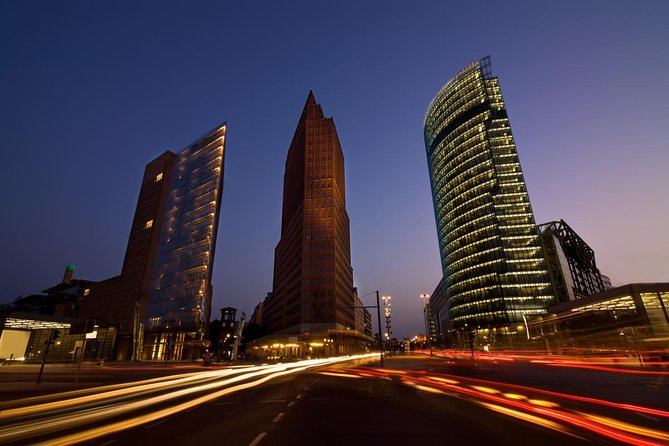
Starting at Potsdamer Platz and the Sony Center
The meeting point is at Potsdamer Platz 10, near the corner of Gabriele-Tergit-Promenade. This is a useful place to begin because Potsdamer Platz captures Berlin’s dramatic rebuilding.
The area was once split by the Berlin Wall and later became a major symbol of the reunified city. Today, its modern architecture gives you an immediate contrast with the older streets and monuments ahead. The Sony Center is part of this modern city picture, even though the stop itself is brief.
You have about 10 minutes here. That is enough for an explanation and orientation, but not a detailed architectural study. I would treat this as the opening chapter, not the main event. The guide sets up the city’s division and rebuilding before leading you toward places where the political story becomes more personal.
Checkpoint Charlie and the Cold War divide
The walk continues to Checkpoint Charlie, one of Berlin’s best-known Cold War sites. You spend about 10 minutes here, learning why this crossing became a symbol of the confrontation between East and West.
The location is valuable because it shows how an international conflict once shaped ordinary movement through the city. Berlin was divided for decades, and this checkpoint represented controlled passage between two political systems. A guide can help you understand the site beyond its familiar name and photo opportunity.
You should keep your expectations in check. Checkpoint Charlie is a short stop on a busy urban route, not a museum visit with a long display of original material. Its value here comes from the explanation and its place in the larger route. The guide connects it to the Brandenburg Gate, the Wall, and the city’s later reunification.
Hitler’s bunker site and the limits of what remains
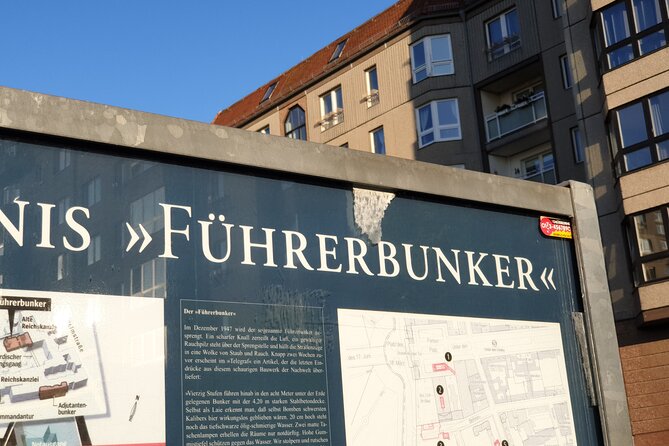
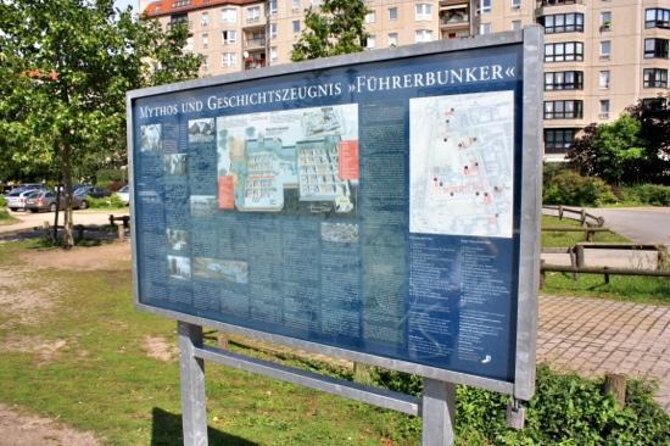
The stop called Hitler’s Bunker takes you to the place where the bunker once stood and where Hitler spent his final days. You do not enter a preserved underground bunker. The importance of the stop lies in understanding why the site looks as it does today and why there is no grand monument marking it.
That restraint is part of Berlin’s approach to difficult Nazi-era places. The guide explains the location, its role at the end of World War II, and the reasons for its present form. This is a short 10-minute stop, so expect a focused explanation rather than a long visit.
For me, this is one of the tour’s most useful lessons: historical places are not always dramatic ruins. Sometimes the challenge is recognizing the meaning of an ordinary-looking site. You will want to listen closely, since the physical clues are limited.
More History Walking Tours in Germany
- Berlin: Charité Hospital Walking Tour of Medical History
★ 4.9 · 276 reviews - Berlin Private Half-Day Walking Tour: Discover the German Capital’s History
★ 5.0 · 244 reviews - The History of Berlin: WWII PRIVATE Walking Tour With Locals
★ 5.0 · 209 reviews - Berlin: Historic Center Walking Tour with a Real Berliner
★ 5.0 · 134 reviews
The Holocaust Memorial and a difficult pause
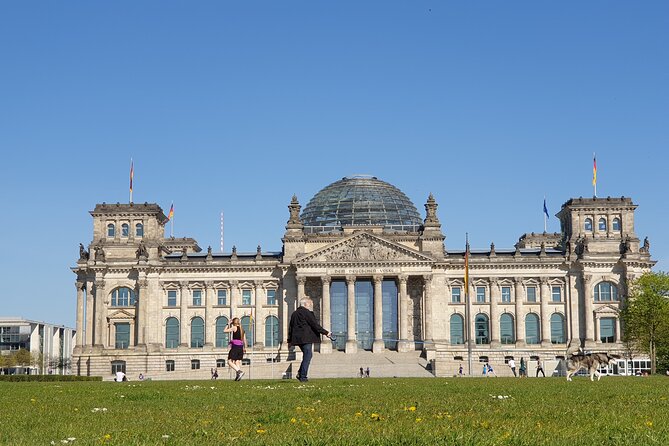
The Memorial to the Murdered Jews of Europe is the emotional center of the walk. Its field of concrete slabs invites you to move through a space that feels different from a conventional monument or museum.
The visit lasts about 15 minutes. The guide shares the story behind the memorial and explains its place in remembering the Holocaust, the greatest crime committed by the German state under Nazism. This is not a light sightseeing stop, and the guide’s tone matters.
The best part of this stop is the chance to pause and connect the political story to the people who were murdered. You are not simply being handed dates and names. You are being asked to consider how a modern capital remembers state-sponsored persecution.
Fifteen minutes is enough for an introduction, but not a full study of the memorial or the Holocaust. If this subject matters deeply to you, plan a separate visit to a museum or documentation center later. The walking tour gives you context, not a complete education.
Unter den Linden, Berlin’s changing royal avenue
Unter den Linden brings a different mood. This broad avenue once led toward the emperor’s palace, and the guide points out how its buildings reflect different periods of construction. You also hear about the damage left by war.
This 20-minute stretch is one of the longer stops, and rightly so. The avenue helps you read Berlin as a built record. Royal power, war damage, reconstruction, and modern public life are all visible along the same route.
I like this part because it slows the pace after the heavy subject of the memorial. You have time to look up, compare facades, and understand that Berlin’s story is not confined to formal memorials. The guide can also point out how the city’s architecture reveals which periods survived, which were rebuilt, and which were deliberately altered.
The walk is also a reminder that much of Berlin’s history is encountered from the pavement. You are not relying on a bus window. You see the proportions of the streets and the relationship between buildings as you move through them.
Bebelplatz and the memory of book burning
At Bebelplatz, the guide explains the Nazi book burning that took place here. The square also includes Humboldt University and the Catholic Cathedral, giving the stop a striking mix of intellectual, political, and religious associations.
You spend around 10 minutes here. That short visit works because the square itself is compact, while the story is powerful. Bebelplatz shows how censorship and propaganda were made public, not hidden away in some remote corner.
This is also a good place to ask questions. The guide’s role is especially useful when several layers of history sit side by side. A university, a cathedral, and the memory of a Nazi attack on ideas create a complicated setting that can be easy to overlook if you walk through alone.
The Brandenburg Gate and changing symbols
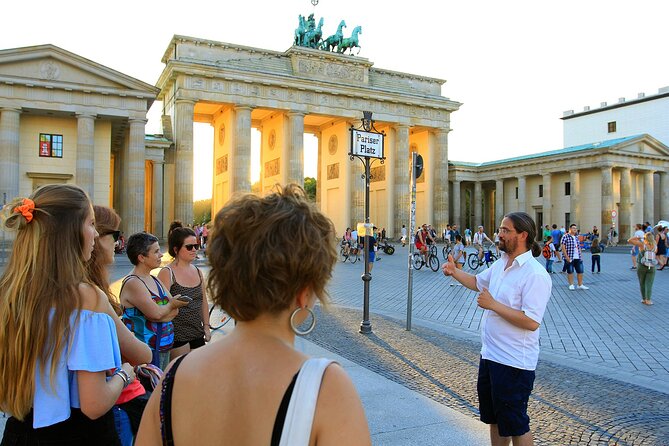
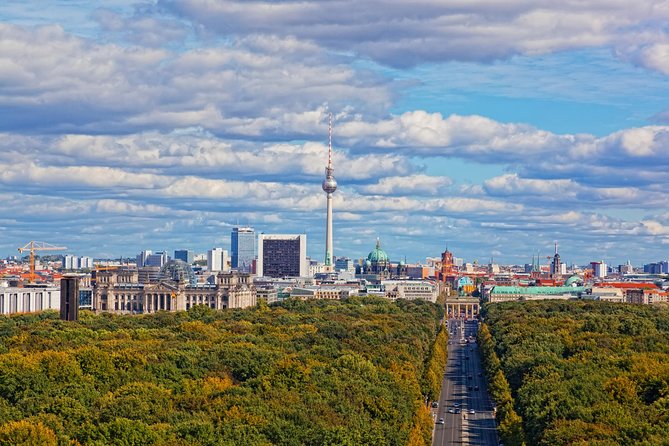
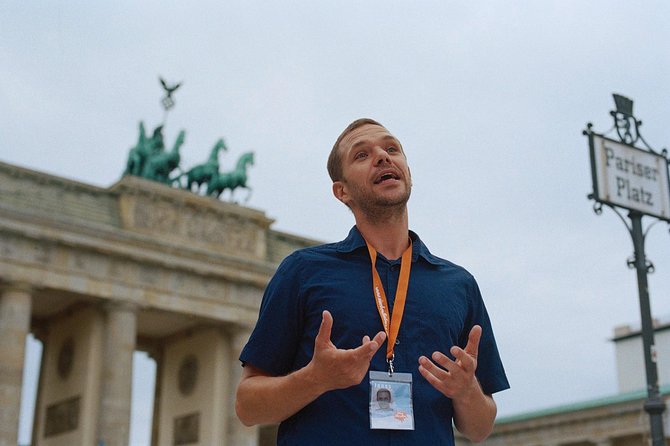
The Brandenburg Gate is one of Berlin’s essential sights, but the tour gives it more meaning than a quick photograph. The guide traces its role from a symbol of royal strength to a Cold War emblem and finally to one of the clearest symbols of German reunification.
The stop lasts about 10 minutes. That may sound brief, but the gate is a natural place to pull together the themes of the morning. Power, division, and unity all meet here.
You will also see why this monument is so often used to represent Berlin. Its design is instantly recognizable, but its political meaning has changed several times. The guide helps you notice that a landmark is not fixed forever. Its importance depends on what a city and its people have lived through.
Because this is one of Berlin’s most photographed locations, it can be busy. The tour is not designed as a long photography session. If you want quiet pictures, return on your own at another time.
Museum Island and the route’s final view
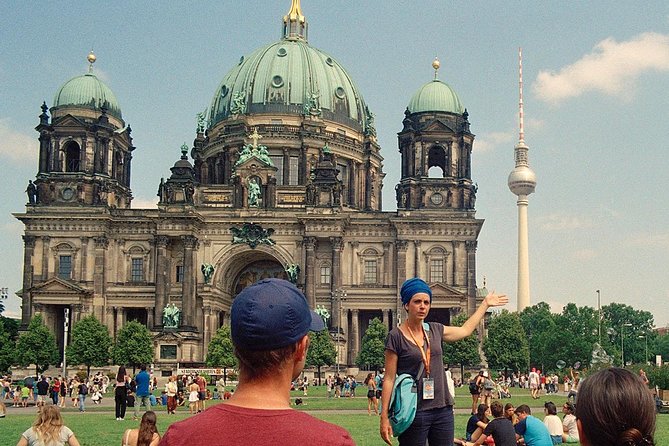
The walk concludes near Museum Island, close to the Berliner Dom and the reconstructed Humboldt Forum. This ending shifts attention from political trauma toward Berlin’s architectural heritage and its ongoing rebuilding.
The stop is listed at about 15 minutes. You receive a brief introduction rather than a museum visit, and admission to the museums is not part of the experience. The endpoint near Alexanderplatz is practical because you can continue sightseeing, find lunch, or use public transportation afterward.
There is one point to clarify: the route information places the Brandenburg Gate among the stops while also describing the end near Museum Island. Since the published route includes both locations, check the exact walking order with your guide at the start. Either way, the important point is that the tour connects the government quarter and historic center on foot.
The Berliner Dom and Humboldt Forum also show the city’s habit of rebuilding and reinterpreting its past. The guide can help you see this as part of a continuing debate about what Berlin should preserve, reconstruct, or present in a new form.
What $27.81 buys you
At $27.81 per person, this is a good-priced introduction to central Berlin. You are paying for about three hours of a professional French-speaking guide, local taxes, and a route that links several major landmarks. You are not paying for food, drinks, or transportation.
The value is strongest if you are visiting Berlin for the first time and want a clear foundation before exploring alone. A guide saves you from treating each site as an isolated attraction. You learn how Potsdamer Platz, Checkpoint Charlie, the bunker site, the Holocaust Memorial, and the Brandenburg Gate fit into one city story.
The price is less compelling if you prefer to move slowly, spend long periods inside museums, or stop for detailed photography. This is a walking overview, not a private tour or a museum ticket package.
The maximum group size is 25 people. That is small enough for a social walking group, but large enough that you may need to stay close to the guide. One useful criticism is the lack of audio receivers. Without them, hearing can be harder when the group spreads out or street noise rises.
Practical advice before you book
Wear comfortable shoes. The tour is completely on foot, and the route covers a substantial part of central Berlin. A moderate level of fitness is recommended.
Dress for the forecast, but prepare for changes. The tour runs in all weather conditions. Bring water, especially in warm weather, and consider a light rain layer rather than assuming the morning will stay dry.
Arrive ready to listen. Much of the value comes from the guide’s explanations at sites where the physical remains are limited. At the bunker location in particular, the story does more work than the view.
The tour operates in French, so it suits French-speaking visitors who want more than a basic orientation. If you are comfortable asking questions, do so. The guides are repeatedly praised for responding to individual questions and adjusting the pace to the group.
The 10 a.m. start is convenient. You should finish around lunchtime, although one group continued for three and a half hours. Keep the rest of the morning flexible rather than booking an exact appointment immediately afterward.
Free cancellation is available up to 24 hours before the start time. Changes or cancellations inside that window are not accepted for a refund.
Who should choose this walk?
I would choose this tour for a first visit, especially if you want Berlin’s major central sights explained in French. It also suits solo visitors, couples, and families with older children who can manage a serious subject and several hours of walking.
It is a good match for anyone who wants a human guide instead of reading a map or following an audio track. The guides’ warmth, humor, and willingness to answer questions are among the strongest parts of the experience.
I would look elsewhere if you need step-free sightseeing, dislike group walks, or want extensive museum time. The route requires moderate fitness, operates in all weather, and does not include transportation between sites. You should also know that the Holocaust Memorial and Nazi-era stops can be emotionally heavy.
Should you book the Berlin History Walking Tour?
Book it if you want a well-priced, French-language introduction to Berlin’s central story. The route covers an impressive number of important places in three hours, and the strongest guide qualities are clear explanations, good pacing, and an ability to connect past events with the city you see today.
Do not book it expecting entry into a preserved Hitler bunker, a museum tour, or a quiet private walk. You will be part of a group of up to 25 people, and listening may occasionally be harder without audio equipment.
For most first-time French-speaking visitors, I think the balance is favorable. Take the tour early in your stay, then return on your own to the Holocaust Memorial, Museum Island, or another site that deserves more time. That combination gives you both the citywide view and the chance to look closer.
FAQ
How long does the Berlin History Walking Tour last?
The tour lasts approximately three hours. One experience continued for about three and a half hours, so allow a little extra time if your schedule is tight.
What time does the tour begin?
The tour starts at 10:00 a.m.
Where does the tour start?
The meeting point is Potsdamer Platz 10, 10785 Berlin, Germany, at the corner of Gabriele-Tergit-Promenade.
Where does the tour end?
The tour ends near Museum Island at Museumsinsel, 10178 Berlin, close to Alexanderplatz.
Is the tour conducted in French?
Yes. The experience operates in French and includes a professional French-speaking guide.
Is transportation included?
No. Transportation to and from the attractions is not included. The experience is conducted on foot.
Does the tour include food or drinks?
No. Food and drinks are not included.
What happens if I need to cancel?
You can cancel for a full refund up to 24 hours before the experience begins. Cancellations or changes made less than 24 hours before the start time are not accepted for a refund.
Newest history tours we have reviewed in Berlin
- Berlin Food & Cultural Tour: Must-Try German & Berliner Classics★ 5.0 · 51 reviews
- Private Tour: Jewish Heritage Walking Tour of Berlin★ 5.0 · 29 reviews
- Small-Group Historical Bike Tour in Berlin★ 4.5 · 103 reviews
- Historic center of Berlin – Tour in Italian★ 5.0 · 143 reviews
- East Berlin Food & History Tour with Eating Europe★ 5.0 · 204 reviews
- Private Berlin WWII and Cold War History Tour with Local Expert Guide★ 5.0 · 28 reviews
- Berlin: Private Bike Tour of the Berlin Wall and Third Reich★ 5.0 · 23 reviews
- Where It All Began: Berlin’s Queer & Trans History Tour★ 5.0 · 27 reviews
History Walking Tours, compared.
History and Hauntings of Salem Guided Walking Tour
Read our review →
Freedom Trail History Small Group Walking Tour
Read our review →
Historic Charleston Guided Sightseeing Walking Tour
Read our review →
Tapas Walking Tour with Food, Wine, and History
Read our review →
Savannah History and Haunts Candlelit Ghost Walking Tour
Read our review →
A History of Terror – Belfast City Centre Walking Tour
Read our review →Browse the lists this tour appears in