
Review · HIROSHIMA HISTORY TOURS
Hiroshima: History of Hiroshima Group Walking Tour
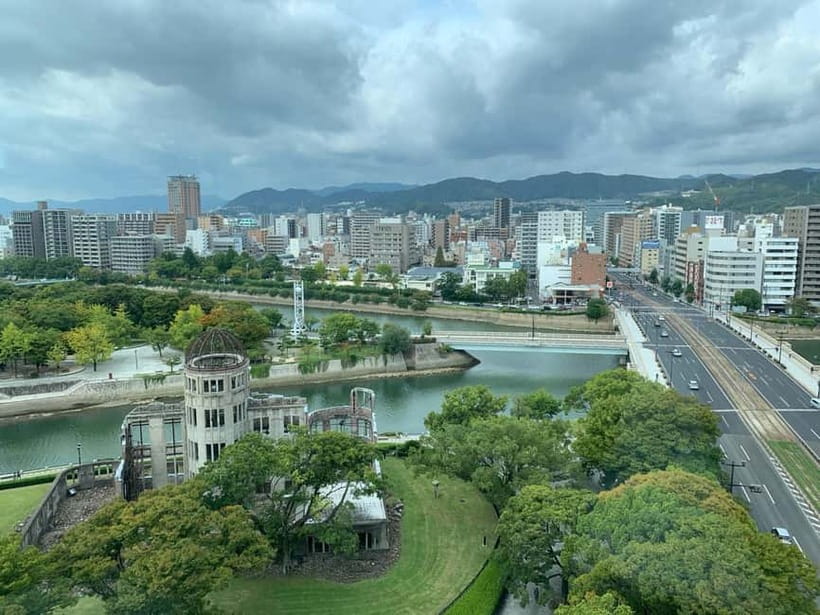
The Atomic Bomb Dome is the tour’s most powerful sight: a damaged building left near the center of the 1945 blast, now preserved as a reminder of the people who died and the city that rebuilt itself. From there, this two-hour walk connects Hiroshima’s memorials to the events of August 6, 1945, rather than leaving you to read isolated plaques on your own.
I like the way the tour combines famous places with quieter memorials, including the Korean Atomic Bomb Victims Cenotaph and the Atomic Bomb Memorial Burial Mound. I also like the guides’ personal connection to Hiroshima. Guides such as Cva, Moe, Tomas, Aya, and Sada have been praised for thoughtful storytelling, family memories, and patient answers. The main consideration is that a large group can make it harder to hear and stay close to the guide, especially outdoors.
Key points at a glance
- The route covers more than the Atomic Bomb Dome: You visit the Peace Gates, cenotaph, Peace Flame, Children’s Monument, burial mound, Peace Bell, hypocenter, and other memorials.
- Personal stories give the history a human scale: Some guides share family connections to survivors and local accounts passed down through Hiroshima families.
- The Hiroshima National Peace Memorial Hall is included: This indoor stop offers a quieter place for reflection and adds context beyond the outdoor monuments.
- The tour explains Hiroshima before and after 1945: You learn why the city was selected, what happened on August 6, and how Hiroshima became associated with peace.
- Two hours is a useful introduction: The route is focused enough for a first visit, though you may want extra time afterward for the Peace Memorial Museum.
- It is priced at $35 per person: For a guided walk through many memorials, with admission to the Peace Memorial Hall included, that is a fair price.
Why a guide helps at Hiroshima Peace Memorial Park
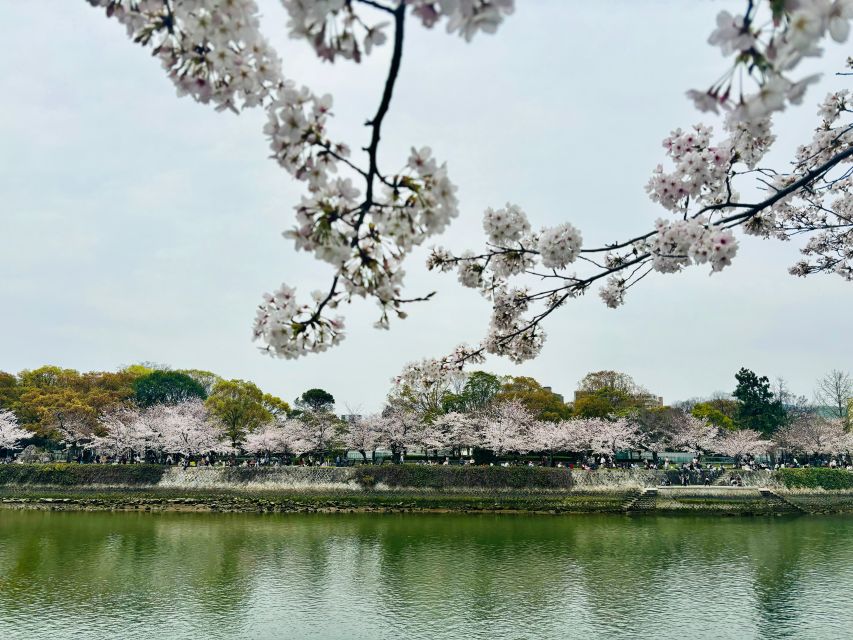
You can walk through Hiroshima Peace Memorial Park alone, but the memorials do not always explain how they connect. A short inscription may name a monument without telling you why it was placed there, whose story it represents, or how it fits into Hiroshima’s wider response to the bombing.
I find the guided format especially useful here because the park contains many symbols. The Peace Flame, Children’s Monument, cenotaph, bells, fountains, and burial sites are not simply scenic stops. Each one reflects a different part of the city’s memory, from mourning and prayer to the hope of ending nuclear weapons.
The tour also looks beyond the moment of the blast. You hear about Hiroshima before the bombing, why it became a target, what happened to people nearby, and how the city rebuilt afterward. That broader frame matters. Without it, the Atomic Bomb Dome can seem like a single dramatic ruin. With it, you begin to understand the city as a living place shaped by loss, recovery, and a continuing message of peace.
The subject is painful, and the best guides handle it without turning the visit into a performance. Cva has been praised for combining serious information with warmth and occasional humor. Moe, Tomas, Nisa, Sada, and others have also been described as careful, engaging, and respectful. Your guide will vary, but the tour’s strength is clearly its human approach.
More History Walking Tours in Japan
- Tokyo: Imperial Palace and Shogun Historical Walking Tour
★ 5.0 · 2,251 reviews - Kyoto Gion: 2-Hour Geisha Culture & History Walking Tour
★ 5.0 · 1,186 reviews - Tokyo Castle & Imperial PalaceーShogun Walking Tour
★ 4.7 · 1,068 reviews
Beginning at the Gates of Peace
Meet your guide in front of the Gates of Peace, beside the Italian restaurant Mario. This is a practical starting point because the gates introduce the tour’s central theme before you reach the most famous monuments.
From here, you begin on foot through the memorial grounds. Wear comfortable shoes. The route is outdoors for much of the time, and the tour runs in rain, cold, or heat unless conditions require a change. Weather-appropriate clothing will make a real difference, since you will pause at several open-air sites.
The first stop is Mother and Baby in the Storm. Its title alone signals the kind of personal stories you will encounter. Rather than beginning with military strategy or statistics, the route moves quickly toward the experiences of civilians and families caught in the bombing.
That choice sets the tone. I appreciate tours that explain large events through individual lives, and this walk repeatedly returns to that approach.
Prayer Fountain and the search for water
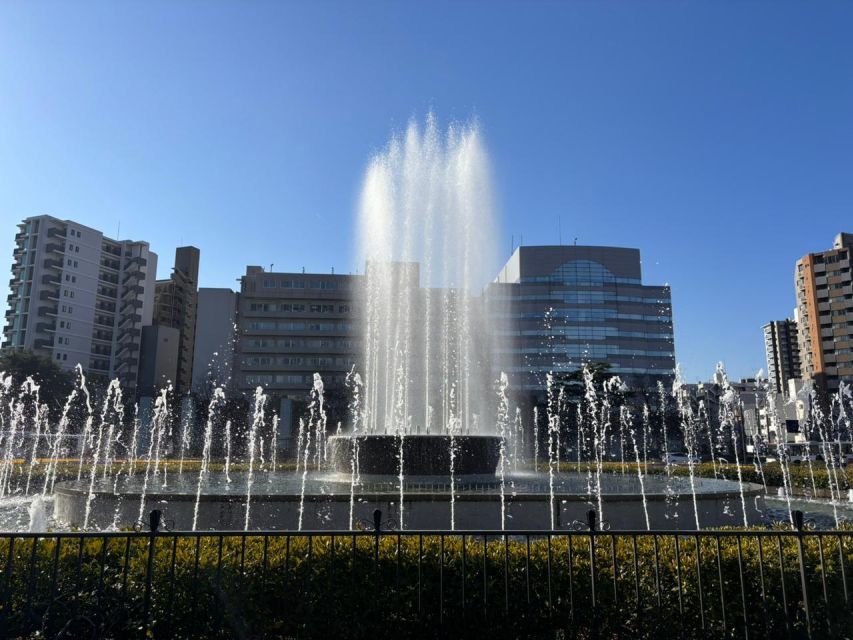
The Prayer Fountain is a short but important stop. The guide explains its meaning while you look across the park and move toward the main memorial area.
Water carries strong meaning in accounts of the bombing. People who suffered burns and injuries often searched for it, so a fountain dedicated to prayer and remembrance connects the physical needs of survivors with the spiritual purpose of the park.
This is also one of the places where an outdoor guide can add useful detail. You are not simply taking a photo of a fountain. You are learning why water appears again and again in Hiroshima’s memorial spaces.
The cenotaph and the Flame of Peace
The Hiroshima Victims Memorial Cenotaph is one of the park’s central monuments. Here, your guide helps you understand the memorial’s role in honoring those who died, including people whose suffering continued long after August 6.
The Peace Memorial Park is dedicated to victims of the nuclear attack, both direct and indirect. That distinction matters. The bombing killed people immediately, but radiation exposure, injuries, displacement, and long-term illness affected many more lives.
A short walk brings you to the Flame of Peace. The flame is one of the park’s clearest symbols, and the guide connects it to Hiroshima’s call for an end to nuclear weapons. I like the pacing here: the tour moves from a personal monument to a citywide and global message without losing the human story.
You will spend only a few minutes at some stops. That can feel brief, but it allows the route to include a wide range of memorials within two hours.
Same streets, a different century:
- Kyoto: Fushimi Inari, Kinkakuji, Bamboo Grove 1 Day Bus Tour
★ 4.8 · 4,316 reviews - World Heritage Shirakawa-go and Experience Tours from Kanazawa
★ 5.0 · 4,049 reviews - World Heritage Kyoto & Nara Uji Authentic Matcha Experience
★ 5.0 · 1,573 reviews - Kanazawa: World Heritage Shirakawa-go Morning Guided Tour
★ 4.9 · 988 reviews
Fifteen quiet minutes at the National Peace Memorial Hall
The Hiroshima National Peace Memorial Hall for Atomic Bomb Victims is the main indoor portion of the walk. Admission is included, and the group spends about 15 minutes here.
This stop gives you a break from the open park and a chance to process what you have heard. The hall is devoted to remembering atomic bomb victims, and the guide provides context before allowing time for quiet reflection.
I consider this inclusion a real value at $35. The tour is not only an outdoor circuit of monuments. You also enter a place designed specifically for remembrance, which adds emotional and historical weight to the walk.
The itinerary allows about 20 minutes at one unspecified stop with free time. That flexible section may give you room to look around, ask questions, or absorb the material without being hurried. Since the exact use of this time can depend on the guide and group, do not expect every minute to follow an identical script.
Children’s Peace Monument and the meaning of remembrance
The Children’s Peace Monument is a photo stop and guided visit lasting about 10 minutes. It is one of the park’s best-known memorials and is closely associated with children affected by the bombing.
Your guide links the monument to victim testimony and the wider story of Hiroshima’s children. This is a particularly important part of the walk for families, though the material can be difficult for younger children. Parents should decide how much detail is appropriate for their children before booking.
The monument also shows how Hiroshima’s remembrance has been shaped by ordinary people. The park is not made up only of government memorials. Children, families, schools, and local communities have all contributed to the city’s peace message.
Burial mound and Korean victims’ cenotaph
The Atomic Bomb Memorial Burial Mound is a quieter stop. It does not have the same visual fame as the Dome, but it helps you understand the scale of the deaths and the difficulty of identifying and returning every victim.
The Korean Atomic Bomb Victims Cenotaph adds another layer often missed on a quick self-guided visit. Korean people were among those affected by the bombing, and this memorial recognizes their suffering. I value its place on the route because it widens the story beyond a single national viewpoint.
These lesser-known sites are where a guide earns the fee. You might pass them on your own without knowing what they represent. Here, the tour connects each place to the people remembered there.
The Peace Bell and the route’s final monuments
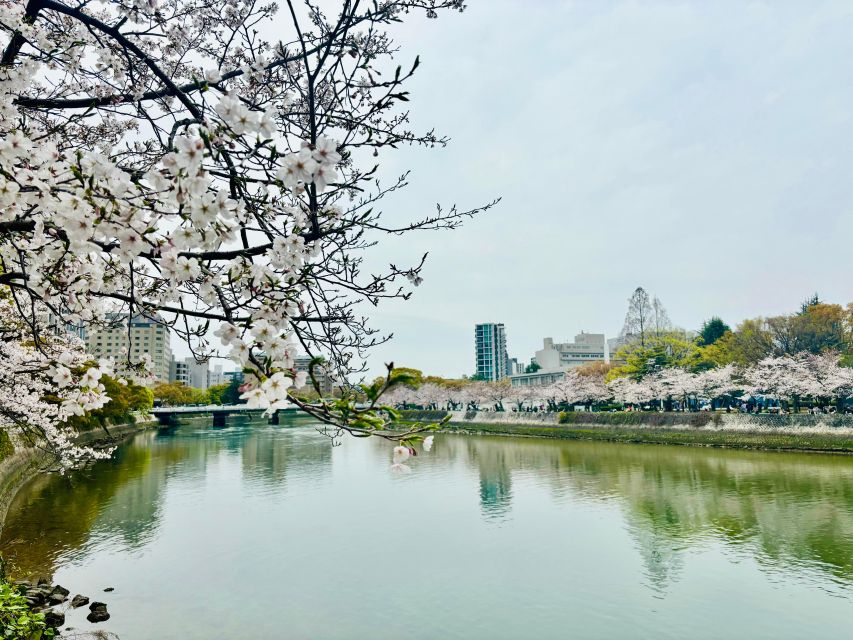
The Peace Bell is another photo stop and guided visit. It invites participation and reflection, but the guide also explains its place within Hiroshima’s broader call for peace.
By this stage, you have seen memorials for victims, children, families, foreign residents, and the city as a whole. The route does not present the park as a collection of unrelated objects. It gradually builds a picture of how Hiroshima remembers.
The tour then continues to the Atomic Bomb Dome. This is usually the moment many people have been waiting for, but it is more meaningful after the earlier stops.
Seeing the Atomic Bomb Dome after the memorials
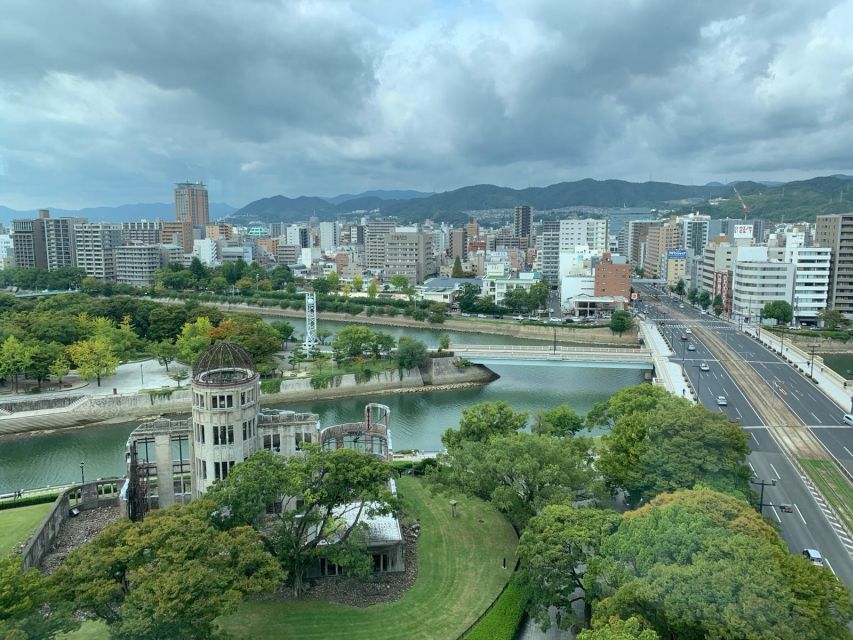
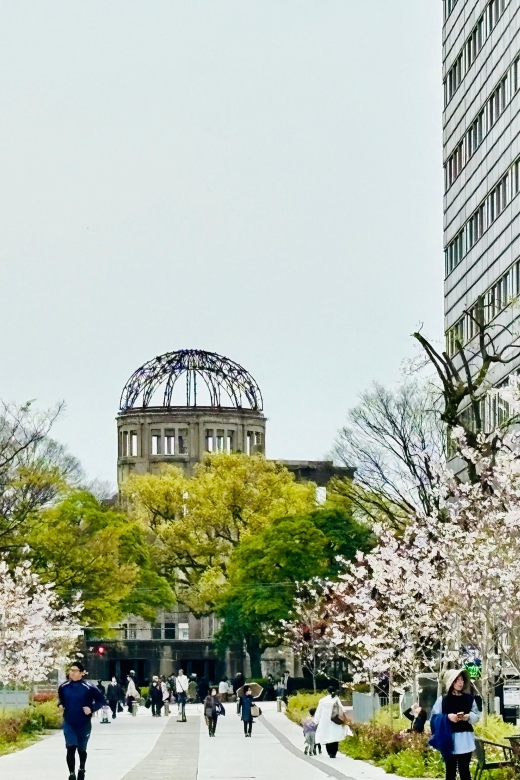
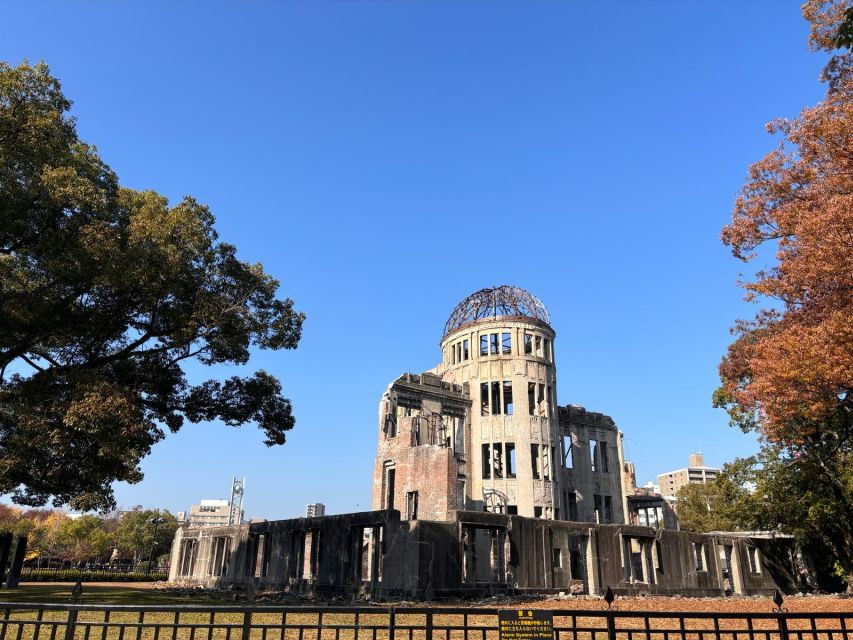
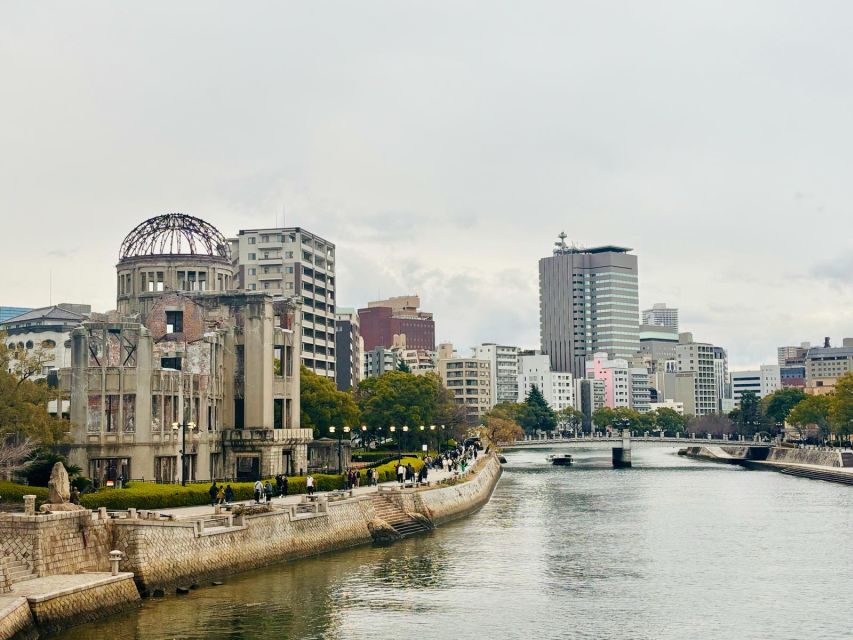
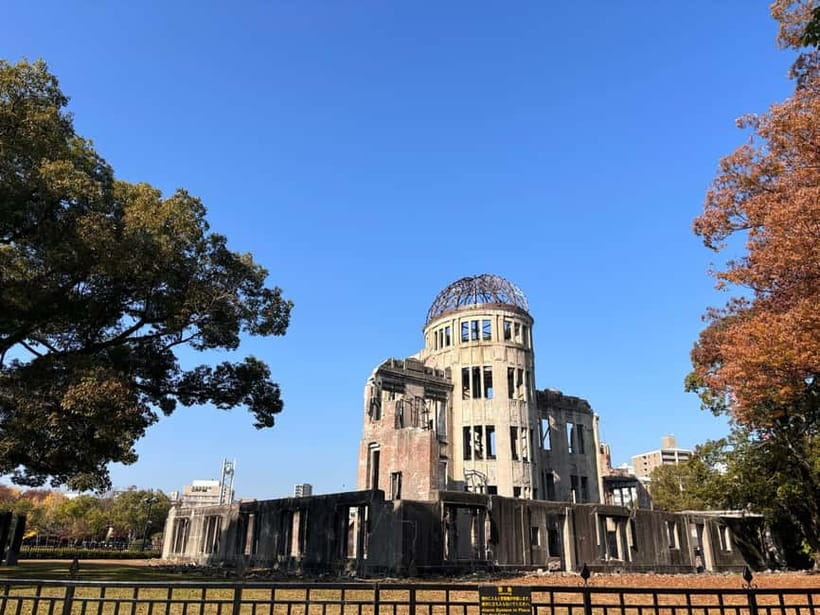
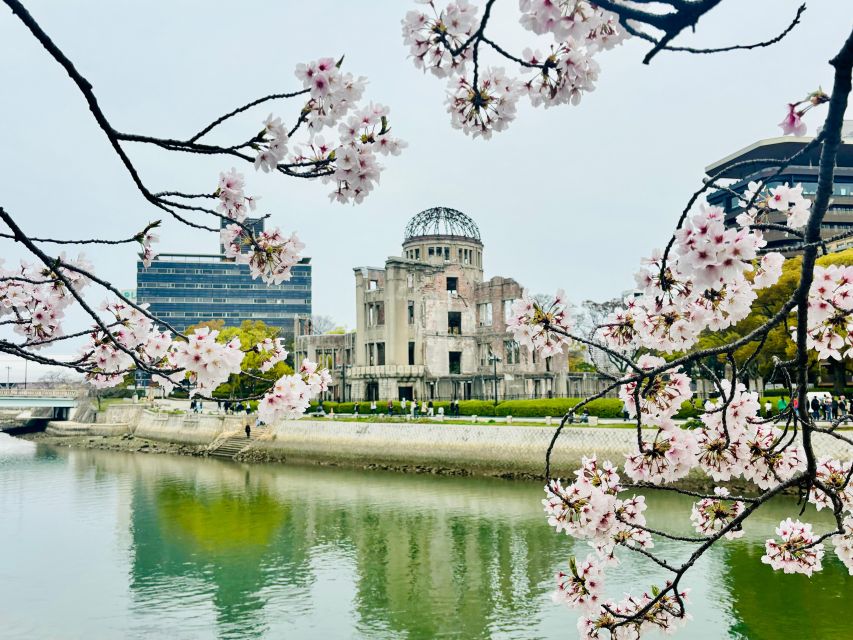
The Atomic Bomb Dome was the only structure left standing near the blast center, and its damaged frame is now one of Hiroshima’s most recognizable images. Your guide explains what the building was before the bombing and why its remains were preserved.
I prefer seeing it later in the route rather than at the beginning. After hearing about the victims and the city’s memorial work, you look at the Dome differently. It is not just a ruin for photographs. It becomes a physical marker of the destruction and a reminder that the city chose to preserve evidence of what happened.
You have about 15 minutes here for a guided visit, sightseeing, and photographs. The area can be emotionally heavy, so do not expect a light sightseeing stop. The guide’s tone matters. Several guides, including Cva and Moe, have been praised for giving people room to reflect instead of rushing through the subject.
The hypocenter and the end of the walk
The tour finishes at the Hiroshima Atomic Bomb Hypocenter Monument, the point identified as the center of the explosion. This final stop gives the route a precise geographic ending.
The contrast is striking. Much of the walk takes place among broad park paths, trees, water, and memorials. The hypocenter brings the event back to one specific place. Your guide explains what happened there and how the blast affected the surrounding area.
Ending here also gives you a natural transition to the rest of your Hiroshima visit. You may want to continue to the Peace Memorial Museum, revisit a monument, or simply take time away from the memorial grounds before your next activity.
How the guide affects the experience
The guide is the most important variable. The company uses English-speaking guides with backgrounds that include Tourism, Anthropology, History, and Peace Studies. Some have master’s or doctoral degrees, while others bring local knowledge and family stories.
The guide names that appear most often in the supplied material include Cva, Moe, Tomas, Toma, Aya, Nisa, Sada, Ali, Han, Shiva, Syed, and Wajid. Do not assume you can select a particular guide unless the booking page allows it.
Cva is especially strong at drawing people into the discussion, asking questions, and making space for different perspectives. Moe and Aya bring local family connections to the bombing. Tomas and Toma are described as passionate and clear, while Sada is noted for adding useful information about Hiroshima’s culture, food, recovery, and present-day life.
The English level has been praised across the guides, but speaking style will naturally vary. If you have a detailed question about wartime policy, survivor testimony, or the city’s reconstruction, ask it during the walk. The guides are encouraged to answer questions, and several people specifically valued the time given to discussion.
Pace, group size, and accessibility
Two hours is enough for a strong introduction, but not enough to cover every part of Hiroshima’s wartime and postwar story. The walk covers many stops, with most visits lasting between five and 15 minutes. It moves steadily without feeling like a race when the group stays together.
Group size deserves attention. One account described a group that was too large for comfort, even though the guide handled it well. In a larger group, you may stand farther from the guide, wait longer for everyone to gather, or have fewer chances to ask questions. If personal discussion is your priority, a smaller departure would be preferable when available.
The activity is listed as wheelchair accessible. You should still expect an outdoor walking route through a public memorial park and confirm any personal mobility needs at booking.
The tour is offered in English only. Bring comfortable shoes and clothing suited to the weather.
Is $35 a fair price?
At $35 per person, I see this as good value for a first visit to Hiroshima’s memorial district. You receive two hours with a live guide, a route through many significant sites, and entry to the Hiroshima National Peace Memorial Hall.
The value is not in the number of monuments alone. It comes from the links between them. A self-guided walk costs less, but you may miss the Korean victims’ memorial, burial mound, or the meaning behind the Peace Flame and Children’s Monument.
The tour does not replace a longer visit to Hiroshima’s museums. You will not have time for extended exhibits, a full research session, or a slow private visit at every monument. Think of it as a guided foundation. You pay to understand the ground beneath your feet, then decide where to spend more time.
Flexible booking also helps. You can cancel up to 24 hours before the start for a full refund, and you can reserve now and pay later. Availability and starting times vary, so check the date that suits your schedule.
Who should book this Hiroshima walk?
I would book this tour if you are visiting Hiroshima for the first time, want clear English explanations, or prefer to understand a memorial site through stories rather than plaques alone.
It is also a good fit if you want to learn about Hiroshima before, during, and after the bombing. The route makes room for personal testimony, local family connections, and the city’s modern peace message.
You may prefer exploring independently if you need a very slow pace, want to spend long periods at each monument, or already have a detailed plan for the Peace Memorial Park. A large group can also be a drawback if you want an intimate conversation.
For most visitors, though, the walk gives structure to a difficult place without flattening it into a simple lesson. It leaves you with a clearer sense of what happened, who was affected, and why Hiroshima continues to speak about peace.
Final verdict: a worthwhile first step in Hiroshima
I recommend this tour for anyone who wants a thoughtful introduction to Hiroshima’s memorial sites. Its best features are the wide route, the inclusion of lesser-known monuments, the Peace Memorial Hall admission, and guides who explain the past through individual lives.
Book it early in your Hiroshima stay, then leave time for the Peace Memorial Museum or a second, quieter walk through the park. If you want context, human stories, and a route that reaches beyond the Atomic Bomb Dome, $35 is a sensible spend.
FAQ
How long does the Hiroshima history walking tour last?
The tour lasts two hours.
Where does the tour begin?
Meet your guide in front of the Gates of Peace, next to the Italian restaurant Mario.
Where does the tour finish?
The walk finishes at the Hiroshima Atomic Bomb Hypocenter Monument.
Is the Hiroshima National Peace Memorial Hall included?
Yes. Admission to the Hiroshima National Peace Memorial Hall for Atomic Bomb Victims is included.
What language is the tour offered in?
The tour is conducted in English with a live English-speaking guide.
Is the tour wheelchair accessible?
Yes, the activity is listed as wheelchair accessible.
Newest history tours we have reviewed in Japan
- Authentic Sapporo: Nijo Market Seafood Lunch & History Tour★ 4.8 · 20 reviews
- Asakusa: 3.5-hour Big-picture History Walk★ 4.7 · 39 reviews
- Asakusa: A Big-picture History Walk to Know Japan★ 4.6 · 77 reviews
- 2.5-Hour Nagoya Tour: Castle History, Local Food & City View★ 4.5 · 36 reviews
- 1-Day Tour from Nagoya: Hiking the Historic Nakasendo Trail★ 4.9 · 34 reviews
- Tokyo: Nikko World Heritage Private Day Trip Hotel Pick-up★ 4.8 · 145 reviews
- 2.5 Hour Private History and Culture Tour in Himeji Castle★ 5.0 · 185 reviews
- From Tokyo: Nikko World Heritage Sight Full Day Private Tour★ 4.9 · 127 reviews
History Walking Tours, compared.

History and Hauntings of Salem Guided Walking Tour
Read our review →
Freedom Trail History Small Group Walking Tour
Read our review →
Historic Charleston Guided Sightseeing Walking Tour
Read our review →
Tapas Walking Tour with Food, Wine, and History
Read our review →
Savannah History and Haunts Candlelit Ghost Walking Tour
Read our review →
A History of Terror – Belfast City Centre Walking Tour
Read our review →Browse the lists this tour appears in