

Review · ATHENS HISTORY TOURS
Athens: History of Rebellion Walking Tour
Athens is more than ancient temples and marble ruins. This walking tour follows the city’s history of rebellion, from resistance under Ottoman rule to the protests and social movements that still shape Athens today. You move from Monastiraki through Syntagma and Kolonaki, then finish in Exarchia, the city’s best-known center of activism.
I like the way the tour connects famous places, such as Parliament and the Tomb of the Unknown Soldier, with lesser-known stories. I also like the small-group format and Maelle’s personal, thoughtful style, which encourages questions rather than simply reciting dates. The main drawback is clear: you walk and stand for two to three hours, and the subject matter can be politically charged.
Key points to know before booking
- Modern Athens takes center stage: This tour focuses on the last 200 years, not mainly on classical Greece.
- Exarchia is the final act: You explore its anarchist, artistic, refugee, LGBT+ and community activism.
- Maelle leads with discussion: She explains politics, culture and social movements in English or French.
- The route links major squares: Monastiraki, Syntagma and the Parliament become chapters in a larger story.
- Small groups suit curious minds: You have room to ask questions and discuss difficult subjects.
- Plan for a lot of standing: Comfortable shoes, water, sunscreen and a hat are sensible.
Why this tour gives Athens a different face
Many first visits to Athens focus on antiquity. That makes sense, but it can leave a large part of the city unexplained. This tour looks at how modern Greece developed, how ordinary people resisted oppression, and why political arguments still matter in daily Athenian life.
You begin with the Greek struggle against Ottoman rule, then move through the creation of the modern Greek state and the popular movements that challenged fascism, violence and repression. The tour also reaches present-day debates around social justice, policing, gentrification and community life.
I find that approach useful because it puts the city’s streets into context. Syntagma is not just a grand square for photographs. Exarchia is not just a neighborhood covered in graffiti. Each place becomes part of a continuing story about who gets heard, who controls public space and what freedom means.
The tour is not designed for visitors who want only a cheerful overview of Athens. It asks you to think. It may leave you with more questions than answers, which is often a good sign on a city walk.
More History Walking Tours in Athens
- Acropolis, Parthenon & Athens Old City Heritage Walking Tour
★ 4.5 · 876 reviews - Ancient Athens for Kids 4-Hour Private Walking Tour
★ 5.0 · 66 reviews - Private Athens Walk: Ruins, Markets & Local Stories
★ 5.0 · 41 reviews
Starting at Monastiraki and the Pantanassa Church
Meet in Monastiraki Square, in front of Pantanassa Church. Look for a guide holding a sign marked Athens City of Rebellion. Monastiraki is an easy starting point, but it is also a fitting one: the square brings together ancient remains, Ottoman-era traces, churches, shops, food stalls and modern city life.
The opening section places Athens under Ottoman rule and introduces the resistance that eventually fed into the Greek Revolution around 200 years ago. I like beginning here because the neighborhood makes it easy to see that Athens has never been only one thing. Ancient, Ottoman, religious, commercial and political layers sit close together.
The formal stop at Monastiraki is short, about five minutes, but the wider area helps set the tone. This is not a tour devoted to architectural detail. Buildings and squares are used as evidence for a story about power and change.
Walking toward Syntagma through central Athens
From Monastiraki, the route passes the Metropolitan Church of Athens and continues toward Syntagma Square. Along the way, you may pause at a less familiar site for a guided explanation. The precise identity of the hidden stops is not given in advance, so part of the appeal is discovering how Maelle connects ordinary-looking places with major events.
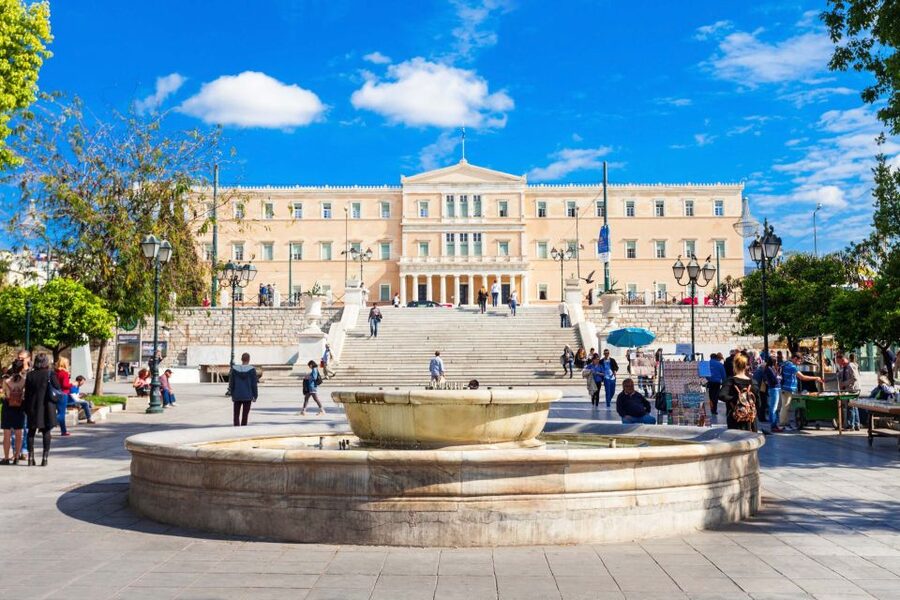
Syntagma is the political heart of modern Athens. The tour treats it as a place where popular pressure has repeatedly met official power. You learn about individuals who became symbols of resistance, as well as large public movements in which Athenians demanded freedom and political change.
This is one of the strongest parts of the experience for visitors who know the Acropolis but want to understand the modern Greek state. The square becomes more than a traffic hub or a place to watch the guards. It becomes a stage for public protest, national conflict and civic life.
Expect about ten minutes at Syntagma, followed by a similar amount of time near the Hellenic Parliament. The stops are not long, so listen closely and ask questions while you can. This is a walking conversation, not a series of extended lectures.
Parliament and the Tomb of the Unknown Soldier
At the Hellenic Parliament, Maelle explains the building’s place in modern political life. The nearby Tomb of the Unknown Soldier adds another layer, linking national memory, military sacrifice and public ceremony.
You get a short guided visit at the tomb, with time for sightseeing. The stop is useful because it shows how governments and societies choose to remember conflict. It also provides a contrast with the grassroots activism discussed later in Exarchia.
Do not expect a formal guard-changing tour to be the main event. The focus here is the political meaning of the site and the people who have gathered around it. If you are mainly interested in ceremonial details, this portion may feel brief. If you want to understand why Syntagma has become a center of protest, it should be more rewarding.
More History Walking Tours in Greece
- Athens:Acropolis – Historical Center Walking Tour in Spanish
★ 5.0 · 32 reviews - Corfu: History and Culture Walking Tour
★ 4.9 · 55 reviews
Kolonaki and the Academy of Athens
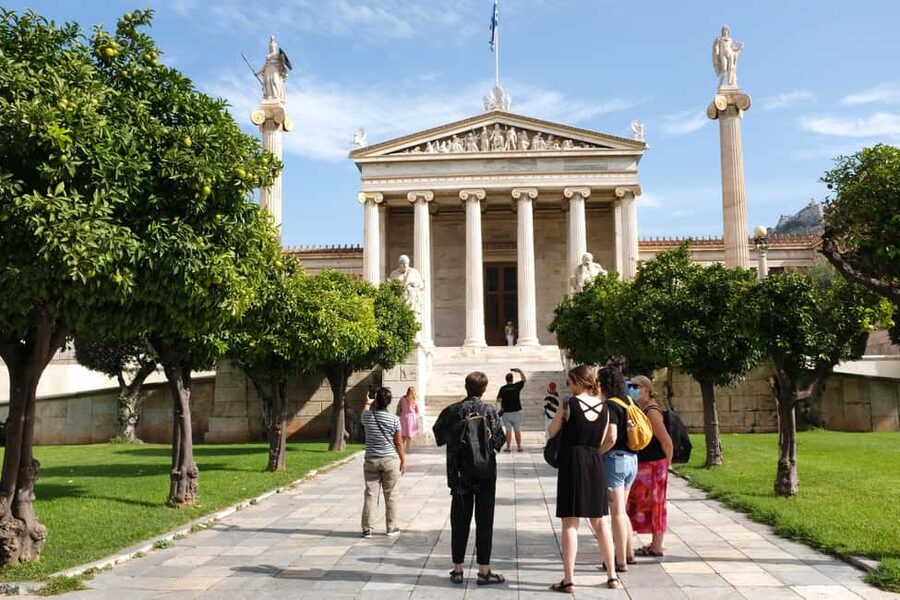
The route passes through Kolonaki before reaching the Academy of Athens. Kolonaki is associated with a different side of central Athens, and walking through it helps broaden the picture beyond protest squares and activist streets.
At the Academy, you get another guided stop and a chance to connect institutions, education and national identity with the wider story of modern Greece. The tour does not treat the city as a collection of isolated attractions. Instead, it asks how official institutions and popular movements have influenced one another.
This section also helps break up the political intensity of the earlier stops. You are still walking through central Athens, but the surroundings shift before the tour turns toward Exarchia. For me, that change makes the final section feel like a progression rather than a sudden jump.
Entering Exarchia, Athens’ center of dissent

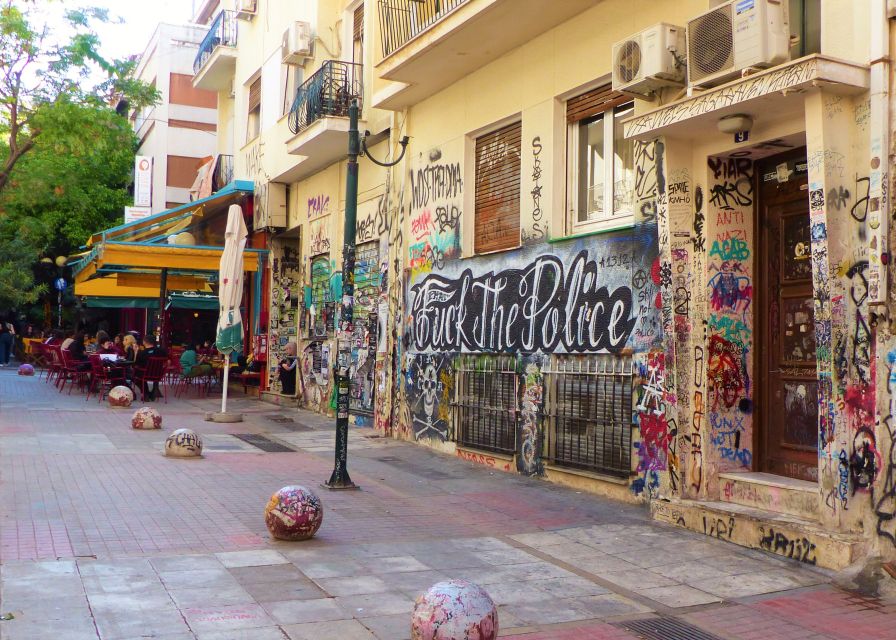
Exarchia is the tour’s main destination and its most distinctive part. The neighborhood is presented as a home for anarchists, artists, refugees and the LGBT+ community, as well as a place where residents and activists have fought over policing, gentrification and the future of community life.
You should come here with an open mind. Exarchia is not presented as a polished attraction, and the tour does not reduce it to colorful walls or edgy photo stops. Maelle explains how the area’s political identity developed and why many residents see it as a living community rather than a product to be packaged for visitors.
The route includes several guided pauses in Exarchia, including a short stop at Exarchion Square. There are also two lesser-known or undisclosed stops. These moments may focus on local activism, art, social movements or the way public space is used. The exact details can vary, so the value lies in the conversation and the connections Maelle makes.
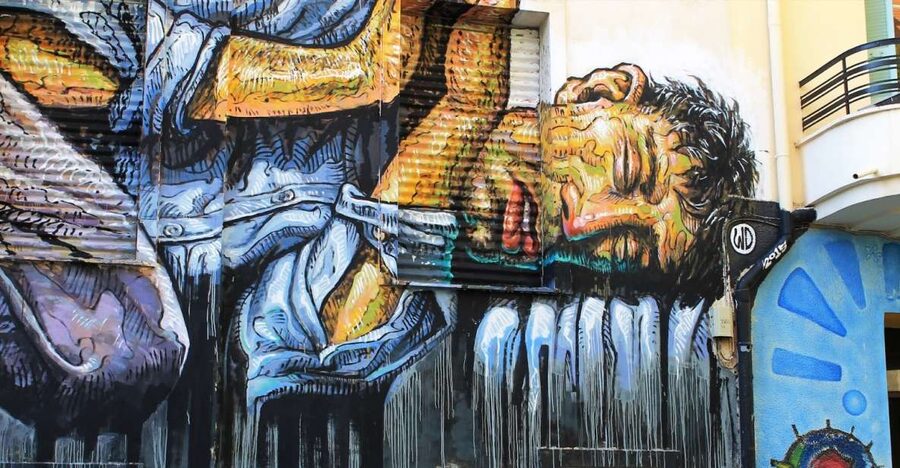
Street art is part of the experience, but it is not treated as decoration alone. You may discuss how a particular image or artist reflects political ideas, resistance or local identity. That turns the walls into part of the conversation, rather than a backdrop for photographs.
What Maelle adds to the experience
Maelle is repeatedly praised for combining clear explanations with warmth, humor and empathy. Those qualities matter here because the subject includes painful and divisive issues. A guide can easily make this kind of tour feel like a political lecture. Maelle’s approach is more interactive, with questions that invite you to think critically about what you are seeing.
I especially value the way she places events in order. Modern Greek history can feel confusing when encountered in scattered fragments. The tour helps connect the Ottoman period, the Greek Revolution, later struggles against fascism and violence, and present-day activism.
Maelle also offers practical suggestions for the rest of your stay. These can include places to eat, shopping areas, sights in Athens and ideas for other Greek islands. That advice is a useful bonus, especially if you take the tour near the start of your visit. Several people who enjoyed the experience wished they had done it earlier, since it gave them a better framework for the rest of Athens.
The language options are English and French. Private and small-group formats are available, which should suit you if you prefer conversation over a large crowd. A smaller group also makes it easier to ask about politics, street art, daily life and anything that has caught your eye.
How much walking and standing to expect
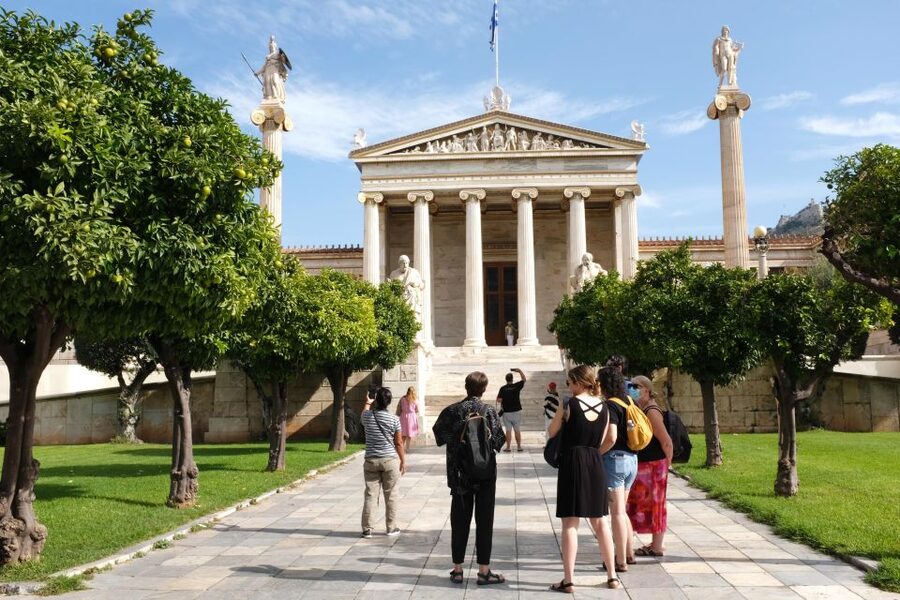
The activity lasts about two and a half hours and is entirely on foot. The supplied information says it is not suitable for people with mobility impairments. Even if you walk comfortably, remember that the tour includes repeated standing pauses in busy public areas.
Wear supportive shoes. Bring water, sunscreen and a sun hat, especially in warm weather. There is no need to carry special equipment, but you should arrive ready to walk through central Athens rather than sit for long stretches.
The route begins in Monastiraki and is described in the stop-by-stop plan as finishing at Plateia Exarcheion. The meeting information also says the activity ends back at the meeting point, so I would confirm the exact finish arrangement when booking. Either way, plan your next activity with a little flexibility rather than scheduling something immediately afterward.
Price, group size and overall value
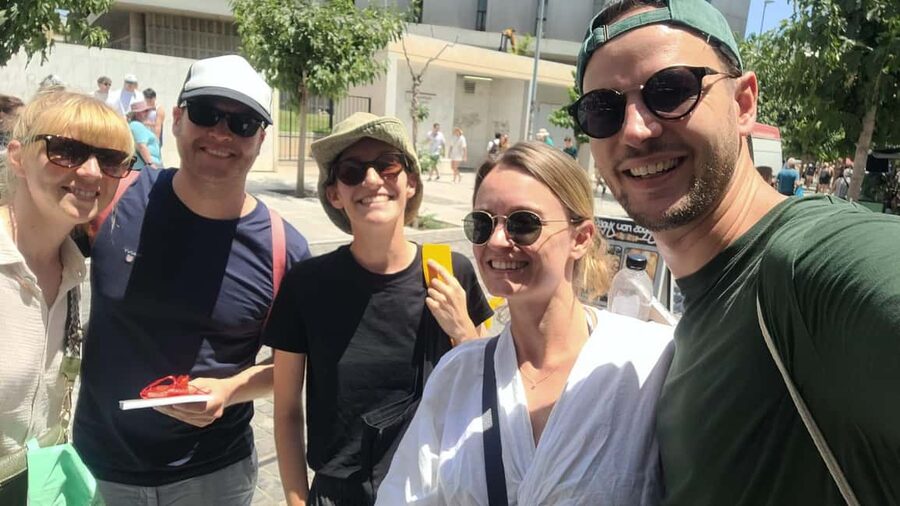
At $44.04 per person, this costs more than a basic general-interest city walk, but it offers a more focused subject. You are paying for a two-and-a-half-hour guided conversation about modern Greece, political resistance and a neighborhood many standard tours barely explain.
The value is strongest if you are interested in history, politics, social justice, culture or contemporary Athens. It is also a good complement to an Acropolis visit. Ancient Greece tells one part of the country’s story. This walk helps explain the modern state and the arguments that continue to shape it.
The value is weaker if you want a broad introduction to every major landmark. You will pass important places, but you will not receive a full archaeological tour of Athens. You also should not expect entry into major museums or monuments. The experience is about public spaces, local context and conversation.
Private and small-group availability may make the price easier to justify if you want a more personal exchange. The booking terms also allow cancellation up to 24 hours in advance for a full refund, and you can reserve now and pay later, which gives you some flexibility.
Who should book this Athens walking tour?
I would recommend it to you if you:
- Want modern Greek history rather than another ancient-world overview
- Enjoy asking questions and discussing political ideas
- Are curious about Exarchia and its activist identity
- Want to understand Athens beyond its famous monuments
- Prefer a private or small-group walk
- Like tours that include local food and sightseeing suggestions
I would think twice if you dislike political subjects or want a purely neutral, quick sightseeing circuit. The tour has a clear interest in resistance movements and social justice. That perspective is part of its appeal, but it may not suit every visitor.
You should also reconsider if standing and walking for several hours is difficult. The tour moves through central streets and public squares, with no indication of regular seated breaks.
Should you book the History of Rebellion Walking Tour?
Book it if you want the Athens that sits behind the postcard. The route connects Monastiraki, Syntagma, Parliament, the Academy and Exarchia, but its real purpose is to show how people have challenged authority and shaped the city around them.
I would choose this tour early in a visit, not on the final day. Maelle’s explanations can change how you see the city, and her suggestions for food and further sightseeing may help with the rest of your plans. At $44.04, it is fair value for a focused, personal introduction to modern Athens.
Skip it only if your main goal is ancient archaeology, classic monuments or a light sightseeing stroll. For anyone interested in the people, conflicts and ideas behind contemporary Greece, this is one of the more useful ways to spend two and a half hours in Athens.
FAQ
Where does the tour begin?
It begins in Monastiraki Square, in front of Pantanassa Church. Your guide will carry a sign that says Athens City of Rebellion.
Where does the tour finish?
The stop-by-stop route finishes at Plateia Exarcheion. The meeting information also says the activity ends back at the meeting point, so confirm the exact return arrangement when booking.
How long does the tour last?
The tour lasts two and a half hours. Starting times depend on availability.
What languages are available?
The tour is offered in English and French.
Is this a private tour?
Private and small-group options are available.
What should I bring?
Bring comfortable shoes, water, sunscreen and a sun hat.
Is the tour suitable for people with mobility impairments?
No. The activity is listed as unsuitable for people with mobility impairments, and you should expect extended walking and standing.
Can I cancel for a refund?
Yes. You can cancel up to 24 hours in advance for a full refund. You can also reserve now and pay later.
Newest history tours we have reviewed in Athens
- Athens: The History of Greek Mythology Private Tour★ 4.7 · 53 reviews
- Athens: Women in Ancient Greece★ 5.0 · 98 reviews
- Athens: Ancient Corinth & Nafplion Guided Premium Tour★ 4.7 · 237 reviews
- Athens: Be an Ancient Sculptor: Craft Your Greek Masterpiece★ 5.0 · 26 reviews
- Athens: Roman Agora & Ancient Agora E-ticket & 2 Audio Tours★ 4.1 · 107 reviews
- Athens: Ancient Greek Theatre Murder Mystery Experience★ 4.8 · 298 reviews
- Athens: Corinth Canal and Ancient Olympia Private Trip★ 4.6 · 21 reviews
- Athens: Kotsanas Ancient Greek Technology Museum Guided Tour★ 5.0 · 29 reviews
History Walking Tours, compared.

History and Hauntings of Salem Guided Walking Tour
Read our review →

Freedom Trail History Small Group Walking Tour
Read our review →
Historic Charleston Guided Sightseeing Walking Tour
Read our review →
Tapas Walking Tour with Food, Wine, and History
Read our review →
Savannah History and Haunts Candlelit Ghost Walking Tour
Read our review →
A History of Terror – Belfast City Centre Walking Tour
Read our review →Browse the lists this tour appears in