Review · ATHENS HISTORY TOURS
Athens:Acropolis – Historical Center Walking Tour in Spanish
The great strength of this tour is its Spanish-speaking official guide and its early route through the Acropolis. You enter from the south slope rather than the main gate, which brings you first to the Theater of Dionysus and helps you avoid some of the worst crowd pressure. I especially like the chance to hear the story of Athena’s contest with Poseidon at the top of the hill, then connect the ruins to modern Athens below.
I also like the small-group feel reported by several visitors, along with the time built in for photos and rest. Guides Efi and Andrea receive especially warm praise for clear explanations, patience, humor, and useful tips for the rest of a Greece trip. The main consideration is the separate Acropolis ticket, which you must arrange for the 8:00 to 9:00 entry slot. Four hours of history can also feel long if you prefer quick sightseeing.
Key points to know before booking
- South-slope entry: Begin near the Theater of Dionysus instead of approaching through the main Acropolis entrance.
- Spanish-speaking guidance: Guides including Efi and Andrea explain the monuments with context, patience, and plenty of detail.
- Acropolis highlights: See the Parthenon, Propylaea, Temple of Athena Nike, and Caryatids from inside the archaeological site.
- Athens from above: Look toward the Temple of Olympian Zeus, Hadrian’s Arch, the Odeon of Herodes Atticus, and the city’s hills.
- Plaka and old Athens: Continue past the Ancient Agora, the Tower of the Winds, and the Metropolitan Cathedral.
- Ticket detail: The Acropolis admission fee is not included, and the required time slot is 8:00 to 9:00.
Starting at the Acropolis south slope
This four-hour walking tour begins at the lower gate of the Acropolis, only a few meters from the Acropolis Museum. Look for the guide holding a sign with the office logo. Hotel pickup is not provided, so plan your own way to this meeting point.
The early start matters. The Acropolis is Athens’ defining sight, and the stone paths become harder to enjoy as crowds build and the sun rises. The tour uses the side entrance on the south slope, a route that takes you past the Theater of Dionysus before you reach the hilltop monuments.
That theater is more than a quick stop on the way uphill. It is described as the oldest theater in the world, and it gives you a useful sense of how public life, performance, religion, and politics overlapped in ancient Athens. Your guide can place the theater within the wider story before you arrive at the most famous buildings above.
Bring sturdy, comfortable shoes. This is a walking tour on an exposed archaeological site, and the activity is not suitable for people with mobility impairments. Baby carriages and electric wheelchairs are not allowed.
More Ancient History Tours in Athens
- Athens: Ancient Greek Theater Performance
★ 4.7 · 2,481 reviews - Historical Delphi One Day Tour with Arachova Stop & Expert Guide
★ 4.5 · 1,247 reviews - From Athens: Ancient Corinth Day Trip with Canal & VR Guide
★ 4.6 · 1,073 reviews
Athena, Poseidon, and the meaning of Athens
Near the top, the guide introduces the old contest between Athena and Poseidon to decide who would become patron of the city. This story is a good example of why a guide adds value here. The Acropolis can look like a collection of pale marble ruins when you first see it, but the myths and civic ideas give the monuments a human shape.
The Spanish-language explanation is the main reason to choose this experience over a simple ticket and self-guided visit. Efi is praised for having 27 years of experience, while both Efi and Andrea are described as patient, lively, and able to explain difficult points without making the visit feel dry.
Several comments also point to a smaller group. Group size can change, so do not treat that as guaranteed, but the tour is designed to be guided rather than a large, impersonal procession. You should have opportunities to ask questions, pause, and take photographs.
The Propylaea prepares you for the summit
The Propylaea is the monumental gateway to the Acropolis. Your guide explains how its design controlled movement and created a sense of anticipation before the visitor reached the sacred buildings.
That detail is easy to miss if you simply walk through with a ticket. The entrance was not only practical. It shaped the emotional experience of arriving, filtering people upward toward the hilltop and its temples. Even after centuries of damage, the scale of the gateway still helps you understand the importance of the site.
From here, the tour moves among the principal monuments. The route is not a museum visit, so do not expect extensive indoor displays. The focus is on the architecture, setting, surviving sculpture, and the stories connected with the buildings.
The Parthenon and the art of proportion

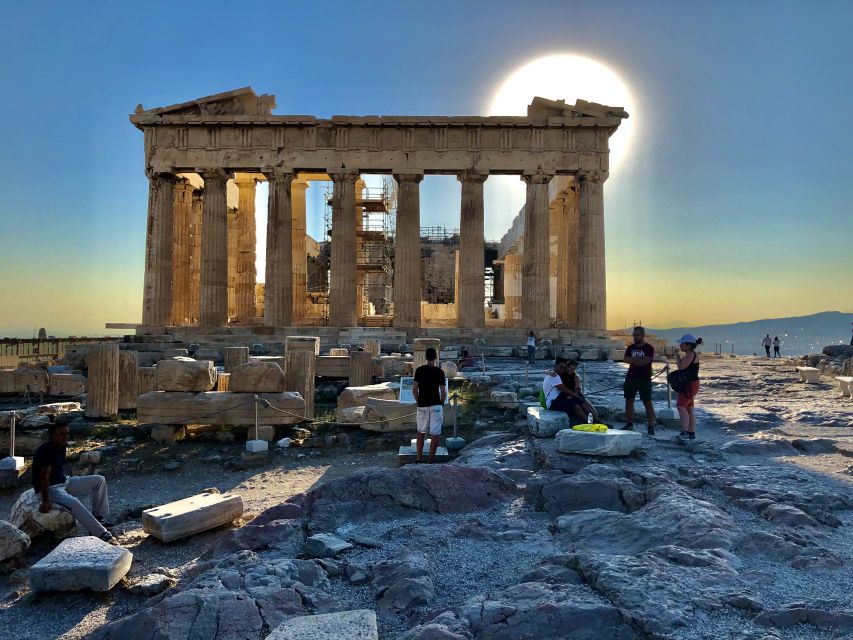
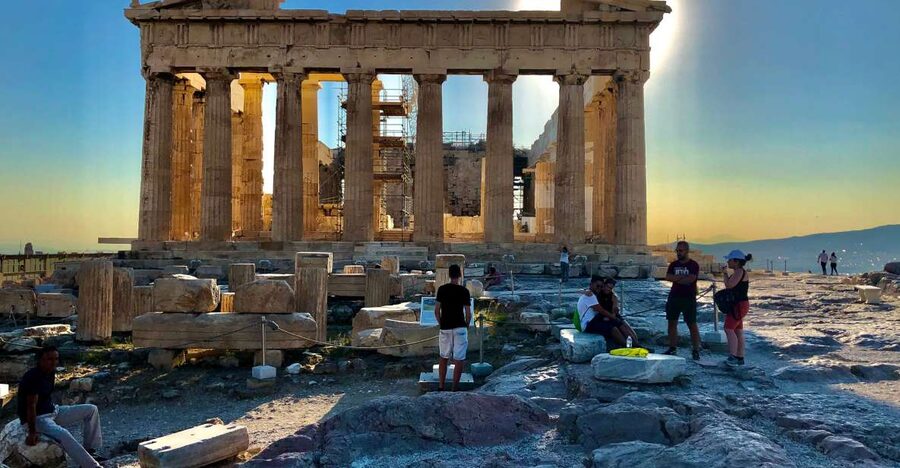
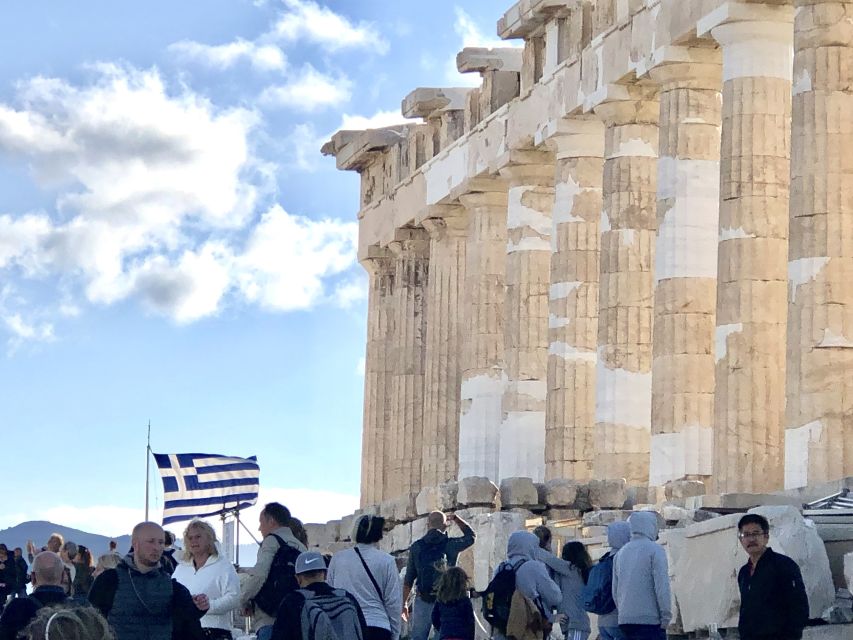
The Parthenon is the tour’s central moment. Built about 2,500 years ago, it is often called one of the most harmonious buildings in world architecture. Your guide explains not only what you are looking at, but why the building was created and how its design became so influential.
I like this part of the tour because the Parthenon needs context. A few minutes in front of it can leave you impressed but uninformed. The guide’s job is to connect the columns, sculpture, religious purpose, and political meaning so you can understand why this particular temple became a symbol of Greece and Western culture.
You should allow time for photographs, but remember that you are in an active archaeological site. The light, weather, and visitor flow will affect how long you can linger in any one spot. One particularly useful feature is the planned photo pause, which keeps the tour from becoming a nonstop lecture.
More Ancient History Tours in Greece
- Acropolis, Parthenon & Athens Old City Heritage Walking Tour
★ 4.5 · 876 reviews - Private Biblical Tour Ancient Corinth & Isthmus Canal from Athens
★ 5.0 · 762 reviews - Athens: Ancient Corinth & Nafplio Full Day Trip with Swim
★ 4.8 · 531 reviews - Athens Skip the Line: Open Air Ancient Greek Theatre Performance
★ 4.5 · 520 reviews
Athena Nike and the Caryatids
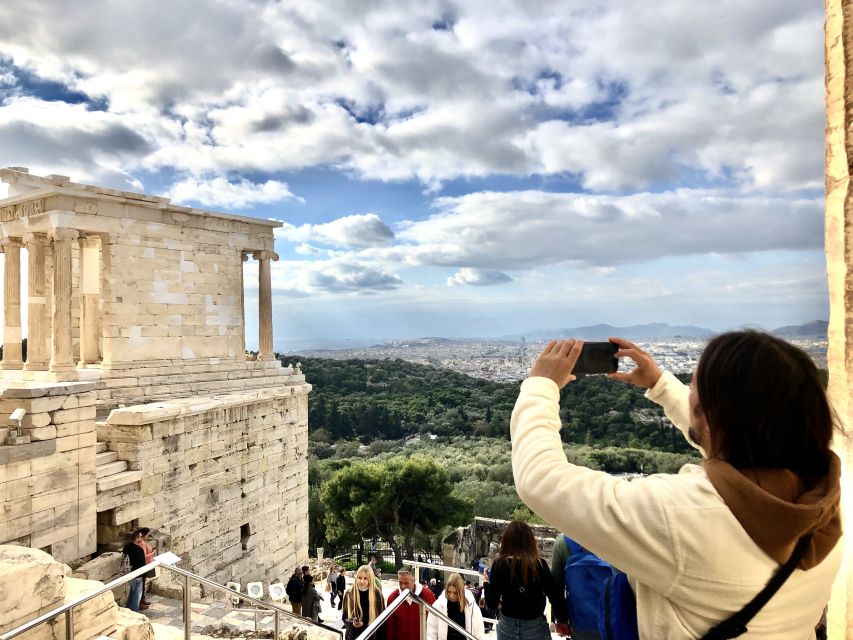
The Temple of Athena Nike is a smaller Ionian building near the entrance. Its size makes it easy to overlook beside the Parthenon, but its position and delicate style give it a different character. The guide points out why this temple matters and how it fits into the Acropolis complex.
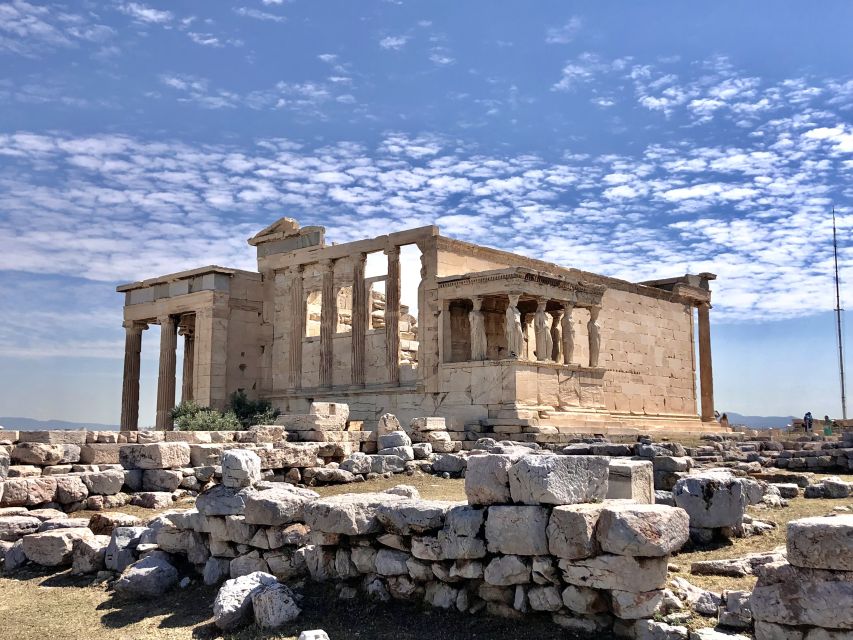
The Caryatids provide another memorable stop. These sculpted female figures serve as architectural columns in the Erechtheion porch. Their graceful appearance can make them seem decorative, but their role as structural supports is part of what makes the building so striking.
Expect the guide to explain the difference between the buildings rather than treat the summit as one single monument. That comparison is useful. You see how the Acropolis combines large formal architecture with smaller, more intricate work.
Views across Athens from the hilltop
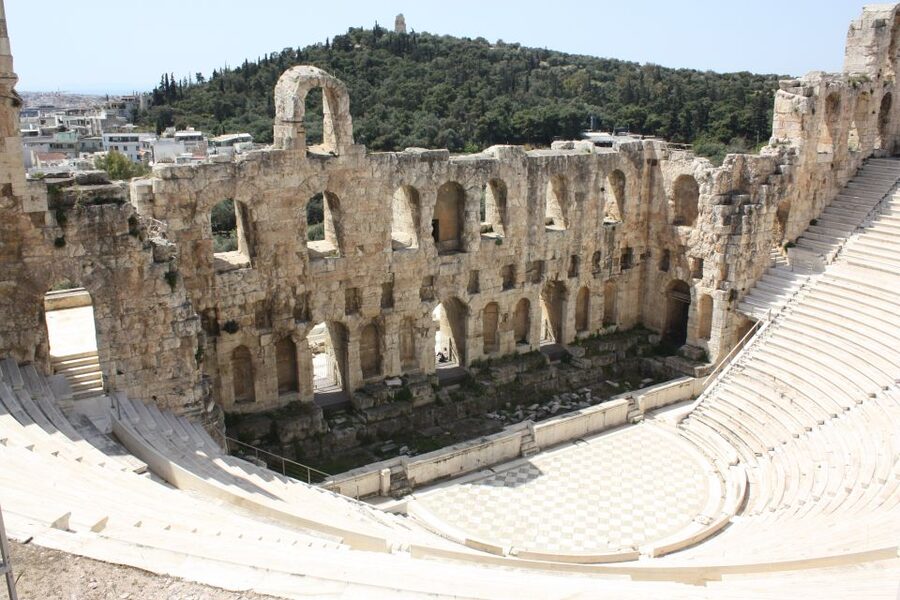
The Acropolis is also Athens’ best place to get your bearings. From the summit, you look toward Hadrian’s Arch and the Temple of Olympian Zeus, the Odeon of Herodes Atticus, the National Observatory, and the hills of Lycabettus, Philopappos, and the Areopagus.
The Odeon is still used for the Athens Festival, giving the ancient site a link to the city’s present-day cultural life. The guide can also help you distinguish the hills and ruins below, turning a broad city view into a readable map.
This is where I find the tour particularly useful for a first stay in Athens. You begin to understand how close the old monuments are to the modern center. You also see why the Acropolis works as more than an isolated ruin. It is tied to the neighborhoods, churches, roads, theaters, and public spaces around it.
Walking from the Acropolis into Plaka
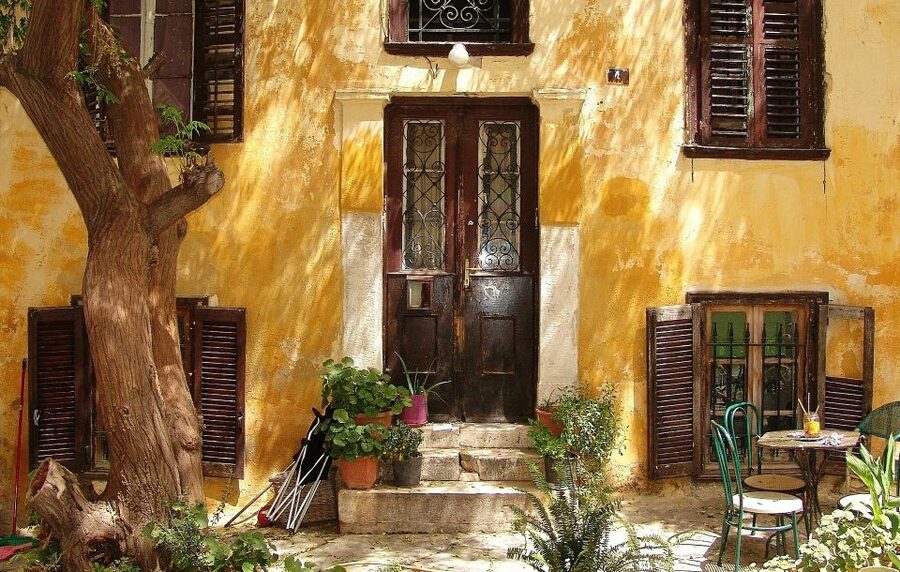
After the Acropolis, the tour heads into the old town and Plaka. This shift changes the pace. You leave the exposed marble of the hill and enter one of Athens’ most picturesque and photogenic neighborhoods.
Plaka is a good place for a guided walk because it can be easy to wander without understanding how its streets relate to the ancient center. The guide keeps the route focused on relevant corners of historic Athens while pointing out places you may want to return to later.
Do not expect a food tour or shopping excursion. Food and drinks are not included, and the listed experience centers on history and sightseeing. You may find café-lined streets and shops in Plaka, but the value here is the guide’s interpretation rather than included refreshments.
The Ancient Agora from the outside
The route passes outside the Ancient Agora, the civic center where Socrates, Plato, and Aristotle are associated with the intellectual life of Athens. The tour does not include entry to the Agora, so you will not receive a full interior visit to that archaeological area.
Still, the exterior stop helps connect the Acropolis to the city that grew around it. The Acropolis was a sacred and ceremonial center, while the Agora was tied to public life, debate, commerce, and civic activity. Seeing both areas in one walk gives you a clearer picture of how ancient Athens functioned.
If the Agora is high on your list, check whether you want to visit it separately. This tour gives you orientation and outside views, not an included Agora admission.
The Tower of the Winds and Athens Cathedral
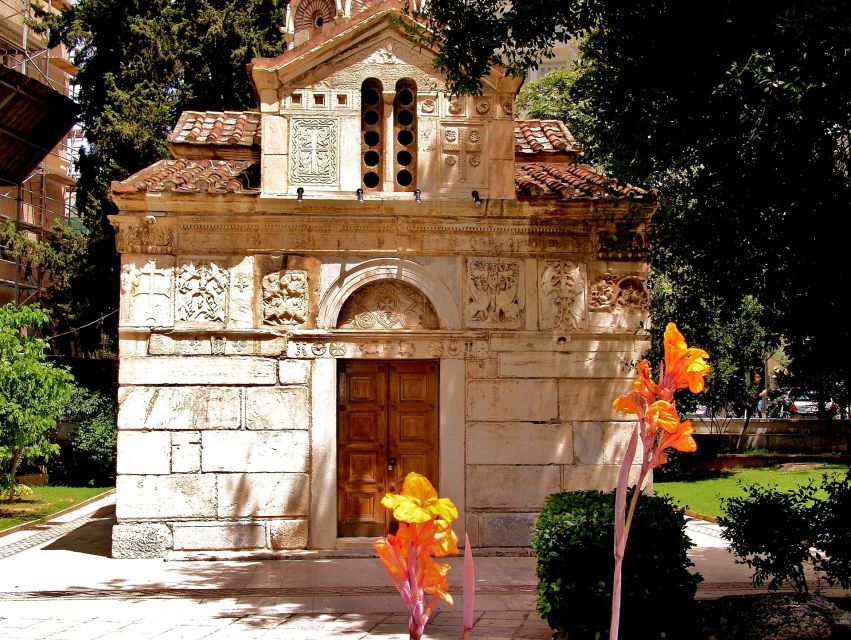
The final section includes the Tower of the Winds, described as the oldest meteorological observatory in the world. Its purpose makes it a nice counterpoint to the grand temples. Instead of celebrating a god or city power, it reflects careful attention to time, weather, and practical measurement.
The tour ends with the Metropolitan Cathedral of Athens, also called the Mitropolis. You learn about Orthodox Christianity, the faith followed by most of the country’s population, and see the church connected with the marriage of Queen Sofía and Juan Carlos.
This final stop broadens the tour beyond classical antiquity. Athens is not only the city of the Parthenon. Its religious traditions, modern history, and everyday neighborhoods are part of the same walk. For a first visit, that wider view is more useful than spending four hours on ruins alone.
How the $57 price works
The tour costs $57 per person, before the Acropolis entrance fee. That separate ticket is the most important pricing detail. You need an Acropolis ticket for the 8:00 to 9:00 time slot, and the tour provider may arrange one at the official cost if you do not already have it.
The value depends on how much help you want at the site. If you are comfortable reading background material and navigating the Acropolis alone, a ticket-only visit will cost less. You are paying this price for a Spanish-speaking licensed guide, headphones, route planning, historical explanation, and the added walk through Plaka and central Athens.
For Spanish-speaking visitors, especially on a first trip, that can be fair value. The guides are repeatedly praised for clear storytelling, warmth, and practical suggestions for the rest of Greece. The small-group feel reported by several people also makes the price easier to justify, though group size is not specified as fixed.
Headphones are included. Food, drinks, hotel transport, and admission to the Acropolis are not.
Who will enjoy this four-hour walk
I would choose this tour if you want the Acropolis explained in Spanish rather than simply photographed. It suits first-time visitors who want a clear introduction to classical Athens, its myths, major buildings, surrounding hills, and old-town neighborhoods in one morning.
It is also a good fit if you value a guide who can answer questions and offer practical ideas for the rest of your stay. Efi and Andrea are singled out for patience, enthusiasm, humor, and useful advice beyond the formal route.
You may want something else if you prefer to set your own pace, spend a long time at each monument, or avoid a four-hour walking program. One visitor felt some historical explanations could be shorter and more direct. That is a fair caution: the detail that helps one person may feel like too much to another.
The walk is not suitable for people with mobility impairments, and the ancient paths can be demanding. Comfortable footwear is essential. You should also be ready for an early start and for outdoor conditions on a hilltop with little shelter.
Should you book the Acropolis and Plaka tour?
Book it if you want a structured first look at Athens with a Spanish-speaking guide, especially if the stories behind the buildings matter as much as the photographs. The south-slope entrance, the Theater of Dionysus, the Parthenon, the Caryatids, the city views, Plaka, and the Tower of the Winds create a well-shaped morning.
Before paying, confirm that you have the required Acropolis admission for 8:00 to 9:00, or ask the provider to arrange it at the official price. If you want to visit the Acropolis Museum or enter the Ancient Agora, plan those separately.
At $57 plus admission, this is not the cheapest way to see the Acropolis. It is a sensible choice for a first visit when you want history in Spanish, a guide who can keep the story moving, and an introduction to the Athens you will explore after the tour.
FAQ
Is the Acropolis entrance ticket included?
No. The Acropolis entrance fee is separate. You need an Acropolis ticket for the 8:00 to 9:00 time slot, and the provider may manage the ticket at the official cost if needed.
How long does the tour last?
The tour lasts four hours.
What language is the tour conducted in?
The live tour guide speaks Spanish.
Where does the tour meet?
The meeting point is at the lower gate of the Acropolis, a few meters from the Acropolis Museum. The guide carries a sign with the office logo.
Is hotel pickup included?
No. Hotel pickup and drop-off are not included.
Does the tour include food or drinks?
No. Food and drinks are not included.
Which Acropolis entrance does the group use?
The group enters through the side entrance on the south slope, near the Theater of Dionysus.
Does the tour enter the Ancient Agora?
No. The route passes outside the Ancient Agora.
Are headphones provided?
Yes. Headphones are included.
Is the tour suitable for people with mobility impairments?
No. The experience is not suitable for people with mobility impairments. Baby carriages and electric wheelchairs are also not allowed.
More History Walking Tours in Greece
- Corfu: History and Culture Walking Tour
★ 4.9 · 55 reviews
More History Walking Tours in Athens
- Athens: History of Rebellion Walking Tour
★ 5.0 · 110 reviews - Ancient Athens for Kids 4-Hour Private Walking Tour
★ 5.0 · 66 reviews - Private Athens Walk: Ruins, Markets & Local Stories
★ 5.0 · 41 reviews
Newest history tours we have reviewed in Athens
- Athens: The History of Greek Mythology Private Tour★ 4.7 · 53 reviews
- Athens: Women in Ancient Greece★ 5.0 · 98 reviews
- Athens: Ancient Corinth & Nafplion Guided Premium Tour★ 4.7 · 237 reviews
- Athens: Be an Ancient Sculptor: Craft Your Greek Masterpiece★ 5.0 · 26 reviews
- Athens: Roman Agora & Ancient Agora E-ticket & 2 Audio Tours★ 4.1 · 107 reviews
- Athens: Ancient Greek Theatre Murder Mystery Experience★ 4.8 · 298 reviews
- Athens: Corinth Canal and Ancient Olympia Private Trip★ 4.6 · 21 reviews
- Athens: Kotsanas Ancient Greek Technology Museum Guided Tour★ 5.0 · 29 reviews
Ancient History Tours, compared.
Colosseum: Underground and Ancient Rome Tour
Read our review →
Colosseum & Ancient Rome with Arena Floor Option I Max 6 People
Read our review →
Colosseum, Ancient Rome Tour or AudioGuided Tour
Read our review →
Colosseum Underground & Ancient Rome Guided Tour
Read our review →

Taormina: Ancient Theater Skip-the-Line Ticket & Audio Guide
Read our review →
Discover the Ancient Ruins of Pompeii: Day Trip from Rome
Read our review →