Review · ATHENS HISTORY TOURS
Private Athens Walk: Ruins, Markets & Local Stories
Athens reveals itself best where daily life rubs against ancient stone. This private walk takes you from Kotzia Square and the central market through Monastiraki, old shopping lanes, Plaka, and the Acropolis perimeter, showing you both working Athens and its famous ruins.
I like the private format, which gives you room to ask about architecture, Greek customs, food, or anything that catches your eye. I also like the route’s range: you move from vegetables, spices, and leather goods to Hadrian’s Library and the Ancient Agora without spending the whole morning in a museum.
The main consideration is pace. Three hours covers a lot of ground, and the tour ends outside the Acropolis rather than taking you inside. At $166.64 per person, it makes the most sense for a small group that values personal guiding and local orientation.
Key points to know before you book
- A working-city start: Kotzia Square and Athinas Street show you shops, markets, and ordinary Athenian business before the ancient sights begin.
- A private English-speaking guide: Guides such as Babis and George have been praised for their warmth, strong English, and command of architecture, archaeology, and local life.
- A useful first-morning route: You cover the central market, Monastiraki, the Ancient Agora, Plaka, and the Acropolis perimeter in about three hours.
- Coffee with a local angle: The tour includes coffee or a soft drink and a local sweet, with some versions ending at a rooftop café with an Acropolis view.
- No Acropolis admission: You finish at the Acropolis entrance, but tickets and time inside the monument are your responsibility.
- Good for orientation: The walk helps you understand how central Athens fits together, making later independent exploring easier.
Why this private Athens walk works as a first introduction
The best feature here is the way the route joins two Athenian worlds. You begin among produce stalls and city offices, then move toward temples, libraries, old neighborhoods, and the Acropolis. That progression gives the ancient sites a human setting.
A standard sightseeing route can leave Athens feeling like a string of monuments. This walk gives you a sense of how the city functions between those monuments. You see people opening shops, merchants selling food, small specialty stores, coffee places, and streets where modern Athens carries on beside stones from the Roman and Ottoman periods.
The private setup matters. Your guide can adjust the talk to your interests and answer questions as they arise. If you care about buildings, guides such as Babis have a strong reputation for explaining architecture and archaeology in clear terms. If you are more interested in food, family customs, shopping, or modern city life, the market portion gives you plenty to ask about.
The tour is also useful if Athens is your first stop in Greece. You get practical advice about bars, restaurants, local specialties, and what to see next. Several past outings with Babis have also included a rooftop coffee stop with a view toward the Acropolis, though the exact café may vary.
More History Walking Tours in Athens
- Acropolis, Parthenon & Athens Old City Heritage Walking Tour
★ 4.5 · 876 reviews - Athens: History of Rebellion Walking Tour
★ 5.0 · 110 reviews - Ancient Athens for Kids 4-Hour Private Walking Tour
★ 5.0 · 66 reviews
Starting at Kotzia Square at 9:30
Meet your guide at Kotzia Square, near Sofokleous 18, at 9:30 in the morning. This is a central location, close to public transportation, and the early start is well chosen. Athinas Street is already active, but the day has not yet reached its hottest or busiest point.
Kotzia Square gives your guide a chance to set the scene. From here, you are close to Athens’ city hall, a neo-classical building that anchors the area. The square itself is a useful reminder that central Athens is not only an archaeological zone. It is also a place of offices, commerce, traffic, and ordinary routines.
Your guide will talk about the long continuity of trade in this part of town. The exact goods have changed, but the basic role of the market area has lasted for centuries. That connection between past and present is one of the tour’s strongest ideas.
Athinas Street and the Central Market
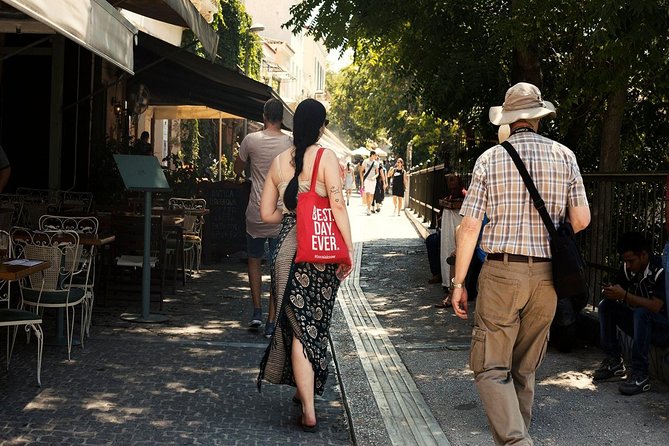
The walk continues along Athinas Street, one of central Athens’ main commercial routes. You pass the Mayor of Athens’ building and watch shop owners prepare for the day. This is a short but worthwhile section because it gives you a sense of the city before the monuments take over.
The central market is the most practical stop on the route. You see fruit, vegetables, meat, cheese, nuts, herbs, and other food products. The sights and smells are part of the experience, but the guide adds the real value by explaining what is local, what you might want to taste, and how the market fits into Greek daily life.
You may buy produce or other food here at your own expense. That is optional, so you can simply walk through and observe if you have already eaten. If you want to shop, ask your guide for help choosing a Greek favorite or understanding an unfamiliar ingredient.
Allow yourself comfortable shoes. The route includes markets, paved streets, back lanes, and archaeological areas, with plenty of standing and walking. One past participant specifically advised bringing your best walking shoes, and that is sound advice.
Monastiraki Square and its layered landmarks

From the market, you head toward Monastiraki, one of central Athens’ most recognizable areas. The square has a lively mix of shops, cafés, ancient remains, religious buildings, and pedestrian traffic. Its name comes from the Greek word for monastery, and the small Pantanassa Monastery sits in the center.
Monastiraki is not a single-period sight. You may see a Byzantine religious building, a Roman library, an Ottoman mosque, and modern commercial streets within a short walk. That mix is exactly why a guide helps. Without context, the buildings can seem like unrelated pieces. With explanation, you begin to see the layers.
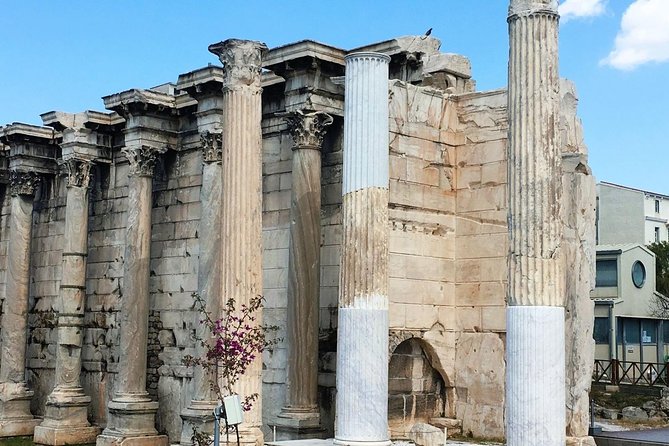
Hadrian’s Library is next. The site dates from the first century and was built in Corinthian style. The tour does not give you an extended indoor visit, so think of this as an exterior introduction rather than a full archaeological tour. If you want to explore the site in detail, you can return later with an admission ticket.
The route also points out the Tzistarakis Mosque, an 18th-century building now used as a ceramics museum. Its presence adds another period to the story of central Athens. The tour includes the view and explanation, but admission is not part of the price.
More History Walking Tours in Greece
- Athens:Acropolis – Historical Center Walking Tour in Spanish
★ 5.0 · 32 reviews - Corfu: History and Culture Walking Tour
★ 4.9 · 55 reviews
Flea-market lanes and specialty shops

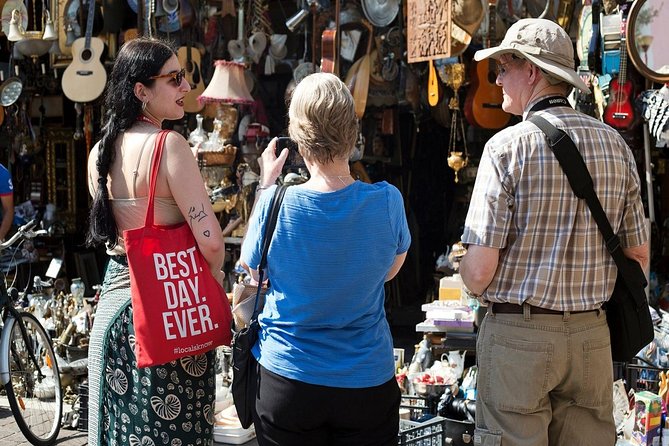
The walk then moves through the flea-market area around Avysinias Square. This is one of the more informal parts of the route. You see merchants, old objects, souvenirs, and shops selling goods aimed at both local buyers and people looking for something to take home.
Nearby Ifaistou or Pandrossos streets offer a different kind of shopping. Depending on the route that day, you might browse leather sandals, handmade icons, Greek musical instruments, antiques, and other specialty goods. You do not have to buy anything, but this is a good place to ask your guide how to judge quality or choose a useful souvenir.
I like this section because it keeps the tour from becoming a march between ruins. Athens is also a city of small businesses and crafts. The shopping streets give you time to pause, look closely, and notice how the old center has adapted to modern trade.
The drawback is that flea markets are commercial spaces. Some people will enjoy the browsing; others may find the merchandise uneven or the streets crowded. Your guide can help you spend your time wisely, but this is not a dedicated shopping tour.
The Ancient Agora and views toward the Acropolis
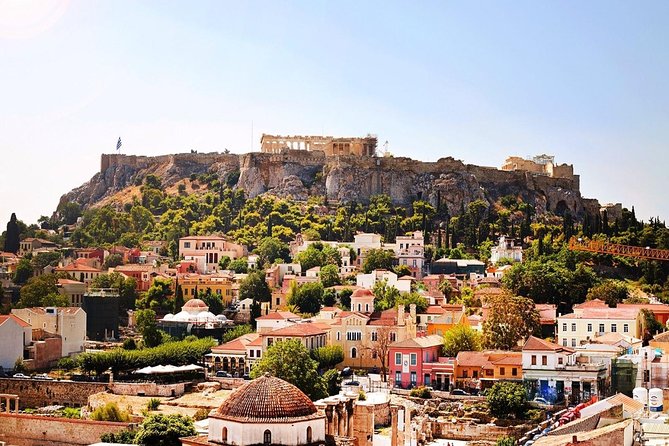
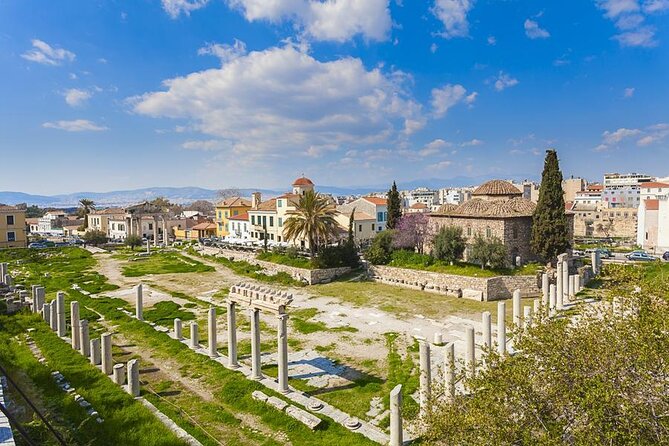
After Monastiraki, you pass the Ancient Agora, once the civic and commercial center of Athens. Merchants traded here during Greek and Roman times, and the site helps explain how public life worked in the ancient city.
The tour’s route appears to focus on seeing the Agora from outside rather than providing a full ticketed visit. Admission is not included. If the Agora is high on your list, plan another visit, since a quick look from the route cannot replace time among the excavated buildings.
You then continue through Thission and toward Plaka. Along the way, your guide points out older houses, including buildings from the 17th and 18th centuries. This section is valuable because Athens is often reduced to classical antiquity, while its later neighborhoods tell a different story about homes, streets, religion, and city growth.
You also get views toward the Acropolis. The approach helps you understand the rock’s position above the center of town and gives you a chance to take photographs before reaching the final section of the walk.
Plaka coffee and a local sweet
The itinerary allows about an hour around Plaka, including a freshly brewed coffee or soft drink and a local sweet. Food and drinks beyond the included refreshment are not covered, so keep a little money handy if you want something extra.
This pause is more than a rest stop. It gives you time to ask questions and shift from sightseeing to conversation. A private guide can offer suggestions for later meals, bars, and neighborhoods, which is often more useful than a list of famous restaurants.
Some past tours have included a rooftop café with a clear view toward the Acropolis. That sounds like a fine setting for the break, but you should not treat the rooftop stop as guaranteed unless your booking confirms it. The listed experience promises a local café, coffee or a soft drink, and a sweet.
Plaka can feel more polished and visitor-focused than the market streets earlier in the morning. That contrast is useful. You see how Athens changes from working market district to old residential quarter and major sightseeing area within a fairly small distance.
Ending at the Acropolis perimeter
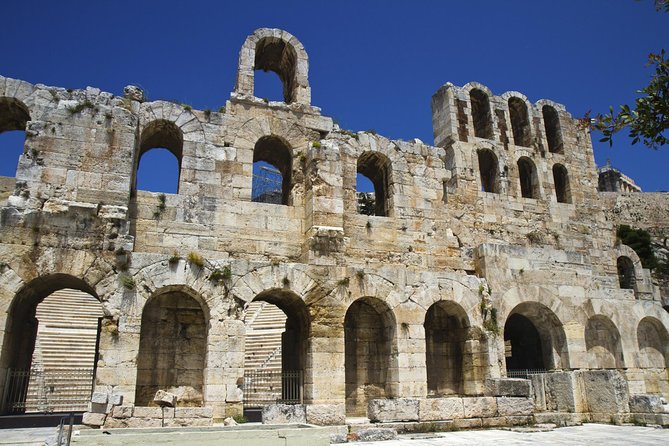
The walk ends at the entrance to the Acropolis. Your guide provides background on the monuments and advice on what to do next, but the tour does not enter the site.
This distinction matters when planning your day. You need a separate Acropolis ticket if you want to go inside, and you should allow additional time for the visit. The tour’s ending point is convenient if the Acropolis is your next stop, but it does not include admission, an interior visit, or a guided tour of the monuments themselves.
The benefit is flexibility. You can continue independently, visit the Acropolis at your own pace, go to the Acropolis Museum, or stop for lunch. You also finish in a part of town where your guide can explain how to return to your hotel or continue elsewhere.
What the private format is worth at $166.64
At $166.64 per person, this is not a bargain walking tour. The value depends heavily on the size of your party and how much you want personal attention.
For a couple or small family, a private guide can be worthwhile because you are not waiting for a large group or listening to a fixed script. You can ask for more architecture, more food, more modern Greek life, or more shopping. Families may also appreciate the ability to adjust the pace. Children must be accompanied by an adult, and the route is open to most people, but it still involves several hours on foot.
The price also includes more than a monument checklist. You receive a local introduction to central Athens, market guidance, a coffee or soft drink, a sweet, and suggestions for the rest of your stay. Guides such as Babis and George have been singled out for their warmth, clear English, and ability to make architecture and history easier to understand.
If you mainly want entry into the Acropolis or Ancient Agora, spend your money on admission and a site-specific guide instead. If you want to get your bearings quickly and understand how the center fits together, this route offers a broader return.
Who should choose this tour
I would recommend it most strongly for:
- First-time visitors with limited time in Athens
- Couples and families who prefer a private guide
- People interested in architecture, archaeology, and city history
- Cruise passengers needing a compact morning introduction
- Anyone who wants market and neighborhood context before visiting the major ruins
- Independent explorers who want restaurant and sightseeing advice for later
It may be less suitable if you dislike walking, want a slow museum visit, or expect a detailed tour inside every archaeological site. The route covers many places, so the experience is about connections and orientation rather than long stops at one monument.
Service animals are allowed, and the meeting point is near public transportation. Confirmation is provided at booking. Free cancellation is available until 24 hours before the start time, but changes or cancellations inside that window are not accepted.
Should you book the Athens Ruins, Markets and Local Stories walk?
Book it if you want Athens explained as a living city, not just a set of ancient stones. The market, Monastiraki lanes, old shops, Plaka coffee, and Acropolis views create a useful first morning, especially with a guide such as Babis or George who can adapt the conversation to your interests.
Skip it if you want full admission and guided time inside the Acropolis, Hadrian’s Library, or Ancient Agora. You will need separate tickets and more time for those sites.
For most first visits, I see this as an orientation walk with real substance. You finish knowing where the market is, how Monastiraki connects to Plaka, what the Ancient Agora meant, and how to continue toward the Acropolis. That practical understanding can make the rest of your Athens stay easier and more rewarding.
FAQ
Where does the tour start?
The tour starts at Kotzia Square, near Sofokleous 18 in central Athens.
What time does the tour begin?
The scheduled start time is 9:30 in the morning.
Where does the tour end?
The walk ends at the entrance to the Acropolis in Athens.
Does the tour include entry to the Acropolis?
No. The tour does not go inside the Acropolis. You may continue independently, but admission is at your own expense.
Is food or coffee included?
The experience includes coffee or a soft drink and a local sweet. Additional food and drinks are not included, and any market purchases are your responsibility.
Is this a private tour?
Yes. Only your own group participates, with a friendly English-speaking local guide. Guides associated with this experience include Babis and George.
More Private History Tours in Greece
- From Athens: Ancient Sparta and Mystras Private Day Trip
★ 4.8 · 18 reviews
More Private History Tours in Athens
- Private Biblical Tour Ancient Corinth & Isthmus Canal from Athens
★ 5.0 · 762 reviews - Private Tour of Apostle Paul’s Footsteps in Ancient Corinth
★ 5.0 · 275 reviews - Athens: The History of Greek Mythology Private Tour
★ 4.7 · 53 reviews - Athens: Corinth Canal and Ancient Olympia Private Trip
★ 4.6 · 21 reviews
Newest history tours we have reviewed in Athens
- Athens: The History of Greek Mythology Private Tour★ 4.7 · 53 reviews
- Athens: Women in Ancient Greece★ 5.0 · 98 reviews
- Athens: Ancient Corinth & Nafplion Guided Premium Tour★ 4.7 · 237 reviews
- Athens: Be an Ancient Sculptor: Craft Your Greek Masterpiece★ 5.0 · 26 reviews
- Athens: Roman Agora & Ancient Agora E-ticket & 2 Audio Tours★ 4.1 · 107 reviews
- Athens: Ancient Greek Theatre Murder Mystery Experience★ 4.8 · 298 reviews
- Athens: Corinth Canal and Ancient Olympia Private Trip★ 4.6 · 21 reviews
- Athens: Kotsanas Ancient Greek Technology Museum Guided Tour★ 5.0 · 29 reviews
Archaeological Site Tours, compared.
Discover the Ancient Ruins of Pompeii: Day Trip from Rome
Read our review →
Ancient Ruins Tour – Guided Arizona Desert Tour by UTV
Read our review →
Ancient Olympia: Archaeological Site and Museum Entry Ticket
Read our review →
Ancient Chacchoben Mayan Ruins & Mayan Experience from Costa Maya
Read our review →
Ancient Syracuse: private guided tour of the Neapolis archaeological park
Read our review →
Coba Private Tour – Ancient Ruins & Refreshing Cenote Swim
Read our review →
Alanya: Ancient Ruins & Hidden Coves of Gazipaşa w/ Cave
Read our review →