

Review · TIRANA HISTORY TOURS
Tirana Walking Tour: History, Culture &Gems by a Passionate Guide
Tirana’s story unfolds in layers: Ottoman mosques, socialist monuments, rebuilt churches, bright cafés, and a city still working out what it wants to become. This walking tour brings those layers together with Albiona, a passionate local guide who explains not just what you are seeing, but how Albania’s past still shapes daily life.
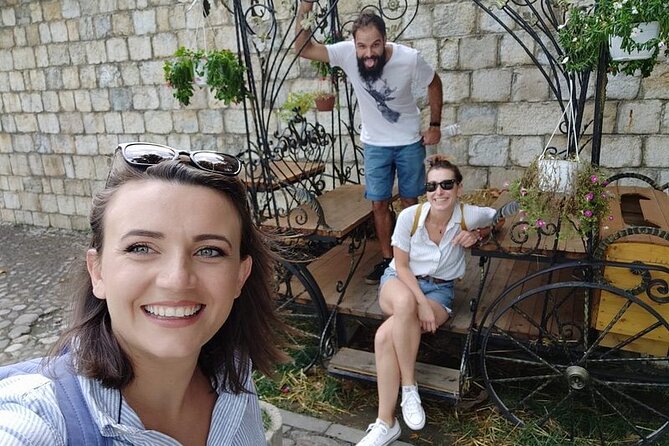
I like the tour’s small maximum of 11 people, which should make it easier to ask questions and keep the pace personal. I also like the route’s broad reach: you move from Skanderbeg Square and the New Bazaar to Blloku, the former preserve of communist leaders, while hearing about Albania’s religious revival and harsh dictatorship.
The main consideration is pace. Twenty-one stops in three to four hours means many places receive a short explanation rather than a long visit. The tour is best for orientation and context, not for spending extended time inside museums.
Key points at a glance

- A strong first-day walk: Start at Skanderbeg Square and learn how Tirana’s main sights fit together.
- Albiona’s personal approach: Expect clear explanations, room for questions, and practical help with navigating the city.
- A rare look at communist Albania: See Postbllok, Enver Hoxha’s former villa, the Pyramid, and the House of Leaves area.
- Religious history in one route: Visit the Et’hem Bey Mosque, Saint Paul’s Cathedral, and the Orthodox Cathedral of Resurrection.
- Local flavor included: The price includes a complimentary shot of rakia, Albania’s traditional spirit.
- Compact and walkable: The route returns to Skanderbeg Square and stays within central Tirana.
Why this walk works so well on your first day
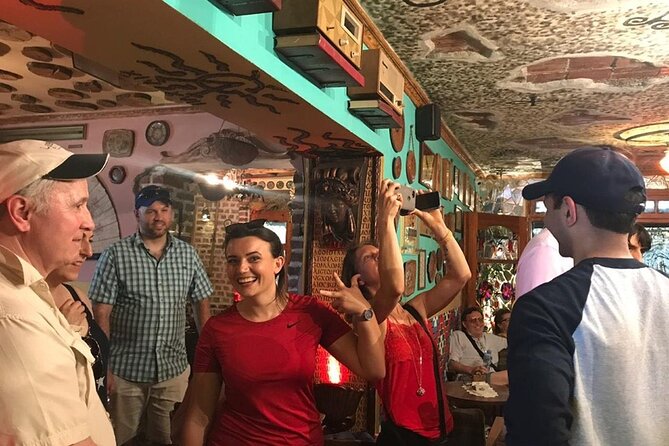
Tirana can feel confusing at first. Its center is compact, but the visual clues point in many directions: Ottoman remnants, Italian-influenced buildings, communist monuments, new cafés, and broad public squares. This tour gives you a framework before you start exploring on your own.
Albiona begins at Skanderbeg Square, the city’s central meeting place. From there, she connects the landmarks to Albania’s larger story, including Ottoman rule, national identity, communism, religious suppression, and the country’s modern changes. That background matters because many Tirana sights are modest at first glance. A stone tomb or a plain bunker means more once you understand what it represents.
I especially like the balance between formal monuments and ordinary city life. You pass through the New Bazaar, walk along Murat Toptani Street, see Tirana Castle’s old remains beside modern businesses, and continue into Blloku, now one of the city’s main social districts. This is not a march from one postcard sight to another. It is a walk through a city that has changed quickly.
The tour is offered in English and lasts about three to four hours. It is generally booked well ahead, around 33 days in advance on average, so I would not leave it until the last minute if your dates are fixed. Same-day booking has worked for some customers, but availability is never something to count on.
More Local Culture and Traditions Tours in the world:
- Amsterdam Food and Cultural Tour with Tastings
★ 5.0 · 4,315 reviews - Sevilla Food Tour: Tapas, Wine, History & Traditions
★ 5.0 · 3,468 reviews - Tromsø: Reindeer Camp and Sami Cultural Tour with Lunch
★ 4.7 · 3,326 reviews
Skanderbeg Square, the Clock Tower, and Et’hem Bey Mosque
The tour begins at Skanderbeg Square, named for Albania’s national hero. This broad public space is the natural starting point for understanding Tirana. It brings together several of the city’s most important sights, including the mosque, Clock Tower, National History Museum area, and government buildings.
You spend about 20 minutes here, enough time to get your bearings and hear why the square matters. It is also a useful place to notice how Tirana presents its national identity. The square is not simply a traffic-free plaza. It is a civic stage, a place for gatherings, celebrations, and everyday city life.
Next comes the Et’hem Bey Mosque, one of Tirana’s most important Ottoman-era landmarks. The exterior is restrained, but the interior is known for detailed frescoes showing trees, bridges, waterfalls, and other natural scenes. Those paintings are unusual in Islamic religious art and give the building a distinct character.
The scheduled stop is only about 10 minutes, so this is a brief look rather than a long architectural visit. Religious buildings may also have access rules that vary, so dress and behavior should be respectful. The tour data lists admission as free at this stop.
The nearby Clock Tower takes about five minutes. At 35 meters, it is one of Tirana’s most familiar markers. Its design reflects both Ottoman and Venetian influences, a small but useful reminder that Albania’s cultural connections have never pointed in just one direction.
Sulejman Bargjini Square and the New Bazaar
The route continues to Sulejman Bargjini Square, a smaller public space linked to Tirana’s founder. You spend only a few minutes here, but the stop helps place the city’s origins before the tour moves into the more active New Bazaar district.
At Pazari i Ri, or the New Bazaar, the walk becomes more sensory. The renewed market area combines traditional food stalls, produce, spices, local crafts, shops, and places to eat. You get about 20 minutes here, which is enough for a look around and perhaps a quick snack if the group’s timing allows.
I like this part because it gives you a break from monuments. You see how Tirana functions as a living city, not just a museum. It is also a good area to return to later if you want local food or a more casual evening walk.
Nearby, Teqja Pazari introduces the Bektashi tradition. The Bektashi Order is a Sufi Muslim group with a strong connection to Albanian religious and cultural life. This brief stop is valuable because it widens the story beyond the better-known mosque and cathedral visits.
Tombs, traditional homes, and a city built over its past
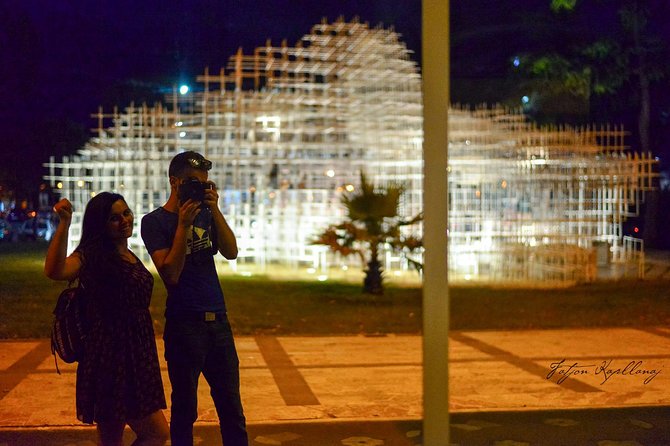
At Kapllan Pasha’s Tomb, you see an octagonal stone monument built in the early 19th century. It was declared a first-category Cultural Monument in 1948. Its columns, carved stone details, and plant decoration make it a small but distinctive survivor from an earlier Tirana.
The former ruler of Tirana was buried here before his remains were later returned to Istanbul. You spend about 10 minutes at the site. It is not a grand complex, so Albiona’s explanation is important in helping you understand why this modest structure matters.
The next stop is the Toptani Sarajet Old Typical House, also described as the Ethnographic Museum of Tirana. The schedule allows only about five minutes, so you should think of it as a short introduction to traditional Albanian domestic life rather than a full museum visit.
The route then passes Bunk’Art 2, a former communist-era bunker turned historical site. The scheduled stop is only five minutes, and entry is not listed as included. If you want to see the museum’s interior exhibits, plan a separate visit and budget for its admission.
That distinction is important. The walking tour introduces many sites, but it does not provide a long museum session at each one. You are paying for the guide’s route and interpretation, not a full day of indoor admissions.
More History Walking Tours in the world:
- History and Hauntings of Salem Guided Walking Tour
★ 5.0 · 14,564 reviews - Lisbon: History, Stories and Lifestyle Walking Tour
★ 4.8 · 10,902 reviews - Boston: Freedom Trail History Small Group Walking Tour
★ 5.0 · 6,450 reviews - Historic Charleston Guided Sightseeing Walking Tour
★ 5.0 · 6,216 reviews
Murat Toptani Street and Tirana Castle
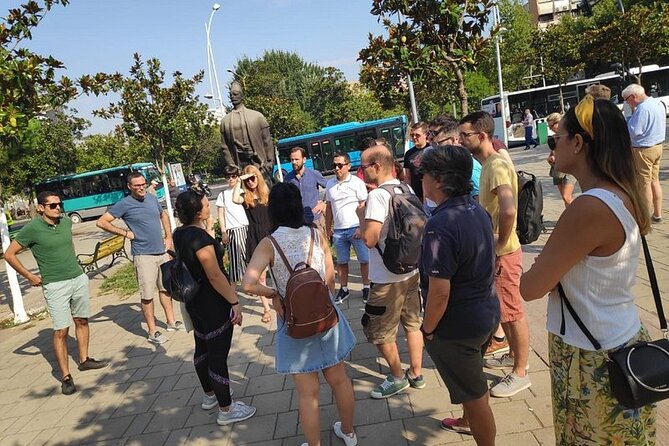
Rruga Murat Toptani offers a change of pace. This central street blends historical buildings, public art, shops, and modern city life. You spend about 10 minutes here, moving through an area that shows how Tirana’s center has been reshaped for pedestrians and social life.
At Tirana Castle, the old walls and ruins sit beside modern food and shopping spaces. The site offers a quick look at the city’s earlier defenses, but the stop lasts only around five minutes. I would not expect a full archaeological explanation or an extended castle visit.
The value here is the contrast. Tirana does not always preserve its past in a separate, untouched zone. Old stonework can appear beside a café or a newly refurbished street. That mixture is one of the city’s defining features, and this section of the walk makes it easy to see.
Three faiths and Albania’s return to religious life
The route includes Saint Paul’s Cathedral, a Catholic landmark with a calm interior and modern design. The stop takes about five minutes. It is a useful reminder that Albania’s religious identity is not limited to one tradition.
The most powerful religious context comes at the Orthodox Cathedral of Resurrection. Built between 2001 and 2012 and consecrated on June 24, 2012, the cathedral represents the return of open religious practice after communism.
Under Enver Hoxha, Albania declared itself the world’s first atheist state in 1967. Religious practice was banned, and many churches, mosques, and religious buildings were destroyed or put to other uses. The cathedral’s construction after the fall of communism is therefore about more than architecture. It marks a public return of faith.
You spend about 10 minutes here. That is enough to understand the importance of the building, though not enough for a detailed study of its interior or religious art.
The Pyramid, Postbllok, and Enver Hoxha’s former villa
The tour’s strongest historical section comes as you approach the former center of communist power. At the Pyramid of Tirana, you see one of the city’s most recognizable buildings. Once associated with Enver Hoxha, it has taken on a new life as Tirana has tried to rethink its difficult past.
The stop is listed at about five minutes, so Albiona provides context rather than a long building visit. The Pyramid is especially useful for understanding how Albania handles communist-era symbols. It has not simply disappeared. It remains part of the city’s present.
At Postbllok, or the Checkpoint Memorial, an open-air installation recalls political repression. The memorial is near the entrance to Blloku and uses physical objects to suggest surveillance, imprisonment, and control. You spend around 10 minutes here.
The tour then points out the former villa of Enver Hoxha. During the dictatorship, Blloku was closed to ordinary citizens and reserved for senior officials and the political elite. Seeing the villa from the outside helps explain the sharp divide between those who governed Albania and those who lived under its restrictions.
This is where Albiona’s style matters most. The tour is not only about dates and buildings. It connects political decisions to family life, fear, lost freedom, and the endurance of Albanian culture. Several people who have taken the walk appreciated that she explained the painful period honestly without presenting Albania as only a story of suffering.
Blloku, Shallvaret, and the modern city
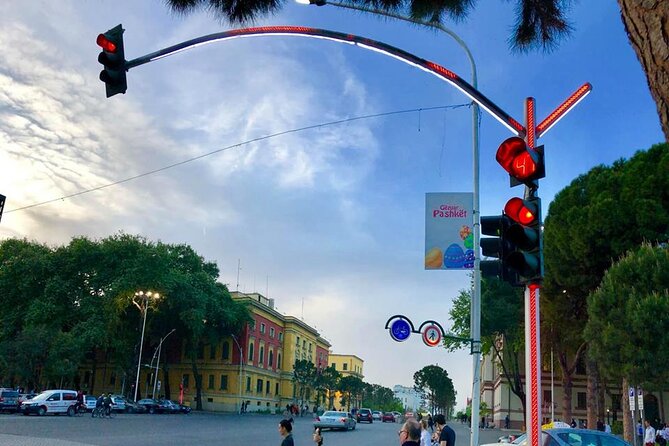
Today, Blloku is one of Tirana’s main social districts, with cafés, restaurants, and nightlife. Its present character can make its former role hard to imagine. That contrast is the point.
I like this stop because it shows how quickly a forbidden district can become a public gathering place. You are not looking at a preserved communist compound behind barriers. You are walking through an active neighborhood where the past sits beneath a modern social scene.
The route continues through Shallvaret, an area with older roots and a changing urban character. Again, the stop is brief, about five minutes. It works best as part of the larger story rather than as a major sight by itself.
The tour ends back near the starting point, making it easy to continue exploring, find lunch, or return to a museum you passed earlier.
House of Leaves and the price of the experience
The House of Leaves, now the Museum of Secret Surveillance, is one of the most important communist-era sites in Tirana. It occupies a former intelligence facility and examines the machinery of surveillance used during the dictatorship.
The walk includes the site as a stop, but admission is not included. The scheduled time is about 10 minutes, so you should not assume you will see the full museum collection during the tour. If this subject interests you, allow extra time on another visit.
At $36.20 per person, the tour offers good value if you want a strong introduction to Tirana and Albania’s recent past. You are covering a large part of central Tirana, receiving several hours of explanation in English, and getting a rakia tasting included. A private guide would normally cost more, while a large group tour may feel less personal.
The value depends on what you want. If you prefer to spend 30 minutes inside every museum, this route will feel too quick. If you want a clear map of the city, practical orientation, and a local voice to help you understand the sights, the price is reasonable.
The group maximum is 11 people. That is small enough for questions and conversation without promising a fully private tour. The experience is also near public transportation, and service animals are allowed. Most people can participate, but remember that this is a walking tour lasting several hours.
A complimentary shot of rakia adds a small local touch. It is not a meal or a tasting session, just one traditional Albanian spirit. Personal expenses beyond that are not included.
Who should book this Tirana walking tour?
I would choose this tour if you are arriving in Tirana and want to understand the city quickly. It suits first-time visitors, history fans, people curious about communist Europe, and anyone who prefers a local guide to a standard audio tour.
It is also a good match if you enjoy asking questions. Albiona’s strongest qualities are her command of Albania’s past, her warmth, and her ability to discuss both difficult history and the country’s future. Her English is described as excellent, and the tour allows time for conversation rather than delivering only a fixed speech.
You should think twice if you have limited mobility or dislike walking at a steady pace. The route covers many stops, and the schedule leaves little room for long rests or detailed indoor visits. Check the weather, too. The experience requires good conditions, and poor weather may lead to a different date or a full refund.
Free cancellation is available up to 24 hours before the start time. Cancellations or changes made less than 24 hours ahead are not refunded or accepted.
Should you book it?
Book this tour if you want context, local conversation, and a broad first look at Tirana. Albiona’s personal approach is the main reason to choose it. She helps connect the Ottoman center, religious landmarks, communist memorials, and modern neighborhoods into one readable story.
Skip it if you want a slow museum tour or a route focused only on major monuments. The pace is brisk, and some stops are brief views from outside. For most first-time visitors, though, this is a smart way to get oriented, learn where Tirana’s difficult stories are held, and leave with better ideas for exploring on your own.
FAQ
Where does the Tirana walking tour start?
The tour starts at Skanderbeg Square, Plaza Tirana, Sheshi Skender Beu, Tirana 1001, Albania.
Where does the tour end?
The activity ends back at the meeting point at Skanderbeg Square.
How long does the tour last?
The walking tour lasts approximately three to four hours.
What language is the tour offered in?
The tour is offered in English.
How many people can join the tour?
The maximum group size is 11 people.
Is a rakia tasting included?
Yes. The experience includes one complimentary shot of rakia, a traditional Albanian spirit.
Is admission to the House of Leaves included?
No. Admission to the Museum of Secret Surveillance, also called the House of Leaves, is not included.
Is the tour suitable for most people?
Most people can participate. The experience is near public transportation, and service animals are allowed.
What is the cancellation policy?
You can cancel up to 24 hours before the start time for a full refund. Changes or cancellations made less than 24 hours before the experience are not accepted or refunded. If poor weather causes the tour to be canceled, you will be offered another date or a full refund.
Newest history tours we have reviewed in the world
- Bologna: Street Food Tour in the Historic Center★ 4.8 · 125 reviews
- Bilbao Historical Tour in small group★ 4.7 · 52 reviews
- CEBU: Cebu City Heritage and Uphill Guided Tour★ 4.2 · 31 reviews
- Bishkek : City Tour (History, Architects, Statues & Culture)★ 4.9 · 54 reviews
- Blenheim: Omaka Aviation Heritage Centre Admission Ticket★ 4.9 · 31 reviews
- Berlin: Nazi History Walking Tour★ 4.8 · 33 reviews
- Best of Baku: 4-Hour City Tour Historic and Modern Landmarks★ 4.7 · 63 reviews
- Belfast: Best of Belfast History, Culture & Art Walking Tour★ 4.9 · 158 reviews
Local Culture & Traditions Tours, compared.

Amsterdam Food and Cultural Tour with Tastings
Read our review →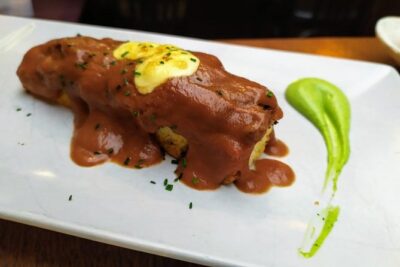
Sevilla Food Tour: Tapas, Wine, History & Traditions
Read our review →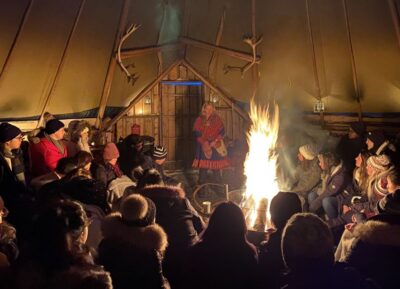
Tromsø: Reindeer Camp and Sami Cultural Tour with Lunch
Read our review →
Half Day Dominican Republic Cultural Tour : Small Group
Read our review →
Ultimate Melbourne Walking Tour: History, Laneways & Culture
Read our review →
Tromsø: Sámi Reindeer Sledding and Sami Cultural Tour
Read our review →
Kyoto Gion: 2-Hour Geisha Culture & History Walking Tour
Read our review →
Marrakech Historical and Cultural Tour – Half Day City Tour
Read our review →Browse the lists this tour appears in