

Review · ZANZIBAR HISTORY TOURS
Stone Town Historical Walking Tour
Stone Town is best understood on foot, one shaded lane and carved door at a time. This private walk brings together the old trading quarter, the Portuguese and Omani eras, the former slave market, local food, royal history, and Freddie Mercury’s Zanzibar roots.
I like the private format, since your guide can adjust the pace and focus. I also like the mix of major sights and everyday places, especially Darajani Bazaar and Forodhani Gardens, where Zanzibar feels lived-in rather than packaged for sightseeing.
The main consideration is that some admissions cost extra, and the walk can feel full for its 2 to 3 hour schedule. You’ll also need to reach Stone Town yourself unless you arrange pickup from a Stone Town hotel in advance.
Key points to know before booking
- A private Stone Town walk for $25 per person: Only your group takes part, which gives you more say over the pace and questions.
- Seven stops in roughly three hours: The route covers the Old Fort, market, gardens, palace, cathedral, and Freddie Mercury Museum.
- History with real weight: Christ Church Cathedral sits on the former slave market site, making this more than a pretty-doors tour.
- Local life is part of the route: Darajani Bazaar brings you close to produce, spices, seafood, clothing, crafts, and local sellers.
- Food is an optional pleasure: Forodhani Gardens becomes a street-food market after sunset, with seafood, samosas, cassava, and potatoes.
- An easy city-center start: The meeting point is at Forodhani, and the walk ends back there.
Stone Town is the real attraction
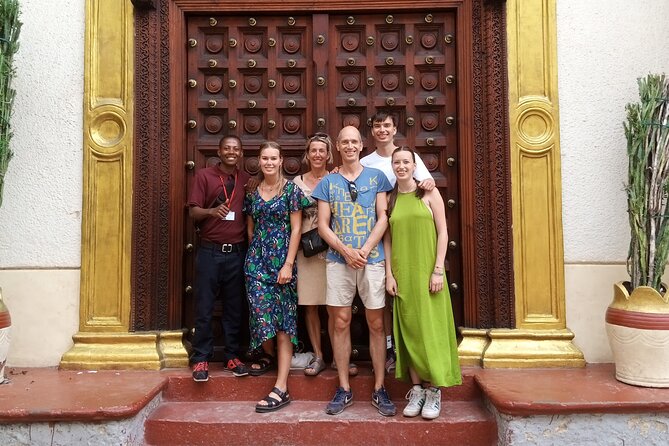
The most useful way to approach this tour is to see it as an introduction to Stone Town itself, not simply a checklist of landmarks. The Old Town is the historic center of Zanzibar City, and its streets show how African, Arab, Persian, Indian, and European influences met through trade and settlement.
That mixture appears in the buildings, religious sites, food, language, and street life. You’ll see old colonial structures beside houses with carved doors, hear calls to prayer from minarets, and catch the smell of the sea mixed with spices and perfumes.
This is also a place with difficult chapters. Zanzibar was a major trading center for spice, silk, and enslaved people for more than a thousand years. A good guide should help you connect the grand architecture with the human stories behind it. Ahmed, one of the named guides associated with this experience, is described as adjusting the pace to personal interests and discussing both Zanzibar’s past and current struggles.
That kind of conversation is one of the strongest reasons to choose a private walk. You can ask why a building looks Indian, why an old fort was built, or how religious communities share the city. You are not limited to a fixed script.
More History Walking Tours in the world:
- History and Hauntings of Salem Guided Walking Tour
★ 5.0 · 14,564 reviews - Lisbon: History, Stories and Lifestyle Walking Tour
★ 4.8 · 10,902 reviews - Boston: Freedom Trail History Small Group Walking Tour
★ 5.0 · 6,450 reviews
Seven stops, and what each one adds
1. Stone Town’s lanes and carved doors
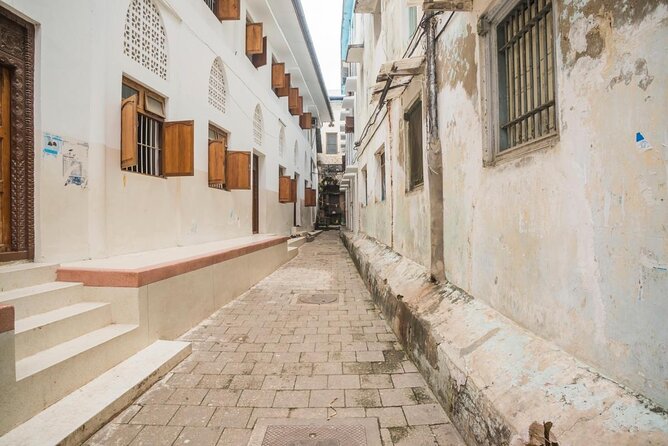
The opening section gives you a feel for the old city before the route narrows in on particular sites. Allow yourself time to look up as you walk. The old colonial buildings and carved Zanzibari doors are among Stone Town’s most memorable details.
The town’s character is not only visual. The sea is close, perfumes drift through the lanes, and calls to prayer rise from the minarets. Islam, Christianity, and Hinduism have coexisted here, adding another layer to the city’s cultural mix.
The listed time for this opening stop is about 30 minutes, though the actual walking pace may vary. That matters because Stone Town is more enjoyable when you have room to pause for photographs and questions. If you rush, you may see the buildings without understanding how the city became a meeting point for so many cultures.
2. The Old Fort and the Portuguese chapter
The Old Fort, also called Ngome Kongwe, is one of the clearest places to discuss Zanzibar’s colonial power struggles. The fort dates to around 1560, and its later form is tied to the Yaarub, who expelled the Portuguese after taking Mombasa.
The guide also connects the fort with the end of Portuguese colonial control and the later Omani takeover in 1698. That sequence helps explain why Stone Town’s architecture and political history cannot be reduced to one European period.
The stop is scheduled for about 40 minutes, the longest single portion of the walk. That is useful. A quick photo from outside would miss the fort’s real value, which is its role as a physical marker of changing power around the western Indian Ocean.
Admission is listed as free for this stop. The open setting also gives you a break from the narrow lanes and a chance to orient yourself within Stone Town.
More History Tours in the world:
- New York City: American Museum of Natural History Ticket
★ 4.5 · 15,447 reviews - Colosseum: Underground and Ancient Rome Tour
★ 4.7 · 12,691 reviews - London Small Group Tour of Historical Pubs
★ 5.0 · 10,422 reviews - Prague: Oldtown, Medieval Underground & Dungeon History Tour
★ 4.3 · 10,277 reviews
3. Forodhani Gardens, best near sunset
Forodhani Gardens is both a meeting point and a food stop, depending on the time of day. The park becomes especially active after sunset, when locals and tourists gather around the street-food market.
You might find grilled seafood, samosas, cassava, and sweet potatoes, along with other Kiswahili and Zanzibari dishes. Food is not included, so bring some extra money if you want to eat. The tour price covers the guide, not snacks or drinks.
The timing deserves attention. A daytime tour may show you the gardens in a quieter state, while an evening visit gives you the food market at its most active. The information provided does not promise a specific start time, so ask before booking if the street-food scene is a priority.
Forodhani is also where the experience starts and ends. That makes the location practical if you are already staying in Stone Town, and it leaves you in a useful spot for an evening meal after the walk.
4. Darajani Bazaar and daily Zanzibar
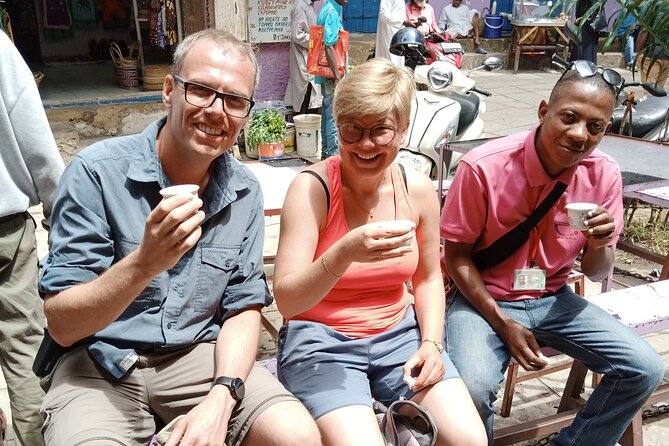
Darajani Bazaar adds a welcome change of pace. Instead of focusing on monuments, you see the market side of Stone Town, with displays of fresh produce, spices, seafood, clothing, and crafts.
This is where you get a closer look at ordinary commerce. You can speak with local vendors, sample traditional foods, and shop for items connected to Zanzibar’s cooking and craft traditions. The market is an important part of the experience because it shows how the city functions today, not only how it looked in the past.
The listed visit lasts about 18 minutes. That is enough for an introduction, but not enough for a slow shopping trip. If you want spices or crafts, tell your guide early and keep an eye on the clock. The tour is designed as a broad history walk, not a dedicated market tour.
The market can also feel busy and crowded. That is part of its character, but you should keep your belongings close and stay aware of your group while looking at stalls.
5. The People’s Palace Museum and royal Zanzibar
The People’s Palace Museum, also known as the Palace Museum, focuses on the Sultan’s former residence and Zanzibar’s royal past. Exhibits and artifacts help explain the island’s court life, cultural traditions, and links with the wider Indian Ocean world.
You may encounter displays connected with traditional music or crafts, though the supplied details do not guarantee a demonstration at every visit. Think of this stop as a compact look at the ruling side of Zanzibar, after seeing the fort that represents military power and the market that represents everyday trade.
The scheduled time is about 18 minutes. That is fairly short for a museum, so you may need to choose what interests you most. If royal history matters to you, say so at the start and ask the guide to give the museum extra attention if time allows.
The Palace Museum also helps balance the tour. Stone Town’s story is not only about colonial buildings and trade. It includes rulers, households, ceremonies, and the cultural traditions that shaped public life.
6. Christ Church Cathedral and the former slave market
This is likely to be the most serious stop. Christ Church Cathedral was built on the site of the former slave market, and the guide addresses that history directly.
The location forces a difficult question: how can a beautiful historic city also be tied to the suffering of enslaved people? That contrast is important. You should not leave Stone Town with only romantic images of carved doors, spices, and ocean air.
The stop is scheduled for about 18 minutes, and admission is not included. The supplied pricing information also lists a $5 per-person entrance fee, so confirm how that fee applies to the sites on your route before you go.
The visit may feel brief given the subject. Still, even a short explanation can give the rest of Stone Town more meaning, particularly when you remember that its wealth and importance were linked to major trade routes that included the slave trade.
This is a place where respectful clothing and behavior matter. The tour information does not give a formal dress code, but you are visiting a cathedral and a site of major religious and historical importance.
7. The Freddie Mercury Museum
The final named stop shifts from royal and colonial history to modern popular culture. Freddie Mercury was born in Zanzibar, and the museum traces his connection to the island and his later career with Queen.
You can expect personal belongings, memorabilia, and artifacts related to his life and music. The museum offers a different way to understand Zanzibar’s place in the world, showing how one person born here became a global figure.
Admission is not included, and the scheduled time is about 18 minutes. That makes it a concise stop rather than a long music-history visit. Fans will likely find it especially appealing, while people less interested in Queen may prefer to spend more time on the fort, market, or cathedral.
Including the museum is a smart choice for a first visit because it connects old Stone Town with a modern identity recognized far beyond Tanzania. It also gives the walk a lighter final note after the difficult history of the former slave market.
What the $25 price really buys you
At $25 per person, this is a reasonable price for a private, guided introduction to Stone Town. You are paying for a professional guide and a route that connects seven important places, not for transportation or a full meal.
The value is strongest if you want context. You could walk past the Old Fort, cathedral, market, and palace on your own, but you would miss some of the connections between Portuguese rule, Omani power, Indian Ocean trade, religious coexistence, and Zanzibar’s royal past.
The private format matters here. Only your group takes part, and the guide can respond to your interests. A history-minded visitor can ask for more detail at the fort and cathedral. A food-focused visitor can spend more time at Forodhani and Darajani. A music fan can make the Freddie Mercury Museum a bigger part of the conversation.
Plan for additional costs. Food and drinks are separate, and entry fees are not included. The information gives a $5 per-person entrance fee, while the stop details specifically identify Christ Church Cathedral and the Freddie Mercury Museum as paid admissions. Confirm the exact arrangement before booking so the final cost does not surprise you.
Timing, meeting point, and walking practicalities
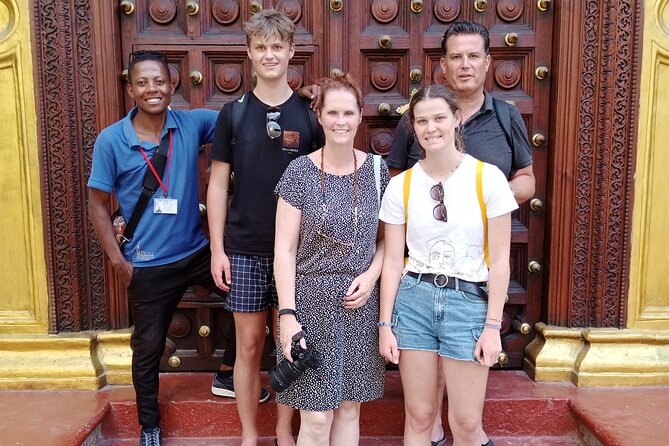
The experience lasts about 2 to 3 hours, with the listed stops adding up to roughly 172 minutes. That leaves little room for long shopping, a full meal, or extended museum visits.
The walk begins at Forodhani in Stone Town and ends back at the same meeting point. If you stay in Stone Town, the location is straightforward. Pickup from Stone Town hotels is available, but you need to request it and send a message in advance.
If you are staying elsewhere on Zanzibar, transfers are not included. You will need to arrange your own way to Stone Town. The route is near public transportation, but the experience itself is a walking tour rather than a vehicle-based sightseeing trip.
Wear comfortable footwear and carry water. Those are practical choices for any 2 to 3 hour walk through old streets, even though the tour information does not specify a dress or equipment list. Give yourself time to find Forodhani before the start, especially if you are unfamiliar with the lanes.
A mobile ticket is provided, and confirmation arrives when you book. Most people can take part, but anyone with particular mobility concerns should ask the provider about the route before reserving.
Who will get the most from this walk

I would choose this tour for a first visit to Zanzibar, especially if you want a broad introduction in one morning or afternoon. It suits history fans, architecture lovers, food-minded visitors, and anyone who prefers asking questions instead of following a large group.
It is also a good match for couples, families, or friends who want a private pace. The ability to discuss current struggles in Zanzibar, as well as earlier periods, gives the walk more substance than a simple photo stop route.
You may want something else if you prefer long museum visits, a food tour, or a relaxed schedule with plenty of shopping time. Seven stops in three hours is ambitious. The tour gives you a useful framework, but you may want to return later to the Palace Museum, Darajani Bazaar, or Forodhani Gardens.
The emotional weight of the cathedral stop is another consideration. This is not only a cheerful stroll through old streets. The history of slavery is part of Stone Town, and the experience is better for acknowledging it directly.
Booking and cancellation details

The tour costs $25 per person and is commonly booked about 13 days ahead. That advance pattern suggests you should reserve before arriving if your Zanzibar schedule is tight, though no specific minimum booking time is given.
Free cancellation is available if you cancel at least 24 hours before the local start time. Cancellations or changes made within 24 hours are not refunded or accepted.
Should you book the Stone Town Historical Walking Tour?
Book it if you want a compact, private introduction to Zanzibar’s capital with a guide who can explain the links between its buildings, trade routes, religions, royal past, and modern culture. The $25 price is fair, especially for a private group and a route that includes both landmarks and local market life.
I would book with two expectations: you will need to pay for food and some admissions, and the itinerary moves at a steady pace. If you have only a short time in Zanzibar, this walk gives you a useful first map of Stone Town. If you already know the city well, choose it only if you want a more personal conversation, a new perspective on its difficult history, or a guide such as Ahmed who can shape the route around your interests.
FAQ

How long does the Stone Town Historical Walking Tour last?
The tour lasts about 2 to 3 hours. The listed stops total roughly 172 minutes, although the exact pace may vary.
Where does the tour start and end?
The tour starts at Forodhani in Zanzibar and ends back at the same meeting point.
Is hotel pickup available?
Pickup is available from hotels in Stone Town, but you must request it and send a message in advance. Transfers from other parts of Zanzibar are not included.
Are entrance fees included in the price?
No. The tour information lists a $5 per-person entrance fee, and Christ Church Cathedral and the Freddie Mercury Museum are specifically marked as having admission fees not included. Confirm the exact fee details before booking.
Is this a private tour?
Yes. Only your group takes part in the activity.
What is the cancellation policy?
You can cancel at least 24 hours before the local start time for a full refund. Cancellations or changes made less than 24 hours before the start are not refunded or accepted.
Newest history tours we have reviewed in the world
- Bilbao Historical Tour in small group★ 4.7 · 52 reviews
- Bologna: Street Food Tour in the Historic Center★ 4.8 · 125 reviews
- CEBU: Cebu City Heritage and Uphill Guided Tour★ 4.2 · 31 reviews
- Bishkek : City Tour (History, Architects, Statues & Culture)★ 4.9 · 54 reviews
- Blenheim: Omaka Aviation Heritage Centre Admission Ticket★ 4.9 · 31 reviews
- Berlin: Nazi History Walking Tour★ 4.8 · 33 reviews
- Best of Baku: 4-Hour City Tour Historic and Modern Landmarks★ 4.7 · 63 reviews
- Belfast: Best of Belfast History, Culture & Art Walking Tour★ 4.9 · 158 reviews
History Walking Tours, compared.

History and Hauntings of Salem Guided Walking Tour
Read our review →

Freedom Trail History Small Group Walking Tour
Read our review →
Historic Charleston Guided Sightseeing Walking Tour
Read our review →
Tapas Walking Tour with Food, Wine, and History
Read our review →
Savannah History and Haunts Candlelit Ghost Walking Tour
Read our review →
A History of Terror – Belfast City Centre Walking Tour
Read our review →Browse the lists this tour appears in