
Review · HAMBURG HISTORY TOURS
Sightseeing Tour – Free Tour – Historic Center-Hamburg On Foot
Hamburg’s old center is best understood as a story of destruction and reinvention. This walk links Viking legends, medieval churches, wartime ruins, preserved eighteenth-century streets, the warehouses of Speicherstadt, and the striking Elbphilharmonie in one compact route. St. Nikolai Memorial and Speicherstadt give the tour its strongest historical weight.
I like the easy start at Rathausmarkt and the fact that the tour is led in Spanish, with guides such as Jan, also written as Jian in the feedback, and Isabel receiving especially warm praise for clear, entertaining explanations. I also like the value: the listed price is just $3.48 per group of up to six. The main consideration is pace. With nine stops in roughly two hours, some places receive only a short explanation, and the route is outdoors, so rain can affect the experience.
Key points before you book
- Nine central Hamburg stops: The route covers Rathausmarkt, St. Petri, Domplatz, Trostbrücke, St. Nikolai Memorial, Deichstrasse, Speicherstadt, Elbphilharmonie, and Hopfenmarkt.
- Spanish-speaking guidance: The tour is designed for Spanish speakers, with guides including Jan or Jian and Isabel named in the available feedback.
- Strong wartime and architectural contrast: You move from old churches and eighteenth-century houses to a nearly destroyed warehouse district and a modern concert hall.
- Small booking price, larger maximum group: The listed rate covers up to six people, but the overall activity may include as many as 30 participants.
- Outdoor walking route: Bring suitable shoes and an umbrella. Poor weather can lead to a new date or a full refund.
- Flexible cancellation: You can cancel for a full refund up to 24 hours before the start time.
Why this Hamburg walk works well
This is not a museum-heavy tour. It is a city walk built around streets, squares, façades, memorials, and the stories attached to them. That makes it useful on your first day in Hamburg, when you want to get your bearings without spending half the morning inside one building.
The route also gives you a useful sense of Hamburg’s mixed character. You see religious landmarks, former commercial streets, wartime scars, a grand warehouse district, and one of Germany’s most debated modern buildings. It is a lot of ground in two hours, but the changing scenery keeps the walk from feeling repetitive.
The guide’s job matters here. Many of the stops are easy to pass without context. Domplatz looks like an ordinary open space unless someone explains what once occupied it. Trostbrücke has a name that invites a story. Hopfenmarkt connects the city to beer production and local trade. Clear, lively explanations make the difference, and that is where Jan or Jian and Isabel appear to fit the tour well.
The route is also practical for anyone who prefers a Spanish-language introduction to the city. You are not simply being shown buildings. You are given a sequence of clues about why Hamburg developed as it did, how it suffered during the Second World War, and why its modern architecture can still prompt mixed feelings.
More History Walking Tours in Germany
- Leipzig: 1.5-Hour Historical Walking Tour in German
★ 4.7 · 2,217 reviews - Berlin: History of the Third Reich Guided Walking Tour
★ 4.7 · 791 reviews - Trier: Guided Old Town Highlights and History Walking Tour
★ 4.7 · 687 reviews
Starting at Hamburg Town Hall
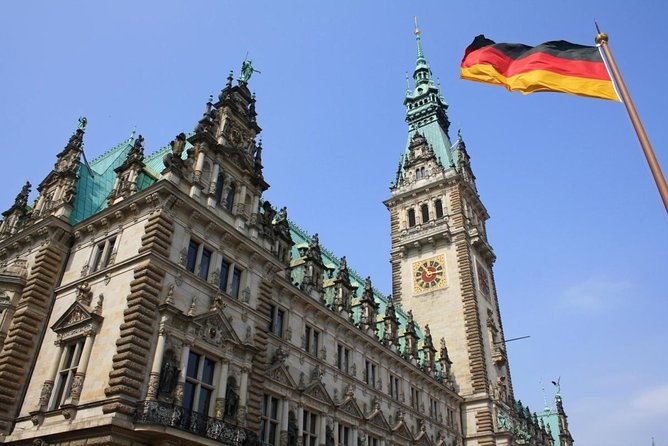
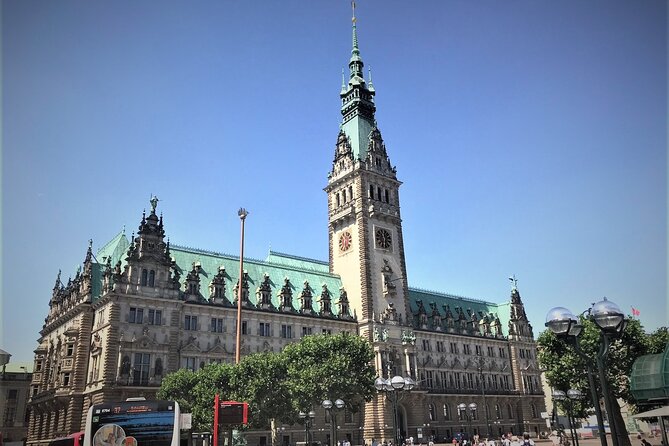
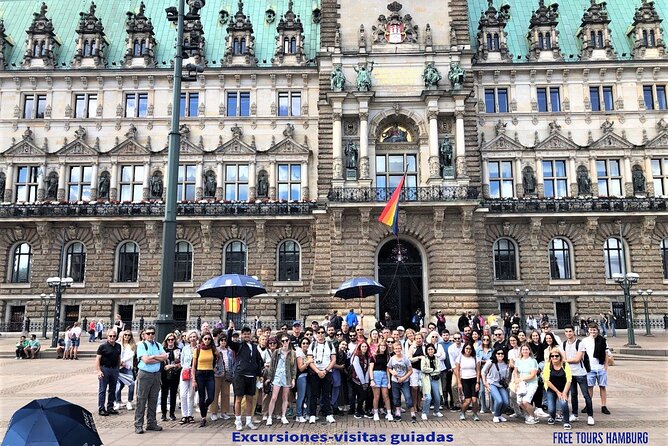
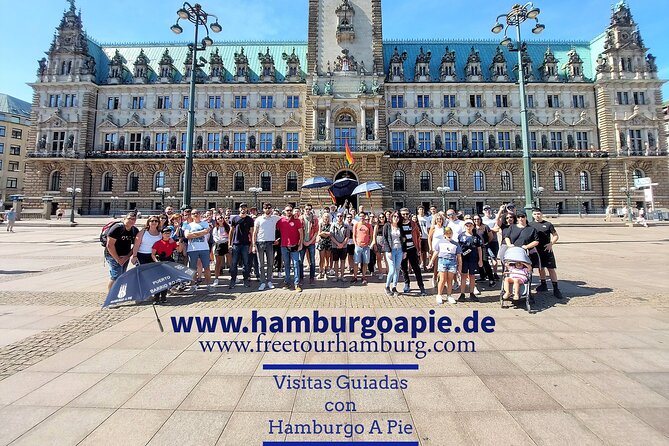
The meeting point is Rathausmarkt, the large square in front of Hamburg Town Hall. This is a sensible place to begin because it is central, easy to recognize, and close to several of the first stops.
The town hall itself receives about 30 minutes, making it the longest scheduled stop. You view the imposing building from outside rather than taking an interior tour. That distinction matters. The activity does not include admission, and interior access is handled through separate guided visits.
An exterior explanation can still be worthwhile. The façade gives your guide a clear opening to discuss Hamburg’s civic identity and the role of the city center. You can also use this time to settle into the group and ask questions before the route becomes more spread out.
If you want to see inside the town hall, plan that separately. Do not assume this walking tour includes interior entry.
St. Petri and the vanished cathedral at Domplatz
The stop at St. Petri Church is brief, about five minutes. It is described as Hamburg’s oldest church, a building that has survived the city’s many disasters. The short visit is best treated as a quick historical marker rather than a full church tour.
Next comes Domplatz, where the guide tackles one of Hamburg’s most entertaining historical puzzles: where did the cathedral go? The story includes Viking theft, fire, and the changing shape of the city. The wording is playful, but the subject is serious. This is where you begin to see that Hamburg’s past is not a neat line from old to new.
At only about ten minutes, Domplatz will not offer a long architectural study. Its value comes from the explanation. Without a guide, you could easily miss why the open space matters.
These early stops also show the tour’s general method. The guide uses a visible place as a starting point, then adds the part you cannot read from the stone alone. That approach suits Hamburg, where war, rebuilding, trade, and changing city plans have left an uneven record.
Trostbrücke and Hamburg’s darker stories
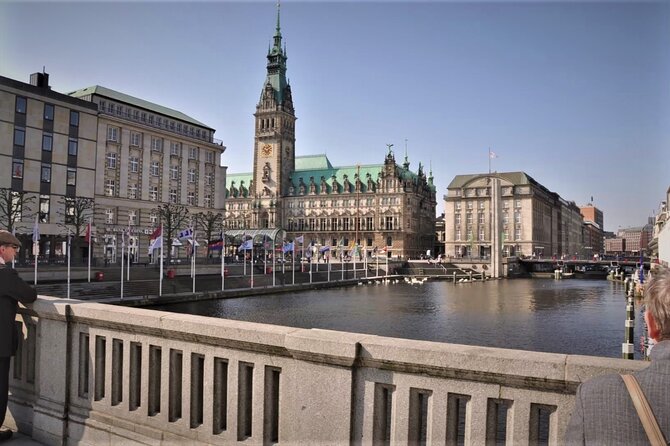
Trostbrücke is another ten-minute stop with a name that raises an obvious question: was it connected to comfort, acquittals, or something else? The tour uses this point to explore the darker side of the city’s past, including the old death row.
This is the kind of stop that gives a walking tour its value. A bridge can look like a simple crossing, yet its name and location may carry stories about law, punishment, and public life. The information provided does not promise a long visit, so expect a focused explanation rather than a detailed historical lecture.
The route’s tone appears to mix grim subjects with good humor. That can make difficult history easier to absorb, but it also means the experience may not suit anyone seeking a solemn, academic presentation at every stop. You are getting a lively city story, not a formal seminar.
More Old Town and Historic Centre Walks in Germany
- The Local Tour of Hamburg Historic Centre
★ 5.0 · 1,058 reviews - Cologne: Old Town Beer History Tour
★ 4.7 · 659 reviews - Berlin: Historic Center Walking Tour with a Real Berliner
★ 5.0 · 134 reviews - Berlin: 1-Hour Guided Tour of the Historic Center
★ 4.2 · 33 reviews
St. Nikolai Memorial and the Second World War
St. Nikolai Memorial is one of the tour’s most important stops. Here the focus shifts clearly to what the Second World War meant for Hamburg. The surviving church remains are a powerful reminder that the city center was not simply old, it was repeatedly damaged and rebuilt.
The stop lasts about ten minutes. That is enough for an introduction to the site and its wartime meaning, but not enough for an exhaustive visit. If this subject matters greatly to you, consider returning on your own after the walk so you can spend more time with the memorial.
I like the way this stop fits into the wider route. Earlier, you hear about churches, medieval events, and old city customs. At St. Nikolai, the story becomes much more recent and tangible. Then the route moves on to streets and districts that show how Hamburg preserved some parts of its past while replacing others.
There is no entrance admission included in the tour. The schedule identifies the stop as an outdoor visit, so make sure you understand that the walk does not provide a full interior museum experience.
Deichstrasse and the feel of eighteenth-century Hamburg
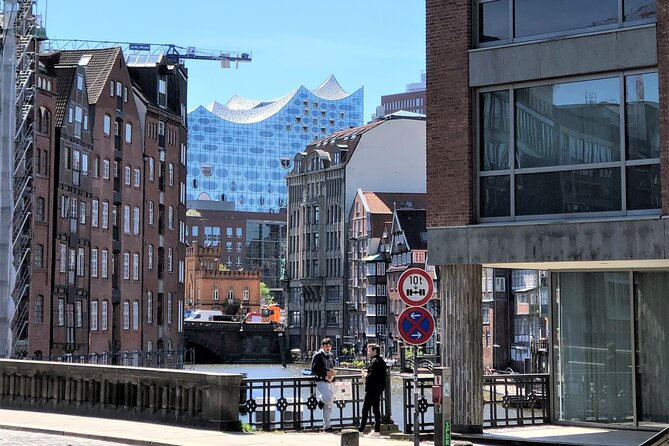
Deichstrasse is one of the most atmospheric portions of the route. The street preserves buildings from another era, and the walk is intended to make you feel the eighteenth century through the architecture and setting.
This is a good place to slow down and look closely. Older façades, narrow views, and preserved structures can communicate more than a single monument. You begin to picture Hamburg as a trading city with homes and businesses packed along its waterways and streets.
The stop is scheduled for about 15 minutes, which gives the guide more room to explain the buildings than at St. Petri or Trostbrücke. Still, do not expect a building-by-building architectural tour. The route has several major stops ahead, so the explanation will remain selective.
Deichstrasse is also a useful contrast with the modern parts of the tour. It shows the city’s older urban texture before you move toward the large warehouse district and the Elbphilharmonie.
Speicherstadt, from wartime damage to renewed splendor
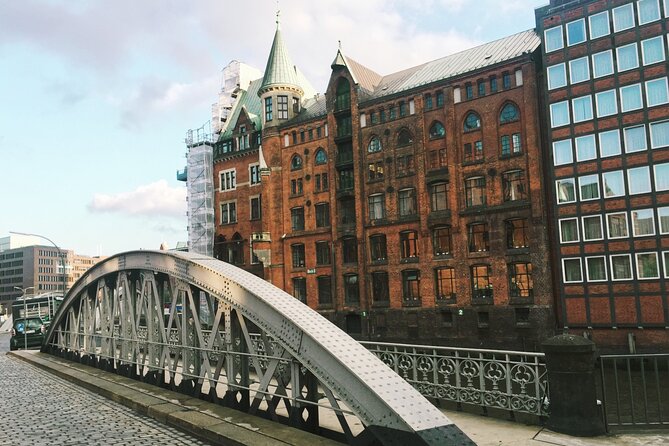
Speicherstadt is one of the tour’s headline sights, and rightly so. The warehouse district is UNESCO-protected and represents Hamburg’s commercial past in a very visible form. Its scale makes clear that this was not a handful of storage buildings, but a major construction project tied to the city’s trade.
The story takes a darker turn during the Second World War, when the district was almost destroyed. The fact that it shines again today gives the stop a clear theme: preservation is not the same as untouched survival. What you see has been damaged, rebuilt, and brought back into public attention.
The scheduled visit lasts about 15 minutes. That is enough to introduce the district and point out its larger meaning, but the area deserves extra time if you want photographs or a slower look at the canals and brick buildings. The tour gives you orientation. You can return later for a more leisurely visit.
The description hints at a local saying that some things can be seen while others can only be counted. That playful line fits the district’s scale and mystery, without turning the stop into a simple photo break. Your guide connects the buildings to Hamburg’s commercial life and wartime experience.
Elbphilharmonie and a modern Hamburg debate
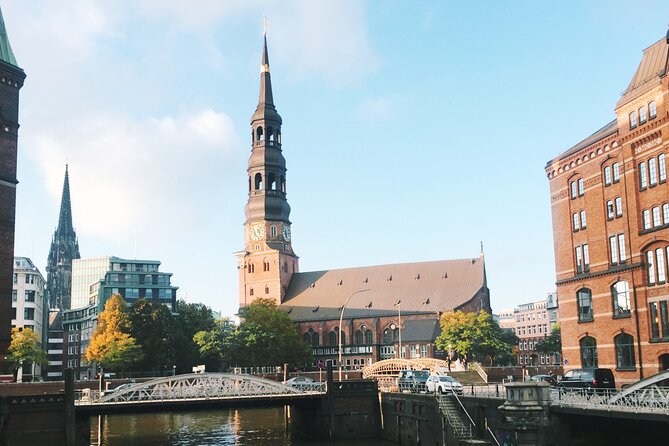
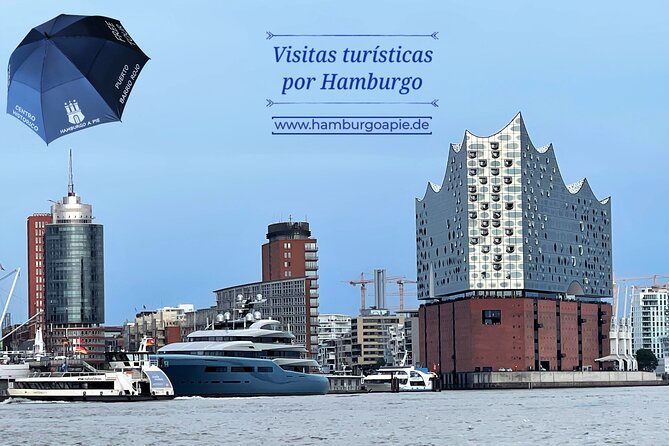
The Elbphilharmonie provides the route’s sharpest change in mood. After churches, old streets, and historic warehouses, you reach a bold modern concert hall that remains tied to controversy over its history.
The stop lasts about 15 minutes. You learn why people in Hamburg still hold mixed feelings about the building, while also having time to appreciate its appearance. The tour does not present the building as a simple success story. That balance is useful. Big public projects can become symbols of civic pride and frustration at the same time.
You should think of this as an exterior introduction unless your booking information says otherwise. No admission to a performance or interior visit is included in the stated tour details. The value is in seeing the building in its urban setting and understanding why it matters to Hamburg.
This is also a strong place to end the historical arc of the route. The city has moved from medieval religious foundations and trading streets to a modern cultural landmark. The old and new are not separate worlds here. They sit beside one another.
Hopfenmarkt and the taste of Hamburg’s beer past
Hopfenmarkt is the final listed stop and lasts about ten minutes. The subject is Hamburg’s beer trade and the city’s breweries, with a lighter look at how hamburgers keep a secret.
That gives the walk a relaxed finish after the more serious wartime material. Beer was not just a drink. It was connected to commerce, production, and daily city life. The stop helps round out the tour by showing that Hamburg’s identity was shaped by ordinary trade as much as by grand buildings and political events.
The route ends at Martin-Luther-Strasse 20, in the square of St. Michael’s Church, known here as Miguelito. This is different from the starting point at Rathausmarkt, so plan for the walk to finish away from where you began. The stated end point is useful if you want to continue sightseeing from St. Michael’s area, but the tour information does not include a further guided visit there.
Price, group size, and what you receive
The listed price is $3.48 per group of up to six. At that rate, the tour offers excellent potential value for a private party of six, assuming the displayed price is the amount charged at booking. It includes the guided route and historical commentary, but not admissions to buildings.
There is one point to clarify: the activity may have a maximum of 30 participants, even though the listed price is set per group of up to six. That means your booking unit and the total walking group are not necessarily the same thing. If a smaller group is important to you, check the final booking details before paying.
The duration is about two hours, with nine stops. Since the route covers a wide section of central Hamburg, you should expect steady walking and short visits rather than long periods at any one site. The mobile ticket keeps the meeting process simple, and the start at Rathausmarkt is easy to identify.
The tour requires no special level of fitness in the information provided, and most people can participate. Service animals are allowed, and the route is near public transportation. An umbrella is a sensible item to bring, especially because poor weather can cause the activity to be canceled.
Who should choose this walk
I would choose this tour if you want a Spanish-language introduction to central Hamburg and prefer stories tied to real streets and buildings. It suits first-time visitors, families who like short historical explanations, and anyone who wants to connect the old town with Speicherstadt and the Elbphilharmonie in one outing.
It is also a good fit if you enjoy a guide with personality. The available feedback highlights Isabel’s clear and entertaining explanations, while Jan or Jian is also associated with strong comments about the amount of information and the quality of the experience. The spelling differs in the supplied material, so do not be surprised if the guide’s name appears one way in booking communication and another way elsewhere.
I would hesitate if you want long interior visits, a specialized architecture lecture, or a slow photography walk. The schedule is full, and some stops last only five or ten minutes. You will get an efficient overview, not a deep examination of every site.
The tour is also less appealing on a wet day. Weather is a stated condition, and cancellation for poor weather can result in another date or a full refund. Bring an umbrella, but remember that even good rain gear cannot turn an outdoor walk into an indoor activity.
Should you book the Historic Center Hamburg on Foot tour?
Book it if you want a lively, Spanish-speaking introduction to Hamburg’s main historic sights, especially if you value local stories more than admission tickets. The mix of Domplatz, St. Nikolai Memorial, Deichstrasse, Speicherstadt, and Elbphilharmonie gives you a useful first look at the city’s losses, trade, architecture, and modern ambitions.
The low listed group price makes the walk particularly attractive for a party of up to six. Just keep the short stop times and possible group size in mind. If Jan or Isabel is guiding, you can expect the style to lean toward clear explanations, local anecdotes, and good humor.
For the best experience, wear comfortable shoes, check the meeting and ending points carefully, and leave extra time to revisit Speicherstadt or St. Nikolai after the tour. This walk gives you the framework. Hamburg supplies plenty to explore afterward.
FAQ
Where does the tour begin?
The tour begins at Rathausmarkt, 20095 Hamburg, Germany.
Where does the tour end?
It ends at Martin-Luther-Strasse 20, 20459 Hamburg, Germany, in the square of St. Michael’s Church, referred to as Miguelito.
How long is the walking tour?
The tour lasts approximately two hours.
What language is the tour conducted in?
The tour is conducted by a Spanish-speaking guide.
Which sights are included?
The route includes Hamburg Town Hall, St. Petri Church, Domplatz, Trostbrücke, St. Nikolai Memorial, Deichstrasse, Speicherstadt, Elbphilharmonie, and Hopfenmarkt.
Is entry to Hamburg Town Hall included?
No. The town hall is visited from outside, and admission is not included.
Is the tour available with a mobile ticket?
Yes. The experience includes a mobile ticket.
How many people can join the activity?
The activity has a maximum of 30 participants. The listed price is for a group of up to six.
Can I cancel for a full refund?
Yes. You can cancel at least 24 hours before the start time for a full refund. Cancellations within 24 hours are not refunded.
What happens if bad weather cancels the tour?
If poor weather causes cancellation, you will be offered another date or a full refund.
Newest history tours we have reviewed in Germany
- Berlin: Nazi History Walking Tour★ 4.8 · 33 reviews
- Berlin: History and Sightseeing with Kids (Free for Kids)★ 4.9 · 19 reviews
- Berlin: Historical Sights & Berlin Wall Tour with a Berliner★ 5.0 · 62 reviews
- Berlin: Urbex Abandoned Places & History Tour★ 4.8 · 18 reviews
- Berlin (E)Bike Tour Historical Highlights in Small groups★ 4.5 · 24 reviews
- East Berlin Food & History Tour with Eating Europe★ 4.8 · 20 reviews
- Berlin: Historic Center Walking Tour with a Real Berliner★ 5.0 · 134 reviews
- Berlin: Guided Craft Beer & Cultural Tour With Snacks★ 5.0 · 68 reviews
Old Town & Historic Centre Walks, compared.

Madrid Essential: Historic Center, Plaza Mayor & Royal Palace
Read our review →
Live Fado Show with Port Wine in Historic Center
Read our review →
Valencia Old Town Tour with Wine & Tapas in 11th Century Historic Monument
Read our review →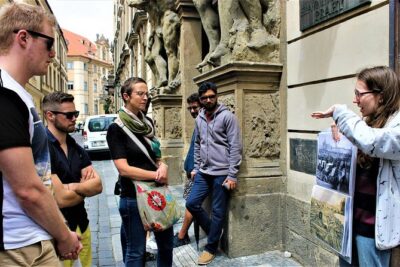
Prague Old Town, Medieval Underground and Dungeon Historical Tour
Read our review →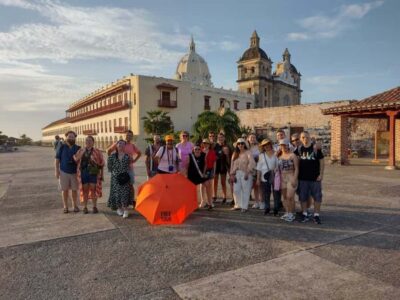
Cartagena: Historic Center and Getsemaní Shared Walking Tour
Read our review →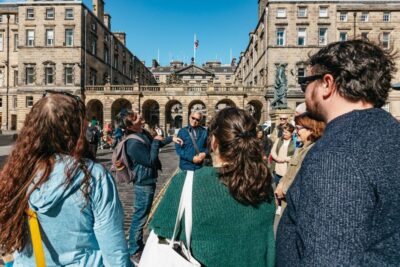
Old Town Walking Tour History and Tales in Edinburgh
Read our review →
Philadelphia Old City Historic Walking Tour with 10+ Top Sites
Read our review →Browse the lists this tour appears in