
Review · JEWISH HERITAGE TOURS
Riga: Jewish History and Heritage Tour
Riga’s Jewish story is written into its streets, wooden homes, synagogues, memorials, and Art Nouveau façades. This 3.5-hour tour connects those places with the lives of thinkers, artists, and ordinary people caught in one of Europe’s darkest chapters. The small group, limited to four, keeps the outing personal, while a car makes it possible to cover sites spread across the city.
I like the chance to enter Peitav Shul, the only Riga synagogue to survive the Nazi period and remain in use. I also like the mix of Jewish heritage and city architecture, from Maskavas Forstadt’s wooden houses to Mikhail Eisenstein’s elaborate buildings and the former home of Isaiah Berlin.
The main consideration is emotional weight. Rumbula, the Great Choral Synagogue memorial, the ghetto area, and the forest massacre sites require quiet attention, not a quick sightseeing mood. The synagogue and Riga Ghetto Museum also close on Shabbat and other Jewish holidays.
Key points
- Peitav Shul still serves Riga’s Jewish community: See the synagogue that survived the Nazi period and hear how its Torah scrolls were saved.
- Maskavas Forstadt reveals an older Jewish neighborhood: Walk among wooden homes, a former Jewish school, and the Bikur Holim hospital.
- Rumbula brings the history into sharp focus: Visit a memorial site connected with mass murder and remembrance.
- Eisenstein’s Art Nouveau is part of the story: Look beyond the ornament to the Jewish architect Mikhail Eisenstein and his place in Riga’s cityscape.
- The group is capped at four people: Pickup is available anywhere in Riga, with transport included.
- Armands leads the experience: He speaks English and Russian and has earned particular praise for explaining both Latvian and Jewish history clearly.
A Jewish Riga tour that reaches beyond the Old Town
Most first visits to Riga begin with medieval lanes, church towers, and Art Nouveau streets. This tour shifts your view. It shows how Jewish life shaped the city and how war and Nazi persecution altered it almost beyond recognition.
You begin with Riga’s broader setting. Latvia’s capital was once called the Paris of the North, a nickname tied to its grand architecture and cultural life. Gothic roofs, Renaissance guild buildings, Baroque homes, and Art Nouveau apartments give the center a polished look. But Jewish Riga often appears in quieter places, especially east of the Old Town.
That contrast matters. You are not simply visiting a synagogue and a museum. You are tracing a community through its places of worship, education, medicine, residence, art, and mourning.
The tour includes walking and driving, so you can cover more ground than on a standard Old Town walk. Pickup from any place in Riga is included, a useful feature if you are staying outside the center or prefer not to arrange a taxi.
More Jewish Heritage Tours in the world:
- Budapest Jewish Heritage Memorial Walking Tour & Synagogue Entry
★ 5.0 · 568 reviews - Budapest: Jewish Heritage Guided Tour with Synagogue Ticket
★ 4.8 · 533 reviews - 3-Hour Porto Jewish Heritage Walking Tour with Local Guide
★ 4.5 · 396 reviews
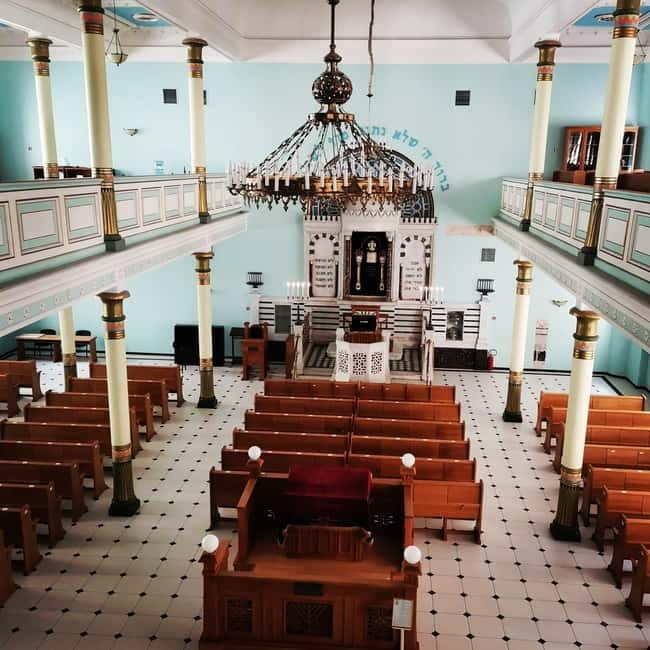
Peitav Shul and the survival of Jewish worship
A visit to Riga Synagogue, also called Peitav Shul, is one of the tour’s central moments. It is the only synagogue in Riga that survived the Nazi period and is still used today.
That fact alone gives the building unusual importance. You are seeing a functioning place of Jewish worship, not only a preserved monument. The guide explains how Torah scrolls were saved, adding a human story of courage and quick action to the architectural visit.
The synagogue visit may feel brief compared with a museum stop, but it carries more weight because the building remains part of living Jewish life. I would treat it as a place for respectful observation rather than a photo stop. Dress according to the weather, and remember that access is not available on Shabbat or other Jewish religious holidays.
Because the tour can be designed around your wishes, you may be able to give this stop more time if the synagogue is especially important to you. Ask about the exact plan when booking, particularly if you have a family connection to Riga or Jewish heritage in Latvia.
Maskavas Forstadt and Riga’s wooden Jewish quarter
Maskavas Forstadt, also called the Maskavas suburb, became Riga’s main Jewish settlement area in the 19th century. Before the Nazi years, it was not a ghetto. That distinction is important, since the neighborhood’s older identity was tied to ordinary community life, not only persecution.
The district’s wooden houses give it a very different feel from central Riga’s stone Art Nouveau avenues. Here, the streets help you picture a working neighborhood where people lived, studied, prayed, and sought medical care.
Several Jewish institutions remain part of the story. The first Jewish secular school now operates as a private Jewish school, and the historic Bikur Holim Jewish hospital is still in use. These details show a community with its own civic structure, not a collection of isolated families.
You should expect some walking on uneven city streets and a setting less polished than central Riga. That is part of the value. Maskavas Forstadt is not presented as a restored museum district. Its wooden housing and surviving institutions make the history feel connected to a real neighborhood.
The car is useful here because the district forms only one part of a wider route. You can walk enough to understand its character, then continue to memorials and other parts of Riga without losing time on long transfers.
The Great Choral Synagogue memorial
The site of the Great Choral Synagogue, also known as the Gogol Shul, is now a memorial. The synagogue itself is gone, so this stop asks you to work with absence.
The place recalls the Jewish people who suffered and died during the Nazi occupation, along with those who risked themselves to save Jewish lives. That second part matters. The history is not only a record of destruction. It also includes acts of help, protection, and moral choice.
I find memorial sites most useful when a guide gives them clear context rather than treating them as a quick photograph. Armands Latvia Guide is led by Armands, whose English and Russian tours focus on explaining both Latvia’s wider past and its Jewish story. His role is especially important here, where the physical remains cannot tell the whole story by themselves.
Do not expect a grand building interior at this stop. The value lies in understanding what occupied the site, what happened there, and how the city remembers it now.
More History Tours in the world:
- New York City: American Museum of Natural History Ticket
★ 4.5 · 15,447 reviews - History and Hauntings of Salem Guided Walking Tour
★ 5.0 · 14,564 reviews - Colosseum: Underground and Ancient Rome Tour
★ 4.7 · 12,691 reviews - Lisbon: History, Stories and Lifestyle Walking Tour
★ 4.8 · 10,902 reviews
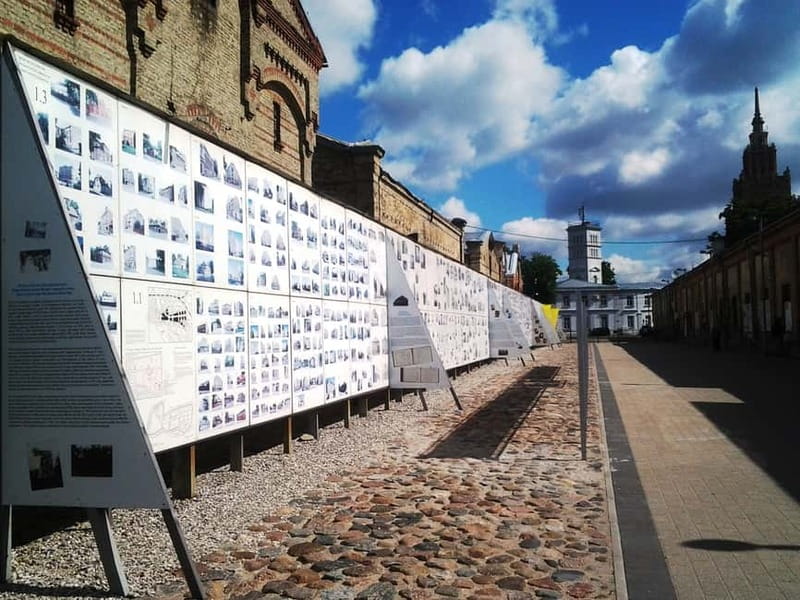
The Riga Ghetto Museum and the surviving streets
The Riga Ghetto Museum sits on the edge of the former ghetto area. The surrounding part of the city is unusual because its small wooden houses have not undergone major architectural change. That gives you a rare chance to see the physical setting where people lived during the ghetto period.
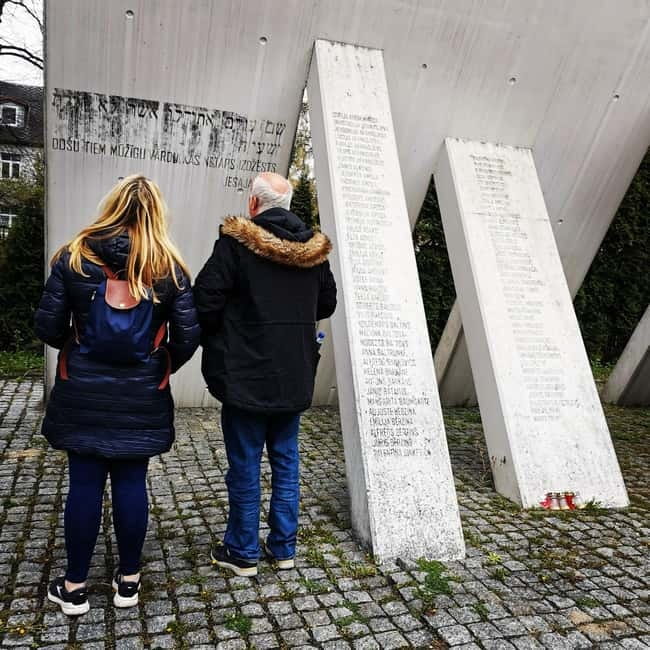
The museum’s walls carry the names of more than 70,000 Holocaust victims. Names turn a vast number into individual identities, even when you cannot read them all. Allow time to take in the scale of the memorial rather than rushing through for a checklist stop.
This is one of the places where the tour’s theme becomes especially direct. You can connect the streets, the housing, the forced confinement, and the names on the walls. The setting is not a reconstructed exhibit made to look old. The surviving small homes help show the real scale of the neighborhood.
The museum is closed on Shabbat and other Jewish religious holidays. If entering the museum is important to you, check the day before committing to this tour. On those closure days, the guide can still shape the excursion around outdoor sites, but the experience will not be identical.
Rumbula and the forests of remembrance
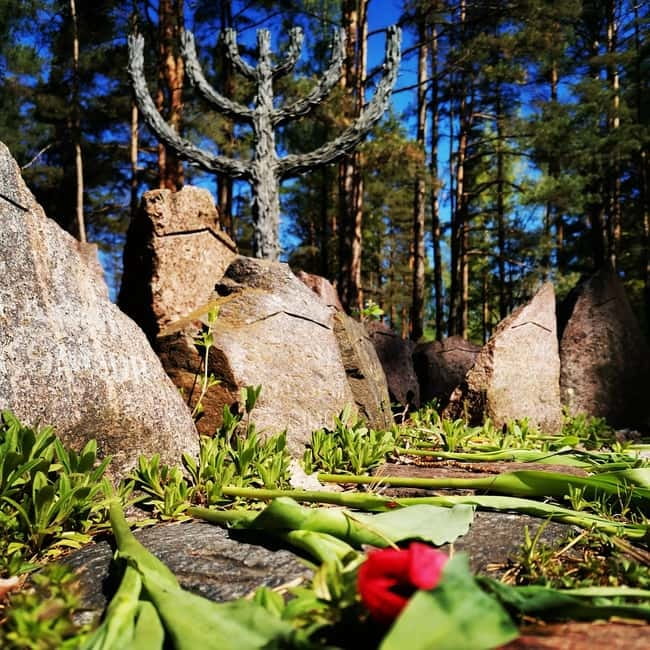
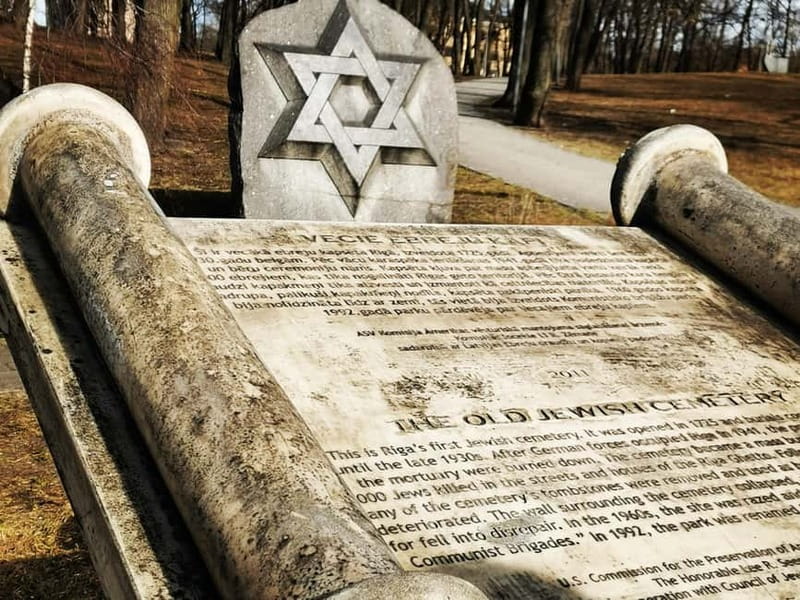
Rumbula Memorial and the old Jewish cemetery are among the tour’s most serious stops. The Rumbula and Biķernieki Forests were sites of mass murder during the Nazi period and are now places of remembrance and contemplation.
You will not find the light sightseeing rhythm of Riga’s central streets here. The setting calls for quiet, and the guide’s explanation helps connect the location to the people who were murdered there. The tour also refers to the old Jewish cemetery, giving you a wider view of how Jewish burial and memorial places fit into the city’s past.
This part of the route is a strong reason to choose a guided visit rather than trying to piece the sites together alone. The locations are spread out, and their meaning depends on historical context. Transport also makes the visit more practical within a 3.5-hour schedule.
The drawback is simple: you cannot give every memorial the same amount of time. Traffic affects the total duration, and the route includes several distant locations. If you want long, reflective visits at both Rumbula and Biķernieki, ask in advance how the guide will divide the time.
Eisenstein’s Art Nouveau and the Jewish cultural story
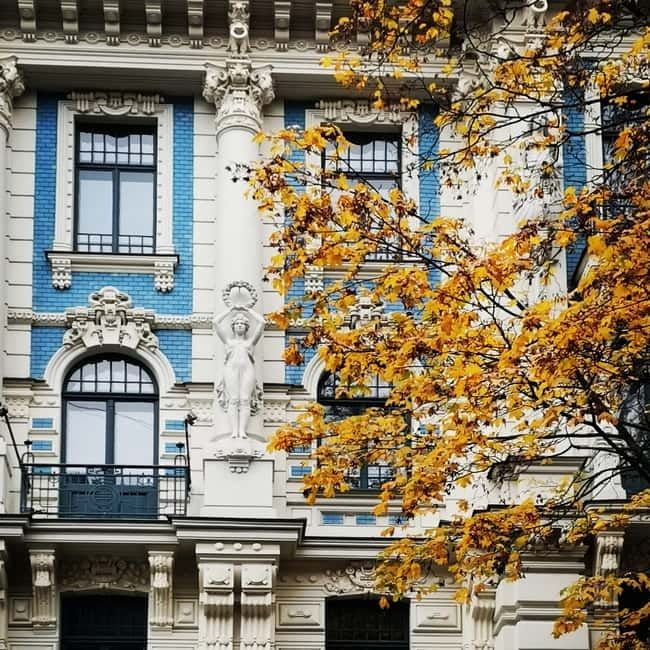
Riga’s Art Nouveau architecture is one of its great pleasures, and this tour gives it a Jewish connection. Mikhail Eisenstein designed some of the city’s most striking buildings. His façades use the elaborate forms that make Riga competitive with better-known Art Nouveau cities such as Prague, Vienna, and Barcelona.
The architecture is not a side note. It helps show the variety of Jewish life in Riga. The city’s Jewish story includes religious buildings and wooden neighborhoods, but also high culture, design, education, philosophy, film, photography, and chess.
Look for the way the buildings use ornament and dramatic detail. The tour does not reduce Jewish history to the Holocaust. It places persecution alongside the achievements and daily lives that came before it.
Riga also produced or hosted several notable figures. Philosopher Yeshayahu Leibovich, filmmaker Sergej Eizenstein, world chess champion Mikhail Tal, and photographer Philippe Halsman are connected with the city. The tour highlights these names to show the breadth of Riga’s Jewish cultural contribution.
Isaiah Berlin’s Riga connection
The house where philosopher Isaiah Berlin lived adds a personal address to the cultural story. Berlin was born in 1909 and died in 1997, and his connection to Riga helps place an internationally important thinker within the city’s streets.
A former home can be a modest stop. Do not expect a museum interior or a large exhibition based on the information provided. Its value is in location and context: a famous philosopher once lived here, and that fact becomes part of the city walk.
For visitors interested in philosophy, intellectual history, or family roots, this may be one of the tour’s most memorable details. It also balances the memorial stops with evidence of Jewish life before and beyond the Second World War.
Armands, the car, and the four-person limit

The experience is led by Armands Latvia Guide, with tours in English or Russian. The group limit of four is a real advantage for a subject that can raise personal questions and needs room for explanation.
A small group also makes the route easier to adjust. The excursion is designed according to your wishes, so you can indicate whether architecture, religious heritage, memorials, or family history matters most to you. The exact balance depends on traffic and the time available.
The car is included, and pickup is available from any place in Riga. That is especially useful because the route links the Old Town, Maskavas Forstadt, the former ghetto area, and memorial sites outside the center.
Transport is not just a comfort here. It protects your limited time. Riga’s streets can slow the tour, and the stated duration may change with traffic. Plan on about 3.5 hours, but avoid scheduling an important activity immediately afterward.
Is $82 good value for 3.5 hours?
At $82 per person, the price makes the most sense for a small group rather than a large coach outing. You are paying for a guide with a car, pickup anywhere in Riga, and access to a route that would be awkward to cover independently in one morning or afternoon.
For one person, the price may feel high compared with a basic walking tour. For two to four people sharing a focused private-style experience, the value improves. You avoid arranging transport between scattered sites and gain explanations that tie each place together.
Meals are not included, but that is not a major issue for a 3.5-hour tour. You can eat before or after, and keeping food separate lets the guide use the available time for the heritage route.
The booking terms are flexible: you can cancel up to 24 hours ahead for a full refund, and you can reserve now while paying later. Those policies help if your Riga schedule depends on weather, arrival times, or changing plans.
Who should choose this Riga Jewish heritage tour?
I would recommend it most strongly to you if you want more than Riga’s famous façades. It suits people interested in Jewish history, the Holocaust, architecture, philosophy, local neighborhoods, and the human stories behind memorial places.
It is also a good choice for anyone with Jewish family roots in Latvia. The former Jewish quarter, Peitav Shul, the school, Bikur Holim hospital, cemetery, and memorials may help you build a clearer picture of Riga’s Jewish community.
You should be ready for serious material. This is not a cheerful city tour with a few historical facts added. The Nazi period and mass murder sites form a central part of the route, and some stops may be emotionally difficult.
The tour is less suitable if you want a relaxed architecture-only outing or a long museum visit in one location. You cover several areas, and traffic can limit time at individual stops.
FAQ
How long does the Jewish history tour in Riga last?
The tour lasts 3.5 hours, although the exact duration can depend on traffic on the city streets.
What languages does the guide speak?
The tour is available in English and Russian.
How many people can join the tour?
The group is limited to four participants.
Is pickup included?
Yes. Pickup is included from any place in Riga.
Can I visit the synagogue and Riga Ghetto Museum on any day?
No. The synagogue and Riga Ghetto Museum are closed on Shabbat and other Jewish religious holidays.
Is food included in the tour price?
No. Meals are not included.
Should you book it?
Book this tour if you want Riga’s Jewish past explained as a connected story, not as a list of separate sights. Peitav Shul, Maskavas Forstadt, the Great Choral Synagogue memorial, the ghetto area, Rumbula, and Eisenstein’s buildings each reveal a different part of the city.
The strongest reasons to choose it are the four-person limit, included car and pickup, and Armands’ clear focus on both Latvian history and Jewish heritage. Check the religious holiday calendar before booking, and leave some flexibility after the tour if you plan to spend time thinking about the memorial sites. For a compact but serious look at Jewish Riga, $82 is a fair price for the transport, personal guide, and wide reach of the route.
Newest history tours we have reviewed in the world
- Enjoy Ancient Mostar★ 4.0 · 45 reviews
- Private Dublin Historical and Heritage Tour by Bike★ 5.0 · 30 reviews
- Dubrovnik by Night, History, Wine & Bites★ 5.0 · 41 reviews
- Ancient Old City– Finest tour of Dubrovnik★ 5.0 · 64 reviews
- Historical Walking Tour of Dublin★ 5.0 · 50 reviews
- DayTripper Dublin: A Guided City Walking Tour★ 5.0 · 90 reviews
- Dublin LGBTQ Pride Historical and Cultural Walking Tour★ 5.0 · 91 reviews
- Interactive Living History in Dalkey Castle near Dublin City★ 5.0 · 133 reviews
Jewish Heritage Tours, compared.
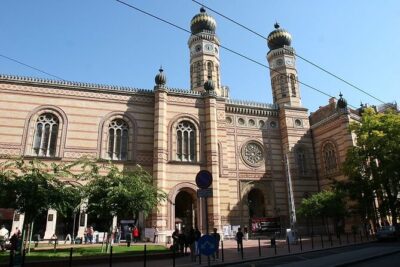
Budapest Jewish Heritage Memorial Walking Tour & Synagogue Entry
Read our review →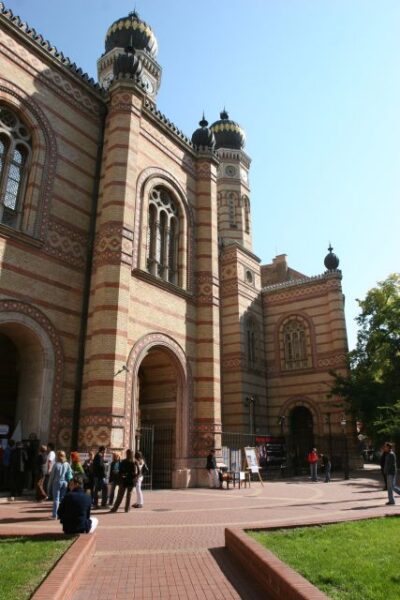
Jewish Heritage Guided Tour with Synagogue Ticket
Read our review →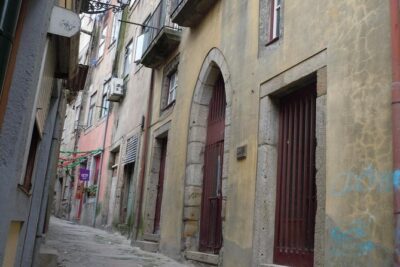
3-Hour Porto Jewish Heritage Walking Tour with Local Guide
Read our review →
Private Jewish Heritage Journey by Barcelona Dreaming
Read our review →

Anne Frank and the Jewish History of Amsterdam Private Tour
Read our review →
Lisbon Jewish Heritage and History – Private Tour Van
Read our review →
Browse the lists this tour appears in