
Review · BARCELONA HISTORY TOURS
Private Jewish Heritage Journey by Barcelona Dreaming
Barcelona’s medieval Jewish Quarter is easy to walk through and easy to miss. Behind the Gothic Quarter’s narrow lanes are traces of the old Call, an ancient synagogue, a concealed mikveh, and stories tied to scholars such as Ramban and Rashba. This private tour gives those quiet details the attention they deserve.
I like the private format, which lets your guide slow down for questions, adjust the pace, or focus on family history. I also like the careful balance between Jewish life, Catalan society, and the later persecution and expulsion, rather than treating the quarter as a simple tale of a lost golden age.
The main drawback is the limited two-hour schedule. You cover important ground, but this is an introduction rather than a full study of Jewish Barcelona. The old city also has cobbles, uneven paving, and a few steps at the synagogue.
Key points to know
- Visit the Ancient Synagogue: Entry is included, with all admission fees covered.
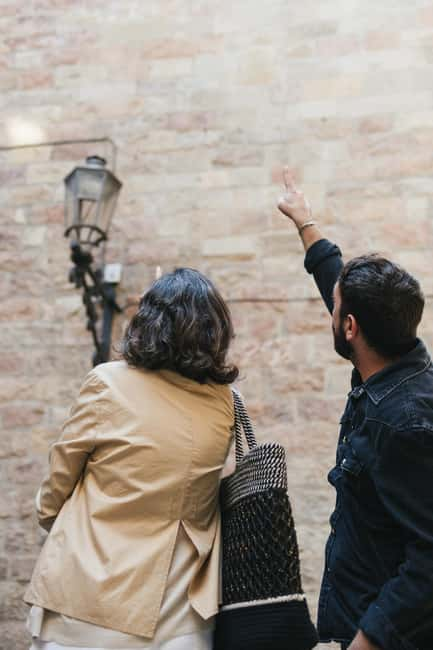
- See the medieval Call beyond the main sights: Your guide points out faint symbols, old buildings, and locations many city walks pass by.
- Ask for a family-focused pace: The tour is private and can suit different ages, interests, and walking speeds.
- Hear about Ramban and Rashba: Their connection to Barcelona gives the quarter an intellectual and personal focus.
- Choose from three tour languages: English, Hebrew, or Spanish guides are available.
- Plan for old-city walking: Bring water and comfortable shoes, and remember that the tour runs in wet weather as well as sunshine.
Why Barcelona’s Call deserves two focused hours
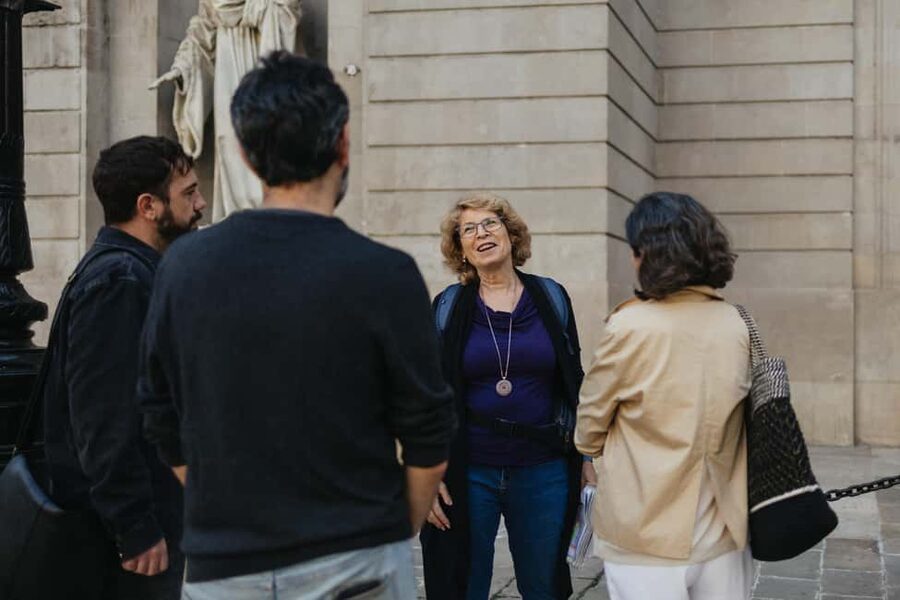
The Gothic Quarter is one of Barcelona’s most atmospheric areas, but atmosphere alone does not explain what you are seeing. The medieval Jewish Call survives in fragments. A doorway, a wall mark, a change in street width, or the position of an old building can carry more meaning than a grand monument.
That is where this tour earns its place. You are not simply shown a map of Jewish Barcelona. You are taught how to read the streets. Your guide connects buildings and alleys with religious life, scholarship, trade, family ties, and the painful events that eventually shattered the community.
I find this approach especially useful if you already plan to walk the Gothic Quarter. Instead of treating the Jewish Quarter as a separate attraction, you begin to see it as part of the city’s older structure. The same plazas and lanes take on a different weight.
The tour also reaches back more than a thousand years, with Jewish life in Barcelona discussed as far back as the fifth century. The advertised historical span extends over 2,000 years, so you should expect a broad view rather than a narrow architectural tour.
More Private History Tours in Spain
- Andorra Original History and Sightseeing Tour (Private, Pickup)
★ 5.0 · 350 reviews - Barcelona 1.5h Private Old Town, Gothic & Ramblas Walking Tour
★ 5.0 · 318 reviews - Madrid Historical Tour with Local Guide in Eco Tuk Tuk Private
★ 5.0 · 876 reviews
Starting beside Conesa Entrepans in Plaça Sant Jaume
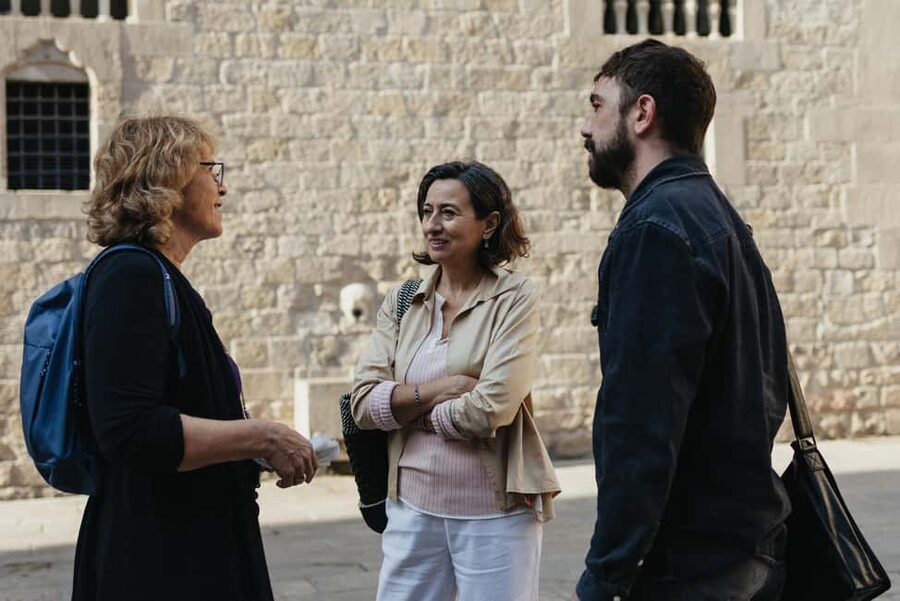
The meeting point is in Plaça Sant Jaume, beside Conesa Entrepans. This is a central and sensible place to begin, but it can also be busy, so pay attention to the exact meeting instructions and look for your guide.
One practical issue has come up more than once: guides may not always be instantly obvious in a crowded square. A guide has contacted participants ahead of time to confirm the meeting, which is helpful, but you should still allow a few extra minutes to get oriented.
The opening section takes you into the old center and sets the historical frame. Your guide may use maps, photographs, or reconstructions to show how the quarter once fitted into Barcelona. This visual help matters because little of the medieval Jewish community remains in an immediately readable form.
If you are visiting with older relatives or children, say so at the start. Guides such as Edu have adjusted their pace for older walkers, stopped when needed, and made room for questions. Families with teenagers have also found that the conversational format keeps the subject approachable.
Plaça de Sant Jaume and the shape of medieval Barcelona
From the meeting point, the walk continues around Plaça de Sant Jaume. The listed walking time is about 15 minutes, though the actual pace depends on questions and the size of your group.
This stop helps place the Jewish community within the wider civic center. You hear about Jewish life not as an isolated footnote, but as one part of medieval Barcelona. The discussion can include social connections, intellectual work, and the ways Jewish residents contributed to the city around them.
This is also where a private guide has an advantage over a fixed group route. If you want more political history, the guide can spend more time on that. If your main interest is genealogy, religious practice, or Sephardic scholarship, you can steer the conversation in that direction.
The tour’s advertised focus on Ramban and Rashba gives this section extra substance. These are not just names attached to a plaque. Their lives help show that Barcelona was linked to serious Jewish learning and wider intellectual networks.
King’s Square and the city’s complicated past
King’s Square is the longest scheduled stop, with about 30 minutes of guided walking and discussion. It is a strong place to address the relationship between Jewish residents, Christian authorities, and the larger medieval city.
The guide presents both the period of coexistence and its limits. You learn about the productive periods of Jewish life in Spain, but also about pressure, persecution, conversion, and the Inquisition. That balance is important. A polished story of harmony would be misleading, while a tour focused only on tragedy would flatten the community’s achievements and daily life.
You may also learn how to spot faint Jewish symbols on old stonework. These marks are not always dramatic. Some are easy to overlook unless someone explains what to look for and why the symbol matters.
I would pay close attention here if you are interested in family history. The quarter’s surviving traces cannot usually provide a simple family tree, but the setting can help you understand the world in which Sephardic families lived, worked, studied, and worshipped.
The walk is not physically extreme, but King’s Square and the surrounding streets are part of an old urban area. Expect cobbles, uneven surfaces, and frequent stops rather than a smooth, uninterrupted stroll.
More Jewish Heritage Tours in Barcelona:
- Barcelona Jewish & Gothic Tour
★ 5.0 · 18 reviews - Budapest Jewish Heritage Memorial Walking Tour & Synagogue Entry
★ 5.0 · 568 reviews - Budapest: Jewish Heritage Guided Tour with Synagogue Ticket
★ 4.8 · 533 reviews - 3-Hour Porto Jewish Heritage Walking Tour with Local Guide
★ 4.5 · 396 reviews
Entering the Ancient Synagogue
The Ancient Synagogue is the tour’s clearest physical connection to medieval Jewish Barcelona. Entry is included, and the admission fee is covered in the price.
The space is modest, which is part of its impact. Do not expect a large modern synagogue or a grand museum hall. The appeal lies in the age of the site, its survival within the old city, and the way your guide explains its place in the former community.
This is also where the tour moves beyond street interpretation. You can stand inside one of Europe’s oldest synagogues and connect the architectural remains with the people and practices already discussed.
The synagogue has a few steps, so it may not be fully accessible for every wheelchair user or stroller. Most of the route is described as accessible, but you should contact the provider if a step-free visit is essential.
Occasional closures are possible. If the synagogue cannot be entered, the walking portion can still be worthwhile, but the visit loses one of its most distinctive elements. I would confirm access close to your tour date if this stop is the main reason you are booking.
The mikveh and the overlooked Rashba House
The route also reveals a hidden medieval mikveh, a ritual bath that is easy to miss without local guidance. It is the sort of place that explains why a specialist tour is more useful than a general Gothic Quarter walk.
Your guide discusses the purpose of the mikveh and places it within the religious life of the community. The point is not simply to see an old room. It is to understand how religious practice shaped the quarter’s buildings and routines.
Casa Adret, often associated with the Rashba House, is another important stop. It helps bring the scholarly side of the quarter into view. The site is easy to pass without context, yet it connects directly with the intellectual life that made medieval Barcelona important within Jewish history.
The itinerary lists about 15 minutes for this final section before returning to the starting area. That is enough time for a clear introduction, but not enough for a long architectural examination. If you want every surviving location explained in detail, ask the guide at the beginning how to use the available time.
What the private format changes
A private tour is not automatically better than a group tour, but here it fits the subject well. The material includes religious terms, historical shifts, and subtle physical evidence. You can stop and ask what a word means instead of letting an unfamiliar point pass by.
You can also shape the conversation around your own reason for coming. Some people want to explore Sephardic roots. Others want a stronger grasp of medieval Spanish history. Some simply want to understand the city beyond its famous churches and Gaudí buildings.
The guides bring different personalities and backgrounds. Alan has used maps and visual material to explain the area and has been especially attentive in bad weather. Edu is known for a clear command of English, a relaxed pace, and an easy conversational style. Ella has focused on both Catalan history and the Jewish past of Barcelona, while Dina has handled detailed questions about Jewish history and persecution.
Other guides, including Lilach, Lior, Eyal, and Leiach, have also led the route. The exact guide depends on the date, but the service is offered in English, Hebrew, and Spanish.
The private setup is particularly useful for families. A two-hour walk can feel long to young children and tiring for older relatives, but a guide can adjust the pace and pause for discussion. One limitation remains: there are not many scheduled places to sit, so tell the guide if regular rest stops matter to your group.
Price, timing, and practical value
At $94 per person, this tour costs more than a standard shared walking tour. The value depends on your group size and your interest in the subject.
For one or two people, the price reflects a private guide, entry to the Ancient Synagogue, and a custom pace. For a family or small group, the per-person cost becomes easier to justify because you are not paying for several separate visits or trying to assemble the history yourself from scattered plaques.
The two-hour length is a sensible first introduction. It fits neatly into a morning or afternoon and leaves time for another part of the Gothic Quarter. At the same time, serious students of Jewish Barcelona may want a longer private program or a second visit.
The tour ends back near Conesa Entrepans, where your guide can suggest places to eat, including kosher and local options. This closing advice can be useful because it connects the historical walk with the rest of your stay rather than leaving you at an anonymous street corner.
Cancellation is free up to 24 hours before the tour, and you can reserve now and pay later. Those terms help if your Barcelona schedule is still shifting.
Who should book this walk
I would recommend it most strongly to people with a clear interest in Jewish history, Sephardic heritage, medieval Spain, or Barcelona’s lesser-seen past. It is also a good choice for families who want a serious subject explained in a personal, flexible way.
You do not need Jewish family connections to appreciate it. The tour also suits anyone who wants to understand how religious communities shaped European cities and how much history can survive in small, easily missed traces.
You should think twice if you want a fast sightseeing route with lots of major monuments. This is a quiet, discussion-led walk. Much of its value comes from interpretation, not spectacle.
Wear comfortable shoes, bring water, and check the weather. The tour runs rain or shine. If you use a wheelchair or stroller, ask specifically about the synagogue steps before booking.
Final verdict on Barcelona’s Jewish Heritage Journey
I would book this tour if Barcelona’s Jewish past is a priority, especially for a family or small group that values questions and a flexible pace. The Ancient Synagogue, mikveh, Casa Adret, and stories of Ramban and Rashba give the walk a strong sense of place.
The price is fair for a private two-hour tour with admission included, though the short duration means you will only get an introduction. Book it early in your Barcelona stay if you can. The guide’s recommendations for kosher food, local dining, and lesser-known places can then improve the rest of your visit.
FAQ
How long does the Jewish Heritage Journey last?
The tour lasts two hours.
How much does the tour cost?
The listed price is $94 per person.
Which languages are available?
The tour is offered in English, Hebrew, and Spanish.
Is the Ancient Synagogue included?
Yes. Entry to the Ancient Synagogue and its entrance fee are included.
Is the tour wheelchair accessible?
Most of the walking route is accessible, but the Ancient Synagogue has a few steps and may not be accessible for every wheelchair user or stroller.
Where does the tour meet?
The meeting point is in Plaça Sant Jaume, next to Conesa Entrepans.
More Private History Tours in Barcelona
- Private Historical Walking Tour of York
★ 5.0 · 1,324 reviews - Private Guided Historic Electric Cart Tour of St. Augustine
★ 5.0 · 1,194 reviews - Istanbul: Acemoglu Historical Turkish Bath w/Private Options
★ 4.6 · 1,190 reviews - From Cairo: Private Full-Day Tour of Historical Alexandria
★ 4.1 · 1,155 reviews
Newest history tours we have reviewed in Barcelona
- Barcelona Jewish & Gothic Tour★ 5.0 · 18 reviews
- Andorra Original History and Sightseeing Tour (Private, Pickup)★ 5.0 · 350 reviews
- Savor Spain: Food, Wine, History & Culture Small Group Tour in Old Barcelona★ 5.0 · 140 reviews
- Taste of Barcelona: Boqueria Market, Tapas & History Tour★ 4.5 · 22 reviews
- Sip, Sites & Bites Barcelona Food, Drinks & History Tour★ 4.5 · 95 reviews
- History Museum of Catalonia & Rooftop Access Ticket★ 4.5 · 43 reviews
- Barcelona Tapas Food Tour, Taverns, History & Local Culture★ 5.0 · 42 reviews
- Historical Montserrat Half-Day Hiking Tour from Barcelona★ 5.0 · 26 reviews
Jewish Heritage Tours, compared.
Budapest Jewish Heritage Memorial Walking Tour & Synagogue Entry
Read our review →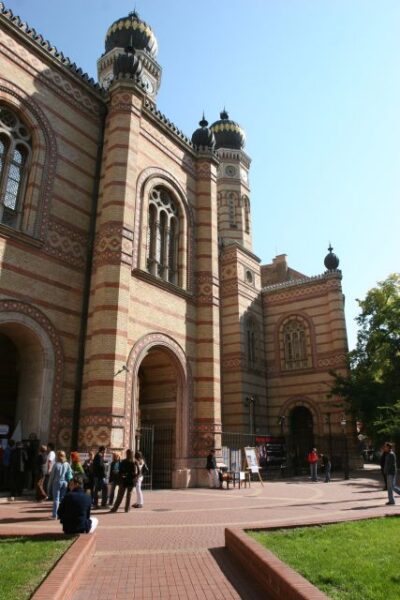
Jewish Heritage Guided Tour with Synagogue Ticket
Read our review →
3-Hour Porto Jewish Heritage Walking Tour with Local Guide
Read our review →

Anne Frank and the Jewish History of Amsterdam Private Tour
Read our review →
Lisbon Jewish Heritage and History – Private Tour Van
Read our review →
Anne Frank and Amsterdam Jewish History Walking Tour
Read our review →Browse the lists this tour appears in