
Review · BARCELONA HISTORY TOURS
Barcelona 1.5h Private Old Town, Gothic & Ramblas Walking Tour
Barcelona reveals its best hand when old stone streets give way to Gaudí’s wild curves. This tour links the Gothic Quarter with Las Ramblas, Passeig de Gracia, Casa Batlló, and La Pedrera in one brisk outing, giving you a useful first look at both medieval and modern Barcelona.
I like the way a local guide leads you through small lanes you could easily miss, then explains the city’s famous Modernist buildings with pictures and stories. I also like the flexible morning, afternoon, and evening departures, especially in hot weather. The drawback is simple: you cover a lot of ground, and no historic interiors are included.
Key points to know before booking
- Two Barcelonas in one walk: Move from Roman remains and medieval churches to Gaudí’s most famous façades.
- A small group, not a private tour: The maximum is 15 people, with a live English-speaking guide.
- Expect about 2 hours 15 minutes: The title says 1.5 hours, but the supplied duration and route indicate a longer experience.
- No interior visits: You see and discuss the buildings from outside, but entry tickets are not included.
- A short metro ride is part of the route: The Barcelona metro is described as clean, safe, and efficient.
- Wear proper shoes: The route includes old stone lanes, city sidewalks, and plenty of walking.
From Roman ruins to Gaudí’s curved façades
This is a useful introduction to Barcelona because it does not keep you in one period of the city’s past. You begin in the oldest quarter, where Roman remains, medieval churches, courtyards, and narrow passages form a tight maze. Later, you walk along the broad Passeig de Gracia, where wealthy families hired leading Modernist architects to design elaborate homes.
That change in mood is the point. The Gothic Quarter feels compressed, shaded, and full of surprises. Passeig de Gracia feels grand and open, with high-end shops and large façades competing for your attention. You get a quick lesson in how Barcelona grew from an old walled center into a major modern city.
The guide is central to the experience. Christian is described as energetic and entertaining, while Henrietta brings strong background in Barcelona’s history, architecture, and current politics. Lena, Evan, Chrisa, Sara, and Melanie are also named as guides who have led this route. The experience can vary with the person leading it, but the format gives you time to ask questions rather than simply follow a script.
More History Walking Tours in Barcelona
- Barcelona: Tapas Walking Tour with Food, Wine, and History
★ 4.8 · 4,261 reviews - Barcelona Tapas Walking Tour: Food, Wine & History
★ 4.5 · 1,928 reviews - Barcelona: Dark History Night Walking Tour
★ 4.8 · 344 reviews
The Gothic Quarter’s lanes reward a guide
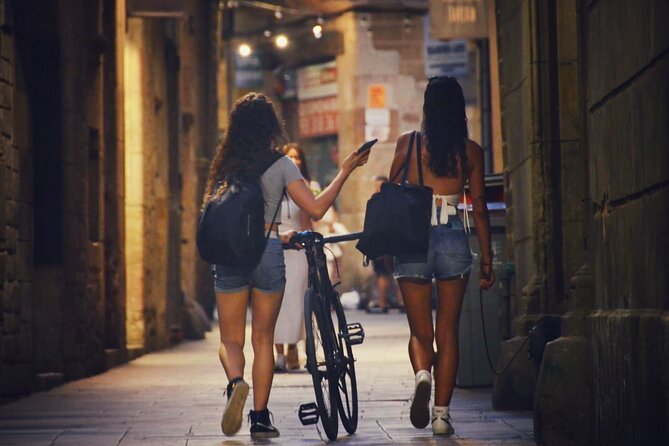
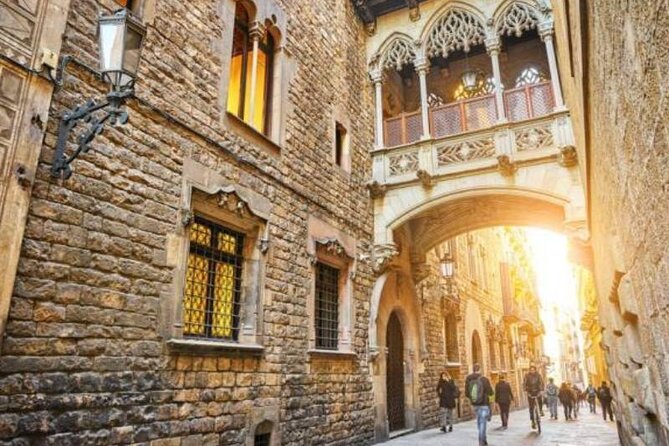
The first major section takes place in the Gothic Quarter, the oldest part of the city. Allow around 30 minutes for Roman ruins, medieval churches, small squares, courtyards, and narrow alleys.
This is where a guide earns the price of admission, even though no admission ticket is needed. The quarter is easy to walk through but harder to understand. A handsome doorway may lead to a quiet courtyard, while an ordinary-looking wall can preserve traces of an earlier period. The route promises the kind of small details that are easy to pass without noticing.
You should expect pauses for photographs and explanations rather than a fast march from landmark to landmark. Melanie, one of the guides, used an iPad and adjusted her stories for a family with children. She also answered repeated questions and allowed a short snack break, which is a useful sign for parents deciding if the pace will work for younger walkers.
The old quarter does have practical drawbacks. Streets can be crowded, surfaces may be uneven, and the narrow setting makes it important to stay close to the group. The radio headset, rented from an outside provider for €1 per person, helps you hear the guide when the street gets noisy. I would take it, particularly if you are not comfortable walking shoulder to shoulder with the guide.
Las Ramblas gives the tour a famous central artery
The stop at Las Ramblas is brief, listed at about five minutes. That is enough for an introduction to Barcelona’s best-known street, its markets, bars, restaurants, and place in the city’s story.
Do not expect a long stroll down every section of the boulevard here. Las Ramblas works more as a connecting point between the old city and the next sights. The guide can explain why the street became so famous and point out the activity around it, but the schedule leaves little time for lingering.
That short stop is sensible. Las Ramblas is easy to return to on your own, while the Gothic Quarter’s smaller lanes are harder to decode without help. If you want to browse markets or stop for food, save that for after the tour.
Barcelona Cathedral and the quiet square at Sant Felip Neri
The route pauses outside Barcelona Cathedral for about five minutes. This medieval Gothic church sits at the heart of the old town and is one of the quarter’s major visual anchors.
You will hear about a secret connected with the cathedral, though the tour does not include entry. That distinction matters. You can admire the exterior and learn its story, but you should not expect time inside the church or access to paid areas.
Next comes Placa Sant Felip Neri, a small square tucked into the old quarter. It offers a quieter change from the main streets, with an intimate atmosphere that makes it a good place for photographs and a short pause. The stop is also brief, so think of it as a carefully chosen glimpse rather than a long visit.
I like this part of the route because it keeps the old town from becoming a checklist of famous names. The cathedral is a major landmark. Sant Felip Neri shows how the quarter can suddenly become still a few steps away from the main flow of the city.
More History Walking Tours in Spain
- Barcelona: The Spanish Civil War Historical Walking Tour
★ 4.9 · 239 reviews - Barcelona Historical Walking Tour: Gothic Quarter and El Born
★ 5.0 · 217 reviews - Barcelona Dark History Night Walking Tour With Drinks
★ 5.0 · 153 reviews - Barcelona El Raval Dark History Walking Tour
★ 5.0 · 70 reviews
Placa Reial adds palms, arcades, and evening energy
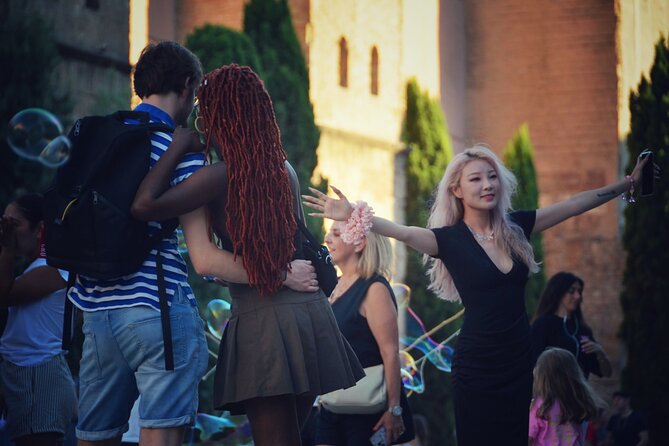
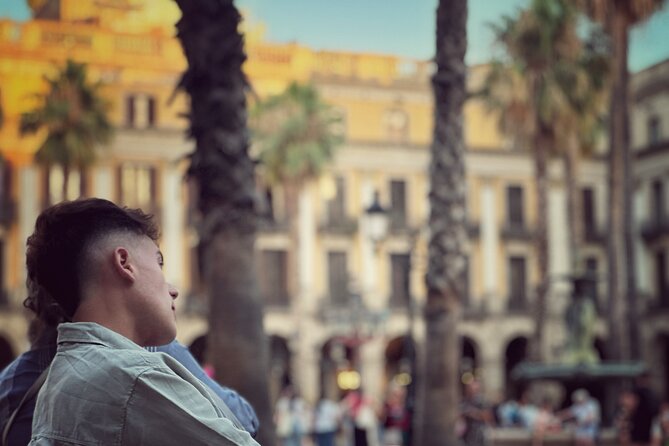
Placa Reial takes about five minutes. This large arcaded square is lined with restaurants and nightlife, with palm trees adding a different look from the stone lanes nearby.
The square works especially well on an evening departure, when the setting becomes more social and atmospheric. Morning and afternoon tours give you a clearer look at the architecture and layout. Since the tour offers different times of day, you can choose the mood that suits your schedule.
Again, the visit is an outside stop. You are not buying a meal or entering a venue as part of the tour. The guide gives context and points out what matters, leaving you free to return later if a restaurant or bar catches your eye.
A short metro ride connects old Barcelona with the Modernist center
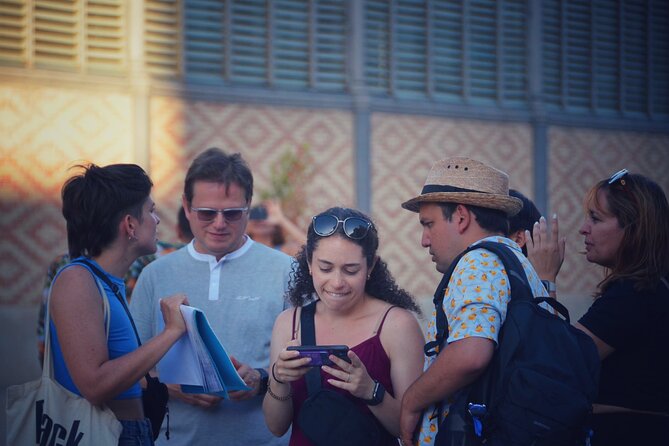
A short metro ride is included in the experience. That small detail makes the route more practical than a long walk between the Gothic Quarter and Passeig de Gracia.
The Barcelona metro is described as clean, safe, and efficient. The ride also gives you a quick sense of how the city’s historic center connects with its grander modern avenues. Your guide handles the transition, so you do not need to work out the route while trying to keep up with a group.
The metro is one reason the experience takes longer than a simple old-town walk. You are not only standing at monuments. You are moving through different parts of Barcelona, with the guide providing the link between them.
Passeig de Gracia is the architectural payoff
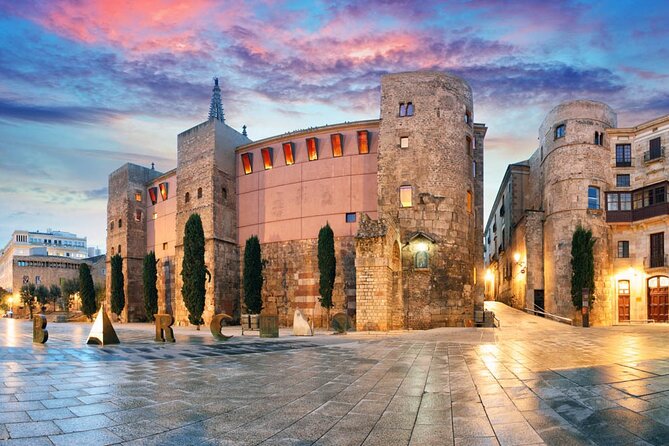
The longest section is the 45-minute walk along Passeig de Gracia, often called the Fifth Avenue of Barcelona. This is where the tour shifts from medieval Barcelona to the city’s Modernist period.
The avenue is known for high-end shops, grand buildings, decorative tiles, distinctive lampposts, and elaborate façades. You can look upward without entering a building and still find plenty to discuss. The guide explains how Gaudí and other architects used unusual shapes, color, stone, ironwork, and light to turn private homes into public attractions.
This part suits anyone who wants more than a quick photograph of Casa Batlló. You hear about the ideas behind the designs and the way Barcelona’s wealthy families competed for impressive homes. Evan has used maps and older pictures to explain the contrast between old and new Barcelona, which can make the city’s changes easier to follow.
Keep your neck comfortable and your camera ready. The buildings are tall, detailed, and easy to miss if you only look straight ahead. The broad avenue also means more traffic, shops, and general city noise than the Gothic Quarter.
Casa Batlló looks like a house from a storybook
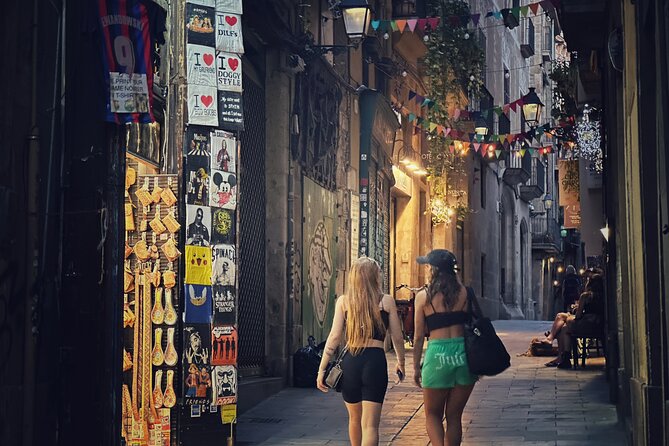
Casa Batlló receives about ten minutes. You see Gaudí’s famous exterior and hear about his design inspirations, including the popular nicknames House of Bones and House of Dragons.
The outside is the focus. Admission is not included, and the tour does not take you through the rooms, stairways, or roof. That keeps the cost and schedule under control, but you should plan a separate visit if you want to study the interior.
Ten minutes is enough for a guided explanation and photographs, though architecture fans may want more time. The guide helps you understand the elements you might otherwise treat as decoration. The building is not just an unusual façade. Its shapes and symbols are part of a larger design idea, and the stories make it easier to notice those details.
Casa Amatller shows that Gaudí was not the only name worth knowing
Casa Amatller sits next to Casa Batlló and receives a five-minute stop. Its Modernist design is by Puig i Cadafalch, another major architect associated with Barcelona’s early 20th-century building boom.
The stop matters because it prevents Passeig de Gracia from becoming a one-architect tour. You see how neighboring buildings could have different personalities, even when they were created during the same period. The contrast also helps you recognize that Barcelona’s Modernist architecture was a wider movement, not just the work of Gaudí.
Since this is an outside visit, the guide’s explanation is especially useful. You have only a few minutes, but the location makes it easy to compare Casa Amatller directly with Casa Batlló.
La Pedrera explains Gaudí’s practical imagination
The final major architectural stop is La Pedrera, also called Casa Mila. The tour allows about ten minutes to discuss Gaudí’s biggest private commission for the Mila family.
The building’s uneven stone exterior is one of the city’s most memorable sights. The guide talks about Gaudí’s design skill and a possible connection between the building and a major Hollywood filmmaker. That unusual detail adds a bit of fun to the architecture lesson without taking away from the main story.
As with Casa Batlló, entry is not included. You see the exterior, hear the background, and get a strong reason to return if Gaudí interests you. Visitors who want the roof, courtyards, or interiors will need to arrange a separate ticket.
What $83.48 buys you
At $83.48 per person, this is not the cheapest way to walk through central Barcelona. The value depends on how much you want a guide to organize the route and explain the details.
You are paying for a live English-speaking guide, a small group capped at 15 people, a planned route through several districts, and a short metro transfer. You also get local context about traditions, architecture, history, and current issues. If you are visiting for a short stay, that combination can save time and help you decide which places deserve a return visit.
The price is harder to justify if you already know Barcelona well, prefer to explore alone, or plan to enter several buildings. No admission tickets are included, so add the cost of any separate visits to Casa Batlló, La Pedrera, the cathedral, or other sights.
I see the strongest value on a first day in Barcelona. You get your bearings quickly, learn the basic shape of the old city, and finish near major Modernist landmarks. It is also a good way to begin a longer visit because guides offer restaurant suggestions and practical advice about where to go and where to avoid.
Timing, pace, and what to bring
The experience is listed at about 2 hours 15 minutes, even though the title refers to a 1.5-hour tour. Plan your day around the longer time. The route includes a metro ride and many stops, so the actual pace is more than a quick neighborhood walk.
Wear comfortable walking shoes. The route includes old-town lanes, city sidewalks, and a long stretch along Passeig de Gracia. Bring water in summer, when the heat can make the distance feel longer.
Evening departures are worth considering during hot weather. An evening walk can make the temperature easier to manage and gives Placa Reial a more social feel. Morning departures may suit you if you want to continue sightseeing afterward, while afternoon tours can fit around other plans.
The tour is offered in English and normally uses a radio headset rented for €1 per person. Most people can participate, and service animals are allowed. The experience starts at Foot Locker on Placa de Catalunya and finishes on Carrer del Consell de Cent near Casa Batlló and La Pedrera, so you end in a useful area for more sightseeing.
Free cancellation is available up to 24 hours before the start time. Poor weather or an insufficient number of bookings can lead to a cancellation, with another date or a full refund offered.
Who should book this Barcelona walk?
I would choose this tour if you are new to Barcelona, have a short stay, or want one organized route that combines the Gothic Quarter and Gaudí’s Modernist buildings. It suits curious families too, especially with a guide who can adjust stories and answer questions.
History and architecture fans should get plenty from it, even without going inside the buildings. The guide’s maps, pictures, stories, and explanations help turn a series of façades into a readable story about Barcelona.
I would skip it if your priority is spending a long time inside Casa Batlló, La Pedrera, or the cathedral. I would also think twice if you dislike group walking, city noise, or a firm route. This is an overview with expert commentary, not a slow architectural study.
For most first-time visitors, I think it is a sensible opening tour. You see major sights, discover corners you might miss alone, and leave with a better plan for the rest of your stay. Book it if you want context and direction. Skip it if you already have a detailed independent plan and prefer to set your own pace.
FAQ
How long does the tour last?
The experience lasts approximately 2 hours 15 minutes. The title refers to 1.5 hours, so you should plan for the longer stated duration.
What language is the tour offered in?
The tour is offered in English and includes a live local English-speaking guide.
Does the tour enter Casa Batlló or La Pedrera?
No. The tour visits both buildings from the outside. Entry tickets are not included.
Are tickets to Barcelona Cathedral included?
No. You see the cathedral and hear about it, but the tour does not include entry into the church or other historic buildings.
Is transportation included?
Yes. The route includes a short ride on the Barcelona metro. The metro is described as clean, safe, and efficient.
How large is the group?
The tour has a maximum of 15 participants.
Where does the tour start and finish?
It starts at Foot Locker, Placa de Catalunya, 20, in Barcelona’s Ciutat Vella. It finishes on Carrer del Consell de Cent, 310, in the Eixample near Casa Batlló and La Pedrera.
More Old Town and Historic Centre Walks in Spain
- Madrid Essential: Historic Center, Plaza Mayor & Royal Palace
★ 5.0 · 6,416 reviews - Valencia Old Town Tour with Wine & Tapas in 11th Century Historic Monument
★ 5.0 · 3,234 reviews - Madrid Historic Centre Food Tour with Authentic Tapas & Wines
★ 5.0 · 814 reviews - Madrid in a Day Tour:Royal Palace, Historic Center & Prado Museum
★ 5.0 · 628 reviews
More Medieval History Tours in Barcelona
- Barcelona: Tipsy Tapas & History Tour in the Gothic Quarter
★ 4.8 · 227 reviews - Barcelona: Gothic Quarter Tour Dark History & Ghosts Tour
★ 4.8 · 64 reviews - Barcelona: Market, Tasty Tapas/Food and Gothic History Tour
★ 4.7 · 48 reviews - Barcelona: Cemetery Tour – Gothic Graves & Local History
★ 4.9 · 33 reviews
Newest history tours we have reviewed in Barcelona
- Barcelona Tapas Tour, Taverns, History & Local Culture★ 5.0 · 25 reviews
- Barcelona Historical 3-Hour Bike Tour★ 4.7 · 222 reviews
- Barcelona: Market, Tasty Tapas/Food and Gothic History Tour★ 4.7 · 48 reviews
- Barcelona: The Spanish Civil War Historical Walking Tour★ 4.9 · 239 reviews
- Barcelona: Cemetery Tour – Gothic Graves & Local History★ 4.9 · 33 reviews
- Barcelona & Chocolate Amatller History and Culture + Activity and Tasting★ 4.9 · 173 reviews
- Barcelona: 3-Hour Esoteric, Spiritual & Historical Tour★ 5.0 · 34 reviews
- Barcelona: 3-Hour Sips, Sites & Bites Food & History Tour★ 4.8 · 33 reviews
Medieval History Tours, compared.
Oldtown, Medieval Underground & Dungeon History Tour
Read our review →
Prague Old Town, Medieval Underground and Dungeon Historical Tour
Read our review →
Templar Tour Convent of Christ & Almourol Castle from Lisbon
Read our review →

Tipsy Tapas & History Tour in the Gothic Quarter
Read our review →
Barcelona Historical Walking Tour: Gothic Quarter and El Born
Read our review →
“Porto: Fado Show with Guided Tour in a Historic Monastery”
Read our review →
Browse the lists this tour appears in