
Review · SWEDEN HISTORY TOURS
Stockholm Viking History Full Day Tour to Sigtuna + Uppsala
The most rewarding part of this day is seeing Viking Sweden away from Stockholm’s museums. You stand beside old rune stones, burial mounds, a reconstructed bridge, and the remains of places where local power and law once took shape. Sigtuna and Old Uppsala give you the broad story, while smaller sites such as Broby Bridge and Arkil Assembly ground it in real places.
I like the mix of archaeology and living towns. I also like the small-group feel, comfortable vehicle, hotel pickup, and guides who bring different strengths: Olof, Calle, Gabriel, Åsa, Urban, Felix, and others have been praised for humor, clear English, and strong command of Swedish history. The one drawback is pace. You see six major stops in one day, so you will have limited time to wander on your own, especially in Sigtuna and Uppsala.
Key points to know before booking
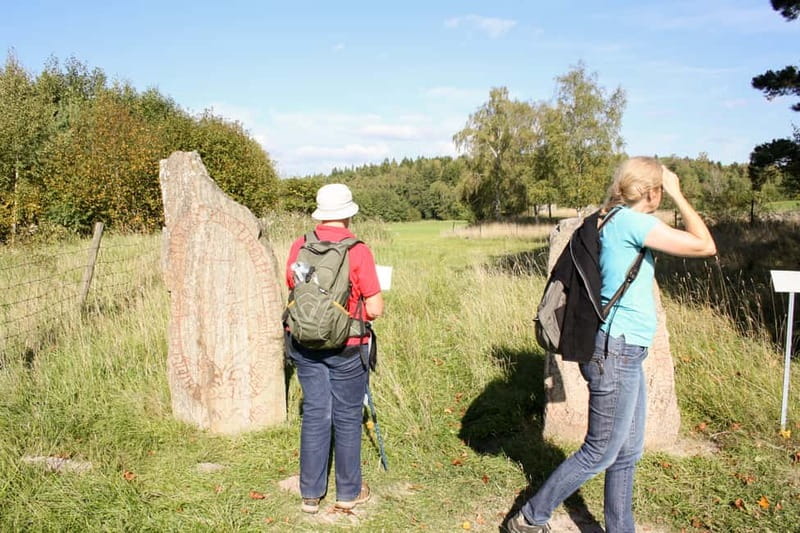
- Six carefully chosen historical stops: Visit Viking burial grounds, rune stones, a reconstructed bridge, an assembly site, Sigtuna, Uppsala, and Old Uppsala.
- Broby Bridge tells a human story: Learn about Estrid and the change from Norse beliefs to Christianity through nearby graves.
- Sigtuna adds charm and breathing room: Walk narrow lanes, medieval church ruins, and wooden streets during the longest stop.
- Old Uppsala gives the grand finale: See three large burial mounds and hear why this place mattered to early Swedish kings and religious leaders.
- The guide makes or breaks the day: Names such as Olof, Gabriel, Calle, Åsa, Urban, and Felix have been especially praised for humor and historical detail.
- Plan for a full day outdoors: The tour lasts 8 to 9 hours, runs in all weather, and includes a lunch break but no included food.
Why this tour gives you more than a quick Viking overview
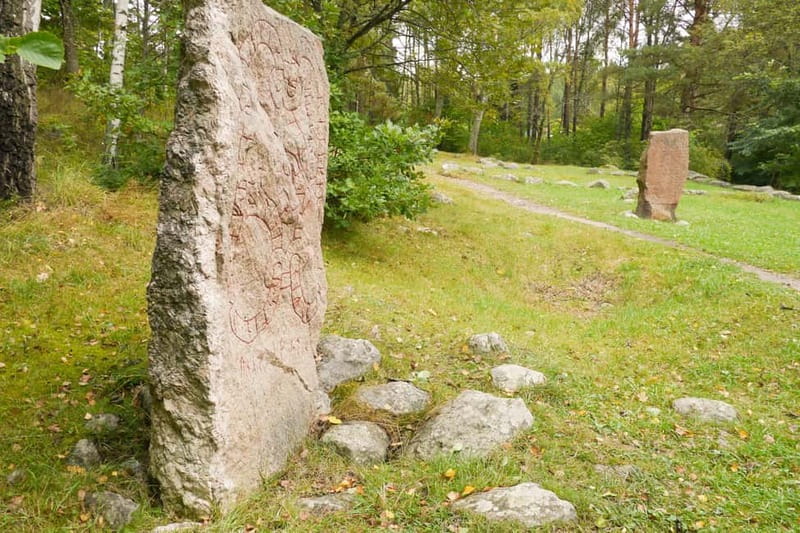
Many visitors first meet Viking history through films, museum displays, and dramatic tales of raids. This tour gives you a more useful view. You see how people marked graves, set up laws, built family networks, used writing, and gradually moved from Norse religion toward Christianity.
The route also helps you separate fact from legend. One guide, Åsa, is described as an archaeologist and university teacher, while other guides such as Olof, Gabriel, Calle, and Urban have been praised for explaining what is known, what is uncertain, and what later stories may have added.
That matters because Viking history is full of gaps. Rune stones provide names and messages, but not every part of the story can be proved. A good guide gives you the evidence without draining the fun from it. This experience appears to do that well.
You travel in a comfortable vehicle rather than trying to connect scattered rural sites by public transport. Pickup is available within 3 kilometers of Stockholm Central Station, and cruise pickup is offered except for arrivals at Nynäshamn. The ride between stops also becomes part of the tour, with explanations about Swedish culture, local history, and the wider setting.
More Medieval History Tours in the world:
- Prague: Oldtown, Medieval Underground & Dungeon History Tour
★ 4.3 · 10,277 reviews - Prague Old Town, Medieval Underground and Dungeon Historical Tour
★ 4.5 · 3,227 reviews - Templar Tour Convent of Christ & Almourol Castle from Lisbon
★ 5.0 · 704 reviews
Broby Bridge and the story of Estrid
Broby Bridge, or Broby bro, is one of the strongest stops for visitors who want more than a quick look at a rune stone. It is an old burial ground connected with Estrid, presented as a powerful Viking woman whose family and status can be traced through the site.
You learn about both a pagan burial place and an early Christian burial site. That makes Broby Bridge useful for understanding a period of change, rather than treating Viking Sweden as one fixed culture. Old Norse beliefs and Christian customs existed side by side, and the graves help show that transition.
The visit lasts about 40 minutes. You will have time for a guided explanation, photographs, and views around the site, but this is not a long archaeological walk. Wear shoes that can handle uneven ground, especially in wet weather.
This stop also shows why a guide matters. A field of graves can look simple at first glance. With the story of Estrid, family power, and changing religious practice, the place becomes much easier to read.
Jarlabanki Bridge and its unusual rune message
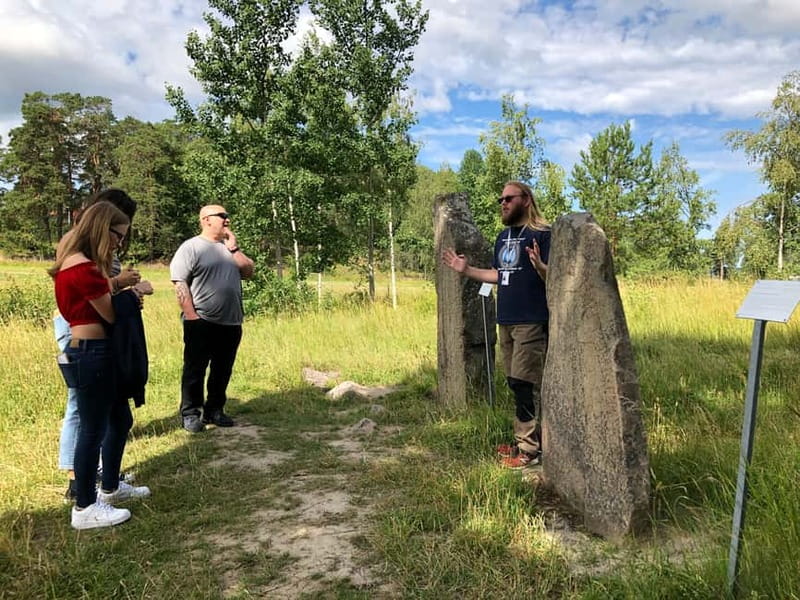
At Jarlabanki Bridge, you see a partly reconstructed Viking bridge and a rune inscription linked to Jarlabanki. The bridge gives you a physical sense of how people moved through the area, while the runes offer a glimpse into how wealthy and powerful individuals wanted to be remembered.
The reconstruction is important to understand. You are not looking at an untouched Viking bridge in its complete original form. Instead, you are seeing a modern reconstruction based on the remains and historical evidence. That makes the site accessible without pretending that every timber is a thousand years old.
You have roughly 40 minutes here for a guided visit and photographs. The appeal is not only the structure itself. It is the strange and personal quality of the inscription, which helps you see rune stones as statements about people, family, faith, and reputation rather than as random old writing.
Arkil Assembly and Viking law
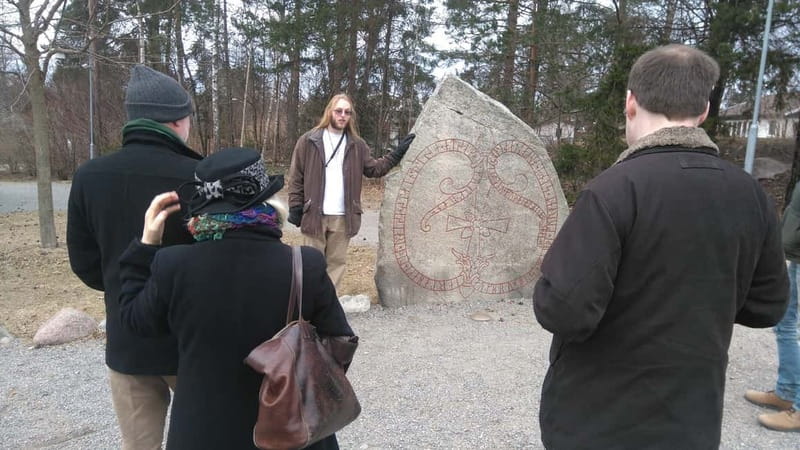
Arkil Assembly, or Arkils Tingstad, introduces the social side of the Viking age. This was an assembly place, sometimes described as a Viking parliament, where people gathered to discuss laws and settle disputes.
The guide explains how kin groups worked and why family ties formed a base for Viking society. You also hear how disputes could be handled before Sweden had the kind of centralized government you know today.
This is one of the more valuable stops for anyone whose idea of Vikings begins and ends with warriors. The assembly site points to negotiation, legal customs, public decisions, and social responsibility. Violence was part of the period, but it was not the whole system.
The visit lasts about 40 minutes. You should expect a short stop with focused explanation rather than a large museum or preserved settlement. The value lies in the story and setting.
More Full-Day Tours in the world:
- Ninh Binh Heritage Full Day Tour with Buffet Lunch and Limousine
★ 5.0 · 2,692 reviews - Bali: Tanah Lot UNESCO World Heritage Sites Full-Day Tour
★ 4.7 · 1,947 reviews - UNESCO’s Ayutthaya Historical Park: Full-Day Tour from Bangkok
★ 4.5 · 1,559 reviews - Full-Day Aruba History and Must-See Landmarks Tour
★ 4.5 · 1,497 reviews
Sigtuna, Sweden’s oldest town
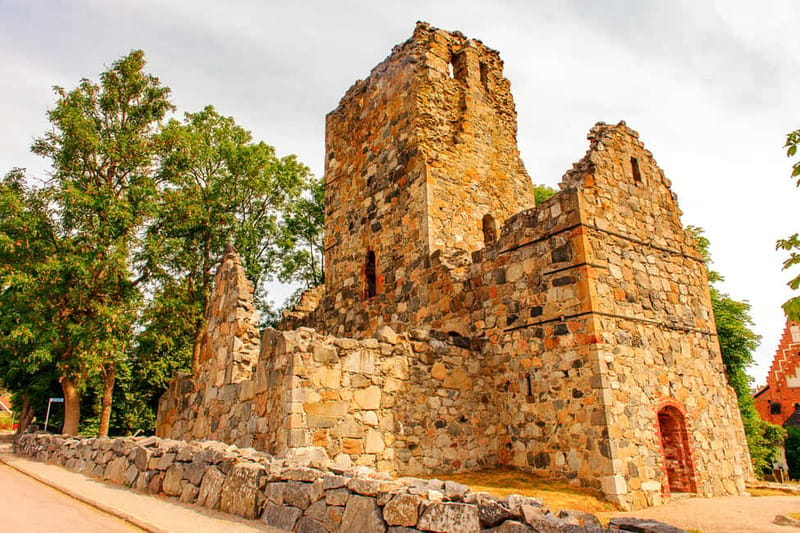
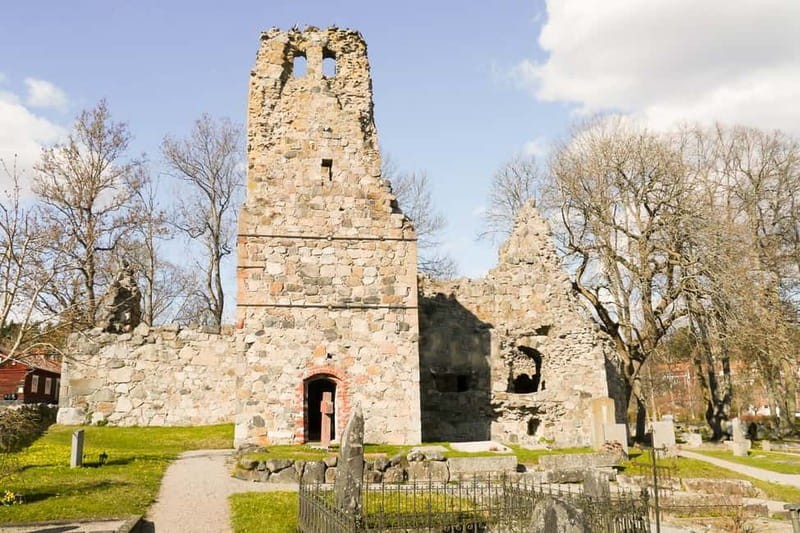
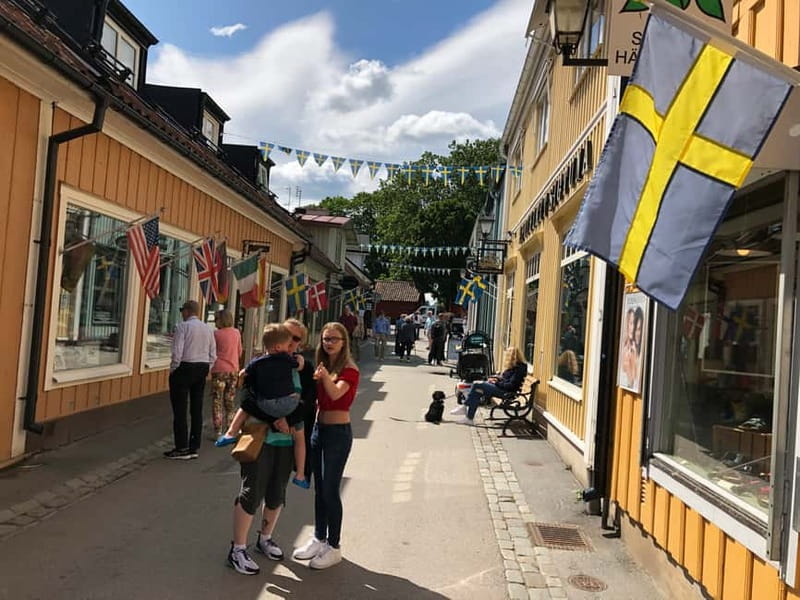
Sigtuna is the most relaxed part of the route and the longest stop, with about 100 minutes for a guided walk, sightseeing, photographs, and lunch. It is known as Sweden’s oldest town and has the feel of a small wooden retreat, with narrow lanes and several medieval church ruins.
I like this change of rhythm. The rural Viking sites are mostly about individual remains and open-air interpretation. Sigtuna gives you streets, buildings, ruins, and a town you can still walk through. You get a stronger sense of how Swedish history continued after the Viking age.
The church ruins are especially useful because they show the spread of Christianity and the growth of medieval Sweden. You do not simply hear that the country changed. You see traces of the institutions that followed.
Lunch is not included, so budget for your own meal. The schedule gives you a proper break, but the time also needs to cover the guided walk and sightseeing. If you want a long, unhurried café lunch and plenty of shopping, you may find the stop too short.
Sigtuna is also a good place to enjoy the ordinary details: wooden streets, compact lanes, and a slower small-town atmosphere. The tour is not limited to Viking monuments, and that is a strength if you want to connect the early period with later Swedish life.
Uppsala city and its great cathedral
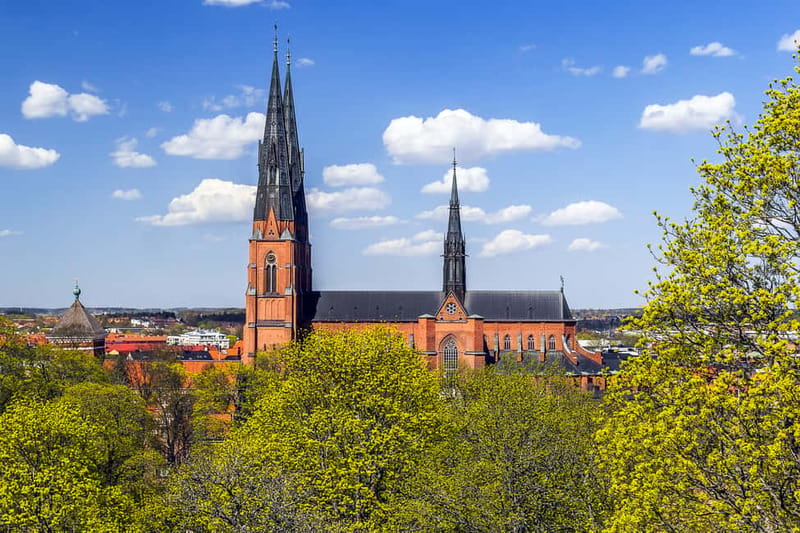
The route continues through Uppsala County before reaching Uppsala city. You have a guided walk of about 30 minutes, followed by around 35 minutes inside or around Uppsala Cathedral with a guide.
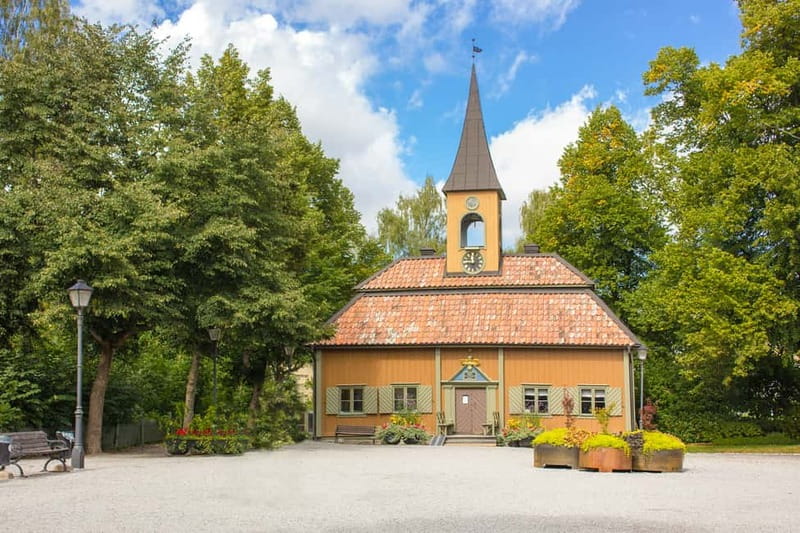
The cathedral is presented as the largest church in the Nordic countries. Its scale gives the day a clear shift from pagan burial mounds and Viking assemblies to medieval Christian power. You see how religion, politics, and royal authority became tied together in later Swedish history.
This part of the day is not focused only on Vikings. That is worth knowing before you book. One account of the tour found the first half more directly connected to the Viking age, while the later stops concentrated more on the period that followed. I see that as a useful tradeoff, since the tour is really about the formation of Sweden, not just Viking raids.
The Uppsala walk is fairly brief. You will get an introduction to the city and its history, but you will not have time to explore every street or museum. If Uppsala itself is your main goal, plan a separate visit.
Old Uppsala and the three great mounds
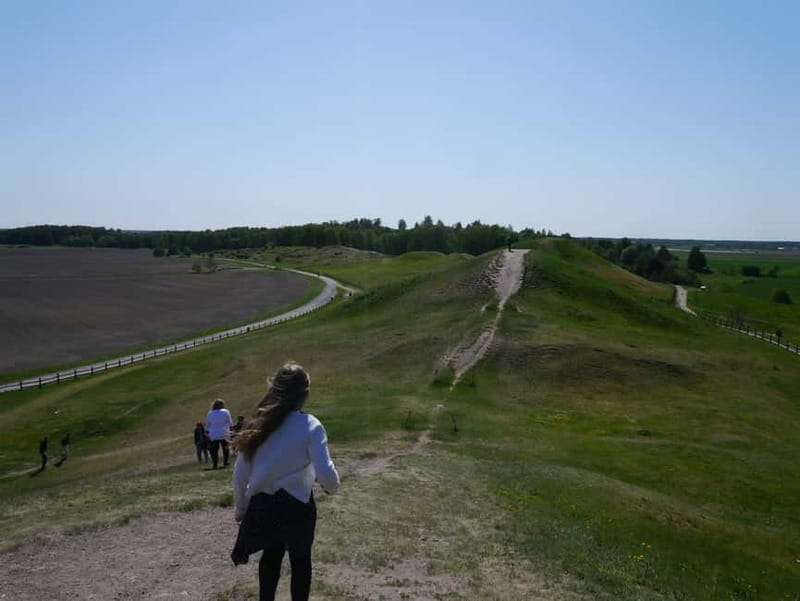
Gamla Uppsala, or Old Uppsala, brings the day back to the early royal and religious center. The three large burial mounds are the main sight, rising about 11 meters and dating back around 1,500 years.
The mounds are impressive because of their size and setting, but the guide’s explanation gives them meaning. You hear about the site’s long importance, the former medieval cathedral, and the role Old Uppsala played in Swedish history.
This is not a theme park version of the Viking age. There are no guaranteed costumes, reenactments, or staged battles in the information provided. Instead, you get grassy mounds, archaeological remains, and a carefully explained connection between power, burial, and belief.
Allow about 40 minutes for the stop. You can take photographs and walk around the mounds, but you should not expect a long private exploration. The route has to keep moving so that you can return to Stockholm within the 8 to 9 hour schedule.
The café break and the practical rhythm of the day
A local café stop adds about 40 minutes for a break, snacks, and regional food. This is helpful after several historical sites, particularly in colder weather when a warm indoor pause matters.
The day is planned with toilet breaks, a lunch period, short visits, and driving time between locations. That structure earned praise for feeling organized without becoming a race. Still, eight or nine hours is a long outing, and the number of stops means you need to stay aware of departure times.
You will be outside at several sites, and the tour operates in all weather. Bring layers and rain protection when needed. Comfortable walking shoes are sensible, even though the tour involves limited walking overall.
No food or drinks are included. You should plan to pay for lunch and café items yourself. The advantage is freedom to choose what suits you, but the $292 price does not cover those costs.
What the $292 price is really buying
At $292 per person, this is not a cheap way to leave Stockholm. The value comes from the route, private transportation, hotel pickup and drop-off, and the guide’s ability to connect sites that would be difficult to combine on your own in one day.
You are paying for access to scattered places rather than a single attraction. Broby Bridge, Jarlabanki Bridge, Arkil Assembly, Sigtuna, Uppsala, and Old Uppsala do not form one compact museum district. A vehicle and a guide save you the work of planning separate connections and working out which sites fit together.
The price makes more sense for a small group, a family, or anyone with limited time in Stockholm. It also suits you if history is a main reason for visiting Sweden and you want interpretation at every stop.
It is less attractive if you prefer to move slowly, spend hours in museums, or explore towns independently. You could visit Sigtuna and Uppsala on your own, but you would miss much of the rural Viking material and would need to organize the day yourself.
The private group option may improve the value for families or friends who want more control over questions and pace. The standard experience is described as intimate rather than a large bus outing, though the exact group size can vary.
The guide is the main reason to book
The strongest praise goes to the guides. Olof is repeatedly described as calm, friendly, and well prepared. Calle is praised for warmth, humor, and flexibility. Gabriel is noted for lively storytelling, while Åsa brings archaeological and university teaching experience. Urban, Felix, Carl, and others have also been singled out for making a long day enjoyable.
That range matters because the route contains many different kinds of stops. You need someone who can explain rune writing, burial customs, Norse mythology, medieval Christianity, Swedish law, and modern culture without turning the day into a lecture.
You should also expect the guide to shape the experience. Some guests found the pace fast because there was so much to see. Others appreciated the balance and did not feel hurried. If you ask questions and stay engaged, you will get more from the time between stops as well as the formal visits.
The tour is in English. Strong English communication has been praised, and guides have been described as able to answer difficult questions and distinguish fact from fiction.
Who will enjoy this day most?
I would choose this tour if you want a serious introduction to Viking and early Swedish history but do not want to rent a car or plan a rural route. It works especially well for first-time visitors who want to see more than central Stockholm.
It is also a good fit for families with older children. The stories of rune stones, burial mounds, kings, laws, and Norse mythology give young people several ways into the subject, though the full day may be tiring for small children.
You may want a different plan if your priority is independent wandering. The schedule leaves limited free time in Sigtuna and Uppsala, and the six-stop structure means you will often be ready to move just as you are getting familiar with a place.
This is also not a tour built around Viking costumes or hands-on activities. Its strength is real sites, historical explanation, and the chance to see places that do not fit neatly into a standard city visit.
My call: book it if the route matters more than free time
I recommend this tour for anyone who wants to understand Viking Sweden through actual places rather than a single museum display. The combination of Broby Bridge, Jarlabanki Bridge, Arkil Assembly, Sigtuna, Uppsala, and Old Uppsala gives you a clear story of burial, law, belief, town life, and political change.
Book it if you value a strong English-speaking guide, comfortable transport, and a full day outside Stockholm. The price is high, but the route is difficult to reproduce efficiently on your own.
Skip it if you want long meals, open-ended walks, or a day focused only on the Viking age. The final portion includes medieval and later Swedish history, and the schedule can feel fast. For the right visitor, though, that broad view is the point: you see not only the Vikings, but the Sweden that followed them.
FAQ
How long does the Stockholm Viking history tour last?
The tour lasts about 8 to 9 hours, including transportation between Stockholm, the historical sites, Sigtuna, Uppsala, and the return to Stockholm.
Where can I be picked up?
Pickup is available within 3 kilometers of Stockholm Central Station. Hotel pickup and drop-off are included, and cruise pickup is available except for arrivals at Nynäshamn.
Is food included?
No. Food and drinks are not included, but the schedule includes a lunch break in Sigtuna and a separate café break for snacks and regional food.
What language is the tour conducted in?
The live tour guide speaks English.
Does the tour involve a lot of walking?
The tour involves limited walking. You will walk during the city visits and around sites such as the burial grounds, bridges, church ruins, and Old Uppsala mounds.
What happens if the weather is bad?
The tour operates in all weather, so you should dress appropriately for outdoor stops.
Newest history tours we have reviewed in the world
- Enjoy Ancient Mostar★ 4.0 · 45 reviews
- Private Dublin Historical and Heritage Tour by Bike★ 5.0 · 30 reviews
- Dubrovnik by Night, History, Wine & Bites★ 5.0 · 41 reviews
- DayTripper Dublin: A Guided City Walking Tour★ 5.0 · 90 reviews
- Ancient Old City– Finest tour of Dubrovnik★ 5.0 · 64 reviews
- Historical Walking Tour of Dublin★ 5.0 · 50 reviews
- Dublin LGBTQ Pride Historical and Cultural Walking Tour★ 5.0 · 91 reviews
- Interactive Living History in Dalkey Castle near Dublin City★ 5.0 · 133 reviews
Medieval History Tours, compared.
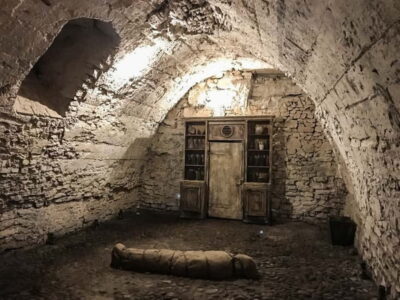
Oldtown, Medieval Underground & Dungeon History Tour
Read our review →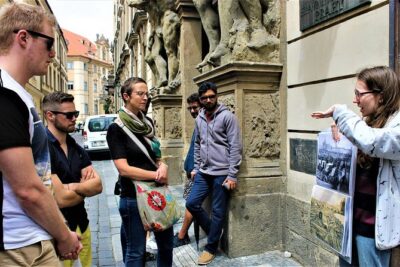
Prague Old Town, Medieval Underground and Dungeon Historical Tour
Read our review →
Templar Tour Convent of Christ & Almourol Castle from Lisbon
Read our review →
Barcelona 1.5h Private Old Town, Gothic & Ramblas Walking Tour
Read our review →
Day Trip From Addis Ababa See Historical Monastery,Stunning Nature,Animals,Birds
Read our review →
Tipsy Tapas & History Tour in the Gothic Quarter
Read our review →
Barcelona Historical Walking Tour: Gothic Quarter and El Born
Read our review →Browse the lists this tour appears in