
Review · YORK HISTORY TOURS
Private Historical Walking Tour of York
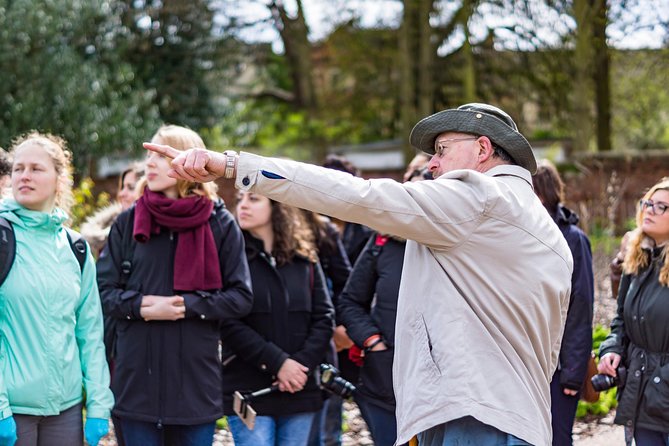
York’s past comes at you quickly on this private walk. You move from the soaring Minster to ancient streets, an abbey’s ruins, royal connections, and Clifford’s Tower, with the story changing every few minutes. Guides such as Alan, Karen, Chris, Sean, and David bring different voices and styles to the route.
I like the private format, which lets you ask questions and set the pace. I also like the local touch: guides can suggest places for a drink or point you toward Evensong at the Minster. The main drawback is that the experience can feel more like a spoken history lesson than a relaxed conversation, depending on your guide.
Key points to know before booking
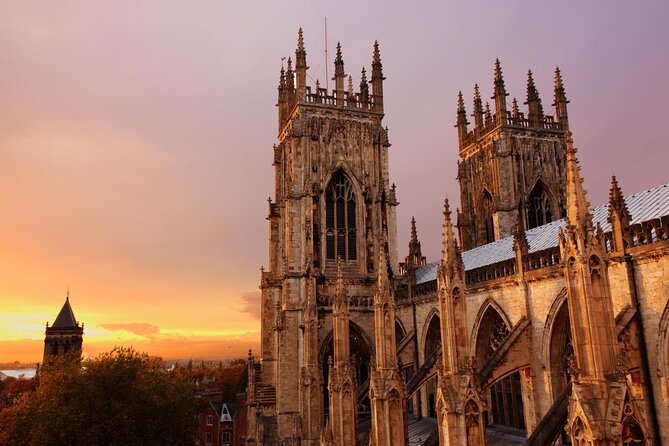
- Start opposite York Minster: The usual meeting point is near Bennett’s tea rooms at the West Entrance.
- Follow York through many eras: Expect stories involving the Minster, kings, Henry VIII, the abbey, the Shambles, and York Castle.
- Your group stays private: The tour is for your party only, with up to 15 people included in the group price.
- Guides bring different strengths: Alan, Karen, Chris, Sean, and David are among the named guides associated with the experience.
- Plan for a real city walk: The route lasts about two to three hours and calls for sensible shoes and moderate fitness.
- Finish near major attractions: The walk ends by Clifford’s Tower and the Castle Museum, a useful spot for continuing your day.
Why this is a smart first look at York
York rewards a guided walk because its streets hold several centuries at once. A medieval lane may sit beside a building linked to royal power, while the Minster points to a much longer religious story. Without context, you can see the sights but miss the connections.
This tour is built for that first day in town. You can use it to get your bearings, learn which places deserve a second look, and pick up practical tips for the rest of your stay. One guide may emphasize kings and battles. Another may spend more time on local customs, sayings, or the small details hidden in the streets.
The private setup matters. If one person in your party is fascinated by medieval politics and another wants to know where to hear music or find a good pub, your guide can shift the balance. You are not locked into a fixed group conversation.
The price is $195.60 per group of up to 15 people. For one or two people, that is a fairly serious expense. For a larger family or group, the cost per person becomes much more reasonable, especially when you want a private guide rather than a large public walk.
More History Walking Tours in the UK
- A History of Terror – Belfast City Centre Walking Tour
★ 5.0 · 2,883 reviews - Edinburgh: Old Town History and Tales Walking Tour
★ 4.8 · 2,361 reviews - Old Town Walking Tour History and Tales in Edinburgh
★ 5.0 · 2,168 reviews
Meeting York Minster at the West Entrance
The usual departure point is opposite York Minster, near Bennett’s tea rooms and the West Entrance. You can also arrange a meeting place within walking distance of central York, and pickup is offered from central hotels.
Starting at the Minster gives the tour a strong opening. Your guide explains the building’s story from its founding to the present day, rather than treating it as just a grand church to photograph. You can expect the talk to place the Minster within York’s wider story and explain why it became such an important part of the city.
The guide does not simply point out the exterior and move on. The focus is on how the Minster developed over time and what it has meant to York. If religious history, architecture, royal connections, or local life interests you most, say so at the start.
You should also be ready for crowds around the Minster. The exact pace may depend on how busy the streets are, how often your group stops, and how many questions you ask. The private format gives you room to pause, but it does not remove the need to keep moving through a working city center.
Royal stories and a building linked to Henry VIII
Another stop looks at the history of a major York building and its links with Henry VIII and other kings. The supplied details do not name the building, so ask your guide to identify it clearly when you arrive.
This part of the walk is useful because it connects York’s streets to national power. You are not hearing only about local buildings. You are also hearing how monarchs shaped the city, how royal authority affected institutions, and why certain places mattered beyond York itself.
Henry VIII gives the story a particularly strong turning point. His reign changed England’s religious and political life, and a building with a direct connection to him can help you see those changes in a physical setting. The value here is less about memorizing dates and more about understanding how decisions made by kings reached into ordinary city life.
If you enjoy asking questions, this is a good point to do it. A private tour can work well for people who want more than a prepared speech. Still, one family of three found the delivery a little rushed and more like a lecture than a conversation. That is worth keeping in mind: the private setting allows questions, but the guide’s personal style still shapes the experience.
St Mary’s Abbey and the remains of a religious center
The abbey stop covers the building from its founding to the present day. York’s abbey remains provide a change of mood after the formal scale of the Minster. Here, the focus is on what the site was, how it was used, and what happened to it over time.
Ruins can be tricky without a guide. You may see fragments of walls and open ground, but the original purpose and scale are not always obvious. A good explanation helps you picture the building as an active place rather than a collection of stones.
This section also gives the tour a chance to show how York changed across different periods. Foundations, surviving walls, and later uses can tell separate parts of the same story. Ask your guide how the abbey fits into the city’s religious and political life, especially if you want to compare it with the Minster.
The stop is also a reminder that York is not only a city of complete monuments. Some of its best historical clues survive in partial form. You need to slow down and look closely, which is easier with a guide who knows what deserves attention.
More Private History Tours in the UK
- Private Group: Historical Pub Walking Tour of London
★ 5.0 · 660 reviews - London: Private Landmark Tour with Professional Photographer
★ 4.7 · 91 reviews - Private Rock n Roll History Tour of London in an Iconic Black Cab
★ 5.0 · 65 reviews - American Heritage in London 4 Hour Private Tour in a Black Cab
★ 5.0 · 64 reviews
Walking the Shambles, one street at a time
The route includes a walk down a historic street with detailed commentary. The street is identified in the tour material as the Shambles, one of York’s most recognizable places.
The Shambles is more than a pretty medieval lane. Its narrow shape and old buildings make it easy to focus on photographs, but the guide can explain how the street worked and why it became important. One guide also tied the walk to the history of words and sayings, a small detail that can make the city feel more personal.
Expect this section to be busy. The Shambles is popular, and its narrow space can make it hard to stop for long. Stay close to your guide and listen carefully when the group moves. A private party has some freedom, but the route still operates in a public street shared by many people.
I like this part of the tour because it places history at street level. You are not only looking at grand buildings. You are following an old route through the city and hearing how language, work, and daily life connect to the places under your feet.
A historic building with changing uses
The walk also includes a detailed account of another historic building, including its founding and the different ways it has been used over the years. The supplied information does not identify the building by name, so you should ask your guide to clarify it on the day.
That uncertainty is not a reason to reject the tour, but it does mean you should not book expecting a fixed list of named interiors. The experience is primarily an outdoor walking tour, with the guide using buildings and streets as points for explanation.
This stop can be especially useful if you enjoy social history. A building’s changing uses often reveal more about a city than its grand design. The guide may explain how its role shifted as York changed, giving you a better sense of the city as a living place rather than a preserved museum.
Your guide’s storytelling ability matters here. Chris has been praised for linking York’s many eras into a clear story, while Sean is described as a good storyteller. Karen’s approach is associated with enthusiasm for York and its past. Those differences can affect how memorable this part feels.
York Castle and the final stop at Clifford’s Tower
The tour ends at Clifford’s Tower, part of the York Castle area, near the Castle Museum. This is a practical finish because you can continue sightseeing after the walk without having to cross the city again.
The final section covers the history of York Castle, with special attention to Clifford’s Tower and events connected with the site. It gives the walk a strong closing point because the castle area brings together questions of authority, conflict, punishment, and public memory.
Do not assume that ending at Clifford’s Tower means admission is included. The tour price covers the private guide and central pickup when arranged, but food, drinks, and attraction admission are not listed as included. If you want to go inside any paid site afterward, check the separate entry arrangements.
The end point also helps you plan the rest of your day. You can visit the Castle Museum, remain near Clifford’s Tower, or make your own way back toward the center. The tour does not return you to your hotel, so consider this when planning meals or later appointments.
What the private format is really worth
A private walk is not automatically better than a group tour. It is better for a particular kind of visitor: someone who wants flexibility, direct access to the guide, and control over the pace.
You can request more detail on Romans, Vikings, Henry VIII, Guy Fawkes, royal history, architecture, or local stories. One guide also offered tips about pubs, a cocktail bar, and Evensong at the Minster. Those suggestions can be useful because they connect the walk to the rest of your visit.
The format also suits mixed-age groups. One party included two people in their eighties and managed the pace and distance. That does not mean the route is effortless. You still need moderate physical fitness, comfortable shoes, and clothing suited to the weather.
The experience operates in all weather. York’s streets can feel very different in rain, wind, or cold, so bring suitable layers and footwear. The guide may adjust the rhythm, but this remains a walking tour rather than an indoor history talk.
Guide style can shape your experience
The named guides bring different strengths. Alan is associated with broad local knowledge and flexibility, including arranging a last-minute tour at an unusual time. Karen is described as proud of York and good at setting the scene for a first visit.
Chris is a strong choice if you want a wide sweep of history and plenty of stories. His approach has been praised for moving through many eras, including Romans, Vikings, Henry VIII, and Guy Fawkes. Sean is noted for storytelling and a clear overview of the city. David is known for asking what interests you and shaping the walk around those subjects.
These descriptions should not make you expect a specific guide unless your booking confirms one. They do show why you should tell the company what you want before the walk. If you want a relaxed conversation, say so. If you prefer a firm route with lots of detail, say that too.
One serious complaint described a guide who showed very little, allowed other people to join a supposedly private group, was difficult to understand, and repeatedly said he needed to rest. That account is at odds with the much stronger overall response, but it is still useful information. Confirm the private arrangement at the start and speak up if the pace or route is not what you expected.
Price, pace, and who gets the best value
At $195.60 for up to 15 people, this is most appealing to families, friend groups, and multigenerational parties. A group of 10 pays far less per person than a couple, while still getting a private guide for two to three hours.
For a couple, the value depends on your priorities. If you care deeply about York’s history and want to ask many questions, the cost may feel fair. If you mainly want a quick orientation, a less expensive group walk may suit you better.
The tour usually lasts about two to three hours. That is enough time to cover the main sights without taking your whole day. Some walks may run close to three hours, especially when the guide gives detailed explanations or your group asks questions.
You do not receive food or drinks, so plan a stop before or after the walk. Since the route begins near the Minster and ends by Clifford’s Tower, you can arrange the tour around central York rather than treating it as a separate transport outing.
Should you book this York walk?
Book it if you want a private introduction to York, value human storytelling, and plan to ask questions. It is particularly useful on your first day, when you want to understand the layout and decide where to spend more time later.
It also suits families with different interests, older adults who need a manageable pace, and history fans who want to connect York’s many periods in one sitting. Tell the guide your priorities early, and ask for local suggestions before the walk ends.
Think twice if you dislike long spoken explanations, need a fully accessible route, or want entry to the Minster, Clifford’s Tower, or other attractions included. The walk is outdoors, weather-dependent, and guide style can vary.
For most groups of four or more, the private price makes good sense. You get York’s major historic themes, a central start and finish, and the chance to shape the experience around what you actually want to understand.
FAQ
Where does the tour usually start?
It usually begins opposite York Minster, near Bennett’s tea rooms by the West Entrance at 36 Precentor’s Court.
Can the guide meet me somewhere else?
Yes. You can arrange a meeting point within walking distance of York city center.
Is hotel pickup available?
Pickup is offered from central hotels and properties.
Where does the tour finish?
The walk ends at Clifford’s Tower on Tower Street, close to Clifford’s Tower and the Castle Museum.
How long does the tour last?
The tour lasts approximately two to three hours.
How many people can join the private tour?
The price covers one private group of up to 15 people.
What language is the tour offered in?
The tour is offered in English.
Is food or drink included?
No. Food and drinks are not included.
What should I wear?
The tour operates in all weather, so dress appropriately and wear sensible footwear. A moderate level of physical fitness is recommended.
Newest history tours we have reviewed in the UK
- Belfast: Best of Belfast History, Culture & Art Walking Tour★ 4.9 · 158 reviews
- Belfast Walking Tour with a Local – History & Craic★ 4.9 · 130 reviews
- Belfast: Peacewall and Political History Black Taxi Cab Tour★ 5.0 · 60 reviews
- Bath : 2 Hour Historic Walking Tour With An App★ 3.6 · 19 reviews
- London: Private Landmark Tour with Professional Photographer★ 4.7 · 91 reviews
- American Heritage in London 4 Hour Private Tour in a Black Cab★ 5.0 · 64 reviews
- Private Rock n Roll History Tour of London in an Iconic Black Cab★ 5.0 · 65 reviews
- London: Medieval History Walking Tour from The Tower★ 4.9 · 318 reviews
Private History Tours, compared.
Private Guided Historic Electric Cart Tour of St. Augustine
Read our review →
Private Full-Day Tour of Historical Alexandria
Read our review →
Private Tour of the Historic City in a Ford T Car
Read our review →
Madrid Historical Tour with Local Guide in Eco Tuk Tuk Private
Read our review →
Private Biblical Tour Ancient Corinth & Isthmus Canal from Athens
Read our review →
Private Kathmandu Sightseeing Tour | UNESCO World Heritage sites
Read our review →
Historic Porto by Private Electric Tuk Tuk to Top Landmarks
Read our review →
Private Tuk Tuk Tour Through Lisbon’s Historical Streets
Read our review →Browse the lists this tour appears in