
Review · UK HISTORY TOURS
Belfast Walking Tour: City Centre History, Troubles & Stories
Belfast’s story is written in grand civic buildings, leaning clocks, riverside sculptures, and the ordinary streets where people lived through the Troubles. This walk links those pieces with local guide Corey, whose personal memories and easy humor help turn a complicated past into something you can follow.
I like the small group limit of 15, and I like the practical audio headsets that let you hear without crowding around the guide. The walk also gives you useful bearings for the rest of your stay, including ideas for places to eat, drink, and explore.
The main drawback is that this is an outdoor walk with little time inside each sight. Belfast weather can change quickly, and the tour may be canceled in poor conditions. Plan for 2 to 3 hours on foot and dress for the day.
Key points to know before booking
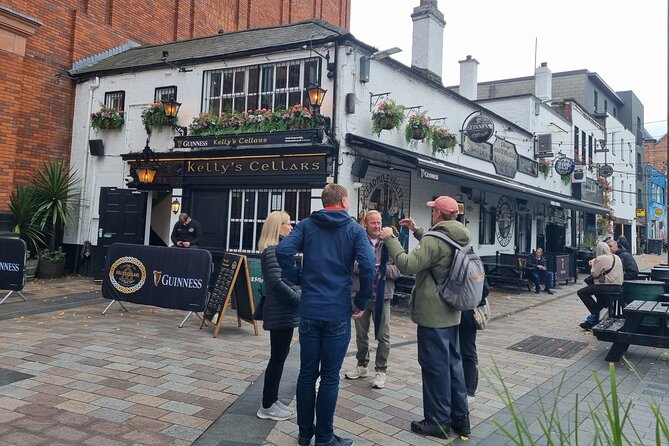
- Local perspective: Corey shares Belfast’s history, politics, and his experience growing up in the city.
- Nine central stops: The route covers City Hall, the Linen Quarter, Belfast Cathedral, the Albert Memorial Clock, the Big Fish, and several modern sculptures.
- A clear introduction to the Troubles: The difficult past is handled directly, with attention to everyday life, identity, and the city’s progress.
- Easy-to-hear commentary: Audio headsets are used on some tours, a real help near traffic and busy streets.
- Small groups: The maximum group size is 15, which leaves room for questions and conversation.
- Good first-day choice: The central route helps you get your bearings and plan the rest of your Belfast visit.
Why this Belfast walk works as a first introduction
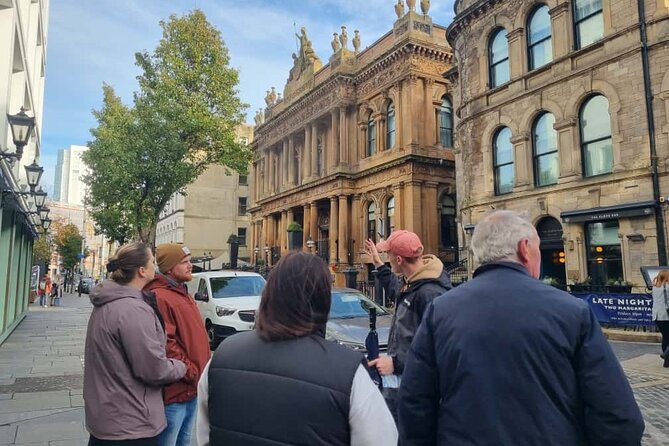
Belfast is compact enough to explore on foot, but its story is not simple. A grand Victorian building can sit close to a modern peace sculpture. A lively arts district may occupy an area once shaped by factories and conflict. This tour gives you a framework for those contrasts.
You begin outside Belfast City Hall in Donegall Square North. From there, Corey leads you through the city centre and toward the River Lagan, with stops that cover politics, industry, religion, architecture, art, and the Troubles.
I would choose this tour early in a Belfast visit. You see many of the central landmarks in one walk, then receive suggestions that can help shape the rest of your time. The route is also short enough to fit into a first afternoon or evening, depending on the departure time.
The tone matters here. Belfast’s past includes sectarian division, violence, and painful memories. This is not a tour that treats the Troubles as a curiosity. Corey’s own background gives the subject a human scale, while the walk also looks toward the city Belfast is becoming.
More History Walking Tours in the UK
- A History of Terror – Belfast City Centre Walking Tour
★ 5.0 · 2,883 reviews - Edinburgh: Old Town History and Tales Walking Tour
★ 4.8 · 2,361 reviews - Old Town Walking Tour History and Tales in Edinburgh
★ 5.0 · 2,168 reviews
City Hall and Donegall Square set the scene
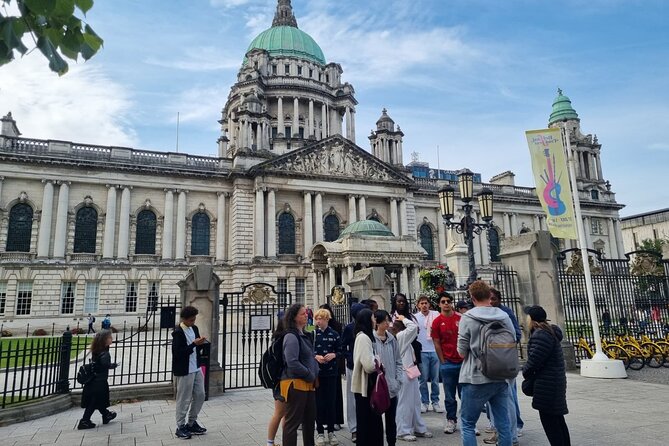
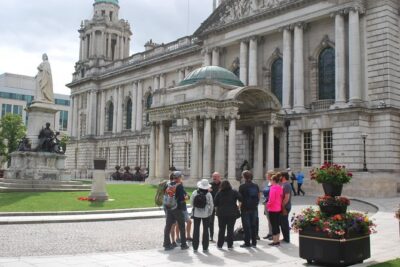
Belfast City Hall is an imposing place to begin. Its stone exterior, stained glass, and central position reflect the city’s civic pride and political importance. You spend about 20 minutes here, enough time to examine the building and hear why this location matters.
The stop is free, but that does not mean it is a quick photo pause. City Hall gives Corey a natural starting point for explaining Belfast’s identity, local government, and the tensions that have shaped public life.
Donegall Square follows with about 10 minutes. The square connects the city’s civic core with shopping streets, offices, and other central routes. It is a useful spot to understand Belfast as a working city, not only as a collection of historic sights.
You should pay attention to the guide’s positioning here. City-centre traffic and passing pedestrians can make a group harder to hear. The audio headset system, when used, solves much of that problem. You can step aside for a photograph without losing the explanation.
The Linen Quarter explains Belfast’s industrial rise
The Linen Quarter offers a different Belfast from the one suggested by City Hall. This was the part of the city linked to linen production, an industry that helped make Belfast internationally important. The nickname Linenopolis captures the scale of that former trade.
You spend around 10 minutes in the area, but the subject reaches beyond the buildings in front of you. Corey explains how work, wealth, factories, and urban growth changed Belfast. This is useful context because the city’s political story cannot be separated from its industrial past.
I like this section because it keeps the tour from becoming only a political history walk. You learn why Belfast grew, who benefited from that growth, and how the city’s built environment reflects its working past.
The stop may feel brief if industrial history is your main interest. Still, the tour has nine stops to cover, and the short format keeps the walk moving. Think of it as a clear introduction rather than a specialist study of linen production.
Linen Hall Library adds a quieter cultural note
The Linen Hall Library has preserved books and archives for more than 200 years. Its position in the city centre gives the tour a chance to shift from factories and politics to reading, education, and cultural memory.
The guide points out why this old library matters to Belfast. It represents the value of keeping records and ideas safe through periods of change. That point fits the wider tour well: Belfast is a city that has had to remember its past while trying to build a different future.
You should not expect a long indoor library visit as part of the walk. The stop lasts about 10 minutes, and the experience is built around outdoor commentary. If you want to spend more time inside, you can note the location and return later on your own.
Same streets, a different century:
- London Small Group Tour of Historical Pubs
★ 5.0 · 10,422 reviews - Edinburgh: Edinburgh Castle Guided History Tour with Tickets
★ 4.8 · 9,933 reviews - Edinburgh: Whisky Tasting with History and Storytelling
★ 4.9 · 2,451 reviews - Soho Music & Historic Pubs Tour
★ 5.0 · 1,993 reviews
Belfast Cathedral and the Cathedral Quarter
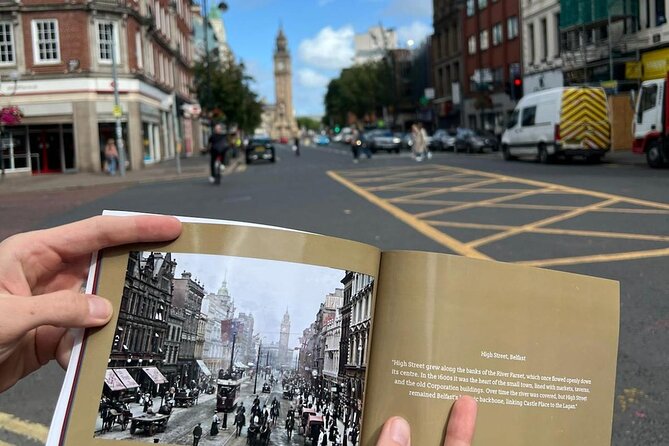
Belfast Cathedral, formally the Cathedral Church of St. Anne, brings religious architecture into the route. You have about 10 minutes to admire the building and hear about its place in the Cathedral Quarter.
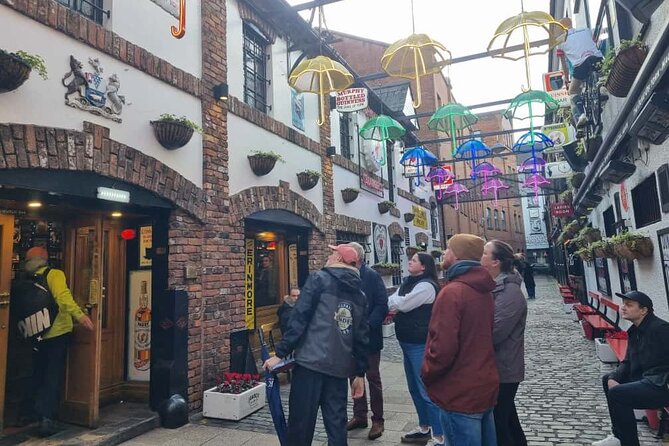
The surrounding area is now linked with art, culture, food, and nightlife, but the cathedral gives it an older anchor. Corey uses the stop to show how different layers of Belfast can exist close together.
This part of the walk is especially helpful if you plan to return to the Cathedral Quarter later. You get a quick sense of the area before deciding how much time to give it. The tour does not include a long interior visit, so check your own schedule if seeing the cathedral inside is important to you.
The Albert Memorial Clock is Belfast’s leaning landmark
The Albert Memorial Clock Tower is one of Belfast’s most memorable sights. Built in honor of Prince Albert, Queen Victoria’s husband, it leans slightly because of the ground beneath it. The nickname Belfast’s leaning tower is easy to remember, and the clock gives the guide another chance to connect architecture with local tales.
The stop also brings in stories about sailors and nightlife around the area. That makes it more than a technical explanation of why the tower tilts. You get a sense of how this part of the city functioned as a meeting place and port-side district.
Spend time looking up. The tower is tall, detailed, and easy to miss if you only glance at it while walking past. The 10-minute pause gives you enough time for photographs and questions.
The Big Fish brings Belfast’s story to the river
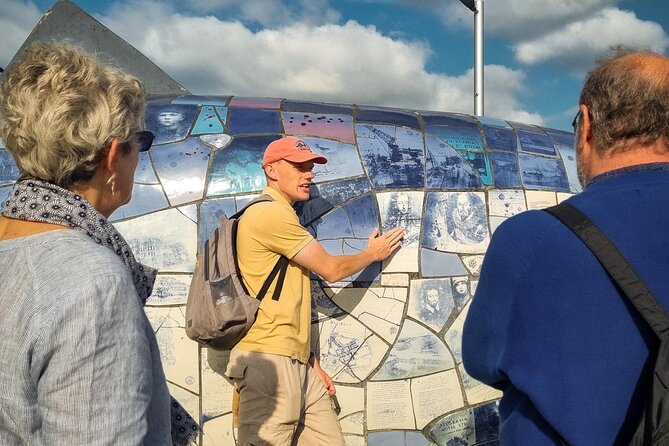
The Big Fish, also called the Salmon of Knowledge, is one of Belfast’s most playful public artworks. Its ceramic tiles carry images and details linked to the city. The sculpture is beside the River Lagan and gives the walk a lighter moment after the more serious historical sections.
You will hear the local tradition of rubbing its nose for luck. It is a small ritual, but it makes the stop memorable, especially for families or anyone who likes a city landmark with a bit of humor.
The Big Fish also shows how Belfast uses public art to tell its story. Instead of keeping history only in museums or grand buildings, the city puts pieces of it into a sculpture people can approach, photograph, and enjoy.
The visit lasts about 10 minutes. It is not a substitute for a full riverside walk, but it is a good introduction to the area and to Belfast’s habit of mixing history with wit.
The Beacon of Hope looks toward a changed city
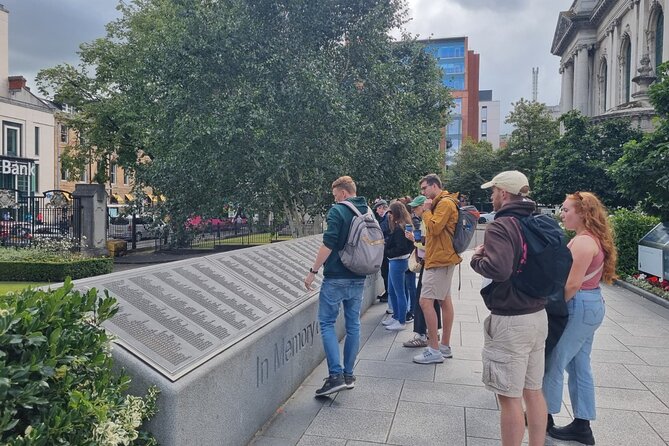
The Beacon of Hope is a peace sculpture with a clear message about resilience and a better future. After the tour has dealt with division and conflict, this stop gives you a visual way to think about Belfast’s recovery.
The sculpture is not presented as a claim that every problem has disappeared. That is important. A useful city tour should explain progress without pretending that history can be neatly closed.
I find this stop valuable because it connects the past to the present. You are not only hearing what happened. You are also seeing how Belfast chooses to express hope in public space.
The Spirit of Belfast closes the route by the river
The Spirit of Belfast is an abstract sculpture made of steel and light. It reflects the city’s modern, creative side and provides a fitting final stop near the riverside.
By this point, the route has moved from civic power to industry, religion, conflict, peace, and modern identity. The sculpture ties those subjects together without spelling out one single answer to what Belfast is.
The tour ends back at the meeting point, according to the supplied details. Because the walk covers the centre and riverside, you should finish with a useful sense of direction. You may also have a better idea of which districts deserve a second look.
Corey’s style is a major part of the experience
The guide is Corey, a local who grew up in Belfast. His approach combines clear explanations with humor and personal stories. That personal angle is most useful during the sections on the Troubles, where a textbook account can feel distant or too tidy.
Corey also answers questions about Belfast politics and history. His style adjusts to the group’s interests, which matters because some visitors want architecture while others want more time on identity, conflict, or daily life.
His wife, Michelle, has joined some tours as well. The experience can feel especially personal when the group is small, and a solo participant has even had the walk tailored around individual interests.
The tone is friendly, but the subject is not treated as a joke. Stories about growing up during tense years help explain the atmosphere and behavior of the time. They should be understood as context, not as entertainment about violence.
Audio headsets make the city-centre route easier
The headsets are one of the most practical features of this walk. Belfast streets can be noisy, and a guide speaking to a group can be hard to hear when traffic passes or pedestrians move around you.
With the audio system, you can take a photograph or walk a little away from the guide while still following the commentary. You do not need to crowd close at every stop.
This also helps the tour feel less rigid. You can look at a building instead of staring only at the guide. For a walking tour that includes several public sculptures and architectural details, that freedom is useful.
The supplied details do not promise headsets at every departure, so you may want to confirm when booking. The feature is clearly part of the guide’s usual setup, and it has been used to good effect on the walk.
Is $30.16 fair for two to three hours?
At $30.16 per person, the price is reasonable if you want a guided overview rather than a self-guided route. You are paying for the guide’s time, local knowledge, storytelling, and ability to connect separate sights into one understandable story.
All the listed stops are free to enter. That keeps the cost simple, but remember that this is not an admission-based tour. The value comes from the explanation and the route, not from included tickets.
The small maximum of 15 improves the value. A group this size is more manageable than a large crowd, and you have a better chance to ask questions. The headsets add another practical benefit.
I would be less likely to book it if you want long visits inside buildings or a specialist tour focused only on the Troubles, linen, architecture, or political murals. This is a broad city introduction. Its strength is the range of subjects and the local voice.
The tour is rated 4.9 from 39 ratings, with 97 percent recommending it. Those figures suggest a strong experience, but your enjoyment will still depend on the weather, your walking pace, and how much you want to discuss Belfast’s recent past.
Who should book this walk?
I would recommend it to first-time visitors, couples, families with older children, solo visitors, and anyone who wants a clear introduction before exploring independently.
It suits you particularly well if you value:
- A local guide rather than a recorded audio route
- Personal stories alongside established history
- A small group with room for questions
- A balanced look at the Troubles and Belfast’s future
- Central landmarks that can be reached on foot
- Practical suggestions for food, drinks, and later sightseeing
It may not suit you if you dislike walking in uncertain weather, need a long indoor experience, or want to spend extensive time at each attraction. Most people can participate, service animals are allowed, and the meeting point is near public transport, but the supplied details do not give a full accessibility assessment.
Book with the weather in mind. Free cancellation is available up to 24 hours before the start time for a full refund. Changes or cancellations inside 24 hours are not refunded, and poor weather or too few bookings can lead to a rescheduled tour or full refund.
Should you book the Belfast Walking Tour?
I would book this as an early Belfast activity, especially if you have only a few nights in the city. Corey’s local perspective, the headsets, and the manageable group size give it more substance than a simple landmark checklist.
The best reason to choose it is the balance. You get City Hall and the Albert Memorial Clock, but also the linen industry, the library, the cathedral, the Troubles, and modern peace art. You leave with a clearer sense of how those pieces fit together.
If you want a focused political tour or extended access to historic interiors, choose something more specialized. If you want a friendly, direct introduction to Belfast that helps you understand both its wounds and its character, this walk is a strong choice.
FAQ
Where does the Belfast walking tour start?
The tour starts at Belfast City Hall on Donegall Square North, Belfast BT1 5GS.
Where does the tour finish?
The activity ends back at the meeting point.
How long does the walking tour last?
The tour lasts approximately 2 to 3 hours.
How much does the tour cost?
The listed price is $30.16 per person.
What language is the tour offered in?
The tour is offered in English.
How many people can join the tour?
The maximum group size is 15 people.
Is the tour suitable for most people?
Most people can participate. Service animals are allowed, and the meeting point is near public transportation.
What happens if the tour is canceled because of bad weather?
If poor weather causes the tour to be canceled, you will be offered a different date or a full refund. The same options apply if the minimum number of participants is not reached.
Newest history tours we have reviewed in the UK
- Ilfracombe Seafront History Walking Guided Tour★ 5.0 · 18 reviews
- Walking Bogside History Tour in Guildhall★ 5.0 · 280 reviews
- Private tour of the stunning Cotswolds with an expert local guide★ 5.0 · 45 reviews
- Curious Cambridge – The History Tour that’s FUN!!!★ 5.0 · 80 reviews
- Birmingham Gangs Nighttime Historical Walking Tour with Pub Stops★ 5.0 · 53 reviews
- 2.5-Hours Walking Tour of Birmingham into Black Heritage Madiba★ 5.0 · 49 reviews
- Private Political History & Murals Tour Belfast★ 5.0 · 182 reviews
- Belfast Political/history/troubles private taxi/cab tour★ 5.0 · 69 reviews
History Walking Tours, compared.

History and Hauntings of Salem Guided Walking Tour
Read our review →

Freedom Trail History Small Group Walking Tour
Read our review →
Historic Charleston Guided Sightseeing Walking Tour
Read our review →
Tapas Walking Tour with Food, Wine, and History
Read our review →
Savannah History and Haunts Candlelit Ghost Walking Tour
Read our review →
A History of Terror – Belfast City Centre Walking Tour
Read our review →Browse the lists this tour appears in