
Review · PRIVATE HISTORY TOURS
PRIVATE Beirut Historical Walking Half Day Tour
Beirut’s story is written in layers: ancient Roman remains, Ottoman and French-era buildings, civil-war scars, rebuilt shopping streets, and a lively seaside setting. This private half-day tour gives you a useful framework for understanding the city, led by David, often called Dave, whose personal experience of growing up in Beirut adds weight to the history.
I especially like the National Museum of Beirut, which gives the morning a strong starting point, and the mix of walking and driving. You see major downtown sights on foot, then ride out to Raouche for the famous Pigeon Rocks. The main consideration is pace: three to four hours is enough for an introduction, not a slow, detailed study of every site.
Key points to know
- National Museum first: Begin with Lebanon’s ancient objects before tackling modern Beirut.
- Personal historical context: David and Dave explain the civil war and later rebuilding with clear, firsthand perspective.
- Private touring: Only your group takes part, making it easier to ask questions or adjust the pace.
- Downtown on foot: See Martyrs’ Square, the Mohammad Al-Amin Mosque, St. George’s Cathedral, Roman baths, Star Square, and the souks.
- Two classic views: Finish with Pigeon Rocks in Raouche and the Beirut Corniche.
- Useful city coverage: Hotel pickup and drop-off let you cover several separate areas without arranging taxis.
Why this half-day works for a first look at Beirut
Beirut can feel confusing at first. Its districts, political history, religious communities, archaeological remains, and modern rebuilding do not fit neatly into one simple story. A good guide helps you connect the pieces instead of handing you a list of buildings.
This tour begins with a short introduction to the city, including a map and an audio presentation. That small preparation matters. You get a basic outline before entering the museum, so the artifacts have a clearer place in the story of Lebanon.
The tour then shifts from museum exhibits to streets and public spaces. You move through central Beirut, where the city’s past is visible in both preserved monuments and rebuilt blocks. The final drive to Raouche changes the mood again, taking you from political and historical questions to the open sea.
I see this as a strong choice if you have only one morning or afternoon available. It covers much more ground than a walking tour alone, but it still gives you time to leave the vehicle and explore central Beirut on foot.
More History Walking Tours in the world:
- History and Hauntings of Salem Guided Walking Tour
★ 5.0 · 14,564 reviews - Lisbon: History, Stories and Lifestyle Walking Tour
★ 4.8 · 10,902 reviews - Boston: Freedom Trail History Small Group Walking Tour
★ 5.0 · 6,450 reviews
The National Museum gives the tour its foundation
The National Museum of Beirut was built in the 1940s, badly damaged during the civil war, and revived in the 1990s. That history is not just background information. The museum itself became part of Beirut’s struggle to protect its cultural record during a violent period.
Inside, you can expect a collection focused on Lebanon’s archaeological past. The museum helps place Beirut within the long story of the eastern Mediterranean, rather than treating the city as only a modern capital shaped by recent conflict.
One useful feature is the way the visit follows the opening city briefing. You first hear an outline of Lebanon’s political and urban story, then see objects that reach much further back in time. The result is a better sense of how old the country is beneath its modern streets.
The museum visit also prepares you for the downtown walk. You will have already considered how valuable discoveries were protected during the war, so the later signs of damage and restoration carry more meaning.
Allow yourself to stay engaged here, even though the tour must keep moving. A half-day schedule cannot provide the time of a dedicated museum visit. If archaeology is your main interest, you may want to return independently for a slower look.
Downtown Beirut shows destruction and rebuilding side by side
The central district, often associated with Solidere, was heavily damaged during the Lebanese Civil War from 1975 to 1990. Much of it was restored in the 1990s, creating a downtown that can feel polished in one block and marked by conflict in the next.
Your guide uses this area to explain Beirut’s contradictions. You may hear about the parliament, the government palace, the Roman baths, religious buildings, and the modern rebuilding effort within the same walk.
That combination is what makes the route worthwhile. You are not simply moving from one pretty facade to another. You are learning why the city looks the way it does, who rebuilt it, and what was lost or preserved.
The private format helps here. You can pause to ask how different parts of the city changed, or discuss the political background behind a particular district. Several tour participants found David’s explanations especially useful because he connected public events with his own experience of growing up in Beirut.
The tradeoff is that central Beirut’s restored areas can feel planned and commercial rather than old and lived-in. The tour does not pretend that reconstruction returned the district to an untouched past. That honesty is important. You see a city trying to balance memory, business, worship, government, and daily life.
Martyrs’ Square connects Beirut’s public memory
Martyrs’ Square is one of the key stops in the downtown walk. It is closely tied to Lebanon’s public and political history, and it gives your guide a natural place to explain the city’s changing identity.
The square is near several other major landmarks, so the stop works as part of a wider route rather than a single isolated sight. From here, you can continue toward the Mohammad Al-Amin Mosque, St. George Maronite Cathedral, the Roman bath remains, and Star Square.
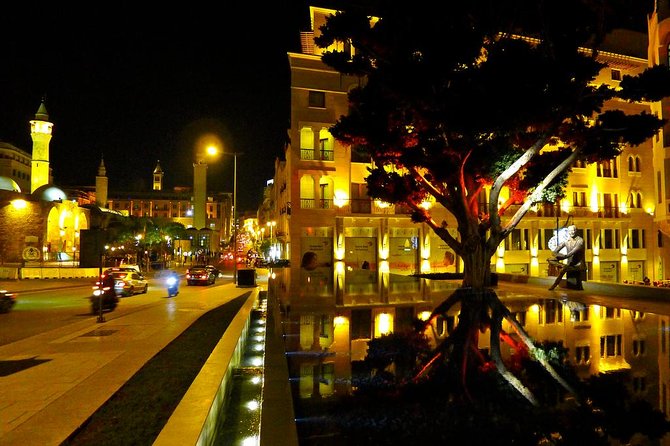
This is a compact section of the tour, but it contains a lot. Religious buildings from different traditions sit close together, while Roman remains and modern civic spaces show how many eras overlap in Beirut.
The Mohammad Al-Amin Mosque is especially noticeable for its scale and blue domes. St. George Maronite Cathedral provides a contrasting religious presence nearby. Seeing both within the same walking route helps you understand Beirut as a city of several communities, not a place with one single cultural identity.
The guide’s role matters more here than it would on a simple photo stop. Without explanation, the buildings can look like unrelated landmarks. With context, their location, use, and symbolism become easier to follow.
More Private History Tours in the world:
- Private Historical Walking Tour of York
★ 5.0 · 1,324 reviews - Private Guided Historic Electric Cart Tour of St. Augustine
★ 5.0 · 1,194 reviews - Istanbul: Acemoglu Historical Turkish Bath w/Private Options
★ 4.6 · 1,190 reviews - From Cairo: Private Full-Day Tour of Historical Alexandria
★ 4.1 · 1,155 reviews
Roman baths and Star Square add older layers
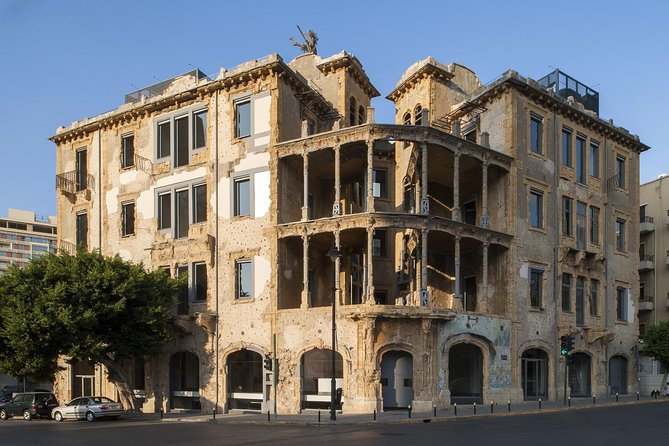
The Roman bath remains offer a quick but valuable reminder that central Beirut was an important urban place long before the modern republic. You may not spend a long time at the ruins, but their location in the middle of the capital makes the point clearly: ancient life is beneath the modern city.
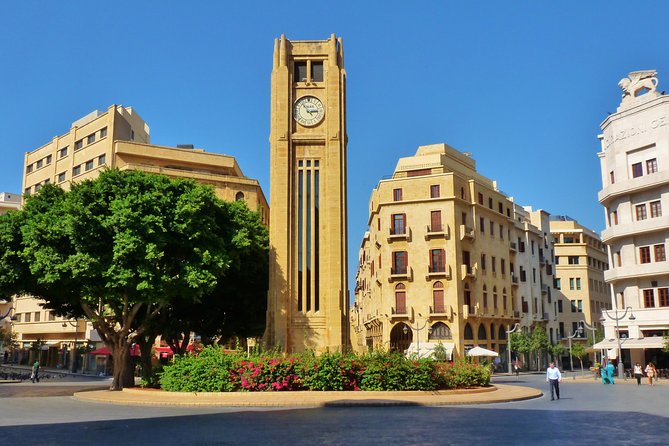
Star Square, also known as Nejmeh Square, adds another layer. Its central clock tower, surrounding streets, and restored buildings form one of downtown’s best-known public spaces.
These stops are not presented as a full archaeological tour. They work better as pieces of a larger explanation. You get a sense of Roman Beirut, modern Beirut, and postwar Beirut within a few blocks.
I like this approach for a first visit because it prevents the ancient remains from becoming disconnected museum objects. You see how archaeology, religious life, government, commerce, and tourism share the same central district.
Beirut Souks reveal the practical side of rebuilding
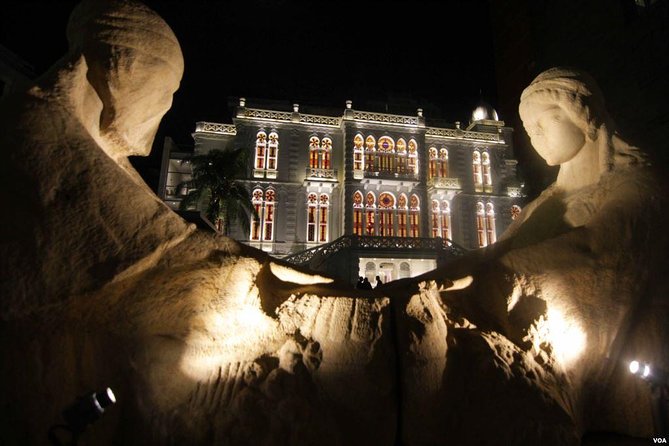
The Beirut Souks were completely demolished during Lebanon’s wars and rebuilt in the 1990s as an open-air shopping mall in the central district. This is one of the clearest examples of Beirut’s effort to replace a damaged urban area with a new commercial center.
The souks are worth seeing even if you are not planning to shop. They show how restoration and redevelopment can create a modern space while still carrying the name and memory of an older market area.
You should also keep your expectations realistic. This is not a preserved medieval bazaar. It is a rebuilt shopping district, and its appeal lies in what it says about postwar Beirut rather than in old-market atmosphere.
The stop can be brief, which suits the tour’s tight schedule. You get a look at the architecture and hear how the area changed, then continue toward the waterfront and Raouche.
Raouche and Pigeon Rocks provide the visual finish
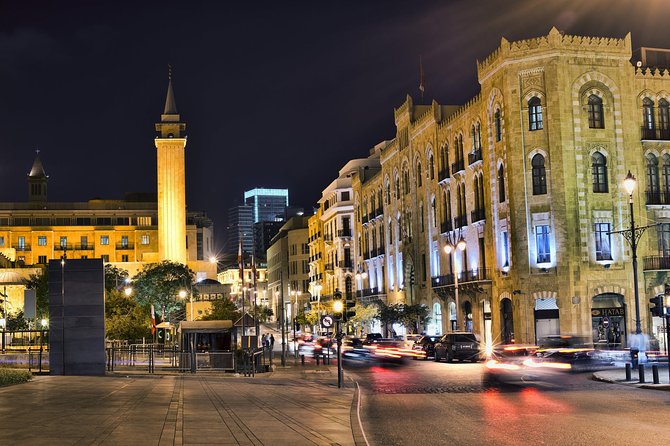
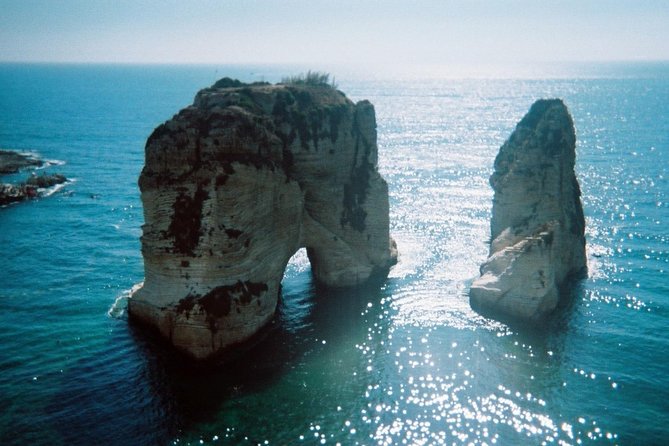
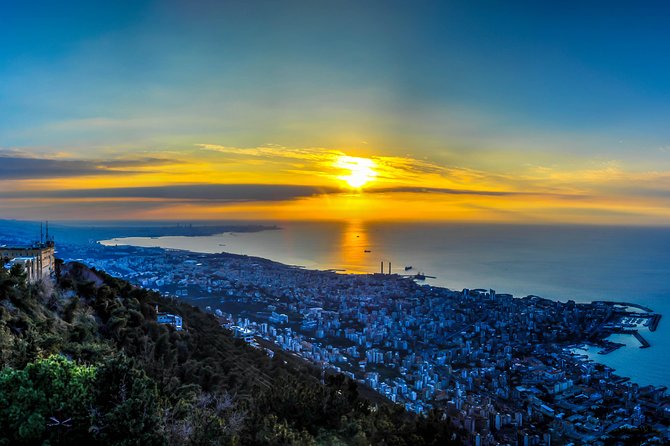
Pigeon Rocks are one of Beirut’s defining sights. The two offshore rock formations rise from the sea near Raouche, and the viewpoint gives you a strong sense of the city’s coastal setting.
After the museum and downtown history, this is a welcome change of pace. You are no longer looking at ruins, rebuilt streets, or religious monuments. You are facing open water and one of the city’s most recognizable natural features.
The listed stop is about 15 minutes, so think of it as a scenic pause rather than a long coastal outing. You will have enough time for photographs and a quick look, but not an extended walk around the area.
The timing may vary with traffic and the group’s pace. Still, including Pigeon Rocks makes the tour feel more complete. Beirut is not only a historic capital. It is also a seaside city, and the coast is central to its character.
The Corniche adds a final city view
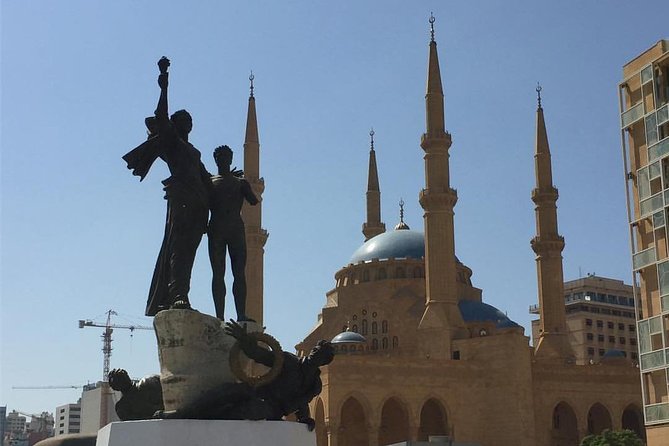
The Beirut Corniche is another short stop, with the possibility of seeing the waterfront in the softer light of late day. The itinerary notes sunset, though the tour begins at 9:00 a.m., so you should confirm the exact timing if sunset is important to you. The route and duration may place this stop at a different hour.
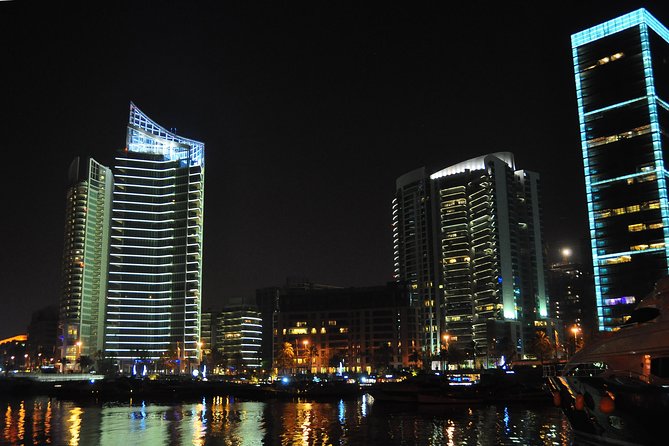
Even without sunset, the Corniche helps round out the experience. You have seen Beirut from inside museums, along central streets, and from the edge of the sea. The waterfront offers a simple way to pause and take in the city without another long explanation.
Because the stop is brief, wear comfortable shoes and keep your camera ready. This is a quick scenic addition, not a long promenade visit.
David’s guiding style is a major part of the value
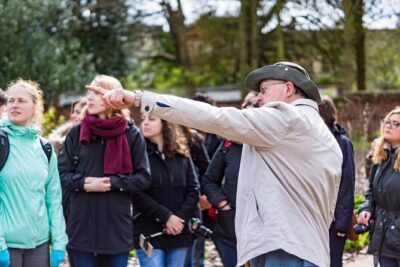
The strongest part of this experience is the guide’s historical storytelling. David, also called Dave, is described as professional, punctual, flexible, and easy to engage with. His talks cover Lebanon’s political past, Beirut’s civil war years, the rebuilding of downtown, and the city’s present-day diversity.
Several details make his approach useful. He begins with a map and a briefing, uses an audio presentation before the museum, and then explains the sites in person during the walking portion. This gives you three different ways to take in a difficult subject.
You can also expect room for questions. The private setup means you do not have to save every question for a crowded group stop. The guide can spend more time on the parts that interest you, provided the schedule allows.
His personal memories are another advantage. A city’s recent history can sound abstract when reduced to dates and political labels. Hearing about Beirut from someone who lived through its more difficult years can make the changes easier to understand.
At the same time, this is a history-led tour. If you want a food-focused outing, long shopping time, or a relaxed beach visit, this is not the best match.
Transportation saves time across a spread-out city
Pickup and drop-off from Beirut city hotels are included, along with an air-conditioned vehicle and a driver-guide. That arrangement is valuable because the route includes several separate areas: the museum, central Beirut, and Raouche.
You will walk during the downtown section, but you are not responsible for piecing together the whole route by taxi. The driving portions also give your guide time to explain the city as you pass through it.
The tour is private, so only your group participates. That is helpful for couples, families, or small groups who prefer not to match the pace of strangers. It also makes a flexible plan more realistic, although the advertised stops still need to fit into the three to four-hour window.
The tour starts at 9:00 a.m. Bring water, wear shoes suited to city walking, and leave some space in your schedule. Beirut traffic can affect how long the driving sections take, and the downtown stops have enough history to invite questions.
Is $93.34 a fair price?
At $93.34 per person, this is not the cheapest way to see Beirut’s central sights. The price makes more sense when you count what is included: hotel transportation, a private vehicle, a driver-guide, museum admission, guiding at several locations, and the convenience of joining the route without arranging separate rides.
It is particularly good value for a small group that would otherwise pay for taxis and a separate museum visit. The private format also gives you more control than a standard shared excursion.
For a solo visitor, the per-person price may feel higher. In that case, the value depends on how much you want historical interpretation and practical transport. The guide’s personal context is the part you cannot easily reproduce with a map or a quick online search.
Lunch is not included, but the short duration means this is easy to handle before or after the tour. The schedule is designed as an introduction, so you should not expect a full-day archaeological or cultural program at this price.
Who should book this Beirut tour?
I would recommend it most strongly to first-time visitors, history-minded people, couples, and anyone with only a few hours in the city. It gives you a useful orientation without asking you to spend an entire day in a vehicle.
It also suits visitors who want direct explanations of Lebanon’s recent past. David’s firsthand connection to Beirut is a real advantage when the subject turns to the civil war and the rebuilding that followed.
You may want a different plan if you prefer to wander alone, spend hours in the National Museum, or focus mainly on restaurants and shopping. The itinerary moves quickly, and the coastal stops are short.
The tour has free cancellation up to 24 hours before the start time. Changes or cancellations inside that window are not accepted for a refund, so check your plans before booking.
Should you book it?
Book this private Beirut Historical Walking Half Day Tour if you want a clear introduction to the city, strong historical explanation, and easy transport between widely separated sights. The combination of the National Museum, downtown landmarks, reconstructed souks, Pigeon Rocks, and the Corniche gives you a well-shaped first look.
The main question is pace. If you want to study each site at length, choose a longer or more specialized tour. If you want Beirut’s major stories explained by a local guide in three to four hours, this is a practical and worthwhile choice.
FAQ
How long does the Beirut historical tour last?
The experience lasts approximately three to four hours.
What time does the tour start?
The tour starts at 9:00 a.m.
Is hotel pickup included?
Yes. Pickup and drop-off from hotels in Beirut city are included.
Is this a private tour?
Yes. Only your group participates in the activity.
Is admission to the National Museum included?
Yes. Museum admission and all listed fees and taxes are included.
Is lunch included?
No. Lunch is not included in the tour price.
Newest history tours we have reviewed in the world
- Enjoy Ancient Mostar★ 4.0 · 45 reviews
- Private Dublin Historical and Heritage Tour by Bike★ 5.0 · 30 reviews
- Dubrovnik by Night, History, Wine & Bites★ 5.0 · 41 reviews
- Ancient Old City– Finest tour of Dubrovnik★ 5.0 · 64 reviews
- Historical Walking Tour of Dublin★ 5.0 · 50 reviews
- DayTripper Dublin: A Guided City Walking Tour★ 5.0 · 90 reviews
- Dublin LGBTQ Pride Historical and Cultural Walking Tour★ 5.0 · 91 reviews
- Interactive Living History in Dalkey Castle near Dublin City★ 5.0 · 133 reviews
Private History Tours, compared.
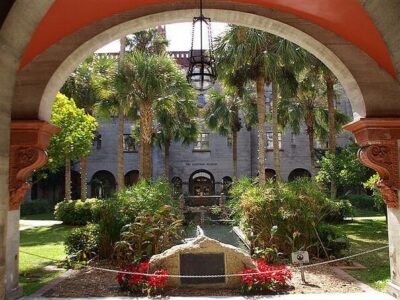
Private Guided Historic Electric Cart Tour of St. Augustine
Read our review →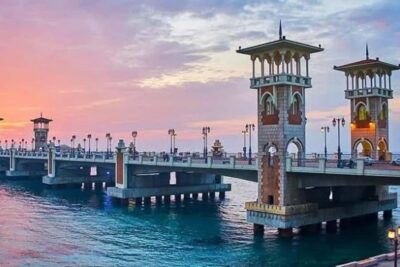
Private Full-Day Tour of Historical Alexandria
Read our review →
Private Tour of the Historic City in a Ford T Car
Read our review →
Madrid Historical Tour with Local Guide in Eco Tuk Tuk Private
Read our review →
Private Biblical Tour Ancient Corinth & Isthmus Canal from Athens
Read our review →
Private Kathmandu Sightseeing Tour | UNESCO World Heritage sites
Read our review →
Historic Porto by Private Electric Tuk Tuk to Top Landmarks
Read our review →Browse the lists this tour appears in