
Review · HAMBURG HISTORY TOURS
German Hamburg Historic City Center Pay-What-You-Want Tour
Hamburg’s story comes into focus on this two-hour walk through the old center, where medieval churches, political power, port life, and warehouse architecture all fit into one compact route. You begin beneath the bright yellow umbrellas in front of the Town Hall and finish at St. Michael’s Church, two of the city’s most recognizable landmarks.
I like the pay-what-you-want format, which keeps the upfront cost low, and I like the route’s mix of major sights and local food culture. The guide-led stories and small anecdotes are especially useful if you want more than a quick photo stop. The main consideration is simple: the tour is conducted in German, and groups of eight or more cannot join together.
Key points at a glance
- German-language walking tour: Expect a live guide and commentary throughout the two-hour route.
- A 1,300-year story: The tour connects Hamburg’s early beginnings with its role as a major modern city.
- Town Hall starting point: Meet directly at the main entrance and look for the bright yellow umbrellas.
- Port food with a local edge: You’ll hear about fischbrötchen, matjes, and labskaus, with the option to taste them at your own expense.
- Speicherstadt photo stop: Allow a few minutes for the old warehouse district’s industrial architecture.
- Small-group rule: Reservations are limited to seven people per group, even if separate bookings are made.
Starting beneath Hamburg’s Town Hall
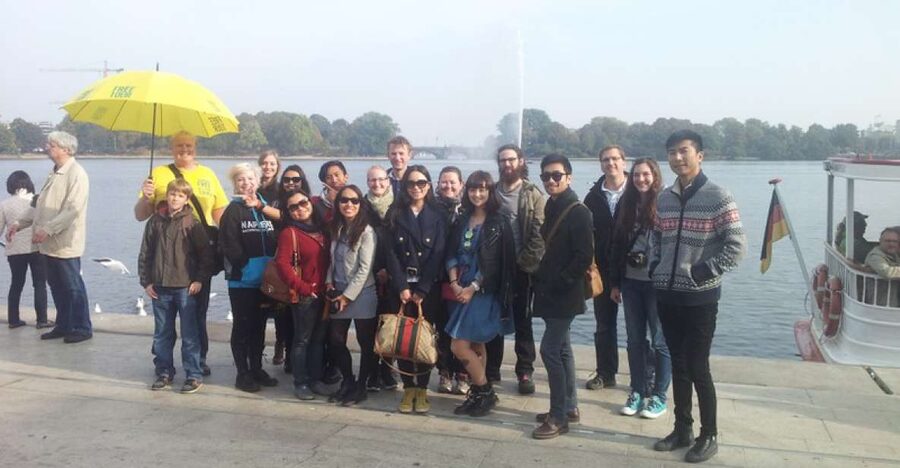
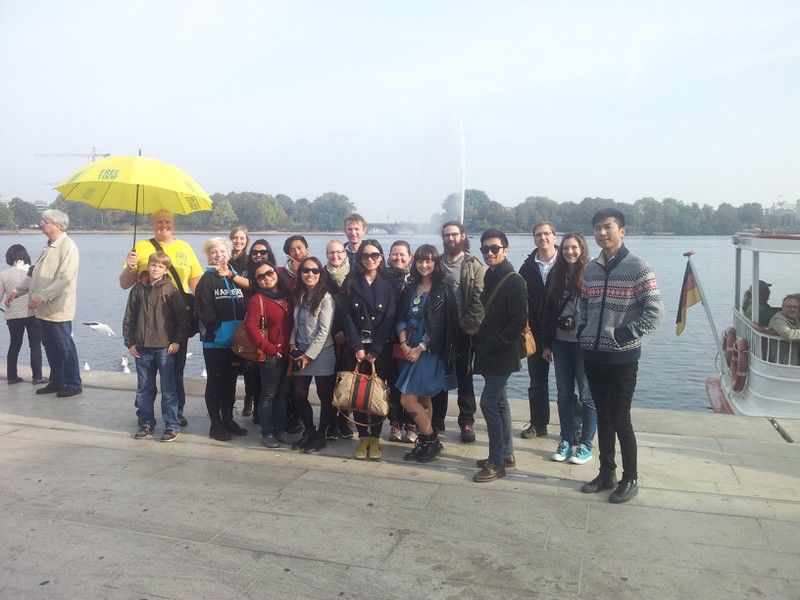
The meeting point is easy to identify: go to the main entrance of Hamburg’s Town Hall and look for the bright yellow umbrellas. That is a useful detail in a busy central square, especially if you are arriving close to the start time.
The Town Hall is a fitting place to begin. It is the political heart of Hamburg, so the first part of the walk gives you a sense of how the city governs itself and how its past shaped its present. You start with a short account of Hamburg’s beginnings, then follow the city’s development from a small enclave of the Holy Roman Empire to a major player in the modern world.
I like this opening because it gives the rest of the route a thread. Instead of seeing the Town Hall, churches, port, warehouses, and St. Michael’s as unrelated stops, you can connect them to Hamburg’s long growth as a city of trade, politics, religion, and shipping.
The route is a walking tour, and transport is not included. You should plan to arrive ready to walk for the full two hours. The activity is listed as wheelchair accessible, though the tour runs outdoors and includes historic areas, so dressing for the weather remains important.
More History Tours in Germany:
- Leipzig: City History Canal Sightseeing Tour on a Motorboat
★ 4.7 · 7,671 reviews - Leipzig: 1.5-Hour Historical Walking Tour in German
★ 4.7 · 2,217 reviews - Berlin: 3-Hour World Heritage Cruise to Potsdam
★ 4.5 · 1,569 reviews
Following Hamburg’s 1,300-year story
A good city tour does more than name dates. It helps you understand why the city looks the way it does. Here, the guide uses Hamburg’s long development as the backbone of the walk.
The 1,300-year span is broad enough to cover the city’s early foundations, its political importance, its religious buildings, and its port economy. You will not get an academic lecture on every period, but you should come away with a clearer sense of how Hamburg grew from a small settlement into a major European city.
This is also where the guide’s personality matters. The tour is designed to include short anecdotes alongside the historical account. Jan is one guide associated with the experience, and the feedback on his tour describes it as interesting, entertaining, and filled with small stories. That combination matters because two hours of dates and formal facts can feel heavy. Anecdotes give the walk some lift.
The tour is entirely in German. You should be comfortable following spoken German for two hours if you want to get the full value from the guide. If you are still learning the language, the main sights remain visible, but the historical details and jokes may be harder to catch.
The Town Hall and Hamburg’s political center
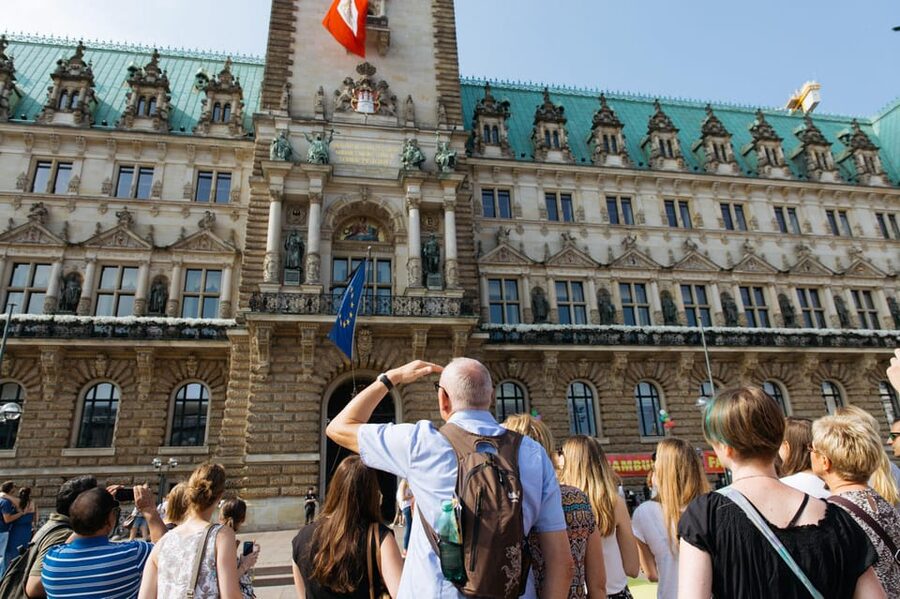
Hamburg’s Town Hall is not just a convenient meeting point. It is the first major sight on the route and an important symbol of the city’s civic life.
The tour takes you toward the building and explains its place in Hamburg’s political center. You may also look inside some of the city’s medieval churches later in the route, where the focus shifts from government to religion and local heritage.
The Town Hall section is best for putting the city’s public identity into context. Hamburg has long had an independent civic character, and a walk that begins here gives you an immediate sense that this is more than a port city. It is also a place shaped by local government and civic institutions.
The exact amount of time spent inside or outside each building can depend on the guide and the day. The supplied details promise a visit to the Town Hall area and access to some medieval churches, but they do not promise a private interior tour or a reserved entry. Think of the experience as a guided city walk, not an attraction ticket.
Medieval churches and their surviving treasures
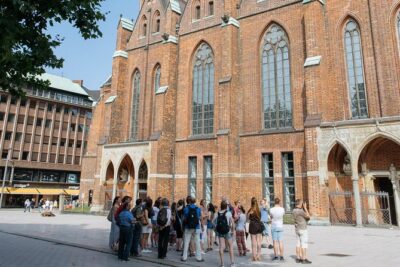
The church section adds a quieter note to the route. You will look inside some of Hamburg’s medieval churches and hear about their treasures.
This is valuable because churches often preserve details that are easy to miss on your own. A guide can point out why an object, decoration, or building feature matters instead of leaving you to admire it without context. The tour information does not name each church or list every treasure, so you should expect a general introduction rather than a fixed catalog of interiors.
The contrast with the Town Hall is part of the appeal. Hamburg’s story is not told only through grand public buildings. It also appears in places of worship, old objects, and the parts of the city that survived through changing political and economic times.
If you enjoy architecture, local history, or religious art, this part may be one of the more rewarding sections. If your main interest is modern Hamburg, the churches may feel less urgent, but they help explain the city’s older character.
Same streets, a different century:
- Heidelberg: Night Watchman Historic Adventure Tour
★ 4.7 · 1,186 reviews - The Local Tour of Hamburg Historic Centre
★ 5.0 · 1,058 reviews - Elbfloren: Historical city tour
★ 4.8 · 929 reviews - Berlin: History of the Third Reich Guided Walking Tour
★ 4.7 · 791 reviews
Tasting Hamburg near the historic port
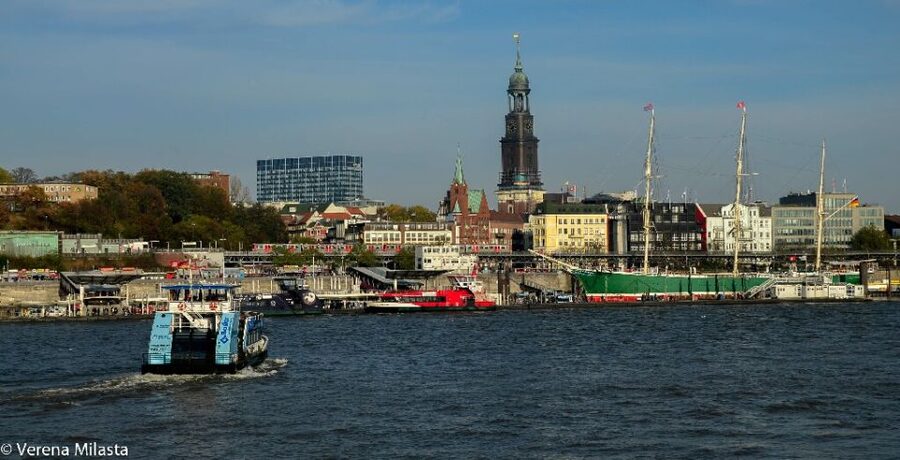
The walk then turns toward the historic port area, where the guide introduces local food and Hamburg’s connection to the water.
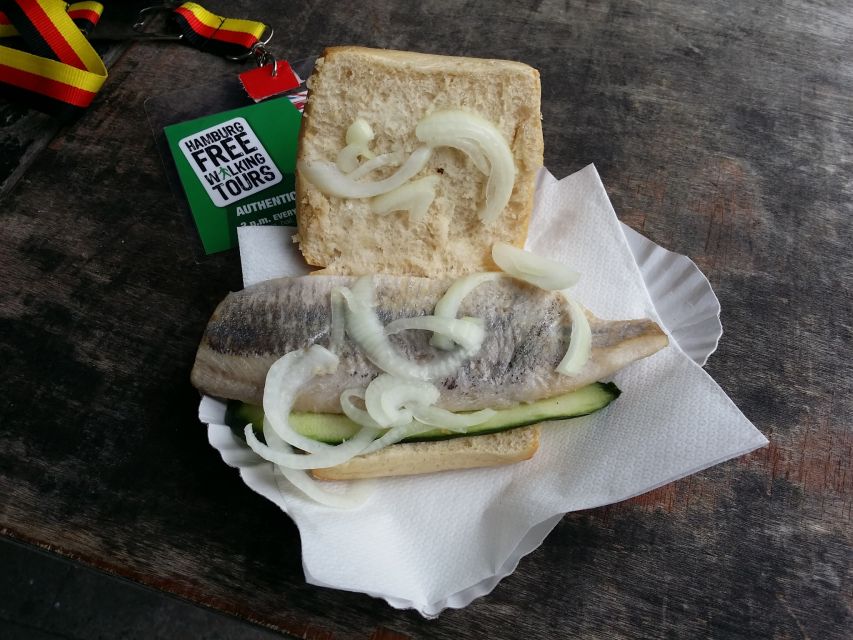
This is not a formal food tour. Food and drinks are not included, and the price of any tasting comes from your own pocket. Still, the stop gives the route a useful local flavor. You can learn about foods such as fischbrötchen, matjes, and labskaus, then decide if you want to try one.
Fischbrötchen is a fish-filled bread roll associated with northern German port life. Matjes is a young pickled herring, while labskaus is a traditional dish made with ingredients that reflect the practical food culture of seafaring communities. The descriptions alone make clear that this is not a stop built around familiar tourist snacks.
The tour presents these dishes as optional tastes, including the chance to try something brave. That is a good approach for a walking tour because nobody is forced into an expensive meal or an unfamiliar dish. If you are curious, you can sample a local specialty. If not, you can listen, take notes, and continue.
Keep your expectations practical. The experience does not include a food allowance or a guaranteed tasting. Bring a little extra money if you want to order something, and remember that the tour continues on foot afterward.
A quick look at Speicherstadt’s red-brick warehouses
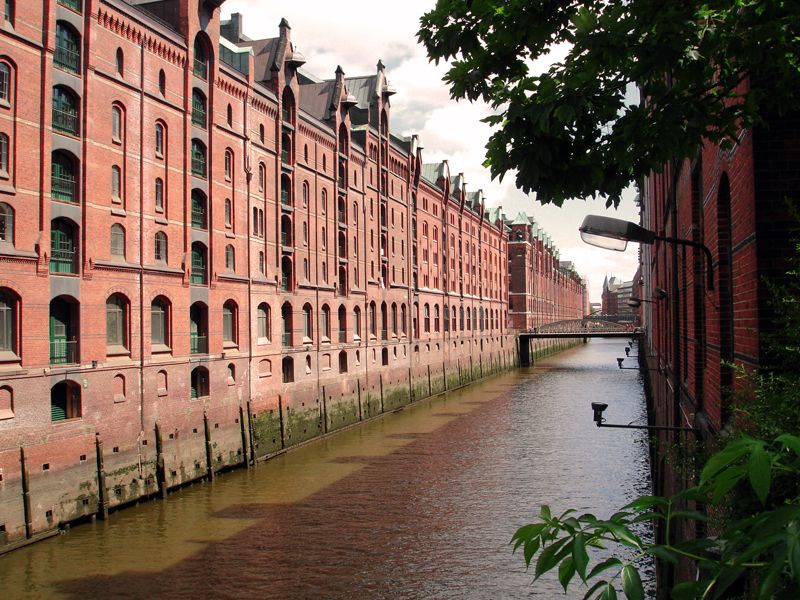
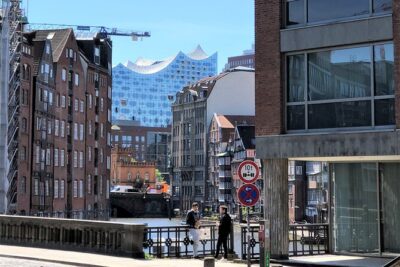
The route includes a short photo stop in Speicherstadt, Hamburg’s old warehouse district. This is one of the strongest visual moments of the walk.
Speicherstadt is known for its industrial architecture, and the brief stop gives you time to admire the scale and character of the old warehouses. It is a good place for photographs because the buildings provide a sharp change from the Town Hall and church interiors.
The wording of the itinerary makes clear that this is a quick photo stop, not a long architectural survey. If you want to study every canal, bridge, and warehouse facade, you will need to return on your own. The tour gives you an introduction and a useful orientation, then keeps moving.
I like that Speicherstadt is included without taking over the whole route. You get a look at Hamburg’s trading past while still making room for the Town Hall, churches, port food, and St. Michael’s. The result is a more varied picture of the city than a tour devoted to only one district.
Ending at St. Michael’s Church
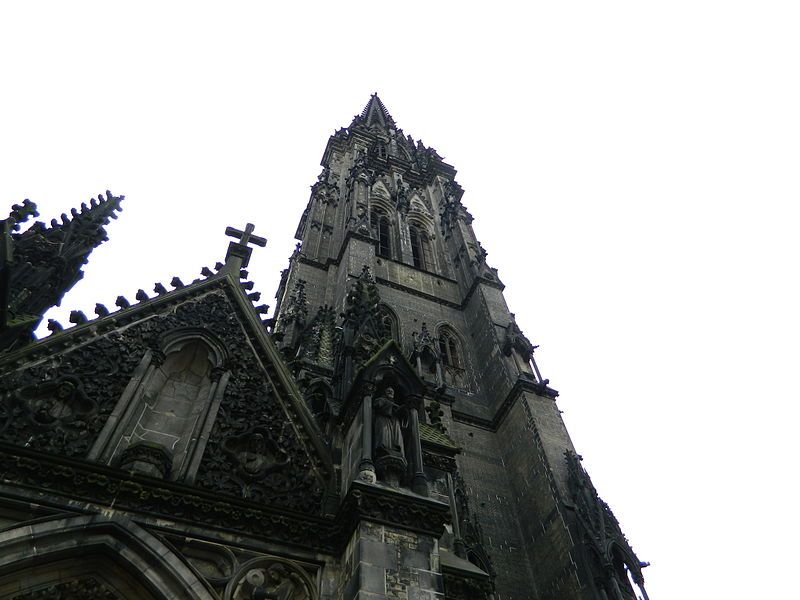
The final stop is St. Michael’s Church, often called Michel by locals. The activity describes it as one of Hamburg’s beautiful churches, and it provides a strong ending because it combines architecture, religious heritage, and a possible city view.
At the end of the guided walk, you are free to look inside the church or consider visiting its tower. The tower visit is not included, so treat it as an optional extra rather than part of the tour price.
This flexible ending works well. You can finish with the group, then decide if you have time and interest for the interior or tower. If you are watching your budget, you can simply take in the exterior and continue with your day. If you want a higher view over Hamburg, the tower is the obvious add-on, but you should check the current entry conditions separately.
Ending here also gives you a clear sense of the route’s range. In two hours, you move from city government to historic churches, port food, warehouse architecture, and one of Hamburg’s best-known religious landmarks.
What the pay-what-you-want price really means
The advertised price is about $3.40 per person, but that is not the complete cost of the guiding service. The guide’s fee is paid according to the pay-what-you-want model, and food, drinks, transport, and any optional church tower entry are separate.
That makes this a low-risk way to get oriented in Hamburg. You can reserve a place without paying the full guide fee at the start, then decide what the experience was worth at the end. For a visitor who wants a first look at the city center, this can be good value.
You should also understand the tradeoff. A pay-what-you-want tour depends on your own judgment about the guide’s time and the quality of the experience. It is not a completely free activity, and the guide’s income comes from the tips offered by the group.
The format is best for visitors who appreciate flexibility and want to keep their initial spending low. If you prefer one fixed price with every cost included, a conventional paid tour may feel easier to budget.
Group size, language, and weather
The tour accepts reservations for up to seven people per group. If your party has eight or more people, even if you make separate bookings, you will not be allowed to join together. You should arrange a private tour instead.
This rule keeps the walk from becoming too large and difficult to manage. For couples, solo visitors, families, or small groups, the limit should help maintain a more personal feel. It also means you should not try to work around the rule with several bookings.
The tour runs in rain, hail, or sunshine, so check the forecast and dress accordingly. Comfortable walking clothes and protection from wet weather will matter more than dressing formally for the Town Hall or churches. The activity is wheelchair accessible, but historic city routes can still vary in surface and space, so you may want to confirm any personal mobility needs before booking.
German is the only listed tour language. This is the most important suitability question. If you understand German well, the tour offers a direct way to hear Hamburg’s story from a live guide. If not, you may get more from a tour offered in a language you follow easily.
Who will get the most from this Hamburg walk
I would choose this tour if you want a compact introduction to Hamburg before exploring more on your own. The route covers enough ground to show the city’s political center, religious buildings, port culture, warehouse district, and a major church without demanding a full day.
It suits people who enjoy history with a personal touch. The mix of facts and anecdotes, including the positive feedback about Jan’s entertaining style, suggests that the tour aims to keep the story moving rather than bury you in dates.
It is also a good choice for budget-minded visitors. The initial price is low, the guide’s fee is flexible, and you can choose whether to spend more on food or the church tower.
I would look elsewhere if you need an English-language tour, want a dedicated food experience, or expect guaranteed entry and long visits inside every landmark. This is a German walking tour with a broad city route, not a private museum tour or a full meal outing.
Should you book this pay-what-you-want tour?
Book it if you speak German and want a practical first walk through Hamburg’s historic center. The Town Hall meeting point is clear, the route includes several different sides of the city, and the pay-what-you-want setup keeps the upfront cost modest.
The strongest reasons to go are the wide historical range, the local food introduction near the port, and the chance to hear the city explained through anecdotes rather than only dates. The experience also gives you useful follow-up ideas, such as returning to Speicherstadt or visiting the tower at St. Michael’s.
Skip it if your group has eight or more people, if you need another language, or if you want every tasting and admission included. For everyone else, this is a sensible two-hour orientation with enough local detail to help shape the rest of your time in Hamburg.
FAQ
How long does the Hamburg historic center tour last?
The walking tour lasts two hours. Check availability for the current starting times.
What language is the tour conducted in?
The live tour guide conducts the tour in German.
Where does the tour begin?
Meet your guide directly in front of the main entrance of Hamburg’s Town Hall. Look for the bright yellow umbrellas.
Where does the tour end?
The activity ends back at the meeting point. The route also finishes at St. Michael’s Church, where you can choose to look inside or consider visiting the tower.
Are food and drinks included?
No. Food and drinks are not included. The guide introduces local specialties such as fischbrötchen, matjes, and labskaus, but any tasting is paid for separately.
Can a group of eight people join the tour?
No. Groups are limited to seven people, even if separate bookings are made. Groups of eight or more should book a private tour instead.
Newest history tours we have reviewed in Germany
- Historic Dresden Private Walking Tour★ 5.0 · 32 reviews
- Walking Through Dresden’s Past with Dr. Fraser Macdonald★ 5.0 · 72 reviews
- Berlin Food & Cultural Tour: Must-Try German & Berliner Classics★ 5.0 · 51 reviews
- Private Tour: Jewish Heritage Walking Tour of Berlin★ 5.0 · 29 reviews
- Small-Group Historical Bike Tour in Berlin★ 4.5 · 103 reviews
- Historic center of Berlin – Tour in Italian★ 5.0 · 143 reviews
- East Berlin Food & History Tour with Eating Europe★ 5.0 · 204 reviews
- Private Berlin WWII and Cold War History Tour with Local Expert Guide★ 5.0 · 28 reviews
Hamburg History Tours, compared.
Historical Tour of the St. Pauli Sex Work District
Read our review →
Sightseeing Tour – Free Tour – Historic Center-Hamburg On Foot
Read our review →
Browse the lists this tour appears in