
Review · LOCAL CULTURE & TRADITIONS TOURS
Cape Town: Art, Culture & History Walking Tour
Cape Town’s story comes into focus as you walk from the painted houses of Bo-Kaap to District Six, passing mosques, markets, colonial buildings, and places tied to apartheid-era removals. Guides such as Mandi, Olwethu, and Diego bring local context to streets that can otherwise look like simple photo stops.
I like the route’s strong mix of art and history, and I like that it gives you practical bearings in the city centre rather than keeping you inside one neighbourhood. The chance to hear local perspectives on South African identity, learn a few greetings in African languages, and get tips for the rest of your stay adds real value.
The main consideration is pace. Two hours is enough for a useful introduction, but not enough for long visits inside every museum or gallery. You also need to stay alert when walking independently after the tour, especially in quieter city streets.
Key points at a glance
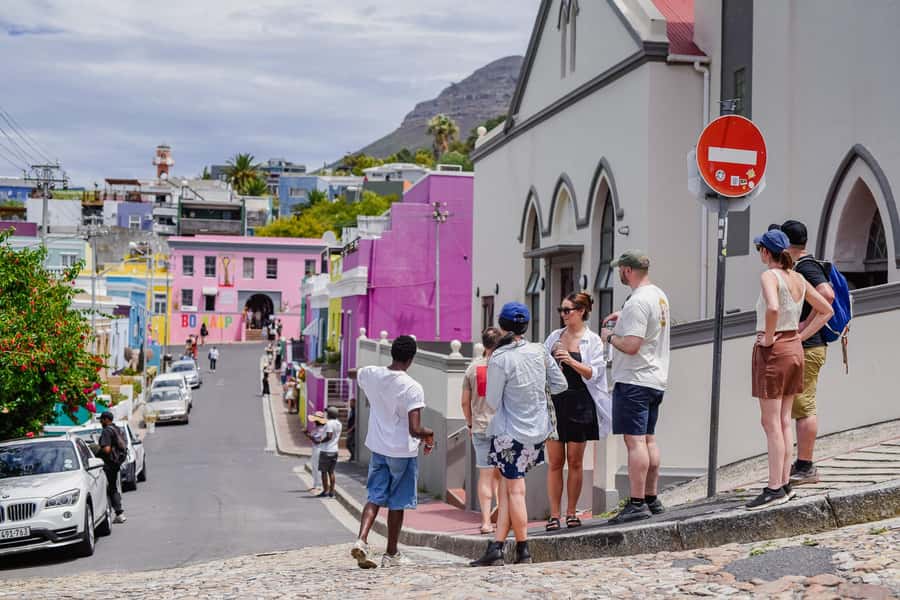
- Bo-Kaap sets the tone: Begin among colourful homes, historic mosques, and Cape Malay cultural traditions.
- A compact city-centre route: Cover Long Street, Greenmarket Square, Company’s Garden, the Slave Lodge area, Parliament, and District Six on foot.
- History without a polished gloss: Expect direct discussion of slavery, colonial rule, forced removals, community life, and identity.
- Art is part of the walk: Local galleries, craft stalls, public art, and creative work appear along the route.
- Guides make the difference: Mandi, Olwethu, Diego, Sipho, and Basil have each led tours, with an emphasis on conversation and local tips.
- Good first-day value: At $37 for two hours, it is a useful orientation if you want context before exploring Cape Town on your own.
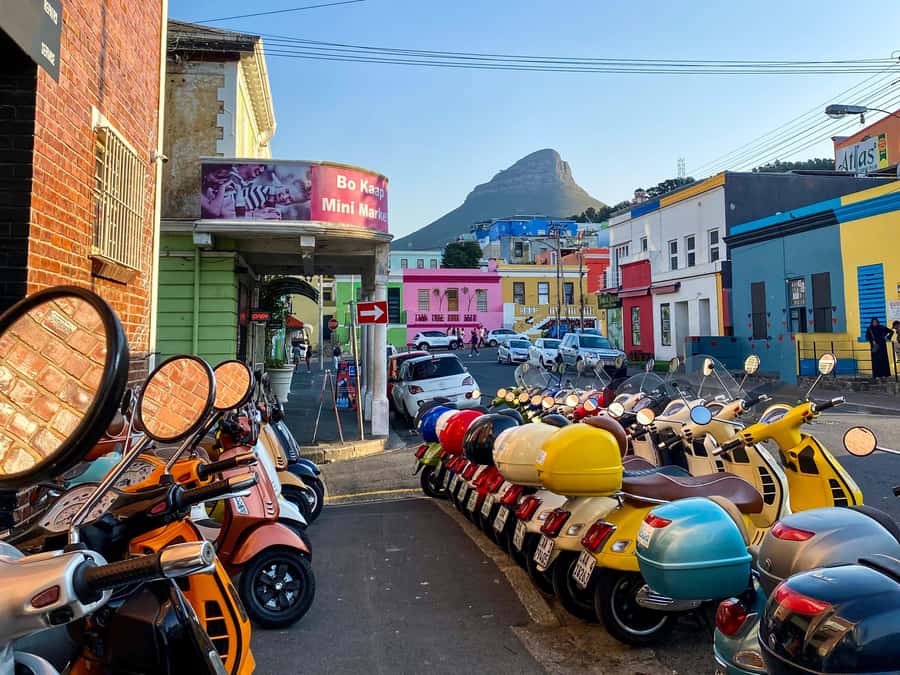
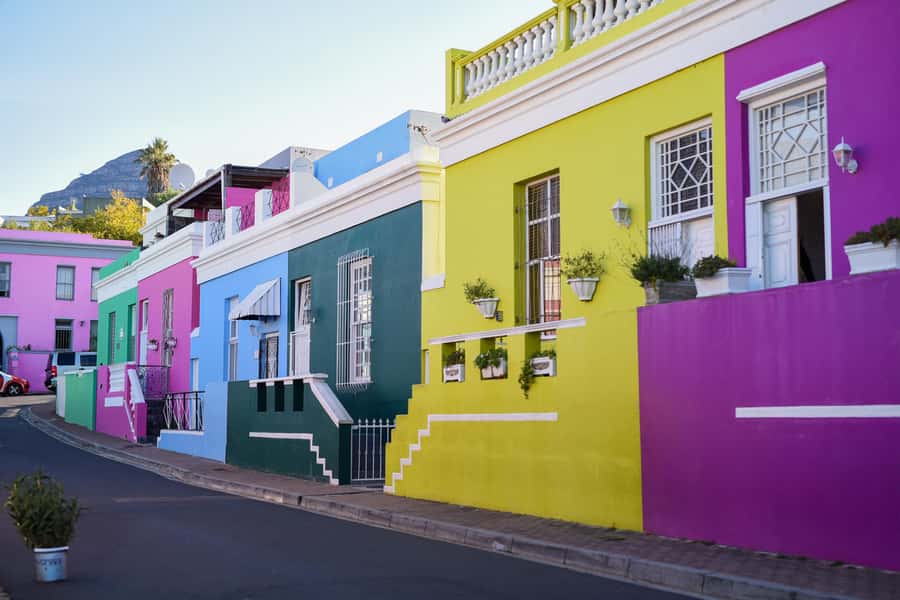
Starting among Bo-Kaap’s painted houses
Meet at Bo-Kaap Deli, at 97 Church Street. The location puts you straight into one of Cape Town’s most recognisable neighbourhoods, but the point is not simply to photograph bright walls and move on.
Your guide explains the roots of Cape Malay culture and the community’s role in shaping Cape Town. The colourful façades are only the visible part of the story. The walk gives you a chance to connect the streets with religion, family life, heritage, and efforts to protect the character of the area.
The first Bo-Kaap section takes about 20 minutes. That is enough time for a guided look and photographs, but not a long neighbourhood visit. If you want extensive time inside local shops or to study every building, you will need to return later.
The stop at Auwal Masjid adds an important religious and historical layer. You see the mosque, hear about its place in the community, and continue through streets where Cape Town’s past remains part of daily life. The tour does not treat Bo-Kaap as a colourful backdrop. It connects the appearance of the area with the people who maintain its traditions.
More Local Culture and Traditions Tours in the world:
- Amsterdam Food and Cultural Tour with Tastings
★ 5.0 · 4,315 reviews - Sevilla Food Tour: Tapas, Wine, History & Traditions
★ 5.0 · 3,468 reviews - Tromsø: Reindeer Camp and Sami Cultural Tour with Lunch
★ 4.7 · 3,326 reviews
From Wale Street to the older city centre
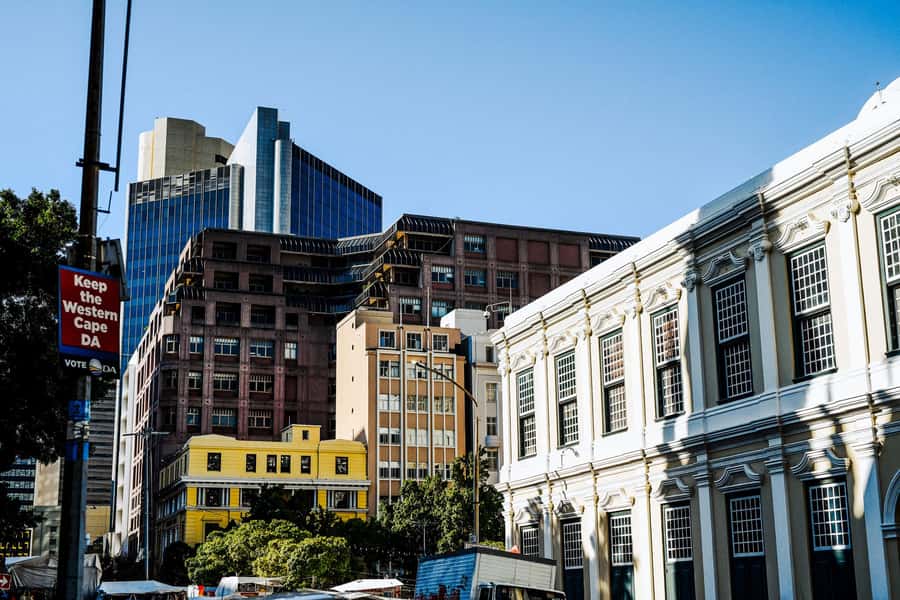
From Bo-Kaap, the group heads along Wale Street and toward Long Street. This part of the walk shows how quickly Cape Town’s character changes from residential lanes to a busier commercial centre.
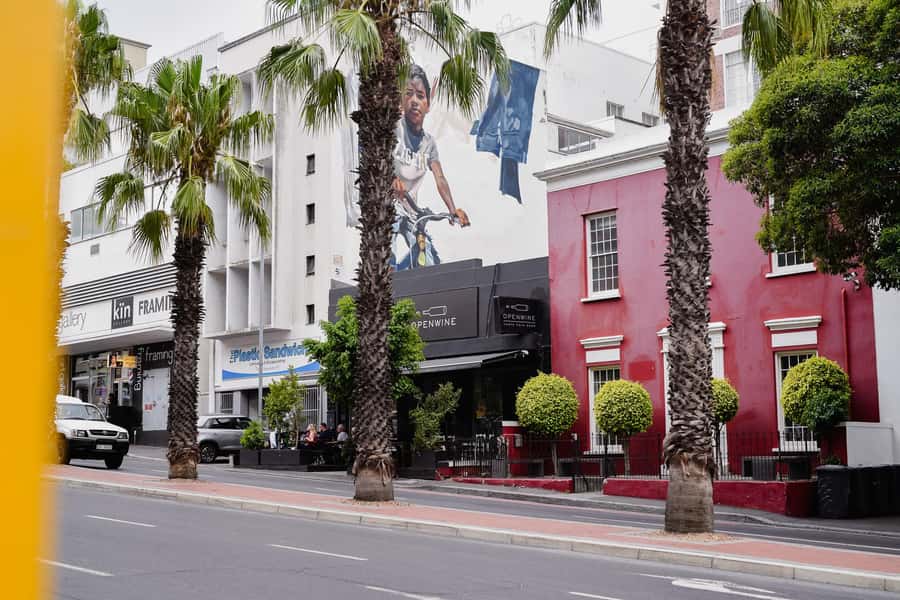
Long Street brings Victorian-era buildings, bars, bookshops, and vintage boutiques. The guide helps you read the street as more than a place to eat or browse. Its architecture and current businesses sit beside older layers of the city, giving you a quick lesson in how Cape Town mixes old buildings with present-day culture.
The route allows around 15 minutes for Long Street. Think of this as a guided introduction, not a shopping stop. You may get ideas for places to return to, but the schedule keeps moving.
That is one of the tour’s strengths. You are not confined to a list of major monuments. You see how neighbourhoods connect, and you get a basic sense of the city centre before setting out alone. Several guides also share restaurant, shopping, and sightseeing suggestions for later in your stay.
Greenmarket Square and Cape Town’s creative side
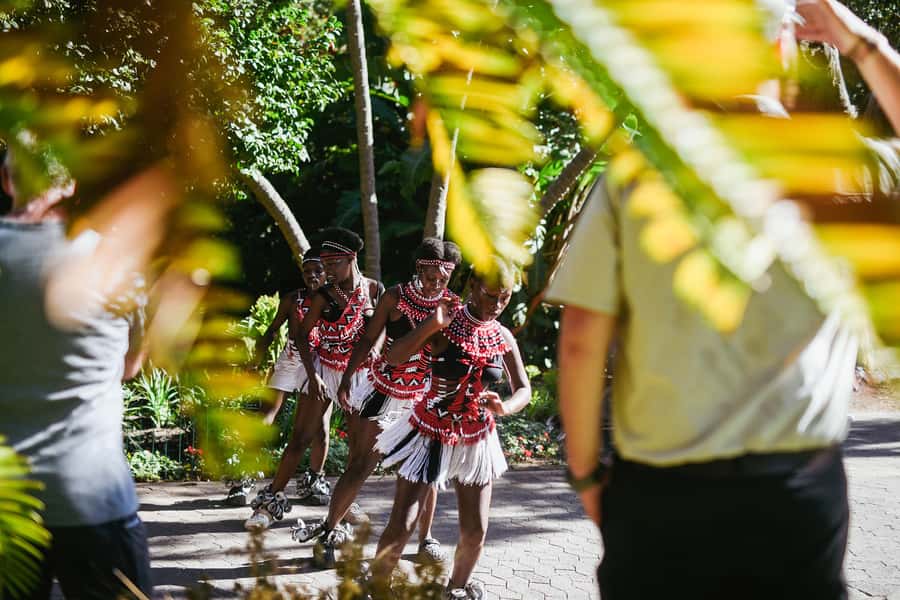
Greenmarket Square is one of the liveliest stops. Traders sell handmade goods, local art, textiles, and souvenirs, giving you a direct look at Cape Town’s commercial and creative life.
The tour allows about 20 minutes here, including time for browsing. You can ask your guide about objects, local styles, and where to shop. One guide even helped a couple negotiate while buying souvenirs, though that kind of extra assistance will depend on the person leading your walk.
This is also a good place to keep your expectations in check. A market stop is not the same as a carefully selected gallery visit. Goods vary, and you may need to judge quality and price for yourself. Still, the square helps connect the city’s art scene with ordinary street commerce rather than presenting art as something found only in formal museums.
The tour’s art focus can extend beyond market stalls. Some routes have included galleries and a recycling artist’s studio, and one participant particularly liked a striking box-shaped building and the discussion of its artist. Exact stops may vary, so ask your guide what is open on the day.
Company’s Garden, the Slave Lodge, and colonial power
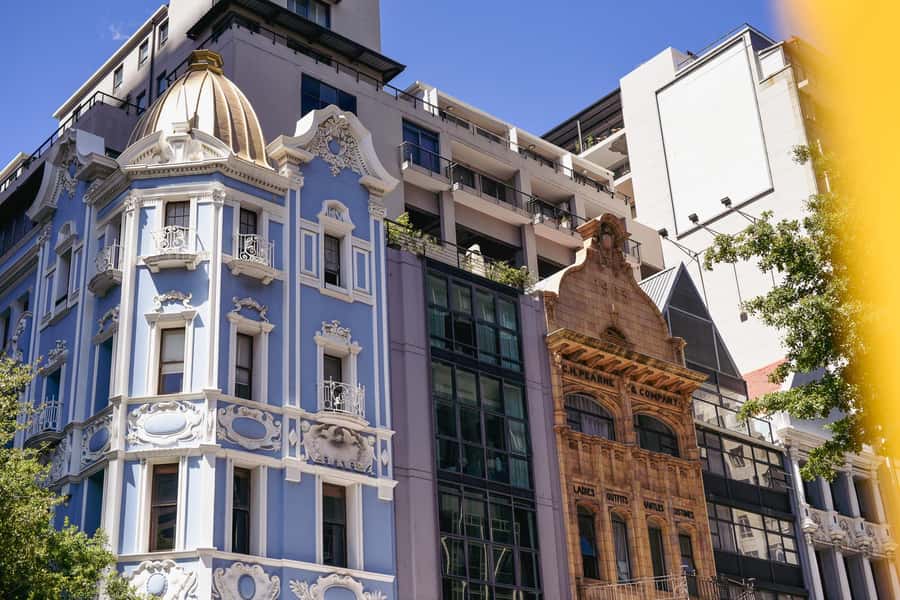
The route continues through Company’s Garden, a green public space with strong links to Cape Town’s colonial development. Here, the guide can help you understand how the city grew around trade, administration, religion, and control.
The walk then passes the Iziko Slave Lodge. This is a serious stop, even if you do not go inside for a full museum visit. The building recalls the people enslaved in Cape Town and the systems that supported colonial society. The tour places that past within the city streets, where it can be easy to focus only on architecture and overlook the human cost behind it.
The planned stop is brief, about 10 minutes. That makes the guide’s explanation especially useful. You will not have time for a full museum experience, so I would return separately if slavery and colonial history are central to your interests.
Parliament follows, with a photo stop and views along the way. The building represents formal political power, while the stories around it help explain how South Africa’s public life changed. The route also includes Cape Town City Hall, where major speeches and protests took place, and there may be a chance to see an exhibition connected with Nelson Mandela.
These stops work best together. You move from religious and community history in Bo-Kaap to trade, slavery, government, protest, and democracy. The walk does not pretend Cape Town has one simple identity.
More History Walking Tours in the world:
- History and Hauntings of Salem Guided Walking Tour
★ 5.0 · 14,564 reviews - Lisbon: History, Stories and Lifestyle Walking Tour
★ 4.8 · 10,902 reviews - Boston: Freedom Trail History Small Group Walking Tour
★ 5.0 · 6,450 reviews - Historic Charleston Guided Sightseeing Walking Tour
★ 5.0 · 6,216 reviews
District Six and the meaning of forced removal
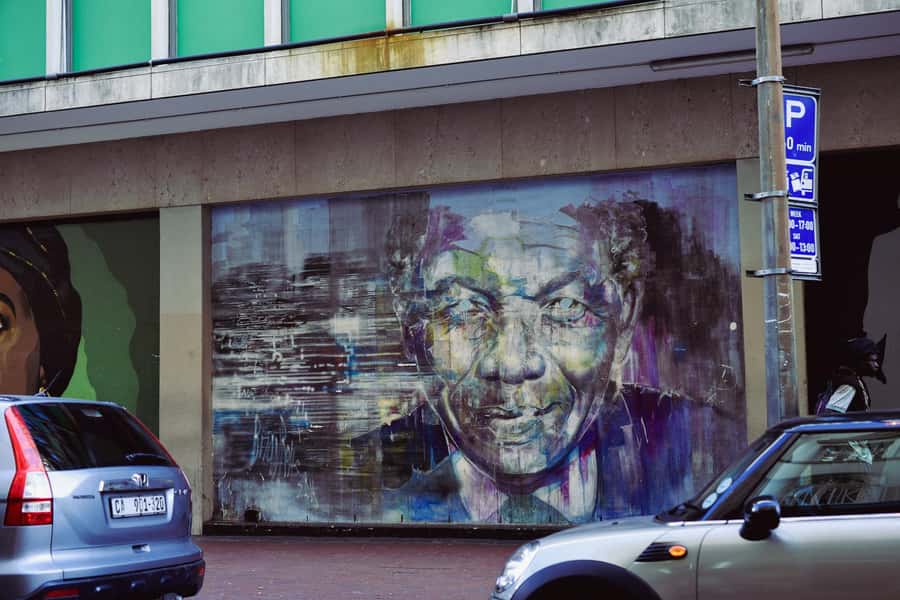
The final major historical section is District Six. This is where the tour moves from broad national themes to the damage done to a specific community.
District Six became a symbol of forced removals under apartheid. Families were pushed out, neighbourhood ties were broken, and the emptying of the area still affects how Cape Town understands belonging and memory. Your guide explains how those events shaped the city and why District Six remains important to conversations about identity and repair.
The District Six Museum stop is listed at about 10 minutes. Again, that is enough for orientation, not a full museum visit. If the subject matters to you, plan additional time at the museum on another day.
This part of the tour is valuable because it resists a postcard version of Cape Town. You are encouraged to consider who was allowed to live where, how communities responded, and how the past remains present in the city’s social life. Guides have been praised for handling these subjects with warmth, humour, and seriousness rather than turning the walk into a dry lecture.
The tour may finish near a Nelson Mandela exhibit, with Truth Coffee Roasting included as a final stop for coffee and sightseeing. It is a pleasant change of pace after the heavier historical material, though the available time and exact finish may vary.
What the guides add to the walk
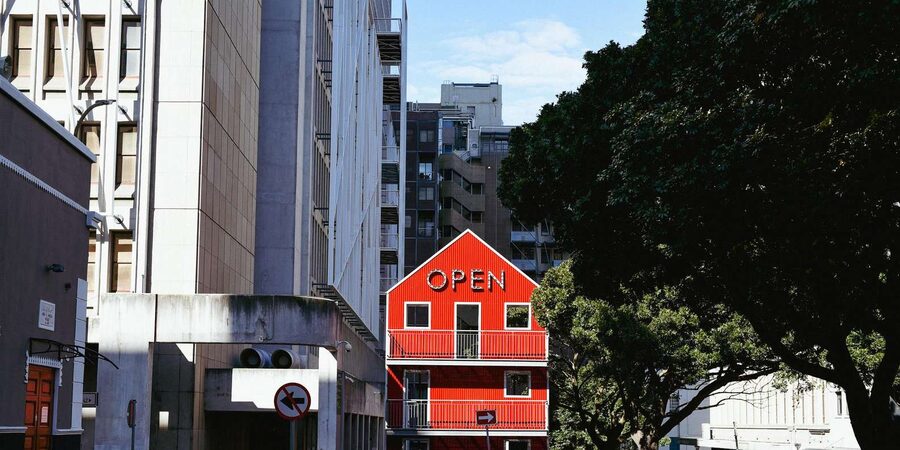
The guide is the heart of this experience. Mandi has led lively walks with clear explanations and an open approach to questions. Olwethu has been noted for helping late arrivals find the group, offering holiday tips, and even waiting to make sure a taxi collected a participant safely.
Diego’s style includes humour, local advice, and simple greetings in languages such as Zulu and Xhosa. He has also helped visitors understand where to eat, shop, and go next. Other named guides include Sipho and Basil, and the assigned guide will depend on the date you book.
The common thread is conversation. You can ask about architecture, social change, art, food, or how to move around the centre. That makes the walk more useful than a memorised list of dates.
The tour is in English. Guides have been described as clear and easy to hear, which matters on busy streets. Still, a walking tour is not a private lecture. If the group is large or the street is noisy, stay close and ask the guide to repeat anything you miss.
Two hours on foot: how demanding is it?
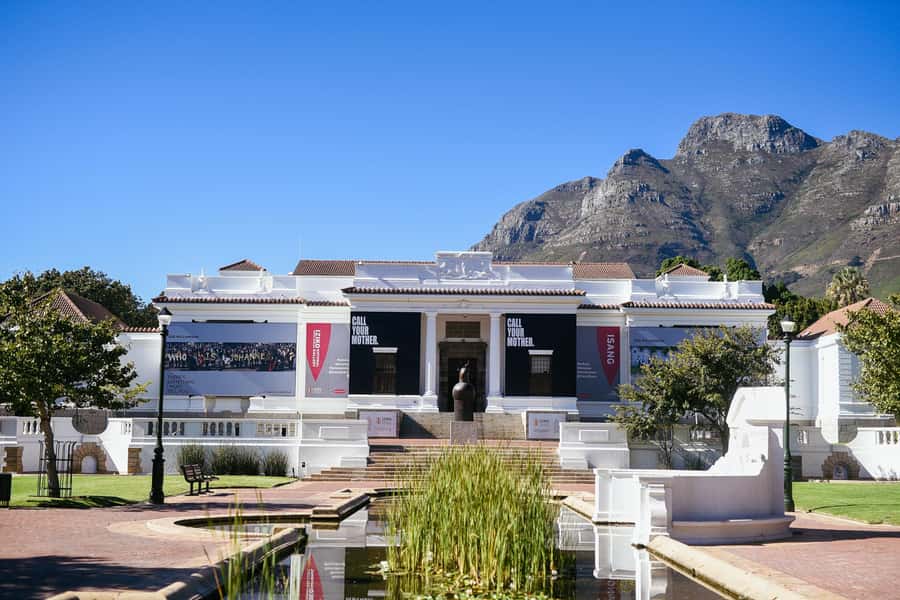
The listed duration is two hours, with stops ranging from 10 to 20 minutes. You walk between Bo-Kaap, Long Street, Greenmarket Square, Company’s Garden, Parliament, and District Six, so comfortable shoes matter.
The route is suited to someone who wants a brisk introduction rather than a slow museum day. You will pause for photographs and explanations, but you should not expect long indoor visits at each site.
The tour is described as wheelchair accessible. Since this is an urban walking route with several streets and outdoor stops, anyone with specific mobility needs should still confirm the day’s route and access details before booking.
Bring water, sunscreen, a hat, sunglasses, and rain gear. A camera is useful, but keep your attention on the guide and your surroundings too. Personal medication and hand sanitizer or tissues are also sensible items to carry.
Safety and city awareness
The guided portion gives you confidence in the centre, but it does not remove the need for ordinary city awareness. Stay with the group, keep valuables secure, and listen when your guide advises you about streets or meeting points.
One troubling incident occurred after a participant left the guided route and followed a restaurant suggestion alone. A member of the party was nearly robbed. That does not define the whole experience, but it is a clear reason to ask your guide which areas are best reached by taxi and which streets are sensible to walk after dark.
The tour itself can help you understand how to move around Cape Town. Several guides offer practical tips, and some have helped participants with taxis or shopping. Treat that advice as part of the value of the walk, not as a substitute for staying alert.
Is $37 a fair price?
At $37 per person, the tour is not the cheapest way to see the city centre, but the price is reasonable if you use it as an orientation session. You are paying for two hours with a local guide, a carefully connected route, historical interpretation, and access to local perspective that is hard to gain from looking at buildings alone.
The value is strongest at the start of a Cape Town stay. After the walk, you can return to Bo-Kaap, Greenmarket Square, the Slave Lodge, District Six Museum, or city-centre shops with a clearer idea of what you are seeing.
The limitation is time. You are not buying full museum admission, lunch, hotel transport, or a private tour. Transportation to Bo-Kaap Deli is your responsibility, and personal purchases are extra.
Free cancellation up to 24 hours before departure and reserve-now, pay-later booking make it easier to fit into a changing schedule. Starting times vary, so check availability when choosing a date.
Who should book this walk?
I would choose this tour if you are visiting Cape Town for the first time and want more than scenic photos. It suits people who enjoy history, architecture, public art, local markets, and honest discussion about apartheid and identity.
It also works well for visitors with only a few days in the city. The route gives you a useful map of the centre and a list of places to revisit. Art lovers should like the galleries, craft stalls, and creative projects, though anyone seeking long gallery visits should book separate museum time.
Families and older walkers may appreciate the short duration, but the walk still requires steady movement and attention. The activity is not suitable for people over 95, and alcohol and drugs are not allowed.
Should you book the Cape Town Art, Culture & History Walking Tour?
Book it if you want a compact, thoughtful introduction to Cape Town that links Bo-Kaap’s community life with slavery, colonial rule, city politics, forced removals, art, and present-day identity. The guides are the main attraction, and Mandi, Olwethu, Diego, Sipho, and Basil have brought different personalities to the route.
Skip it if you want a long museum visit, a food tour, or a private car ride between sights. For most first-time visitors, though, $37 buys useful context, local advice, and a better way to read the city. I would schedule it early in your stay, wear good shoes, and leave time to revisit the places that catch your interest.
FAQ
Where does the Cape Town walking tour begin?
It begins at Bo-Kaap Deli, 97 Church Street, Bo-Kaap, Cape Town, 8001.
How long does the tour last?
The tour lasts two hours.
How much does the tour cost?
The listed price is $37 per person.
What language is the tour conducted in?
The live tour guide speaks English.
Which neighbourhoods does the tour visit?
The route includes Bo-Kaap, the Cape Town city centre, and District Six.
Does the tour visit Auwal Masjid?
Auwal Masjid is included as a guided sightseeing and photo stop.
Is the District Six Museum included?
District Six Museum is included as a guided sightseeing and photo stop. The listed stop lasts about 10 minutes.
Is hotel pickup included?
No. Hotel pickup and drop-off are not included, and you must arrange transportation to the meeting point.
Is the tour wheelchair accessible?
Yes, the activity is listed as wheelchair accessible.
Can I cancel for a refund?
Yes. You can cancel up to 24 hours in advance for a full refund.
Newest history tours we have reviewed in the world
- Bilbao Historical Tour in small group★ 4.7 · 52 reviews
- Bologna: Street Food Tour in the Historic Center★ 4.8 · 125 reviews
- CEBU: Cebu City Heritage and Uphill Guided Tour★ 4.2 · 31 reviews
- Bishkek : City Tour (History, Architects, Statues & Culture)★ 4.9 · 54 reviews
- Blenheim: Omaka Aviation Heritage Centre Admission Ticket★ 4.9 · 31 reviews
- Berlin: Nazi History Walking Tour★ 4.8 · 33 reviews
- Best of Baku: 4-Hour City Tour Historic and Modern Landmarks★ 4.7 · 63 reviews
- Belfast: Best of Belfast History, Culture & Art Walking Tour★ 4.9 · 158 reviews
Local Culture & Traditions Tours, compared.
Amsterdam Food and Cultural Tour with Tastings
Read our review →
Sevilla Food Tour: Tapas, Wine, History & Traditions
Read our review →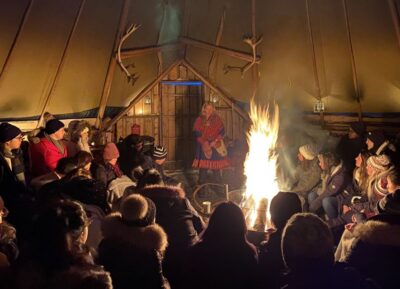
Tromsø: Reindeer Camp and Sami Cultural Tour with Lunch
Read our review →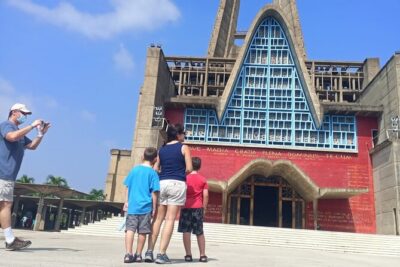
Half Day Dominican Republic Cultural Tour : Small Group
Read our review →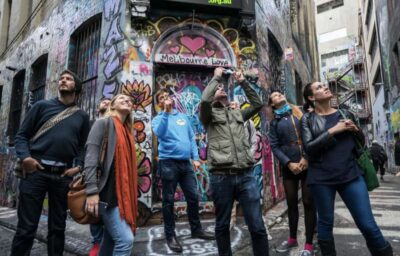
Ultimate Melbourne Walking Tour: History, Laneways & Culture
Read our review →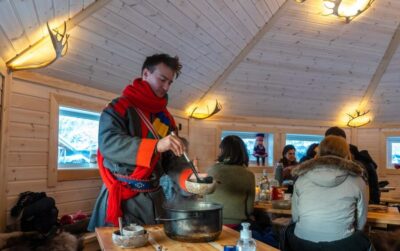
Tromsø: Sámi Reindeer Sledding and Sami Cultural Tour
Read our review →
Kyoto Gion: 2-Hour Geisha Culture & History Walking Tour
Read our review →
Marrakech Historical and Cultural Tour – Half Day City Tour
Read our review →Browse the lists this tour appears in