
Review · UK HISTORY TOURS
Belfast: A History of Terror Walking Tour
Belfast’s city centre becomes a history book on this 2.5-hour walk. From City Hall, your guide connects centuries of division to The Troubles, then leads you to bombing sites, former security points, and memorials where the past still feels close. I like the local, personal storytelling and the careful treatment of civilians caught in the conflict. I also like the headsets, which make it easy to follow in a group.
The main thing to consider is the subject matter. This is a serious tour about killings, bombings, fear, and loss, not a light sightseeing stroll. The route is flat and only 1.5 miles, but Belfast rain can test your coat, and you need a good standard of English to follow the detail.
Key points to know before you go
- The route begins at Belfast City Hall: You get the broad historical setting before moving into the Troubles.
- Personal experience matters here: Guides including James, Mylie, Anne, Chris, Steve, Jim, and Roisin have been praised for linking public events with everyday life.
- The tour visits real city-centre locations: Former attack sites, security cordons, reflection points, and the Forgotten Troubles Memorial give the story a physical setting.
- The tone is balanced rather than sensational: Political groups, the British Army, police, and civilians are all placed within the story.
- The walk is easy physically: The route is flat, with no hills or steps, and covers about 1.5 miles.
- It is best for adults and children aged 12 or older: The content is serious, detailed, and delivered in English.
Why this Belfast history walk is worth your time
A city tour about The Troubles can easily become a list of dates, factions, and tragedies. This one aims to explain how Belfast reached that point, what daily life felt like during the violence, and why peace remains a process rather than a neat ending.
That wider frame is the tour’s greatest strength. You are not simply shown a plaque and told what happened there. Your guide first explains the long political and religious divisions that shaped Northern Ireland, then shows how those divisions affected streets, shops, public buildings, and ordinary families.
I especially like the way the tour connects the past to the present. Belfast is not treated as a city frozen in conflict. You hear about regeneration, reconciliation, and the challenges that still remain, including the work of remembering people who were killed or affected.
The guides also bring different kinds of experience. James has been praised for making difficult material clear and for using gentle humour at suitable moments. Mylie is known for her passion and care when telling local stories. Anne and Chris have drawn on their experiences of growing up in Belfast during The Troubles. Roisin has been praised for explaining the political complexity without taking sides.
The exact guide depends on the day, so you should not book expecting one named person. But the company uses local guides with strong knowledge of Belfast, and several have personal memories of the period. That can give the tour a human scale that a museum display cannot always provide.
More History Walking Tours in the UK
- A History of Terror – Belfast City Centre Walking Tour
★ 5.0 · 2,883 reviews - Edinburgh: Old Town History and Tales Walking Tour
★ 4.8 · 2,361 reviews - Old Town Walking Tour History and Tales in Edinburgh
★ 5.0 · 2,168 reviews
Starting at City Hall: the long road to The Troubles
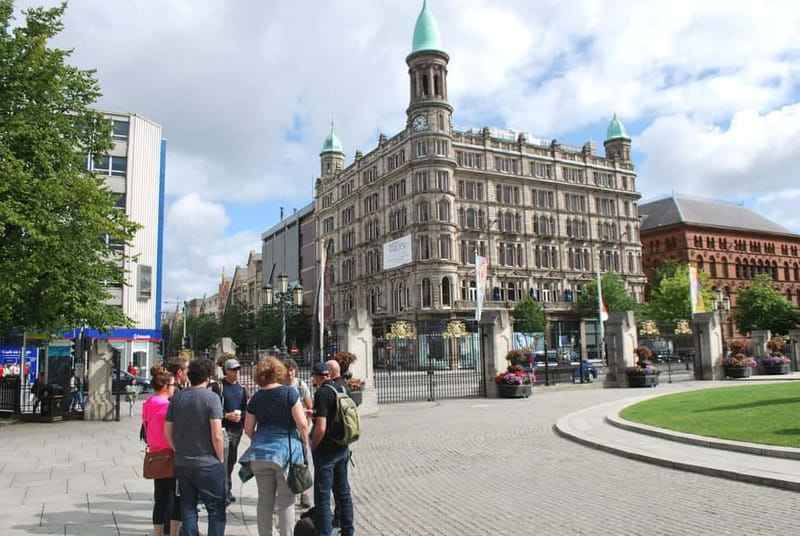
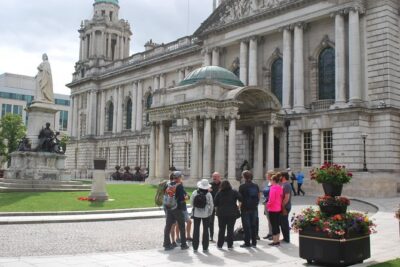
Meet your guide at the front gates of Belfast City Hall on Donegall Square North. Look for the DC Tours logo on a black jacket or shirt, and arrive about 10 minutes early.
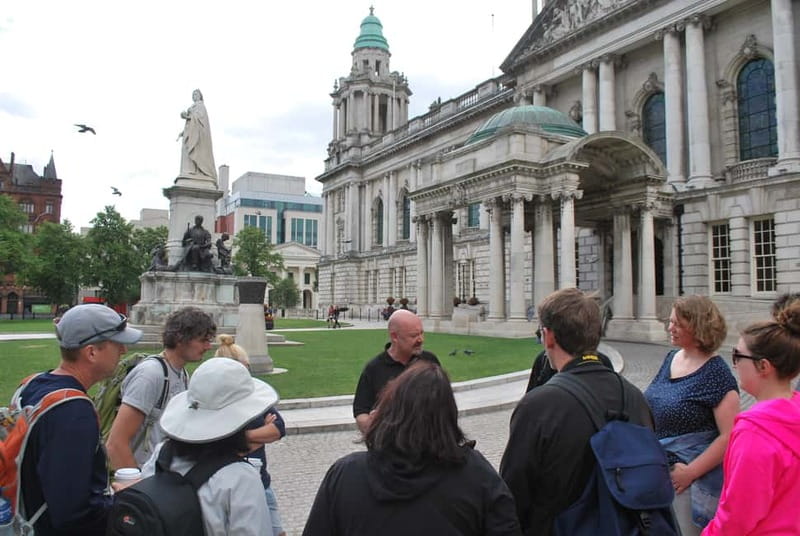
City Hall is a sensible starting point because it gives your guide space to explain the background before the walk turns to violence. The tour looks back across roughly 800 years of Irish and British history, focusing on the political and social divisions that helped shape modern Northern Ireland.
This early section matters. If you know little about the subject, the causes of The Troubles can seem baffling. The terms, loyalties, and political claims are not always easy to sort out. A good guide can give you the basic structure without drowning you in names and dates.
Expect discussion of identity, religion, politics, British rule, Irish nationalism, and the division of the island. The aim is not to tell you which side to support. It is to help you understand why different communities saw the same events in sharply different ways.
That balance is important. The most useful guides explain competing views clearly, then let you think about the moral and political questions yourself. The tour is strongest when it keeps ordinary people in view rather than turning the story into a contest between organisations.
Walking through the places where violence happened
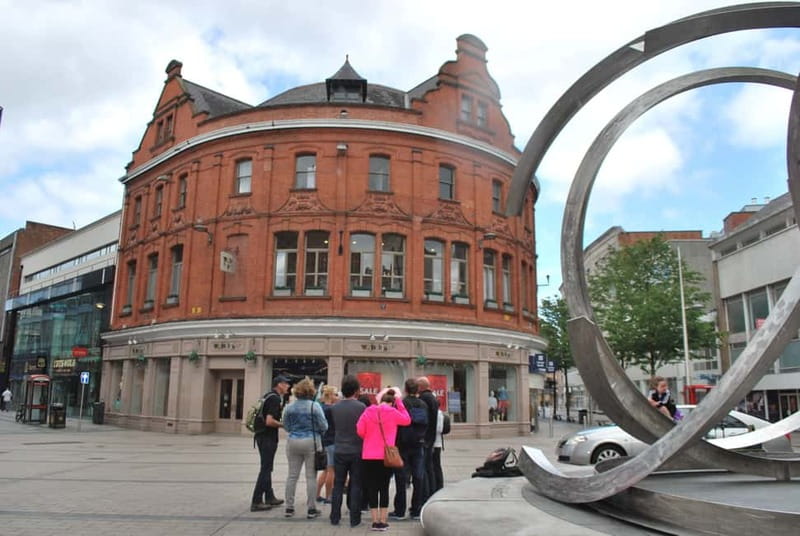
From City Hall, the group moves through central Belfast to locations connected with major Troubles-era events. The route covers about 1.5 miles, so you are not marching across the whole city or visiting every famous wall and neighbourhood.
Instead, the city centre acts as the classroom. You stop at places where bombings and attacks occurred, and your guide explains what happened, who was affected, and how the city changed in response.
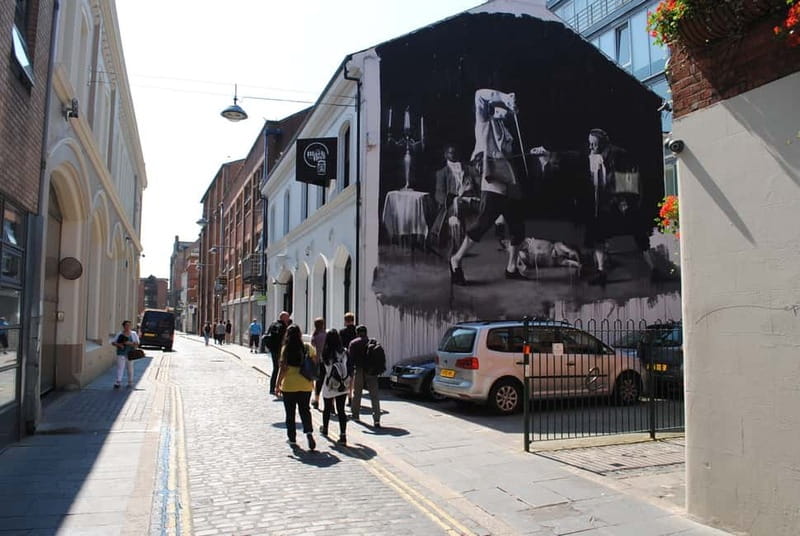
These stops can be more powerful than a general lecture. A busy street or commercial area may look perfectly ordinary now, yet the guide can show how it once carried barriers, checkpoints, patrols, or the memory of an attack. That contrast helps you picture the gap between present-day Belfast and the city people knew during the worst years.
The walk also covers former security cordon locations. These points help explain how violence altered movement through the city. Streets that now feel open and easy to cross could once be controlled, searched, or closed.
You will hear about the role of the British Army, police, paramilitary groups, businesses, and civilians. The emphasis is on how politics became part of daily life. Fear did not always mean that people stopped working, shopping, studying, or meeting friends. Normality and danger existed side by side.
The guides use personal accounts and local stories to make that point. You might hear how people handled transport, work, family life, or sudden disruption. These details help you understand the conflict as something lived hour by hour, not just something recorded in a textbook.
Personal stories, careful language, and appropriate humour
The subject demands care. Stories about deaths and bombings can become exploitative if presented for shock value. This tour is designed to avoid that approach, using context and empathy instead.
Several guides have been praised for checking in with the group during the walk. James, for example, has been described as attentive to the group’s comfort, explaining the route at the start and making sure people understood each section before moving on.
That kind of care makes a difference. You can ask questions without feeling that you are interrupting a performance. You also get a chance to pause mentally before the next difficult story.
There is some humour, but it is used to help people stay engaged rather than to make light of suffering. The best moments of humour give you breathing room after a serious explanation. They do not erase the sadness of what happened.
The audio headsets are another practical plus. They allow you to hear the guide clearly while standing near a roadside or in a larger group. If you have some hearing difficulty, this feature may be especially useful. You still need to listen closely, since the tour packs a great deal into two and a half hours.
Same streets, a different century:
- London Small Group Tour of Historical Pubs
★ 5.0 · 10,422 reviews - Edinburgh: Edinburgh Castle Guided History Tour with Tickets
★ 4.8 · 9,933 reviews - Edinburgh: Whisky Tasting with History and Storytelling
★ 4.9 · 2,451 reviews - Soho Music & Historic Pubs Tour
★ 5.0 · 1,993 reviews
The peace process and Belfast today
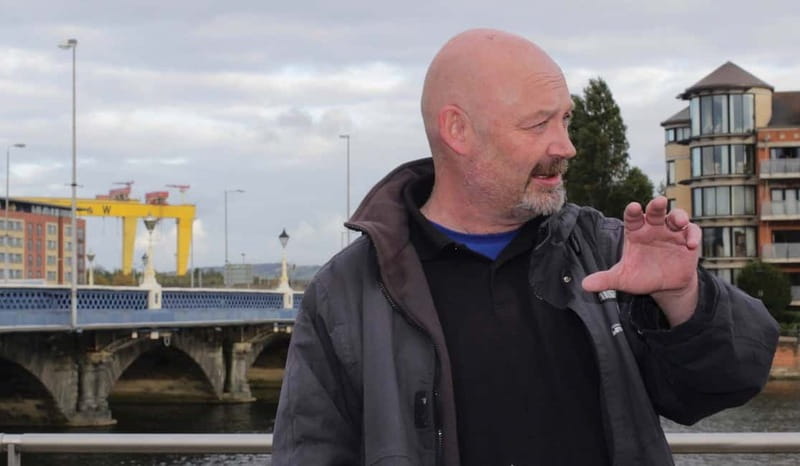
The tour does not stop at the height of the violence. It explains how peace was reached and how Belfast began to regenerate after the conflict.
This final section gives the walk a more hopeful shape, but it does not pretend that peace solved every problem. Reconciliation takes time, and old divisions can continue through politics, memory, neighbourhood identity, and differing views of the past.
You will hear what peace looks like in a post-conflict city and how Belfast has changed. The point is not simply that the bombs stopped. It is that a city must also deal with memory, trust, public space, and the question of how different communities share a future.
That is why the Forgotten Troubles Memorial is an important stop. It provides a place for reflection and introduces the difficulties still faced by people affected by the conflict. The memorial is not just a final photo opportunity. It asks you to consider whose stories are remembered, whose pain is recognised, and how a city marks loss.
I appreciate that the tour treats peace as an ongoing effort. You leave with a sense of Belfast’s resilience, but also with a clearer idea of the work still required.
What the 2.5-hour format feels like
Two and a half hours is a good length for this subject. A shorter walk could offer only a quick outline, while a much longer tour might be hard to absorb, especially in wet or cold weather.
The route is physically easy. It is flat, has no hills or steps, and covers about 1.5 miles. You will spend much of the time standing while the guide speaks, so comfortable shoes still matter.
The pace is designed around stops rather than constant walking. That gives the guide room to explain events and allows you to look at the surrounding streets. You should not expect a rapid march from one attraction to another.
The main challenge is concentration. This is a lot of history in one sitting, and the material can be emotionally heavy. If you have no prior knowledge of Northern Ireland, you may want to write down unfamiliar names or ask your guide to repeat a point.
The tour is conducted only in English. You do not need to be a specialist, but you do need a good standard of English to follow the political and historical detail.
Price, weather, and practical value
At $35 per person, this is not the cheapest way to spend a couple of hours in Belfast, but I think the price is fair for a specialised tour with a local guide, headsets, and a carefully planned route.
You are paying for interpretation rather than entry to a single attraction. The value comes from learning how separate events connect, understanding the setting in which they happened, and hearing local perspective that you would not get from simply walking around alone.
It is especially good value if you are new to Belfast or know The Troubles only through headlines. The tour gives you a useful foundation for later visits to museums, murals, political neighbourhoods, or other parts of Northern Ireland.
Belfast weather is part of the calculation. The tour runs in rain, so bring a waterproof jacket and dress warmly in winter. Comfortable, weather-ready shoes are more useful than smart footwear.
The route begins and ends within the city centre area, and there is no coach transport. That makes it easy to fit into a day of sightseeing, though you should avoid scheduling something immediately afterward if you prefer time to reflect or ask extra questions.
Cancellation is free up to 24 hours before the start, and you can reserve now while paying later. Those terms are useful if your Belfast plans may shift.
Who should take this tour?
I would choose this tour if you want context, not just photographs. It suits adults, older teenagers, history students, and anyone trying to understand Belfast beyond its tourist slogans.
It also works well for visitors who have already seen the city’s main sights but still feel unsure about The Troubles. The guide can connect the modern centre with the forces that shaped it.
The tour may not suit children under 12, since the subject includes political violence, death, and personal loss. It may also feel too serious if you want a relaxed introduction to Belfast’s architecture, pubs, or food.
If you have a strong political position, come prepared to listen. The tour aims for a balanced account rather than a speech designed to confirm one side. You may still disagree with parts of the interpretation, but the format encourages understanding before judgment.
Should you book the History of Terror walk?
Book it if you want to understand why Belfast looks and feels the way it does. The city centre locations, personal accounts, and clear explanations make the past easier to grasp than a list of facts in a guidebook.
I would take it early in your Belfast stay. It can give later visits to museums, memorials, and neighbourhoods more meaning. Choose a waterproof jacket, arrive early at City Hall, and set aside enough attention for the full two and a half hours.
Skip it only if you want a light sightseeing walk or if the subject feels too heavy for your trip. For everyone else, this is a thoughtful and well-priced way to meet Belfast’s difficult past, while still recognising the city’s effort to build a more peaceful future.
FAQ
Where does the Belfast History of Terror tour meet?
The tour meets at the front gates of Belfast City Hall on Donegall Square North, Belfast. Your guide wears a black jacket or shirt with the DC Tours logo on the left breast.
How long is the walking tour?
The tour lasts 2.5 hours and covers about 1.5 miles.
Is the route difficult?
The route is completely flat, with no hills or steps. Comfortable shoes are recommended because you will be walking and standing during the tour.
Is the tour available in languages other than English?
No. The tour is conducted in English, and you need a good standard of English to fully follow the information.
Can children join the tour?
Children under 12 are not permitted on this experience.
What should I bring?
Bring comfortable shoes and clothing suitable for the weather. A waterproof jacket is recommended for rain, and warm clothing is advised during winter.
Is the tour wheelchair accessible?
Yes, the tour is wheelchair accessible.
Can I cancel my booking?
Yes. You can cancel up to 24 hours before the tour for a full refund. You can also reserve your place and pay later.
Newest history tours we have reviewed in the UK
- Belfast: Best of Belfast History, Culture & Art Walking Tour★ 4.9 · 158 reviews
- Belfast Walking Tour with a Local – History & Craic★ 4.9 · 130 reviews
- Belfast: Peacewall and Political History Black Taxi Cab Tour★ 5.0 · 60 reviews
- Bath : 2 Hour Historic Walking Tour With An App★ 3.6 · 19 reviews
- American Heritage in London 4 Hour Private Tour in a Black Cab★ 5.0 · 64 reviews
- Private Rock n Roll History Tour of London in an Iconic Black Cab★ 5.0 · 65 reviews
- London: Private Landmark Tour with Professional Photographer★ 4.7 · 91 reviews
- London: Medieval History Walking Tour from The Tower★ 4.9 · 318 reviews
History Walking Tours, compared.
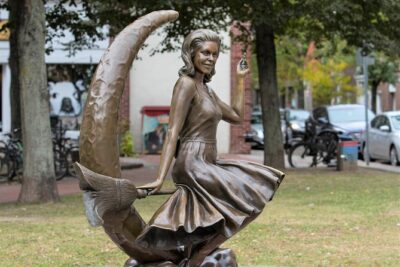
History and Hauntings of Salem Guided Walking Tour
Read our review →
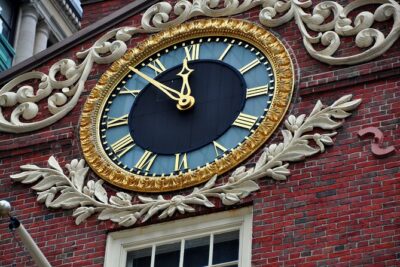
Freedom Trail History Small Group Walking Tour
Read our review →
Historic Charleston Guided Sightseeing Walking Tour
Read our review →
Tapas Walking Tour with Food, Wine, and History
Read our review →
Savannah History and Haunts Candlelit Ghost Walking Tour
Read our review →
A History of Terror – Belfast City Centre Walking Tour
Read our review →Browse the lists this tour appears in