
Review · CAMBODIA HISTORY TOURS
Banteay Srei and Grand Circuit Heritage Tour from Siem Reap
Banteay Srei is the star here. Its small sandstone buildings carry some of Angkor’s finest carvings, and reaching it by road through local villages gives you a different view of Cambodia than a temple circuit inside Angkor Thom. The day also includes Pre Rup, Neak Pean, Preah Khan, and Phnom Bakheng, so you get several styles in one outing.
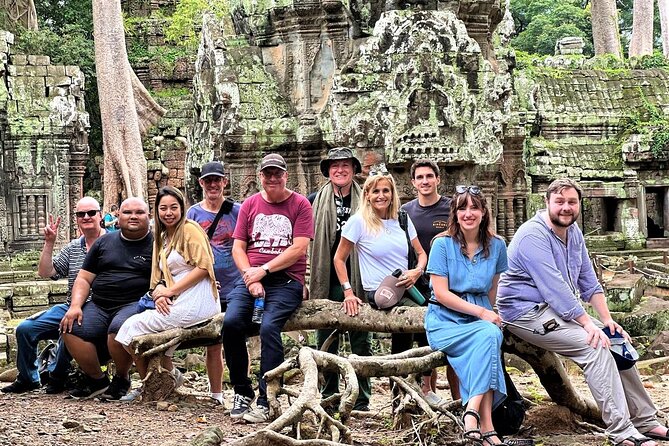
I like the small maximum group of 15, which gives a guide such as Sak or Pi room to explain details without turning the visit into a moving crowd. I also like the air-conditioned vehicle, bottled water, and cool towels. Those are simple comforts, but they matter after several hours in the Cambodian heat.
The drawback is the pace. Five temples, long driving time, and a possible sunset stop make this a full day, not a gentle stroll. The $24 price also excludes the $37 temple pass, and one guide was criticized for repeatedly asking for a top rating, so the guide experience may vary.
Key points to know before booking
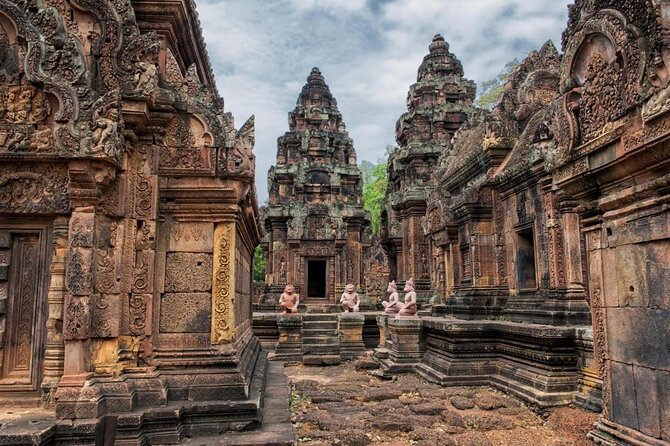
- Banteay Srei brings the most detailed carvings, with finely worked sandstone on a smaller scale than Angkor Wat.
- Five temple stops fill roughly eight hours, including the Grand Circuit sites and a late-day visit to Phnom Bakheng.
- The group is capped at 15 people, a useful middle ground between a private tour and a large coach outing.
- Hotel pickup and drop-off in Siem Reap are included, with an 8:00 am start.
- The $37 temple pass is extra, making the listed cost about $61 per person before any food or other personal spending.
- Sak and Pi are named guides praised for clear explanations, while one guide received criticism for pressing for reviews.
Why this route works as a second Angkor day
This tour makes the most sense after you have seen the headline sites, particularly Angkor Wat and the temples around Angkor Thom. The Grand Circuit is quieter in feel and gives you more variety: a Hindu state temple, a small island sanctuary, a large Buddhist complex, a finely carved countryside temple, and a hilltop sunset viewpoint.
You are not simply looking at five versions of the same monument. Each stop shows a different period, purpose, or design idea. That makes the route useful if you want help connecting the stones to Khmer architecture rather than rushing from one photo stop to the next.
The day begins at about 8:00 am with hotel pickup in Siem Reap. Transport is by climate-controlled vehicle, usually a minibus or similar vehicle, and the group can include up to 15 people. That is large enough to keep the price low but small enough for a guide to speak with the group directly.
The vehicle also gives you a break between sites. After walking on exposed paths and climbing temple steps, a cool interior, bottled water, and a cool towel are welcome. This is not a luxury tour, but the practical touches are well chosen for the climate.
More History Tours in the world:
- New York City: American Museum of Natural History Ticket
★ 4.5 · 15,447 reviews - History and Hauntings of Salem Guided Walking Tour
★ 5.0 · 14,564 reviews - Colosseum: Underground and Ancient Rome Tour
★ 4.7 · 12,691 reviews
Pre Rup: a strong opening at 8:00 am
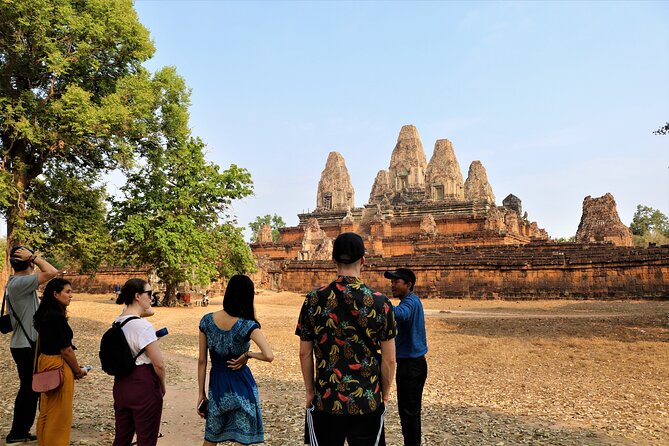
Pre Rup is the first scheduled stop, with about an hour and a half set aside. Built as the state temple of Khmer king Rajendravarman, it is a Hindu temple with a tall, stepped form that makes the scale clear from the start.
I like beginning here because the structure helps you understand the basic temple-mountain idea. You can take in the layered platforms, towers, and brick-and-sandstone construction before the day’s smaller and more detailed sites demand closer attention.
The stop is listed as 1 hour 30 minutes, though exact time can vary with the group. Expect walking and steps, so comfortable shoes are a sensible choice. Knees and shoulders must be covered at the temples, and it is easier to follow that rule from the start than to adjust clothing at each entrance.
Pre Rup is also a useful contrast with Banteay Srei later in the day. Here, the impression comes from height and form. At Banteay Srei, the attraction is close-up carving and careful detail.
The road to Banteay Srei through rural Cambodia
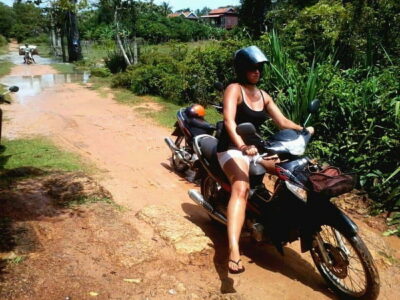
The drive to Banteay Srei is part of the experience, not just dead time between temples. The route passes through local villages, giving you glimpses of everyday Cambodia beyond the main Angkor zone.
The information provided does not give a precise driving time, so you should expect the day to include a fair amount of sitting in the vehicle. That is one reason the air conditioning matters. The road journey also breaks up the temple walking and gives you a chance to cool down.
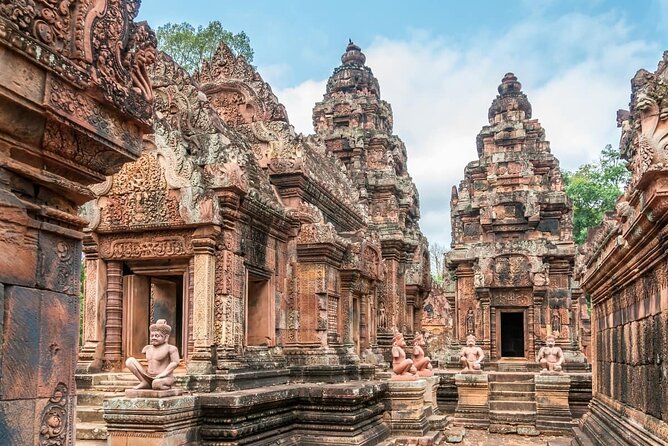
Banteay Srei receives about three hours, the longest stop of the day. That is sensible. The site is smaller than Angkor Wat, but the carvings reward slow looking. A guide can point out decorative details that are easy to miss if you only walk around the outside and take photographs.
Banteay Srei: the day’s finest close-up work
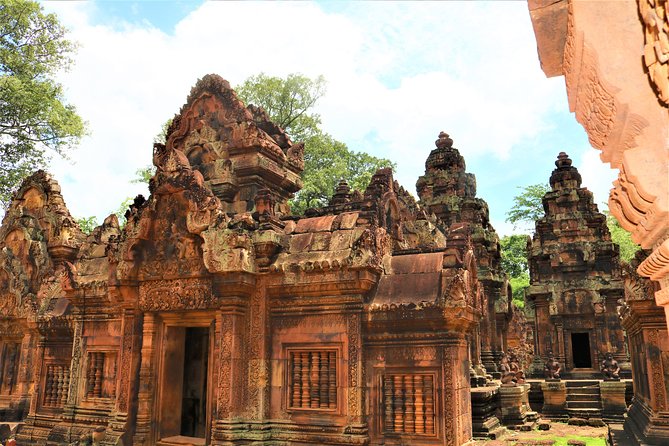
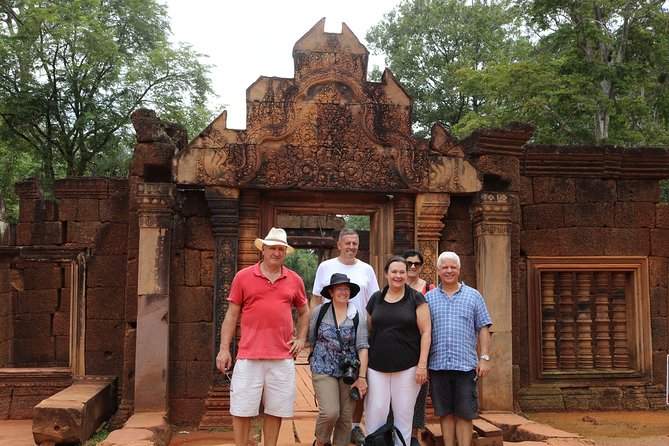
Banteay Srei is often remembered for its delicate, well-preserved sandstone reliefs. The buildings are smaller than the great Angkor monuments, yet the stonework feels unusually precise. This is the temple where you should slow down and look at doorways, pediments, figures, and repeated patterns.
The fine carving is the reason this stop deserves three hours. You are not dealing with one giant facade that can be understood from a distance. The interest is in the workmanship, and your guide’s explanation can help you notice how the decoration fits the building.
Sak is specifically praised for giving detailed explanations and for knowing useful photo spots. He is also described as a photographer, which may help if you want better angles or a few group pictures. Pi is another named guide praised for answering questions and keeping the group engaged.
That said, do not book this as a private photography session. The group can contain as many as 15 people, and the tour must keep moving. A guide may suggest good places to take pictures, but you will still be sharing the stop with the rest of the group.
The surrounding countryside adds value here. Banteay Srei feels different from the major temples near Siem Reap, both because of its scale and because the drive takes you away from the densest part of the temple zone. If you have only one day for Angkor, the main monuments may take priority. If you have a second day, this is exactly the sort of stop that adds variety.
Same streets, a different century:
- Lisbon: History, Stories and Lifestyle Walking Tour
★ 4.8 · 10,902 reviews - London Small Group Tour of Historical Pubs
★ 5.0 · 10,422 reviews - Prague: Oldtown, Medieval Underground & Dungeon History Tour
★ 4.3 · 10,277 reviews - Charleston’s Old South Carriage Historic Horse & Carriage Tour
★ 5.0 · 10,023 reviews
Neak Pean: a short walk to an island temple
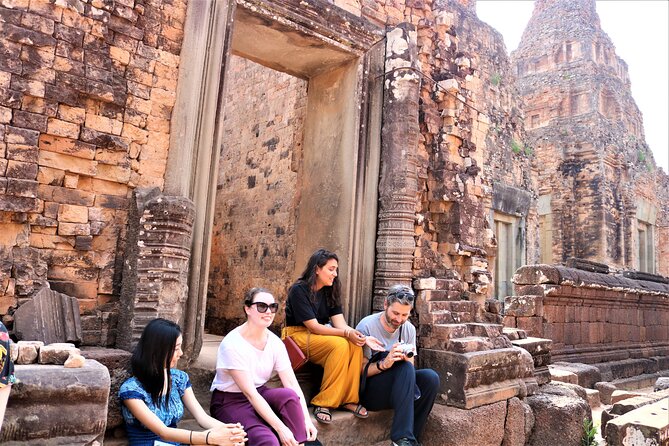
After the countryside excursion, the route returns to the Grand Circuit for Neak Pean. The stop lasts about 40 minutes and focuses on an artificial island with a Buddhist temple.
Neak Pean is a change of mood and setting. Instead of a broad temple mountain or a long gallery, you approach a compact sanctuary connected to its water setting. The visit is shorter, so listen carefully when the guide explains the layout and purpose.
Forty minutes is enough for an introduction and photographs, but it does not leave much room for lingering. If you prefer to study every carving or sit quietly at each site, this tour may feel brisk. The benefit is that the schedule allows you to see more of Angkor in one day.
Preah Khan: a larger, more atmospheric stop
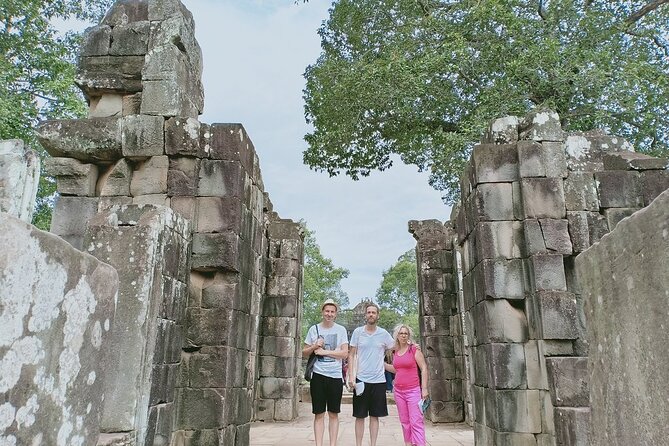
Preah Khan follows Neak Pean, with about an hour allocated. Jayavarman VII commissioned the complex in honor of his father, and it offers a useful contrast with the smaller Banteay Srei and Neak Pean.
I would pay attention to the way Preah Khan unfolds as you walk through it. The site feels more extensive and layered, and the route gives a clearer sense of how a large temple complex is organized. Your guide can add meaning to the spaces instead of leaving you to see only corridors and carved stone.
One hour is enough for a focused visit, but not for every corner. Keep your walking shoes on and stay aware of the group’s pace. This is also a good point in the day to appreciate the transport breaks. By now, the shade and air conditioning between stops will feel as valuable as the monuments themselves.
Phnom Bakheng and the sunset question
The itinerary ends at Phnom Bakheng, with about an hour scheduled for the temple ruins and views toward Angkor Wat. The stop is intended as a late-afternoon viewpoint, with sunset as the hoped-for payoff.
Sunset is never guaranteed. Cloud cover can block the colors, and one reported outing had clouds in the way, although the view toward Angkor Wat was still worthwhile. That is the right way to think about this stop: a pleasant closing view, not a promise of a perfect sky.
The timing may also depend on conditions at the site and the group’s progress. Since the day starts at 8:00 am and includes five temples, you should be prepared for a long finish. If you are tired by late afternoon, Phnom Bakheng may feel like an extra effort. If you still have energy, it gives the day a memorable final pause.
The listed itinerary also includes two pass-by portions without named stops. Do not count these as additional temple visits. They are simply part of the route.
What the $24 price really covers
At $24 per person, the tour is inexpensive for an eight-hour day with hotel transportation, an English-speaking guide, and a vehicle. But the headline price is not your full temple-day budget.
The temple pass is listed separately at $37 per person, paid directly at the site. That brings the basic combined cost to about $61 per person. Food is not listed among the inclusions, so allow extra money for lunch or drinks. One account mentions a restaurant lunch, but the supplied details do not say that lunch is included.
For that combined price, the tour offers reasonable value if you want the logistics handled. You do not need to arrange a vehicle between five distant stops, plan a route through villages, or work out how to return to Siem Reap after the final viewpoint.
The tradeoff is control. You will not set the length of every stop, choose your own lunch schedule, or decide to skip a temple once the day is under way. A private car would offer more freedom, but this small-group format keeps the cost lower.
Guide quality can shape the whole day
The strongest praise is directed at guides who explain the temples clearly. Sak is repeatedly singled out for detailed information, an engaging manner, and help with photographs. Pi is described as able to answer a wide range of questions and keep the group involved.
The driver also matters on a long day. Mr. Black is praised for being welcoming and driving safely, while the vehicle is described as comfortable and air-conditioned. These details may sound minor when you are booking, but eight hours on hot roads makes a calm driver and a cool vehicle important.
There is one clear warning. A guide named Pal was criticized for asking several times for a five-star rating and for wanting the review completed before the tour ended, followed by a WhatsApp reminder. That behavior is not part of the sightseeing itself, but it can damage the experience. Guide assignments can vary, so you should treat the named positive and negative experiences as useful possibilities, not guarantees.
Who should book this tour
I would choose this tour if you have already seen the main Angkor sights and want a second day with more variety. It suits you if you prefer having temple history explained, want hotel pickup, and do not mind sharing transport with a group of up to 15.
It is also a good fit if Banteay Srei is high on your list but you do not want to arrange a separate countryside trip. The route combines that distant temple with four other major stops, making efficient use of a full day.
Families should note that children must be accompanied by an adult and the minimum age is eight. Most people can participate, but you should be comfortable walking outdoors and using temple steps. Cover your knees and shoulders, and wear shoes you can walk in for several hours.
I would hesitate if you want a slow, private visit at each monument or if you dislike long road sections. I would also avoid building your entire decision around sunset at Phnom Bakheng. The temple is a useful final stop, but weather may give you a muted view.
Practical details that affect the day
Pickup and drop-off are offered at Siem Reap hotels, with an 8:00 am start. Confirmation is provided when you book, and passport name and country are required for every participant.
The tour includes an English-speaking guide, air-conditioned transport, hotel transfers, bottled water, and a cool towel. Temple admission is not included, and the stated pass price is $37 per person.
Free cancellation is available up to 24 hours before the local start time for a full refund. Changes or cancellations inside that window are not accepted for a refund. The experience can also be rescheduled or refunded if poor weather or an insufficient number of bookings causes cancellation.
Should you book the Banteay Srei and Grand Circuit tour?
Book it if you want a practical second Angkor day that mixes famous names with smaller, more detailed temples. Banteay Srei and Preah Khan are the strongest reasons to go, while the cool vehicle and limited group make the long route easier.
Before paying, add the $37 temple pass to the $24 tour price, plan for food, and accept that the day will be busy. If you can live with that pace, this is a good-value way to reach Banteay Srei and see a broad slice of Angkor without arranging your own transport.
FAQ
What temples are included in the tour?
The route includes Pre Rup, Banteay Srei, Neak Pean, Preah Khan, and Phnom Bakheng. Two additional parts of the route are listed as pass-by sections without named stops.
How long does the tour last?
The experience lasts approximately eight hours and starts at about 8:00 am.
Is hotel pickup included?
Yes. Pickup and drop-off at Siem Reap hotels are included.
How large is the group?
The group has a maximum of 15 participants.
Is the temple pass included in the price?
No. The temple pass must be paid directly at the site and is listed as $37 per person.
What should I wear?
Your knees and shoulders must be covered at the temples. Comfortable walking shoes are recommended.
What is included besides transport and the guide?
The tour includes an English-speaking guide, air-conditioned transport, bottled water, and a cool towel.
What is the cancellation policy?
You can cancel up to 24 hours before the start time for a full refund. Cancellations or changes made less than 24 hours before the start are not refunded. If poor weather or too few bookings causes cancellation, you will be offered another date or experience, or a full refund.
Newest history tours we have reviewed in the world
- Bologna: Street Food Tour in the Historic Center★ 4.8 · 125 reviews
- Bilbao Historical Tour in small group★ 4.7 · 52 reviews
- CEBU: Cebu City Heritage and Uphill Guided Tour★ 4.2 · 31 reviews
- Bishkek : City Tour (History, Architects, Statues & Culture)★ 4.9 · 54 reviews
- Blenheim: Omaka Aviation Heritage Centre Admission Ticket★ 4.9 · 31 reviews
- Berlin: Nazi History Walking Tour★ 4.8 · 33 reviews
- Best of Baku: 4-Hour City Tour Historic and Modern Landmarks★ 4.7 · 63 reviews
- Belfast: Best of Belfast History, Culture & Art Walking Tour★ 4.9 · 158 reviews
Cambodia History Tours, compared.
Browse the lists this tour appears in