
Review · CAMBODIA HISTORY TOURS
2 Days Guided Historical Tour in Angkor
Angkor Wat at sunrise is the hook, but the real value comes from the second day. You get the famous temples first, then smaller and quieter sites such as Ta Som, Neak Pean, and Preah Khan, where the ancient city feels less like a photo stop and more like a place to study. Two full mornings and afternoons give you room to look closely, rather than race through a single grand circuit.
I like the small group limit of 15, which makes it easier to hear guides such as Sam, Vone, Sok, Heang, Sary, and Sayon. I also like the practical care: an air-conditioned vehicle, cold water, wet towels, hotel pickup, and regular chances to use a clean restroom. The main drawback is the early start, long hours, heat, and substantial walking. The $35 tour price also does not include the $62 temple pass or meals.
Key points to know before you book
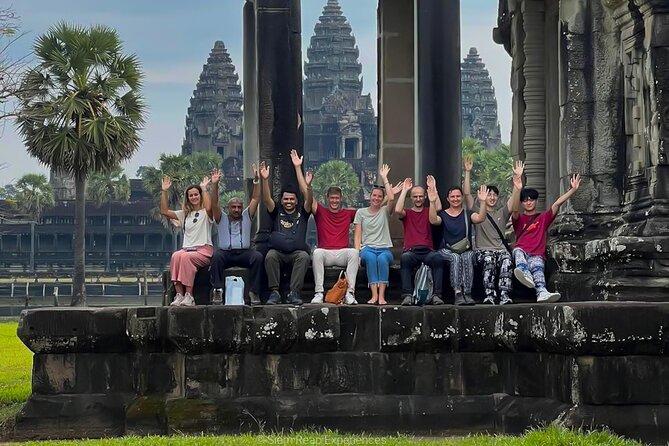
- Sunrise begins at 4:30 am: You leave early for Angkor Wat, with time to watch the sky brighten before touring the temple.
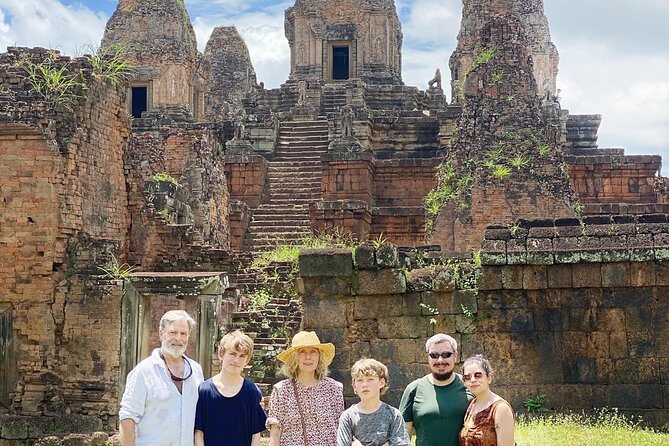
- The itinerary mixes famous and quieter temples: Bayon and Ta Prohm share the first day with Angkor Thom and Ta Keo, while day two focuses on Pre Rup, Ta Som, Neak Pean, and Preah Khan.
- Guides make the stonework easier to read: Sam is praised for clear stories about the Khmer Empire, while Vone is noted for history, humor, and taking photos.
- Comfort is built into the price: Air conditioning, bottled cold water, wet towels, hotel pickup, and drop-off are included.
- The listed price is not the final cost: Add the $62 temple admission fee, plus breakfast and other meals.
- This is active sightseeing: Expect heat, stairs at some temple sites, and plenty of walking over two days.
Why two days works better than one
Angkor is not one building. It is a huge temple zone with monuments from different periods, religious traditions, and royal reigns. A single morning can give you Angkor Wat and perhaps Bayon, but it leaves little time to understand how the sites connect.
This tour uses the first day for the landmarks most people picture when they think of Angkor. You see Angkor Wat, the South Gate of Angkor Thom, Bayon, Ta Keo, and Ta Prohm. The second day changes the rhythm, taking you to Pre Rup, Ta Som, Neak Pean, Preah Khan, and Phnom Bakheng.
The result is a useful contrast. Day one can feel busy and full of major sights. Day two gives you more space to notice details, walk through longer temple areas, and take photographs without the same pressure. The itinerary is still full, so this is not a slow, private archaeological study. It is a broad introduction with enough explanation to make the ruins meaningful.
The company says the two-day program covers 11 temples. The schedule names the main stops above, with the exact count depending on how the temple complex is grouped during the visit. Ask at pickup if you want the guide to confirm the day’s final stop order.
More Two-Day Trips in the world:
- Heritage Binh Chuan 2 Days 1 Night discovery in Lan Ha Bay
★ 5.0 · 470 reviews - All Inclusive 2-Day Ancient Egypt and Old Cairo Highlights Tour
★ 5.0 · 139 reviews - 2 days Private tour of Hampi world heritage site from Bangalore by car
★ 5.0 · 75 reviews
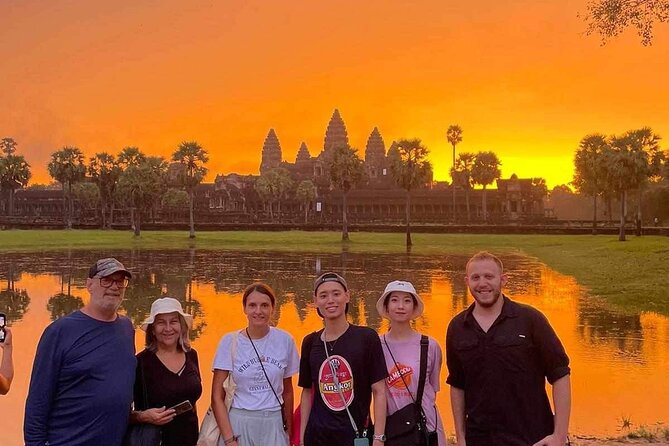
Sunrise at Angkor Wat, with a long first morning
Pickup begins around 4:30 am. That is a serious start, but it is necessary if you want to be in position for sunrise. Bring a small flashlight if you have one, since the early approach can be dark. The tour information specifically notes that a flashlight is provided, but having your own may still be useful.
Sunrise is not the whole point of the Angkor Wat visit. Once the light improves, your guide takes you inside and explains the temple’s design, carvings, and religious purpose. You then have time to look around and take photographs.
Angkor Wat rewards patience. Its towers, galleries, courtyards, and bas-reliefs can blur together if you only follow a guide from one corner to the next. The useful feature here is the balance between explanation and free time. Guides such as Sam and Vone are praised for giving historical context while allowing time to explore independently.
Do not expect a quiet private sunrise. Angkor Wat is one of Cambodia’s busiest sights, and an early start helps, but it does not turn the site into a deserted ruin. The benefit is softer morning light and cooler temperatures before the heat builds.
Angkor Thom South Gate and Bayon’s stone faces
The South Gate of Angkor Thom is a short visit, listed at about 30 minutes. It is a good introduction to the scale of the ancient city. A causeway crosses the moat, lined with stone figures, while the gate carries carved faces associated with the great Khmer monuments.
This stop works best when your guide explains what you are seeing. From the vehicle, it can look like a grand entrance and little more. The figures and faces make more sense when you understand that the gate formed part of a carefully planned royal city.
Bayon follows, with about two hours set aside. This is one of the most rewarding stops on the first day, but also one of the easiest places to feel disoriented. Towers carry large carved faces, and narrow passages connect courtyards and galleries.
A good guide helps you read the temple in layers. Bayon was a Buddhist state temple built in the late 12th or early 13th century, and its carvings include both religious images and scenes of daily life. Sam, Heang, and other guides are specifically praised for explaining the political and religious background instead of offering only dates and names.
Two hours is useful here. You can listen, walk, pause in the shade, and return to details that caught your eye. The stone surfaces can be uneven, so wear shoes with a firm sole.
Ta Keo, breakfast, and the heat of the day
Ta Keo is a temple mountain, built largely from sandstone and linked to the early development of that material in Khmer construction. The stop lasts about an hour, with a breakfast break before entering.
Breakfast is not included. That matters because the day has already begun early, and you should plan to carry some cash or arrange your own morning food. The tour does provide water, but water is not a substitute for breakfast during a long day in the sun.
Ta Keo is more severe in appearance than Ta Prohm. Its strong geometric form and steep levels make it a useful comparison with the more decorative temples. Depending on the route and site conditions, you may find the stairs demanding. The guide can explain the structure, but you should set your own pace and use the vehicle’s air conditioning when you need a break.
The combination of Ta Keo and Ta Prohm also helps break up the day. You move from a more exposed temple mountain to a site known for trees, galleries, and atmospheric ruins.
More Guided Tours in the world:
- History and Hauntings of Salem Guided Walking Tour
★ 5.0 · 14,564 reviews - Edinburgh: Edinburgh Castle Guided History Tour with Tickets
★ 4.8 · 9,933 reviews - Historic Charleston Guided Sightseeing Walking Tour
★ 5.0 · 6,216 reviews - Rome: Colosseum with Arena, Roman Forum and Palatine Guided Tour
★ 4.0 · 5,598 reviews
Ta Prohm, where roots share the frame
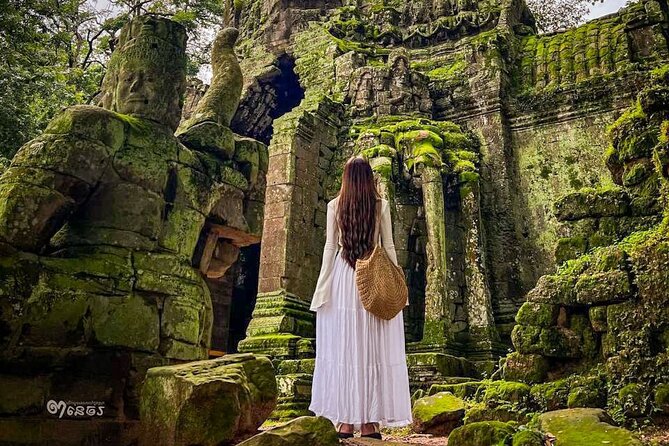
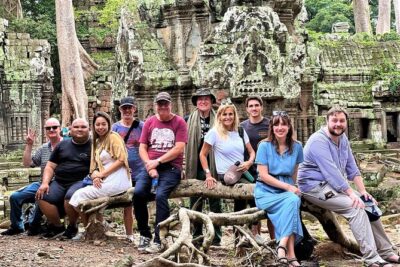
Ta Prohm is the most immediately atmospheric stop on day one. Trees grow through the old stonework, and roots press across walls and doorways. The image is familiar, but the site still has plenty to offer beyond a famous photograph.
Your guide can help separate fact from movie-inspired expectation. Ta Prohm was built in the Bayon style near Angkor Thom, and its ruined condition shows how architecture and plant growth have affected one another over time. You will have roughly an hour, enough to see key areas without making the whole visit feel endless.
This is also a place where crowds can slow movement. The guide’s job is partly historical and partly practical, helping you keep track of the group while finding good places to pause. Vone is praised for taking pictures and noticing small details, which can be handy at a site where the best view is not always the most obvious one.
By this point, you may be tired. The first day begins before dawn and includes several substantial temple visits. The supply of cold water and the air-conditioned vehicle are not minor extras here. They can determine whether you enjoy the final hour or simply endure it.
Pre Rup begins a quieter second day
Day two starts at Pre Rup, a Hindu temple built as a state temple for King Rajendravarman in the 10th century. The visit is listed at about two hours, making it one of the longer stops.
Pre Rup is a temple mountain built from brick, laterite, and sandstone. Its elevated form gives you a clear sense of how Khmer architects used height, steps, and repeated levels to shape a sacred building. The brickwork also looks different from the sandstone surfaces you see at other sites.
This is a good place to begin the second day because it moves away from the immediate fame of Angkor Wat. You still get a major monument, but the pace can feel less frantic. If your guide is Sam, Sary, or Sayon, expect plenty of historical explanation and time for photographs.
The heat may be stronger later in the day, so use the early hours well. A hat, sunscreen, comfortable shoes, and a light shirt are sensible choices for both days.
Ta Som and Neak Pean show a different side of Angkor
Ta Som is a smaller temple built in the late 12th century for King Jayavarman VII. The one-hour stop gives you a more compact site after the large scale of Pre Rup.
Small does not mean unimportant. Ta Som lets you see how a temple complex can feel personal and easy to read. You can focus on doorways, carvings, and the way the structure sits within its setting without needing to cover a huge area.
Neak Pean is different again. It sits on an artificial island associated with the Jayatataka reservoir and Preah Khan. The approach and water setting make it unlike the temple mountains and enclosed galleries elsewhere on the tour.
The listed visit is about an hour. The site may appeal most to you if you like unusual layouts and the relationship between temple architecture and water. It is less about climbing through massive towers and more about understanding the planned setting.
Two hours at Preah Khan
Preah Khan is one of the most substantial stops on the second day, with about two hours scheduled. King Jayavarman VII built it in the 12th century in honor of his father.
The temple combines long corridors, courtyards, carvings, and areas where the structure has been altered or partly restored. Two hours gives your guide time to explain the site and gives you room to walk without treating every doorway as a quick photo stop.
This is where a strong guide can make a real difference. Sam is repeatedly singled out for stories about the Khmer Empire and Cambodian history. Heang is praised for clear information at each temple, while other guides, including Pheap, Sary, and Sayon, are noted for patience and useful explanations.
Preah Khan can also be tiring. It is a large site, and the day has already included several temples. Keep your water close, take shade breaks, and remember that you do not have to examine every corridor to get value from the visit.
Phnom Bakheng and the sunset question
The itinerary lists Phnom Bakheng as a final stop, with sunset viewing included in the tour overview. The schedule gives only two minutes for this stop, which is clearly a short timing entry rather than a full visit. Confirm the exact sunset plan with your guide on the day.
Phnom Bakheng is a Hindu temple mountain dedicated to Shiva and built in the late ninth century during the reign of King Yasovarman. Its elevated position is why it is linked with sunset views.
The sunset portion may be appealing if you want to finish the two-day program with a broad view and a change from enclosed temple corridors. It may also be the least predictable part of the day because sunset timing, access, and crowd control can affect how long you remain there. Treat it as a possible highlight, not the sole reason to book.
What the $35 price really covers
At $35 per person, the tour offers strong value for two days of guided transport around a large temple zone. You receive an air-conditioned vehicle, a guide, hotel pickup and drop-off, cold water, wet towels, and visits to the scheduled temples.
The important catch is the admission fee. The temple ticket is not included and costs $62 per person. That brings the known tour and temple cost to $97 before meals. Breakfast and lunch are also extra, so budget for food separately.
This pricing can still make sense if you want a simple way to cover many sites without arranging transport and guiding on your own. The value is strongest for first-time visitors who want context and a fixed route. It is less ideal if you prefer to choose every stop, linger for hours at one temple, or avoid early mornings.
The group size is capped at 15. That is not the same as a private tour, but it is small enough for questions and easier coordination than a large coach group.
Who should book this Angkor tour
I would choose this tour if you have two days in Siem Reap and want the main temples plus a selection of quieter ones. It suits couples, friends, and families who value transport and explanation more than total freedom.
It also works well if you want help with the practical strain of Angkor. The heat can reach 40 degrees, and one participant found the vehicle’s air conditioning, regular water, and flexible rest time especially important. The guides generally allow time for self-guided looking and photographs, rather than speaking without pause.
I would hesitate if you dislike a 4:30 am start, cannot manage long walking days, or need a French-speaking guide. One French-speaking visitor found the English difficult to follow and wished for a Francophone option. The supplied information does not promise language choices, so ask before booking if that matters.
Free cancellation is available up to 24 hours before the start time. Changes or cancellations inside that window are not accepted for a refund.
Should you book it?
Book this two-day Angkor tour if you want a well-priced, guided introduction with sunrise, sunset, major temples, and quieter corners in one package. Guides such as Sam, Vone, Sok, Heang, Sary, and Sayon are praised for history, patience, humor, and practical help, though guide assignment is not guaranteed.
Go in knowing the real budget is $97 for the tour and temple pass, plus meals. Bring patience for the early start, heat, and walking, and confirm the sunset timing and guide language before you pay. If those points suit you, this is a sensible way to see far more than Angkor Wat alone.
FAQ
What time does the tour start?
Pickup starts at about 4:30 am, beginning with the sunrise visit at Angkor Wat.
How long is the tour?
The experience lasts approximately two days.
How many people can join the group?
The group has a maximum of 15 travelers.
Is hotel pickup included?
Yes. Hotel pickup and drop-off are included. Drop-off can be arranged at your hotel or somewhere around Pub Street in Siem Reap.
Is the temple admission fee included?
No. The temple ticket costs $62 per person and must be paid separately.
Are meals included?
No. Meals are not included. A breakfast stop is planned near Ta Keo, but you pay for your own food.
What is included in the tour price?
The price includes an air-conditioned vehicle, a tour guide, cold water, wet towels, hotel pickup and drop-off, and the scheduled temple visits.
Does the tour include Angkor Wat sunrise?
Yes. Day one begins with a sunrise visit to Angkor Wat, followed by guided exploration inside the temple.
Can I cancel for a full refund?
Yes, if you cancel at least 24 hours before the experience start time. Cancellations or changes made less than 24 hours in advance are not accepted for a refund.
Newest history tours we have reviewed in the world
- Bologna: Street Food Tour in the Historic Center★ 4.8 · 125 reviews
- Bilbao Historical Tour in small group★ 4.7 · 52 reviews
- CEBU: Cebu City Heritage and Uphill Guided Tour★ 4.2 · 31 reviews
- Bishkek : City Tour (History, Architects, Statues & Culture)★ 4.9 · 54 reviews
- Blenheim: Omaka Aviation Heritage Centre Admission Ticket★ 4.9 · 31 reviews
- Berlin: Nazi History Walking Tour★ 4.8 · 33 reviews
- Best of Baku: 4-Hour City Tour Historic and Modern Landmarks★ 4.7 · 63 reviews
- Belfast: Best of Belfast History, Culture & Art Walking Tour★ 4.9 · 158 reviews
Cambodia History Tours, compared.
Banteay Srei and Grand Circuit Heritage Tour from Siem Reap
Read our review →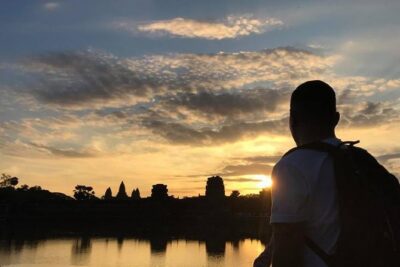

Browse the lists this tour appears in