
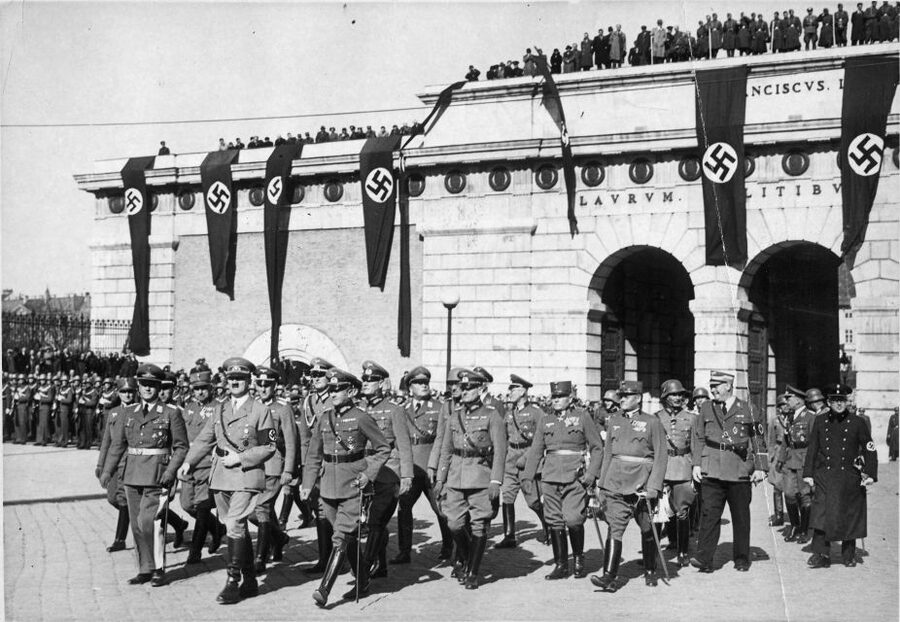
Review · VIENNA HISTORY TOURS
Vienna: World War II Historical Walking Tour
Vienna’s World War II story is harder and more revealing than a simple tale of a city caught in a war. This 2.5-hour walk connects Hitler’s early years, Austria’s annexation, the destruction of Jewish Vienna, wartime bombing, and the city’s postwar division to places you can see in the center today.
I like the way the tour links grand landmarks with difficult subjects, and I like the thoughtful pacing. Guides such as Dieter, Stefan, Wolfgang, Michael, and Siggi use stories, photographs, questions, and personal family accounts to make the past easier to grasp. The main drawback is that the tour covers about four kilometers, and nearly all of it takes place outdoors, so good shoes and weather-ready clothing matter.
Key points to know before booking
- Starts beside the Opera House: Meet under the green umbrella by Albrechtsbrunnen, below the Albertina Museum.
- Focuses on Vienna’s role: The tour examines Austrian support, fear, antisemitism, annexation, bombing, liberation, and occupation.
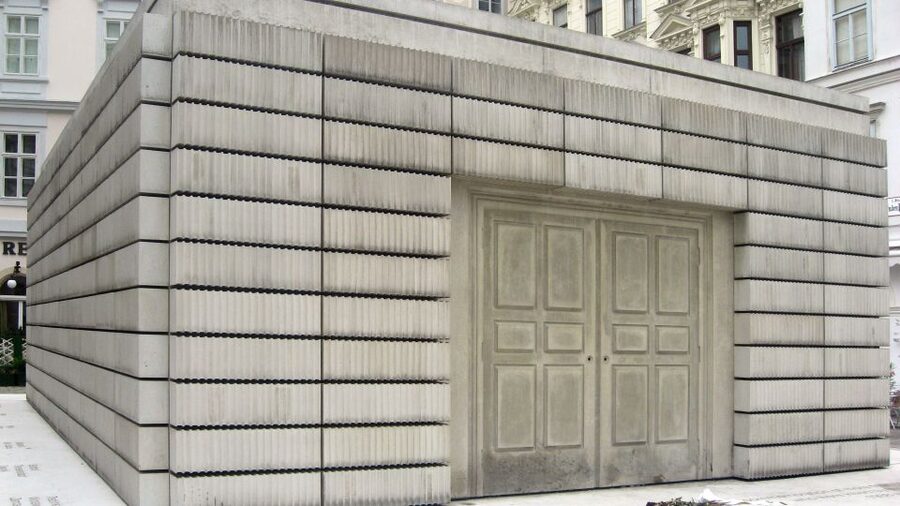
- Includes two powerful stops: See the only synagogue in Vienna to survive the Nazi regime and visit the city’s Holocaust memorial.
- Uses headsets for larger groups: You can hear the guide without crowding around or walking within a few feet of the speaker.
- Covers about four kilometers: The route includes regular pauses, with chances to sit, find shelter, and take breaks.
- Costs $31 per person: That is fair value for a live, English-language history walk lasting 150 minutes.
Starting at the Albertina with Hitler’s Vienna
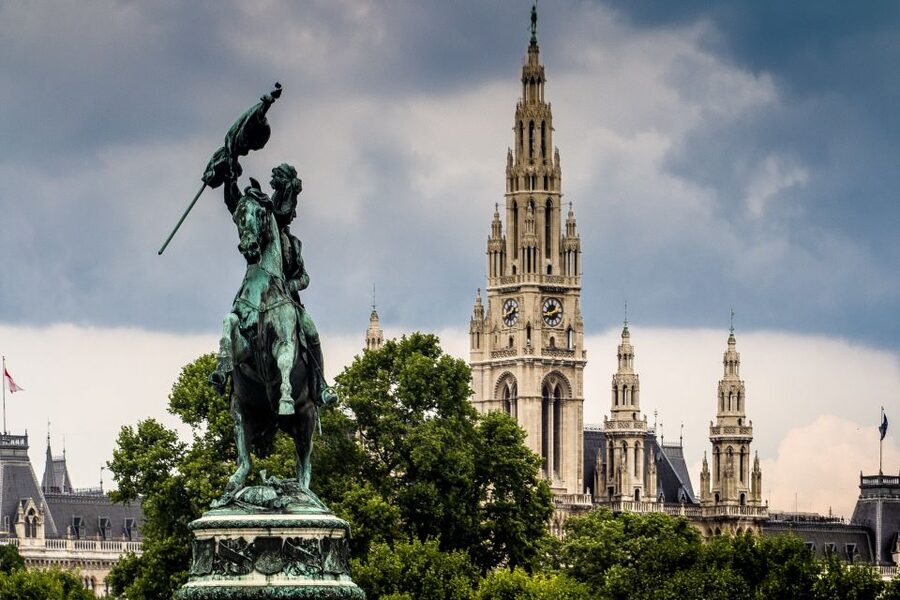
The meeting point is easy to locate if you know what to look for: the green umbrella in front of Albrechtsbrunnen, the fountain below the Albertina Museum and next to the Vienna State Opera. Karlsplatz and Oper subway station is nearby, so you can reach the start without a long walk through unfamiliar streets.
The location also sets up the tour well. You begin among Vienna’s polished imperial buildings, opera crowds, and grand public spaces. Against that backdrop, the guide asks you to consider how this same city shaped the young Adolf Hitler, then later welcomed or resisted the political forces that helped turn him into a dictator.
That early section is not presented as a simple excuse for Hitler’s crimes. The guides place his years as an art student within Vienna’s social and political climate, then explain how antisemitism, ethnic rivalry, economic anxiety, and fear helped create an atmosphere in which extremist ideas could gain ground. The most useful part is the link between a person’s early surroundings and the wider political world around him, without pretending that background removes personal responsibility.
Dieter is especially strong at connecting separate parts of the story. Stefan has been praised for pairing broad context with details tied to individual locations, while Siggi often uses printed photographs to show how streets and buildings looked during the period. The guide you receive may vary, but the format is built around explanation rather than a quick list of dates.
More WWII and D-Day Tours in the world:
- Zagreb: City & History Walking Tour & WW2 Tunnels
★ 4.9 · 1,202 reviews - Pearl Harbor History Remembered Tour from Ko Olina
★ 5.0 · 1,009 reviews - Hiroshima Peace (Heiwa) Walking Tour at World Heritage Sites
★ 5.0 · 872 reviews
Vienna’s Jewish community and the synagogue that survived
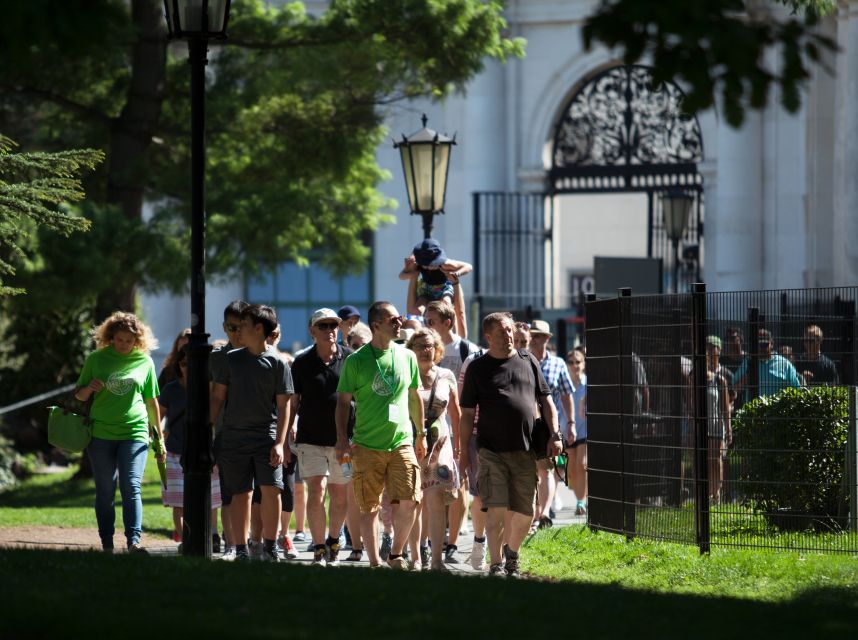
One of the tour’s key stops is the only synagogue in Vienna that survived the Nazi regime. That fact gives the visit unusual weight, but it also needs careful explanation. The synagogue is not simply a surviving building to photograph. It is a reminder of how much was destroyed, and of how completely Vienna’s large Jewish community was targeted.
You hear what happened when ethnic rivalry and fear took hold in the city. The tour addresses the persecution of Jewish residents as part of Vienna’s own story, rather than treating the Holocaust as something that happened elsewhere. This is an important distinction. Austria’s relationship with the Nazi regime can be uncomfortable to examine, and the guide’s role is to explain local participation and local suffering with care.
You should expect a serious tone here. The subject matter includes discrimination, deportation, destruction, and loss. Guides are praised for handling difficult material with sympathy and for encouraging questions, but this is not a light sightseeing walk with a few wartime facts added on.
The synagogue stop works best for you if you want to understand how political ideas affected ordinary people, neighborhoods, and places of worship. It also adds a physical point of reference to a story that can otherwise feel too large and abstract.
The Holocaust memorial and the cost of forgetting
The Holocaust memorial provides another quiet pause in the center of Vienna. Its somber design asks you to slow down and think, rather than simply move from one landmark to the next. The tour uses this stop to place Vienna’s wartime story within the wider murder of Europe’s Jewish population.
The guide does not treat the memorial as a final dramatic flourish. Instead, it becomes part of the explanation of how memory works in a city that was also damaged physically and politically by the war. You can consider what is remembered in public spaces, what was hidden, and how Vienna has confronted its past.
This is also one reason I would avoid scheduling the walk when you are rushed. The value is not only in seeing the memorial. It comes from giving yourself enough time to listen, ask a question, and take in the setting. The 150-minute length gives the guide room to explain rather than race from plaque to plaque.
Bomb damage and the physical scars of World War II
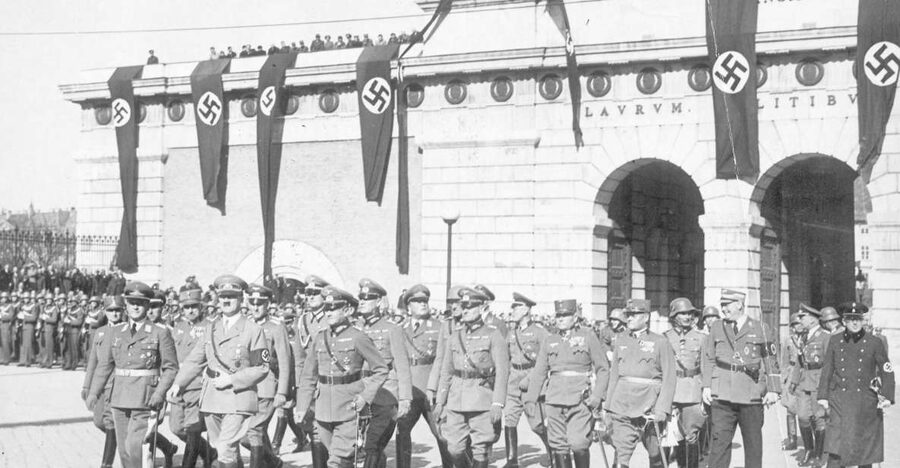
The tour explains the effect of more than 100,000 bombs on Vienna. You learn how the city was damaged and how the marks of war remained visible after the fighting ended. The walk turns central Vienna into evidence, showing you how a city of palaces, churches, streets, and public buildings was pulled into total war.
This portion should appeal to you if you prefer military history tied to actual places. Rather than focusing only on battles far from the city, the guide explains what bombing meant for Vienna itself. The point is not just the number of bombs. It is the way destruction affected daily life, housing, public buildings, and the shape of the city after 1945.
The route also helps you notice details you might otherwise pass without thought. A guide can explain why a particular site matters, then show a historic photograph or connect it to a larger event. Several guides use visual material, and this is especially helpful when present-day buildings look intact or have been repaired.
Do not expect a museum visit built into the walk. Entrances to attractions are not included, and the experience is an outdoor walking tour. Its strength is the connection between streets and stories, not access to interior collections.
More History Walking Tours in the world:
- History and Hauntings of Salem Guided Walking Tour
★ 5.0 · 14,564 reviews - Lisbon: History, Stories and Lifestyle Walking Tour
★ 4.8 · 10,902 reviews - Boston: Freedom Trail History Small Group Walking Tour
★ 5.0 · 6,450 reviews - Historic Charleston Guided Sightseeing Walking Tour
★ 5.0 · 6,216 reviews
Liberation, occupation, and Vienna’s unusual postwar division
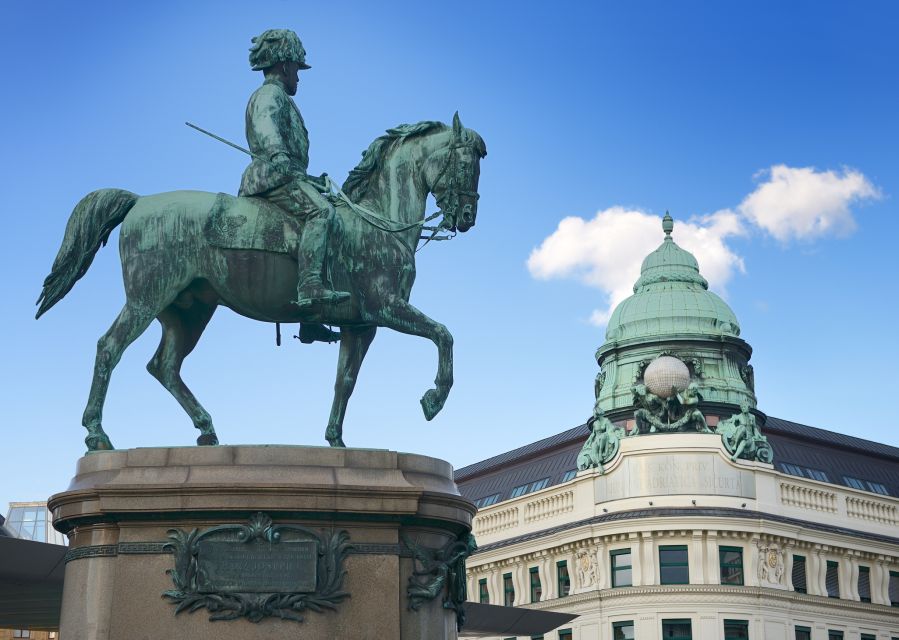
The final part deals with what happened after the war. Vienna was divided among the Allied powers, and it was the only city in the world where the Allied powers managed zones together. That arrangement shaped the city’s political life and helps explain why postwar Vienna cannot be understood simply as a defeated capital returning to normal.
The guide explains the transition from Nazi rule to liberation and occupation, including the way the city was split. This gives the walk a useful second half. You begin with Hitler’s early years and the rise of Nazi power, then follow the consequences through bombing, liberation, and the political structure imposed after the war.
This wider time frame is one of the tour’s strongest features. A shorter walk might focus only on Hitler or the Holocaust. Here, you get a more complete account of how Vienna changed from the years before the war through its aftermath.
You may also find the postwar section less familiar than the Hitler material. That makes it valuable even if you already know the basic outline of World War II. The guide can show how the end of the conflict did not instantly settle questions of responsibility, identity, occupation, and memory.
Why the guiding matters more than the route
The buildings and memorials give the tour its structure, but the guide makes the experience work. The strongest guides do not simply recite facts. They explain cause and effect, ask questions, and connect a location to the people who experienced it.
Dieter is frequently praised for his clear teaching style, patience, and ability to join separate events into one story. Wolfgang brings colorful tales and interpretation to the route. Stefan is a strong storyteller who encourages thought-provoking questions, while Michael is praised for explaining a broad range of wartime subjects in an approachable way. Siggi often adapts the emphasis to the group’s interests and uses printed images.
The guide is not fixed, so you should not book on the assumption that one particular person will lead your walk. Still, the repeated pattern is clear: the experience depends on a live guide who can respond to questions and adjust the pace.
Headsets are a practical improvement. Larger walking groups can be frustrating when you have to stay shoulder to shoulder with the guide or strain to hear over traffic. Here, the guide uses a microphone and you receive an earpiece, allowing you to look at a building or walk safely without losing the explanation.
Walking comfort, weather, and route planning
The route covers roughly four kilometers over two and a half hours. That is a moderate distance, but the time includes standing and listening, not just walking. Comfortable shoes are essential, and you should dress for Vienna’s weather.
The pacing is one of the better features. Guides make stops at places of interest, and the route includes opportunities to sit, use a toilet, or find shelter from rain and cold. On wet days, guides have adjusted the schedule and paused indoors when possible. That does not make the tour weatherproof, but it does show sensible handling of changing conditions.
If you have mobility concerns, consider the distance and the amount of time on your feet before booking. One participant with multiple sclerosis found the approximately four-kilometer route manageable because of the breaks and steady pace. That is encouraging, but it is not a guarantee for every person or every day. Ask about your own needs when arranging the tour.
The walk does not return to the starting point. Plan your next activity accordingly. The route ends near a subway stop, which makes it useful as a way to reach another part of Vienna, but you should not expect to finish beside the Albertina.
Is $31 a fair price?
At $31 per person, this is a reasonable price for a 150-minute live walking tour in central Vienna. You are paying for a guide, a planned route, historical interpretation, and equipment such as headsets. You are not paying for museum entry, transport, food, or a private tour.
The value is strongest if you want context. You could walk past the synagogue, memorial, and wartime sites on your own, but the connections between them are harder to build without help. The guide explains why each stop matters and brings in photographs, family stories, and political background.
It is less useful if you want a broad general introduction to Vienna. This is a focused tour about World War II, Hitler’s connection to the city, the Holocaust, bombing, liberation, and occupation. If your main interest is art, music, imperial architecture, or cafés, choose a different walk.
Flexible booking also helps. You can cancel up to 24 hours in advance for a full refund, and you can reserve now and pay later. That is useful if your Vienna plans depend on weather or if you are arranging several fixed-time visits.
Who should book this Vienna history walk?
I would choose this tour if you want to understand Vienna’s part in World War II instead of seeing the city only as an imperial capital. It suits adults, older teenagers, history students, teachers, and anyone interested in how political ideas affect real streets and communities.
It is also a good early-trip activity. The route gives you historical context for sites you may pass during the rest of your stay, and one guide specifically recommends taking it near the start of a Vienna visit for that reason.
You should think twice if you dislike serious historical subjects, long guided explanations, or outdoor walking. The tour does not soften the Holocaust or turn the war into entertainment. Its tone is respectful, analytical, and sometimes confronting.
Final verdict: book it for context, not just sightseeing
Book this walk if you want a clear, place-based account of Vienna during and after World War II. The combination of the surviving synagogue, Holocaust memorial, bombing damage, Hitler’s early years, and the Allied occupation gives you a fuller picture than a tour focused on one famous figure.
The best reason to go is the guiding. Dieter, Stefan, Wolfgang, Michael, Siggi, and others bring different styles, but the experience consistently depends on careful explanation, strong storytelling, and room for questions. Wear comfortable shoes, bring weather protection, and allow the full two and a half hours. At $31, it is a sound choice for a serious history walk that helps you see central Vienna with sharper eyes.
FAQ
Where does the Vienna World War II Historical Walking Tour begin?
It begins in front of the Albertina Museum, beside the Vienna Opera House. Look for the green umbrella near Albrechtsbrunnen, the fountain below the Albertina.
Which subway stop is closest to the meeting point?
The meeting point is near Karlsplatz and Oper subway station.
How long does the walking tour last?
The tour lasts 150 minutes, or two and a half hours.
What language is the tour conducted in?
The tour is conducted in English with a live guide.
What main sites are included?
The route includes the only synagogue in Vienna that survived the Nazi regime, Vienna’s Holocaust memorial, and locations connected with wartime damage and the postwar division of the city.
Does the tour include attraction entrance fees?
No. Entrance fees to attractions are not included. The activity is a guided walking tour.
How much walking is involved?
The route covers about four kilometers, with stops and pauses during the two-and-a-half-hour experience.
Are headsets provided?
Headsets are used for larger groups so you can hear the guide while walking through the city.
Does the tour return to its starting point?
No. The tour does not return to the Albertina meeting point, although a subway stop is close to the end of the route.
Can I cancel the booking?
Yes. You can cancel up to 24 hours in advance for a full refund. You can also reserve now and pay later.
Newest history tours we have reviewed in the world
- Bilbao Historical Tour in small group★ 4.7 · 52 reviews
- Bologna: Street Food Tour in the Historic Center★ 4.8 · 125 reviews
- CEBU: Cebu City Heritage and Uphill Guided Tour★ 4.2 · 31 reviews
- Bishkek : City Tour (History, Architects, Statues & Culture)★ 4.9 · 54 reviews
- Blenheim: Omaka Aviation Heritage Centre Admission Ticket★ 4.9 · 31 reviews
- Berlin: Nazi History Walking Tour★ 4.8 · 33 reviews
- Best of Baku: 4-Hour City Tour Historic and Modern Landmarks★ 4.7 · 63 reviews
- Belfast: Best of Belfast History, Culture & Art Walking Tour★ 4.9 · 158 reviews
WWII & D-Day Tours, compared.
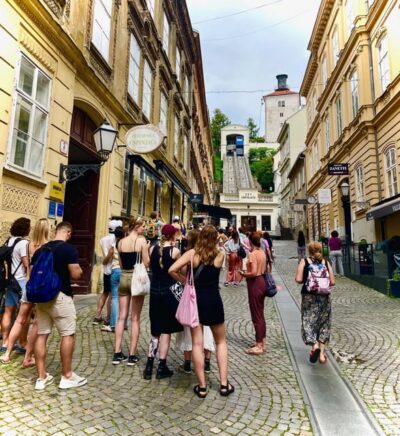
Zagreb: City & History Walking Tour & WW2 Tunnels
Read our review →
Pearl Harbor History Remembered Tour from Ko Olina
Read our review →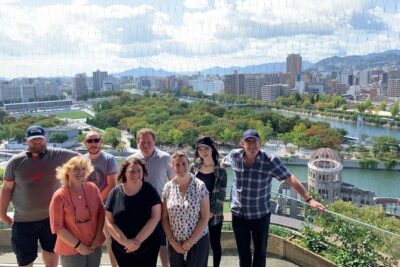
Hiroshima Peace (Heiwa) Walking Tour at World Heritage Sites
Read our review →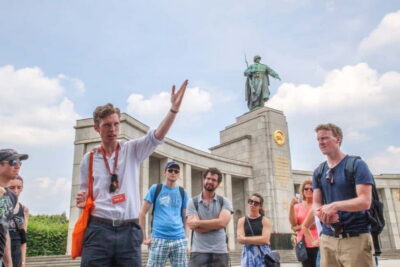
![Pearl Harbor & USS Arizona Small-Group Tour [Early Access]](https://media.myhistoryguide.com/wp-content/uploads/pearl-harbor-uss-arizona-small-group-tour-early-access-400x267.jpg)
Pearl Harbor & USS Arizona Small-Group Tour [Early Access]
Read our review →
Anne Frank and the Jewish History of Amsterdam Private Tour
Read our review →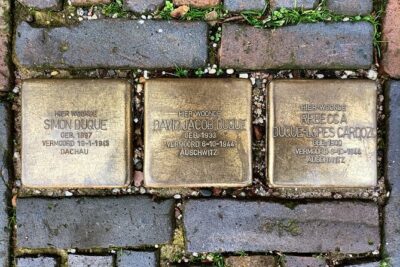
Anne Frank and Amsterdam Jewish History Walking Tour
Read our review →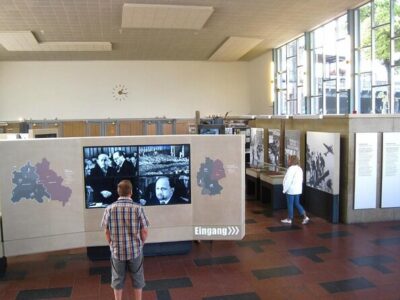
The History of Berlin: WWII PRIVATE Walking Tour With Locals
Read our review →Browse the lists this tour appears in