
Review · VIENNA HISTORY TOURS
Vienna: Essential History Walking Tour
Vienna’s grand center can feel like a row of beautiful facades until someone explains who lived behind them, why the buildings matter, and what was lost along the way. This two-hour walk links Roman ruins, Habsburg power, wartime damage, and everyday Viennese customs in a compact central route.
I like the small groups, which make it easier to ask questions, and I like the way guides such as Herbert use humor, anecdotes, and even iPad images to make long-dead rulers feel less remote. The main drawback is that the tour spends much of its time in the Hofburg area, so it may feel too Habsburg-heavy if you want a broad survey of all Vienna.
Key points to know before booking
- Roman beginnings: Start at Michaelerplatz Excavations and learn why Vienna’s earliest settlement mattered.
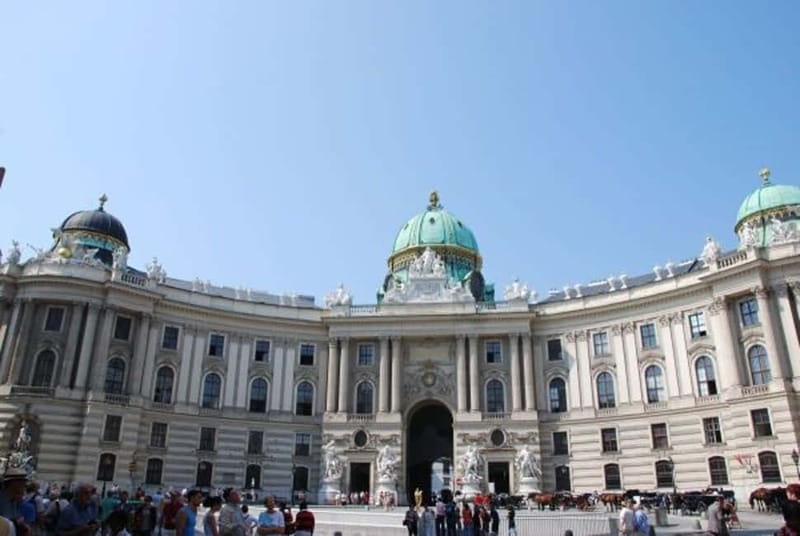
- Imperial center: Walk through the Hofburg and Heroes’ Square while connecting buildings to the rulers who used them.
- Stories beyond the facades: Hear about Habsburg weddings, burial customs, the Imperial Crypt, and the Carinthian Gate Theatre.
- Serious wartime context: The Albertina and Monument Against War and Fascism add a darker chapter to the imperial story.
- Strong first-day choice: The route helps you decide which museums, churches, and local sights deserve a return visit.
- Practical limits: Entrance fees are extra, the tour runs in all weather, and it is not suitable for children under 12 or people with mobility impairments.
Why this two-hour walk works well in central Vienna
At $34 per person, this is not the cheapest way to see Vienna’s center, but it is a fair price for a live guide who can connect a lot of places in a short time. You are paying less for entry to a museum and more for interpretation: why a roof symbol matters, why one square carries an emperor’s name, and why a wedding ceremony could take place without the groom present.
The route covers a relatively tight section of central Vienna. That matters because you are not spending half the tour on public transport or trudging between distant sights. Past participants describe groups as small, sometimes around six or seven people, and occasionally even smaller. Group size can change, but the format should give you a better chance to hear clearly and ask questions.
I would book this early in your stay. Guides regularly offer suggestions for museums, food, local drinks, and other sights, and the information can help you plan the rest of your visit. One especially useful tip from the tour is to check the Lipizzaner stallion schedule carefully, since the full show is not performed in summer.
The tour is offered in English or German. The guide is not fixed, so you might meet Herbert, Wolfgang, Dorothy, or another member of the team. Herbert receives repeated praise for his humor, clear explanations, personal manner, and use of historical images on an iPad. The strength of the experience depends partly on the individual guide, but the format clearly favors a guide-led conversation rather than a scripted march from one photo stop to the next.
More History Walking Tours in the world:
- History and Hauntings of Salem Guided Walking Tour
★ 5.0 · 14,564 reviews - Lisbon: History, Stories and Lifestyle Walking Tour
★ 4.8 · 10,902 reviews - Boston: Freedom Trail History Small Group Walking Tour
★ 5.0 · 6,450 reviews
Meeting at Michaelerplatz and Roman Vienna
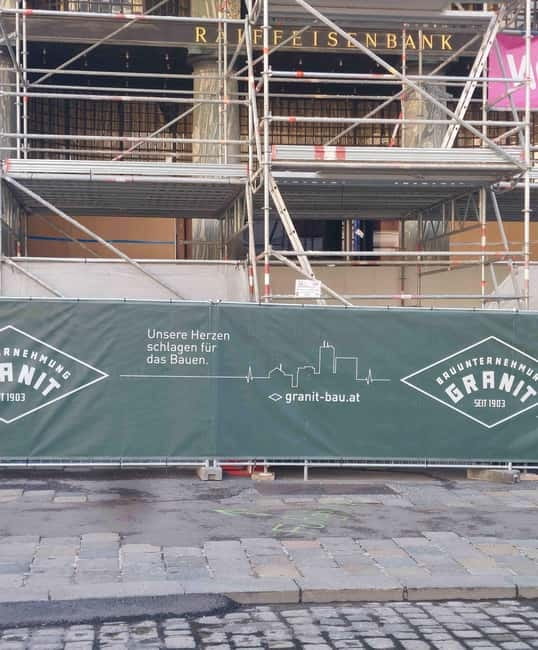
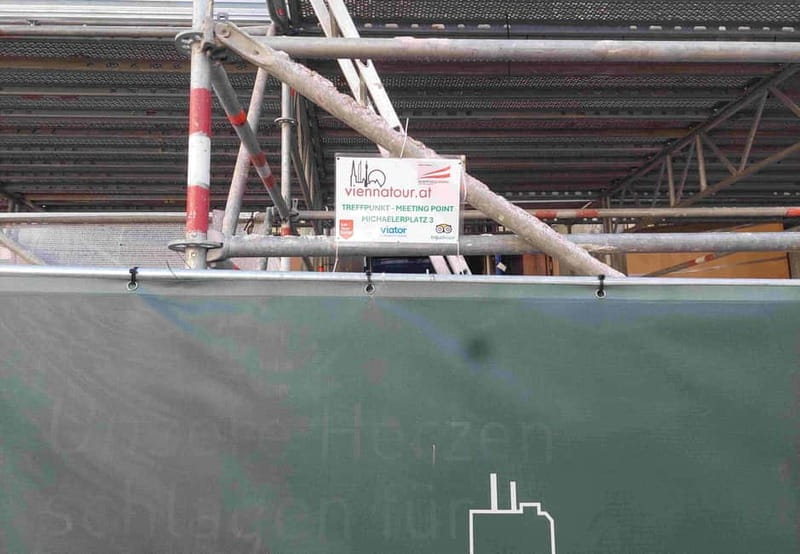
You meet in front of Loos Haus at Michaelerplatz 3, between Kohlmarkt and Herrengasse. Look for the Raiffeisenbank name on the facade. The meeting point is about a three-minute walk from Herrengasse station on the U3 line, so it is easy to reach from elsewhere in the city.
The first stop is the Michaelerplatz Excavations. Here, the tour starts with Roman Vienna and the practical question of why a castle was built in this location. That is a useful opening because it gives you a simple frame for the city: Vienna was not placed here by accident, and its central position shaped its military, political, and commercial role.
You will not simply be told that Vienna is old. You will begin to see different layers beneath the polished imperial center. The excavations help connect the modern square to the earlier settlement, while the nearby architecture shows how later rulers built over, around, and through earlier periods.
Michaelerplatz is also a good place to learn how to read Vienna. A guide can point out details that are easy to miss when you are focused on taking in the grand buildings. This is one of the tour’s practical benefits: you leave with a better eye for symbols, entrances, sculptures, and changes in architectural style.
St. Michael’s Church and the first Habsburg stories
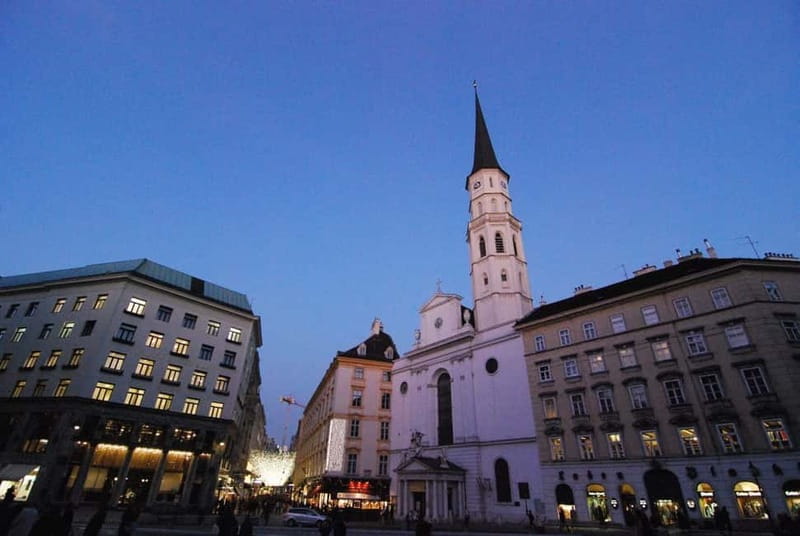
The walk continues to St. Michael’s Church, described as Vienna’s third-oldest church. Its unusual feature is the mixture of three architectural styles, a reminder that major buildings rarely come from one clean moment in time.
The church stop adds variety to the palace material. Instead of hearing only about emperors and military power, you get a sense of how religious buildings changed as Vienna changed. The tour explains what you are looking at from outside, but do not assume that every stop means an interior visit.
The guide also begins to introduce Habsburg customs and personalities. This is where the route becomes more than a list of dates. The Habsburg family governed for centuries, but the useful details are often personal and odd: marriage arrangements, burial rituals, and the rules that shaped royal life.
The Hofburg and the enormous imperial complex
The Hofburg is the central portion of the walk, and it is also the section that may feel longest. The palace complex covers about 555,000 square meters, a size that can be hard to grasp until you walk through its courtyards and open spaces.
A good guide makes the scale meaningful. You learn why the Hofburg expanded, how different rulers left their mark, and what the buildings were used for. The aim is not just to admire a grand palace but to understand how power operated from this part of Vienna.
The tour then moves through Heroes’ Square, or Heldenplatz. Its broad size is striking, but the guide explains what lies behind the facades and why the square carries such political weight. This is one of the places where architecture and history meet most clearly.
The imperial buildings can seem formal and silent when viewed on your own. A guide supplies the human details: the rulers connected to the rooms, the ceremonies held there, and the political ambitions represented by the setting. You may find the discussion especially useful if this is your first introduction to the Habsburg family.
There is one fair warning. One past participant felt that roughly an hour and a half of the two-hour walk was spent around the Habsburg area. That is not a flaw if imperial Vienna is your main interest. If you want equal attention for every part of the city, you may prefer a broader city tour.
More History Tours in the world:
- New York City: American Museum of Natural History Ticket
★ 4.5 · 15,447 reviews - Colosseum: Underground and Ancient Rome Tour
★ 4.7 · 12,691 reviews - London Small Group Tour of Historical Pubs
★ 5.0 · 10,422 reviews - Prague: Oldtown, Medieval Underground & Dungeon History Tour
★ 4.3 · 10,277 reviews
The Imperial Treasury and the Austrian National Library
The Imperial Treasury is discussed as one of the key places to visit in Vienna. You learn why it matters and what you can expect to see there, but entrance fees are not included in the tour price. Treat this stop as useful planning advice rather than a guaranteed museum visit.
That distinction is important. A two-hour walk cannot provide the time needed for a proper museum visit, especially in a city with collections as large as Vienna’s. The guide helps you decide if the Treasury belongs on your own schedule later.
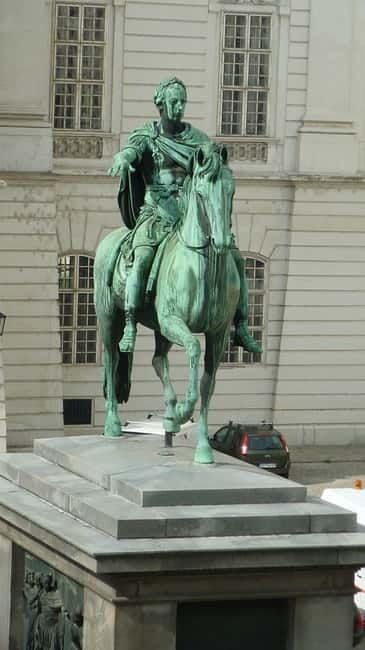
The Austrian National Library comes next, with attention to its grand state room. The guide also explains the symbol on the roof and why the square is named for Emperor Joseph II. These are small details, but they give the area a stronger sense of place.
I like this part of the route because it shows how Vienna rewards close looking. The main building is easy to photograph, but the meaning of a roof emblem or a square name is not obvious. A short explanation can turn a decorative feature into a clue about the city’s political and intellectual past.
Again, the tour does not include entry fees. If you want to see the State Hall or the Imperial Treasury inside, budget separately and check opening times for your dates.
Habsburg weddings and the Imperial Crypt
The church connected with Habsburg weddings is one of the most memorable stops because the custom itself is so strange. You hear why some grooms were not present at their own weddings, a detail that makes dynastic marriage feel less like romance and more like state business.
The church is closed on Sundays and public holidays, so the stop may be limited or altered on those dates. This is worth checking before you book, particularly if the wedding story is one of the reasons the tour appeals to you.
The Imperial Crypt adds another unusual chapter. The guide explains the Habsburg burial ritual and the significance of the crypt. Vienna’s imperial story is full of ceremony, and this stop shows how carefully the dynasty handled death as well as marriage.
Entrance fees are not included here either. The walk gives you context, but you will need a separate ticket if you decide to go inside. That arrangement works well for people who want an overview first, then prefer to choose only the museums and historic interiors that fit their interests.
Albertina, war memories, and the city’s darker side
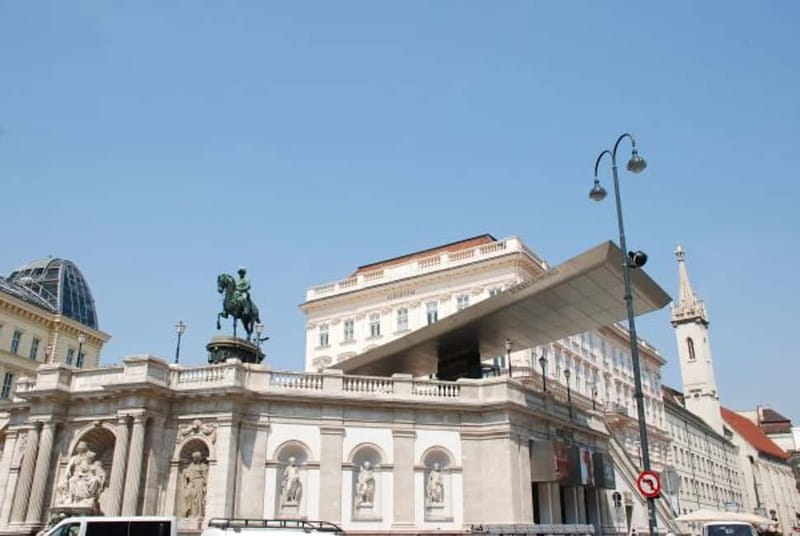
At the Albertina, the focus shifts toward art and the city’s cultural life. The museum is home to one of the world’s largest collections of graphic art, but the walking tour does not replace a museum visit. Instead, it places the building within the wider center and explains why it matters.
Nearby, the Monument Against War and Fascism changes the mood. Vienna’s imperial buildings can encourage a romantic view of the past, but the monument confronts the damage and suffering associated with the Second World War.
This is an important part of the walk. You get a more honest picture of Vienna, one that includes beauty, political power, destruction, and memory. Guides also use historical images to show how buildings looked after the war, which can make the scale of the damage easier to understand.
The balance is helpful. The tour does not stop at imperial nostalgia. It asks you to look at what survived, what was rebuilt, and what the city chooses to remember in public spaces.
The State Opera, Neuer Markt, and St. Stephen’s Cathedral
The route passes the State Opera and explains why the Hotel Sacher now occupies the site of the former Carinthian Gate Theatre. This is a classic example of Vienna’s changing city fabric. A modern building or famous hotel can conceal an earlier landmark unless someone points it out.
At Neuer Markt, the Providentia Fountain provides another chance for a small story with a larger lesson. Vienna’s fountains and monuments are not merely background decoration. Their figures and symbols often carry political or religious meaning, and the guide uses this stop to explain what you might otherwise walk past.
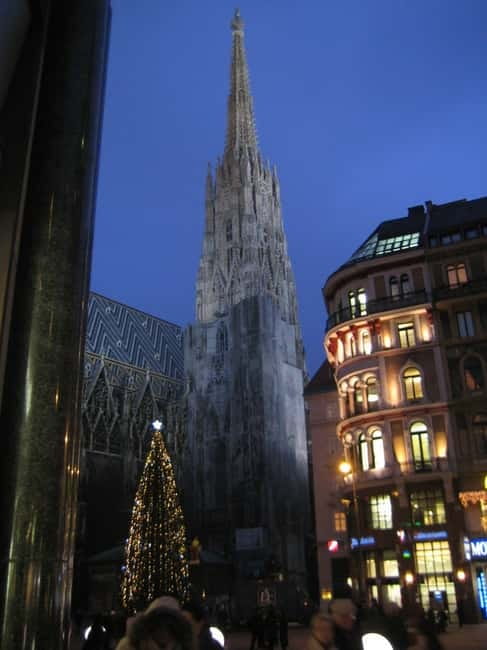
The walk finishes at St. Stephen’s Cathedral, Vienna’s best-known landmark. You hear about its partial destruction during the Second World War and about a commonly taught point that is not quite correct. That closing note fits the tour’s overall approach: look closely, question simple versions of the past, and do not assume the familiar explanation is the whole story.
The stated drop-off point is Stephansplatz 8A, close to the cathedral. From there, you are well placed to continue sightseeing on your own, visit another central attraction, or return to one of the museums discussed during the walk.
What the guide adds to the buildings
The repeated praise for Herbert centers on three things: strong command of the subject, an easy sense of humor, and a personal way of speaking with the group. Several people describe his explanations as detailed without becoming dull. That balance matters in Vienna, where a guide can easily bury you under names, dates, and imperial titles.
Herbert has also used an iPad to show pictures of important figures and images of buildings after wartime damage. Visual aids are especially useful when you are standing in front of a restored facade and trying to imagine what it looked like before or after a major event.
Other guides receive warm comments too. Dorothy is described as clear and willing to answer questions, while Wolfgang is praised for his energy and command of Vienna’s geography and past. Your experience will depend on who leads the walk, but the repeated pattern is clear: this tour works best when you enjoy conversation, follow-up questions, and stories alongside the main route.
The humor is often dry rather than theatrical. That is a good match for the subject. Habsburg marriage rules, burial customs, and palace politics can become heavy, and a well-timed joke keeps the information moving.
Who should book, and who should skip it
I would choose this walk if you are visiting Vienna for the first time and want a strong base in the historic center. It suits adults and older teenagers who enjoy history, architecture, political stories, and practical advice about what to see next.
It is also a good fit if you want to cover major sights without a long, exhausting march. The route stays in central Vienna, and the pace is described as manageable. You will still be on your feet for two hours, so comfortable shoes and weather-ready clothing make sense. The tour runs in all weather.
I would skip it if you want extensive interior visits. The guide discusses the Imperial Treasury, National Library, Albertina, Imperial Crypt, and other sights, but admission is separate. This is an orientation walk, not a museum pass.
It is not suitable for children under 12 or people with mobility impairments. Large bags and luggage are not allowed, and video or audio recording is prohibited.
The free cancellation window is 24 hours before the start, and you can reserve while paying later. Those terms are useful if your plans are still shifting, but the bigger booking decision is whether you want a history-led walk rather than a general sightseeing loop.
Should you book the Vienna Essential History Walking Tour?
Book it if you want Vienna to make sense quickly. For $34, you get two hours of focused guiding, a small-group setting, a route through the city’s central imperial sights, and plenty of suggestions for the rest of your stay.
The strongest reason to go is the guide’s interpretation. The buildings are impressive on their own, but the stories about Roman Vienna, Habsburg weddings, burial customs, wartime destruction, and vanished theatres give them meaning.
Do not book it expecting equal time in every district or entry to the museums. Choose it early in your visit, wear sensible shoes, and arrive ready to ask questions. If you like history delivered with dry humor and human anecdotes, this is a useful and well-priced introduction to central Vienna.
FAQ
How long does the Vienna Essential History Walking Tour last?
The tour lasts two hours.
What is the price?
The price is $34 per person.
Where does the tour begin?
It begins in front of Loos Haus at Michaelerplatz 3, 1010 Vienna. The building is between Kohlmarkt and Herrengasse, and the facade displays the name Raiffeisenbank.
Where does the tour finish?
The walk finishes at Stephansplatz 8A, near St. Stephen’s Cathedral. The listed drop-off location is in Stephansplatz.
Which languages are available?
The tour is offered in English and German with a live guide.
Are entrance fees included?
No. Entrance fees are not included, so you need to pay separately if you enter the Imperial Treasury, Austrian National Library, Albertina, Imperial Crypt, or another paid attraction.
Is the wedding church always open during the tour?
No. The church connected with Habsburg weddings is closed on Sundays and public holidays.
Is the tour suitable for children or people with mobility impairments?
The tour is not suitable for children under 12 or people with mobility impairments. It takes place in all weather, and large bags or luggage are not allowed.
Newest history tours we have reviewed in the world
- Bilbao Historical Tour in small group★ 4.7 · 52 reviews
- Bologna: Street Food Tour in the Historic Center★ 4.8 · 125 reviews
- CEBU: Cebu City Heritage and Uphill Guided Tour★ 4.2 · 31 reviews
- Bishkek : City Tour (History, Architects, Statues & Culture)★ 4.9 · 54 reviews
- Blenheim: Omaka Aviation Heritage Centre Admission Ticket★ 4.9 · 31 reviews
- Berlin: Nazi History Walking Tour★ 4.8 · 33 reviews
- Best of Baku: 4-Hour City Tour Historic and Modern Landmarks★ 4.7 · 63 reviews
- Belfast: Best of Belfast History, Culture & Art Walking Tour★ 4.9 · 158 reviews
History Walking Tours, compared.
History and Hauntings of Salem Guided Walking Tour
Read our review →
Freedom Trail History Small Group Walking Tour
Read our review →
Historic Charleston Guided Sightseeing Walking Tour
Read our review →
Tapas Walking Tour with Food, Wine, and History
Read our review →
Savannah History and Haunts Candlelit Ghost Walking Tour
Read our review →
A History of Terror – Belfast City Centre Walking Tour
Read our review →Browse the lists this tour appears in