
Review · VIENNA HISTORY TOURS
Historical Hitler Walking Tour of Vienna
Hitler’s Vienna is best understood not through one grand monument, but through a chain of ordinary city streets, famous squares, memorials, and buildings that reveal how Austria moved from imperial confidence to Nazi rule. This 2.5-hour walking tour follows that chain from the Albertina Museum to Schwedenplatz.
I like two things right away: the route links Hitler’s early life with Austria’s political and cultural history, and it gives serious attention to Jewish Vienna rather than treating the Holocaust as a footnote. The main drawback is the title. This is not a tour devoted only to Hitler. It is a broader walk through Vienna before, during, and after the Nazi period.
Key points to know before booking
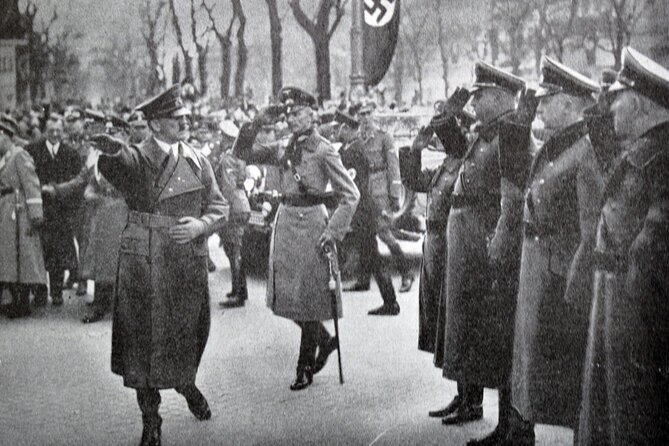
- Hitler’s Vienna is placed in context: You learn about his failed application to Vienna’s Academy of Fine Arts, his years in the city, and the ideas that shaped his later politics.
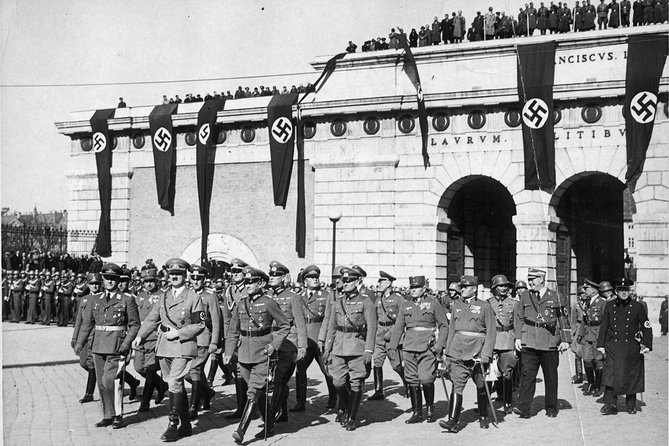
- The route covers major sites and lesser-known reminders: The State Opera, Heldenplatz, Judenplatz, Morzinplatz, and the Stadttempel Synagogue all play a part.
- Jewish history receives real attention: The Judenplatz Holocaust Memorial commemorates more than 65,000 Austrian Jews murdered between 1938 and 1945.
- Guides add visual material: Dieter, Wolfgang, Stephan, Charles, and others have used maps, photographs, and tablet images to explain how places looked and functioned.
- You walk for about two and a half hours: Wear solid shoes and prepare for wind, cold, sun, or rain.
- The group can include up to 25 people: That keeps the tour fairly manageable, though hearing the guide may depend on where you stand.
Starting beside the Albertina and Vienna State Opera
The tour begins at Albertinaplatz, outside the Albertina Museum, at 2:30 p.m. This is a busy central meeting point, so arrive early enough to find the guide and group before departure. One practical tip comes from a less positive experience: make sure you can clearly identify the guide before the walk starts and stay close when the group moves off.
The first stop is the Vienna State Opera, about a short introduction rather than a long visit inside. The opera house opened in 1869 with Mozart’s Don Giovanni, in the presence of Emperor Franz Joseph and Empress Elisabeth. That detail matters because it places you in the confident, imperial Vienna that Hitler encountered as a young man.
After the Anschluss in 1938, the opera’s cultural life changed sharply. Artists and employees were dismissed, persecuted, or murdered, and some works were banned. Hitler visited the building twice that year, in June and October. The guide uses the opera to show that Nazi power did not affect only parliament, police, and battlefields. It reached into the arts, changing who could work, what could be performed, and whose presence was tolerated.
I find this an effective opening because you begin with one of Vienna’s most elegant buildings, then learn how quickly an artistic institution can be bent to political purposes. You also get a useful reminder that Hitler’s relationship with Vienna was tied to culture and ambition, not simply military history.
More History Walking Tours in the world:
- History and Hauntings of Salem Guided Walking Tour
★ 5.0 · 14,564 reviews - Lisbon: History, Stories and Lifestyle Walking Tour
★ 4.8 · 10,902 reviews - Boston: Freedom Trail History Small Group Walking Tour
★ 5.0 · 6,450 reviews
The Albertinaplatz memorial and Austria’s difficult memory
From the opera, the walk continues to the Memorial Against War and Fascism on Albertinaplatz. Austrian sculptor Alfred Hrdlicka created the memorial, which has been here since 1988. Its purpose is direct: to remember the victims of war and fascism and confront one of the darkest periods in Austrian history.
This stop is especially useful for understanding how Vienna remembers the past in public space. The monument is not polished imperial decoration. It is meant to unsettle you. Your guide explains its symbols and connects the memorial to the destruction caused by war, including the more than 100,000 bombs that struck Vienna during the Second World War.
You will not spend a long time at every stop. The scheduled pause here is around ten minutes, enough for an explanation and a close look, but not enough for a full museum-style discussion. That format works well if you want a moving overview. If you prefer to study each memorial at length, you may want to return independently.
The art academy and Hitler’s failed application
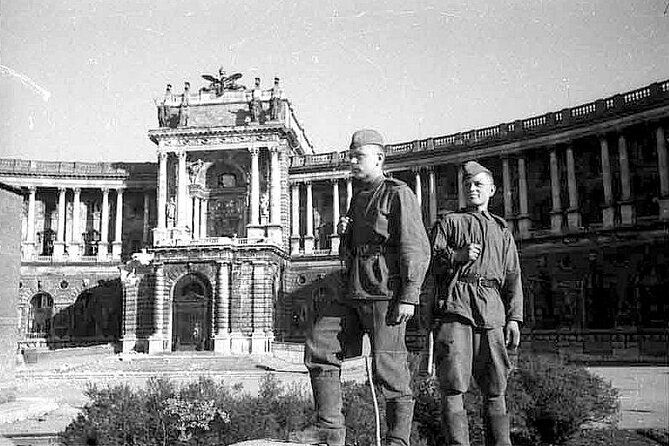
The next stop is the Akademie der bildenden Künste, the art school that did not accept Hitler as a student. This is one of the tour’s most recognizable links to his early life, and it helps explain why the tour title attracts so much attention.
The important point is not that one admission decision single-handedly created Hitler. The useful question is how his ambitions, disappointments, social surroundings, and political ideas developed over time. The guide places the academy within Vienna at the turn of the twentieth century, rather than presenting a simple story of rejection leading directly to dictatorship.
This is also where the tour shows its real focus. You are not being taken to a collection of personal rooms or a preserved Hitler residence. You are walking through places that help explain his connection to Vienna and the city’s role in his political imagination.
Heldenplatz and the March 1938 speech
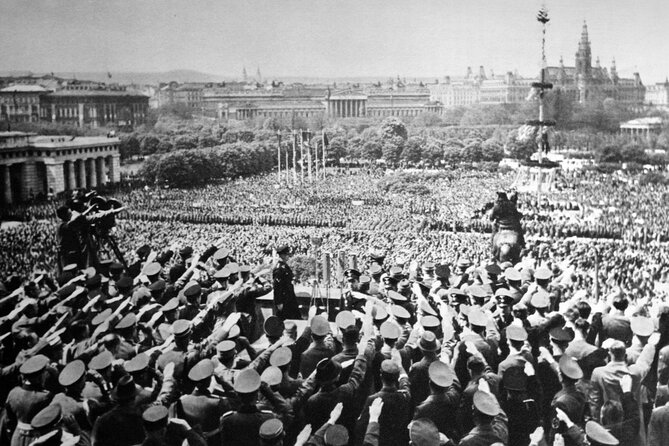
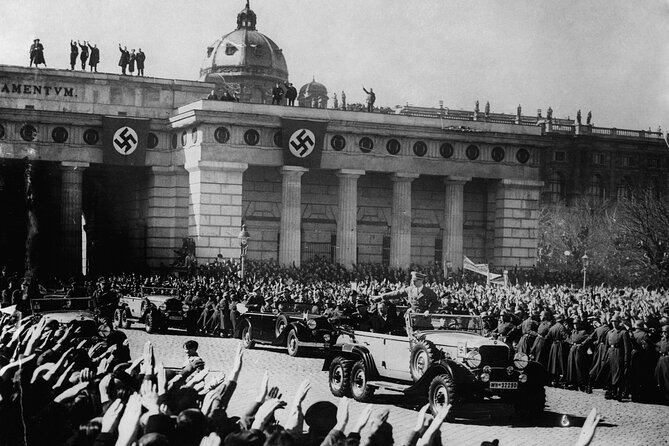
Heldenplatz is the emotional center of the route. On March 15, 1938, Hitler addressed a huge crowd from the balcony of the Neue Hofburg after Nazi Germany annexed Austria. The speech became a symbol of the National Socialist seizure of power and of the broad public approval that accompanied it.
Your guide describes what happened in the square and explains why the event remained traumatic in Austria after the war. The setting is grand, open, and closely tied to imperial power. That contrast makes the stop effective: the same ceremonial space associated with Habsburg rule became a stage for Nazi triumph.
This is one of the places where an excellent guide matters most. A date and a speech alone do not tell you why Heldenplatz has such weight. Guides such as Dieter, Wolfgang, and Stephan have been praised for threading together the physical setting, the political background, and the later Austrian struggle to face its own role.
The stop also helps correct a common misunderstanding. Austria was not merely an innocent country swallowed by Germany. The Anschluss involved German force, but it also received significant local support. The tour treats that uncomfortable subject directly.
More History Tours in the world:
- New York City: American Museum of Natural History Ticket
★ 4.5 · 15,447 reviews - Colosseum: Underground and Ancient Rome Tour
★ 4.7 · 12,691 reviews - London Small Group Tour of Historical Pubs
★ 5.0 · 10,422 reviews - Prague: Oldtown, Medieval Underground & Dungeon History Tour
★ 4.3 · 10,277 reviews
Judenplatz and the scale of the Holocaust
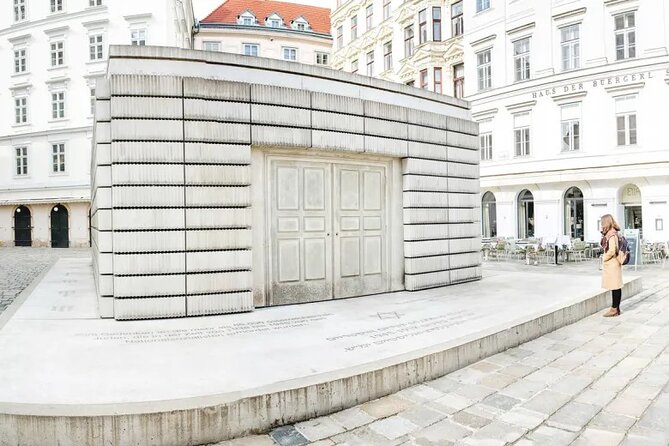
The route then crosses the historic center toward Judenplatz. Here you see the Holocaust Memorial for the Austrian Jewish victims of the Shoah, dedicated to more than 65,000 Austrian Jews murdered by the National Socialists between 1938 and 1945.
This is one of the most important stops on the walk. The memorial, designed as a sealed library, gives the impression of countless stories that cannot be fully opened or recovered. Your guide connects it to the long history of Jewish life in Vienna and to the destruction of that community under Nazi rule.
I value the way this stop widens the subject beyond Hitler himself. A tour about one dictator can easily become too focused on his personality. Judenplatz brings the victims and the city’s Jewish institutions back to the center of the story.
You should expect serious material here. The discussion includes persecution, deportation, murder, and the tragic fact that many Austrian Jews took their own lives rather than face deportation. It is not a light sightseeing stop, and that is precisely why it belongs on the route.
Morzinplatz and the former Gestapo headquarters
At Morzinplatz, the guide explains the site of the former Hotel Metropole. Before the Nazi period, it was a luxury hotel. Under the Third Reich, it became one of the Gestapo’s most brutal headquarters.
The physical setting can be easy to miss if you walk past alone. There is no grand preserved complex presenting the entire story. Instead, the memorial asks you to connect a modern city square with the violence once organized there.
This stop gives the tour a sharper edge. Earlier sections deal with ideas, speeches, cultural change, and public memory. Morzinplatz shows how those ideas became a system of arrest, interrogation, torture, and fear. It also reinforces the value of walking tours in Vienna: the history is often attached to an address rather than a large museum entrance.
The hidden Stadttempel Synagogue
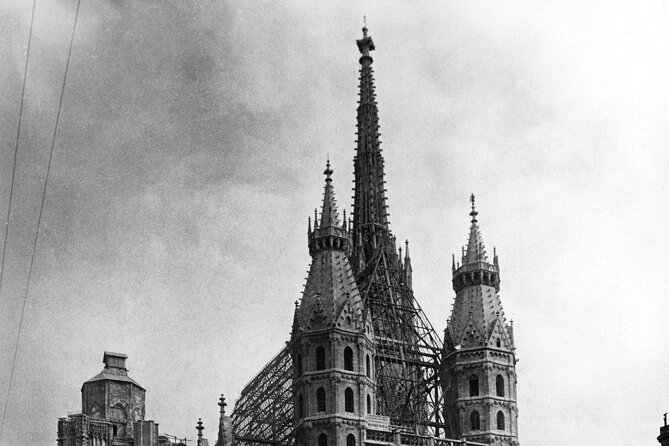
The final major theme is Jewish Vienna and the Stadttempel Synagogue, also called the Seitenstettentempel. The synagogue is hidden behind a five-story apartment building on Seitenstettengasse.
This unusual arrangement was shaped by regulations requiring non-Catholic places of worship to be concealed from direct street view. The synagogue’s main building therefore sits behind the street-front apartments. Above the entrance gate is an inscription asking worshippers to enter with thanksgiving and praise.
The guide explains why the synagogue is not immediately visible from the street and how that design reflects the restrictions placed on Jewish religious life. It is a small architectural detail with a large political meaning.
You do not enter the synagogue as part of the stated tour. The stop is an exterior explanation and a chance to understand the building’s unusual position. That distinction matters if you are hoping for an interior visit.
The walk ends a few minutes from Schwedenplatz. This is a practical finish, with access to the U1 and U4 subway lines and plenty of restaurants for a meal afterward. Ending here also makes it easy to continue sightseeing without having to cross the city again.
What the guide adds to the experience
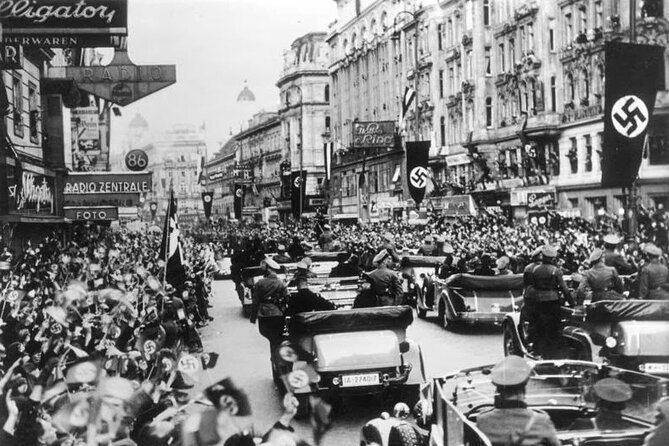
The strongest part of this tour is the guide’s ability to connect separate facts. The route itself is worthwhile, but a map of locations would not explain why the opera, art academy, Heldenplatz, Judenplatz, Morzinplatz, and synagogue belong in one story.
Dieter is often singled out for his careful historical explanations, relaxed pace, and attention to the group. Wolfgang is associated with an engaging, thoughtful presentation and a philosophical approach to the period. Stephan has used an iPad with photographs and maps, which can help you picture buildings and events that are no longer visible.
Other guides, including Charles, Siggy, Sigee, and unnamed English-speaking guides, have also led the walk. The guide you receive depends on the date. The consistent qualities to look for are clear English, good pacing, and the ability to handle difficult questions without reducing the past to easy slogans.
One minor concern is hearing. A single comment describes difficulty hearing through the guide’s device. Stay near the guide, especially at busy streets and open squares. A group of up to 25 is not huge, but it is large enough for sound to become an issue.
Price, length, and physical demands
At $32.65 per person, the tour offers reasonable value if you want a guided interpretation of Vienna’s Nazi-era history. You are paying for a licensed guide, not admission to museums or historic interiors. Since all listed stops are viewed from public areas, the price makes the most sense for the storytelling and historical connections.
The walk lasts about two hours and thirty minutes. It is described as easy walking, but you remain outdoors for much of the afternoon. Wear comfortable shoes and clothes, carry water, and bring sunblock plus a raincoat or umbrella. Vienna’s weather can change quickly, and cold or wind can make the final hour feel longer.
Some guides have added indoor pauses when the weather was especially cold. You should not count on a long warm-up break, but the guides appear to pay attention to comfort and group pace. A moderate level of physical fitness is recommended.
The tour is offered in English and uses a mobile ticket. Hotel pickup, food, drinks, and gratuities are not included. Service animals are allowed, and the meeting and ending points are close to public transport.
Free cancellation is available until 24 hours before the start time. If poor weather or an insufficient number of bookings causes cancellation, you can choose another date or receive a full refund.
Who should take this Vienna history walk?
This tour suits you if you enjoy political history, memorials, architecture, and careful explanations of how a society changes. It is particularly useful during a first visit to Vienna because the route also passes through some of the city’s most important central landmarks.
You do not need to arrive as a specialist. The guides build from basic facts and add context. Still, you should expect a serious lecture-style walk rather than a light city stroll. The subject includes antisemitism, political violence, persecution, mass murder, and Austria’s responsibility during the Nazi period.
If you want a pure Second World War tour focused on military campaigns, bombings, or battlefield events, this may not be the right choice. The tour stays centered on Hitler’s connection to Vienna, the rise of National Socialism, Jewish life, and the city’s response to the past.
The title can also create the wrong expectation. Hitler is a central thread, but much of the experience is about Vienna’s institutions, public spaces, victims, and political culture. That broader approach is a strength, provided you know what you are booking.
Should you book the Historical Hitler Walking Tour of Vienna?
I would book this if you want a serious, well-paced introduction to Vienna’s role in the Nazi period and you are willing to spend two and a half hours outdoors. The best reasons are the clear route, the attention given to Jewish Vienna, the powerful Heldenplatz stop, and guides who can add maps, photographs, and careful explanation.
I would think twice if you dislike walking, need extensive indoor time, or expect a tour focused only on Hitler’s personal biography. Bring weather protection, stay close enough to hear, and arrive early at Albertinaplatz so the group can be identified easily.
For history-minded visitors, this is a strong use of an afternoon. It leaves you with more than a list of dates. You see how Vienna’s opera, public squares, memorials, religious buildings, and ordinary addresses all carry evidence of the city’s most difficult years.
FAQ
Where does the tour begin?
The tour begins at Albertinaplatz, outside the Albertina Museum in central Vienna.
What time does the tour start?
The stated start time is 2:30 p.m.
Where does the tour end?
The walk ends a few minutes from Schwedenplatz, near the U1 and U4 subway lines and several restaurants.
How long does the tour last?
The tour lasts approximately two hours and thirty minutes.
What language is the tour offered in?
The tour is offered in English.
What sites are included?
The route includes the Vienna State Opera, Memorial Against War and Fascism, Akademie der bildenden Künste, Heldenplatz, Judenplatz Holocaust Memorial, Morzinplatz, and the Stadttempel Synagogue area. Other nearby places may also be discussed.
Is admission to attractions included?
The listed stops are viewed from public areas, and admission tickets are not required. The tour price includes a licensed guide, but not food, drinks, or hotel transportation.
What should I bring?
Wear comfortable shoes and clothes. Bring water, sunblock, and a raincoat or umbrella because Vienna’s weather can be unpredictable.
Can I cancel the booking?
You can cancel at least 24 hours before the start time for a full refund. Changes or cancellations made less than 24 hours before the start are not accepted for a refund.
Newest history tours we have reviewed in the world
- Bilbao Historical Tour in small group★ 4.7 · 52 reviews
- Bologna: Street Food Tour in the Historic Center★ 4.8 · 125 reviews
- CEBU: Cebu City Heritage and Uphill Guided Tour★ 4.2 · 31 reviews
- Bishkek : City Tour (History, Architects, Statues & Culture)★ 4.9 · 54 reviews
- Blenheim: Omaka Aviation Heritage Centre Admission Ticket★ 4.9 · 31 reviews
- Berlin: Nazi History Walking Tour★ 4.8 · 33 reviews
- Best of Baku: 4-Hour City Tour Historic and Modern Landmarks★ 4.7 · 63 reviews
- Belfast: Best of Belfast History, Culture & Art Walking Tour★ 4.9 · 158 reviews
History Walking Tours, compared.
History and Hauntings of Salem Guided Walking Tour
Read our review →
Freedom Trail History Small Group Walking Tour
Read our review →
Historic Charleston Guided Sightseeing Walking Tour
Read our review →
Tapas Walking Tour with Food, Wine, and History
Read our review →
Savannah History and Haunts Candlelit Ghost Walking Tour
Read our review →
A History of Terror – Belfast City Centre Walking Tour
Read our review →Browse the lists this tour appears in