
Review · NORWAY HISTORY TOURS
Oslo: Historic Myths & Legends Evening Walking Tour
Oslo’s old center gets more interesting after dark, when City Hall murals, fortress walls, and quiet squares become settings for stories about trolls, nisse, huldra, prisoners, thieves, and Viking beliefs. This two-hour walk connects the city’s famous sights with the less tidy tales that ordinary guidebooks often leave out.
I like the way the tour uses folklore as a doorway into history, rather than treating myths as simple ghost stories. I also like the easy pace and the chance to ask questions, with guides such as Maria and Anastasia adding practical suggestions for what to see next.
The main drawback is the weather. Winter evenings can be very cold, windy, and dark, and the route is not suitable for wheelchair users or people with mobility impairments. Bring warm layers and good shoes.
Key points
- City Hall meeting point: Begin by the swan fountain at the entrance to Oslo City Hall on Fridtjof Nansen’s Square.
- Norse folklore with context: Hear about trolls, nisse, huldra, Viking beliefs, spirits, bells, and other traditions.
- Akershus Fortress after dark: Learn about its medieval design, prisoners, castle stories, and changing role in Oslo.
- Old crimes and punishments: Bankplassen brings stories of audacious thefts and the justice system of earlier Oslo.
- A useful first-day walk: The route gives you a strong orientation and guides often suggest other places to visit.
- Cold-weather planning matters: The walk continues in poor weather, so comfortable shoes and proper winter clothing are essential.
Why Oslo’s myths make a good introduction
Many city walks give you dates, names, and a row of buildings. This one adds the stories people used to explain danger, luck, crime, death, and the unseen world.
You hear about mischievous trolls, helpful nisse, and mysterious huldra, but the point is not to pretend these creatures are historical fact. The tour connects these tales to Norwegian culture and to the way people understood their surroundings before modern science and medicine offered different explanations.
I find that approach useful because folklore gives you a better feel for local culture than a list of royal names. You begin to notice how old beliefs appear in art, architecture, customs, and stories passed down through families.
The tone is relaxed rather than theatrical. You are not taken underground, and this is not a ghost-hunting expedition. The focus stays on the cultural meaning of legends and the real places linked to them.
More History Walking Tours in the world:
- History and Hauntings of Salem Guided Walking Tour
★ 5.0 · 14,564 reviews - Lisbon: History, Stories and Lifestyle Walking Tour
★ 4.8 · 10,902 reviews - Boston: Freedom Trail History Small Group Walking Tour
★ 5.0 · 6,450 reviews
Starting at City Hall and its Viking beliefs
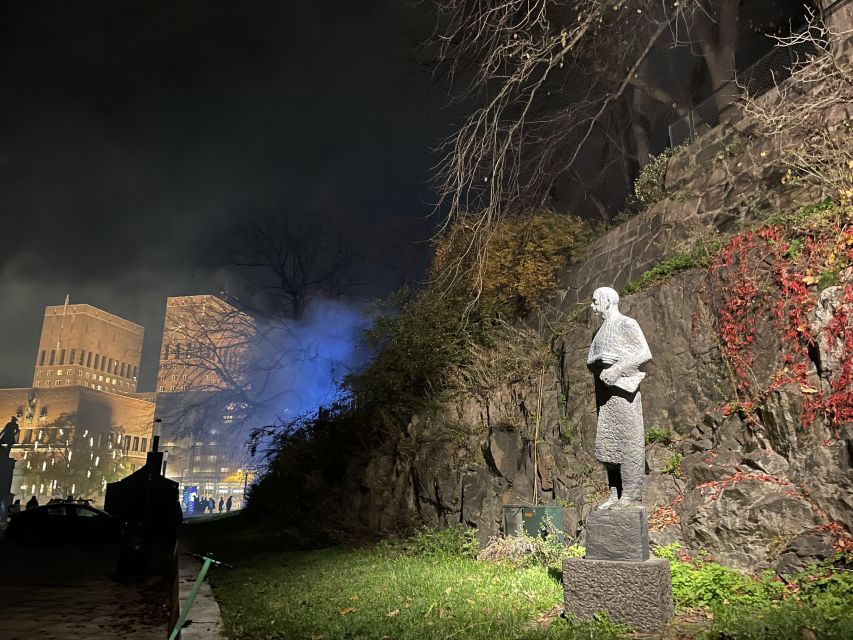
Meet your guide near the swan fountain at the entrance to Oslo City Hall. The location is central and easy to identify, but give yourself enough time to find Fridtjof Nansen’s Square if you are unfamiliar with central Oslo.
City Hall is more than a meeting point. Its walls contain wooden friezes and other artwork connected with Norwegian stories, including Viking beliefs. Your guide uses these details to explain how Norse ideas shaped the way people pictured gods, heroes, death, protection, and the forces around them.
This is one of the tour’s most useful features. You are not simply told that Vikings sailed the Nordic seas. You get a sense of the beliefs and fears that traveled with them.
The City Hall section also helps set the tone for the rest of the walk. The building represents modern Oslo, while the stories reach back through older customs and legends. That contrast gives you a quick introduction to the city’s long timeline.
Access to specific interior areas can depend on the tour’s arrangements, so think of the City Hall stop mainly as a place to understand the artwork and the stories attached to it. The tour is built around walking and outdoor stops, not a museum visit.
Christiania Torv and the city beneath the city
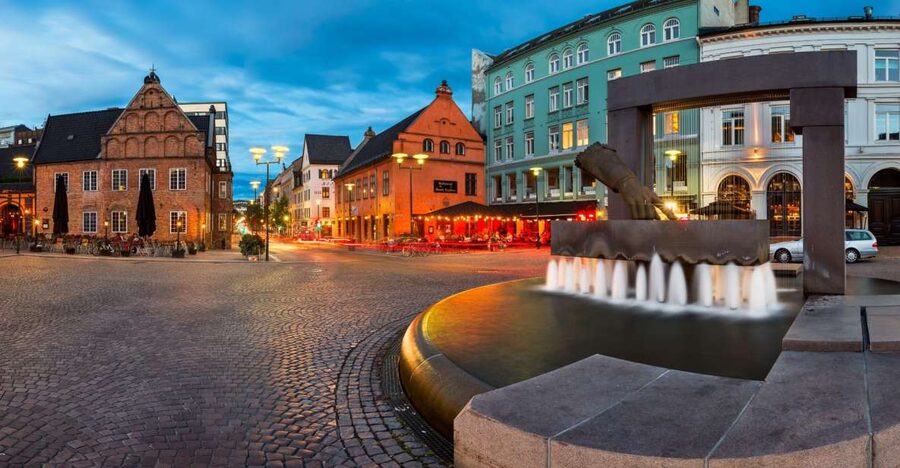
From City Hall, the route continues toward Christiania Torv, one of the historic squares in the old center. This is where Oslo’s past feels especially close to the present, with the guide using the buildings and streets as prompts for stories about the city’s earlier life.
The tour does not treat Christiania Torv as a quick photo stop. The guide explains how events and people connected with the square reflect the changes Oslo has gone through over time.
You will hear stories that add personality to the old center. Some are strange, some are funny, and some show how uncertain life could be in earlier centuries. The tales help you see the city as a place where people worked, traded, prayed, feared punishment, and tried to make sense of events they could not explain.
The route is also useful for orientation. Several people use the walk as an early activity in Oslo because it points out places they might otherwise pass without noticing. I would book it near the start of your stay if you want ideas for later sightseeing.
Akershus Fortress, medieval walls and prison tales
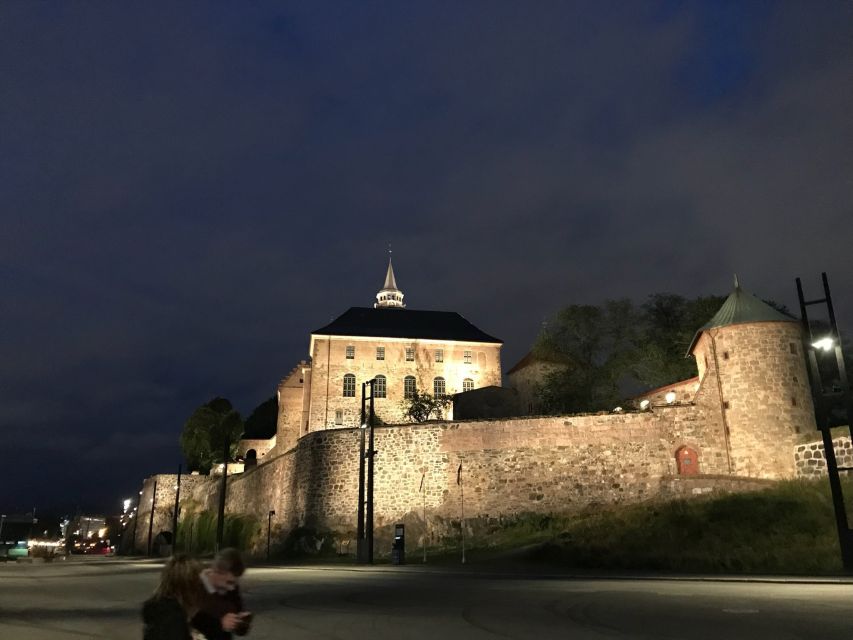
Akershus Fortress is the physical centerpiece of the walk. Its walls and defensive design show why Oslo needed protection and how medieval builders used the site to control access to the city.
Your guide explains the fortress’s engineering and changing purpose. You learn how its layout helped defend Oslo, then hear stories about the people held inside its formidable walls and the fates they faced.
This is where the tour shifts from broad folklore to more concrete human stories. A fortress can look impressive from the outside, but accounts of prisoners make the place easier to understand. The walls were not only part of a military system. They also enclosed people caught up in the harsh justice of their time.
The evening setting adds atmosphere without turning the stop into a horror show. You may see the fortress in low light, but the emphasis remains on history and cultural meaning. If you want a dramatic ghost tour with hidden chambers and underground exploration, this is not that experience.
The fortress section also rewards a slower pace. You may pause for photos and questions, and the guide has room to explain details that would be easy to miss on a quick daytime pass.
More History Tours in the world:
- New York City: American Museum of Natural History Ticket
★ 4.5 · 15,447 reviews - Colosseum: Underground and Ancient Rome Tour
★ 4.7 · 12,691 reviews - London Small Group Tour of Historical Pubs
★ 5.0 · 10,422 reviews - Prague: Oldtown, Medieval Underground & Dungeon History Tour
★ 4.3 · 10,277 reviews
Bankplassen and Oslo’s audacious thieves
At Bankplassen, the subject turns toward crime, robbery, and justice. This gives the tour a welcome change of pace after the myths and fortress stories.
You hear about daring thefts and complicated robberies that once shook the city. The appeal is not just the crime itself. The stories show how money, authority, reputation, and security worked in earlier Oslo.
The guide also explains how medieval justice operated and how crimes were punished. These details can be sobering, but they help you understand the gap between modern legal systems and older ideas of guilt, public order, and retribution.
I particularly like this part for travelers who are less interested in mythology. Even if trolls and huldra are not your main reason for booking, the crime stories and old justice system give the walk a solid historical backbone.
Bankplassen also helps broaden the picture of Oslo. You are not only hearing about kings and warriors. You are hearing about thieves, victims, officials, prisoners, and the ordinary people affected by public rules.
Oslo Cathedral and the walk through the old center

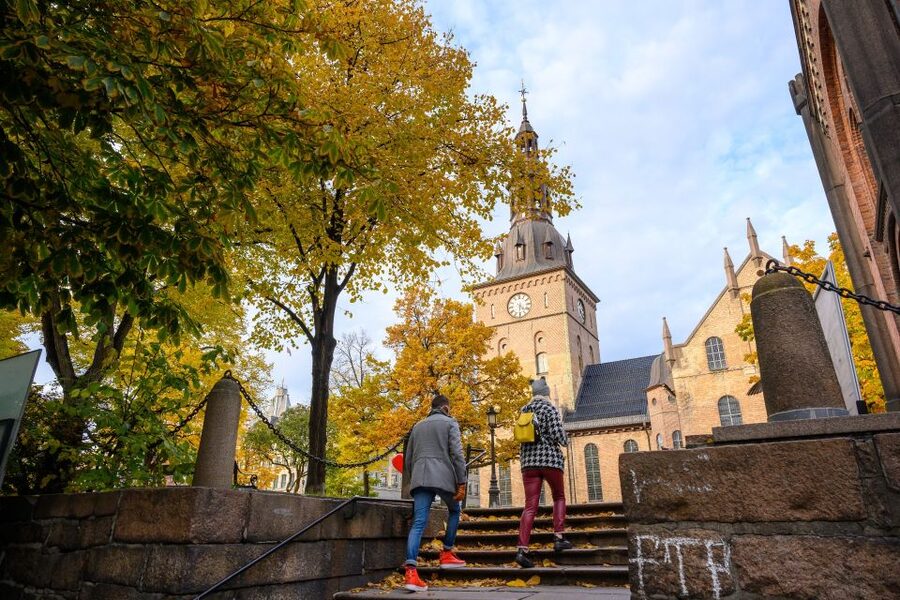
Oslo Cathedral is among the landmarks associated with the route. The exact amount of time spent at each location can vary, but the cathedral helps connect religious life with the city’s older stories and architecture.
As you move between the main stops, the guide points out details that can be hard to read without context. The walk is not a race from one landmark to another. It is a series of short explanations, stories, questions, and pauses.
That format suits Oslo well. The central sights are close enough to connect on foot, yet each one carries a different part of the city’s story. City Hall introduces art and Viking beliefs. Christiania Torv brings in old civic life. Akershus adds defense and imprisonment. Bankplassen brings crime and justice. The cathedral adds another layer of religious and urban history.
You should not expect a full interior tour of every building. This is primarily an outdoor evening walk, with the guide using visible places as evidence and story settings.
What the guide adds to the experience
The guide is the deciding factor on a story-led walk, and the strongest part of this experience is the human delivery. Maria is praised for being funny, warm, and easy to listen to, while Anastasia is described as enthusiastic and clear in English. Other guides lead the walk too, but the experience depends on having someone who can connect the facts without making the evening feel like a lecture.
The format leaves room for questions. You can ask about the stories, the buildings, or other places in Oslo, and guides often offer suggestions for the rest of your visit.
That makes the walk especially useful for solo visitors. You get a social activity without the pressure of a formal dinner or a long day trip, and you can ask for ideas that suit your own interests.
The guide’s enthusiasm also helps with material that could otherwise feel remote. Medieval punishments, Viking beliefs, and local folklore are easier to follow when they are explained with humor and clear links to the street in front of you.
English is the stated tour language. The guides are expected to lead in English, and the activity is designed for an English-speaking group.
Evening timing, cold weather and walking comfort
The two-hour length is about right. It gives the guide enough time to cover several subjects without turning the evening into a long endurance test.
Darkness changes the mood. In December, one walk ran from 4:00 to 6:00 p.m., when Oslo was already dark. That can make the city feel atmospheric, but it also means you need to pay attention to footing and keep your clothing warm.
Winter conditions can be serious. Temperatures in the minus 10s and piercing wind have not stopped the tour from running, but they can make the experience uncomfortable if you arrive in light clothing. Wear insulated layers, gloves, a hat, and shoes with a firm sole.
Comfortable shoes are required because the tour is on foot for the full two hours. The route is described as manageable, but the activity is not suitable for people with mobility impairments or wheelchair users.
The official age guidance says the tour is not suitable for children under 13. One family found the stories enjoyable for children aged eight and ten, but that does not change the stated recommendation. Families should consider both the age rule and the cold evening conditions before booking.
Is $42 a fair price?
At $42 per person, this is not the cheapest way to walk around Oslo, since you can visit many central streets without paying anything. The value comes from the guide’s storytelling, the connected route, and the extra meaning added to sights you could otherwise see on your own.
You are paying for two hours with a live English-speaking guide, not entry to a museum, food, transport, or hotel pickup. Taxes are included, but food and drinks are not.
I think the price is fair if you enjoy guided storytelling and want more than a quick landmark checklist. It is less compelling if you prefer to explore independently, already know Oslo’s central history, or mainly want to enter the buildings along the route.
The tour can also save planning time. Instead of researching folklore, Viking beliefs, fortress history, and old crimes separately, you get a single walk that ties them together.
Free cancellation up to 24 hours before the start gives you some flexibility, and you can reserve now and pay later. Check the available start times when booking because evening light and weather can vary by season.
Who should book this Oslo walking tour?
I would recommend it to first-time visitors who want a lively introduction to central Oslo. It gives you useful context early in a trip and may point you toward places to revisit in daylight.
It also suits solo visitors, couples, and adults who like history with a little mystery. The folklore is central, but the tour is not aimed only at mythology fans. The sections on Akershus Fortress, prison life, thefts, and medieval punishment provide plenty of grounded history.
You may also enjoy it if you have already seen Oslo’s main sights and want a different angle. The guide can draw your attention to overlooked details and lesser-known stories rather than simply repeating the standard facts.
I would think twice if you dislike walking in cold weather, need step-free access, or want a tour focused on inside visits. The route is outdoors, the weather can be harsh, and the activity is not designed for wheelchair users or people with limited mobility.
My call: book it if you want Oslo with a story attached
Book this tour if you want to understand why Oslo’s old streets carry more than architectural interest. The mix of Norse folklore, City Hall artwork, Christiania Torv, Akershus Fortress, old crimes, and medieval justice gives you a memorable way to get oriented.
I especially recommend it for your first or second evening, when a guide can help you decide what to explore next. Just dress for the forecast, wear solid shoes, and remember that this is a cultural history walk with legends, not a ghost-hunting expedition.
FAQ
Where does the Oslo myths and legends tour begin?
Meet the guide near the swan fountain at the entrance to Oslo City Hall on Fridtjof Nansen’s Square.
How long does the walking tour last?
The tour lasts two hours.
What language is the tour conducted in?
The live tour guide speaks English.
What places does the route visit?
The route includes Oslo City Hall, Christiania Torv, Akershus Fortress, Bankplassen, Oslo Cathedral, and other nearby historic locations.
Is this a ghost tour?
No. The tour discusses stories about ghosts and underground kingdoms, but it is not a ghost-hunting expedition and does not go underground. Its focus is the historical and cultural meaning of the stories.
What should I bring?
Bring comfortable shoes. Warm clothing is also important for evening walks, especially in winter, when Oslo can be very cold and windy.
Is the tour suitable for children?
The activity is officially not suitable for children under 13. One family reported enjoying it with children aged eight and ten, but the stated age guidance is 13 and older.
Is the tour wheelchair accessible?
No. The activity is not suitable for wheelchair users or people with mobility impairments.
Newest history tours we have reviewed in the world
- Bilbao Historical Tour in small group★ 4.7 · 52 reviews
- Bologna: Street Food Tour in the Historic Center★ 4.8 · 125 reviews
- CEBU: Cebu City Heritage and Uphill Guided Tour★ 4.2 · 31 reviews
- Bishkek : City Tour (History, Architects, Statues & Culture)★ 4.9 · 54 reviews
- Blenheim: Omaka Aviation Heritage Centre Admission Ticket★ 4.9 · 31 reviews
- Berlin: Nazi History Walking Tour★ 4.8 · 33 reviews
- Best of Baku: 4-Hour City Tour Historic and Modern Landmarks★ 4.7 · 63 reviews
- Belfast: Best of Belfast History, Culture & Art Walking Tour★ 4.9 · 158 reviews
History Walking Tours, compared.
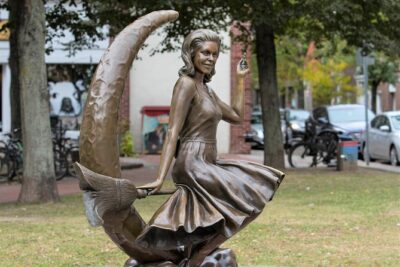
History and Hauntings of Salem Guided Walking Tour
Read our review →

Freedom Trail History Small Group Walking Tour
Read our review →
Historic Charleston Guided Sightseeing Walking Tour
Read our review →
Tapas Walking Tour with Food, Wine, and History
Read our review →
Savannah History and Haunts Candlelit Ghost Walking Tour
Read our review →
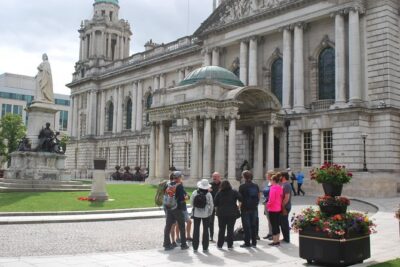
A History of Terror – Belfast City Centre Walking Tour
Read our review →Browse the lists this tour appears in