Review · HISTORY WALKING TOURS
The Original Cebu City Historical and Food Walking Tour
Cebu’s best introduction may be found away from the beach resorts, in old churches, crowded markets, jeepneys, and small food stops. This tour links those pieces into one afternoon, with local street food and Cebu’s Spanish, Chinese, and Philippine past sharing the same route.
I like the mix of history and everyday life. The Heritage of Cebu Monument, Yap-Sandiego Ancestral House, and Magellan’s Cross give you a useful frame for the city, while a jeepney ride and time at Carbon Market show how Cebu works today. I also like the relaxed guide-led format, especially for a first visit or a solo evening in the city.
The main caution is value. At $69.99, this is not a cheap walking tour, and the experience can feel short if the group moves quickly. Food, entrances, and guiding are included, but you arrange your own ride home from Freedom Park, and some church interiors may not be accessible during services or crowded periods.
Key points before you book
- The tour starts at 4 pm: You walk into Cebu’s historic center during the late afternoon and finish at Freedom Park near Carbon Market.
- A jeepney ride may be part of the route: This is public transport, not a private sightseeing vehicle, and it adds a useful slice of daily Cebu life.
- Food is adventurous and local: Depending on the day and route, you may try lechon, balut, tuslob buwa, durian, drinks, and other Filipino snacks.
- Six major sights are built into the route: Expect the Heritage of Cebu Monument, Yap-Sandiego Ancestral House, Santo Niño Basilica, Carbon Market, Magellan’s Cross, and Cebu Metropolitan Cathedral.
- Guides shape the experience: Kyle, Lorelie, Philip, Necian, and other guides have been praised for being friendly, conversational, patient, and helpful.
- The price includes key costs, but not everything: Entrance fees and food stops are covered, while your return transport and any extra purchases are your responsibility.
Why this tour works as a Cebu introduction
Cebu City can feel confusing when you first arrive. Major sights sit close to markets, churches, traffic, and side streets, but they do not always explain themselves clearly. This tour gives you a route and a local escort, so you spend less time figuring out where to go and more time noticing what is around you.
The afternoon begins at Ayala Terraces, a practical meeting point near public transport. From there, the tour heads toward the old center. The advertised duration is about four hours, though the pace matters. Some groups have finished in roughly three and a half hours, while others have reported a shorter outing after moving quickly between stops.
That variation is worth knowing. This is not a slow, museum-style program with long breaks at every site. It is a moving city walk with food, short visits, conversation, and several stops. If you want a relaxed pace, tell your guide early and ask how much time is planned for each place.
The group can reach 20 people. A smaller group should make it easier to ask questions and keep the food stops informal, but a full group will take longer to move through busy streets and market areas.
More History Walking Tours in the world:
- History and Hauntings of Salem Guided Walking Tour
★ 5.0 · 14,564 reviews - Lisbon: History, Stories and Lifestyle Walking Tour
★ 4.8 · 10,902 reviews - Boston: Freedom Trail History Small Group Walking Tour
★ 5.0 · 6,450 reviews
Heritage of Cebu Monument and the city’s origin story
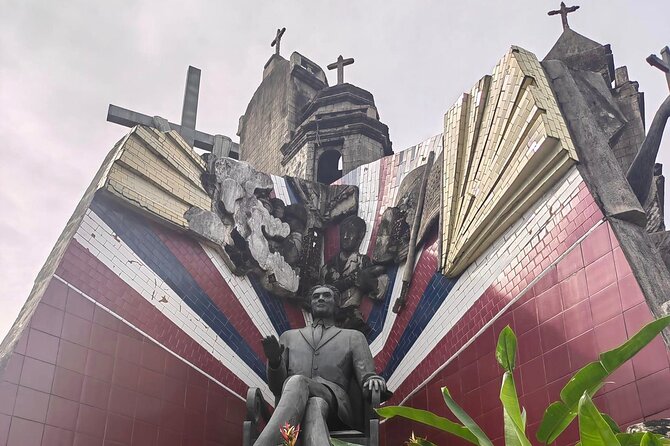
The Heritage of Cebu Monument is an outdoor tableau showing key scenes from Cebu and Philippine history. Its subjects include the Battle of Mactan, the inauguration of Sergio Osmeña as president, and the canonization of Pedro Calungsod.
You get about 30 minutes here, with admission included. That is enough to examine the figures and listen to an explanation of why the scenes matter. I would pay close attention to the guide’s commentary, since the sculpture itself can be hard to read without context.
This is a good opening stop because it gives you a quick map of Cebu’s past. The tour does not treat the city as only a Spanish colonial story. The monument places several major moments together, helping you see how religion, politics, and local identity overlap.
Yap-Sandiego Ancestral House, wood, coral, and family life
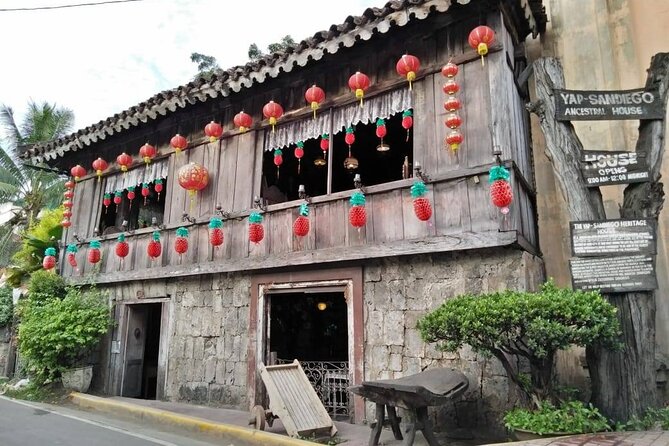
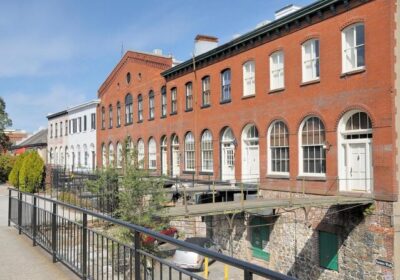
The Yap-Sandiego Ancestral House is one of the most atmospheric stops. Built around 1680, it is made from wood and coral stone, with Spanish and Chinese design influences.
The house offers a more intimate look at the past than a monument or church facade. Instead of hearing only about major events, you get a sense of how an old Cebu home was built and preserved. Its age alone makes it an important stop, but the combination of Chinese and Spanish elements makes it especially useful for understanding Cebu’s mixed cultural background.
Admission is included, and the visit is planned for about 30 minutes. One practical point is that this is a place where entry matters. Make sure you know which sites you will enter and which ones you will see from outside, since access to religious buildings can depend on services, crowds, or the day’s schedule.
Santo Niño Basilica and the center of Cebu devotion
The Basilica Minore del Santo Niño de Cebu was founded in 1565 by Fray Andrés de Urdaneta. It is commonly called the Santo Niño Basilica and is one of Cebu’s most important religious sites.
The basilica is tied to the Santo Niño, or Holy Child, and it sits beside Magellan’s Cross in the old city center. The tour allows about 30 minutes here, with admission listed as included. In practice, you may spend part of that time outside or in the surrounding plaza if the church is crowded or holding services.
This is a place for respectful sightseeing. Dress and behavior should match the setting, and your guide can help explain what you are seeing without turning an active place of worship into a mere photo stop.
More History Tours in the world:
- New York City: American Museum of Natural History Ticket
★ 4.5 · 15,447 reviews - Colosseum: Underground and Ancient Rome Tour
★ 4.7 · 12,691 reviews - London Small Group Tour of Historical Pubs
★ 5.0 · 10,422 reviews - Prague: Oldtown, Medieval Underground & Dungeon History Tour
★ 4.3 · 10,277 reviews
Carbon Market and food on the street
Carbon Market is where the historical walk turns more directly toward daily life. Its name comes from carbón, the Spanish word for coal. The area was associated with a coal depot used by Cebu’s old railway in the 19th century.
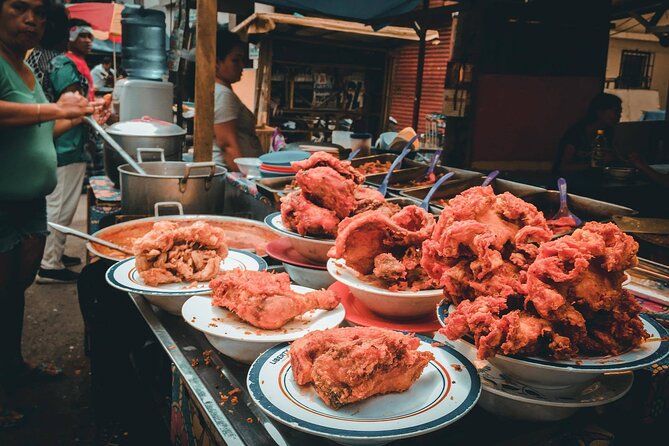
The market is also an important part of the food side of the tour. You may walk past stalls and small food shops, sample local dishes, and see how Cebu’s residents shop and eat. The exact food can vary, but the experience has included lechon, balut, tuslob buwa, durian, drinks, and other small portions.
You should arrive ready to try unfamiliar food. Some dishes may be excellent for you, while others may not suit your taste. That is part of the point, but it is also why I would not book this as a polished restaurant meal. This is a street-food outing, with simple local settings and flavors that can be strong, unusual, or unfamiliar.
The food count can also vary. The tour is described as having three food stops, while some routes have included four places. Do not expect every dish to appear on every departure. Market conditions, holidays, closures, and the guide’s route can affect what is available.
One of the most useful parts is the chance to ask questions before tasting something. A guide can explain what you are eating and help you decide how adventurous you want to be. Vegetarians should ask about the menu before booking, since several of the well-known foods named for the tour are meat or egg based.
Magellan’s Cross and Cebu’s Catholic story
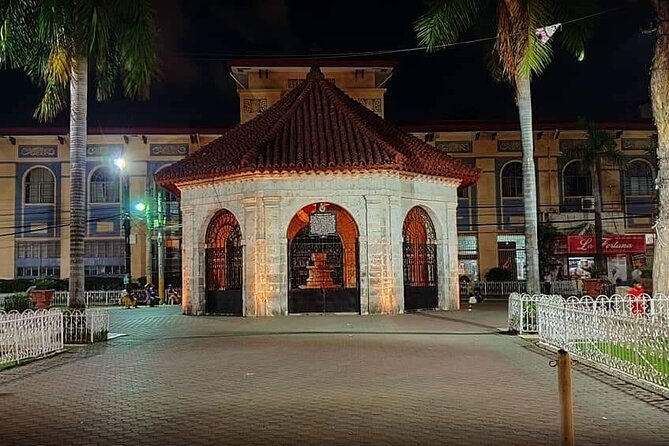
Magellan’s Cross sits in a stone pavilion beside Santo Niño Basilica at Plaza Sugbo. The cross is associated with the arrival of the Spanish expedition and the planting of Christianity in Cebu.
The pavilion is small, so the stop itself is brief in physical terms. Its importance comes from the surrounding story and its connection to the basilica. Your guide can help separate the historical event from the later religious meaning attached to the site.
This is one of those places where a short explanation makes a large difference. On your own, you might take a photograph and move on. With context, you can better understand why this small structure is one of Cebu’s most recognized landmarks.
Cebu Metropolitan Cathedral and the limits of access
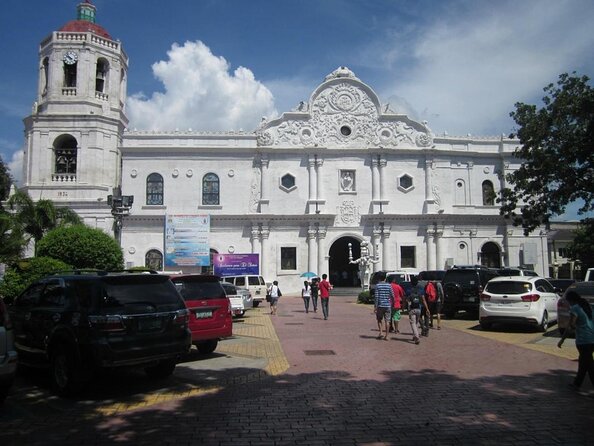
The Cebu Metropolitan Cathedral is officially dedicated to Saint Vitalis and the Immaculate Conception. Much of the building was damaged during World War II and later rebuilt.
The cathedral gives the route another view of Cebu’s long Catholic tradition, but access can be less predictable than at a standard museum. If a service is underway, the building is packed, or the guide decides that entry would be disruptive, you may see it from outside rather than take a full interior visit.
That is not necessarily a flaw in the route, but it is a reason to set expectations correctly. The tour gives you a broad look at the cathedral, basilica, and cross. It does not guarantee a quiet interior visit at every religious site.
Riding a jeepney instead of taking a private vehicle
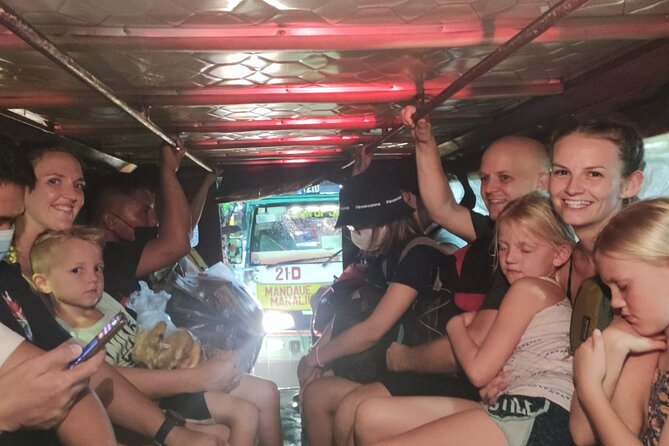
The jeepney segment is one of the most memorable parts for many people. You use public transport with local riders rather than being carried between sights in a private tour van.
That choice makes the experience more useful, but it also means less comfort and less control. You may need to stand, squeeze into a busy vehicle, or follow your guide through a normal city transfer. For a visitor who has not yet ridden a jeepney, this is a simple way to learn how this famous form of transport fits into Cebu life.
I would think of the ride as part of the tour’s purpose, not as a free transfer. The operator’s goal is to show ordinary city routines, and public transportation is part of that. If you need private transport or a fully air-conditioned route, this is the wrong format.
Guides, group mood, and the human side of the tour
The guide can make or break a food walk. The strongest guide feedback centers on Kyle, Lorelie, Philip, and Necian. They have been described as friendly, patient, conversational, attentive, and good at explaining both food and local customs.
Kyle appears particularly suited to visitors who want to ask questions. Philip has been praised for helping a solo woman feel safe while exploring unfamiliar parts of the city. Lorelie has been noted for her enthusiasm for Cebu food and for creating an easy group mood. Necian has been described as informative and relaxed.
Guide assignments can change, so you cannot assume a specific person will lead your departure. Still, the format encourages conversation. You can ask about jeepneys, food preparation, Cebu history, and where to eat later in your stay.
The social side is also part of the value. People often share dishes and compare reactions, which can make the outing lively. If you prefer to sightsee alone and move at your own pace, a group tour may feel more structured than you want.
Is $69.99 a fair price?
The $69.99 fee is reasonable only if you value the combination of guiding, entrances, food, and route planning. You are paying for more than a walk between landmarks, but you are not receiving private transport or a full restaurant dinner.
The included elements are useful: entrance fees, food stops, and a guide who handles the route. You also save the effort of planning how to connect the old house, basilica, market, cross, and cathedral in one afternoon.
Still, the price can feel high if the tour runs well under four hours, if you arrive late and miss a major stop, or if the food portions are modest. Arrive on time. One late arrival resulted in a missed museum visit, and the guest still paid the full fee.
The end point is Freedom Park in Carbon. Your ride back to your hotel is not included, so budget for a Grab or other transport. This detail matters if you are staying far from the city center or if you have an evening booking immediately afterward.
Who should book this Cebu walking tour?
I would choose this experience for a first visit, especially if you have only one evening in Cebu City. It gives you major landmarks, food, a market, local transport, and a guide in one compact outing.
It also suits solo visitors who want company and reassurance while walking through unfamiliar areas. Adventurous eaters will get the most from it, particularly those curious about balut, tuslob buwa, lechon, or other Filipino specialties.
I would be more cautious if you are vegetarian, dislike public transportation, need a guaranteed four-hour schedule, or want refined food. You should also avoid booking it immediately before an important appointment, since traffic, food stops, and group pace can affect the finish time.
The cancellation policy is strict: the booking is non-refundable and cannot be changed. If poor weather cancels the experience, you are offered another date or a full refund. The same applies if the minimum number of participants is not met.
Should you book it?
Book this tour if you want a quick, practical introduction to Cebu that connects major sights with ordinary city life. The best parts are the old ancestral house, the jeepney ride, the market, and the chance to taste food you might not order alone.
Skip it if you expect private transport, a fixed four-hour schedule, restaurant-quality dining, or a low-cost basic walking tour. At $69.99, the value depends on using the included entrances and food stops and appreciating the guide’s local help. Arrive on time, wear comfortable shoes, keep your evening open after the finish, and treat the food as an adventure rather than a carefully controlled tasting menu.
FAQ
Where does the tour start and finish?
It starts at Ayala Terraces on Biliran Road in Cebu City at 4 pm. It ends at Freedom Park in the Carbon area.
How long does the experience last?
The listed duration is approximately four hours. The actual length can vary with group pace, travel between stops, and time spent at food locations.
What places are included?
The route includes the Heritage of Cebu Monument, Yap-Sandiego Ancestral House, Basilica Minore del Sto. Niño de Cebu, Cebu Carbon Market, Magellan’s Cross, and Cebu Metropolitan Cathedral.
Is transportation included?
A jeepney or other public transportation may be used during the route. Transport back to your hotel from Freedom Park is not included.
Are food and entrance fees included?
Food stops and entrance fees are included. The exact food selection can vary, and extra purchases are not specified as included.
Can I cancel or change my booking?
The experience is non-refundable and cannot be changed for any reason. If the operator cancels because of poor weather or because the minimum number of participants is not reached, you are offered another date or a full refund.
Newest history tours we have reviewed in the world
- Enjoy Ancient Mostar★ 4.0 · 45 reviews
- Private Dublin Historical and Heritage Tour by Bike★ 5.0 · 30 reviews
- Dubrovnik by Night, History, Wine & Bites★ 5.0 · 41 reviews
- Historical Walking Tour of Dublin★ 5.0 · 50 reviews
- DayTripper Dublin: A Guided City Walking Tour★ 5.0 · 90 reviews
- Ancient Old City– Finest tour of Dubrovnik★ 5.0 · 64 reviews
- Dublin LGBTQ Pride Historical and Cultural Walking Tour★ 5.0 · 91 reviews
- Interactive Living History in Dalkey Castle near Dublin City★ 5.0 · 133 reviews
History Walking Tours, compared.
History and Hauntings of Salem Guided Walking Tour
Read our review →
Freedom Trail History Small Group Walking Tour
Read our review →
Historic Charleston Guided Sightseeing Walking Tour
Read our review →
Tapas Walking Tour with Food, Wine, and History
Read our review →
Savannah History and Haunts Candlelit Ghost Walking Tour
Read our review →