
Review · OLD TOWN & HISTORIC CENTRE WALKS
Baku Oil Heritage & Old Town Walking Tour
Baku’s story is written in stone, but its real plot is oil. This 2.5-hour walking tour connects the fortress lanes of Icherisheher with the grand palaces and civic buildings built when black gold turned Baku into an international boomtown. Guides such as Gani and Lina bring old photographs, personal insight, and a clear sense of how the city changed.
I like two things here. First, the route covers both the Old City and the oil-boom district, so you see more than a pretty medieval quarter. Second, the guide’s attention gives the buildings a human angle, from an oil baron’s family tragedy to the first secular school for Muslim women. The main consideration is that you do not enter the Maiden Tower or Shirvanshahs’ Palace, and the $70 price is higher than a basic group walk.
Key points to know before booking
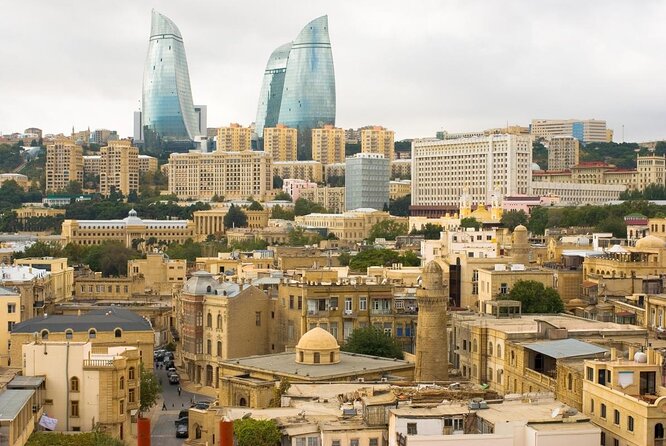
- Oil wealth shapes the whole route: Learn how late 19th-century oil money changed Baku’s streets, architecture, and social life.
- The Old City is only half the story: Icherisheher is paired with Istiglaliyyat Street and its grand European-influenced buildings.
- Gani is a major strength: His humor, prepared photos, clear English, and answers to questions receive especially strong praise.
- Major sights are viewed from outside: The tour explains the Maiden Tower and Shirvanshahs’ Palace but does not include entry.
- It is built for orientation: Starting and ending at Fountain Square makes this a useful first activity in Baku.
- The price reflects personal guiding: At $70 per person, the value depends on how much you want context and conversation rather than simple sightseeing.
Why Baku’s oil story makes this walk different
Many city walks in Baku focus on attractive façades and narrow Old Town streets. This one gives you the reason those façades exist. Baku’s first oil boom in the late 19th and early 20th centuries brought immense wealth, foreign influence, new public buildings, and a sharp change in the city’s social life.
You will hear about oil barons who wanted palaces, gardens, schools, and memorials that would carry their names into the future. You will also see how Baku developed beyond its medieval fortress walls, then passed through Soviet rule and later independence.
That wider frame matters. The Maiden Tower is not just an old stone landmark. The grand buildings outside the walls are not simply decorative. Each stop helps explain how money, ambition, religion, education, and politics shaped modern Azerbaijan.
The tour is described as private, with undivided attention from a personal guide, though the practical information also lists a maximum of 30 participants. If you are booking for a larger party, confirm how the private arrangement applies to your group. Either way, the focus is on direct explanation rather than waiting for a large sightseeing crowd.
More Old Town and Historic Centre Walks in the world:
- Madrid Essential: Historic Center, Plaza Mayor & Royal Palace
★ 5.0 · 6,416 reviews - Lisbon: Live Fado Show with Port Wine in Historic Center
★ 4.7 · 4,166 reviews - Valencia Old Town Tour with Wine & Tapas in 11th Century Historic Monument
★ 5.0 · 3,234 reviews
Starting at Fountain Square
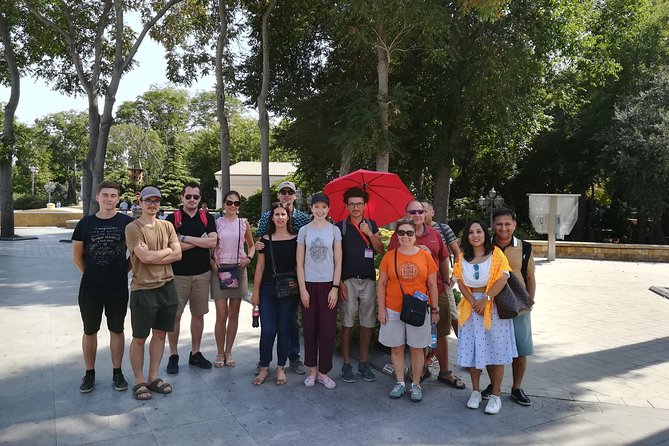
The walk begins at Fountain Square on Nizami Street, a central meeting point that is easy to use as a base for exploring Baku. The square is now a place for leisure, dining, and city life, but its earlier role was more commercial.
Your guide uses the area to explain how it became part of the main trading street during Baku’s first oil boom. That opening gives you an immediate contrast: a modern downtown gathering place layered over the commercial center of an expanding imperial city.
Only about 10 minutes are scheduled here, which is enough for orientation rather than a long stop. The tour also ends back at Fountain Square. I like that arrangement because you can continue to dinner, shopping, or another walk without having to find your way back from a distant neighborhood.
Entering Icherisheher through the Gosha Gala Gate
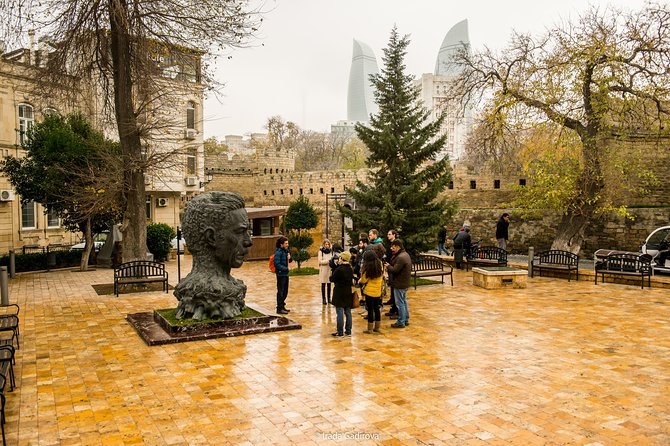
The Old City, known as Icherisheher, is the heart of the walk. You enter through the Gosha Gala Gate and follow the old defensive walls into a maze of narrow streets. The setting is compact, atmospheric, and far removed from the broad avenues built during the oil boom.
The guide explains the 12th-century citadel walls and places them within Baku’s older story. You will see the Muhammad Mosque, also dating to the 11th century, and hear about the religious and civic life that developed inside the fortress.
The route includes the Maiden Tower, one of Baku’s best-known landmarks. The guide explains the tower at its entrance, but admission is not included and the tour does not take you inside. That is an important distinction if you want interior exhibits or a climb for city views.
The same applies to the Shirvanshahs’ Palace. You will stop outside, hear about the 15th-century complex, and use historic photographs to picture earlier conditions. You should plan a separate visit if you want to explore the palace rooms and grounds at length.
This outside-only approach keeps the walk moving and allows it to cover more ground. The trade-off is less time inside the monuments. I would see this experience as an orientation to Icherisheher, not a substitute for a full museum visit.
A stop at the Museum of Miniature Books adds a smaller, more unusual detail to the Old City route. The provided information does not include museum admission, so ask the guide whether the stop is an exterior explanation or whether you have time to enter separately.
Narrow lanes, historic photos, and everyday Baku
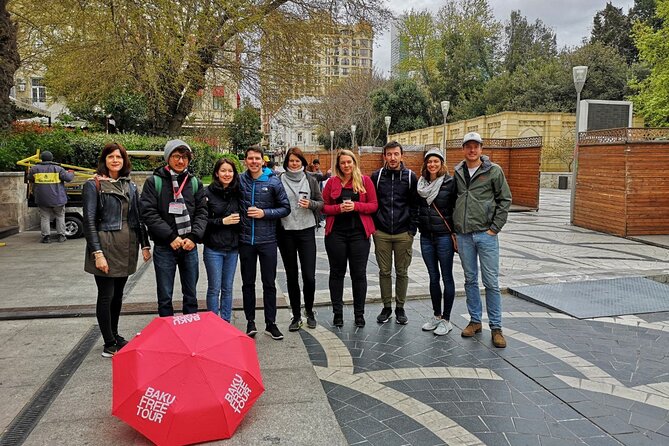
One of the tour’s useful features is the use of historic photos and prepared diagrams. Old photographs can make a major difference in Baku, where the same street may show medieval walls, imperial-era construction, Soviet changes, and modern restoration within a short distance.
The guide also discusses everyday life, not only rulers and wealthy builders. That broadens the walk beyond architecture. You get a sense of how oil wealth affected society and how Baku’s mix of cultural and religious communities shaped the city.
Gani receives especially strong praise for keeping people engaged, answering questions, and using humor without losing the historical thread. Several comments also single out his English as articulate and easy to follow. Lina is another named guide associated with a warm introduction to the Old City, along with practical suggestions for baklava and vegetarian food.
That kind of informal advice can be useful early in a stay. It helps turn a short history walk into a basic introduction to eating, language, and the rhythm of the city.
More History Walking Tours in the world:
- History and Hauntings of Salem Guided Walking Tour
★ 5.0 · 14,564 reviews - Lisbon: History, Stories and Lifestyle Walking Tour
★ 4.8 · 10,902 reviews - Boston: Freedom Trail History Small Group Walking Tour
★ 5.0 · 6,450 reviews - Historic Charleston Guided Sightseeing Walking Tour
★ 5.0 · 6,216 reviews
Leaving the fortress for Istiglaliyyat Street
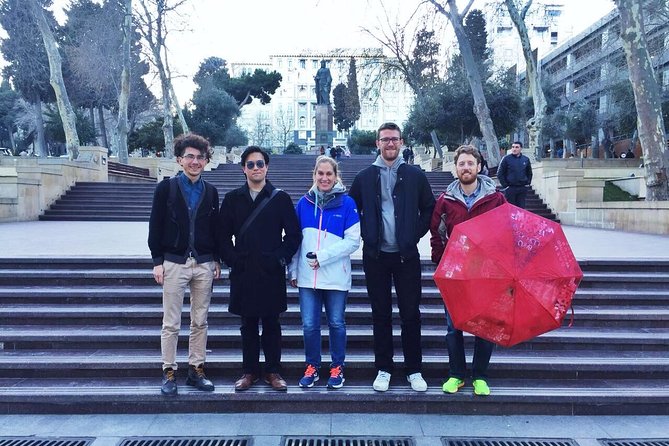
The route then shifts from medieval Baku to Istiglaliyyat Street, formerly known as Nikolayevskaya and Kommunisticheskaya. This was one of the main streets of imperial Russian Baku, and it shows how far the city expanded beyond the fortress.
Here the focus turns to urban change and the ambitions of oil barons. You will pass or discuss the Governor’s Garden, Baku City Hall, Philharmonic Hall, the Palace of Happiness, the Institute of Manuscripts, Ismailiyya Palace, the Literature Museum, and the statue of Nizami.
This section is where the tour earns its title. You are not only looking at old buildings. You are learning how oil money paid for grand civic spaces and personal memorials, and how Baku’s architecture drew from European styles while developing its own local identity.
The route is particularly useful for anyone interested in architecture. The buildings help explain the cosmopolitan character of boom-era Baku and the presence of different communities in the city. Your guide’s job is to connect the façades with the people and motives behind them.
Philharmonic Fountain and the Ali and Nino connection
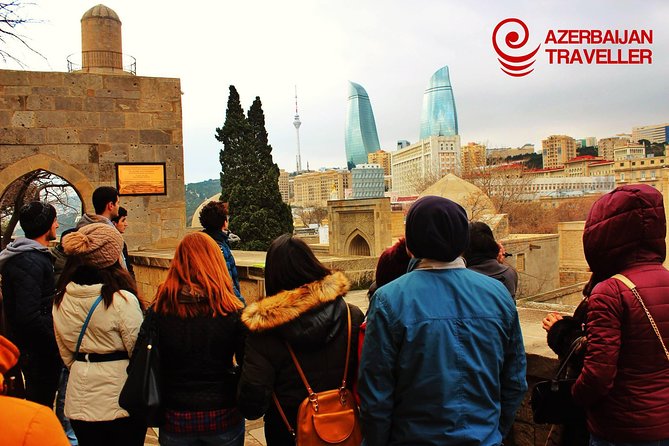
The Philharmonic Fountain marks one of the areas developed as Baku grew beyond its fortress walls. The garden provides a change of pace after the tight lanes of Icherisheher.
The guide links this place to Ali and Nino, the well-known novel set against the cultural and political changes of the Caucasus. The stop is short, about 10 minutes, so expect a story and orientation rather than a long literary discussion.
I like this connection because it gives the city a cultural voice. Baku’s past can feel like a list of dates and buildings unless you attach it to people, fiction, family stories, and changing ideas about identity. This stop helps do that.
Baku City Hall and the look of an oil boom
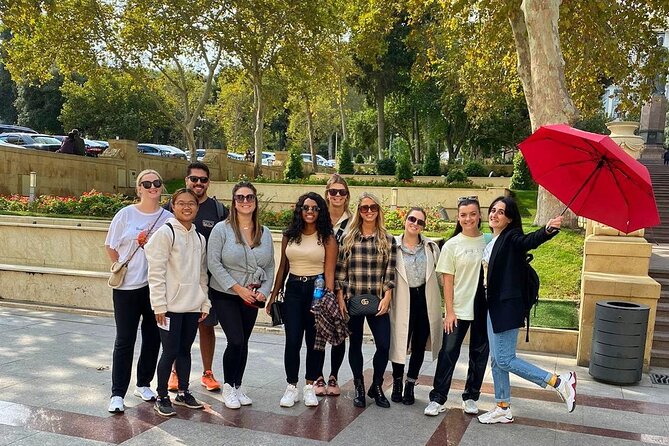
Baku City Hall is one of the clearest examples of the city’s oil-boom architecture. The building helps explain European design influences and the role of a cosmopolitan population in shaping Baku’s public image.
The guide discusses how oil wealth transformed the city and how builders used grand civic architecture to present Baku as a modern capital. The stop lasts about 10 minutes, which is enough to examine the exterior and ask questions.
There is no private transport included, but none is needed for this route. You move on foot between central sights. That keeps the connection between buildings clear and lets you see how the streets fit together rather than viewing each place as an isolated stop.
Saadet Sarayi and a personal oil-baron story
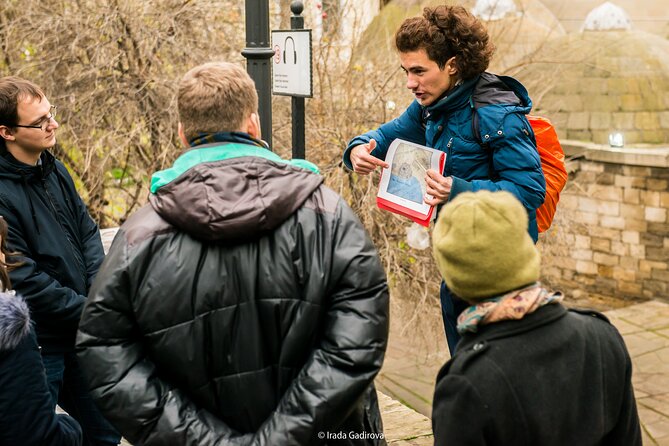
Saadet Sarayi, also called the Palace of Happiness, brings the oil boom down to a personal scale. The story centers on an oil baron and his wife, with the mansion later serving as a marriage registry.
That use gives the building a continuing place in city life. It is not only a relic of wealth. It remains tied to family celebrations and marriage, which makes the architecture feel less remote.
This is one of the better stops for people who prefer human stories to lists of construction dates. The guide explains how private wealth, romance, status, and public memory overlap in Baku.
The former Taghiyev School for Girls
The former Taghiyev School for Girls, now the Institute of Manuscripts of Azerbaijan, introduces education and social change. The story concerns the first secular school for Muslim women and the wider modernization of Baku and Azerbaijan.
This is a valuable counterweight to the palaces. Oil wealth did not only produce mansions and grand streets. It also helped fund new institutions and debates about education, public life, and the future of society.
The stop also connects to Azerbaijan’s first independence. You will not receive a full national history course in 10 minutes, but the guide uses the building to show how education and modernization fed into larger political changes.
Ismailiyya Palace and Venetian Gothic detail
Ismailiyya Palace is another powerful example of personal wealth turned into architecture. An oil baron commissioned the palace in memory of his son, and the building was designed in a Venetian Gothic style.
The emotional reason behind the commission matters. It shows how the city’s grandest structures could serve as family memorials as well as displays of money and influence.
The building is part of the exterior walking route, so you should not expect an interior tour. Still, the combination of design, family loss, and public history makes it one of the more memorable stops.
What the 2.5-hour pace feels like
The schedule gives most of the time to the Old City, followed by a series of short stops outside the walls. You should expect steady walking, frequent pauses, and plenty of explanation rather than long periods inside museums.
That pace works well for a first look at Baku. You can gather a mental map, learn which sights deserve a later visit, and ask about food, phrases, and other things to do. It is less suitable if you want slow photography, extensive monument interiors, or time to sit at each site.
Wear comfortable shoes and plan around the weather. The experience requires good weather and may be canceled if conditions are poor. Bottled water is included, while lunch, admission fees, and private transportation are not.
The tour can accommodate most participants, and service animals are allowed. It is near public transportation, which makes the central meeting point practical. Confirmation is provided at booking, and the stated maximum is 30 people.
Is $70 a fair price?
At $70 per person, this is not the cheapest way to walk through Baku. You are paying for a guide-led interpretation of the city, a private-tour format, and a route that combines several historical periods.
The value is strongest if you want to understand what you are seeing. Gani’s use of photos, humor, architectural detail, and political context is exactly the kind of added explanation that can make a short city visit more rewarding. The price is harder to justify if you mainly want a quick stroll and are comfortable reading about the sights on your own.
Admission fees are excluded, so budget separately if you want to return to the Maiden Tower, Shirvanshahs’ Palace, or another museum. Group discounts are available, which may improve the cost for families or larger parties.
Free cancellation is available up to 24 hours before the start time. Within 24 hours, you receive no refund. If poor weather or an insufficient number of participants cancels the activity, you are offered another date or a full refund.
Who should book this Baku walking tour?
I would choose this for a first day in Baku, especially if you want the city to make sense before visiting museums on your own. It suits history fans, architecture lovers, families with older children, and anyone curious about how oil wealth shaped daily life and public space.
The tour also works well for people who prefer conversation over a recorded audio guide. The strongest guide feedback centers on clear explanations, humor, patience, and the ability to answer detailed questions. Children aged 10 and 12 are specifically described as enjoying the experience, so the storytelling can work for families.
You may want another option if your main goal is entering every major sight. The Maiden Tower and Shirvanshahs’ Palace are explained from outside, and there is no lunch or transport included.
Should you book it?
Book it if you want a lively, well-organized introduction to Baku’s Old City and oil heritage, especially at the beginning of your stay. The combination of fortress streets, oil-baron palaces, women’s education, literature, and Soviet-era context gives you a useful framework for the rest of the city.
I would skip it only if $70 feels too high for a walking orientation or if you want extensive interior visits. For most visitors who value a strong guide, historic photos, personal stories, and a clear route through Baku’s complicated past, it is a sound way to spend two and a half hours.
FAQ
How long does the Baku Oil Heritage and Old Town Walking Tour last?
The tour lasts approximately 2 hours and 30 minutes.
Where does the tour start?
It starts at KFC9RCP+28F on Nizami Street in Baku, near Fountain Square.
Where does the tour end?
The walk ends back at Fountain Square, the same central area where it begins.
Is the tour private?
The experience is described as a private tour with a personal guide and undivided attention. The provided information also lists a maximum of 30 participants, so confirm the arrangement if you are booking for a larger party.
Does the tour enter the Maiden Tower?
No. The guide explains the Maiden Tower at the entrance, but admission is not included.
Does the tour enter Shirvanshahs’ Palace?
No. The palace is explained from outside, and admission is not included.
What is included in the price?
Bottled water is included. Lunch, private transportation, and admission fees are not included.
Is the tour suitable for most participants?
Yes. Most people can participate, and service animals are allowed. The route is near public transportation.
What happens if the weather is poor?
The experience requires good weather. If it is canceled because of poor weather, you are offered a different date or a full refund.
Newest history tours we have reviewed in the world
- Enjoy Ancient Mostar★ 4.0 · 45 reviews
- Private Dublin Historical and Heritage Tour by Bike★ 5.0 · 30 reviews
- Dubrovnik by Night, History, Wine & Bites★ 5.0 · 41 reviews
- Historical Walking Tour of Dublin★ 5.0 · 50 reviews
- DayTripper Dublin: A Guided City Walking Tour★ 5.0 · 90 reviews
- Ancient Old City– Finest tour of Dubrovnik★ 5.0 · 64 reviews
- Dublin LGBTQ Pride Historical and Cultural Walking Tour★ 5.0 · 91 reviews
- Interactive Living History in Dalkey Castle near Dublin City★ 5.0 · 133 reviews
Old Town & Historic Centre Walks, compared.
Madrid Essential: Historic Center, Plaza Mayor & Royal Palace
Read our review →
Live Fado Show with Port Wine in Historic Center
Read our review →
Valencia Old Town Tour with Wine & Tapas in 11th Century Historic Monument
Read our review →
Prague Old Town, Medieval Underground and Dungeon Historical Tour
Read our review →
Cartagena: Historic Center and Getsemaní Shared Walking Tour
Read our review →
Old Town Walking Tour History and Tales in Edinburgh
Read our review →
Philadelphia Old City Historic Walking Tour with 10+ Top Sites
Read our review →Browse the lists this tour appears in