
Review · NEW ORLEANS HISTORY TOURS
New Orleans: French Quarter Food History Walking Tour
New Orleans food makes the past edible, and this three-hour walk puts that idea to work. You’ll cross the French Quarter from Chartres Street to Toulouse Street, stopping for gumbo, hot sauces, pralines, catfish po-boy, muffuletta, boudin balls, red beans and rice, and banana bread pudding.
I like the wide food range, which lets you compare two famous New Orleans sandwiches in one outing. I also like the way guides such as Beth, Gary, John, Meg, and Kat connect each dish with the people, trade, migration, and traditions that shaped the city.
The main catch is dietary flexibility. A vegetarian menu is available by request, but there is no vegan, gluten-free, or dairy-free version, and the set tastings may include seafood or alligator. At $85, this is good value if you arrive hungry and want both a meal and a history lesson, but it is less appealing if you plan to skip several dishes.
Key points to know before you book
- Three hours and up to nine tastings: Portions add up, so eat lightly beforehand.
- Both signature sandwiches: You’ll sample a muffuletta and a po-boy, two very different New Orleans classics.
- History with every stop: Guides explain how local food connects to Creole, Cajun, and New Orleans culture.
- Small-group feel: The tour is designed for up to nine food tastings, with walking between stops rather than one long restaurant meal.
- Vegetarian option available: Request it at checkout for dishes such as black-eyed pea soup, vegetable jambalaya, and a Portobello po-boy.
- Rain or shine: Wear comfortable shoes and be ready for heat, humidity, or wet weather.
Starting with gumbo inside 3rd Block Depot
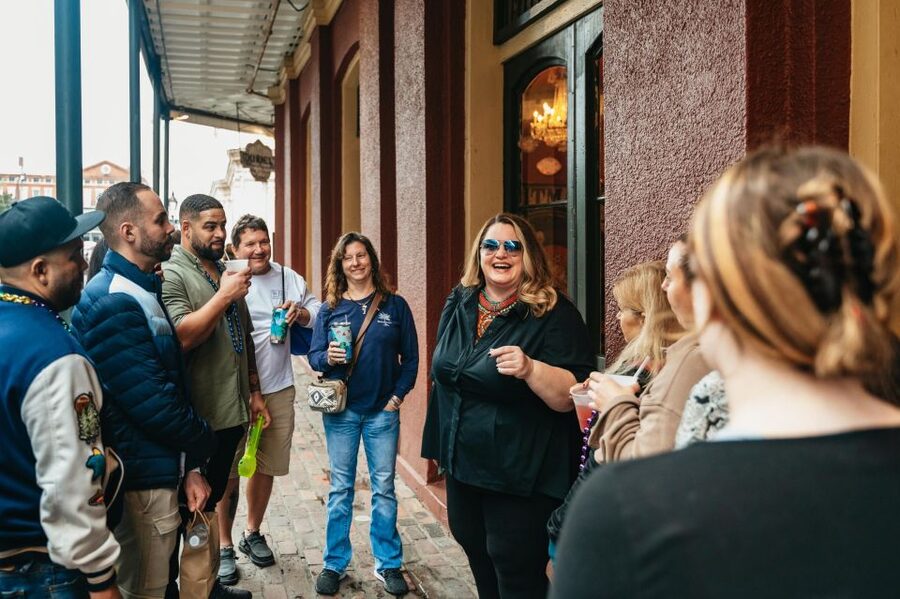
Meet your guide inside 3rd Block Depot at 316 Chartres Street. This is not just a place to gather before the tour. It is your first food stop, where you begin with rustic Cajun-style gumbo served with warm potato salad.
That pairing gives you a useful first taste of Louisiana cooking. Gumbo is often discussed as a single dish, but recipes vary widely. Here, the warm potato salad adds a creamy, comforting contrast to the seasoned stew. Your guide uses the first tasting to set up the larger story of New Orleans food, including the overlap between Cajun and Creole cooking.
The opening stop also matters for timing. You are not asked to wait through a long introduction before eating. The food and the city background begin together, which is one reason this tour works well early in your New Orleans visit.
The first restaurant can be noisy. One person specifically found the staff here distracting while the guide was speaking, so stay close to your guide and do not hesitate to ask for a point to be repeated. Guides such as Beth, Gary, John, and the guide nicknamed Professor are praised for explaining the city in a clear, lively way rather than turning the tour into a dry lecture.
More History Walking Tours in New Orleans
- New Orleans Garden District History Walking Tour
★ 5.0 · 2,879 reviews - French Quarter Historical Sights and Stories Walking Tour
★ 5.0 · 2,724 reviews - New Orleans Food and History Walking Tour
★ 5.0 · 1,544 reviews
A short French Quarter walk with a useful sense of place
After the first tasting, you walk about five minutes to the next stop. The route crosses the Vieux Carré, the old square that gives the French Quarter its name.
This is a food tour, not a full architectural walk, but the movement between restaurants gives you a better feel for the district than sitting in one dining room. You will hear stories as you go, then see the streets where the city’s food culture developed.
The walking is spread across the three-hour schedule. The listed sections include walks of roughly five and ten minutes, followed by tastings that last from about 20 to 45 minutes. That rhythm helps the food settle, but you should still wear shoes you can comfortably use on historic city streets.
The tour is described as wheelchair accessible, though it is also listed as unsuitable for people with mobility impairments. If you need specific assistance, confirm the route and stop access before booking. The activity runs rain or shine, so a light rain layer and water are sensible choices. Water is included, but soft drinks and alcohol are not.
Hot sauce, pralines, and the sweeter side of Creole cooking
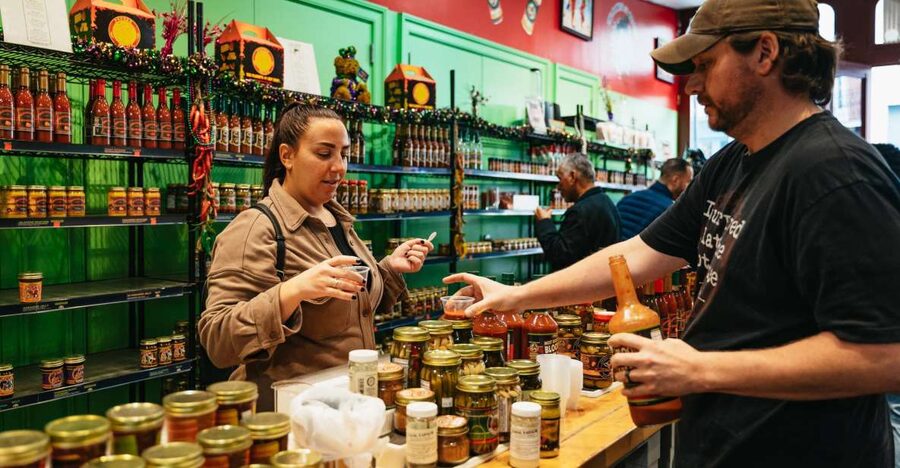
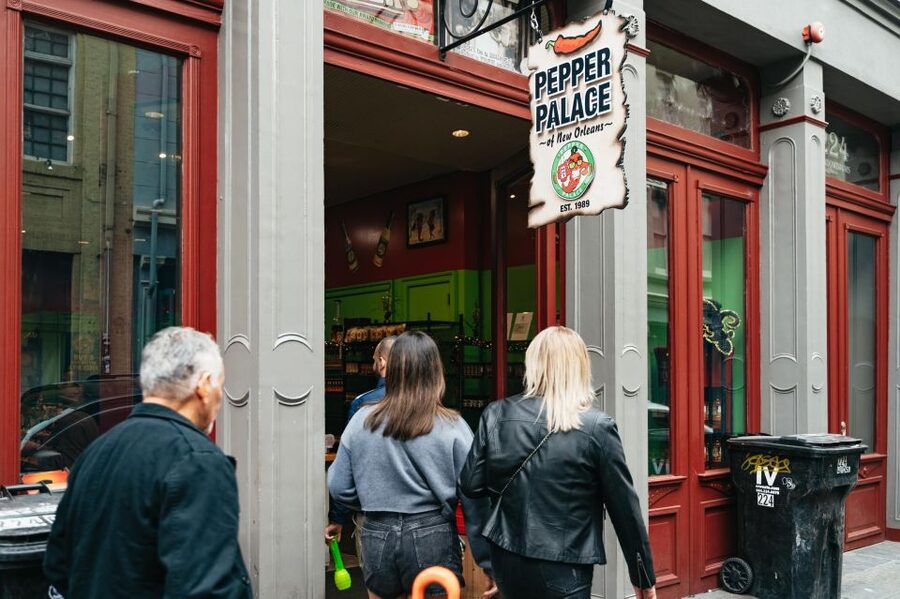
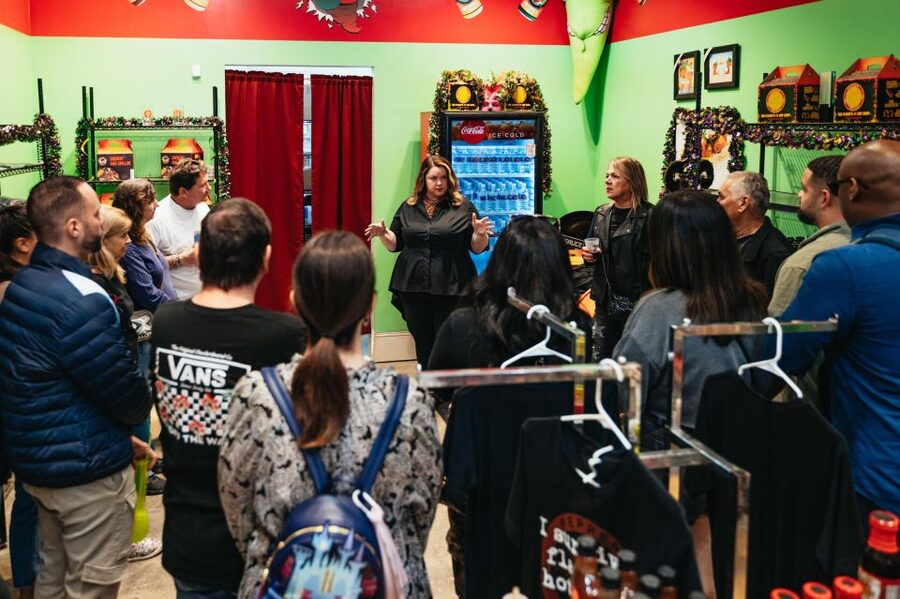
One stop takes you to a hot sauce bar where you can sample dozens of fiery varieties. This is a fun change of pace from sit-down food, but take the tasting slowly. The sauces vary in heat, and one participant learned the hard way that a particularly spicy sample may call for milk rather than bravado.
The hot sauce stop shows how condiments can be part of the local food identity, not just an extra squirt on a plate. You can compare flavors and heat levels while your guide explains how seasoning shapes Louisiana cooking.
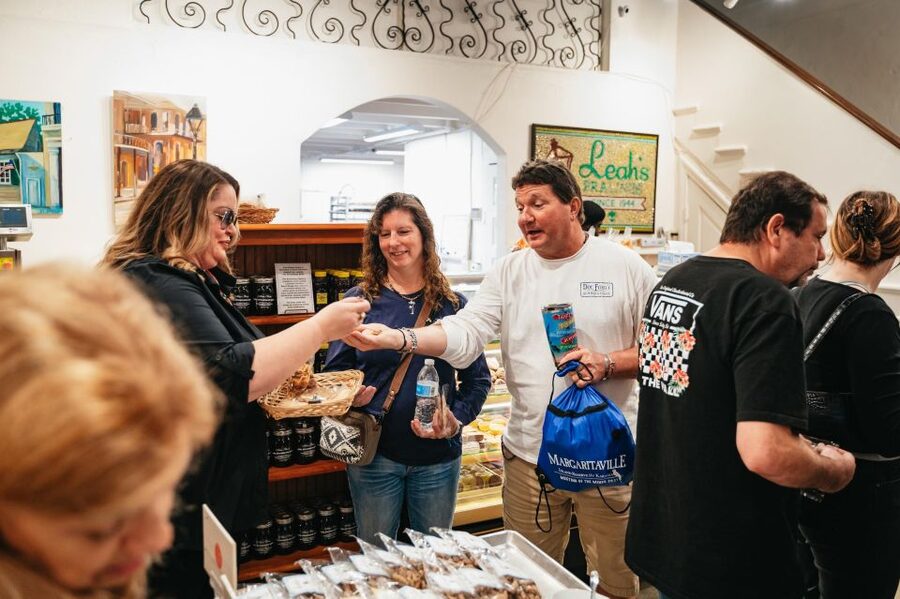
Next comes Leah’s Pralines, where you taste a traditional Creole praline or the newer bacon pecan brittle. This stop adds texture and sweetness to a route that otherwise leans toward stews, fried seafood, and meat.
I like this contrast because it keeps the tour from treating New Orleans food as one long parade of heavy dishes. You get a quick look at candy-making and a reminder that pecans, sugar, and local sweets have their own place in the city’s culinary story.
The candy stop may also be a better fit for someone who is cautious about seafood or spicy food, although it does not replace the savory tastings. The overall menu is fixed enough that you should tell the operator about genuine food allergies when booking. The provider asks you not to treat ordinary dislikes as allergy notices, so be clear and specific.
The po-boy and the muffuletta show two sides of New Orleans
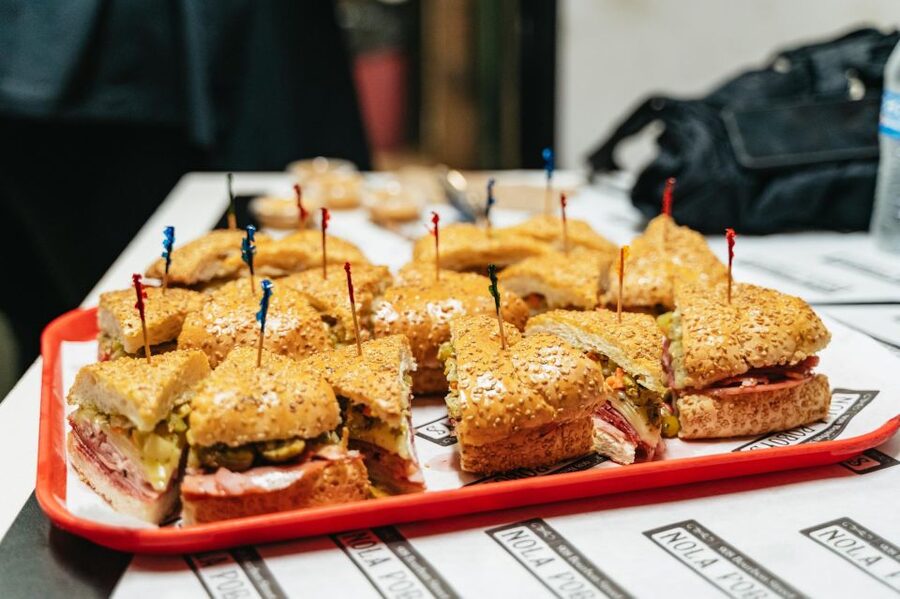
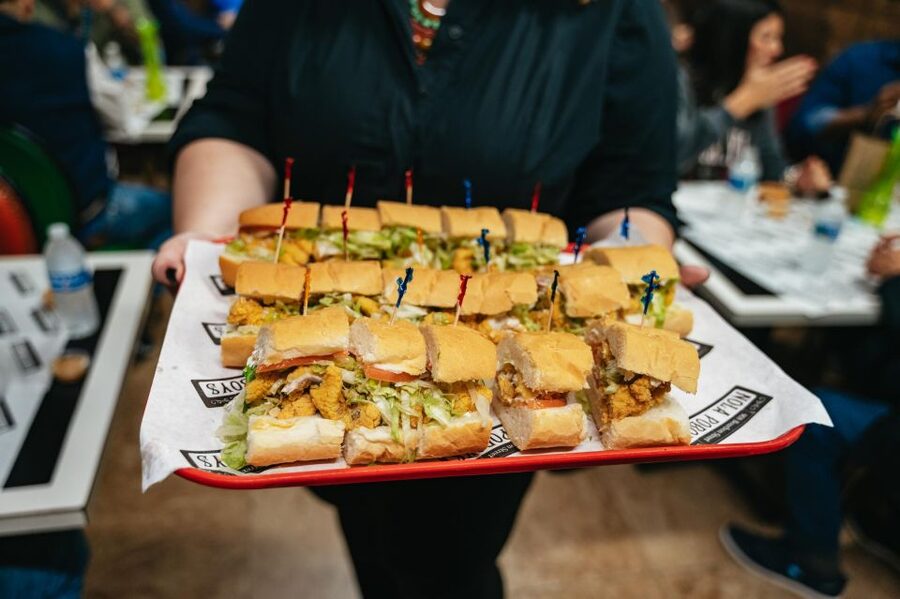
At NOLA Poboys, you learn about Louisiana’s seafood tradition before tasting a freshly fried catfish po-boy. The po-boy is usually the more immediately familiar of the two sandwiches, with fried fish, bread, and toppings creating a crisp, filling bite.
This is one of the more substantial samples, so do not fill up on breakfast. The route is designed to function almost like a progressive lunch, and several people found the portions large enough to leave them full at the end.
The next sandwich is the muffuletta, a New Orleans original with a heavier, meatier profile. Tasting both in one tour is useful because they represent different sides of the city’s food culture. The po-boy points toward seafood and fried-food traditions, while the muffuletta offers a denser sandwich built around cured meats and the characteristic New Orleans style of preparation.
The stop also gives your guide a natural chance to explain how food traditions came from many communities and became local. The best guides do not simply name ingredients. They connect the dish to the city’s people and past, which is what turns a series of samples into a food-history tour.
There is one limitation here. If you do not eat seafood, the standard menu may be difficult. One person skipped food because of seafood and alligator concerns, despite enjoying the historical portion. The vegetarian menu includes a Portobello po-boy, but you must request that option in advance.
More History Walking Tours in the USA
- New Orleans Cocktail History Walking Tour in the French Quarter
★ 5.0 · 604 reviews - New Orleans Jazz History and Music Walking Tour
★ 4.5 · 477 reviews - New Orleans Historic Cemetery Walking Tour
★ 5.0 · 175 reviews - New Orleans: Drunk History Walking Tour
★ 4.2 · 165 reviews
Boudin balls and red beans and rice bring the meal inland
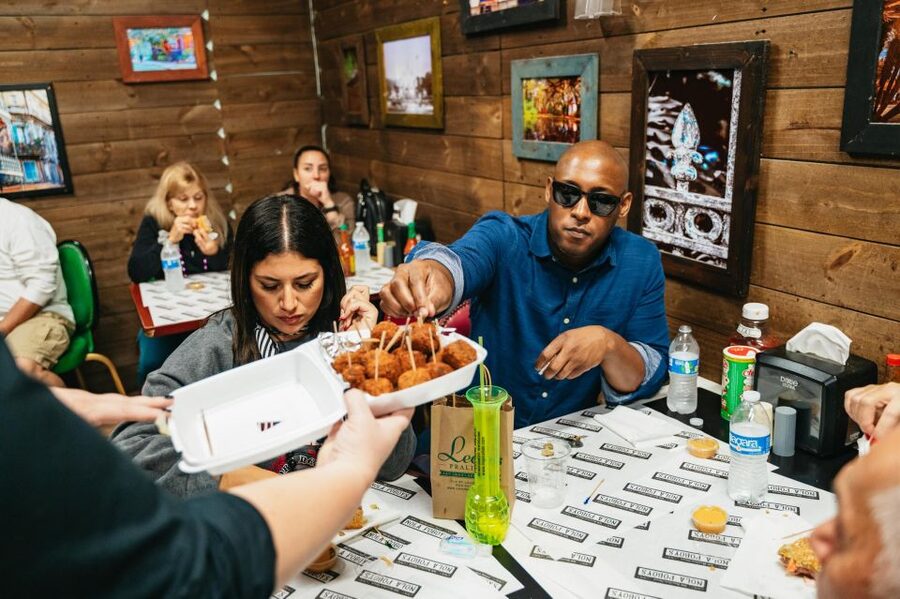
Boudin balls follow the sandwich stops. They give you another way to taste Louisiana seasoning and sausage-making traditions in a compact, fried form.
The food comes quickly in small servings, but this is not a light snack circuit. Gumbo, po-boy, muffuletta, boudin, red beans and rice, candy, and dessert can add up to a full meal. I would schedule this tour when you can keep the rest of your day flexible rather than planning another major lunch immediately afterward.
At Creole Cookery, you sample red beans and rice. This is one of the dishes that can look simple on the plate but carries plenty of cultural meaning. The combination is filling, familiar, and very different from the fried seafood earlier in the walk.
Several guides use this stop to explain how everyday dishes became part of New Orleans identity. One person’s favorite sample was the red beans and rice, while others singled out the gumbo. That difference is a good sign for a tasting tour: the food covers enough ground that you can discover your own favorite instead of being pushed toward one showpiece dish.
The meal also has a practical benefit for first-time visitors. You may know that you want to try New Orleans food, but not know how to order a full meal built around unfamiliar dishes. Small tastings let you sample the classics without committing to a large plate of something you may not enjoy.
Finishing with banana bread pudding
The final food stop is dessert, with bananas Foster bread pudding. It is a warm, sweet finish after several savory courses, and it gives the tour a clear ending rather than leaving you with one last salty bite.
Dessert also helps explain why people repeatedly describe the tour as filling. Portions are not presented as a formal nine-course meal, but the number of stops is high enough that you should arrive hungry. The practical advice is simple: have a modest breakfast, bring water, and avoid scheduling the tour right after a big lunch.
The listed schedule gives the final guided food section about 45 minutes, longer than some earlier stops. That leaves room for the guide to tie together the dishes, the French Quarter, and the city’s food traditions without rushing you from one counter to the next.
The tour finishes on Toulouse Street near the end of the French Quarter. You do not return to the starting restaurant, so think of it as a useful one-way introduction to the area. You can continue exploring nearby on foot, though no hotel pickup or drop-off is included.
What the guides add to the experience
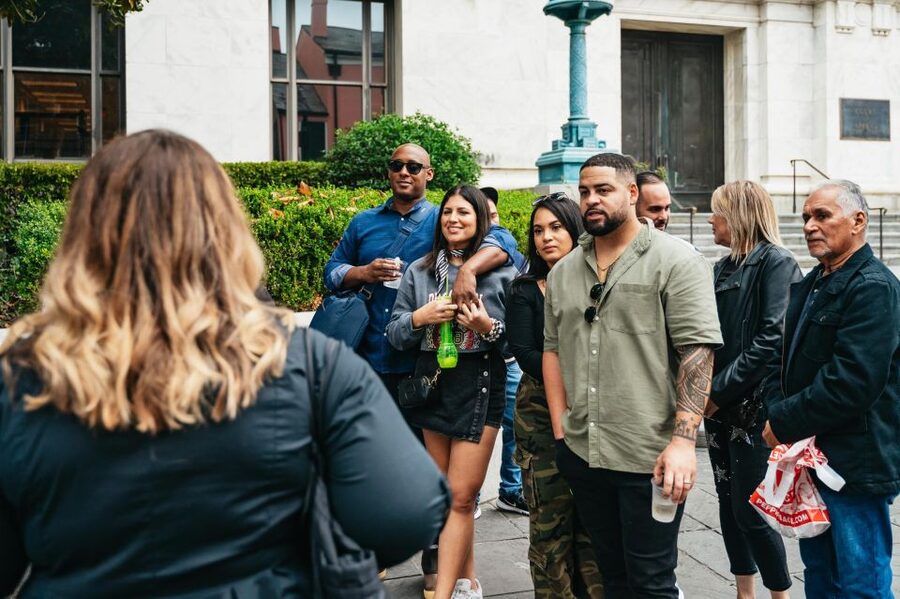
The strongest part of this tour is the guide. Beth is repeatedly praised for mixing local history, personal warmth, and good timing. Gary is noted for connecting food with the broader story of New Orleans. John, often called Professor, brings an easy teaching style, while Meg and Kat are described as friendly, energetic, and approachable.
The guide matters because the food samples alone would not justify the full price for everyone. You can find gumbo, po-boys, pralines, and red beans and rice elsewhere in the French Quarter. What you are paying for is the route, the organization, the explanation, and the chance to taste several staples without planning each stop yourself.
The best guides also adjust their style to the group. One person appreciated that the guide remained engaging even with a quiet group. Another liked the steady pace and the willingness to answer questions. That is useful if you prefer a conversational tour over a loud performance.
You should still expect a group activity, not a private food crawl. With up to nine tastings and multiple restaurant stops, the guide must keep everyone moving. A small issue at one venue, such as staff noise, can affect how easily you hear the explanation. Staying near the guide helps.
Is $85 a fair price?
At $85 per person, this is not a bargain snack walk. It becomes better value when you count the number of food samples, the three hours of guiding, the walking route, and the tips to servers and waitstaff included in the price.
The food may amount to a full lunch or early dinner, depending on portion sizes and your appetite. Water is included, but you pay separately for alcoholic drinks and soft drinks. Most stops have bars, so you can add a beverage if you want, but that raises the final cost.
I would compare this tour with the price of ordering several separate dishes in the French Quarter. You would need to choose the restaurants, manage the timing, pay for full portions, and miss the guide’s explanations. If you want only one famous sandwich, $85 is too much. If you want a structured introduction to many local dishes and the stories behind them, the price is easier to justify.
The strongest value comes when you book it near the start of your stay. You can use the guide’s food suggestions and local knowledge to shape later meals. Several people wished they had done it earlier, and that advice makes sense: the tour gives you a map of what to look for during the rest of your visit.
Who should book this French Quarter food walk?
I would recommend it to first-time visitors who want a broad introduction to New Orleans cooking without spending days researching restaurants. It suits curious eaters, couples, families with older children, and anyone who enjoys local history delivered in a relaxed way.
It is also a good choice if you want a mix of seated restaurant tastings, shop visits, and street-food-style stops. The route does not trap you at one table, and the short walks help break up the eating.
Vegetarians can take part if they request the alternate menu at checkout. That menu includes black-eyed pea soup, vegetable jambalaya, a Portobello po-boy, and other versions of Southern classics. Pescatarians may also find the menu workable, but you should still ask about the exact dishes available on your date.
I would skip it if you are vegan, gluten intolerant, dairy free, or unwilling to eat seafood, meat, or dishes with a fixed preparation. The provider specifically says there is no vegan, gluten-free, or dairy-free option. Also skip it if you want a private, highly customized food itinerary or dislike walking in uncertain weather.
Practical details that affect your day
The experience lasts three hours and is conducted in English. Start times vary, so check availability when booking. You meet inside 3rd Block Depot at 316 Chartres Street and finish on Toulouse Street.
Cancellation is free up to 24 hours before the tour, and you can reserve now and pay later. Those terms help if your New Orleans schedule is still taking shape, but they do not change the dietary limits or rain-or-shine policy.
Tell the operator about food allergies when you book. Do not assume that a dish can be changed at the last minute, especially when the tour moves through several restaurants. Bring a little patience for busy dining rooms, comfortable walking shoes, and an appetite.
Should you book it?
Book this tour if you want the French Quarter explained through food rather than only through buildings and landmarks. The combination of gumbo, hot sauce, pralines, po-boy, muffuletta, boudin, red beans and rice, and dessert gives you a strong first taste of New Orleans, while guides such as Beth, Gary, John, and Meg add the local context that makes each stop matter.
At $85, it is best viewed as a guided progressive meal and cultural introduction, not a cheap tasting sampler. If you can eat the standard menu, arrive hungry, and book early in your stay, I think it is a smart use of three hours. If your diet is restrictive or you plan to skip several signature dishes, spend your money elsewhere.
FAQ
How long does the New Orleans French Quarter food tour last?
The tour lasts three hours, including guided walks and food tastings between the stops.
Where does the tour begin and end?
You meet your guide inside 3rd Block Depot at 316 Chartres Street. The tour finishes on Toulouse Street in New Orleans.
What food is included?
Samples may include Cajun-style gumbo with warm potato salad, hot sauces, a praline or bacon pecan brittle, catfish po-boy, muffuletta, boudin balls, red beans and rice, and banana Foster bread pudding. The activity information describes up to eight included samples and up to nine food tastings, so the exact count may vary.
Is there a vegetarian option?
Yes. Request the vegetarian option at checkout. It can include black-eyed pea soup, vegetable jambalaya, a Portobello po-boy, and other meat-free versions of Southern classics.
Does the tour offer vegan, gluten-free, or dairy-free food?
No. The provider states that vegan, gluten-free, and dairy-free options are not available.
Are drinks included?
Water is included. Alcoholic drinks and soft drinks cost extra, though most restaurant stops have bars where you can buy a beverage.
Newest history tours we have reviewed in New Orleans
- New Orleans: 1.5-Hour Voodoo History Evening Tour★ 4.5 · 34 reviews
- New Orleans: Wicked History Walking Tour with a Local Witch★ 4.3 · 29 reviews
- New Orleans: Swamp Boat Ride and Historic Plantation Tour★ 4.7 · 303 reviews
- New Orleans: Tremé African American & Creole History Tour★ 4.9 · 208 reviews
- New Orleans: Garden District Food, Drinks & History Tour★ 4.9 · 97 reviews
- New Orleans: French Quarter Saints & Sinners History Tour★ 4.6 · 56 reviews
- New Orleans: Drunk History Walking Tour★ 4.2 · 165 reviews
- New Orleans, French Quarter: Pirate History Walking Tour★ 5.0 · 45 reviews
History Walking Tours, compared.
History and Hauntings of Salem Guided Walking Tour
Read our review →

Freedom Trail History Small Group Walking Tour
Read our review →
Historic Charleston Guided Sightseeing Walking Tour
Read our review →
Tapas Walking Tour with Food, Wine, and History
Read our review →
Savannah History and Haunts Candlelit Ghost Walking Tour
Read our review →
A History of Terror – Belfast City Centre Walking Tour
Read our review →Browse the lists this tour appears in