
Review · NEW ORLEANS HISTORY TOURS
French Quarter Historical Sights and Stories Walking Tour
New Orleans history is packed into a few blocks, and this tour shows you how to read it. You’ll move from the French Market to St. Louis Cathedral, Jackson Square, Royal Street, and the Mississippi River while your guide connects architecture, religion, food, politics, and daily life.
I like the small-group limit of 12 and the practical advice built into the walk. Guides such as Scott, Tim, Libby, Renee, Lesley, and Yvonne are praised for clear storytelling and useful dining and sightseeing tips. The main consideration is pace: two hours gives you a strong introduction, but not every corner of the Quarter.
Key points at a glance
- Six central stops: The route covers the French Quarter, French Market, St. Louis Cathedral, the Mississippi River, Royal Street, and Jackson Square.
- A useful first-day tour: Your guide can help you understand the area and suggest places to visit and eat later in your stay.
- Small group format: The stated maximum is 12 people, making it easier to hear the guide and ask questions.
- Architecture with context: You’ll learn how French, Spanish, American, and Caribbean influences shaped the neighborhood.
- Two hours on foot: Expect a steady walk through the historic center, with no meals or hotel transportation included.
- Weather matters: The tour runs in all weather, so bring water and wear comfortable walking shoes.
Why this French Quarter walk is worth your time
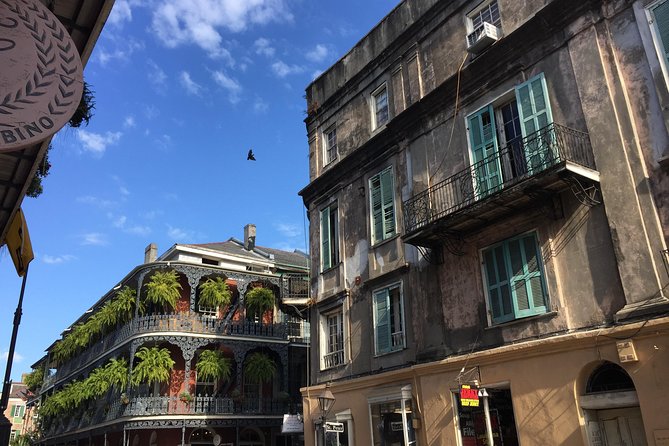
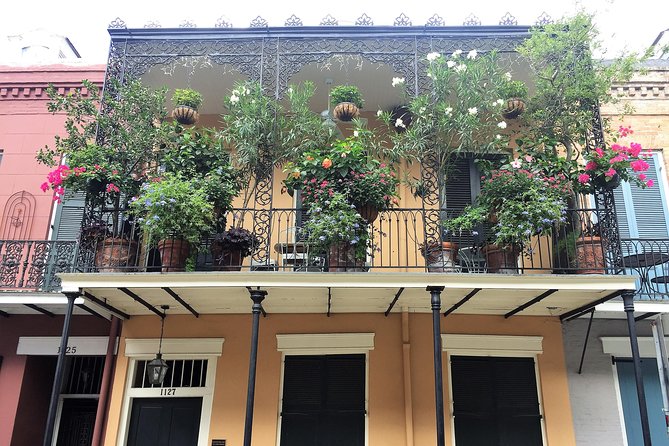
The French Quarter can look simple at first: iron balconies, old courtyards, colorful facades, music spilling from doorways, and crowds moving along Bourbon and Royal streets. But the details make more sense once someone explains who built these places, how the neighborhood changed, and why New Orleans still feels different from other American cities.
That is the real value of this walk. You are not paying for admission to a monument. The sights are free. You are paying for the connections between them, plus the stories you would probably miss while wandering on your own.
The tour costs $35 per person, which is a fair price for a two-hour guided walk with a maximum group size of 12. It is especially good value if this is your first visit or if you want a better grasp of the Quarter before choosing restaurants, shops, museums, or later excursions.
I would schedule it early in your New Orleans stay. You can use the guide’s suggestions for the rest of your trip, and the walk gives you a practical sense of where Jackson Square, the riverfront, the French Market, and Royal Street sit in relation to one another.
More History Walking Tours in New Orleans
- New Orleans Garden District History Walking Tour
★ 5.0 · 2,879 reviews - New Orleans Food and History Walking Tour
★ 5.0 · 1,544 reviews - New Orleans Cocktail History Walking Tour in the French Quarter
★ 5.0 · 604 reviews
Starting near Dumaine Street
The walk begins at the listed meeting point near 400 Dumaine Street in the French Quarter. Check your confirmation carefully for the exact meeting instructions, then arrive ready to walk rather than expecting a vehicle or hotel pickup.
The start is close to major French Quarter sights and public transportation. Since the tour ends at Jackson Square, you will finish in one of the most useful places in the district, with plenty of nearby streets to continue exploring on your own.
You receive a mobile ticket, and the tour is offered in English. Three daily departure times give you some flexibility, although the supplied details do not list the exact hours. Pick a time that fits the weather and your energy. New Orleans heat can make even a short walk feel longer, especially when the pavement and sun build up.
The French Quarter: reading the oldest neighborhood
The first portion introduces the French Quarter and its many layers. This is where the guide helps you look beyond attractive buildings and understand the neighborhood as a meeting place shaped by French, Spanish, American, and Caribbean forces.
Architecture is a major part of the experience. You might hear about the district’s balconies, courtyards, building styles, and the way design reflects different periods of New Orleans life. One of the strongest parts of the tour is learning that architecture is not just decoration. It can point to climate, culture, wealth, religion, and the people who lived behind the facades.
The first stop is listed at about 30 minutes. That gives your guide time to set the scene without rushing immediately from one photo stop to the next.
The tradeoff is that a walking tour cannot enter every building or cover every street. You are mainly seeing the Quarter from public spaces, with the guide adding the meaning. If you want a long look inside historic homes or museums, plan those separately.
The French Market and stories from daily life
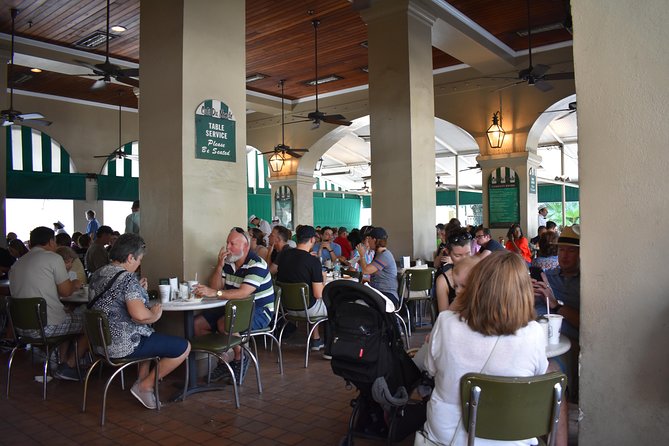
The French Market adds a different mood. Rather than treating the Quarter as a row of historic buildings, the guide places it in the context of buying, selling, eating, and gathering.
The stop lasts about 15 minutes. That is enough for an overview, but you should not expect a full food tour or time to browse every stall. Food and drinks are not included, so bring money if you want to purchase something during or after the walk.
This is also a good point to ask practical questions. Guides are encouraged to share suggestions for dining and shopping, and the strongest feedback about this tour repeatedly points to that local advice. You may leave with a better idea of where to return later, rather than trying to choose a restaurant at random.
More History Walking Tours in the USA
- History and Hauntings of Salem Guided Walking Tour
★ 5.0 · 14,564 reviews - Boston: Freedom Trail History Small Group Walking Tour
★ 5.0 · 6,450 reviews - Historic Charleston Guided Sightseeing Walking Tour
★ 5.0 · 6,216 reviews - Savannah History and Haunts Candlelit Ghost Walking Tour
★ 5.0 · 3,235 reviews
St. Louis Cathedral and the city’s spiritual story
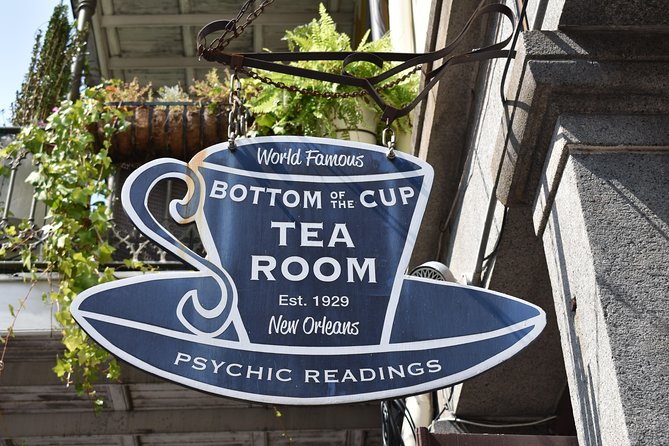
The stop at St. Louis Cathedral lasts about 15 minutes. This late-18th-century basilica has witnessed major moments in New Orleans history, and it gives the guide a natural opening to discuss religion, power, community life, and the city’s changing identity.
The cathedral sits beside Jackson Square, so this part of the route connects naturally with the final stop. You will learn from the outside as part of the walking tour. The supplied details do not promise interior admission, a service visit, or special access, so treat this as a guided exterior visit unless your guide tells you otherwise.
I like this part because it keeps the history from becoming only a story about buildings. The cathedral helps show how faith and public life were closely linked in the old city. If religious history is not your main interest, the guide also brings in wider stories about New Orleans culture.
The Mississippi River and the city’s constant challenge

The riverfront stop takes about 15 minutes. The Mississippi gave New Orleans its reason for being, helping the city grow through trade and transport, while also creating a constant fight against water and flooding.
You get a broad view of the river’s importance rather than a long waterfront walk. The stop is brief, but it gives useful physical context. After hearing about the city’s buildings and people, you see the natural force that helped shape its location and fortunes.
This is one of the less decorative parts of the route, but it matters. The French Quarter makes more sense when you understand its relationship with the river. Bring water for yourself, not just for the view. The tour operates in all weather, and there may be little relief from heat during outdoor stops.
Royal Street: shops, performers, and local recommendations
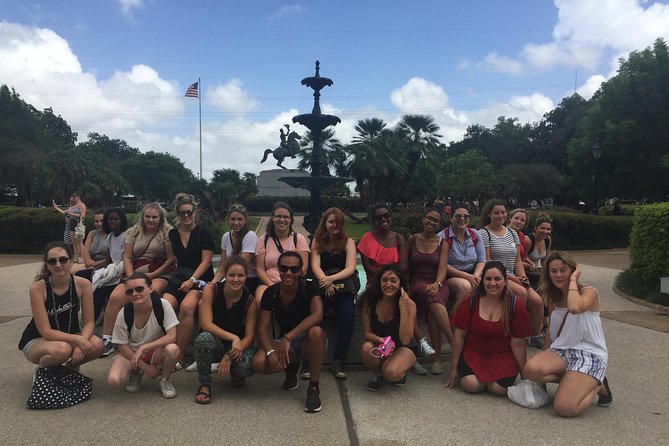
Royal Street receives about 30 minutes, making it one of the longer stops. It is known for shopping, street performers, restaurants, and historic buildings, so it gives the tour a chance to connect the old Quarter with its present-day life.
This is where the walk can feel most useful for planning the rest of your stay. You can ask about places to eat, streets worth returning to, and how to spend time in the district without simply following the busiest crowd.
The guide may also bring in local politics and current city issues. That sounds like a small detail, but it adds personality. New Orleans is not only a preserved historic setting. It is a living city with arguments, decisions, humor, and changing priorities.
Royal Street can also be one of the more crowded sections of the route. Stay close enough to hear, and do not assume you can stop for serious shopping while the group is moving. Save purchases for after the tour unless your guide gives you time.
Jackson Square, where the tour ends
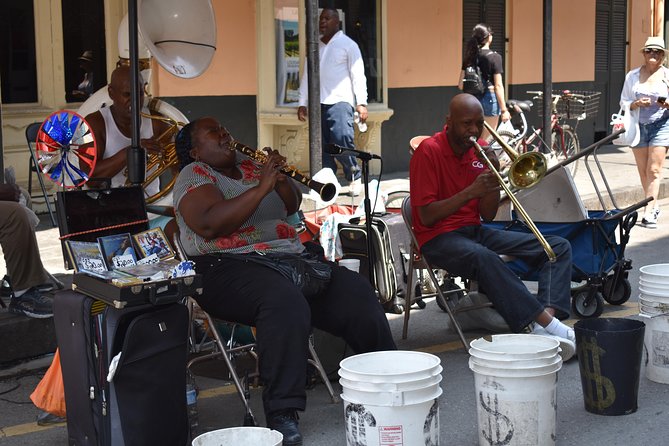
The final stop is Jackson Square, the heart of the French Quarter. The listed visit lasts about 15 minutes, and the tour ends at 701 Decatur Street in the square.
This is a fitting finish because the square brings many of the tour’s themes together. French and Spanish roots, American identity, Caribbean influence, architecture, religion, public art, and street life all meet here.
Since the tour ends in the square, you are well placed to continue on foot. You can return to the cathedral, explore nearby streets, visit places you noticed earlier, or use the guide’s recommendations for food and shopping.
The ending is also practical for people with limited time. There is no return transfer to arrange. You simply finish in the center of the neighborhood, although hotel pickup and drop-off are not included.
The guides and the style of storytelling
The guide can make or break a history walk, and this experience has a strong record in that area. Guides named in the feedback include Scott, Tim, Libby, Renee, Lesley, and Yvonne.
Their shared strengths are clear speaking, humor, local knowledge, and a willingness to answer questions. Scott is repeatedly described as engaging and helpful before and after the tour. Tim is praised for friendly storytelling and a strong grasp of local history. Libby is described as passionate and well versed in the people, culture, and past of New Orleans.
That does not mean every guide will use the same script or tell every story in the same way. It is better to expect a guide-led conversation than a theatrical performance. The experience seems strongest for people who ask questions and enjoy connections between the past and present.
One useful detail is the variety of subjects covered. The walk can move from architecture to religion, food, music, local politics, and city culture. That range keeps the two hours from feeling like a list of dates and building names.
What the small group means for you
The maximum group size is 12. That is a real advantage in a city where large walking groups can block sidewalks and make it hard to hear.
A smaller group also gives you more room to ask about a building, a restaurant, or a detail that catches your eye. It helps the guide adjust the conversation to the group instead of simply speaking over a crowd.
You should still expect a public-city walk, not a private tour. The French Quarter can be noisy, crowded, and active. The smaller size improves the experience, but it cannot remove the sounds and movement of the neighborhood.
Comfort, weather, and practical planning
Wear comfortable walking shoes. This is not a tour for stiff footwear or a packed schedule that leaves no room to pause afterward.
Bring water, especially in warmer months. The tour runs in all weather, so check the forecast and dress for heat, rain, or cooler conditions. The details say most people can participate, and service animals are allowed.
Food and drinks are not included. Hotel pickup and drop-off are also not included, but the meeting and ending points are in the French Quarter and near public transportation.
The tour is offered in English only. Confirmation is provided at booking, and cancellation is allowed up to 24 hours before the experience for a full refund.
Who should book this tour?
I would choose this walk if you are visiting New Orleans for the first time, bringing children who need a clear introduction, or returning after several years and want to see the Quarter with fresh eyes.
It also suits solo visitors. The small group makes it easier to hear the guide and ask questions without feeling lost in a large crowd. Couples and families who enjoy history, architecture, food, and local stories should find plenty to hold their interest.
Repeat visitors can benefit too. The route may cover familiar streets, but a guide can point out details you passed before and explain why the buildings and public spaces matter.
You may want something else if you dislike walking, need a very slow pace, or want extensive interior visits. One two-hour route cannot cover every street, building, or subject in the French Quarter. Think of it as a strong orientation and story-filled overview, not a complete survey of New Orleans.
Should you book the French Quarter Historical Sights and Stories Walking Tour?
For $35, this is a sensible way to begin a New Orleans visit. You get a professional guide, a focused two-hour route, six important stops, and the benefit of a small group rather than a large crowd.
Book it early if you want restaurant and sightseeing ideas for later. Bring water, wear good shoes, and accept that the route covers selected parts of the Quarter rather than every possible sight.
I would book it if you want the French Quarter to make more sense than it would from a self-guided stroll. Skip it only if you already know the district well and prefer to explore without a set route.
FAQ
How long is the French Quarter Historical Sights and Stories Walking Tour?
The tour lasts approximately two hours.
How much does the tour cost?
The price is $35 per person.
What language is the tour offered in?
The tour is offered in English.
Where does the tour start?
It starts at the listed meeting point at 400 Dumaine Street in New Orleans, Louisiana.
Where does the tour end?
The tour ends at 701 Decatur Street in Jackson Square, in the heart of the French Quarter.
What places are visited?
The route includes the French Quarter, French Market, St. Louis Cathedral, the Mississippi River, Royal Street, and Jackson Square.
Is food included?
No. Food and drinks are not included in the tour price.
Is hotel pickup and drop-off provided?
No. Hotel pickup and drop-off are not included.
What should I bring?
Bring water, especially during warmer months, and wear comfortable walking shoes. The tour operates in all weather, so dress appropriately.
Newest history tours we have reviewed in the USA
- Nashville: Belle Meade Historic Mansion Tour★ 4.8 · 63 reviews
- Beaufort: Local History and Film Sites Tour by golf cart★ 4.9 · 102 reviews
- Boston: Guided Seafood Tasting and History Tour★ 4.9 · 90 reviews
- Beaufort: Gullah Heritage Tour★ 4.8 · 26 reviews
- Beaufort: Historic City Tour by Bus★ 4.9 · 228 reviews
- Austin: Downtown Austin Haunted History Tour★ 4.4 · 31 reviews
- Austin: Morning History Walking Tour of Downtown Austin★ 4.9 · 71 reviews
- Atlanta: Beltline Food, Street Art, and History Walking Tour★ 5.0 · 47 reviews
History Walking Tours, compared.
History and Hauntings of Salem Guided Walking Tour
Read our review →
Freedom Trail History Small Group Walking Tour
Read our review →
Historic Charleston Guided Sightseeing Walking Tour
Read our review →
Tapas Walking Tour with Food, Wine, and History
Read our review →
Savannah History and Haunts Candlelit Ghost Walking Tour
Read our review →
A History of Terror – Belfast City Centre Walking Tour
Read our review →Browse the lists this tour appears in