
Review · NEW ORLEANS HISTORY TOURS
New Orleans Jazz History and Music Walking Tour
New Orleans jazz comes into focus when you connect the music to the places that shaped it. This 2.5-hour walk starts at Louis Armstrong Park and Congo Square, then moves through the French Quarter to live music in a local venue.
I like the small group, capped at 12, and the chance to hear actual bands rather than only talk about music. I also like the guides’ personal connection to New Orleans. Kristi is a local musician, while Adam and Andre have earned praise for their easy pace and strong storytelling.
The main drawback is the walking. You cover about 14 blocks, or 1.5 miles, and the tour is outdoors before you settle into a club. The route and final venues can change, so you should book this for a broad look at New Orleans music, not a guaranteed lineup or fixed club schedule.
What makes this New Orleans jazz walk worth your time
- Congo Square puts jazz in its proper setting: You learn how African, Caribbean, European, Creole, and local New Orleans traditions met here.
- Louis Armstrong Park gives the tour a strong start: The park connects the city’s musical past with one of its most famous sons.
- The group stays small: No more than 12 people makes it easier to hear the guide and ask questions.
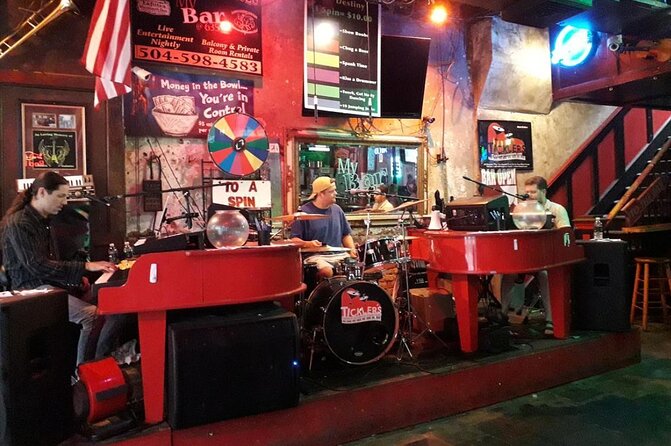
- Live music is part of the evening: Your guide takes you into a jazz or music venue selected for that night.
- One drink is included: You can order more, but the basic tour includes a drink at a music stop.
- Your booking supports local music: Part of the value is helping musicians and venues continue their work.
Why this tour begins in Tremé
The meeting point is at 701 North Rampart Street, just outside the French Quarter. From there, you enter Louis Armstrong Park in Tremé, a neighborhood central to New Orleans music and African American culture.
This opening matters because it keeps the tour from treating jazz as something that simply appeared in Bourbon Street clubs. Your guide explains the people, sounds, and social spaces that helped shape the music long before it became a symbol sold to visitors.
The first park visit lasts about 35 minutes. It is not just a quick photo stop. You hear about Louis Armstrong, one of the most important figures in jazz, and how his connection to New Orleans fits into the wider story of the city.
The park also gives you some room to breathe before the longer walk. One practical note: an outdoor event or nearby activity can make it harder to hear a guide playing short music examples from a phone. Stay close to the guide if music clips are part of your walk.
You also pass the Mahalia Jackson Theater of the Performing Arts. It is named for the New Orleans-born gospel singer, and its presence helps broaden the story beyond jazz alone. Gospel, blues, and other musical forms overlap throughout New Orleans, and the theater is a useful reminder that the city’s music story has never belonged to one genre.
More History Walking Tours in New Orleans
- New Orleans Garden District History Walking Tour
★ 5.0 · 2,879 reviews - French Quarter Historical Sights and Stories Walking Tour
★ 5.0 · 2,724 reviews - New Orleans Food and History Walking Tour
★ 5.0 · 1,544 reviews
Congo Square and the roots of the sound
Congo Square is one of the most meaningful stops on the route. It was a place where enslaved people and free people of color were allowed to gather and socialize. Your guide explains how West African and Caribbean sounds met European musical ideas in New Orleans.
This context gives the later club visit more meaning. You are not simply hearing a band in a bar. You are learning why rhythm, call-and-response, percussion, improvisation, and musical exchange became so important here.
The tour does not present jazz as a single invention by one person. Instead, it shows how many cultures and communities contributed to a uniquely American art form. That approach is one of the strongest parts of the experience, especially if you know the famous names but want a better grasp of the forces behind the music.
The Congo Square portion takes about 15 minutes. It is brief, but the subject is serious and worth your attention. Listen for how your guide connects the city’s social history with its musical development.
Walking into the French Quarter
From Louis Armstrong Park, the tour heads into the French Quarter, also called the Vieux Carré. You pass historic sites while your guide explains how music worked its way through the neighborhood’s homes, businesses, dance halls, and clubs.
This section is less about checking off landmarks and more about understanding how the neighborhood functions after dark. You learn where music is played, how venues differ, and how to make better choices for the rest of your evening.
The route may include Bourbon Street or Frenchmen Street, and that flexibility is intentional. Your guide chooses the path based on the night’s music and the best chance of hearing a good set.
That means you should not expect the same walk every time. If you want a fixed route with every stop guaranteed, this may feel loose. If you prefer a local to adjust the evening around the music, the changing route works in your favor.
Bourbon Street, French Market, and the city’s musical past
One possible route follows Bourbon Street. Your guide discusses the street’s history and points out places connected with musicians and collaborators who helped shape blues and jazz.
Bourbon Street can be loud and crowded, so the quality of this part depends on your guide’s ability to keep the history focused. The best moments come when the guide moves beyond the street’s party image and explains how residential and commercial spaces once supported working musicians.
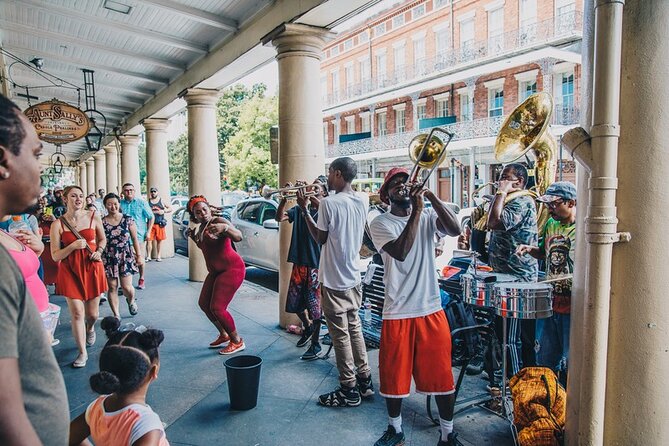
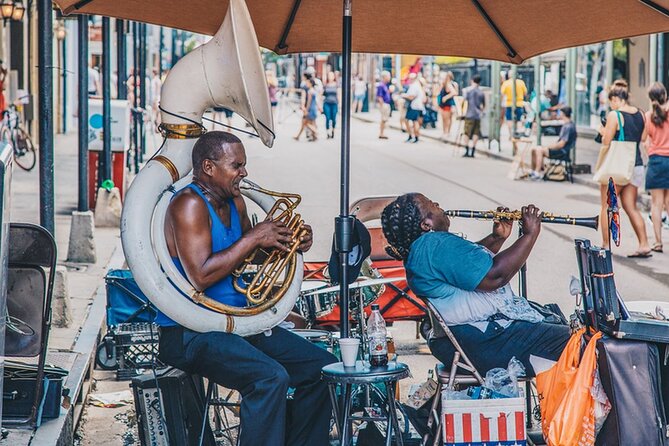
You may also catch a busker near the historic French Market. This is not promised, but it shows how live music can appear in New Orleans outside formal venues.
The Bourbon Street section takes about 30 minutes. Wear shoes that can handle uneven pavement and keep your belongings secure in crowded areas. The tour covers a reasonable distance, but standing and walking on city streets for two and a half hours can feel tiring in warm weather.
More History Walking Tours in the USA
- History and Hauntings of Salem Guided Walking Tour
★ 5.0 · 14,564 reviews - Boston: Freedom Trail History Small Group Walking Tour
★ 5.0 · 6,450 reviews - Historic Charleston Guided Sightseeing Walking Tour
★ 5.0 · 6,216 reviews - Savannah History and Haunts Candlelit Ghost Walking Tour
★ 5.0 · 3,235 reviews
Frenchmen Street and the first live set
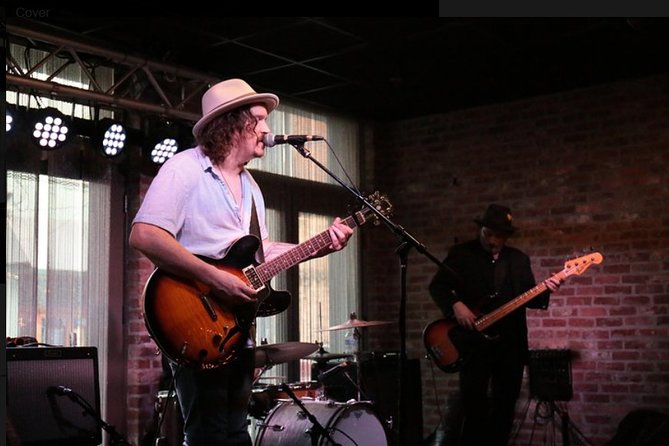
The other possible route leads toward Frenchmen Street, known for its concentration of live music venues. Here, the tour shifts from historical explanation to the practical experience of hearing a band in a club.
Your guide takes you inside a music venue selected for the evening. The goal is to hear local performers and learn how the music scene operates, rather than simply walk past famous doors.
Many bookings appear to include two music stops, though the exact venues and number of performances can depend on the evening. Groups have heard different bands in the French Quarter and on Frenchmen Street, and some have stayed after the tour ended to keep listening.
That is a real benefit if you are new to New Orleans nightlife. You do not have to spend your first evening guessing which door to enter. Your guide can point you toward places that fit the music and tell you how to find listings, when to arrive, and how to plan later nights.
The included drink is provided at one of the music stops. It does not have to be alcoholic, and additional drinks or food are your responsibility. The tour is for people aged 21 and older.
What the guides add to the evening
The guide can make or break a music tour, and this experience has several guide styles in its rotation.
Kristi has led many of the most warmly received outings. She is from New Orleans and is also a musician, so she can explain the city through both local experience and musical practice. Her approach often links cultural history, neighborhood stories, and the bands playing that night.
Adam is praised for a relaxed pace, clear explanations, and strong enthusiasm for jazz. He has also been able to adjust the evening around a particular performance, including a set by Delfeayo Marsalis.
Andre has received similar praise for combining jazz history with visits to two venues. The common thread is personal interest. You are not getting a scripted walk that treats jazz as a museum object. You are spending the evening with someone who cares about the city’s music.
Still, guide style can vary. One person may focus more on social and economic issues affecting musicians, while another may spend more time on genres, performers, and musical details. If you want a precise lecture on jazz theory or a long list of artists, say so early and ask questions.
A useful history lesson, not just a club crawl
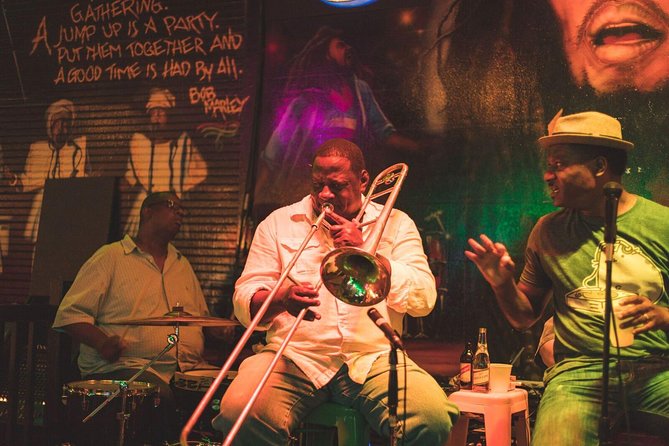
This tour works best because it connects three kinds of information.
First, you get physical places: Louis Armstrong Park, Congo Square, the French Quarter, Bourbon Street, Frenchmen Street, and the area around Preservation Hall.
Second, you get cultural context. Your guide explains how Creole traditions, African and Caribbean sounds, European instruments, gospel, blues, and jazz developed alongside one another.
Third, you get a live example. Hearing a band after learning where the music came from changes how you listen. You may notice the rhythm section, improvisation, or the exchange between players in a way you would have missed on your own.
The stop near Preservation Hall is especially useful. The venue works to protect and continue traditional New Orleans jazz, so passing it gives you a clear link between the city’s older sound and its current music scene.
The tour does not promise a concert with a particular artist. That is both a limitation and part of its local character. Your guide chooses the music available that night, so the final experience depends on the schedule and route.
Is $60.56 a fair price?
At $60.56 per person, this is not the cheapest way to hear music in New Orleans. You can walk around the French Quarter for free, and you can choose a club on your own.
The price becomes easier to justify when you count what is included: about 2.5 hours with a local guide, a walk through Tremé and the French Quarter, historical interpretation, entry into a live music venue, one drink, and personal advice for the rest of your stay.
The small group also matters. With a maximum of 12 people, the guide can answer questions and keep the walk from feeling like a large procession. Some outings may be much smaller, which makes the experience feel nearly private without the cost of booking a private tour.
You are also helping support local musicians and venues. That does not replace the need to tip your guide or musicians, but it adds a useful purpose to the booking.
I see the price as good value if you are new to New Orleans, care about music, and want help choosing where to go afterward. It is less compelling if you already know the clubs, have a fixed concert plan, or mainly want a seated performance.
How to prepare for the 1.5-mile walk
Wear comfortable shoes. This is the most practical advice from the start. The walk covers about 14 blocks, and the route includes outdoor streets before the music stop.
Plan for changing conditions. The experience requires good weather, and poor weather can lead to a new date or a full refund. You should also be ready for the possibility that the evening’s route changes based on the music available.
Arrive prepared to listen while walking. The tour mixes history, neighborhood observation, and live sound. Stay close to the guide during outdoor explanations, especially if the area is noisy.
Bring enough money for extra drinks, food, and tips. One drink is included, but anything beyond that costs extra. Gratuities for the guide and musicians are not included.
Booking earlier is sensible. The tour is often reserved about 33 days ahead, and the 12-person limit can make popular dates fill sooner. Free cancellation is available until 24 hours before the start time. Cancellations or changes inside that window are not refunded or accepted.
Who will enjoy this most?
I would choose this tour for a first or second night in New Orleans. The information can shape the rest of your visit, giving you a better sense of which neighborhoods and music venues deserve your time.
It suits solo visitors, couples, and small groups who want an easy way into the city’s music scene. The compact group helps solo participants join the conversation, while the live music gives couples and friends something to share beyond a standard sightseeing walk.
It also suits people who care about cultural context. The tour deals with slavery, race, Creole culture, neighborhood change, and the economic pressures facing musicians. You should expect more than light entertainment.
It is not ideal for anyone under 21, anyone who cannot comfortably walk 1.5 miles, or anyone seeking a guaranteed artist or exact club. It may also disappoint you if you want a purely musical lecture with little discussion of social history.
Should you book the New Orleans Jazz History and Music Walking Tour?
Book it if you want to understand how New Orleans jazz grew from place, people, and shared musical traditions, then hear live music the same evening. The strongest version of the tour comes with a guide such as Kristi, Adam, or Andre who can connect the history to the performers in front of you.
I would schedule it near the beginning of your New Orleans visit. You will leave with practical ideas for later nights, from finding listings to choosing venues and knowing when to arrive.
Skip it if you already have a detailed music itinerary or dislike walking between stops. For everyone else, the combination of Congo Square, Louis Armstrong Park, French Quarter stories, one included drink, and live local music makes this a useful and entertaining introduction to New Orleans.
FAQ
How long does the tour last?
The tour lasts approximately 2 hours and 30 minutes.
How far will I walk?
You will walk about 14 blocks, or approximately 1.5 miles, through Tremé and the French Quarter.
Where does the tour start?
The meeting point is 701 N Rampart Street, New Orleans, Louisiana 70116, near the French Quarter.
Where does the tour finish?
The tour ends in the French Quarter area of New Orleans.
Is live music included?
Yes. Your guide takes you into a live jazz or music venue selected for the evening. The exact venue and route can vary.
Is a drink included?
Yes. One drink is included at a music stop. Additional drinks and food are not included, and the included drink does not have to be alcoholic.
Can people under 21 join?
No. Participants must be at least 21 years old.
How many people can join the tour?
The group is limited to a maximum of 12 people.
Can I cancel for a refund?
You can cancel at least 24 hours before the start time for a full refund. Cancellations or changes made less than 24 hours before the start time are not accepted or refunded. If poor weather cancels the tour, you will be offered another date or a full refund.
Newest history tours we have reviewed in the USA
- Nashville: Belle Meade Historic Mansion Tour★ 4.8 · 63 reviews
- Beaufort: Local History and Film Sites Tour by golf cart★ 4.9 · 102 reviews
- Boston: Guided Seafood Tasting and History Tour★ 4.9 · 90 reviews
- Beaufort: Gullah Heritage Tour★ 4.8 · 26 reviews
- Beaufort: Historic City Tour by Bus★ 4.9 · 228 reviews
- Austin: Downtown Austin Haunted History Tour★ 4.4 · 31 reviews
- Austin: Morning History Walking Tour of Downtown Austin★ 4.9 · 71 reviews
- Atlanta: Beltline Food, Street Art, and History Walking Tour★ 5.0 · 47 reviews
History Walking Tours, compared.
History and Hauntings of Salem Guided Walking Tour
Read our review →
Freedom Trail History Small Group Walking Tour
Read our review →
Historic Charleston Guided Sightseeing Walking Tour
Read our review →
Tapas Walking Tour with Food, Wine, and History
Read our review →
Savannah History and Haunts Candlelit Ghost Walking Tour
Read our review →
A History of Terror – Belfast City Centre Walking Tour
Read our review →Browse the lists this tour appears in