
Review · ANTWERP HISTORY TOURS
Antwerp: Private 3-Hour Historical Sightseeing Walking Tour
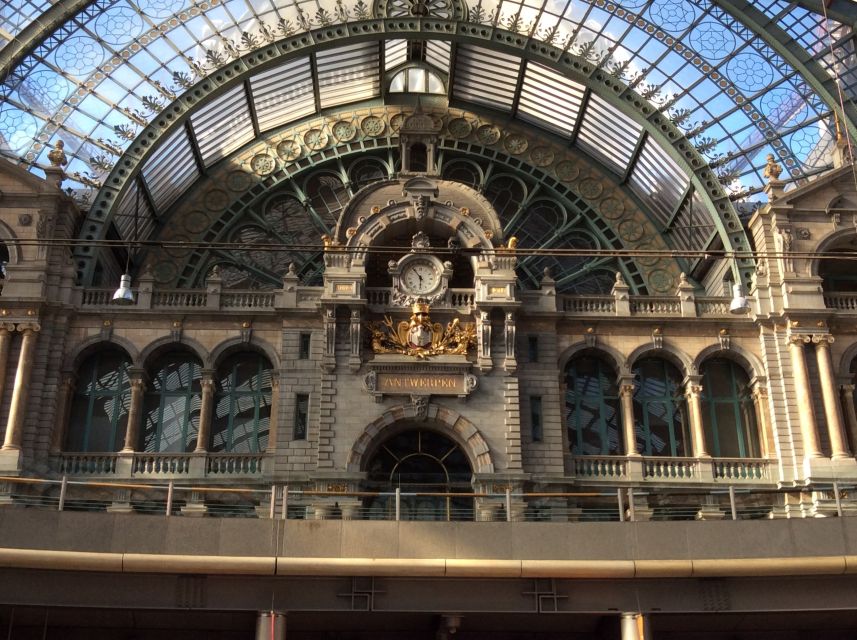
Antwerp saves one of its best surprises for the end: Central Station, a grand 19th-century building that feels more like a palace than a place to catch a train. This private walk connects that station with the city’s old squares, guild houses, cathedral, medieval lanes, and Rubens landmarks.
I like the private format, since your guide can explain a building or pause longer when something catches your eye. I also like the route’s range, from Renaissance City Hall to crooked medieval alleyways and the polished shopping street Meir.
The main consideration is the amount of walking on uneven historic streets. The tour is not suitable for wheelchair users or people with limited mobility, and the guide may be harder to hear on noisy city streets.
Key points at a glance
- A private three-hour route: Your group can include up to 20 people, with a guide focused on your party.
- Central Station finishes the walk: You get a guided look inside one of Antwerp’s grandest buildings.
- The old quarter is the star: Grote Markt, City Hall, guild houses, and the cathedral make the early part especially rewarding.
- Guides can adapt the visit: Luc and Rosemarie are among the guides named in recent bookings, and Luc began by discussing the program and personal interests.
- Several languages are available: Choose from Dutch, English, French, or German.
- Plan for a lot of walking: Comfortable shoes and clothes matter, and entrance fees are not included.
Starting at Grote Markt and the Brabo Fountain
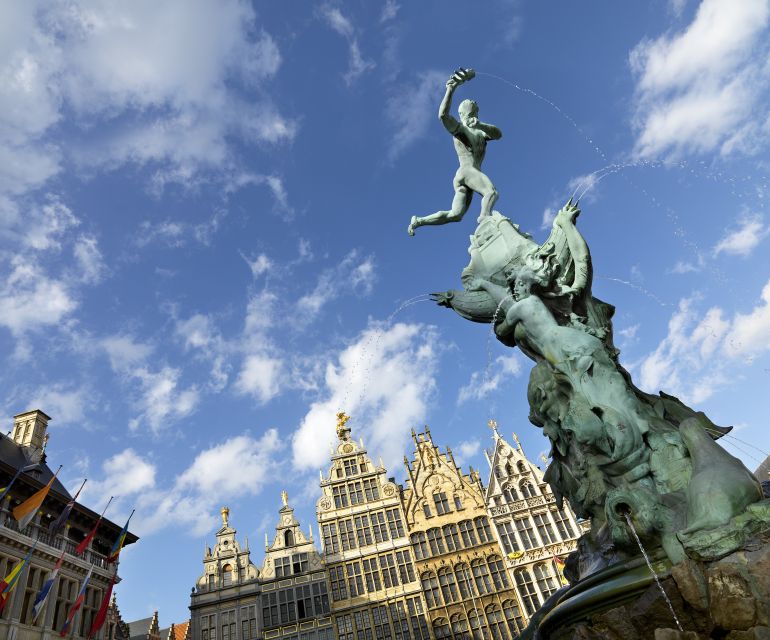
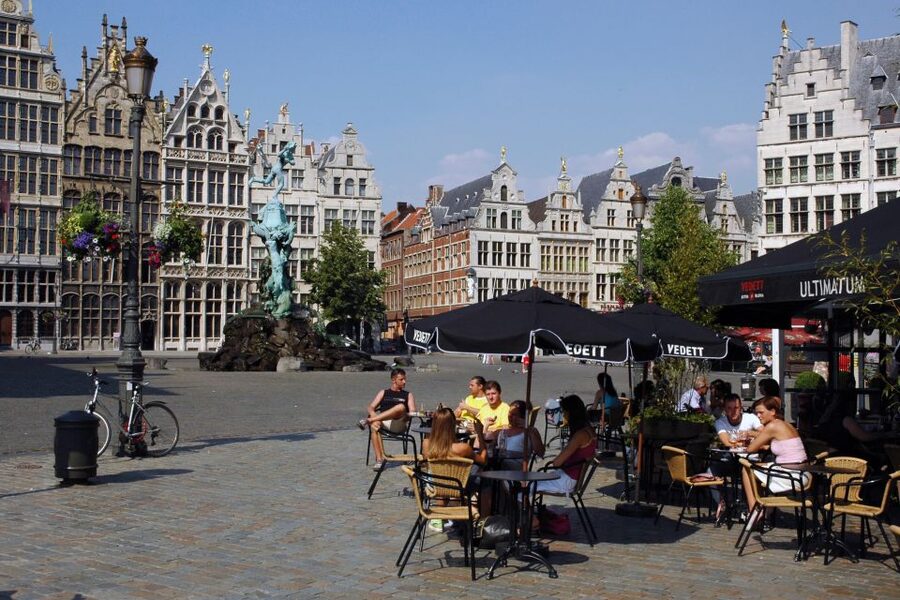
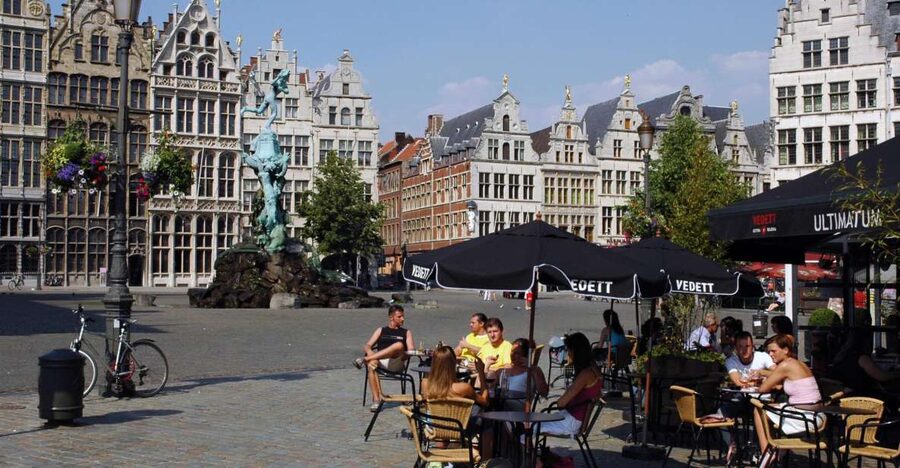
The tour begins at Brabo Fountain in Grote Markt, Antwerp’s main historic square. The fountain, inaugurated in 1887, gives your guide an easy starting point for explaining the city’s symbols and the old quarter around you.
This is a useful place to begin because Antwerp’s story is written directly into the buildings. Look around the square and you’ll see a collection of ornate guild houses, each with its own roofline, decoration, and place in the city’s commercial past. The details are easier to appreciate with someone pointing out what you might otherwise pass by.
The square can be lively, and city noise is a practical issue. One person specifically found parts of a guided walk difficult to hear because of street sound. I would stay close to your guide and ask for a repeat if needed, especially during the busiest periods.
The meeting information gives two possible arrangements: the guide is described as meeting you at your hotel lobby, while the stated meeting point is Brabo Fountain at Grote Markt. Confirm the exact starting place when you book. That small check can save time, particularly if you are arriving by train or staying outside the old center.
More History Walking Tours in Belgium
- Historical Walking Tour: Legends of Bruges
★ 5.0 · 2,541 reviews - Historical Walking Tour: Legends of Antwerp
★ 5.0 · 1,837 reviews - Historical Walking Tour: Legends of Gent
★ 5.0 · 1,761 reviews
City Hall and Antwerp’s guild houses
From Grote Markt, you look toward Antwerp’s Renaissance City Hall and the surrounding guild houses. This is one of the most visually rewarding sections of the walk, since the buildings create a tight, theatrical frame around the square.
Your guide explains the architecture of the 16th and 17th centuries, when Antwerp was an important European trading center. You do not need to know architectural terms in advance. The value here is having someone connect the decorative façades, the guild identities, and the city’s changing fortunes.
I would allow yourself time to look up. The most interesting details are often above street level, including statues, stepped gables, ornamental work, and the distinct shapes of the houses. A private guide can answer the small questions that a general group tour may have to skip.
This part of the route is also good for first-time orientation. Grote Markt, City Hall, and the nearby cathedral establish the basic shape of Antwerp’s old center. After this introduction, later stops make more sense because you have already seen the city’s civic and commercial heart.
Our Lady Cathedral and Flemish art
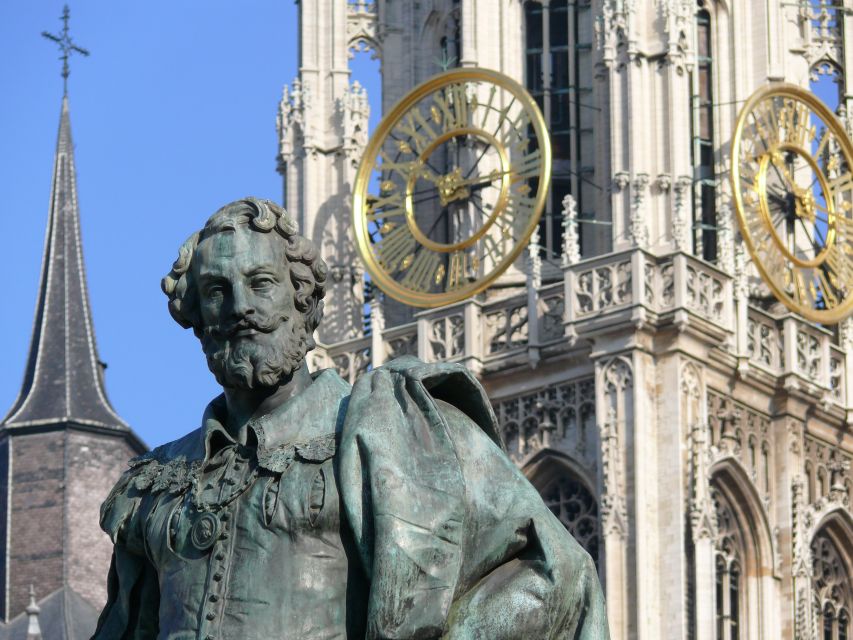
The next major stop is the Cathedral of Our Lady, one of Antwerp’s defining landmarks. Inside, you can see works by famous Flemish masters, including art connected with Pieter Paul Rubens.
The cathedral is important for both its architecture and its collection. Your guide gives the art a local setting rather than leaving you to decode a large church on your own. That can be especially helpful if you are interested in Flemish painting but do not want a full museum lecture.
Entrance fees are not included, so check the current admission cost before setting out. The tour information does not promise a full interior visit in every detail, so it is sensible to confirm exactly what your booking covers. Even so, the cathedral forms a key part of the route, and its location makes it a natural continuation from Grote Markt.
The walking order is practical. You move from civic buildings to religious art without losing sight of the old center. I like that progression because it shows Antwerp through several lenses rather than treating the city as a series of unrelated photo stops.
Vlaeykensgang and the medieval lanes
Vlaeykensgang changes the mood. Instead of broad squares and grand façades, you enter a narrow medieval passage with crooked alleyways and a much quieter, more enclosed feel.
This is the kind of place where a guide adds real value. The lane is easy to miss if you are exploring without a plan, and its shape makes more sense when you understand how older parts of the city developed. You will want to slow down here rather than rush through for a quick picture.
The narrow streets also explain why this tour is not recommended for people with mobility impairments. Historic lanes can be awkward underfoot, and the full route includes several different street surfaces. Wear comfortable shoes with good support. Dress comfortably rather than treating this as a short stroll between attractions.
Vlaeykensgang is one of the most distinctive stops because it breaks up the grand architecture. After the open scale of Grote Markt and the cathedral, these tight lanes remind you that Antwerp was also a lived-in medieval city.
More Private History Tours in Belgium
- Private Historical Tour: The Highlights of Bruges
★ 5.0 · 315 reviews - Private tour: Highlights & History of Antwerp
★ 5.0 · 299 reviews - Bruges: Private Historical Highlights Walking Tour
★ 4.7 · 191 reviews - Private Historical Tour: Legends of Antwerp
★ 5.0 · 125 reviews
Groenplaats, Meir, and the Rubens connection
The route continues through Groenplaats before reaching Meir, Antwerp’s best-known shopping street. Groenplaats gives you another broad city setting, while Meir shifts the experience toward present-day Antwerp.
That contrast is useful. You see how the historic center connects to a modern commercial street rather than remaining frozen in the past. Meir is a good place to notice the change in architecture, pace, and street use as you move away from the oldest quarter.
Along the way, you pass Rubens House, the former home and studio of Pieter Paul Rubens. The stop matters because it connects the city’s art collection with the place where the painter lived and worked. The tour passes by the house, but entrance fees are not included, so do not assume this walking tour includes a full museum visit.
If Rubens is a main reason for your visit, you may want to ask the guide how much time is available for the exterior and whether a separate interior visit would fit your plans. The private format gives you a better chance to discuss that interest, though the three-hour schedule still covers a long route.
Why the private format changes the experience
At $341 per group of up to 20, this is not priced like a low-cost group walk. The value depends heavily on your party size. For two people, it is a substantial expense. For a larger family or group of friends, the per-person cost drops quickly, and you gain a guide reserved for your group.
The private setup is most useful if you want to ask questions, adjust the emphasis, or move at a comfortable pace. Luc, one of the named guides, began by discussing the planned program and taking personal requests into account. That is exactly the sort of flexibility I would want from a private tour.
The experience also works well for families or mixed-age groups who want a shared introduction to Antwerp. One recent booking included a couple and their granddaughter, and they enjoyed learning about the city’s changing past together. A private guide can make the explanations more personal than a fixed script.
The tradeoff is that private does not mean every admission is covered. You pay for the guide, while food, drinks, and entrance fees are extra. Budget for those costs if you want to enter the cathedral or visit Rubens House beyond the exterior stop.
The final stop: Antwerp Central Station
The walk ends at Antwerp Central Station, built at the end of the 19th century. This is a strong finish because it is both a transport hub and an architectural attraction.
Your guide provides a guided visit, giving you context for the building rather than leaving you to admire it quickly before catching a train. The station’s scale and decorative design offer a clear change from the medieval lanes and Renaissance façades earlier in the walk.
Ending here can also be practical. If you are staying elsewhere in Belgium, arriving by train, or continuing to another city, you finish at a major transport point. The tour details do not specify onward travel arrangements, so you should still check your own train time and allow enough margin after the three-hour walk.
I especially like the route ending here because it avoids a weak final stop. Instead of finishing beside an ordinary street, you end inside one of Antwerp’s most memorable buildings.
Guides, languages, and the pace of the walk
The tour is available in Dutch, English, French, and German. That range is useful for couples, families, and groups who want detailed explanations in a preferred language.
The named guides in recent bookings include Luc and Rosemarie. Rosemarie was described as friendly, relaxed, humorous, and full of information. Luc was praised for discussing the plan at the start, accepting suggestions, and making room for individual interests. Those details suggest that the guide’s personality can shape the experience, as it does with any private city walk.
You should expect a steady three-hour walking program rather than a quick introduction. Comfortable shoes are essential. Comfortable clothes are also recommended, since the route moves through squares, shopping streets, narrow lanes, and the station.
The tour is not suitable for wheelchair users or people with limited mobility. If stairs, uneven pavement, or long periods on foot are a concern, ask the operator about the route before booking. The supplied information does not promise an adapted itinerary.
What the 4.8 rating tells you
The tour has a 4.8 rating from 70 reviews, with repeated praise for the guides’ friendliness, humor, flexibility, and historical explanations. The strongest pattern is not one single monument. It is the quality of the personal guiding.
That matters because Antwerp is a city where the best experience comes from connecting places. Grote Markt is more meaningful after you understand City Hall and the guild houses. Rubens House makes more sense after seeing the cathedral’s Flemish art. Central Station feels more impressive when it closes a route through several centuries of architecture.
The one clear caution is audibility. City noise can make parts of the explanation difficult to follow. Stay near the guide, choose a quieter position when possible, and speak up if you miss a point. A private group makes that request easier than a large shared tour.
Who should book this Antwerp walk?
I would choose this tour for a private group that wants a broad introduction to central Antwerp in one morning or afternoon. It is particularly suitable for first-time visitors, families, and groups with an interest in architecture, Flemish art, or the city’s long commercial past.
It is also a good choice if you prefer a guide who can respond to your questions instead of following a rigid public-tour script. The option to discuss personal interests at the start is a useful advantage.
I would look elsewhere if you want a museum-heavy experience, a short route, or a fully accessible tour. This walk passes Rubens House and the cathedral, but entrance fees are extra, and the focus is on seeing and understanding the city center on foot.
Should you book it?
Book this private Antwerp tour if you value a personal guide, want the major historic sights in one well-planned route, and can comfortably walk for three hours. The combination of Grote Markt, guild houses, the cathedral, Vlaeykensgang, Meir, Rubens House, and Central Station gives you a solid first look at the city.
For a couple, the $341 group price may feel steep. For a family or group of friends, it can be reasonable, especially if you use the private format to shape the conversation around your interests. Confirm the meeting point, ask about cathedral and Rubens House entry details, and wear reliable shoes. If those conditions suit you, this is a useful, well-rounded way to get oriented in Antwerp.
FAQ
How long does the Antwerp historical walking tour last?
The tour lasts three hours.
How much does the private tour cost?
The listed price is $341 for a private group of up to 20 people.
Where does the tour meet?
The stated meeting point is Brabo Fountain at Grote Markt. The tour information also says the guide will meet you in your hotel lobby, so confirm the exact arrangement when booking.
Which languages are available?
The tour is offered in Dutch, English, French, and German.
Is this a private group tour?
Yes. The tour is private, with a maximum group size of 20 people.
Are entrance fees included?
No. Entrance fees are not included. Food and drinks are also not included.
Which sights are included in the route?
The route includes Grote Markt and Brabo Fountain, City Hall and the guild houses, Our Lady Cathedral, Vlaeykensgang, Groenplaats, Meir, Rubens House, and Antwerp Central Station.
Is the tour suitable for wheelchair users?
No. The tour is not suitable for wheelchair users or people with mobility impairments. Comfortable shoes and clothes are recommended.
More Three-Hour Tours in Belgium
- Berlin: 3-Hour World Heritage Cruise to Potsdam
★ 4.5 · 1,569 reviews - Edinburgh: 3-Hour Historical Walking Tour in Italian
★ 4.7 · 734 reviews - 3-Hour Porto Jewish Heritage Walking Tour with Local Guide
★ 4.5 · 396 reviews - 3-Hour Atlanta Beltline Food, Street Art and History Tour
★ 5.0 · 345 reviews
Newest history tours we have reviewed in Belgium
- Antwerp: Private Historical Highlights Walking Tour★ 4.9 · 36 reviews
- Private Historical Tour: Legends of Antwerp★ 5.0 · 125 reviews
- Bruges: Private Historical Highlights Walking Tour★ 4.7 · 191 reviews
- Private Historical Tour: The Highlights of Bruges★ 5.0 · 315 reviews
- Historical Walking Tour in Antwerp Old City★ 5.0 · 277 reviews
- Private tour: Highlights & History of Antwerp★ 5.0 · 299 reviews
- Antwerp: Historical Walking Tour in the Old City★ 4.8 · 373 reviews
- Ghent: 40-Minute Historical Boat Tour of City Center★ 4.3 · 430 reviews
Private History Tours, compared.
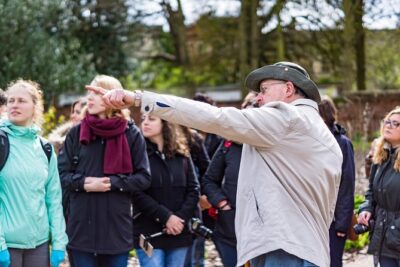
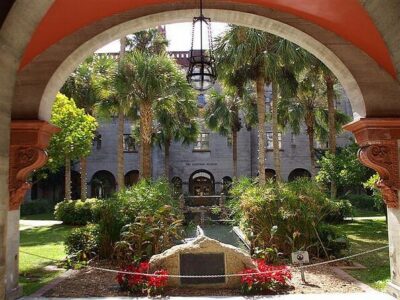
Private Guided Historic Electric Cart Tour of St. Augustine
Read our review →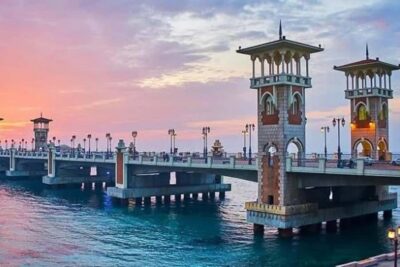
Private Full-Day Tour of Historical Alexandria
Read our review →
Private Tour of the Historic City in a Ford T Car
Read our review →
Madrid Historical Tour with Local Guide in Eco Tuk Tuk Private
Read our review →
Private Biblical Tour Ancient Corinth & Isthmus Canal from Athens
Read our review →
Private Kathmandu Sightseeing Tour | UNESCO World Heritage sites
Read our review →
Historic Porto by Private Electric Tuk Tuk to Top Landmarks
Read our review →Browse the lists this tour appears in