
Review · BRUGES HISTORY TOURS
Historical Walking Tour: Legends of Bruges
Bruges reveals itself best at walking pace, and this tour strings together the city’s greatest sights in one tidy route. You’ll hear why Bruges was a medieval trade power, how its people earned the nickname Fools of Bruges, and why a beer pipeline runs beneath the streets. I like the mix of famous landmarks and odd local stories, which keeps the walk from feeling like a parade of dates and building names.
I also like the value. At $3.62 per person, you get about two hours and fifteen minutes with an English-speaking guide, while the tour covers places you might otherwise pass without understanding. Tips are recommended, and one guide noted that guides pay to do the tour, so a good performance deserves a fair tip. The main drawback is that this is an outdoor walk with a lot of stops, and cold or wet weather can wear you down, especially with young children.
Key points to know before you book
- Eleven central Bruges stops: The route links the Markt, Belfort, Beguinage, Minnewater Lake, Our Lady’s Church, Groeninge, and Burg Square.
- A story-led introduction: Expect tales about medieval trade, French royal power, beer, swans, leather-making, and Emperor Maximilian.
- A strong first-day choice: The walk gives you a useful map of Bruges before you return to the places you want to explore inside.
- Small enough to stay personal: The maximum group size is 24, and some departures may be much smaller.
- Guide quality matters: Guides including Louis, Martin, Victoria, Sander, Thomas, and Wouter have been praised for humor, clear English, and local knowledge.
- Budget pricing with tipping expected: The low price makes the tour accessible, but your tip is an important part of the guide’s compensation.
Why this Bruges walk works so well for first-time visitors
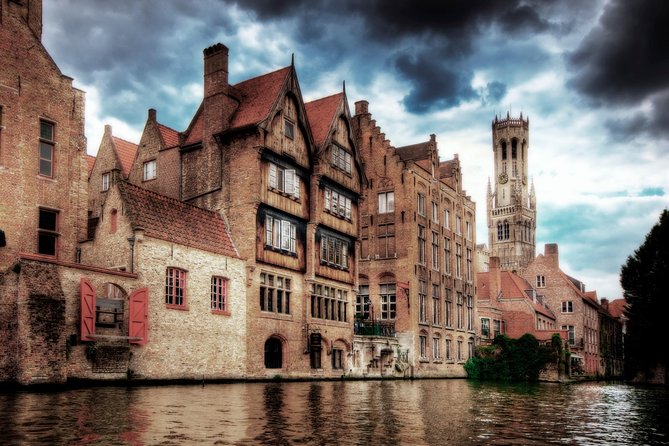
Bruges is compact, but its beauty can distract you from its story. You see stepped gables, canals, old stone, and swans, then realize you have walked past a former hospital, a princely religious community, and the political center of medieval Flanders without knowing it.
This tour gives those sights a useful frame. The guide moves from the Markt to Burg Square, with major landmarks and smaller details along the way. You do not enter every attraction for a full visit, but you learn what each place is, why it matters, and which ones deserve a return visit.
That makes the tour especially useful at the start of a short stay. I would take it early, then use the rest of the day to revisit the Belfort, museums, church, or brewery that caught your eye. The route also works well for a first visit because it brings together the city’s best-known sights without asking you to plan the order yourself.
The tour is offered in English, lasts about two hours and fifteen minutes, and allows up to 24 people. That is large enough to provide a lively group but still smaller than many big city walks. A few guides have led groups of only four people, though you should not assume your departure will be that intimate.
More History Walking Tours in Belgium
- Historical Walking Tour: Legends of Antwerp
★ 5.0 · 1,837 reviews - Historical Walking Tour: Legends of Gent
★ 5.0 · 1,761 reviews - Brussels: Historical Walking Tour with Chocolate & Waffle Tasting
★ 5.0 · 1,165 reviews
Starting at the Markt, where Bruges made its money
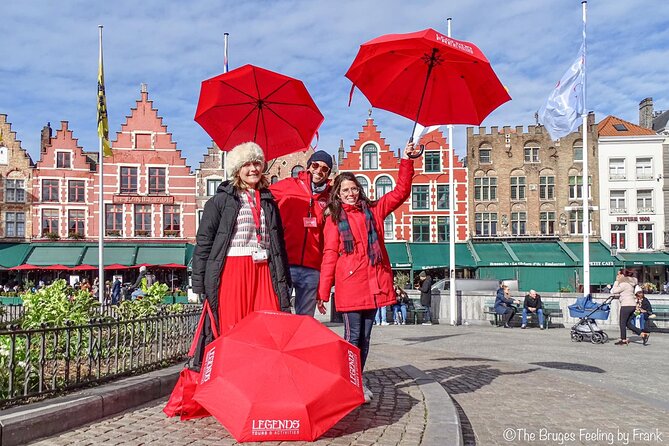
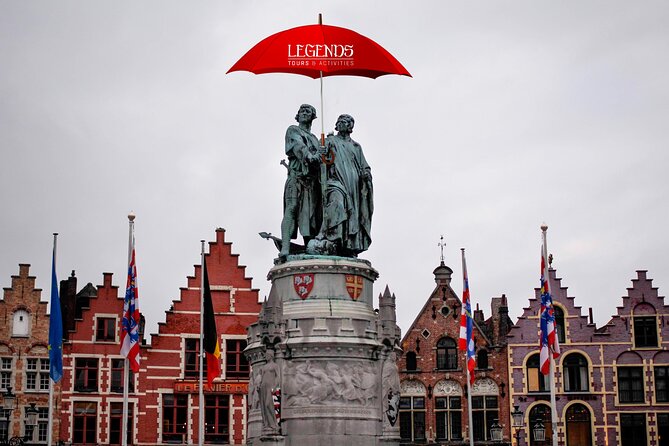
The walk begins at Pieter de Coninck en Jan Breydelmarkt, better known as the Markt. This is the natural place to begin because it introduces Bruges as a trading city rather than just a pretty old town.
The opening talk covers Bruges’ role as a medieval commercial hub and the uneasy relationship between the city and the French king. That political conflict gives the square more weight. You are not simply looking at grand façades. You are standing in a place where money, civic pride, and royal authority collided.
Allow about 15 minutes here. The guide’s storytelling makes the difference. Martin, Victoria, Louis, Sander, and other guides have been praised for bringing the past to life without turning the walk into a lecture. You can also ask questions, although the amount of personal attention will depend on group size.
The Belfort and the sound of civic power
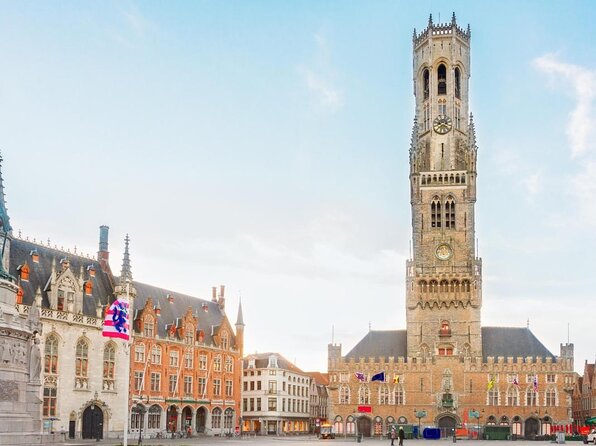
The Belfort is one of Bruges’ defining sights, and the tour spends about 10 minutes explaining the halls behind the bell tower and the tower’s role during the Middle Ages. The focus is on function and power, not simply on the tower’s height or photogenic shape.
This is where the walk helps you see Bruges as a self-governing city. A bell tower was more than decoration. It was tied to civic life and the city’s ability to organize itself.
The tour does not include a climb of the Belfort. If you want the view from the top, you need a separate ticket, and one useful tip is to buy that ticket in the morning. The walking tour can help you decide if the climb is worth fitting into your schedule, but it is not a substitute for the tower visit.
Gruuthuse, St John’s Hospital, and Bruges’ social side
The route then turns toward the Gruuthusemuseum, a renovated city palace that belonged to a wealthy Bruges family. The family held a monopoly on a particular part of the beer trade, giving the guide a chance to connect grand architecture with business.
That detail is valuable because it shows how Bruges’ wealth was built. Behind the elegant palace was commercial control, not just noble taste. You get about 10 minutes here, enough for context and orientation rather than a museum visit.
Next comes Sint-Janshospitaal, one of the oldest surviving hospitals in the world. The guide explains its role in medieval society and why it became one of the city’s important institutions. This stop adds a needed human note to the tour. Bruges was not only merchants, rulers, and wealthy families. It also depended on places that cared for the sick and vulnerable.
You should treat both stops as introductions. Admission is not listed as part of the experience, and the time at each place is too short for a full indoor visit. If you want to see the palace collections or hospital art in detail, save time for a separate visit.
Same streets, a different century:
- Brussels: Historical Tour with Chocolate & Waffle Tasting
★ 4.8 · 1,206 reviews - THE Storytelling Tour of Bruges | First Day Must | History & Tips
★ 5.0 · 925 reviews - Historical Walking Tour: The Story of Bruges – by Legends
★ 4.7 · 483 reviews - Ghent: 40-Minute Historical Boat Tour of City Center
★ 4.3 · 430 reviews
The Beguinage, a quieter corner of Bruges
The Princely Beguinage Ten Wijngaarde offers a change of mood. The walk enters this picturesque community, where women have lived together for more than 800 years.
The guide’s job here is to explain what the beguinage was and why it mattered. Its quieter setting also gives the group a break from the busiest central streets. Ten minutes is enough to appreciate the layout and hear the basic story, though you may wish you had more time to linger.
This is one of the tour’s most useful contrasts. The Markt shows civic and commercial Bruges. The Beguinage shows a more secluded form of community life. I would mark it as a place to return to after the tour, especially if you prefer calm courtyards and a slower pace.
Beer, the Fools of Bruges, and De Halve Maan
Outside De Halve Maan Brewery, the guide explains how Bruges earned the nickname Fools of Bruges and points out part of the beer pipeline beneath the city.
This is exactly the kind of detail that makes a city walk memorable. You are not only told that beer mattered in Bruges. You are shown how its production and movement became part of the city’s modern identity. The brewery stop also adds humor after several heavier medieval subjects.
The tour pauses outside rather than providing a brewery visit or tasting. Some guides have included a chocolate stop or complimentary truffle, and that can be a pleasant extra, but chocolate is not listed as an included feature. Think of any sample as a bonus, not a reason to book.
Minnewater Lake and the city’s swans

At Minnewater Lake, also called the Lake of Love, the guide explains why Bruges has swans on its canals and tells the story of the city’s conflict with Emperor Maximilian of Austria.
This 15-minute stop gives the tour room to breathe. The water, bridges, and swans are among Bruges’ most recognizable sights, but the story adds political meaning to the scene. A postcard view becomes part of a tale about authority, punishment, and the city’s relationship with an emperor.
The lake is also a practical point to notice how weather affects the experience. On a cold day, you may want a warm layer even if the forecast looks mild. One family had to leave early with a toddler during freezing weather. The route is manageable for most people, but the tour is not ideal if you need frequent indoor breaks.
Our Lady’s Church and the Flemish art connection
Onze-Lieve-Vrouwekerk is covered in about 10 minutes. The guide points out its brick tower, described as the second tallest brick tower in the world, and explains that the church houses a Michelangelo statue and the tombs of the last Dukes of Burgundy.
That is a lot of significance in one stop. The church connects Bruges to ambitious medieval construction, Italian art, and Burgundian power. It also helps explain why Bruges attracted wealthy patrons and artists.
Again, the guide provides orientation rather than a full church tour. If the Michelangelo sculpture or the ducal tombs are high on your list, plan time to return. The walking tour tells you what to look for, which can make a later independent visit much more rewarding.
Groeninge, the Tanner’s Square, and everyday work
The route visits the garden of the Groeningemuseum for about five minutes. The guide points toward works by major Flemish masters displayed in the museum. This is a brief stop, but it places Bruges within the wider story of Flemish painting.
The short pause also reflects the tour’s overall purpose. You are collecting useful clues, not spending an hour with individual artworks. Art lovers should reserve separate museum time.
At Huidenvettersplein, the old Tanner’s Square, the guide explains the unpleasant work of greasing skins and turning them into leather. The stop gives you a glimpse of the trades that supported daily life and also explains why some parts of the old city were less pleasant than the polished façades suggest.
This is one of the better examples of the tour’s balance between grand subjects and ordinary work. You get dukes, emperors, and wealthy merchants, but also hospitals, tanners, brewers, and the practical business of keeping a city running.
Ending at Burg Square, Bruges’ political heart
The final stop is Burg Square, reached after passing the old Fishmarket. The tour ends here after about 15 minutes of explanation about the square as Bruges’ political heart and birthplace.
Ending at Burg makes sense. The Markt introduces commerce and civic life, while Burg brings the story back to government and authority. It also leaves you in a useful central location for continuing your day.
At the end, ask your guide for practical suggestions. Guides such as Celine, who grew up in Bruges, have offered local advice about getting around, places to eat, and things worth adding to a visit. Do not expect every guide to give the same recommendations, but the final stop is a good moment to ask.
The guides are the key part of the experience
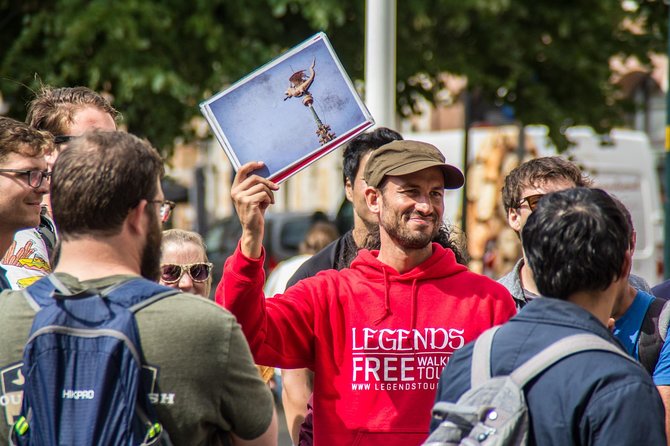
The route is fixed, but the personality of the guide shapes the day. Louis has been praised for his passion and storytelling, while Victoria is known for humor, charisma, and a personal touch. Martin has been described as entertaining and clear, and Sander has received praise for answering questions and using visual aids.
Thomas, Wouter, Willem, Erik, Emiel, Sam, Patrick, Nicholas, and Celine have also been singled out for friendly delivery, local insight, humor, or strong historical explanations. You cannot choose a particular guide from the information provided, so book this for the route and format rather than a guaranteed personality.
The strongest pattern is clear English, engaging stories, and guides who connect buildings to people. One fair criticism is that the tour leans toward historical and political material, so you may want more social and cultural detail. Ask questions if that is important to you.
Price, group size, weather, and practical value
At $3.62 per person, this is an unusually inexpensive way to get an organized introduction to Bruges. The price covers the walking tour and all fees and taxes, but it does not include admission to the Belfort, museums, or church interiors.
The low price comes with an important custom: tips are recommended. A guide has pointed out that guides pay to do the tour, so consider the listed price a starting point rather than the full value of the service. If your guide keeps the group engaged and gives useful advice, tip accordingly.
The tour accepts service animals, is near public transportation, and most people can participate. The maximum group size is 24. Wear shoes suited to a sustained city walk, and dress for the forecast. The walk requires good weather, and the operator may cancel it if conditions are poor or if too few people book. In either case, you are offered another date or a full refund.
You can cancel for a full refund up to 24 hours before the start time. Within 24 hours, cancellations and changes are not accepted.
Who should book Legends of Bruges?
I would choose this tour if you are visiting Bruges for the first time, have only one day, or want historical context before exploring alone. It is also a good fit for families with older children who can manage a two-hour walk and enjoy stories about kings, beer, swans, and city rivalries.
It is less suitable if you want long indoor visits, a brewery tasting, a Belfort climb, or a slow photography walk. The pace includes many stops, but each one is short. You will see a great deal, yet you will need to return on your own for detailed museum and church visits.
The experience carries a 4.9 rating from 2,541 ratings, with 98 percent recommending it. That matches the strongest qualities here: a well-planned route, lively storytelling, and guides who often bring local character to the walk.
Should you book this Bruges walking tour?
Book it if you want to get your bearings fast and understand why Bruges looks the way it does. The route covers the essential sights, adds memorable tales, and costs little compared with the time it can save you.
Skip it if you prefer to set your own pace or already know Bruges well. For most first-time visitors, though, this is a smart opening move. Take it early, note the places you want to revisit, and leave room in your schedule for the interiors the tour only introduces.
FAQ
How long does the Legends of Bruges walking tour last?
The tour lasts approximately 2 hours and 15 minutes.
Where does the tour start?
It starts at Pieter de Coninck en Jan Breydelmarkt, 8000 Brugge, Belgium.
Where does the walking tour end?
The tour ends at Burg Square, at Burg 15, 8000 Brugge, Belgium.
Is the tour offered in English?
Yes. The experience is offered in English.
Are entrance tickets included?
The tour includes all fees and taxes, but the listed stops are described as free admission stops. Separate admission may be needed if you choose to enter attractions such as the Belfort, museums, or church.
What happens if the weather is poor or I need to cancel?
The experience requires good weather and may be rescheduled or fully refunded if canceled for poor weather or too few bookings. You can cancel for a full refund at least 24 hours before the start time. Cancellations within 24 hours are not refunded.
Newest history tours we have reviewed in Belgium
- Antwerp: Private 3-Hour Historical Sightseeing Walking Tour★ 4.8 · 70 reviews
- Antwerp: Private Historical Highlights Walking Tour★ 4.9 · 36 reviews
- Private Historical Tour: Legends of Antwerp★ 5.0 · 125 reviews
- Bruges: Private Historical Highlights Walking Tour★ 4.7 · 191 reviews
- Private Historical Tour: The Highlights of Bruges★ 5.0 · 315 reviews
- Antwerp: Historical Walking Tour in the Old City★ 4.8 · 373 reviews
- Historical Walking Tour in Antwerp Old City★ 5.0 · 277 reviews
- Private tour: Highlights & History of Antwerp★ 5.0 · 299 reviews
History Walking Tours, compared.
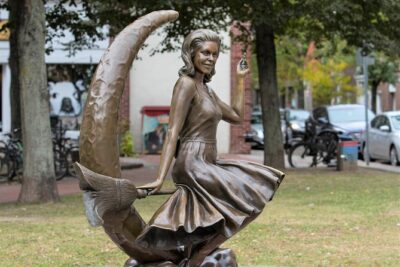
History and Hauntings of Salem Guided Walking Tour
Read our review →
Freedom Trail History Small Group Walking Tour
Read our review →
Historic Charleston Guided Sightseeing Walking Tour
Read our review →
Tapas Walking Tour with Food, Wine, and History
Read our review →
Savannah History and Haunts Candlelit Ghost Walking Tour
Read our review →
A History of Terror – Belfast City Centre Walking Tour
Read our review →Browse the lists this tour appears in