
Review · BRUGES HISTORY TOURS
Bruges: Private Historical Highlights Walking Tour
Bruges packs a remarkable amount into a small medieval center, and this private walking tour gives you two focused hours to make sense of it. You move from the Market Square to the Beguinage, with stories of love, war, money, swans, and old city rivalries along the way. The local storytelling is the main event.
I like the private format because you can ask questions and request a different emphasis, from architecture to odd legends. I also like the practical finish: your guide points out what to do next and gives you a booklet with local discounts, including €3 off boat tours. The main drawback is simple: two hours is enough for an excellent overview, not for extended visits inside every landmark.
Key points at a glance
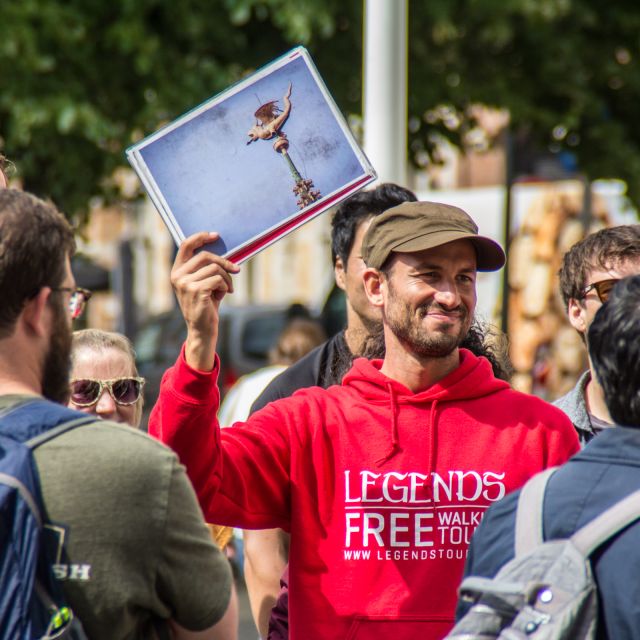
- A true private tour for your group: The $206 price covers up to two people, with a private guide rather than a shared walk.
- Bruges’s major sights in one route: See the Markt, Burg Square, Church of Our Lady, St. John’s Hospital, Gruuthuse Palace, Minnewater, Beguinage, Fish Market, and more.
- Stories instead of a fact dump: Guides such as Martin, Louis, Kobo, Patrick, Wouter, and Piet are praised for mixing history with humor and local tales.
- A useful Rosary Quay stop: Rozenhoedkaai is the city’s most photographed viewpoint and gives you time for your own pictures.
- Flexible and accessible: The walk can be customized, is wheelchair accessible, and runs rain or shine.
- A city orientation with after-tour value: The guide can suggest further sights, food, drinks, and places to visit, while the booklet offers local discounts.
Starting at the Markt, Bruges’s grand medieval stage
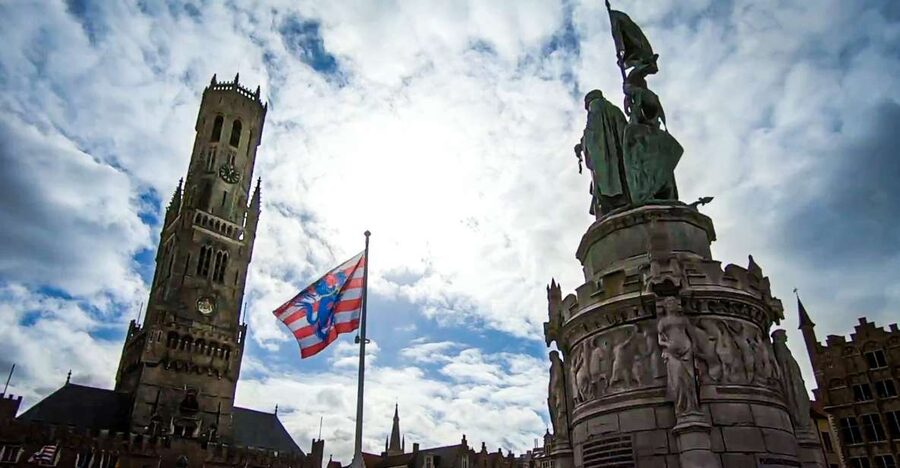
Meet your guide beside the statue in the middle of Grote Markt, the main square, under a red umbrella. This is a sensible starting point because the Markt gives you Bruges in one sweeping look: tall historic façades, the Belfry, and the broad civic space where trade and public life once centered.
Your guide uses the square to set up the story of Bruges. The city’s past is not presented as a list of dates. Instead, you hear about power, wealth, conflict, romance, and the characters who shaped the city. That approach matters in Bruges, where a pretty façade can hide a story about merchants, rulers, religious life, or political trouble.
The private setting helps here. If you want more detail about architecture, medieval commerce, or the legends behind a particular building, you can ask without holding up a large group. If you have already seen the Markt before the tour, tell the guide. The route can be adjusted around what you know.
The tour is conducted in Dutch, English, German, French, or Spanish. Guides named in the feedback include Martin, Louis, Kobo, Wouter, Patrick, Piet, and others. The strongest pattern is not one particular guide, but the mix of clear explanation, humor, and genuine local interest. Louis, who is locally born and raised, was especially effective at shaping the walk around what his group had already seen.
More History Walking Tours in Belgium
- Historical Walking Tour: Legends of Bruges
★ 5.0 · 2,541 reviews - Historical Walking Tour: Legends of Antwerp
★ 5.0 · 1,837 reviews - Historical Walking Tour: Legends of Gent
★ 5.0 · 1,761 reviews
Burg Square and the city’s public face
From the Markt, the walk continues through the medieval center toward Burg Square. This part of Bruges shows how close the city’s commercial and political worlds sit to one another.
Burg Square is a useful contrast to the Markt. The Markt feels open and theatrical, while Burg is more closely tied to government and civic authority. Your guide can connect the buildings and streets to the way Bruges grew as an important medieval center.
I find this kind of context more useful than simply collecting names. You begin to see why Bruges has such a strong sense of place. The streets are not arranged like a modern city built all at once. They reflect layers of trade, religion, government, and daily life.
The guide also brings in the less polished side of the past: intrigue, war, and conflict. That balance keeps the tour from turning Bruges into a picture-book setting with no human trouble behind it. You get the beauty, but also the ambition and rivalry that helped shape it.
Church of Our Lady, St. John’s Hospital, and Gruuthuse Palace
The Church of Our Lady, St. John’s Hospital, and Gruuthuse Palace form one of the tour’s strongest clusters of historic landmarks. They are close enough to fit into a walking route, yet each points to a different part of Bruges’s story.
The Church of Our Lady is one of the city’s major visual landmarks. Even from outside, its scale and position make it an important stop. If you are interested in art, religious life, or medieval building methods, this is a good place to ask your guide to slow down and explain what you are seeing.
St. John’s Hospital adds a more human side. A hospital was not simply a medical facility in the modern sense. It also reflects charity, religion, care for the poor, and the way a medieval city looked after people who could not manage alone. The guide’s stories help turn the building from an impressive exterior into part of the city’s social history.
Gruuthuse Palace gives the route another angle. Here, the focus turns toward wealth, status, and the people who could afford grand homes and a visible place in city life. You will not be making full museum visits at each stop, so treat these locations as a guided introduction. You can return later if one catches your interest.
This is one reason I recommend taking the walk early in your Bruges stay. The guide can help you decide where a longer visit is worth your time. You may leave wanting to see more of a church, museum, or palace, rather than spending your whole day guessing which interiors deserve priority.
Minnewater and the Beguinage
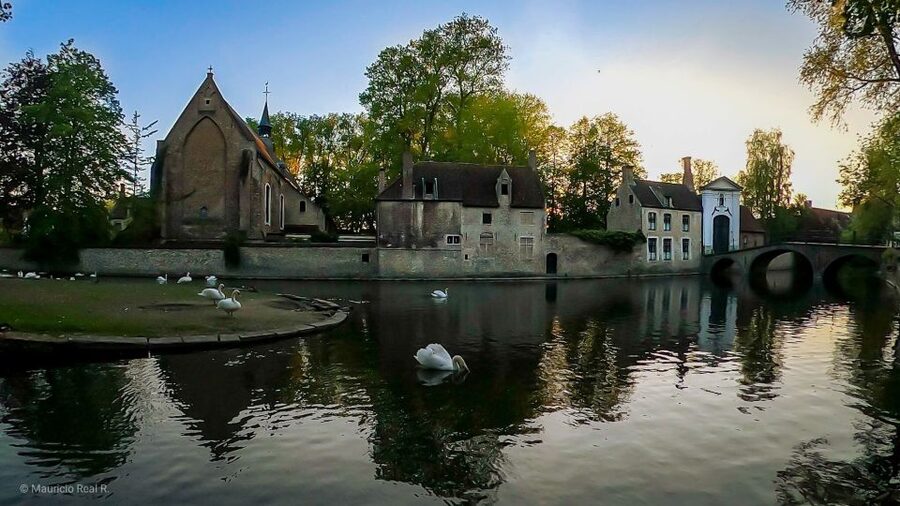
The route continues toward Minnewater, often called the Lake of Love, and the Beguinage. This section gives you a change of pace after the main squares and grand buildings.
Minnewater is tied to one of Bruges’s best-known romantic names. The guide adds the legend and separates the story from the facts, giving you the sort of memorable detail that helps the city stay in your mind. One unusual local subject mentioned during the tour is the city’s swans, a detail that can lead to a particularly memorable story about Bruges.
The Beguinage offers a quieter setting. It is a place to consider religious and communal life outside the city’s main centers of power. The stop is valuable because it broadens your picture of Bruges. This is not only a city of merchants and grand squares. It also had communities built around faith, work, and a more restrained daily rhythm.
The walking pace is described as comfortable, which is welcome because the route covers a lot. Still, wear sturdy, comfortable shoes. Bruges is best experienced on foot, and a two-hour walk can feel longer if your footwear is poor. The tour is wheelchair accessible, but you should still keep the full walking format in mind when deciding if it suits your group.
More Private History Tours in Belgium
- Private Historical Tour: The Highlights of Bruges
★ 5.0 · 315 reviews - Private tour: Highlights & History of Antwerp
★ 5.0 · 299 reviews - Private Historical Tour: Legends of Antwerp
★ 5.0 · 125 reviews - Antwerp: Private 3-Hour Historical Sightseeing Walking Tour
★ 4.8 · 70 reviews
Rosary Quay, the photograph everyone wants
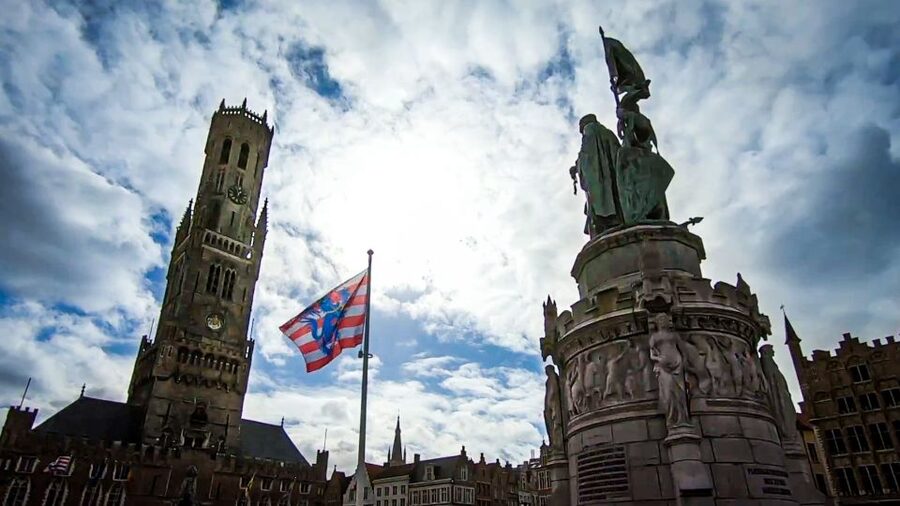
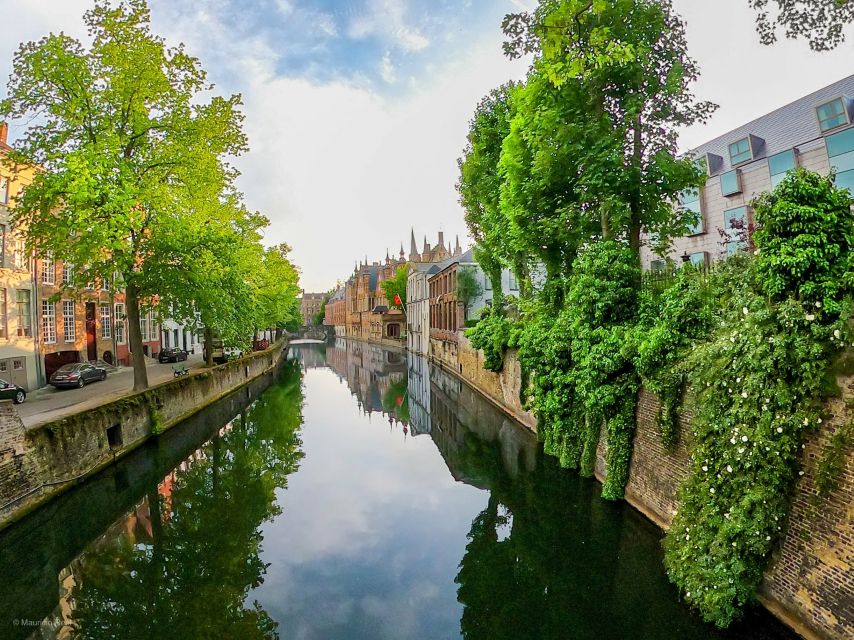
Rozenhoedkaai, or Rosary Quay, is the stop most likely to appear in your Bruges photographs. It is widely considered the city’s most photographed spot, and the tour gives you time to take your own pictures rather than rushing past for a quick glance.
This is a good example of the difference between a guided walk and a sightseeing checklist. Your guide explains why the view matters, then gives you a chance to enjoy it. The canals, old buildings, and reflected light create the familiar Bruges scene, but the visit is still worth making in person.
Bring your camera or phone ready. The stop is short enough to fit the tour without taking over the whole route. If photography matters to you, tell the guide at the start. A private tour gives you a better chance of making small adjustments for photo stops than a large shared group would.
The Fish Market and Half Moon Brewery
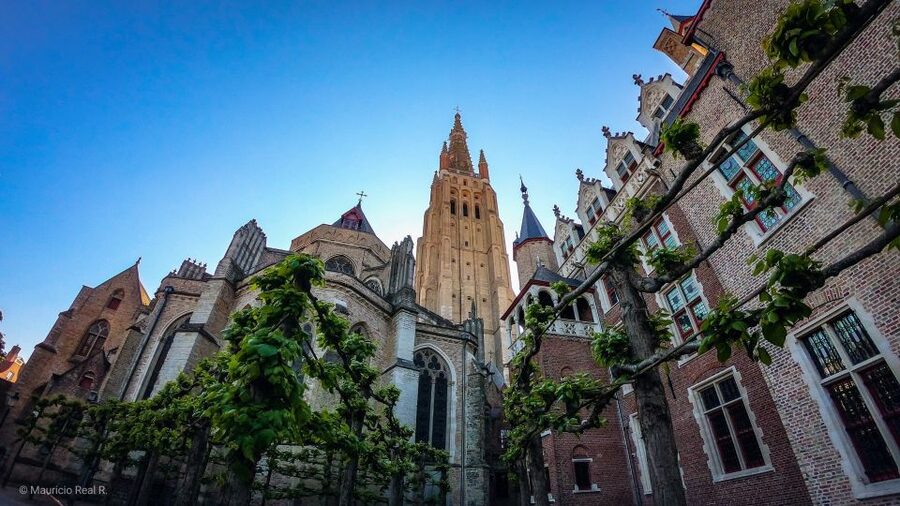
The Fish Market and Half Moon Brewery bring the walk back to everyday Bruges. These are useful stops because they connect grand history with food, drink, work, and modern city life.
The Fish Market reflects the city’s trading past and its relationship with the water. It helps explain that Bruges was not built only for rulers and church officials. Markets gave the city its daily rhythm, and the products sold there helped support the local economy.
Half Moon Brewery gives you a chance to think about Belgian beer without turning the tour into a tasting. Food and drinks are not included, so plan to buy them separately if you want to explore the local beer scene. The guide can offer suggestions for restaurants and drinks, and the booklet may provide gifts or discounts at selected local businesses.
This part of the tour is particularly useful if you have only a short time in Bruges. You get ideas for where to return after the walk, instead of seeing the city only as an outdoor museum.
What makes the storytelling work
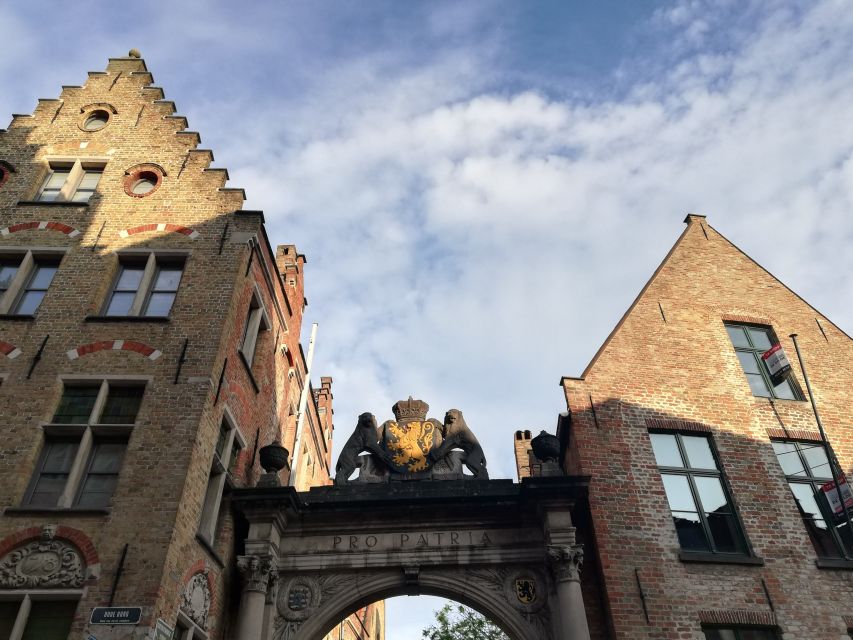
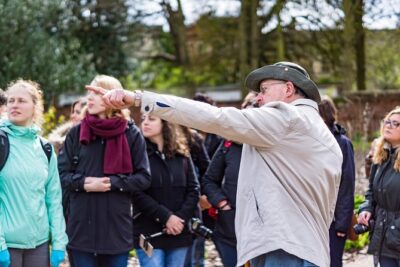
The most praised part of this experience is the guide’s delivery. People respond well when the past is explained through funny stories, legends, and facts rather than a stream of dates.
Wouter, for example, is remembered for pairing strong information with amusing stories. Martin is repeatedly described as engaging and entertaining, while Kobo is praised for warmth, humor, and a strong command of Bruges’s past. Louis is noted for answering questions and tailoring the route to what his group had already visited.
That range matters because guiding style can shape your whole experience. A very academic guide might suit you if you want architecture and chronology. A lively storyteller may suit you better if you want the city to feel immediate and memorable. This tour appears to lean toward the second approach, while still giving enough historical detail to build a clear picture of Bruges.
The stories also give you useful memory hooks. You may forget a date, but you are more likely to remember a strange local tale, an unusual swan story, or the reason a particular square mattered. That is exactly what a short city walk should do: give you a framework you can use for the rest of your visit.
Is $206 good value for two people?
At $206 per group of up to two, this is not the cheapest way to see Bruges. The price makes more sense if you value privacy, questions, language choice, and the ability to adjust the route.
For two people, you are paying about $103 per person for a two-hour private introduction. That can be fair if you would otherwise book separate attractions, spend time finding key sights, and miss the context that connects them. The booklet adds some practical value, especially if you plan to take a boat tour and use the €3 discount.
The value improves for a couple with limited time. You see many of the city’s main locations in a compact route and finish with advice on what to do next. It is less compelling if you prefer to explore at your own pace, want long interior visits, or are comfortable using a guidebook and map.
The tour is also private for your group, so you do not have to match the pace or interests of strangers. That can be worth paying for on a special trip, with children, or when one person in your group has specific interests.
From 1 March 2026, Bruges will limit each guide to a maximum of 20 people. A group over 20 must book a second guide, since exceeding the limit is punishable by law. The supplied information also notes headsets for groups of 24 or more, but groups above 20 should plan around the new two-guide rule.
Practical details that affect your day
The tour lasts two hours, and you can check available starting times when booking. It runs rain or shine, so bring weather protection and wear comfortable shoes. The walk is wheelchair accessible, which makes it a useful option for many groups, though the route remains a city walking tour.
Food and drinks are not included. That is not a major flaw, since Bruges has plenty of places to eat and drink after the walk, but budget for them separately. The guide’s local suggestions can help you avoid wasting your next hour deciding where to go.
You can cancel up to 24 hours in advance for a full refund, and you can reserve now while paying later. Those terms help if your plans depend on train schedules or changing weather.
Who should book this Bruges walk?
I would choose this tour for a first visit to Bruges, especially if you have one day or less and want the city to make sense quickly. It also suits couples who prefer a private guide, families who need a flexible pace, and anyone who enjoys history delivered with humor.
It is a good fit if you want both famous sights and less obvious stories, or if you like finishing a tour with a list of places to return to. The language choice is broad, and the private format lets you ask for more attention to architecture, legends, local life, or practical recommendations.
I would be more cautious if you want to enter and study every landmark, take long photo stops, or spend most of the time sitting. Two hours gives you a strong overview, but Bruges offers far more than any single walking route can cover.
Should you book it?
Book this tour if you want a lively introduction to Bruges that covers the major sights without feeling like a dry lecture. The strongest reasons are the private format, the flexible route, the guide’s story-driven style, and the chance to get useful advice for the rest of your visit.
Skip it if you prefer complete independence or plan to spend your time inside museums and churches. For everyone else, this is a practical way to meet Bruges through its squares, canals, legends, and local characters before setting out on your own.
FAQ
Where does the Bruges walking tour meet?
Meet your guide in Grote Markt, the main square of Bruges. The guide waits beside the statue in the middle of the square with a red umbrella.
How long does the private tour last?
The walking tour lasts two hours. Starting times depend on availability.
What languages are available?
The live guide can conduct the tour in Dutch, English, German, French, or Spanish.
Is the tour private and customizable?
Yes. The experience is for a private group, and you can make special requests or customize the route around your interests.
What sights are included on the walk?
The route includes the Market Square, Church of Our Lady, St. John’s Hospital, Gruuthuse Palace, Minnewater, Beguinage, Half Moon Brewery, Fish Market, Burg Square, and Rosary Quay, along with other historic locations.
What happens if my group has more than 20 people after 1 March 2026?
Each guide may lead a maximum of 20 people. A group larger than 20 must book a second guide under Bruges’s new rule.
Newest history tours we have reviewed in Belgium
- Antwerp: Private 3-Hour Historical Sightseeing Walking Tour★ 4.8 · 70 reviews
- Antwerp: Private Historical Highlights Walking Tour★ 4.9 · 36 reviews
- Private Historical Tour: Legends of Antwerp★ 5.0 · 125 reviews
- Private Historical Tour: The Highlights of Bruges★ 5.0 · 315 reviews
- Historical Walking Tour in Antwerp Old City★ 5.0 · 277 reviews
- Private tour: Highlights & History of Antwerp★ 5.0 · 299 reviews
- Antwerp: Historical Walking Tour in the Old City★ 4.8 · 373 reviews
- Ghent: 40-Minute Historical Boat Tour of City Center★ 4.3 · 430 reviews
Private History Tours, compared.
Private Guided Historic Electric Cart Tour of St. Augustine
Read our review →
Private Full-Day Tour of Historical Alexandria
Read our review →
Private Tour of the Historic City in a Ford T Car
Read our review →
Madrid Historical Tour with Local Guide in Eco Tuk Tuk Private
Read our review →
Private Biblical Tour Ancient Corinth & Isthmus Canal from Athens
Read our review →
Private Kathmandu Sightseeing Tour | UNESCO World Heritage sites
Read our review →
Historic Porto by Private Electric Tuk Tuk to Top Landmarks
Read our review →Browse the lists this tour appears in