
Review · BRUGES HISTORY TOURS
Private Historical Tour: The Highlights of Bruges
Bruges is easiest to understand on foot, and this private tour gives you a fast lesson in how a medieval trading town became one of Belgium’s most admired historic cities. You move from the Markt to Burg Square through old commercial lanes, churchyards, a beguinage, and the Lake of Love, with stories about merchants, dukes, kings, beer, leather, and swans along the way.
I like the private format, since your guide can slow down for photos, answer family questions, or shift toward architecture and local life. I also like the useful food and drink advice. Guides including Martin, Sam, Patrick, and Mauricio have pointed people toward local chocolate, beer, waffles, fries, and Flemish cooking.
The main caution is the pace. Eleven stops in about two hours means most places are explained from outside or from a nearby public space. If you want long museum visits or a climb up the Belfort, you will need extra time afterward.
Key points before you book
- A compact route with 11 named stops: You cover Bruges’ main central sights without spending the whole day on a single museum or church.
- A private guide for your party: The walk can respond to your interests and pace, unlike a large group tour.
- Useful local advice at the end: Guides regularly share suggestions for restaurants, breweries, chocolate, waffles, fries, and Flemish food.
- Several stops are exterior visits: Admission to the Gruuthusemuseum, Sint-Janshospitaal, Onze-Lieve-Vrouwekerk, and Groeningemuseum is not included.
- Hotel pickup is included: The tour can begin at your Bruges hotel, although the stated meeting point is Pieter de Coninck en Jan BreydelMarkt.
- Early timing is worth considering: Bruges gets crowded with day visitors, so a morning start can make the narrow streets easier to handle.
Why this two-hour walk works well in Bruges
Bruges can feel like a picture book at first glance: canals, stepped gables, church towers, and horse carriages. A guide helps you get past the pretty surface. This tour links the buildings to the people who used them, the trades that made money here, and the political fights that shaped the city.
The route is also sensible for a first visit. It begins near the Markt, the city’s most recognizable square, and ends at Burg Square, the political center of old Bruges. Along the way, you see the main medieval core plus quieter corners that are easy to miss if you simply follow the canal paths.
The price is $99.81 per person. That is not the cheapest way to see Bruges, but the value improves as your party gets larger because this is a private activity. You are paying for a guide dedicated to your group, not just for a set of landmarks. It can be a good choice for a family, a couple wanting a focused introduction, or anyone who dislikes walking in a large pack.
The tour lasts about two hours, and the listed stop times add up to roughly that length. Expect a moving conversation rather than eleven full visits. Your guide may spend more time at the Markt, Belfort, or Burg Square if those subjects interest you, while the shorter stops provide context for later exploration.
More Private History Tours in Belgium
- Private tour: Highlights & History of Antwerp
★ 5.0 · 299 reviews - Bruges: Private Historical Highlights Walking Tour
★ 4.7 · 191 reviews - Private Historical Tour: Legends of Antwerp
★ 5.0 · 125 reviews
Markt: Bruges begins with trade and tension
The Markt is the natural opening classroom. Here, your guide explains how Bruges became a trading hub in the Middle Ages and why its position mattered to merchants moving goods through northern Europe.
You also hear about the difficult relationship between Bruges and the French king. That political thread helps explain why the city’s prosperity did not always bring peace. Bruges had money, influence, and a strong local identity, but it also had to deal with powerful rulers who wanted control.
This is a short stop, listed at about 10 minutes, so do not expect a full political lecture. It is enough to give you a framework for the rest of the walk. Once you know Bruges was more than a pretty town, its squares and grand buildings make more sense.
Belfort: the tower behind the postcard
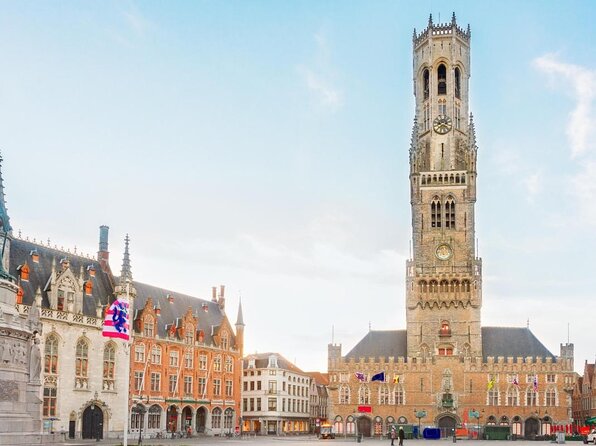
The Belfort is one of Bruges’ defining sights. The tour visits the halls behind the bell tower and explains the role the tower played during the Middle Ages.
That detail matters. The Belfort was not simply a photogenic tower. It represented civic power and helped protect important city records and privileges. Your guide uses the building to show how Bruges governed itself and how public authority was displayed in stone.
The admission ticket for the tower is not included, and this tour does not promise a climb. If reaching the top is important to you, plan that as a separate activity. The walking tour gives you context first, which can make a later visit more meaningful.
Gruuthusemuseum: wealth built on a trade monopoly
The Gruuthusemuseum occupies a renovated city palace once linked to a wealthy Bruges family. Your guide explains how the family gained influence through a monopoly in a particular trade.
That is a useful reminder that medieval fortunes often came from control over a specific product or route. The palace is not just an attractive old building. It shows how trade could turn into political and social power.
The stop lasts about 10 minutes, and museum admission is not included. You will get an explanation of the house and its owners rather than time to inspect the full collection. If you like decorative arts, domestic interiors, or the lives of merchant families, return later for a proper museum visit.
Same streets, a different century:
- Historical Walking Tour: Legends of Bruges
★ 5.0 · 2,541 reviews - Historical Walking Tour: Legends of Antwerp
★ 5.0 · 1,837 reviews - Historical Walking Tour: Legends of Gent
★ 5.0 · 1,761 reviews - Brussels: Historical Tour with Chocolate & Waffle Tasting
★ 4.8 · 1,206 reviews
Sint-Janshospitaal: care, faith, and medieval society
The hospital of St John is one of the oldest surviving hospitals in the world. The tour pauses here to explain why hospitals were central to medieval society.
You can expect a short introduction to the building’s purpose and place in city life. Hospitals were not merely medical facilities in the modern sense. They also reflected religious duty, charity, and the social structure of the period.
Admission is not included, so the guide’s explanation is the main experience during the walk. You can add the interior later if you want more time with the building and its art. This stop is especially useful if you prefer social history to a list of dates and rulers.
The Beguinage: a community of women for eight centuries
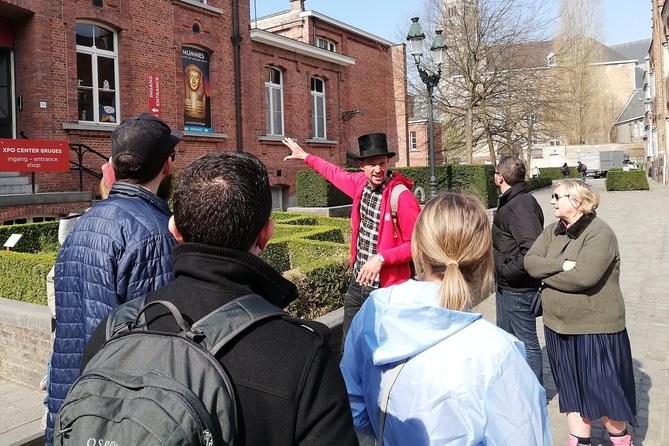
The Princely Beguinage Ten Wijngaarde brings a quieter mood to the route. You walk into a picturesque enclosed area where a community of women has lived together for more than 800 years.
Your guide explains the beguine way of life and why this community mattered. It was a distinct form of religious and social organization, different from the usual image of a convent. The calm setting makes a sharp contrast with the commercial energy of the Markt.
This is one of the stops that should not be rushed. The listed visit is about 10 minutes, and a short walk through the area gives you a sense of its shape and atmosphere. Still, if this is a part of Bruges you particularly want to study, allow extra time after the tour.
One practical point deserves attention: the published route includes the Beguinage, but at least one past tour experience did not reach it. If this stop matters to you, confirm the planned route with your guide at the start. A private tour should make that conversation easy.
Minnewater Lake: swans, love, and a clash with an emperor
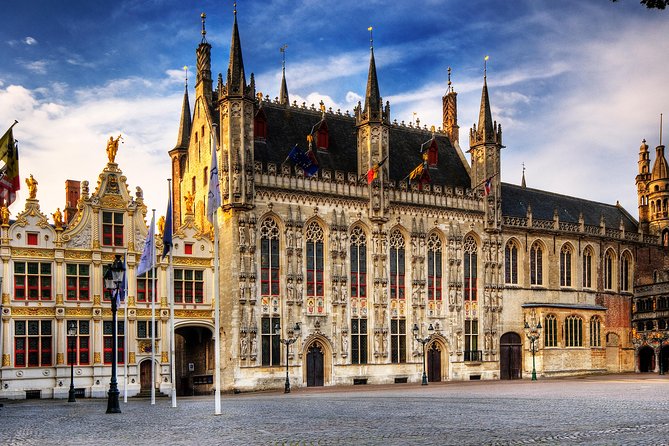
At Minnewater Lake, the guide tells the story behind Bruges’ swans and the city’s conflict with Emperor Maximilian of Austria. The lake gives you one of the prettiest pauses on the route, but the political story keeps it from being just a photo stop.
The swans are tied to Bruges’ past and local memory. Your guide connects that familiar image with the city’s strained relationship with Maximilian. It is a good example of how a small local symbol can carry a long political story.
The stop is listed at about 15 minutes, making it one of the longer pauses. That gives you time for photographs and a little breathing room. As with the Beguinage, confirm that the route will include it if you are booking mainly for these southern sights.
De Halve Maan: beer under the streets
Outside De Halve Maan Brewery, you hear why the people of Bruges were given the nickname Fools of Bruges. The guide also points out part of the beer pipeline running beneath the city.
This is a fun stop because it connects an old urban problem with a modern working brewery. The pipeline is a reminder that Bruges is not only a preserved historic center. It is also a living city that has found practical ways to keep production near the center while moving beer below street level.
You do not receive a brewery admission or tasting as part of the tour. The stop is mainly about the story and the exterior. If beer interests you, ask your guide for advice on local breweries and where to continue afterward. Several guides, including Sam and Martin, are especially praised for practical suggestions about beer and food.
Onze-Lieve-Vrouwekerk: brick, Michelangelo, and Burgundy
The Church of Our Lady is one of the route’s major architectural stops. Its brick tower is described as the second tallest brick tower in the world, and the church contains a statue by Michelangelo along with the tombs of the last Dukes of Burgundy.
That is a lot to take in during 10 minutes. The guide gives you the main story and points out why the church matters, but you should not expect a full art history visit. Admission is not included.
The connection to the Burgundian dukes adds political weight to the church. Bruges was shaped by commerce, but it was also tied to powerful courts and noble families. The Michelangelo work gives the stop a direct link to European art beyond Belgium.
If you want to see the interior carefully, plan a separate return visit. The walking tour is best used to learn what to look for before you enter.
Groeningemuseum: Flemish art in a garden setting
The route goes into the garden of the Groeningemuseum, where works by major Flemish masters are displayed. The listed stop is only about five minutes, so think of this as an orientation point rather than a museum visit.
The guide can help you understand why Flemish painting matters to Bruges and the surrounding region. You may also get a quick look at the setting before deciding if you want to buy admission and return.
The museum ticket is not included. That separation is helpful for people with limited time, since you can decide later if the collection deserves a longer visit. Art lovers should not mistake this brief stop for a substitute for the museum itself.
Huidenvettersplein: the smell of old trade
At Huidenvettersplein, the old Tanner’s Square, the guide explains how workers greased animal skins and turned them into leather. The trade was practical, profitable, and very smelly.
This stop adds texture to the tour. Grand churches and merchant palaces can make medieval Bruges seem polished, but cities also depended on unpleasant work. Tanneries needed water, space, and access to trade networks, and their presence shaped where people worked and lived.
The square is a free public stop and takes about 10 minutes. It is the kind of place where a short explanation changes what you notice. Afterward, you may look at old commercial lanes less as scenery and more as workplaces.
Burg Square: finishing at the city’s political heart
The tour passes the old Fishmarket and finishes at Burg Square, the political heart and birthplace of Bruges. This is a strong ending because it brings the route back to power and civic life after the earlier stories of trade, religion, craft, and local legend.
Your guide can tie together the themes introduced at the Markt: who controlled Bruges, how the city made money, and how rulers and residents struggled over authority. The square is also a useful place to continue exploring on your own.
The tour ends at Burg Square, not back at the starting point. Hotel pickup is included in the tour details, but the stated route begins at Pieter de Coninck en Jan BreydelMarkt and ends at Burg. Confirm the exact pickup arrangement when you book, especially if you are staying outside the central area.
What the private format changes
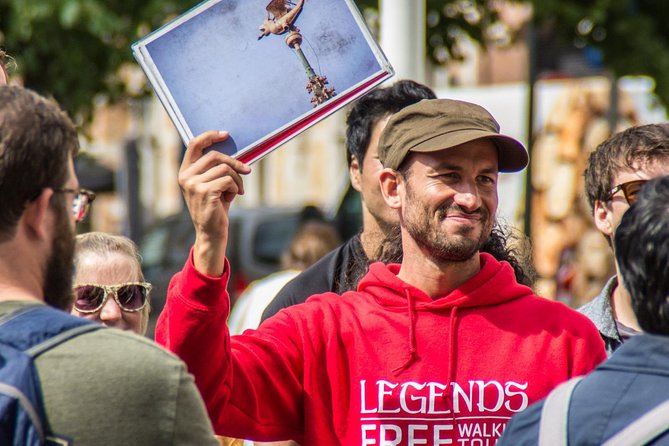
The biggest practical benefit is control. If you walk slowly, need regular photo pauses, or have children and older family members with you, the guide can adjust the pace. One past family group ranged from age 9 to 75 and found the format suitable for everyone.
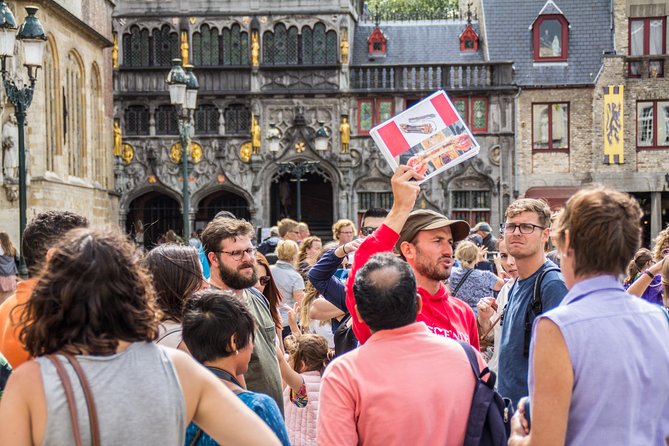
You can also ask for more depth in a subject that interests you. Guides such as Martin have used dates, old photographs, physical objects, and stories about local people to make the past easier to picture. Mauricio is noted for answering questions at length and adapting the route to the group’s interests.
The quality can vary by guide, as it does on any guide-led experience. The names most often associated with particularly strong experiences include Martin, Piet, Sam, Patrick, Mauricio, Erik, Wouter, Hilde, Louis, and Helga. Martin is praised for clear English, detailed local knowledge, and thoughtful follow-up recommendations. Piet is known for a comfortable pace and strong local background. Sam brings humor and visual aids, while Patrick is described as especially accommodating.
The walk is offered in English. You should state your preferred start time when booking. If you want a group larger than 15 people, contact the provider directly at [email protected].
Timing, crowds, and comfort
Bruges’ center can become crowded, especially around the Christmas markets and during the main day-trip hours. A morning start is a smart choice if you want clearer views and easier movement through narrow streets.
The route covers a lot of ground in two hours, but it is not described as strenuous. One person who walks slowly found the private pace comfortable. Still, you are on your feet for most of the experience, and cold or wet weather can affect the day. A guide once kept checking that a group was comfortable on a very cold day, but you should dress for outdoor walking.
An evening start can also work. One guest found an evening walk a good introduction to Bruges. The best time depends on your plans, but an early start gives you the most flexibility to revisit museums and churches afterward.
What you pay for, and what you do not
At $99.81 per person, the tour includes the local professional guide, private service, hotel pickup and drop-off, and taxes and fees. Food and drinks are not included.
Museum and church admission is also not included at the stops where a ticket is listed. This keeps the base price clear, but it means you should budget extra if you plan to enter the Gruuthusemuseum, Sint-Janshospitaal, Onze-Lieve-Vrouwekerk, or Groeningemuseum.
I see the price as reasonable for a private introduction, especially for two or more people who value personal attention. It is less compelling if you only want exterior photographs and are comfortable reading about Bruges on your own. The value comes from the guide’s stories, route choices, questions, and local recommendations.
Free cancellation is available up to 24 hours before the start time. Changes or cancellations inside that window are not accepted for a refund.
Who should book this Bruges walk?
Book it if you are visiting Bruges for the first time and want the city to make sense quickly. It suits couples, families, and small groups who prefer conversation over a fixed script.
It is also a good fit if you want restaurant and beer advice from someone who knows the city. The food suggestions are a real practical benefit, especially for waffles, fries, chocolate, Flemish meals, and local breweries.
You may want another option if your main goal is long museum visits, a Belfort climb, or an intensive academic lecture. This tour gives you a broad introduction, not a full day of interior access.
Should you book the Highlights of Bruges tour?
Yes, if you want a private orientation before exploring Bruges on your own. The route covers the essential central sights, and the guide adds the local stories that turn a pleasant walk into a clearer picture of the city.
Before booking, ask for an early start if crowds concern you. Confirm the hotel pickup details and make sure the Beguinage and Minnewater Lake are included if they are priorities. For the best value, use the two-hour walk as your introduction, then return to the museums and churches that caught your interest.
FAQ
How long does the private Bruges tour last?
The tour lasts approximately two hours.
How much does the tour cost?
The listed price is $99.81 per person.
Is the tour private?
Yes. Only your party participates in the activity.
Is hotel pickup included?
Yes. Hotel pickup and drop-off are included, but you should confirm the exact pickup arrangement when booking because the stated meeting point is Pieter de Coninck en Jan BreydelMarkt.
Where does the tour end?
The tour ends at Burg Square, Burg, 8000 Brugge, Belgium.
What language is the tour offered in?
The tour is offered in English.
Are food and drinks included?
No. Food and drinks are not included unless specifically stated.
Are museum admission fees included?
No. Admission is not included for the Gruuthusemuseum, Sint-Janshospitaal, Onze-Lieve-Vrouwekerk, or Groeningemuseum.
Can I request a particular start time?
Yes. You should mention the time you would like to start when booking.
Can groups larger than 15 people book?
Yes, but groups larger than 15 people should contact the provider at [email protected].
Is cancellation free?
You can cancel up to 24 hours before the experience for a full refund. Cancellations or changes made less than 24 hours before the start time are not accepted for a refund.
Newest history tours we have reviewed in Belgium
- Antwerp: Private 3-Hour Historical Sightseeing Walking Tour★ 4.8 · 70 reviews
- Antwerp: Private Historical Highlights Walking Tour★ 4.9 · 36 reviews
- Private Historical Tour: Legends of Antwerp★ 5.0 · 125 reviews
- Bruges: Private Historical Highlights Walking Tour★ 4.7 · 191 reviews
- Antwerp: Historical Walking Tour in the Old City★ 4.8 · 373 reviews
- Historical Walking Tour in Antwerp Old City★ 5.0 · 277 reviews
- Private tour: Highlights & History of Antwerp★ 5.0 · 299 reviews
- Ghent: 40-Minute Historical Boat Tour of City Center★ 4.3 · 430 reviews
Private History Tours, compared.
Private Guided Historic Electric Cart Tour of St. Augustine
Read our review →
Private Full-Day Tour of Historical Alexandria
Read our review →
Private Tour of the Historic City in a Ford T Car
Read our review →
Madrid Historical Tour with Local Guide in Eco Tuk Tuk Private
Read our review →
Private Biblical Tour Ancient Corinth & Isthmus Canal from Athens
Read our review →
Private Kathmandu Sightseeing Tour | UNESCO World Heritage sites
Read our review →
Historic Porto by Private Electric Tuk Tuk to Top Landmarks
Read our review →Browse the lists this tour appears in