
Review · ANTWERP HISTORY TOURS
Antwerp: Private Historical Highlights Walking Tour
Antwerp’s old center packs a remarkable amount into a short walk: medieval guild houses, Baroque churches, a secret alley, major art and fashion sites, and the city’s grand cathedral. This private two-hour tour gives you a clear route through the historic core, with stories and local legends tying the sights together.
I like the way the guide can adjust the walk to your interests, and I like that the tour reaches places such as Vlaeykensgang and the Plantin-Moretus Museum, which are easy to miss when you explore alone. The main drawback is price: at $206 for up to two people, this is a costly walking tour, especially since it lasts only two hours and does not include a drink or museum admission.
Key points to know before you book
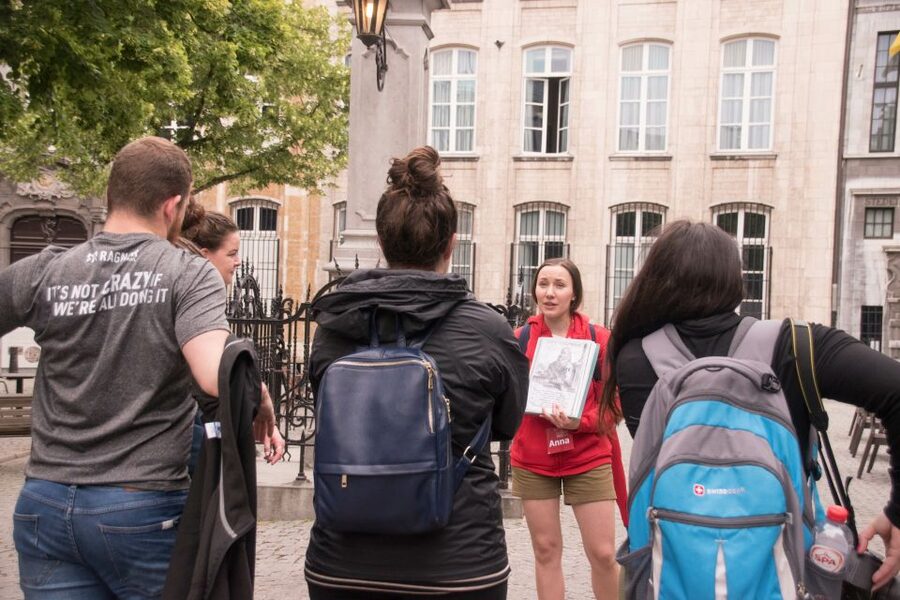
- Grote Markt is the starting point: Meet by the statue under the guide’s red umbrella.
- A strong first look at Antwerp: The route links the guild houses, Brabo Fountain, churches, museums, and cathedral in one compact walk.
- Private and adjustable: You can focus more on art, architecture, history, food, or shopping.
- Guides speak three languages: Tours are available in English, Dutch, and Spanish.
- Useful for a first visit: The walk helps you get your bearings before returning to favorite areas on your own.
Starting with Antwerp’s medieval showpiece
You meet your guide beside the statue in Grote Markt, Antwerp’s main historic square. Look for the red umbrella, a simple detail that makes the meeting point easy to spot in a crowded center.
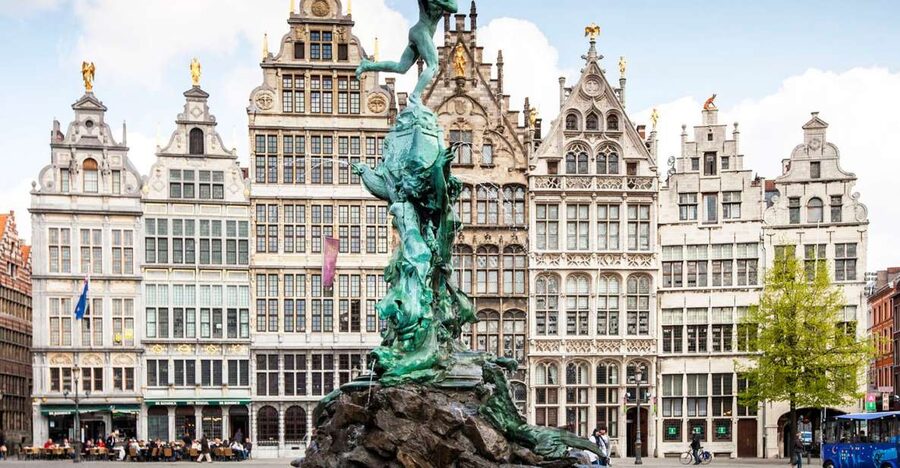
Grote Markt gives you an instant lesson in Antwerp’s past. The square is framed by ornate medieval guild houses, the city hall, and the Brabo Fountain. Your guide explains how these buildings connect to trade, civic power, and the old stories that shaped the city.
The square is also a good place to begin because it gives you a visual map of the old center. From here, the tour moves on foot through streets that connect the commercial, religious, artistic, and domestic sides of Antwerp.
The Brabo Fountain carries one of Antwerp’s best-known legends. The statue shows Brabo throwing the hand of a giant into the river, a story linked to the city’s name. This is the sort of local tale that makes the buildings easier to remember. You are not just looking at a fountain; you are learning why the city tells its own story in stone and bronze.
More History Walking Tours in Belgium
- Historical Walking Tour: Legends of Bruges
★ 5.0 · 2,541 reviews - Historical Walking Tour: Legends of Antwerp
★ 5.0 · 1,837 reviews - Historical Walking Tour: Legends of Gent
★ 5.0 · 1,761 reviews
Churches, writers, and Baroque drama
The next stop is the Hendrik Conscience Statue, named for the Flemish writer. This part of the walk brings together literature, religion, and old civic life. You see an impressive Baroque church and the former city library, giving the stop more range than a simple photo break.
The tour then reaches Carolus Borromeus Church, one of Antwerp’s major Baroque landmarks. Its 17th-century details show the period’s taste for movement, decoration, and theatrical design. Your guide can help you read the building rather than simply admire its surface: look at the way the architecture directs your eye and creates a sense of ceremony.
A two-hour tour cannot give you unlimited time at every church. That is worth keeping in mind if you want long interior visits or careful study of art. This experience is built more around orientation and explanation. You see the important places, hear why they matter, and then decide where you want to return.
That format works well for a first day in Antwerp. It keeps the pace moving and prevents you from spending your whole morning in one building before you know what else the city offers.
Handelsbeurs and Antwerp’s trading power
Handelsbeurs Antwerpen, the Bourse of Antwerp, adds an economic chapter to the walk. The exchange is described as the world’s first Wall Street, a phrase that captures Antwerp’s role as a major international trading center in the 16th century.
This stop helps explain why the city became wealthy enough to support grand churches, merchant houses, artists, printers, and fashion businesses. Antwerp’s beauty did not appear by chance. Trade created the money and connections that helped shape the city.
I especially value this kind of stop because it gives context to the architecture. Without it, you might see a line of handsome buildings and miss the reason Antwerp grew so important. With it, the old center becomes a record of business, ambition, and international exchange.
The tour does not present Antwerp as only a museum of old buildings. It shows how commerce still influences the city’s identity. That is useful if you want more than a string of dates and names.
Rubens, fashion, and the city’s creative side
The route continues to Rubens House, the former home and workshop of Peter Paul Rubens. The stop introduces you to one of Antwerp’s most famous artists and to the practical world behind his success.
Rubens was not only a painter working alone in a quiet studio. His home and workshop point to the scale of his career, his professional network, and the way art operated in a wealthy European city. Your guide shares more about his life and the reasons he became so successful.
Because this is a walking tour, do not assume your ticket includes entry to the house or time inside every museum. The itinerary brings you to the places and explains their importance. If Rubens is your main reason for visiting Antwerp, check separately how much time you want for the museum itself.
The tour then shifts from Baroque painting to modern fashion at MoMu, the fashion museum. Antwerp has a major reputation for fashion, and MoMu gives you a fresh way to understand the city’s creative character. Even a short stop can help you decide if you want to return for a full museum visit or plan time for shopping.
This pairing works well. Rubens represents Antwerp’s artistic power in the 17th century, while MoMu points toward the city’s more recent design culture. In a few blocks, you move from painted altarpieces to clothing and contemporary style.
One useful detail from the private format is that the guide can adjust the conversation. If you care more about art than shopping, you can ask for more attention to Rubens. If food and fashion interest you more, you can steer the discussion in that direction. One guide, Flip, was specifically praised for tailoring a walk around art, Belgian waffles, and local interests.
More Private History Tours in Belgium
- Private Historical Tour: The Highlights of Bruges
★ 5.0 · 315 reviews - Private tour: Highlights & History of Antwerp
★ 5.0 · 299 reviews - Bruges: Private Historical Highlights Walking Tour
★ 4.7 · 191 reviews - Private Historical Tour: Legends of Antwerp
★ 5.0 · 125 reviews
Plantin-Moretus and the power of the printed word
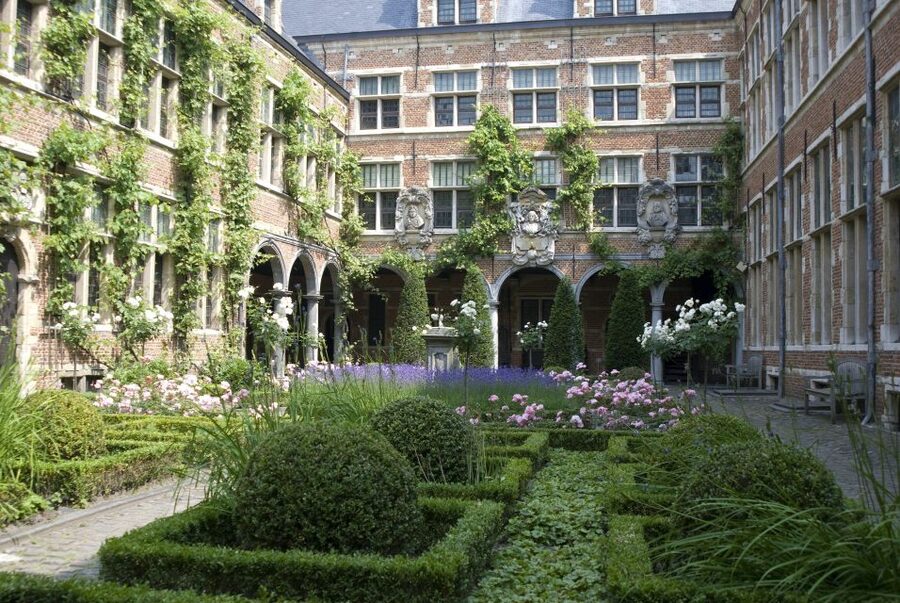
The Museum Plantin-Moretus is one of the strongest stops for understanding Antwerp’s intellectual and business life. It was the first museum to receive UNESCO World Heritage status, and it connects printing, scholarship, commerce, and family history.
The museum is linked to the Plantin printing house, a major name in European publishing. Even if you only see the exterior during this walk, the guide can explain why the place matters and why printing helped Antwerp reach far beyond Flanders.
I like that this stop broadens the tour beyond the usual church-and-square route. Antwerp was not shaped only by merchants and painters. Printers, writers, publishers, and readers also helped make it an important European center.
Again, the two-hour limit matters. You will not have time for a full museum visit alongside all the other stops. Think of this part of the route as an introduction. Mark the museum as a place to return to if you want a slower look at the building and collections.
Vlaeykensgang, Antwerp’s quiet medieval lane
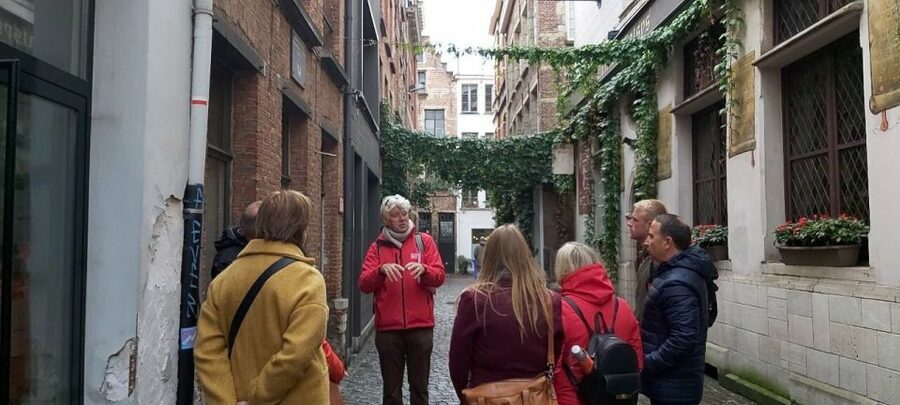
Vlaeykensgang is one of the most atmospheric parts of the walk. This narrow medieval alley is not easy to find without local help, which is one reason a guide adds real value here.
The passage offers a look at some of the best-preserved remnants of medieval Antwerp. Its small scale provides a sharp contrast to Grote Markt and the city’s grand churches. You trade broad façades and open squares for enclosed lanes and old domestic architecture.
The alley is often described as one of Antwerp’s most photographed places. Bring your camera, but take a moment to look beyond the obvious picture. The real appeal is the change in mood. You have moved from the city’s public face into a quieter corner that feels much closer to daily medieval life.
This is also a good example of why a private guide can be useful in Antwerp. Large attractions are easy to locate. Small passages are less certain, and you may walk past Vlaeykensgang without realizing what is there.
Nello, Patrasche, and the Cathedral of Our Lady
The Nello and Patrasche Statue provides another memorable photo stop. The figures come from the story of a young boy and his dog, and the statue has become a popular place to pause in the old center.
Your guide explains the story and its connection to Antwerp. This gives the stop more meaning than a quick photograph. Local stories often reveal how a city sees itself, what it chooses to remember, and how literature becomes part of public space.
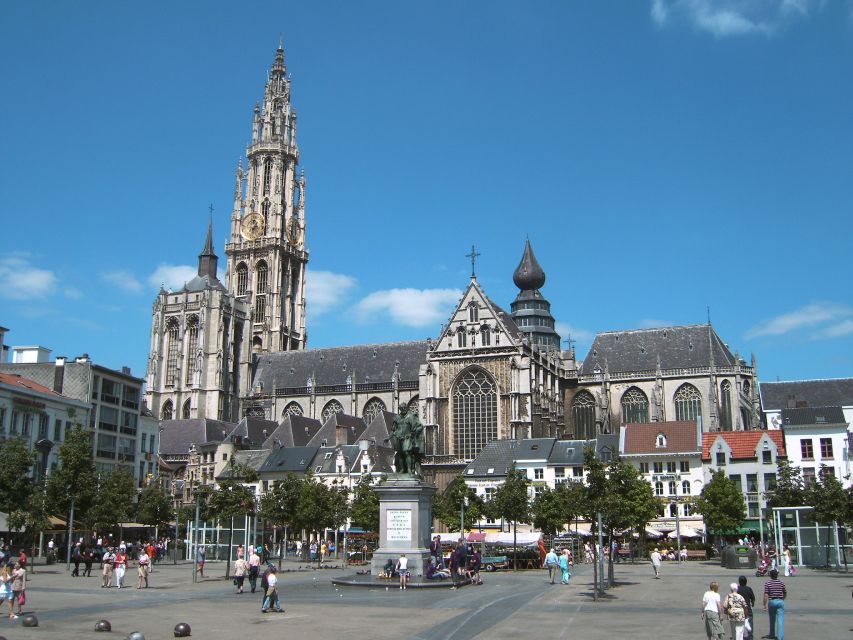
The walk finishes in front of the Cathedral of Our Lady. This is a fitting end because the cathedral gathers many of the themes introduced earlier: religion, art, civic pride, trade, and centuries of building work.
You learn about its construction and the curious details behind the project. The cathedral is one of Antwerp’s defining landmarks, so ending here gives you a strong final reference point. From the square, you are well placed to continue exploring the old center, find a café, or return for a longer cathedral visit.
The final stop also keeps the route practical. You finish in a central area rather than at a distant transport point. The tour does not include a closing drink, which one participant considered a weakness given the price, but you can easily continue into Antwerp’s cafés and food spots afterward.
What the private format adds
A private group means the guide’s attention is yours. For two people, that can make the walk feel more like a conversation than a standard group lecture. You can ask about a church detail, pause for a photograph, or shift the focus toward food, art, shopping, or local legends.
The tour is also described as customizable. That does not mean every stop can be replaced or that the route has no structure. It means you have more room to tell the guide what matters to you.
This flexibility was useful for people who wanted both culture and food advice. You can ask about Belgian waffles, culinary specialties, or areas worth exploring after the walk. The included booklet with coupons and discounts may add some practical value, though its usefulness depends on which offers you receive and whether they fit your plans.
The guides speak English, Dutch, and Spanish. Feedback identifies guides named Flip and Arie, with Flip receiving particular praise for warmth, energy, and adjusting the walk to personal interests. Guide assignments can vary, so you should not book on the assumption that one specific guide is guaranteed unless the provider confirms it.
Price, pace, and who gets the best value
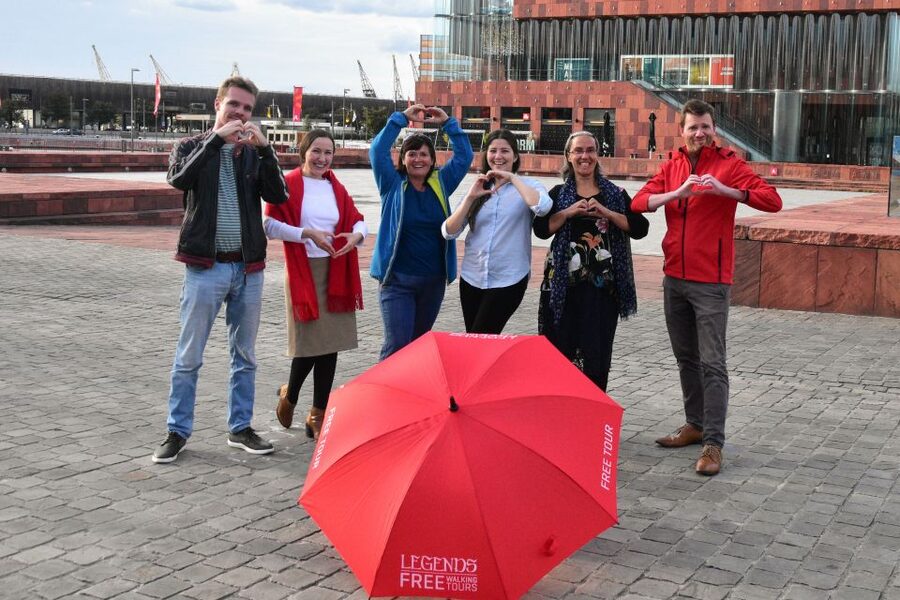
The cost is $206 per group of up to two people. For two, that works out to $103 per person. For one person, the same group price makes the tour poor value unless you place a high premium on private guiding.
The price makes more sense if you are traveling as a couple or pair and want personal attention, a flexible route, and a fast introduction to the city. It makes less sense if you want museum entry, a long stop at each attraction, or a low-cost overview.
At two hours, the pace is brisk. You cover many locations, so expect short explanations and outside views rather than extended time inside every church and museum. Wear comfortable shoes, as requested, and plan for rain or shine.
The tour is wheelchair accessible, which is important for visitors who need a more carefully planned route. Still, Antwerp’s historic center includes old streets and narrow passages, so it is sensible to confirm any specific mobility concerns before booking.
The cancellation policy is friendly: you can cancel up to 24 hours ahead for a full refund. You can also reserve now and pay later, which helps if your schedule is still changing.
Should you book this Antwerp walking tour?
Book it if you want a private introduction to Antwerp that connects the obvious sights with places you might miss alone. It is especially useful on your first day, when you want to understand the old center before choosing which museums and churches deserve more of your time.
I would choose it for a couple interested in architecture, local stories, art, and food advice. I would also consider it for a short stay, since the route covers a lot of ground without requiring a full day.
Think twice if you are watching your budget, traveling alone, or hoping for detailed museum visits. At $206, the value rests in the private guide and customized conversation, not in included admissions or a long refreshment stop.
For the right audience, this is a smart way to get oriented. You leave with Antwerp’s main landmarks in place, a few stories to remember, and several ideas for where to spend the rest of your visit.
FAQ
Where does the tour meet?
Meet your guide by the statue in Grote Markt Square in Antwerp. Look for the guide carrying a red umbrella.
How long does the walking tour last?
The tour lasts two hours.
What languages are available?
The guide can lead the tour in English, Dutch, or Spanish.
Is this a private tour?
Yes. It is a private group experience, and the tour can be customized around your interests.
Is the tour wheelchair accessible?
Yes, the activity is listed as wheelchair accessible.
What should I bring, and does the tour run in bad weather?
Bring comfortable shoes. The tour takes place rain or shine, so prepare for the weather on the day.
Newest history tours we have reviewed in Belgium
- Antwerp: Private 3-Hour Historical Sightseeing Walking Tour★ 4.8 · 70 reviews
- Private Historical Tour: Legends of Antwerp★ 5.0 · 125 reviews
- Bruges: Private Historical Highlights Walking Tour★ 4.7 · 191 reviews
- Private Historical Tour: The Highlights of Bruges★ 5.0 · 315 reviews
- Antwerp: Historical Walking Tour in the Old City★ 4.8 · 373 reviews
- Historical Walking Tour in Antwerp Old City★ 5.0 · 277 reviews
- Private tour: Highlights & History of Antwerp★ 5.0 · 299 reviews
- Ghent: 40-Minute Historical Boat Tour of City Center★ 4.3 · 430 reviews
Private History Tours, compared.
Private Guided Historic Electric Cart Tour of St. Augustine
Read our review →
Private Full-Day Tour of Historical Alexandria
Read our review →
Private Tour of the Historic City in a Ford T Car
Read our review →
Madrid Historical Tour with Local Guide in Eco Tuk Tuk Private
Read our review →
Private Biblical Tour Ancient Corinth & Isthmus Canal from Athens
Read our review →
Private Kathmandu Sightseeing Tour | UNESCO World Heritage sites
Read our review →
Historic Porto by Private Electric Tuk Tuk to Top Landmarks
Read our review →Browse the lists this tour appears in