
Review · NORWAY HISTORY TOURS
Oslo: Small Group History, Art & Secrets Tour
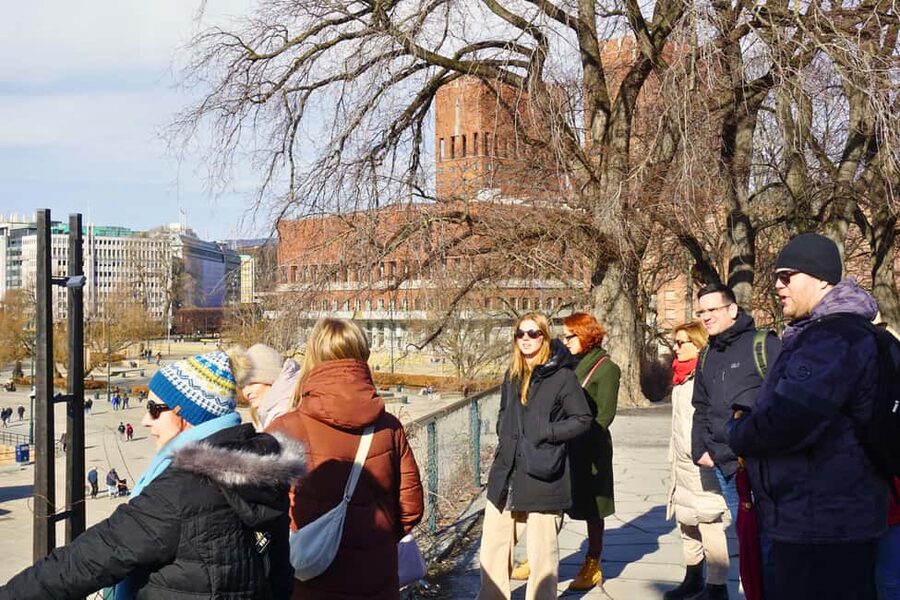
Oslo’s story comes into focus on foot. In three hours, you move from the Royal Palace and Karl Johans Gate to medieval traces, fire-scarred streets, the harbor, and bold modern buildings. I like the way the route connects old Oslo with the new waterfront, rather than treating each sight as a separate photo stop. I also like the visit inside Deichman Bjørvika, where you get a proper look at one of the city’s most striking modern public spaces.
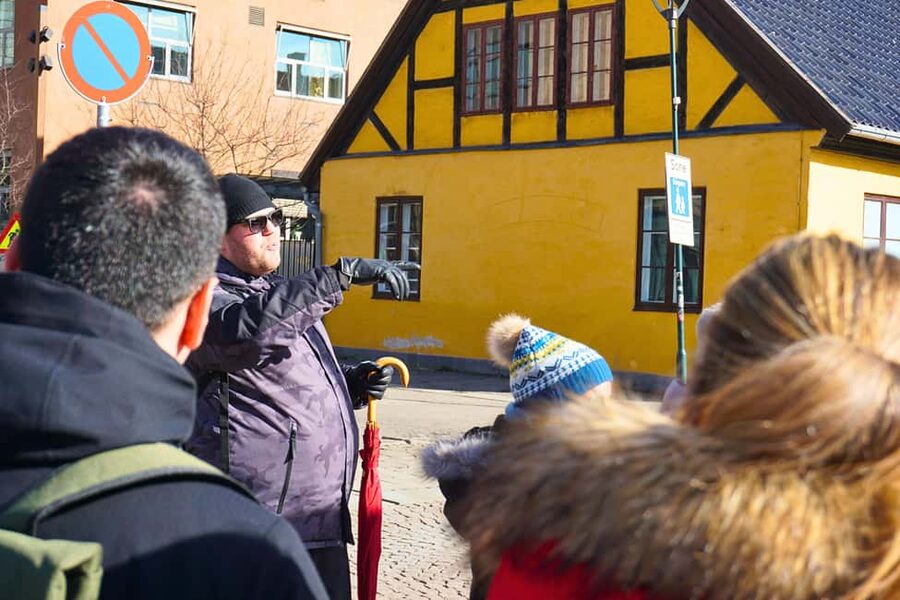
The small group size, capped at 10 people, gives the guide room to answer questions and adjust the pace. Guides such as Anders, Martin, Magnus, Lester, and Monica have been praised for warmth, humor, and useful local advice. The main drawback is the walking itself: this is not suitable for wheelchair users or people with mobility impairments, and wet or cold weather can make three hours outside feel long.
Key points at a glance
- A city story told in sequence: Follow Oslo from its medieval beginnings through devastating fires, royal power, trade, and modern design.
- A compact group of no more than 10: You can hear the guide clearly and ask questions without shouting across a crowd.
- A strong mix of famous and lesser-known stops: See City Hall, Parliament, Akershus Fortress, the Stock Exchange, and Christian IV’s Glove.
- A worthwhile indoor pause: Enter the award-winning Deichman Library for light, quiet, and innovative Norwegian design.
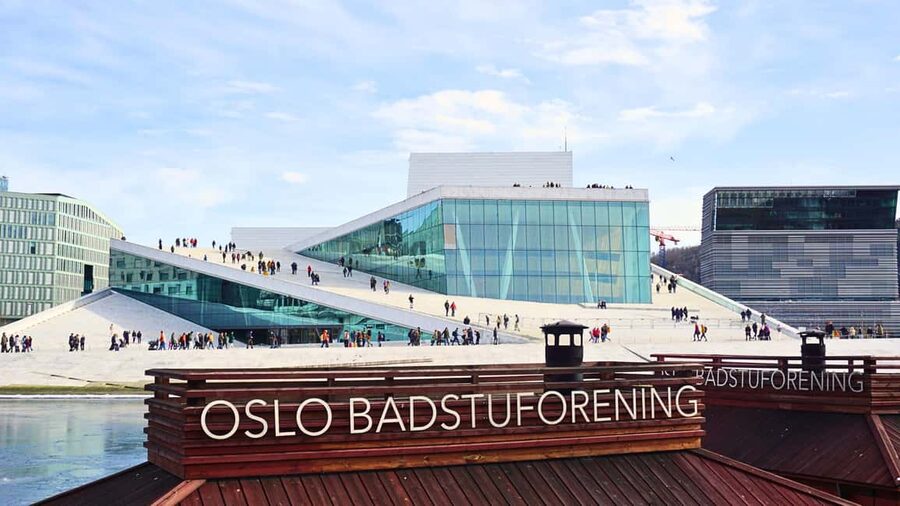
- A waterfront finish with excellent views: Look toward the Opera House and Munch Museum from the pier side.
- Useful advice along the way: Guides have offered restaurant suggestions, practical Oslo tips, and help with photos.
Why this three-hour walk works so well
Many city walks give you a list of monuments. This one gives you a sequence. The route begins in the royal part of Oslo, crosses the civic center, reaches the old fortress and financial district, then finishes among the city’s newer cultural buildings.
That order matters. You can see how Oslo’s identity shifted from a medieval settlement to a capital shaped by monarchy, fire, shipping, banking, art, and public architecture. The guide’s explanations are the thread holding it together.
I especially like the balance between big sights and small details. You see the buildings most first-time visitors want, but you also stop at places such as Christian IV’s Glove and Bank Square. These stops help explain how the city was rebuilt and reorganized over time.
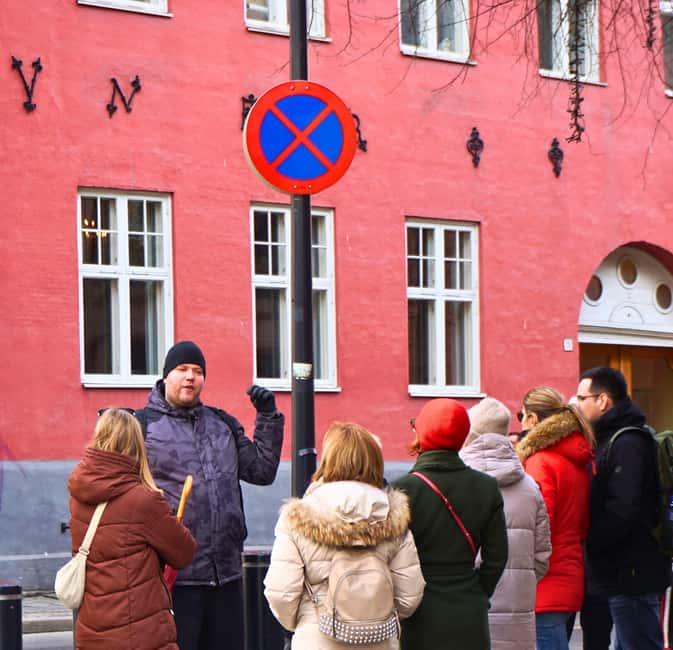
The guide is an important part of the experience. The named guides praised most often include Anders, Martin, Magnus, Michael, Lester, and Monica, though your guide depends on the date and language you book. The strongest descriptions emphasize clear storytelling, humor, patience, and an ability to answer questions without rushing the group.
You may also get practical advice beyond the formal route. Anders has been noted for suggesting restaurants at different price levels, while another guide, Martin, is also a professional chef and has offered food recommendations. That kind of advice is useful in Oslo, where a good local suggestion can help you spend your money wisely.
More Small-Group History Tours in the world:
- London Small Group Tour of Historical Pubs
★ 5.0 · 10,422 reviews - Boston: Freedom Trail History Small Group Walking Tour
★ 5.0 · 6,450 reviews - Madrid Tapas & Taverns Small Group Food & History Tour
★ 5.0 · 2,664 reviews
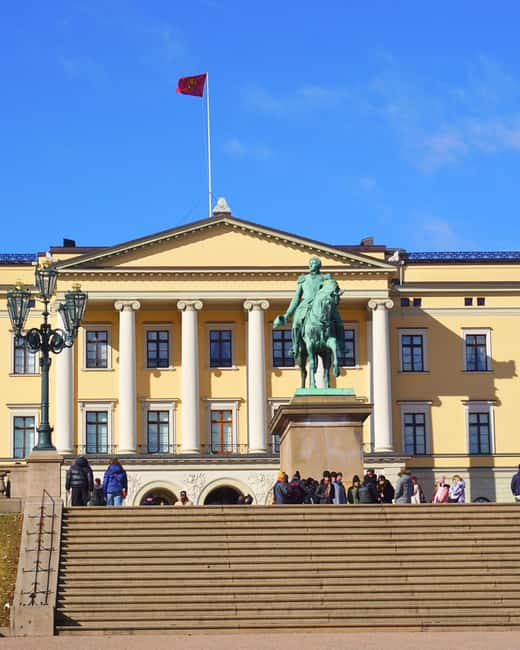
Starting at the Royal Palace and Slottsparken
Meet in front of the Royal Palace, where the guide carries an open red umbrella. This is a simple meeting point, but allow enough time to locate the group before the starting hour.
The palace area gives the tour a calm beginning. You start among royal grounds and green park space before heading toward the city center. The setting makes it easy to picture Oslo as a capital shaped by monarchy and national institutions.
From here, the walk moves toward the Nobel Peace Center. The stop is guided and includes about 10 minutes of walking and sightseeing. It is a useful early introduction to Oslo’s role as the home of the Nobel Peace Prize presentation, while also placing you close to the waterfront and civic center.
The route is not a museum visit at this point. You are learning from the outside and moving on, which keeps the pace lively but means you should not expect extended indoor exhibits.
Nobel Peace Center and Oslo City Hall
The Nobel Peace Center leads you toward Oslo City Hall, one of the city’s most recognizable buildings. You get a guided sightseeing stop and time for photographs, with roughly 10 minutes listed for the visit.
City Hall is more than a place to take a picture. Its location ties together politics, public life, and the harbor. Your guide can explain how Oslo’s civic center relates to the surrounding streets and waterfront.
This is one of the tour’s better photo moments, but the time is short. If you want to study every architectural detail or visit the interior at length, you will need to return on your own. The tour gives you context and orientation rather than a full architectural inspection.
National Theatre and Karl Johans Gate
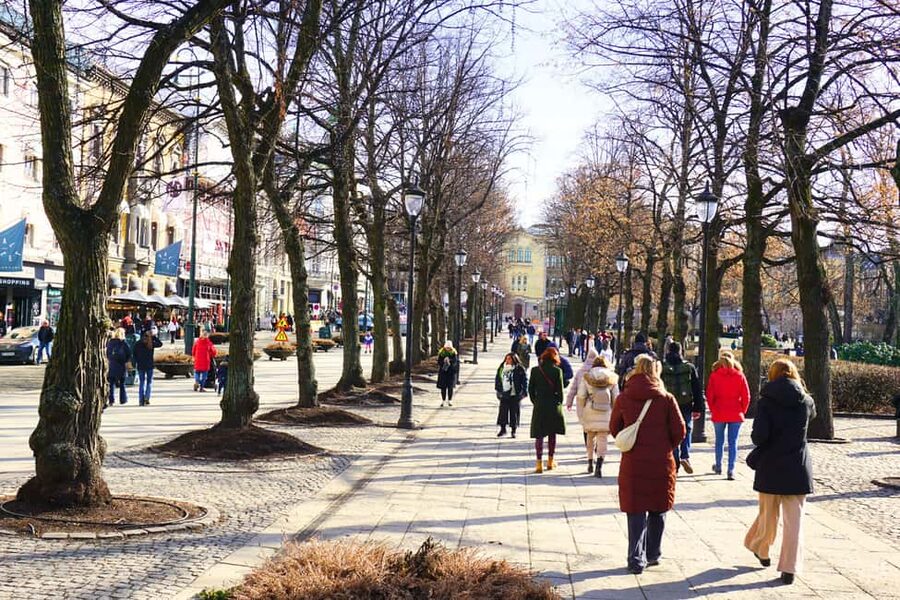
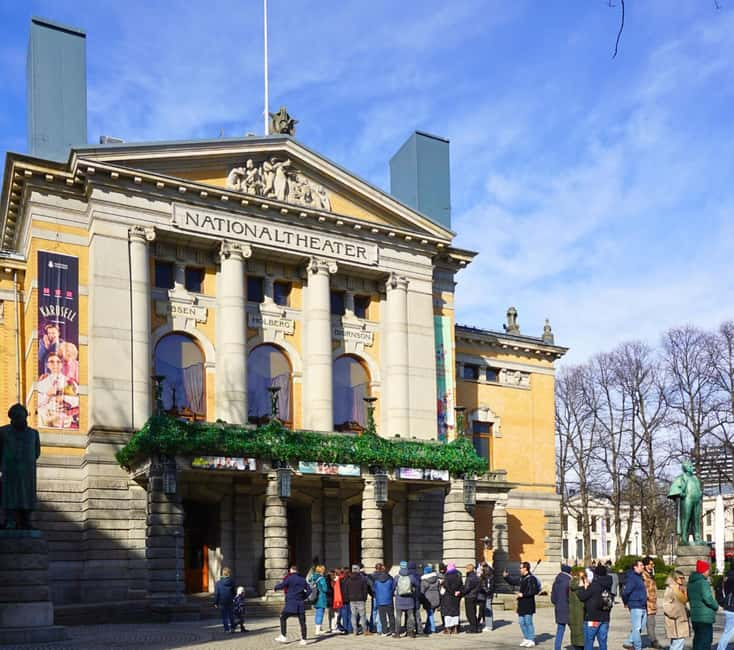
The Norwegian National Theatre is next, with time for a photo stop, a visit, and views along the way. The theater adds art and performance to the story of the capital.
One particularly memorable detail from the guiding style is the use of performance. Martin has been praised for giving an excellent rendition of music connected with a famous Ibsen play. You cannot count on that exact guide or moment, but it shows how this tour can move beyond dates and building names into Oslo’s cultural life.
The walk continues along Karl Johans Gate, Oslo’s main ceremonial street. Here, the city’s royal, political, and cultural institutions line up in a way that makes the capital easy to read.
You get about 15 minutes for this section, including photographs and guided sightseeing. It is a good place to slow down, watch city life, and notice the relationship between the street and the buildings around it.
More History Tours in the world:
- New York City: American Museum of Natural History Ticket
★ 4.5 · 15,447 reviews - History and Hauntings of Salem Guided Walking Tour
★ 5.0 · 14,564 reviews - Colosseum: Underground and Ancient Rome Tour
★ 4.7 · 12,691 reviews - Lisbon: History, Stories and Lifestyle Walking Tour
★ 4.8 · 10,902 reviews
Parliament and the story of rebuilding
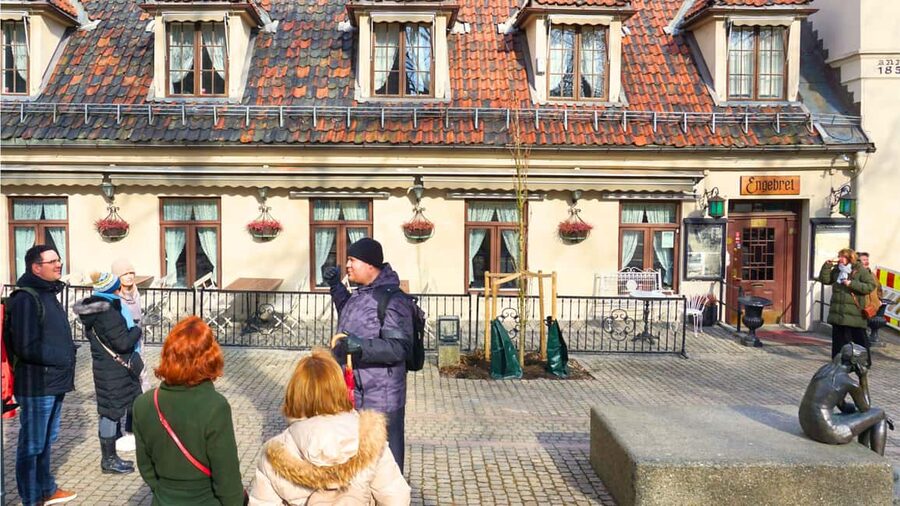
The Norwegian Parliament is another 15-minute stop. Your guide explains the institution and its place in the city, while you get time for photographs.
The most useful part of this section is the larger story of Oslo’s fires and rebuilding. The city was not simply allowed to grow in one continuous pattern. Devastating fires forced changes in its streets and buildings, and later development gave Oslo a more planned civic center.
This context makes the walk more valuable than a quick pass by Parliament. You begin to see why some streets feel formal and spacious, and why the center combines older traces with later construction.
The guides are also good at adding small, quirky facts. That is a recurring strength of the experience. You are not limited to official dates and grand political events. Ask questions if you enjoy unusual details, since the small group format makes conversation easier.
Christian IV’s Glove and Akershus Fortress
Christian IV’s Glove is a brief but unusual stop. It marks an important point in Oslo’s urban story and gives you a physical reference for the city’s earlier beginnings.
The stop lasts about 10 minutes and includes a visit, guided explanation, and views along the way. It is exactly the kind of place you could miss without someone pointing it out.
From there, the walk reaches Akershus Fortress. Allow about 15 minutes for this part, including photographs and sightseeing. The fortress gives you one of the strongest historical settings on the route, with open views and a clear connection to Oslo’s defense and royal past.
Do not expect a full fortress tour or entry into every interior space. The experience is a guided outdoor visit. You get the main story, the setting, and time for photographs, then continue toward the financial district.
The fortress can also be one of the more uneven walking sections. Comfortable shoes matter, and the weather matters even more. Wear layers and bring water, especially if you are taking the tour during a warmer part of the year.
Bank Square and Oslo’s financial past
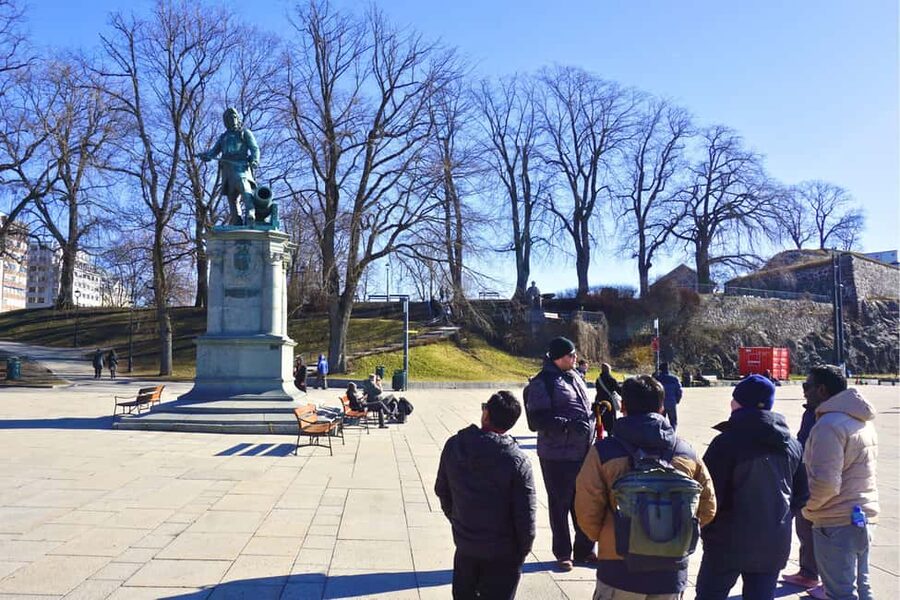
Bank Square brings the focus from military power to money and trade. The guide explains how banking and commerce helped shape Oslo into a modern Scandinavian business center.
You then pass the Bank of Norway and the Oslo Stock Exchange. The Stock Exchange receives about 15 minutes of guided sightseeing, enough to understand its role and take photographs.
This part of the walk is valuable because it broadens the usual Oslo story. The city is often presented through royal buildings, museums, and the waterfront. Here, you see how finance and trade helped drive its growth.
The buildings may not have the immediate appeal of the Opera House or fortress walls, but the explanation gives them purpose. If you enjoy understanding how cities function, this is one of the more useful sections.
The waterfront, Opera House, and Munch Museum views
The route then heads toward the waterfront and the Oslo Opera House. This is a 15-minute stop with a short break, photographs, a visit, and guided commentary.
From the pier side, you can look toward the Opera House and the Munch Museum. Both buildings represent Oslo’s modern cultural identity, and their bold forms contrast with the older streets and fortress you have just seen.
The waterfront is also a natural place to pause. You get a change of scenery after the historic center and a chance to take photographs without feeling that every minute is devoted to a lecture.
The views are a major reason to bring a camera. Still, weather can alter the experience. On a clear day, the harbor and buildings should be a highlight. In rain or strong wind, the open waterfront may feel less comfortable, so dress for conditions rather than for the season alone.
Inside Deichman Bjørvika
Deichman Bjørvika is one of the tour’s strongest features. You spend about 20 minutes here, with time for a break, photographs, free exploration, and sightseeing.
The library was named one of the most beautiful libraries in the world, but the practical value is that you get to step inside. Its light-filled spaces and modern design offer a quiet contrast to the outdoor route.
I like this stop because it shows modern Norway through everyday public life. You are not only looking at a monument. You are entering a working cultural space built around reading, study, and community use.
Twenty minutes is enough to appreciate the design and take photographs, but not enough for a detailed exploration of the entire building. If libraries and architecture matter to you, plan to return after the tour when you have more time.
The indoor pause also helps break up the walk. One person described a café-style break as a welcome part of the experience, and the schedule includes a break around the Opera House and library area. The exact arrangement may vary, but you should have a chance to rest and get water during the route.
Ending near Oslo Central Station
The tour finishes at Oslo Central Station, with the stated end area also near Centropa Restaurant & Bar. This is convenient for a first day in the city. You can continue sightseeing, catch a train, or stop for a meal without making a long trip back to the starting point.
Ending at the station also makes the tour useful for orientation. After three hours, you know how the royal center, civic buildings, fortress, financial district, and waterfront fit together.
The route covers a lot of ground. That is a benefit if you have limited time, but it also means the tour is not a slow, leisurely stroll at every stop. Ask for a pause if you need one, and tell the guide early if you walk more slowly. The small group makes this easier than it would be on a large coach or crowded public tour.
Price, group size, and languages
At $35 per person, this is a reasonable price for a three-hour guided walk in a costly capital. You are paying for a local guide, a structured route, scenic views, and entry into Deichman Library. No museum admission is included, but the main stops on the route are outdoor sights or public spaces.
The value is strongest if you are new to Oslo and want a clear introduction before exploring alone. A good guide can save you time, explain what you are seeing, and point you toward restaurants and other activities for the rest of your stay.
Groups are limited to 10 participants. That is small enough for direct questions and a more personal pace, but not necessarily a private tour. Some departures may be very small, and one group had only three people, but you should book with the expectation of a small shared group.
Tours are available in English, Spanish, Italian, and German. When choosing, select the language in which you can best follow detailed historical explanations. Humor and local stories are much easier to enjoy when you are not working to translate every sentence.
Free cancellation is available up to 24 hours before the tour for a full refund. You can also reserve now and pay later, which helps if your Oslo plans are still shifting.
Who should book this Oslo walk?
I would choose this tour for a first visit, a short stay, or the first morning of a longer Oslo trip. It gives you a useful mental map and enough background to make later visits to the Opera House, fortress, museums, or waterfront more meaningful.
It suits people who like history, architecture, public spaces, and local anecdotes. It is also a good fit if you want restaurant suggestions or practical advice from a guide who is happy to answer questions.
You should think twice if you dislike walking, need step-free access, or want long indoor visits at museums. Museum tickets are not included, and this is mainly an outdoor sightseeing route with one library visit.
Bring comfortable shoes, water, a camera, and weather-appropriate clothing. Oslo’s weather can change, and the open harbor section is more enjoyable when you are prepared.
Should you book the History, Art and Secrets Tour?
Yes, if you want an affordable first look at Oslo that explains how the city fits together. The route is broad, the group is small, and the mix of royal history, fires, finance, art, fortress views, and modern design gives you more than a standard monument walk.
Book it especially if you can get a guide such as Anders, Martin, Magnus, Lester, or Monica, though guide assignment is not guaranteed. Their reported strengths include clear explanations, humor, patience, restaurant advice, and careful attention to slower walkers.
Skip it if mobility is a concern or if you prefer to spend three hours inside museums. For most first-time visitors who are comfortable on foot, the $35 price buys a useful orientation and a lively introduction to Oslo.
FAQ
How long does the Oslo History, Art and Secrets Tour last?
The tour lasts three hours.
Where does the tour begin?
It begins in front of the Royal Palace. The guide will be there with a red umbrella open.
Where does the tour finish?
The tour finishes at Oslo Central Station. The stated end area is also near Centropa Restaurant & Bar.
What languages are available?
The tour is available in English, Spanish, Italian, and German.
How large is the group?
The tour is limited to 10 participants.
Is entry to Deichman Library included?
Yes. The guided experience includes entry into the Deichman Library in Bjørvika.
Are museum tickets included?
No. Tickets for museums are not included in the tour price.
What should I bring?
Bring comfortable walking shoes, water, a camera, and clothing suitable for the weather.
Is the tour suitable for wheelchair users or people with mobility impairments?
No. The tour is not suitable for wheelchair users or people with mobility impairments.
Newest history tours we have reviewed in the world
- Private Dublin Historical and Heritage Tour by Bike★ 5.0 · 30 reviews
- Dubrovnik by Night, History, Wine & Bites★ 5.0 · 41 reviews
- Enjoy Ancient Mostar★ 4.0 · 45 reviews
- Historical Walking Tour of Dublin★ 5.0 · 50 reviews
- DayTripper Dublin: A Guided City Walking Tour★ 5.0 · 90 reviews
- Ancient Old City– Finest tour of Dubrovnik★ 5.0 · 64 reviews
- Dublin LGBTQ Pride Historical and Cultural Walking Tour★ 5.0 · 91 reviews
- Interactive Living History in Dalkey Castle near Dublin City★ 5.0 · 133 reviews
Small-Group History Tours, compared.
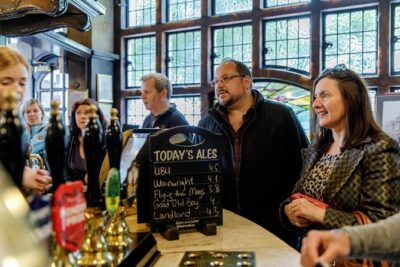
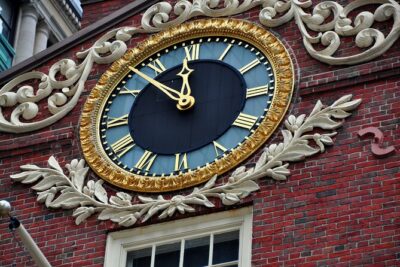
Freedom Trail History Small Group Walking Tour
Read our review →
Madrid Tapas & Taverns Small Group Food & History Tour
Read our review →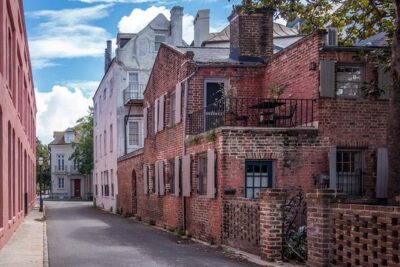
Hidden Alleyways and Historic Sites Small-Group Walking Tour
Read our review →
New Orleans Small-Group Haunted History Carriage Tour
Read our review →
Half Day Dominican Republic Cultural Tour : Small Group
Read our review →
Ultimate Seville Tapas, Wine & History Small Group Tour
Read our review →
Vienna Historic Center Small Group Walking Tour
Read our review →Browse the lists this tour appears in