
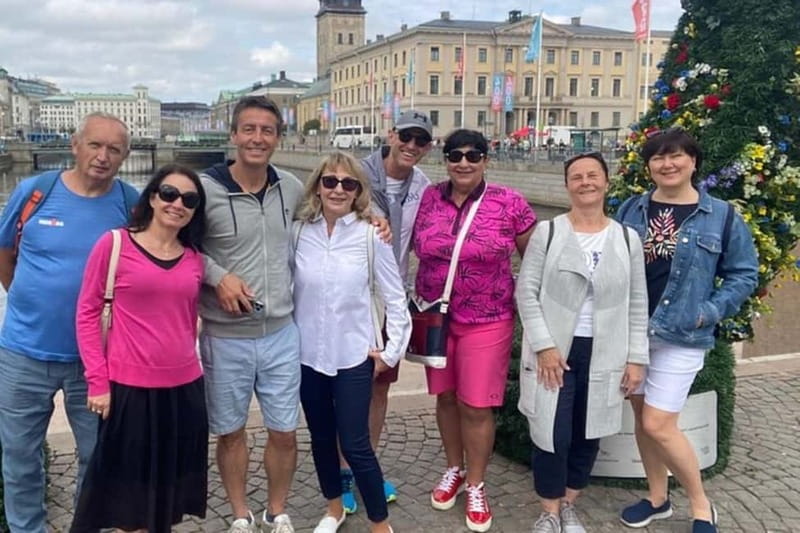
Review · SWEDEN HISTORY TOURS
Gothenburg: Historical Walking Tour in Central City
Gothenburg reveals itself best on foot, and this tour gives you a useful first look at the city before you commit your remaining time. Marcus, who was born and raised in Gothenburg, leads you through 17 stops covering old streets, churches, markets, fortifications, and places to eat.
I like the mix of local advice and city history. You get more than a parade of monuments: Marcus points out restaurants, bars, shopping streets, cafes, and places locals spend time. I also like the small-group feel, which leaves room for questions about food, culture, current life, and what to do next.
The main consideration is pace. Two hours covers a large circuit, so many stops are brief exterior visits rather than long museum-style explorations. If you want detailed time inside every building, this is not that tour. If you want to get your bearings fast, it is a strong start.
Key points to know before you book
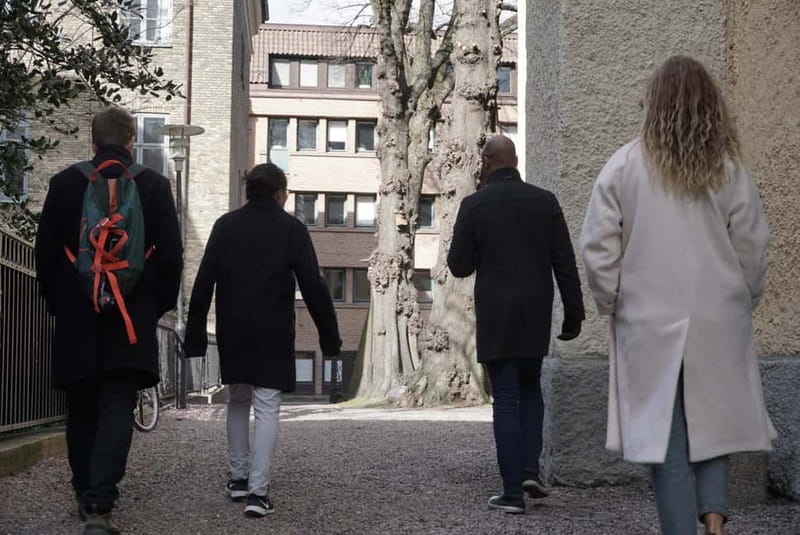
- Seventeen central sights in two hours: The route packs in old city buildings, markets, churches, fortifications, viewpoints, and shopping streets.
- Marcus is a lifelong Gothenburg local: He can answer practical questions about what to see, where to eat, and how to shape the rest of your stay.
- History stays connected to daily life: The walk pairs Gothenburg’s past with restaurants, bars, cafes, shopping, and local hangouts.
- Small groups help the conversation: You have a better chance to ask questions and request tips than on a large, scripted city walk.
- A good first-day choice: The route helps you decide which sights deserve a longer visit later.
- English and Swedish are available: The tour works well for international visitors and Swedish-speaking residents who want a fresh view of the city.
Why this works well as your first Gothenburg activity
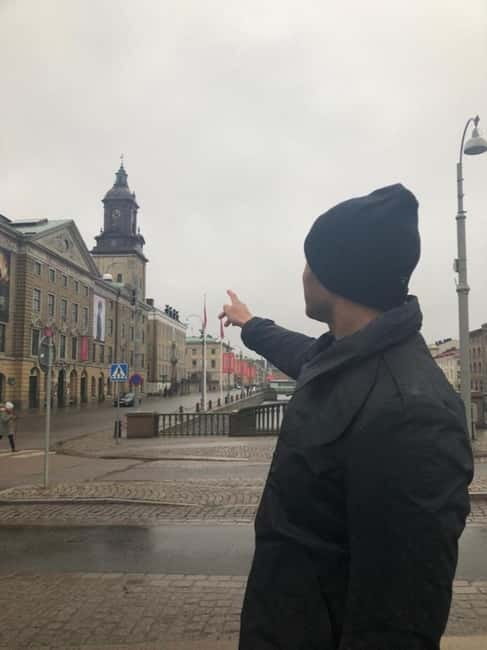
Gothenburg can feel easy to cross, but its center has layers that are not obvious at street level. Waterways, old defenses, trading areas, churches, markets, and later civic buildings all sit within a fairly compact area. A local guide helps connect those pieces before you start exploring alone.
Marcus keeps the focus broad. You learn about the city’s past, but you also get advice for the present day. That matters because a two-hour walk can save you from spending half a day trying to work out which areas suit your interests.
I would book this near the beginning of a visit, especially if you have only a short stay. Bring a phone so you can save locations for later. One useful habit is to drop a map pin at restaurants, bars, or sights that catch your eye during the walk. The route includes many choices, and you may not remember all of them afterward.
The experience is guided in English or Swedish. The meeting point is next to the statue in the middle of Gustaf Adolfs Torg, close to Brunnsparken tram and bus station. That central transport connection makes the start fairly simple to reach.
More History Walking Tours in the world:
- History and Hauntings of Salem Guided Walking Tour
★ 5.0 · 14,564 reviews - Lisbon: History, Stories and Lifestyle Walking Tour
★ 4.8 · 10,902 reviews - Boston: Freedom Trail History Small Group Walking Tour
★ 5.0 · 6,450 reviews
Gustaf Adolfs Torg sets the scene
The walk starts at Gustaf Adolfs Torg, a natural place to begin understanding central Gothenburg. From here, Marcus can orient you to the old center and explain how the streets and districts fit together.
Starting in a major square also helps you judge the tone of the tour. This is not a coach ride that leaves you watching the city through glass. You move at street level, with time to look up at buildings and ask questions as the route unfolds.
The walk returns to the same square at the end. That is useful if you want to continue independently, use public transport, or head back to a hotel without learning a second meeting point.
Churches, old buildings, and the early city
The first section includes the Deutsche Kirchengemeinde Göteborg, also called the German Christinae Parish, followed by Kronhuset and the area known as Inom Vallgraven. These stops introduce the older built fabric of Gothenburg and the city’s links with trade and foreign communities.
Kronhuset is especially useful for understanding the age of the center. The building gives the walk a firm historical anchor before the route moves through streets where the past and present sit side by side.
Inom Vallgraven appears twice in the route because it is not just one sight. It is the central district through which several important stops connect. You will spend time crossing and revisiting this part of town rather than viewing it from a single point.
At Lilla torget, the scale changes. Smaller squares and adjoining streets give you a chance to notice the city’s everyday rhythm. Marcus can place these spaces in context while also pointing out nearby places for food and drink.
Victor Noblesse is another stop along the central route. The supplied tour details do not describe a specific interior visit here, so expect it to function as a point of interest during the walk rather than a long admission-based stop.
Gothenburg Cathedral and the royal hunting lodge
Gothenburg Cathedral adds a major religious landmark to the route. Here, the tour shifts from street layout and civic history to the role of the church in the city’s development. You should expect an explanation and a visit stop, but the two-hour format does not suggest an extended guided interior tour.
Drottning Kristinas Jaktslott, or Queen Christina’s Hunting Lodge, brings a different character. It is one of the more unusual names on the route and helps show that Gothenburg’s old center is not only about grand squares and commercial buildings.
These stops work best as part of the larger story. You are not simply collecting photographs. You are seeing how royal connections, religion, defense, trade, and daily city life have all left marks within a walkable area.
More History Tours in the world:
- New York City: American Museum of Natural History Ticket
★ 4.5 · 15,447 reviews - Colosseum: Underground and Ancient Rome Tour
★ 4.7 · 12,691 reviews - London Small Group Tour of Historical Pubs
★ 5.0 · 10,422 reviews - Prague: Oldtown, Medieval Underground & Dungeon History Tour
★ 4.3 · 10,277 reviews
Fortifications and views above the center
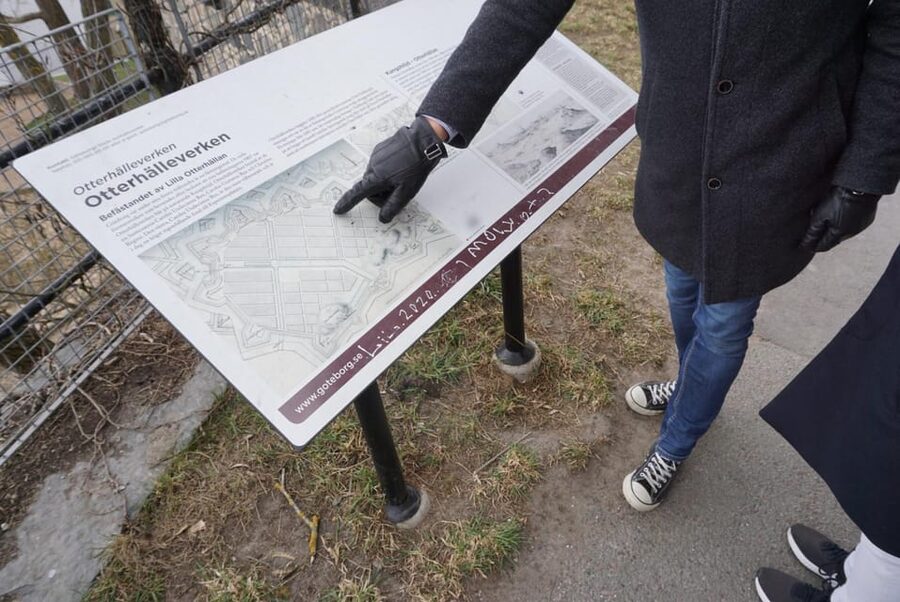
Carolus XI Rex Bastion gives the route a clear defensive theme. Gothenburg’s position and history make fortifications an important part of understanding the city, and this stop helps explain why older walls and bastions appear in the central area.
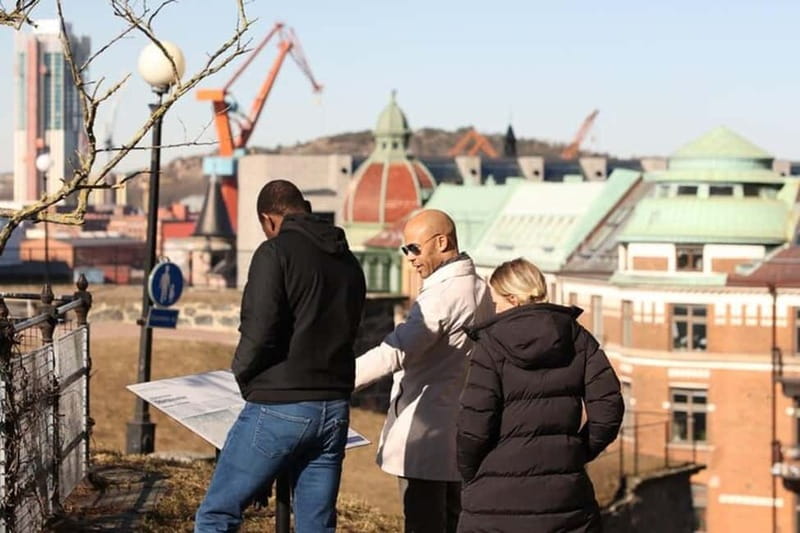
The tour also includes viewpoints on the city heights. The exact viewpoint is not named in the provided details, so you should not expect a guaranteed visit to a particular tower or hill. You can expect Marcus to include elevated views as part of the walk and to use them to help you read the city from above.
This section may be the most physically demanding part of the experience. The tour description calls it a walk around the old center and mentions city heights, so comfortable shoes are sensible. You may also want water, especially on a warm day.
The views have practical value beyond photographs. After seeing the center from above, streets and districts are easier to place when you continue exploring on your own.
Feskekorka and Gothenburg’s food culture
Feskekorka, Gothenburg’s famous fish market, brings the city’s food traditions into the walk. Even if you do not stop for a meal, the building and market setting show how closely Gothenburg’s identity is tied to the sea and its trading past.
This is also where the tour’s food advice becomes especially useful. Marcus does not limit recommendations to one meal or one style of restaurant. He offers suggestions for restaurants, bars, cafes, and places locals use, then provides a larger list at the end.
That can be more helpful than a generic list from a guidebook. You can ask about the kind of evening you want, then shape your plans around the answer. The information provided does not promise tastings or a meal, so book this for guidance rather than a food tour.
Grönsakstorget and the Market Hall
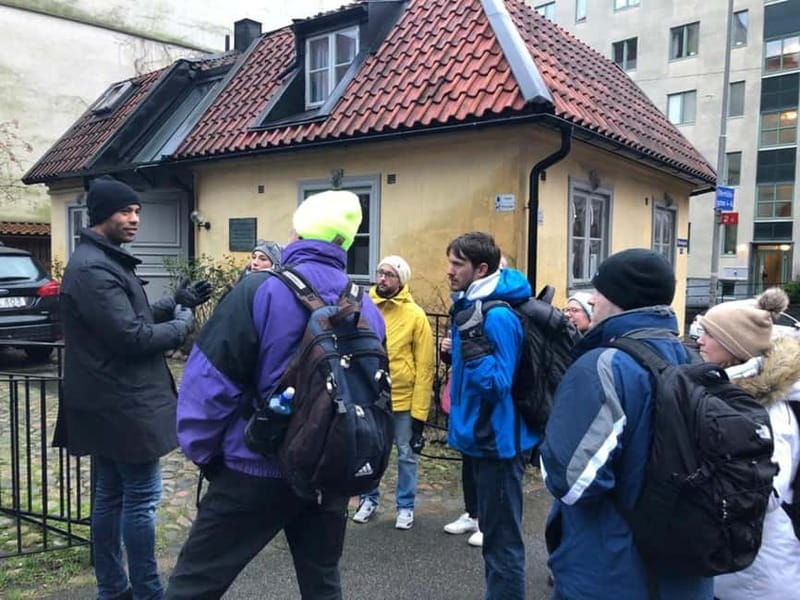
Grönsakstorget and Gothenburg’s Market Hall continue the food theme, but they also show how central streets serve both residents and visitors. Markets are useful stops on a city walk because they connect architecture and commerce with normal daily activity.
The Market Hall is a good place to note down options for a later lunch or snack. The tour does not include food, drinks, or purchases, so plan to pay separately if you decide to return.
I like the way these stops broaden the tour. A walk focused only on monuments can leave you with facts but no sense of how to spend the evening. Here, the historical route also gives you clues about where to eat and how to experience the center outside the main sightseeing hours.
The Garden Society, Fredsgatan, and the final circuit

The Garden Society is passed by rather than listed as a full visit. That distinction matters. You may get an outside view or a quick explanation, but you should not plan on a lengthy garden visit during the two-hour tour.
Fredsgatan 6 is another central stop, followed by a pass by Let’s Boat. These points help complete the circuit through central Gothenburg and add modern city life to the older buildings and defenses seen earlier.
The route then returns to Gustaf Adolfs Torg. By this point, you have crossed several parts of the center and received a practical map of the city. The final restaurant and bar suggestions are especially useful here, because you can decide what to do while the places are still fresh in your mind.
What Marcus adds beyond the route
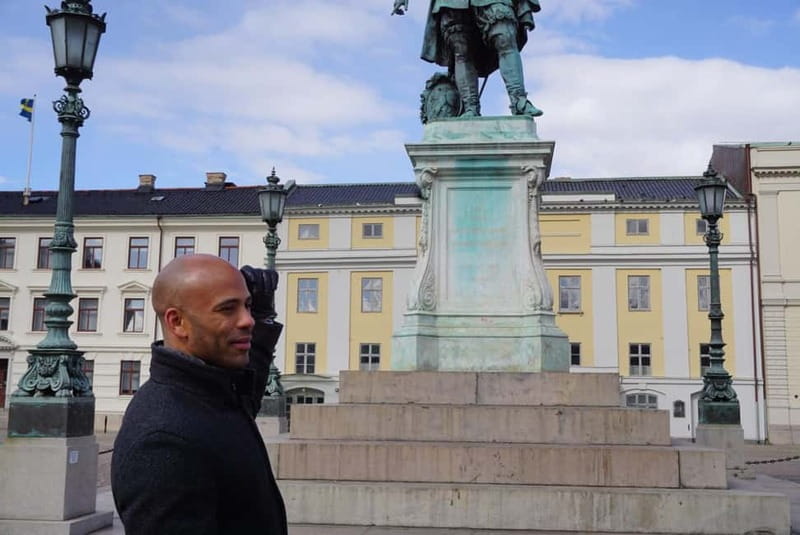
The strongest part of this experience is the guide’s local connection. Marcus was born in Gothenburg and has lived there all his life. That does not make every recommendation automatically perfect for every visitor, but it gives you someone to question about the city in a direct way.
The conversation is a central part of the walk. You can ask about history, culture, current affairs, cafes, bars, restaurants, shopping, and attractions for the next few days. The available details also show that Marcus checks in with the group about comfort and allows room for practical needs such as a bathroom break.
His style appears to suit people who prefer an easy conversation over a formal lecture. He is described as friendly, open, enthusiastic, and comfortable with questions. One especially useful feature is the balance between historical facts and leisure advice. You get a clearer sense of both old Gothenburg and present-day Gothenburg.
The smaller group format helps. Exact maximum group size is not provided, so I would not assume a private tour. Still, the experience is presented as a small-group walk, and the interaction seems to be an important part of its value.
Price, pace, and practical value
At $50 per person for two hours, this is not the cheapest way to see a city center. You are paying for a guided introduction, local conversation, viewpoints, and practical recommendations rather than admission to a major attraction.
The value is strongest if this is your first visit or if you have limited time. A good orientation walk can help you choose where to return, which restaurants to try, and which areas deserve a longer look. That can make the price worthwhile, especially for visitors who would otherwise spend time sorting through too many options.
The value is less clear if you already know central Gothenburg well and mainly want long visits inside specific buildings. The route touches many places, but its strength is range, not extended time at one sight.
Because the tour covers 17 points in two hours, the average stop is short. Think of it as a carefully guided overview with conversation, not a full historical lecture at each location.
Free cancellation is available up to 24 hours before the start for a full refund, and you can reserve now and pay later. Starting times vary, so check availability for your date. These policies make it easier to place the walk early in your schedule without locking every detail too far ahead.
Who should book this Gothenburg walk?
I would recommend it most strongly to first-time visitors, couples, solo visitors, small groups of friends, and anyone staying only a day or two. It is also a good fit if you want to combine history with food and nightlife advice rather than spend two hours on architecture alone.
English-speaking visitors can join comfortably, and Swedish is also offered. The tour can suit Swedish residents too. A local participant who has visited Gothenburg many times found that the walk changed their understanding of the city, which suggests that familiar streets can still offer fresh context.
Families may like the conversational format, but the supplied information does not give an age range or child-specific plan. If you are traveling with children, consider the amount of walking and the number of short historical stops.
You should choose something else if you need wheelchair details, a fixed accessibility plan, a food tasting, or extended indoor visits. Those features are not specified here, so ask the provider before booking if they matter to you.
Should you book it?
Book this tour if you want a well-rounded first look at Gothenburg and value a local guide who can help shape the rest of your visit. Marcus combines old buildings, city defenses, markets, churches, viewpoints, and everyday food advice in a compact two-hour route.
Skip it if you already have a detailed plan centered on museums or interiors. For most first-time visitors, though, the timing is right: take the walk early, save the places that interest you, then spend the following days exploring Gothenburg with a much clearer sense of where you are.
FAQ
How long does the Gothenburg historical walking tour last?
The tour lasts two hours.
How much does the tour cost?
The price is $50 per person.
Where does the tour begin?
It begins at Gustaf Adolfs Torg, next to the statue in the middle of the square.
Which public transport stop is near the meeting point?
Brunnsparken is the nearby tram and bus station.
Where does the tour end?
The walk returns to Gustaf Adolfs Torg.
Which languages are available?
The live guide offers the tour in English or Swedish.
How many sights are included?
The route includes 17 listed sightseeing points, with some visited and some passed by.
Does the tour include restaurant and bar recommendations?
Yes. Marcus provides restaurant and bar suggestions during the walk and shows a recommended list at the end.
Can I cancel for a full refund?
Yes. You can cancel up to 24 hours in advance for a full refund.
Can I reserve the tour and pay later?
Yes. You can reserve your place and pay nothing at the time of booking.
Newest history tours we have reviewed in the world
- Enjoy Ancient Mostar★ 4.0 · 45 reviews
- Private Dublin Historical and Heritage Tour by Bike★ 5.0 · 30 reviews
- Dubrovnik by Night, History, Wine & Bites★ 5.0 · 41 reviews
- Historical Walking Tour of Dublin★ 5.0 · 50 reviews
- DayTripper Dublin: A Guided City Walking Tour★ 5.0 · 90 reviews
- Ancient Old City– Finest tour of Dubrovnik★ 5.0 · 64 reviews
- Dublin LGBTQ Pride Historical and Cultural Walking Tour★ 5.0 · 91 reviews
- Interactive Living History in Dalkey Castle near Dublin City★ 5.0 · 133 reviews
History Walking Tours, compared.
History and Hauntings of Salem Guided Walking Tour
Read our review →
Freedom Trail History Small Group Walking Tour
Read our review →
Historic Charleston Guided Sightseeing Walking Tour
Read our review →
Tapas Walking Tour with Food, Wine, and History
Read our review →
Savannah History and Haunts Candlelit Ghost Walking Tour
Read our review →
A History of Terror – Belfast City Centre Walking Tour
Read our review →Browse the lists this tour appears in