
Review · UK HISTORY TOURS
Glasgow: Historical Walking Tour: Guided by a local actor
Glasgow’s story is best told in the streets, where grand Victorian buildings sit beside old lanes, former trading houses, and places tied to politics, faith, and public punishment. This two-hour walk links those pieces with a professionally trained local actor, giving the past a human voice instead of a dry list of dates.
I like the route’s mix of George Square architecture and Merchant City stories, and I like that the guides bring performance skills to the job. Ian, Martin, Luke, and Gordon are all praised for clear delivery, humor, poetry, and good answers to questions. The main consideration is pace: two hours gives you a useful introduction, but not enough time to go inside every museum or sight.
Key points to know before you go
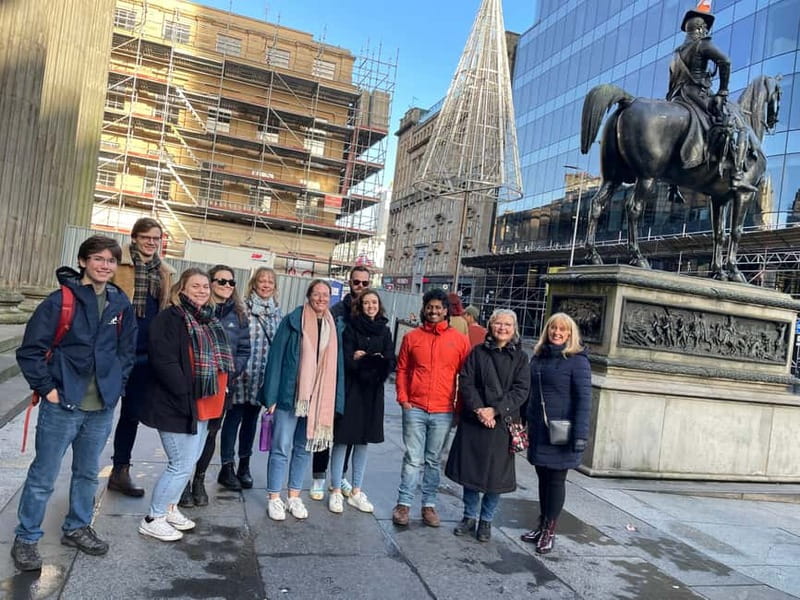
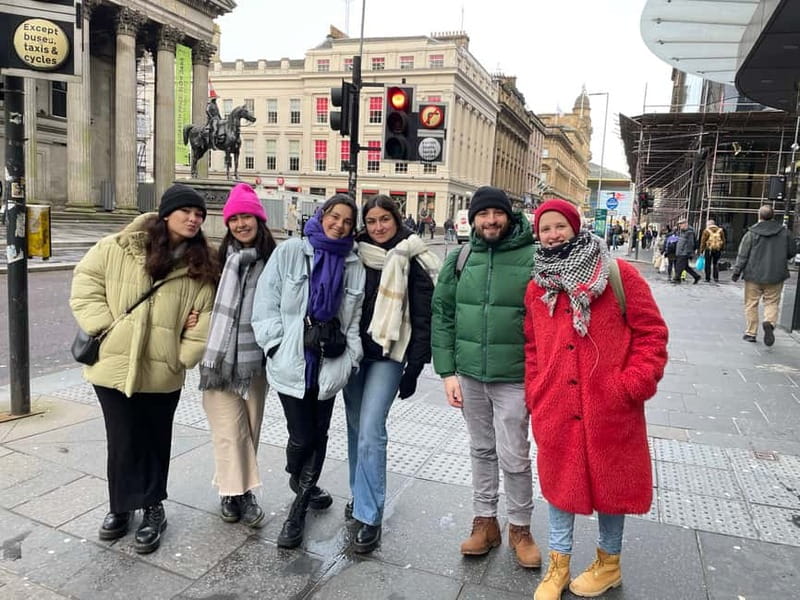
- Actor-led storytelling: Guides such as Ian, Martin, Luke, and Gordon use humor, drama, anecdotes, and sometimes poetry to tell Glasgow’s story.
- A walk through several eras: The route moves from early Christian and Roman influences to medieval Glasgow, imperial trade, industrial growth, socialism, and modern city life.
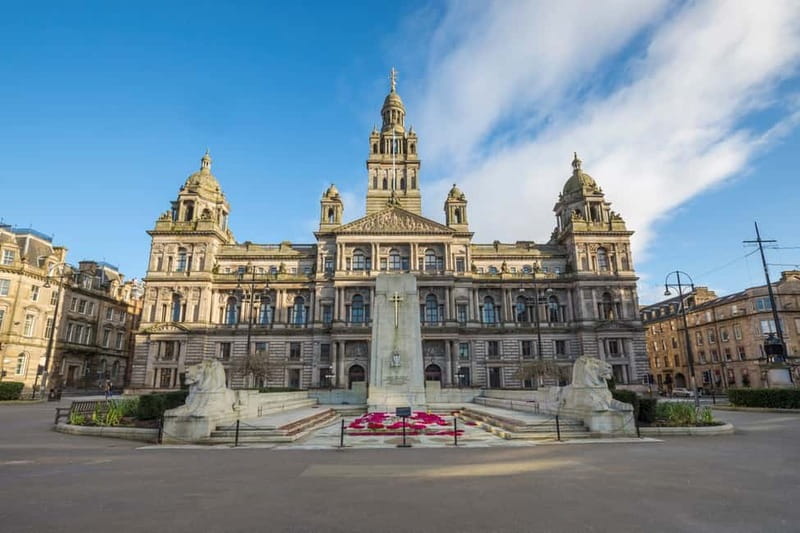
- George Square sets the scene: See the City Chambers, Merchants’ House, council headquarters, and the square’s Victorian monuments.
- Merchant City adds atmosphere: Explore old lanes, former barons’ homes, trading sites, and the area where commercial capitalism took root.
- Museums are noted, not explored: The Gallery of Modern Art, Police Museum, and Glasgow Cathedral are useful follow-up stops, but there is no time for full visits during the walk.
- Easy practical setup: The route follows flat terrain, is wheelchair accessible, runs in all weather, and costs $20 per person.
Why an actor makes Glasgow easier to understand
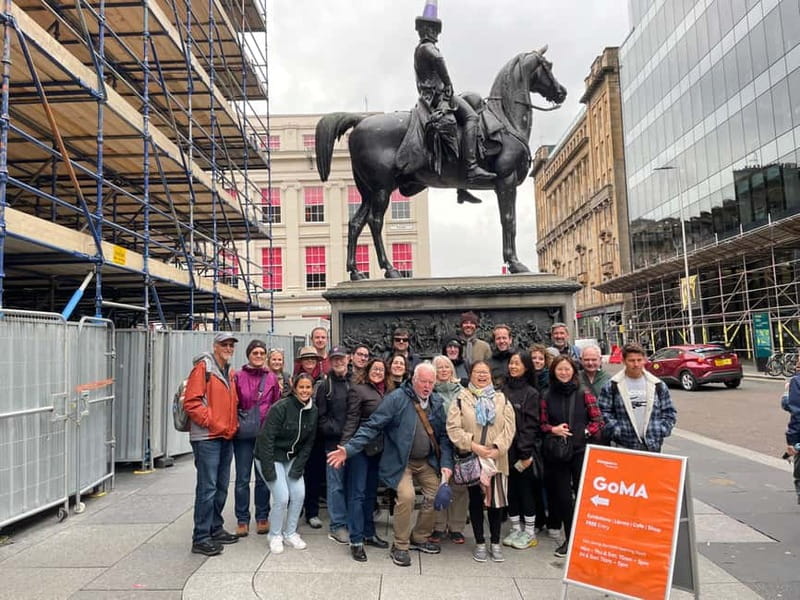
A city tour can quickly become a parade of dates and building names. This one takes a different route. Your guide is a trained actor who lives in Glasgow, so the walk is built around spoken stories, timing, jokes, and character.
That matters in Glasgow. The city’s past includes trade, empire, religious change, immigration, political movements, fortunes made and lost, and some grim public events. A guide who can shift from a funny anecdote to a serious point helps keep those subjects connected.
The strongest guides appear to be Ian, Martin, Luke, and Gordon, based on the repeated praise they receive. Ian is described as both funny and attentive, with time for questions after the walk. Martin is praised for his dramatic delivery and ability to connect with a large group. Luke is noted for being easy to hear, funny, and clear. Gordon brings wit, poetry, and a strong sense of affection for Glasgow.
Guide assignments can change, so you should not book on the assumption that one particular actor will lead your walk. Still, the format is consistent: English-language storytelling from someone who knows the city personally and can make a street corner feel like a scene from a play.
More History Walking Tours in the UK
- A History of Terror – Belfast City Centre Walking Tour
★ 5.0 · 2,883 reviews - Edinburgh: Old Town History and Tales Walking Tour
★ 4.8 · 2,361 reviews - Old Town Walking Tour History and Tales in Edinburgh
★ 5.0 · 2,168 reviews
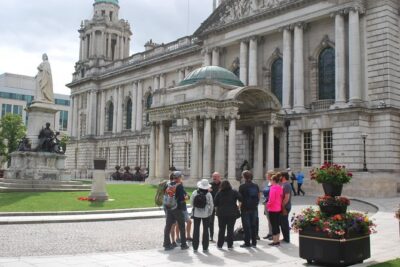
George Square: Glasgow in grand Victorian stone
Meet your guide between the lions in George Square, just behind the white granite Cenotaph and War Memorial. If a major event disrupts the square, the alternate meeting point is the Piper Whisky Bar at the corner of Cochrane Street and George Square.
This is a good place to begin because the architecture immediately shows Glasgow at the height of its civic confidence. Look around at the City Chambers, Merchants’ House, and the headquarters of Glasgow City Council. The square is named after an English king, a detail that opens the door to questions about power, identity, and the relationship between Glasgow and the wider British state.
You get time to admire the architecture and take photos, but the square is not treated as a long architectural study. Instead, your guide uses it as a starting point for the city’s larger story. You learn how Glasgow grew into the second city of the British Empire and how wealth from trade helped shape its public buildings.
The square also gives you a useful orientation to central Glasgow. You are near the commercial center, the Merchant City, major cultural sights, and the route toward Glasgow Cathedral. I recommend paying attention to the buildings overhead before the walk moves on. The tour’s later stories about trade and status make more sense once you have seen how the city displayed its success.
From early Glasgow to the modern commercial center
The next part of the walk reaches back to early Christian and Roman influences. You hear how ancient tribes affected the area and how Glasgow’s original medieval center developed.
This section is valuable because it prevents the city from seeming like a purely Victorian creation. Glasgow is often associated with grand nineteenth-century architecture, shipbuilding, commerce, and industry, but the walk points to older roots beneath that later growth.
The route then moves toward the modern commercial district. Here, the subject changes from faith and early settlement to money, business, and political ideas. Your guide explains where commercial capitalism took hold and where socialism and the British Labour movement began.
That combination is one of the tour’s best features. Glasgow’s past is not presented as a simple rise from small settlement to wealthy city. You hear how economic growth affected social life and politics, and how different groups responded to the city’s unequal fortunes.
The guide’s style makes a difference in this section. A plain lecture about capitalism and socialism could feel heavy. A skilled actor can give the story pace and help you understand why these ideas mattered in the streets around you.
Merchant City and the people behind the money
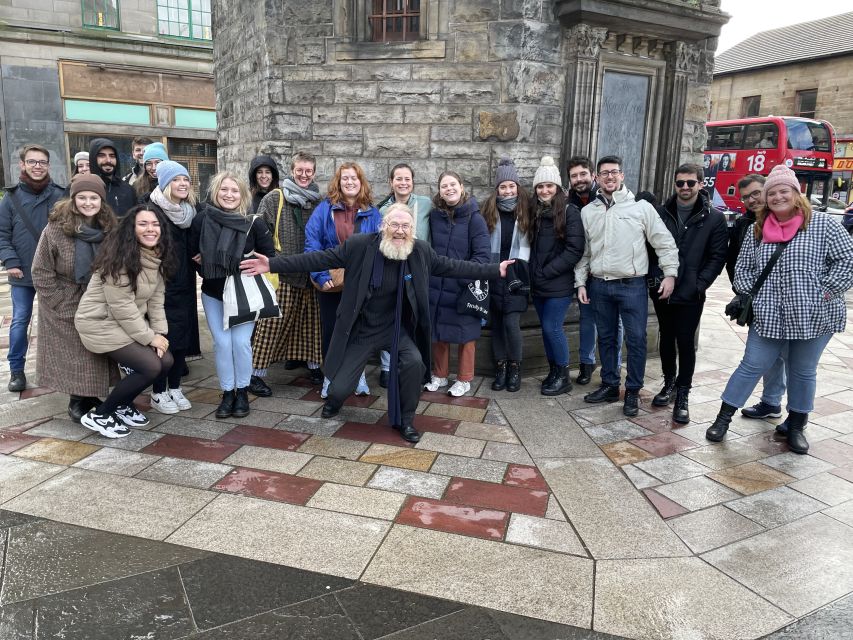
Merchant City is the heart of the walk. You move through streets and lanes connected with Glasgow’s original trading barons, seeing where wealthy merchants built homes and palaces.
The district is especially good for understanding the gap between public grandeur and private fortune. The city’s large civic buildings tell one story. Merchant City’s former residences tell another, showing how individual traders displayed their success.
Your guide covers people who made fortunes, lost fortunes, and shaped Glasgow’s place in international trade. You also hear the intriguing claim that Glaswegians may have helped set the American War of Independence alight. The point is not simply to attach Glasgow to a famous event. It shows how local commerce could connect the city to disputes far beyond Scotland.
This is where the tour feels most like a walk through a living city rather than a museum lesson. You are looking at ordinary streets while hearing about traders, ambition, political change, and risk. The old lanes and side streets give the stories a more personal scale.
Allow yourself time to look up and around. The route includes a good deal of walking, and the guide must keep the group moving. You may hear more than you can inspect in detail, so note the buildings or places you want to revisit later.
Same streets, a different century:
- London Small Group Tour of Historical Pubs
★ 5.0 · 10,422 reviews - Edinburgh: Edinburgh Castle Guided History Tour with Tickets
★ 4.8 · 9,933 reviews - Edinburgh: Whisky Tasting with History and Storytelling
★ 4.9 · 2,451 reviews - Soho Music & Historic Pubs Tour
★ 5.0 · 1,993 reviews
The Cathedral, museums, and what to save for later
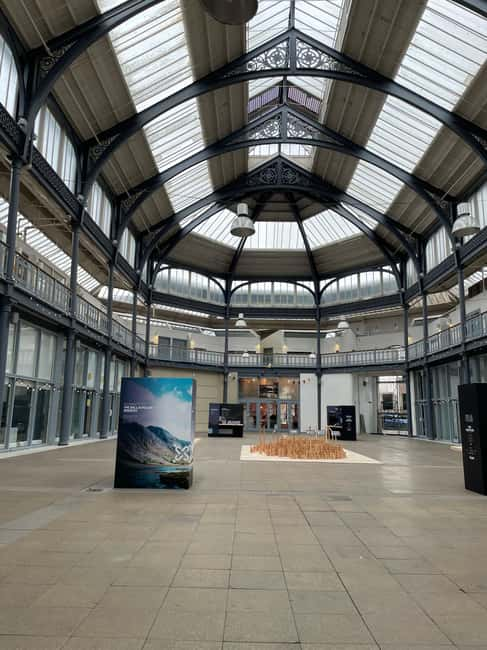
The tour points out Glasgow Cathedral, the Gallery of Modern Art, and the Police Museum. These are not full visits during the walk. That is important when planning your day.
Glasgow Cathedral offers a chance to continue the early religious story after the tour. The Gallery of Modern Art gives you a different view of the city, linking the old commercial center with present-day culture. The Police Museum adds another angle, focusing on law and public life.
All Glasgow museums and galleries are free to visit. That makes the tour more useful as a first look, since you can return later without paying another admission fee. I would treat the walk as an orientation and choose one or two of these places for a separate visit.
The same applies to the cathedral. You may wish to return when you have more time and can give the building your full attention. The tour provides context and points you in the right direction, but the schedule does not allow for a long interior visit.
Irish immigration and Glasgow’s changing population
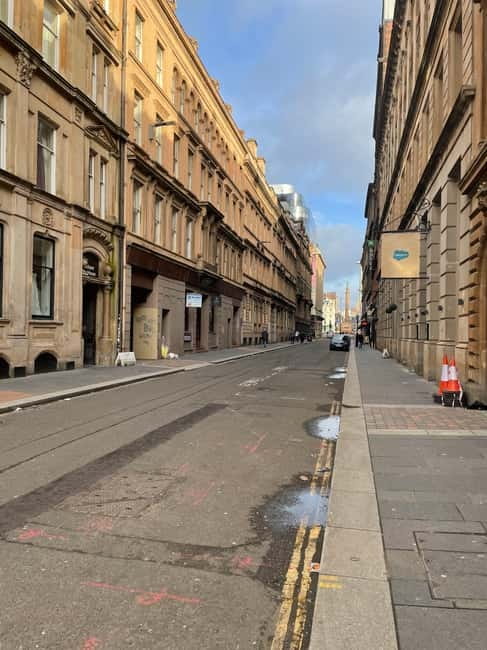
The walk also covers the influence of Irish immigrants on Glasgow’s growth. This is an essential part of the city’s story, since population change helped shape its work, neighborhoods, faith communities, and social tensions.
The subject adds needed balance to the grand account of merchants and civic buildings. Wealthy traders and political movements are only part of Glasgow’s past. The city also grew through migration and the labor of people who arrived looking for work and a new life.
You should expect the guide to connect this story with wider changes in Glasgow rather than present it as an isolated topic. Since the tour covers roughly 1,500 years in about two hours, the treatment is necessarily broad. Still, it helps you see the city as a place shaped by people moving in and out, not just by its most famous buildings.
Mercat Cross and the darker side of the city
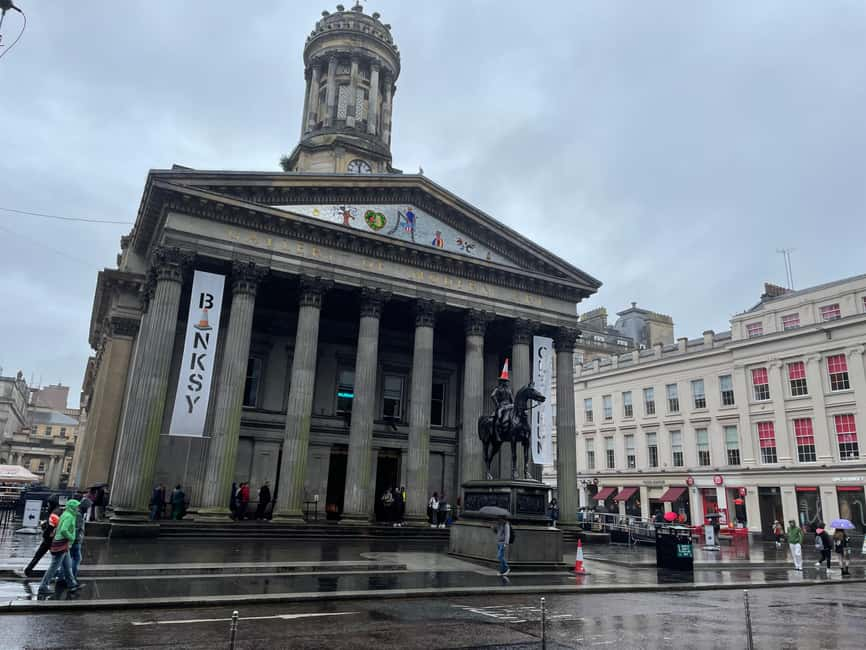
The walk finishes at Glasgow Cross, also called Mercat Cross. This was once a place of public executions, so the final stop turns the mood toward the city’s harsher past.
It is an effective ending. You have already heard about wealth, trade, politics, religion, and immigration. Mercat Cross reminds you that public life also included punishment, spectacle, and fear.
Some guides add stories of murder, ghosts, and grave robbing, along with other darker tales. The exact emphasis depends on your guide, but the experience is not limited to polite civic history. If you like a tour with a little edge, this final section should suit you.
The ending also leaves you in a useful central location. You can continue to Glasgow Cathedral, visit one of the free museums or galleries, or explore Merchant City on your own. The tour itself does not include food or drinks, and it does not provide hotel pickup or drop-off.
What the two-hour timing really means
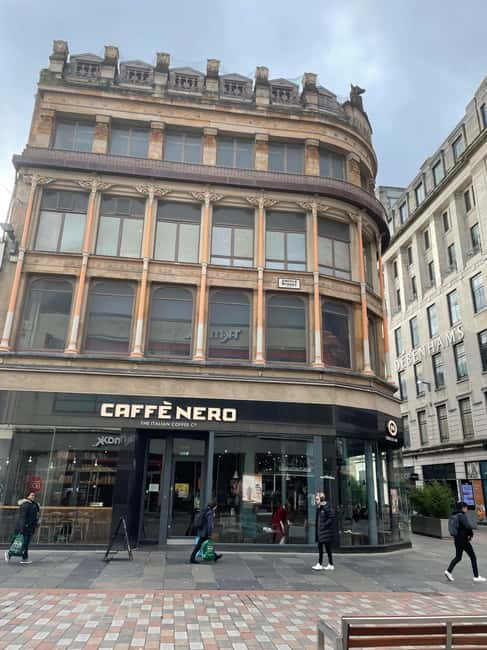
Two hours is long enough to give you a strong first view of central Glasgow without taking up the whole day. That makes it a smart choice on your first morning, especially if you want help deciding what to see next.
The tradeoff is coverage. You will walk through several parts of the center, hear a large amount of history, and pass cultural sights, but you will not spend long inside them. One guide is praised for offering useful suggestions about places to eat and things to do afterward, so save your questions for the end.
The route is on flat terrain and is listed as wheelchair accessible. You still need comfortable shoes, since the activity is a continuous walking tour. Wear weather-appropriate clothing and bring a camera. The walk operates rain or shine, and Glasgow weather can change quickly.
The meeting point between the lions is easy to identify once you are in George Square. Arrive with enough time to find the white Cenotaph and the lions without rushing.
Is $20 a fair price?
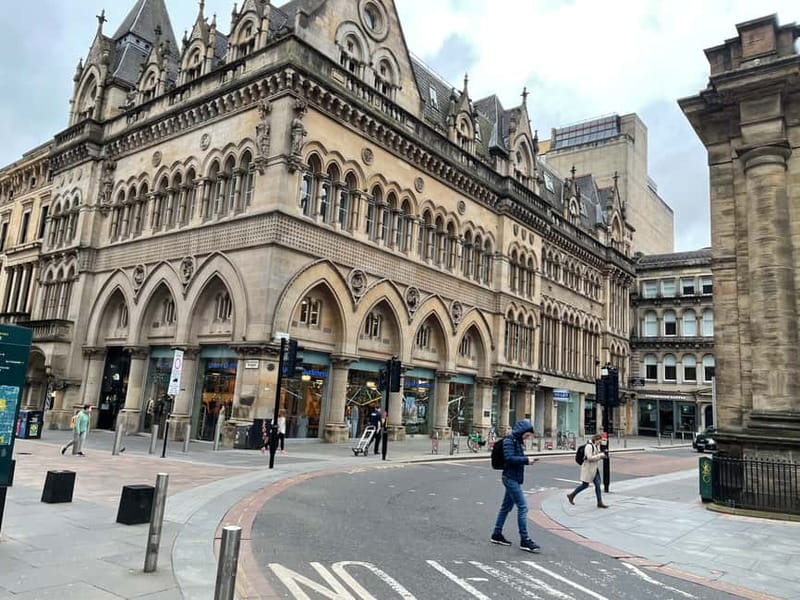
At $20 per person, this is good value if you want context and company while getting oriented. You are paying for two hours with a live guide who can connect architecture, politics, trade, religion, immigration, and local anecdotes.
The price is particularly reasonable because the tour points out several places you can visit free of charge later. It does not include admissions, food, transport, or hotel pickup, but none of those omissions are surprising for a central walking tour.
The value depends on your interest in storytelling. If you prefer to explore quietly with an audio guide, you may find the performance style unnecessary. If you want a local voice, quick answers, and a sense of how the city’s pieces fit together, the cost is modest.
Who will enjoy this Glasgow walk?
I would recommend it most strongly to first-time visitors who want to get their bearings fast. The route introduces the main central areas and gives you enough background to make later visits more rewarding.
It also suits:
- People who enjoy history told through anecdotes rather than a formal lecture
- Visitors interested in politics, trade, migration, and social change
- Couples and families who want a compact activity
- Museum fans who want to choose their own free follow-up visits
- Anyone who appreciates a guide with humor, poetry, and theatrical delivery
It may be less suitable if you want long stops inside buildings or a detailed architecture tour. The walk covers a lot of ground in two hours, and the guide’s stories are the main attraction.
Should you book it?
Book this tour if you want Glasgow explained by a local performer rather than simply pointed out on a map. The best part is the combination of clear history, dark tales, jokes, and personal feeling for the city. Ian, Martin, Luke, and Gordon are all praised for making the walk easy to follow and enjoyable.
Skip it if you need extended interior visits or a slow, specialist study of one subject. For most first visits, though, the flat route, free follow-up sights, flexible cancellation up to 24 hours ahead, and $20 price make this a sensible introduction to central Glasgow.
FAQ
Where does the Glasgow walking tour start?
Meet your guide between the lions in George Square, just behind the white granite Cenotaph and War Memorial. If a major disruption affects the square, meet at the Piper Whisky Bar at the corner of Cochrane Street and George Square.
How long does the tour last?
The walking tour lasts two hours. Starting times vary, so check availability when booking.
What language is the tour in?
The live tour is conducted in English.
Is the tour wheelchair accessible?
Yes. The route is wheelchair accessible and takes place on flat terrain.
Does the tour enter Glasgow Cathedral or the museums?
The guide points out Glasgow Cathedral, the Gallery of Modern Art, and the Police Museum, but there is not enough time for full visits during the walk. Glasgow museums and galleries are free to visit later.
What should I bring?
Wear comfortable shoes and weather-appropriate clothing. Bring a camera, and be prepared for the tour to run in rain or shine.
Newest history tours we have reviewed in the UK
- Ilfracombe Seafront History Walking Guided Tour★ 5.0 · 18 reviews
- Walking Bogside History Tour in Guildhall★ 5.0 · 280 reviews
- Private tour of the stunning Cotswolds with an expert local guide★ 5.0 · 45 reviews
- Curious Cambridge – The History Tour that’s FUN!!!★ 5.0 · 80 reviews
- Birmingham Gangs Nighttime Historical Walking Tour with Pub Stops★ 5.0 · 53 reviews
- 2.5-Hours Walking Tour of Birmingham into Black Heritage Madiba★ 5.0 · 49 reviews
- Private Political History & Murals Tour Belfast★ 5.0 · 182 reviews
- Belfast Walking Tour: City Centre History, Troubles & Stories★ 5.0 · 39 reviews
History Walking Tours, compared.
History and Hauntings of Salem Guided Walking Tour
Read our review →
Freedom Trail History Small Group Walking Tour
Read our review →
Historic Charleston Guided Sightseeing Walking Tour
Read our review →
Tapas Walking Tour with Food, Wine, and History
Read our review →
Savannah History and Haunts Candlelit Ghost Walking Tour
Read our review →
A History of Terror – Belfast City Centre Walking Tour
Read our review →Browse the lists this tour appears in