

Review · DUBLIN HISTORY TOURS
St Patricks Cathedral. Dublin Castle, Book of Kells Heritage Tour
The Book of Kells is the star here, but it is only one chapter in a compact walk through Dublin’s past. In about three and a half hours, you move from medieval religious art to British rule, Irish independence, university life, and the street folklore of Molly Malone. The best guides, including Noel Quinn, Marty, Alan, Michael, and Sean, make the connections clear.
I like the small group limit of 15, which leaves room for questions and personal stories. I also like that admission to St Patrick’s Cathedral and the Book of Kells experience is included, so the $142.02 price covers the main sights rather than just a guided walk around them.
The main catch is simple: Dublin Castle is exterior-only. You see its grounds and hear about its long role in Irish government, but you do not enter the castle buildings. This is also a walking tour, so comfortable shoes and a little stamina matter.
Key points to know before booking
- The Long Room and Book of Kells are the centerpiece: You see the manuscript exhibition, the famous library hall, and a new immersive digital experience.
- Dublin Castle means grounds, not interiors: The guide explains the site, but castle buildings are not entered.
- St Patrick’s Cathedral brings the history indoors: Gothic architecture, memorials, Jonathan Swift’s tomb, and the Door of Reconciliation give the visit real depth.
- The guides are a major part of the experience: Noel Quinn, Marty, Michael, Alan, Sean, Ann, Mick, and others are praised for warm storytelling and flexible answers.
- Plan for a brisk city walk: The route covers several central sights over roughly three and a half hours.
- The schedule details need checking: The itinerary lists St Patrick’s Cathedral, Dublin Castle, the Book of Kells, Trinity College, and Molly Malone, while the meeting information says the walk finishes outside St Patrick’s Cathedral.
Why this Dublin history walk works
Dublin is easy to underestimate. Its principal sights sit close together, yet each one tells a different story. This experience puts those stories side by side instead of treating each monument as an isolated photo stop.
At St Patrick’s Cathedral, you encounter medieval religion and literary Dublin. At Dublin Castle, the focus shifts to centuries of English and British administration. Trinity College brings in scholarship and art, while Molly Malone adds a lighter dose of popular folklore.
That range is the tour’s strength. You do not spend three hours hearing only about churches or only about politics. You get a broad introduction to how Dublin was shaped, with a local guide filling in the links between the buildings.
The group size can make a real difference. A maximum of 15 people is small enough for questions, and several guide names receive repeated praise for making the walk feel personal. Noel Quinn is noted for his friendly manner and care with individual needs. Marty is praised for detailed storytelling and local insight. Michael is known for adjusting explanations to the group’s interests, while Alan and Sean are singled out for clear, engaging history.
The tone is not academic for its own sake. You get facts, but also anecdotes, explanations of symbols, and suggestions for pubs and restaurants from guides such as Mick and Noel. That is useful when you want your first Dublin walk to help shape the rest of your stay.
More Castle and Palace History Tours in Dublin:
- Dublin to Cork, Blarney Castle & Cóbh Heritage Centre by train
★ 4.5 · 510 reviews - Interactive Living History in Dalkey Castle near Dublin City
★ 5.0 · 133 reviews - Book of Kells. Medieval Dublin Castle. 5* History & Heritage Tour
★ 5.0 · 73 reviews
St Patrick’s Cathedral and the story inside its walls
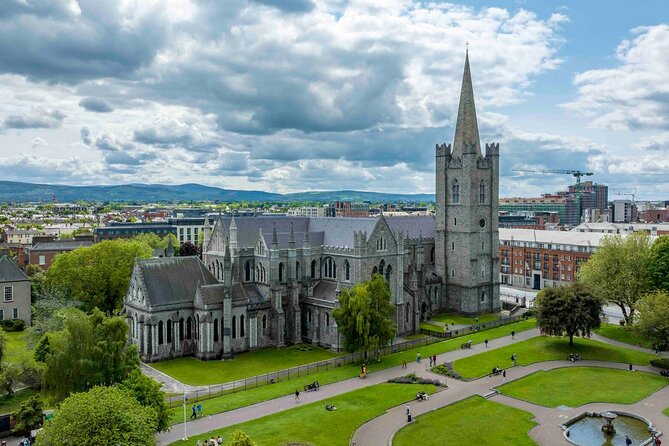
St Patrick’s Cathedral is the largest cathedral in Ireland, and its Gothic design gives the first major stop plenty of visual impact. Look up at the pointed arches, then slow down for the carved details, woodwork, memorials, plaques, and tombs gathered throughout the church.
The cathedral is not simply an old building to admire from the outside. Its interior connects religious life with Irish literature and politics. Jonathan Swift, author of Gulliver’s Travels, served as dean from 1713 to 1745 and is buried here. His presence gives the building a strong literary connection as well as a religious one.
The Door of Reconciliation is another memorable detail. Its story relates to a 15th-century conflict between the Earls of Ormond and Kildare, and it has become one of the cathedral’s best-known historical objects. Your guide can help you understand why a door became a symbol of an attempted settlement.
Allow about an hour for this stop. That is enough time to hear the main stories and still look around, though anyone interested in architecture or memorial inscriptions may want longer. One benefit of finishing at the cathedral, as the meeting information indicates, is that you may be able to stay on afterward and continue at your own pace.
The practical issue is mobility. This is a walking tour, and the full route covers a fair amount of ground. A guide has helped a visitor with a walker use a lift at the cathedral, but you should mention mobility needs when booking rather than assume every part of the route will be effortless.
Dublin Castle, with the honest limitation
Dublin Castle began in the early 13th century on the site of a Viking settlement. It later became the center of English and British administration in Ireland, a role it held for more than 900 years until the transfer of power to the Irish Free State in 1922.
That background makes the castle grounds an important stop. The site is tied to conquest, government, independence, and the creation of modern Ireland. A good guide can explain those changes in plain language and show how the complex fits into Dublin’s wider story.
You should be clear about what you are buying. The experience includes a walk through the castle grounds and gardens, but it does not enter the interiors of the castle buildings. The scheduled visit is about 30 minutes, so this is an orientation and history stop, not a full castle visit.
That limitation is not a deal-breaker for me if you want a broad city tour. It would matter more if Dublin Castle is high on your personal list and you want to see state rooms or interior displays. In that case, plan separate time to explore the castle beyond this walk.
Weather can affect this part of the experience most. The castle stop is outdoors, and rain or wind may make the half-hour visit less comfortable. Dublin weather changes quickly, so a waterproof layer is sensible even when the morning looks promising.
The Book of Kells and Trinity’s Long Room
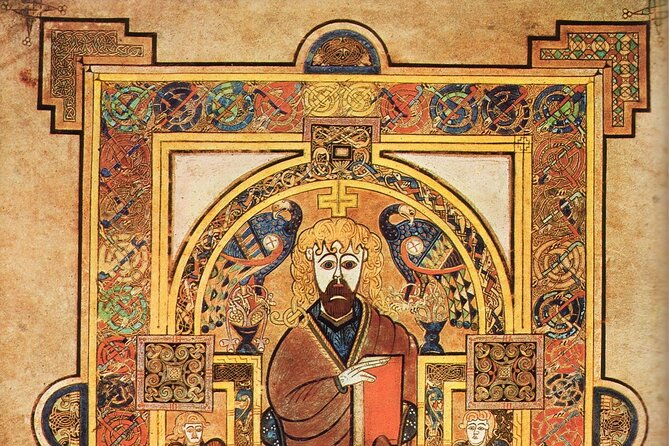
The Book of Kells is the emotional center of the tour for many people. Created by Celtic monks around 800 AD, this illuminated manuscript contains the four Gospels in Latin. Its pages combine Christian imagery with spirals, animals, knots, gold leaf, and intense color.
You will not see every page. Two open pages are displayed at a time, and the pages are rotated regularly. That is worth knowing before you arrive. The manuscript is famous for its detail, but the display is controlled and the room can feel focused and quiet rather than expansive.
The exhibition explains how the book was made and why it matters. It also tells the story of its movement from Iona to Kells for safekeeping. The details help turn a brief look at an ancient book into a better understanding of medieval art, religion, and Irish culture.
The guide’s role changes inside the buildings. Guides are not allowed to lead a full spoken tour within the Book of Kells exhibition and Long Room, so they provide context beforehand. That preview is useful. You enter knowing what to watch for instead of trying to absorb every panel and illustration at once.
After the manuscript comes the Long Room in the Old Library. The hall stretches about 65 meters and contains roughly 200,000 of the library’s oldest books. Marble busts line the space, and the long rows of shelving create one of Dublin’s most memorable interiors.
The experience also includes the Long Room’s newer immersive digital presentation. This adds another way to understand the manuscript and the library, especially if the fine detail of the original pages is difficult to see at a glance.
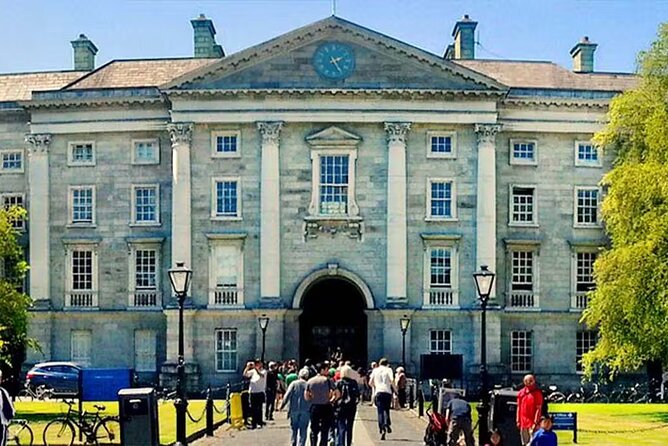
Trinity College itself dates to 1592, when it was founded by Queen Elizabeth I. The campus includes the Campanile bell tower and the Rubrics Building, described as the oldest surviving structure. The Book of Kells visit gives you a concentrated look at the Old Library, while the wider Trinity stop adds a sense of the university’s age and daily academic setting.
More Architecture and Landmark Tours in Dublin:
- Venice: St. Mark’s Basilica Guided Tour & VR History Intro
★ 3.9 · 4,880 reviews - Venice’s Best: Basilica, Doge’s Palace, Gondola & History Gallery
★ 4.5 · 2,478 reviews - Córdoba: Skip-the-Line Great Mosque-Cathedral History Tour
★ 4.7 · 1,690 reviews - Pantheon Elite Guided Tour – Rome’s Iconic Ancient Temple
★ 5.0 · 1,447 reviews
Molly Malone and Dublin’s lighter side

The Molly Malone statue provides a short change of pace after the cathedral, castle, and university. The bronze figure was unveiled in 1988 during Dublin’s millennium celebrations and depicts Molly as a 17th-century fishmonger pushing a cart of seafood.
The statue is linked to Dublin’s musical and folkloric identity. It is not a major historical monument in the same way as St Patrick’s Cathedral or Dublin Castle, but it shows how the city remembers itself through song and popular stories.
The scheduled stop is about 20 minutes. That is enough for an explanation, photographs, and a quick look at the surrounding streets. The statue also helps keep the tour from becoming too solemn. Irish history includes difficult periods, and a stop tied to folklore gives the walk a more relaxed finish.
Because the exact order may change, pay attention to the meeting and ending instructions. The published details identify the Henry Grattan Monument at College Green as the starting point and St Patrick’s Close as the end. The stop list presents St Patrick’s Cathedral earlier, while the end point places it last. Confirm the order shortly before setting out if that matters for your plans.
Guides who make the difference
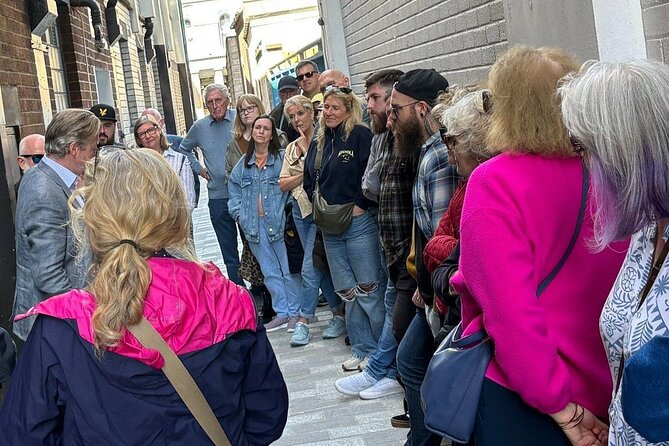
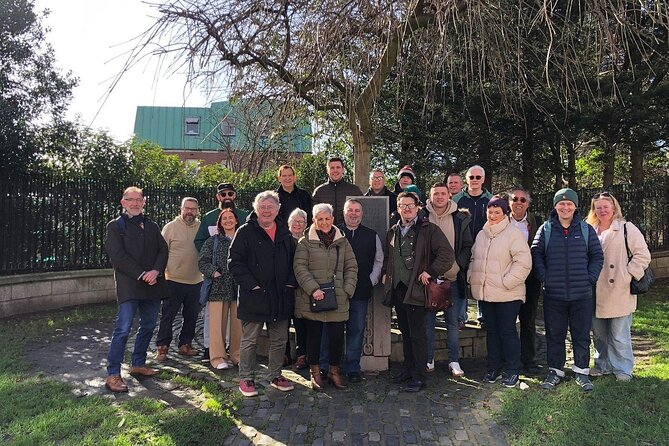
The sights are strong enough to fill an afternoon, but the guide determines how much you take away. The most praised guides share a few traits: they explain Irish history clearly, welcome questions, and adjust the pace or emphasis when the group shows interest in a particular subject.
Marty is a good fit if you enjoy detailed historical context and stories about what you pass between stops. Michael is noted for adapting the walk to the group and drawing attention to details that are easy to miss in the Book of Kells exhibition. Noel Quinn receives particular praise for his warmth, humor, and personal care, including helping a visitor who used a walker.
Alan is described as especially strong on Irish history and helpful with questions. Sean is praised for a fast-paced, organized style, while Ann is recognized for lively storytelling. Mick adds practical local suggestions for pubs, restaurants, and places to settle in after the walk.
You cannot usually choose a specific guide, so treat these names as examples of the standard to expect rather than a promise that one person will lead your date. The strongest part of the experience is the human interpretation, not simply admission to the buildings.
Price, time, and what you receive

At $142.02 per person, this is not a bargain-priced city stroll. The price makes more sense when you count the included admissions to St Patrick’s Cathedral and the Book of Kells experience, plus the guide and the small group limit.
You are paying for a concentrated introduction to several of Dublin’s most important sites. If you planned to visit the cathedral and Book of Kells independently, the tour adds structure and historical context. It also saves you from working out how to connect the stops yourself.
The value is weaker if you mainly want Dublin Castle interiors, long unhurried visits, or time to browse every exhibition at your own speed. The 30-minute castle visit is short, and the overall pace is active. You may also want a separate Trinity College visit if you hope to explore more of the campus.
The tour is offered in English and uses mobile tickets. It is capped at 15 people, and group discounts may be available. Most people can take part, but the walking demands should be taken seriously. Wear supportive shoes, keep your schedule free for the full three and a half hours, and avoid placing a tight appointment immediately afterward.
The cancellation terms are flexible if your plans change: full refunds are available when you cancel at least 24 hours before the start time. Changes or cancellations inside that window are not accepted for a refund.
Who should book this tour?
I would choose this experience if you have limited time in Dublin and want a strong first look at the city’s major cultural sights. It suits first-time visitors, families who appreciate a guide’s stories, and anyone who wants Irish history explained as a connected narrative rather than a series of isolated facts.
It also works well for visitors who value questions and conversation. Small groups have allowed guides to tailor discussions to family interests, including women’s achievements in Irish history. That flexibility is a real benefit when you are traveling with children or several generations.
I would hesitate if you dislike walking, need long periods at each stop, or specifically want to tour the inside of Dublin Castle. The Book of Kells visit also has a set viewing format, with only two pages open at a time.
For the right visitor, the tour offers a useful balance: a grand cathedral, a politically important castle site, an ancient manuscript, a historic university, and a piece of Dublin folklore. Book it for the guide’s interpretation and the efficient route, not just for a checklist of entrances.
FAQ
How long does the tour last?
The experience lasts approximately 3 hours and 30 minutes.
How much does the tour cost?
The listed price is $142.02 per person.
What language is the tour offered in?
The tour is offered in English and led by an English-speaking local guide.
Where does the tour begin?
The meeting point is the Henry Grattan Monument at College Green in Dublin.
Where does the tour finish?
The stated end point is outside St Patrick’s Cathedral at St Patrick’s Close.
Is admission included?
Admission to St Patrick’s Cathedral and the Book of Kells experience is included. The tour also includes access to the Old Library Long Room.
Do you enter the inside of Dublin Castle?
No. The tour walks through the Dublin Castle grounds and gardens but does not enter the interiors of the castle buildings.
How many people can join the tour?
The maximum group size is 15 people.
Is the tour suitable for people with limited mobility?
The experience is a walking tour and may not suit anyone with limited mobility. A guide has assisted a visitor with a walker at the cathedral, so mention your needs before the tour.
Can I cancel for a full refund?
Yes. You can cancel at least 24 hours before the start time for a full refund. Cancellations or changes made less than 24 hours before the experience are not accepted for a refund.
Newest history tours we have reviewed in Dublin
- Private Dublin Historical and Heritage Tour by Bike★ 5.0 · 30 reviews
- Historical Walking Tour of Dublin★ 5.0 · 50 reviews
- DayTripper Dublin: A Guided City Walking Tour★ 5.0 · 90 reviews
- Dublin LGBTQ Pride Historical and Cultural Walking Tour★ 5.0 · 91 reviews
- Interactive Living History in Dalkey Castle near Dublin City★ 5.0 · 133 reviews
- Full-Day Irelands Ancient Boyne Valley Private Guided Tour★ 5.0 · 36 reviews
- Interactive Guided Tour of Printing History★ 5.0 · 23 reviews
- Hidden Dublin: Haunted History Walking Tour v2.0 2026★ 4.5 · 188 reviews
Castle & Palace History Tours, compared.
Edinburgh Castle Guided History Tour with Tickets
Read our review →
Madrid Essential: Historic Center, Plaza Mayor & Royal Palace
Read our review →
Venice’s Best: Basilica, Doge’s Palace, Gondola & History Gallery
Read our review →
Imperial Palace and Shogun Historical Walking Tour
Read our review →
Saadian Tombs & Bahia Palace, Medina Guided Tour
Read our review →
Charleston historical walking tour with a Professor of History at The Citadel
Read our review →
Abu Dhabi Grand Mosque, Palace, and Heritage Village
Read our review →
Buda Castle District Dark History, Legends and Vampire Night Tour
Read our review →Browse the lists this tour appears in