
Review · NEW YORK CITY HISTORY TOURS
NYC: Lower East Side Devour Food & History Walking Tour
The most interesting thing about this tour is the way it turns the Lower East Side into a meal you can follow from stop to stop. You begin with Katz’s pastrami, move through Dominican, Jewish, Chinese, and modern New York flavors, and finish with an unusual doughnut. I like the seven or more tastings and the focus on small, family-run businesses rather than a standard sightseeing route.
I also like that the food tells the neighborhood’s story without turning the walk into a lecture. A guide such as Craig can make the experience feel friendly and informal, and families have found it easy to enjoy. The main drawback is practical: vegans, wheelchair users, people with celiac disease, and anyone needing strict allergy control should choose another tour.
Key points to know before booking
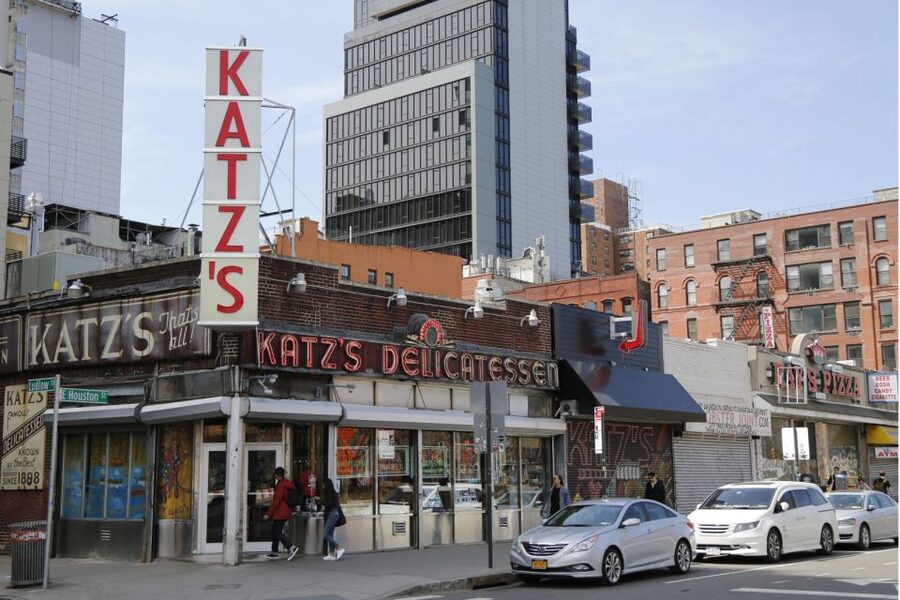
- Katz’s pastrami starts the morning with a true Lower East Side classic, served with mustard at the city’s oldest delicatessen.
- Seven family-run businesses provide enough food for breakfast and lunch, so arrive hungry.
- The route crosses several food traditions, including Dominican, Jewish, Chinese, and modern New York cooking.
- A Chinatown stop may feature Fujian peanut butter noodles or thin-skinned pork dumplings, depending on the tasting served.
- The tour lasts three hours and usually runs in the morning, with a fair amount of walking between stops.
- Dietary planning matters: vegetarian, dairy-free, pescatarian, gluten-free, and pregnancy adaptations may be possible, but replacements are not guaranteed at every stop.
Why this three-hour walk works
The Lower East Side is one of the best parts of New York for understanding how food and migration shaped one another. The streets hold traces of Jewish settlement, Chinese enterprise, Dominican family life, old-style bodegas, and newer food businesses that borrow from the past without copying it.
This tour gives you that story in small bites. Instead of spending three hours looking at buildings from the outside, you stop to taste what the neighborhood has become. I find that approach useful because food gives you an immediate connection to a place. You do not need to remember every date to understand that different communities have left their mark here.
The pace is also sensible for a food walk. You are not sitting down for one long meal. You are sampling at several addresses, walking off some of the food between stops, and seeing how quickly the character of the neighborhood changes. The three-hour length is long enough to provide a full meal, but short enough to fit into a morning in New York.
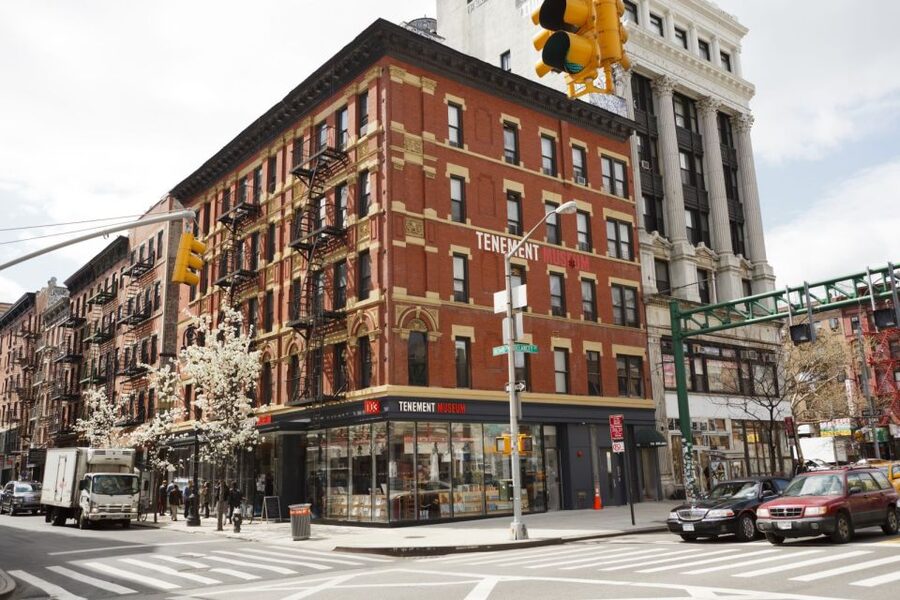
Arrive 15 minutes early at Peretz Square, on the corner of East Houston Street and First Avenue. Look for a guide with a red bag or a Devour Tours sign. The meeting point is across from One and One restaurant at 71 East First Street.
More History Walking Tours in New York City
- Hamilton and Washington Revolutionary Walking Tour
★ 5.0 · 182 reviews - #1 Rated NYC Chinatown Food and History Walking Tour with FNYT
★ 5.0 · 171 reviews - Tribeca Architecture And History Walking Tour
★ 5.0 · 141 reviews
Katz’s pastrami and the opening taste of New York
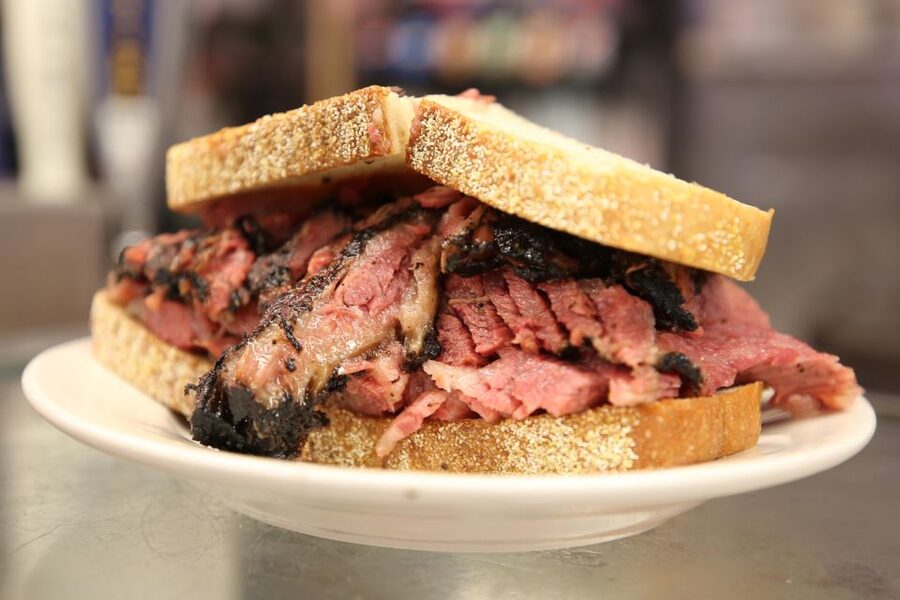
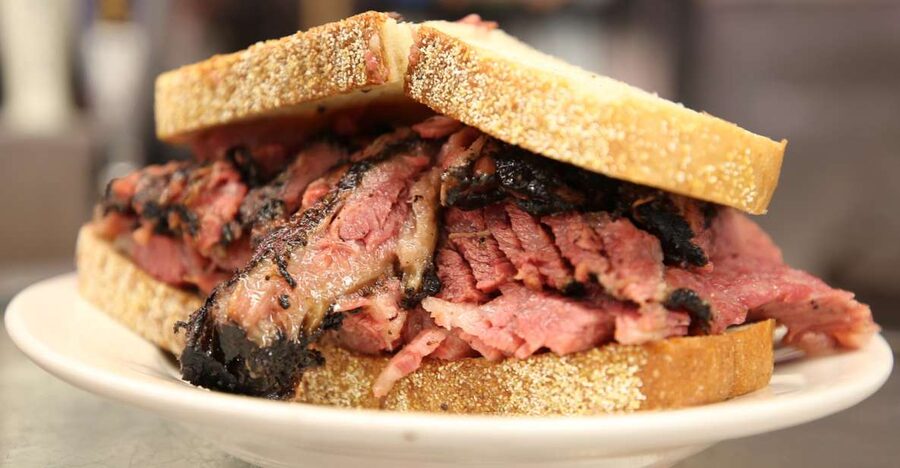
Starting at Katz’s Delicatessen gives the tour a strong first scene. The family-run institution has served the Lower East Side since 1888, and its giant sandwiches are part of New York’s food culture. Here, the signature tasting is pastrami with mustard.
This is not a dainty sample. The tour description promises a proper taste of the famous sandwich, so you should not eat a large breakfast before arriving. The pastrami also sets up one of the central themes of the morning: food brought by immigrant communities can become part of the city’s shared identity.
Katz’s is an active, well-known place, so do not expect a quiet historical museum. The value is in seeing a working deli that still serves the food it became known for, then hearing how that kind of business fits into the neighborhood’s past and present.
If you have children with you, the food and setting can be a good fit. One family brought boys aged 11 and 13, and the children enjoyed the tour. That does not mean every young eater will like every stop, but the range of familiar and unusual foods gives families a fair chance of finding plenty to enjoy.
Dominican breakfast beyond the usual New York bagel
The next food stop shifts the focus to Dominican cooking. You visit a local breakfast counter and sample a selection of what is served there. This is a useful part of the tour because it widens the picture of what New York breakfast can be.
Many visitors think of a New York morning in terms of bagels, eggs, or diner food. A Dominican breakfast counter offers another view, tied to the neighborhood’s local residents and family businesses. The stop is less about one famous dish and more about seeing how a community’s everyday food fits into the city.
The exact tasting can vary, so I would not book this expecting one specific plate. Instead, come ready for a selection. If you have dietary limits, tell the operator before the tour. Vegetarian, dairy-free, pescatarian, gluten-free, and pregnancy-friendly adjustments may be available, but you may not receive a replacement at every stop.
Handmade cheese and cured meat at a local market
The tour continues to a cheese shop in a local market. It was named the best in the United States by Food and Wine magazine, and the tasting includes handmade cheeses and cured meats.
This stop adds a slower, more ingredient-focused note after the sandwiches and breakfast food. You get to compare textures and flavors while learning how a small specialty shop can contribute to the Lower East Side’s current food scene.
The cured meats make this a difficult stop for vegans, and dairy-free guests should arrange an alternative in advance. Even with an accommodation, you may miss part of what makes the cheese shop special. That is worth considering before paying for a food tour built around several shared tastings.
I like this stop because it gives you something to look for after the tour. A good food walk should not end when the guide says goodbye. Here, you may leave with a better sense of how to spot a serious cheese counter or specialty market during the rest of your New York stay.
More History Walking Tours in the USA
- Lower Manhattan Secrets And History Walking Tour
★ 5.0 · 96 reviews - NYC: History of Slavery & Underground Railroad Walking Tour
★ 4.7 · 87 reviews - New York: Rock and Roll History and Culture Walking Tour
★ 5.0 · 22 reviews - History and Hauntings of Salem Guided Walking Tour
★ 5.0 · 14,564 reviews
Bodegas and the modern New York bagel
As you walk, the bodegas become part of the visual story. These small corner shops are linked to the Jewish community that shaped the Lower East Side in the early 20th century, even as the businesses and neighborhood around them have changed.
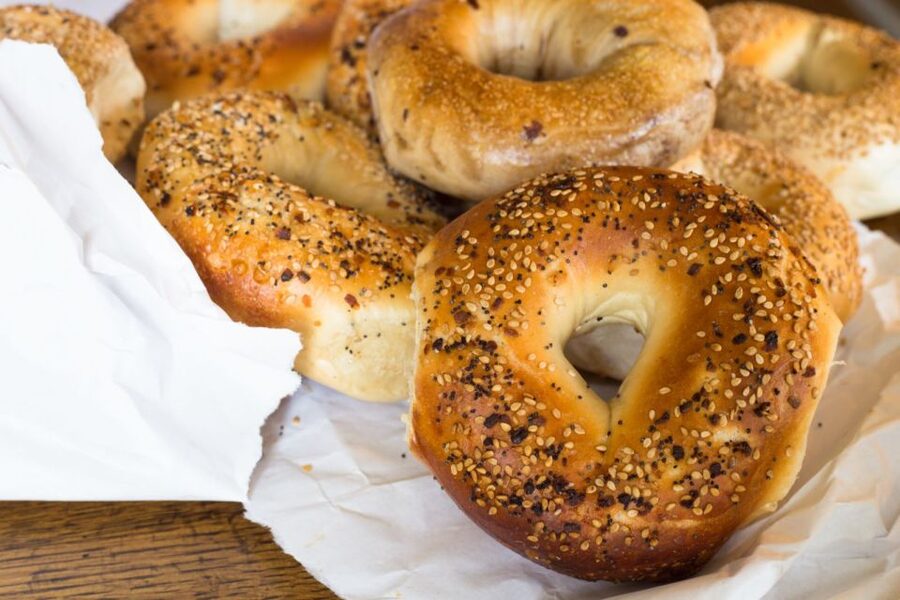
The tour then visits a newer take on the classic bodega and serves a modern New York-style bagel. This contrast is one of the more useful parts of the route. You see how an old neighborhood idea can be reworked for current tastes without losing its New York identity.
Do not expect a plain, quick bagel stop. The point is the updated interpretation, and the tasting is designed to show how familiar local food can change. If you are comparing several New York food tours, this is the kind of stop that separates a simple eating itinerary from a tour with a clear point of view.
The Jewish connection is important, but keep one detail straight: the businesses visited are not kosher. The tour passes through a former Jewish quarter and includes Jewish food traditions, but kosher travelers should not treat the tastings as kosher-certified.
Chinatown noodles, dumplings, and a different New York story
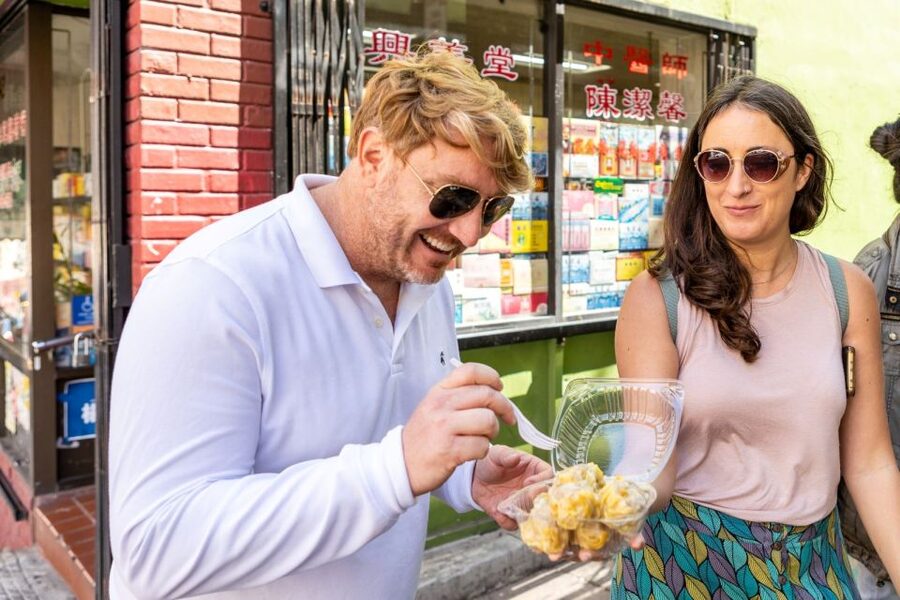
Chinatown is close to the Lower East Side route, and the food changes again as you approach it. The tour highlights the influence of Chinese food on New York and stops at a newer Chinatown business.
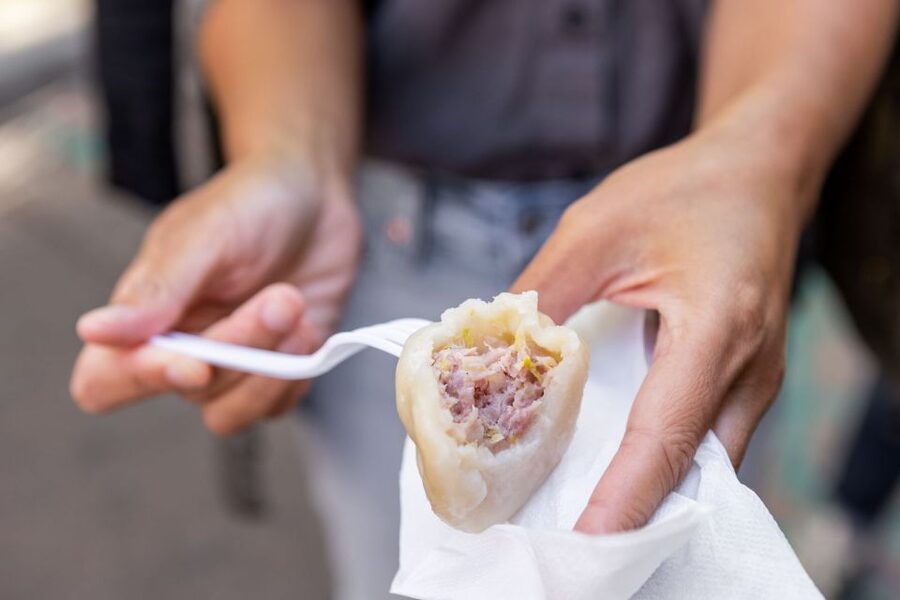
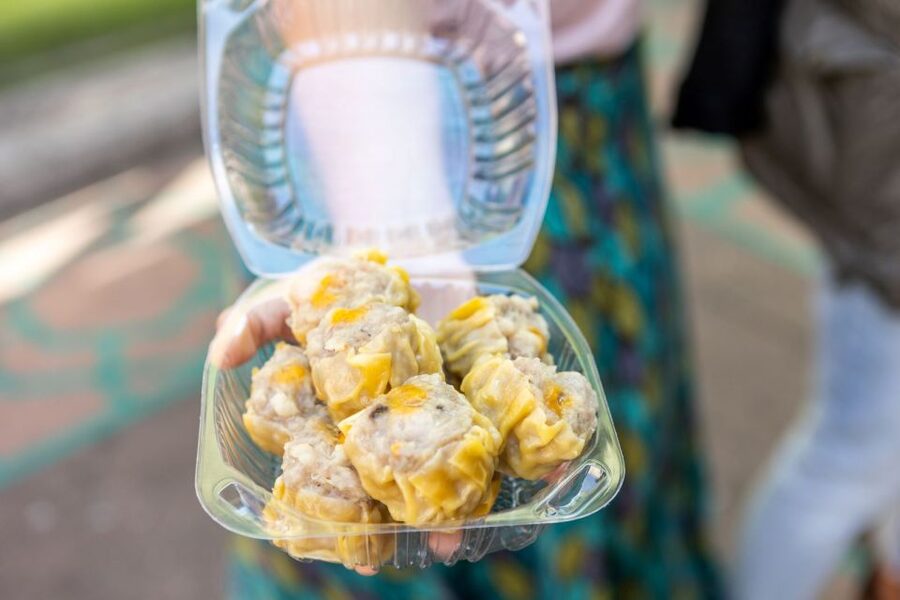
Possible tastings include Fujian peanut butter noodles or thin-skinned pork dumplings. Both options show why this is more than a generic Chinatown walk. You are not simply stopping for a famous takeout item. You are being introduced to a particular regional style and to a business that represents Chinatown’s newer food scene.
The noodle tasting can be especially useful for anyone who thinks of Chinese food in broad categories. Fujian peanut butter noodles offer a different flavor profile from the dishes many people first associate with American Chinese restaurants. The dumplings provide a more familiar entry point, though the thin skins give them their own character.
Because the exact tasting may depend on the stop and the day, keep your expectations flexible. The broader value is the transition from Jewish and Dominican food traditions into Chinese cooking, all within a compact part of Manhattan.
Pickles with a family recipe
The pickle tasting is a small stop, but it carries a lot of meaning. You try a family recipe passed down through generations, tied to another food tradition brought by Jewish immigrants who settled in the Lower East Side in the late 19th century.
Pickles work well on a food tour because they reset your palate after heavier bites. They also show how preservation, thrift, and family habits can become part of a neighborhood’s food identity.
This is a good example of the tour’s scale. You are not only tasting the headline foods. You are also trying the side dishes and pantry items that often tell a more personal story. A pastrami sandwich may be famous, but a family pickle recipe can feel closer to the kitchen table.
Again, this stop is not kosher simply because it connects with Jewish food history. If strict kosher practice matters to you, take that as a firm reason not to book.
The final doughnut and the tour’s sweet finish
The last stop is a beloved artisanal doughnut shop known for innovative flavors. The description promises a doughnut unlike a standard bakery version, making this a fitting finish after three hours of savory food.
Ending with a sweet is smart, especially after the pickle and Chinatown stops. It gives the walk a clear finish and lets the tour close on a playful note. You may find that the final doughnut is the easiest tasting to discuss with the rest of your group because everyone can compare the flavor and texture.
The doughnut is also a reminder that the Lower East Side is not frozen in one historical period. The tour connects old Jewish and immigrant food traditions with newer businesses that experiment with familiar American forms.
By the end, you have tasted at least seven items at seven family-run businesses. The food is substantial enough to count as breakfast and lunch, so plan your next meal accordingly.
Is $79 a fair price?
At $79 per person, this is not the cheapest way to eat in the Lower East Side. You could spend less by choosing one deli meal, one Chinatown snack, and a doughnut on your own.
The price makes more sense when you count the number of tastings, the guide, and the neighborhood context. You are paying for seven or more samples, access to a planned route, and explanations that connect the food to migration and local change. A self-guided visit would also require you to find the businesses, decide what to order, and manage the timing.
I consider the value strongest if you want a full morning activity and would otherwise book several meals. It is less compelling if you already know the Lower East Side well, prefer choosing every dish yourself, or mainly want one large meal.
The food portions are described as enough for breakfast and lunch, which helps the calculation. You should still think of the tour as a series of tastings rather than a restaurant meal with a single seat and full menu choice.
Walking, timing, and comfort
This is a walking tour, so wear comfortable shoes. You will move between several businesses and spend three hours on your feet, with stops along the way.
The tour is usually offered in the morning. That timing fits the food: you begin with breakfast items, continue through savory tastings, and finish with a doughnut. It also leaves the afternoon open for museums, shopping, or more exploring in Manhattan.
There is no hotel pickup or drop-off. You need to reach Peretz Square yourself and arrive 15 minutes before the start. The tour is not suitable for wheelchairs, mobility impairments, or baby strollers, and strollers are specifically not allowed.
The guide speaks English. A live guide is included, and the guide’s role matters here because the food is only half the experience. A warm guide can keep the group moving, explain the neighborhood clearly, and help you understand why each stop belongs on the route. Craig, one guide associated with this experience, was singled out for making the walk feel friendly and relaxed.
Food restrictions and who should skip it
This is not a good choice for vegans. The route relies heavily on pastrami, cured meat, cheese, pickles, dumplings, noodles, bagels, and doughnuts, so a vegan would miss too much of the planned food.
Vegetarians, pescatarians, dairy-free guests, pregnant women, and people eating gluten-free without celiac disease may be accommodated if they contact the operator before booking. Do not assume every stop will have a substitute.
People with serious food allergies must sign an allergy waiver at the start. Anyone with celiac disease should skip the tour because gluten cross-contamination cannot be ruled out, even if gluten-free food can sometimes be arranged.
This advice is not a minor footnote. The route moves through several small food businesses, and the tour cannot guarantee strict separation of ingredients. If your health depends on careful preparation, choose a food experience with tighter control.
Who should book this Lower East Side food tour?
I would recommend it to first-time New York visitors who want a guided introduction to the Lower East Side without spending a full day on a formal history tour. It also suits people who plan trips around food and like trying several small portions instead of ordering one familiar meal.
Families with older children can do well here, especially if the children are willing to try new foods. The range of flavors helps, and the three-hour format is easier to manage than a full-day outing.
The tour is also a good match for anyone curious about how New York’s Jewish, Dominican, Chinese, and newer food traditions meet in one compact neighborhood. You will not receive a complete history of the Lower East Side, but you will get a clear food-based introduction.
Should you book it?
Book this tour if you want a filling morning, a guided neighborhood walk, and a broad range of tastes for $79. The strongest reasons are the family-run businesses, the generous number of samples, and the clear links between food and local history.
Skip it if you need a wheelchair-friendly route, strict kosher food, vegan dishes, or guaranteed celiac-safe preparation. Also skip it if you prefer a quiet sit-down meal rather than walking between several stops.
For everyone else, arrive hungry, wear good shoes, and keep the rest of your day’s meals light. The tour’s best feature is its variety: Katz’s pastrami, Dominican breakfast, cheese and cured meat, a modern bagel, Chinatown noodles or dumplings, a family pickle, and an inventive doughnut give you a useful taste of how the Lower East Side keeps changing.
FAQ
How long does the Lower East Side food tour last?
The tour lasts three hours and is usually available in the morning.
Where does the tour meet?
It meets at Peretz Square, on the corner of East Houston Street and First Avenue, across from One and One restaurant at 71 East First Street.
How early should I arrive?
Arrive 15 minutes before the scheduled start time. The guide will carry a red bag or a Devour Tours sign.
What food is included?
You receive seven or more tastings at seven family-run businesses. Tastings can include Katz’s pastrami with mustard, Dominican breakfast food, handmade cheese, cured meats, a modern New York-style bagel, Fujian peanut butter noodles or pork dumplings, pickles, and an artisanal doughnut.
Is the food enough for a full meal?
The tastings are described as enough for breakfast and lunch. You should arrive hungry and avoid planning another large meal during the tour.
Is the tour suitable for vegetarians or people with dietary restrictions?
The tour can adapt for vegetarians, gluten-free diets without celiac disease, dairy-free diets, pescatarians, and pregnant women. Contact the operator before joining because a replacement may not be available at every stop.
Is the tour safe for people with celiac disease?
No. Gluten cross-contamination cannot be guaranteed, so the tour is not recommended for people with celiac disease.
Is the tour wheelchair accessible or suitable for strollers?
No. The tour is not suitable for wheelchair users, people with mobility impairments, or baby strollers.
What is the cancellation policy?
You can cancel up to 24 hours in advance for a full refund. The reserve-now-and-pay-later option lets you book without paying at the time of reservation.
Newest history tours we have reviewed in New York City
- Soul of Harlem: Strivers Row, Apollo Theatre, Gospel History★ 4.6 · 87 reviews
- New York: Rock and Roll History and Culture Walking Tour★ 5.0 · 22 reviews
- NYC: History of Slavery & Underground Railroad Walking Tour★ 4.7 · 87 reviews
- New York: Mafia and Gangster History Tour in Little Italy★ 4.6 · 79 reviews
- NYC: Night Out Prohibition History Bar and Speakeasy Tour★ 4.6 · 128 reviews
- New York City: Flatiron Food, History, and Architecture Tour★ 4.8 · 43 reviews
- NYC: New York City History of Stand-Up Comedy Tour★ 4.8 · 21 reviews
- NYC: Central Park Pedicab Tour and Natural History Access★ 4.7 · 52 reviews
History Walking Tours, compared.
History and Hauntings of Salem Guided Walking Tour
Read our review →

Freedom Trail History Small Group Walking Tour
Read our review →
Historic Charleston Guided Sightseeing Walking Tour
Read our review →
Tapas Walking Tour with Food, Wine, and History
Read our review →
Savannah History and Haunts Candlelit Ghost Walking Tour
Read our review →
A History of Terror – Belfast City Centre Walking Tour
Read our review →Browse the lists this tour appears in