
Review · NEW YORK CITY HISTORY TOURS
New York: Mafia and Gangster History Tour in Little Italy
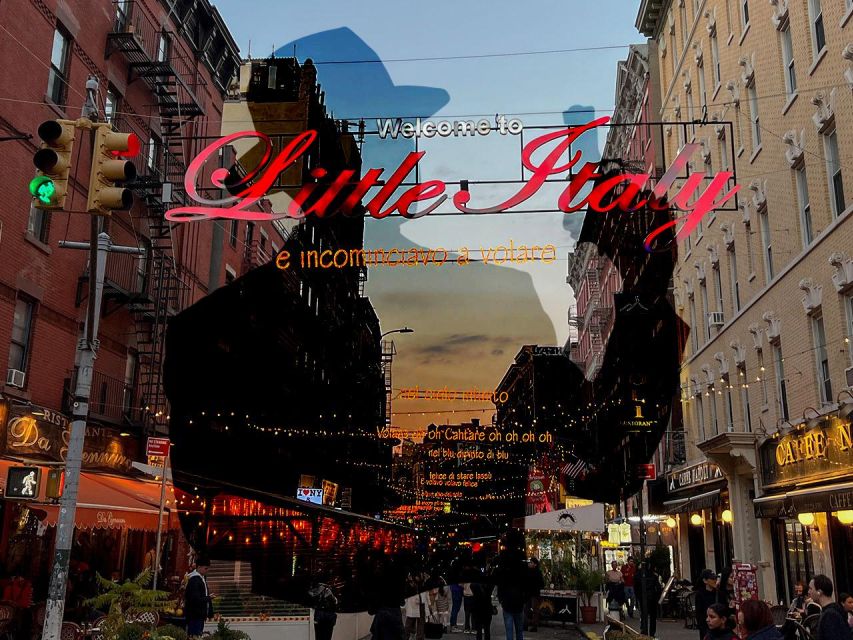
Little Italy’s mob story is best understood on foot, where a social club, square, restaurant, and police building turn names from crime history into real places. This two-hour walk follows the path from early Black Hand gangs and Prohibition battles to Lucky Luciano, John Gotti, and the killing of Crazy Joey Gallo.
I like the small group limit of 10, which gives the guide room to answer questions and show historical photos without shouting over a crowd. I also like the wider focus: the tour covers police figures such as Lieutenant Petrosino and Frank Serpico, not just mob bosses.
The main drawback is the outdoor format. You walk about one mile, and the tour runs in rain or cold unless the weather becomes unsafe. Wear comfortable shoes, arrive early, and be ready to stay on your feet.
Key points to know before booking
- The Ravenite Social Club is the main John Gotti stop: See the Little Italy building linked with the Dapper Don and the Gambino crime family.
- The story moves beyond movie mythology: Learn how Black Hand gangs, Prohibition, Luciano, and the Five Families fit together.
- Real crime scenes anchor the walk: The route includes Umberto’s Clam House, where Crazy Joey Gallo was shot, and the location tied to Sally Bugs Briguglio.
- The guide uses visual material: Tom, also identified as Thomas, has used photographs and newspaper clippings to show how places looked in earlier decades.
- The route is short but packed: It covers about one mile in two hours, with time for explanation at each stop rather than a hurried march.
- Film fans get an optional extra: The guide may point out locations connected with The Godfather and The Sopranos.
What this Little Italy mob tour is really about
This is not just a tour of old gangsters and famous shootings. Its better purpose is to explain how organized crime changed over time, and how New York’s police, courts, neighborhoods, and politics shaped that change.
You begin with early Black Hand gangs, whose threats and extortion tactics helped create the public image of Italian American organized crime. From there, the story moves into the violent competition for control of alcohol during Prohibition. That period brought figures such as Joe The Boss Masseria into the center of New York’s underworld.
The guide then explains how Lucky Luciano helped change the structure of organized crime. Instead of focusing only on one boss ruling by force, Luciano helped create the Commission of Five Families, a system designed to manage disputes and divide power among major crime groups.
That framework gives the walk a useful backbone. You are not simply hearing disconnected anecdotes. Each stop helps explain a shift in power, a police response, or a change in how the mob operated.
I also appreciate that the tour includes law enforcement figures. Lieutenant Petrosino represents an earlier fight against organized crime, while Frank Serpico represents the danger of exposing police corruption from inside the department. That wider view keeps the tour from treating mobsters as folk heroes.
More History Tours in New York City:
- New York City: American Museum of Natural History Ticket
★ 4.5 · 15,447 reviews - American Museum of Natural History Admission Ticket
★ 4.0 · 1,931 reviews - NYC: Speakeasy Drinks and Prohibition History Tour
★ 4.7 · 474 reviews
Starting at Spring and Mulberry Streets
Meet on the sidewalk at the corner of Spring and Mulberry Streets, beside DaSalvio Playground at 44 Spring Street. Look for the guide in a white cap, and arrive at least 10 minutes early.
This matters. The walk begins promptly, and once the group leaves, you cannot join it. Little Italy has plenty of foot traffic and street activity, so giving yourself extra time is sensible.
The opening section takes place in Little Italy and lasts about 75 minutes. It provides the main historical framework before the route narrows into specific locations linked with Gotti, Petrosino, and famous mob killings.
The group size makes a real difference here. With no more than 10 people, you should be able to hear the guide clearly and see the photographs and newspaper articles brought along for the presentation. Tom is the guide named most often in the available information, with Thomas also used. He is described as friendly, prepared, and strongly interested in the subject.
One useful detail is the guide’s binder of images. Old photographs can make a modern street corner easier to understand, especially when the original storefront or club is gone, altered, or hidden behind a newer facade.
From the Black Hand to Joe The Boss Masseria
The opening history deals with early Black Hand gangs and the methods they used. Extortion, threats, and intimidation formed part of a criminal system that preyed on local businesses and residents.
This section is valuable because it gives you a starting point before the more famous names appear. Without it, Lucky Luciano and John Gotti can seem like isolated characters from gangster movies. With it, you can see how earlier groups, rival factions, and immigrant neighborhood networks helped shape later syndicates.
The tour then moves into Prohibition and the fight to control liquor sales. The end of legal alcohol created enormous profits, and those profits intensified conflicts among criminal groups.
Joe The Boss Masseria appears at this point as one of the major figures in the struggle for control. The story leads toward the conflict between older styles of mob leadership and the newer organization associated with Luciano.
I find this historical sequence more useful than a simple list of crimes. It explains why power shifted, why alliances mattered, and why a more formal structure eventually replaced constant street warfare.
Lucky Luciano and the Five Families
Lucky Luciano is presented as a major organizer who transformed New York’s criminal world. His importance was not only personal power. It was his effort to create a system that could manage competing groups through the Commission of Five Families.
The guide also covers Luciano’s unusual relationship with the government during World War Two. This part adds a political dimension to the tour. It shows that the boundary between law enforcement and organized crime was not always simple, especially when officials believed criminal contacts could serve wartime security interests.
You should listen for the difference between historical fact and gangster legend. Mob stories often grow through films, books, and retelling. A good guide helps separate the recognizable movie version from the documented events behind it.
That is one reason the photos and newspaper clippings matter. They give the spoken account something concrete to work from, rather than leaving the tour as a string of dramatic tales.
Same streets, a different century:
- Hamilton and Washington Revolutionary Walking Tour
★ 5.0 · 182 reviews - #1 Rated NYC Chinatown Food and History Walking Tour with FNYT
★ 5.0 · 171 reviews - Tribeca Architecture And History Walking Tour
★ 5.0 · 141 reviews - NYC: Night Out Prohibition History Bar and Speakeasy Tour
★ 4.6 · 128 reviews
The Ravenite Social Club and John Gotti
The Ravenite Social Club is one of the most anticipated stops. It became closely associated with John Gotti, the Gambino crime family boss known in the press as the Dapper Don.
Here, the tour follows Gotti’s rise and fall and explains why the Ravenite became such a famous address. The building itself may not deliver a cinematic moment, but that is part of the lesson. The site is an ordinary piece of Little Italy carrying an extraordinary amount of public history.
I like this stop because it connects media image with physical place. Gotti was not just a name in newspaper headlines. He was linked with a particular club, neighborhood, and public style that helped make him one of the most recognizable mob figures of his era.
The guide’s photographs are especially useful here. They can show how the location looked during the period when Gotti drew national attention.
Do not expect to enter every location on the route. This is a sidewalk walking tour, so the value comes from the explanation, the exterior views, and the context supplied by the guide.
Lieutenant Petrosino Square and the police response
The visit to Lt. Petrosino Square shifts the focus from mob bosses to the people who tried to stop them. Lieutenant Giuseppe Petrosino became known for his work against organized crime and for his efforts to challenge criminal networks in New York.
This stop helps correct the usual imbalance in gangster tours. Crime history is not only about the men who gained power. It is also about investigators who took risks, developed new methods, and worked against groups that could threaten witnesses and officials.
The small group format is useful here because this part may raise questions about how policing changed over time. You can ask about Petrosino’s role, the methods used by early investigators, and the limits they faced.
The square also offers a change of pace after the more familiar mob names. If your main interest is law enforcement, this may be one of the more worthwhile parts of the walk.
The Police Building and Frank Serpico
The Police Building adds another layer to the story. The tour brings in Frank Serpico, who risked his life to expose corruption within the police department.
Serpico’s story differs from Petrosino’s, but placing them on the same route shows how the problems facing New York law enforcement changed. One represents an early campaign against organized crime. The other became known for challenging corruption within the police system itself.
This part keeps the tour from presenting crime as a battle between perfect police officers and obvious criminals. Institutions can fail, officials can be compromised, and individuals can face serious consequences for speaking out.
You may find this stop less visually dramatic than the Ravenite or Umberto’s. Its value is mainly in the explanation. If you prefer a tour built only around gangsters, this section may feel like a detour. I see it as a needed piece of the story.
Umberto’s Clam House and the killing of Crazy Joey Gallo
The route ends with some of its most famous crime scenes. Umberto’s Clam House is associated with the 1972 shooting of Crazy Joey Gallo, a mobster whose death became part of New York’s underworld lore.
Standing outside a restaurant connected with a killing can feel more immediate than hearing the same story in a museum. At the same time, the location is still a working part of the city, not a preserved crime scene. You should expect an urban street setting rather than a staged attraction.
The final section also covers Sally Bugs Briguglio and the place where he met his bloody end. These stops give the tour a strong finish, but the guide generally places the deaths within the larger story of alliances, rivalries, and shifting criminal power.
That context is important. The goal is not simply to collect shocking anecdotes. You learn why these men were targets, how their deaths fit into wider conflicts, and what the events reveal about organized crime at the time.
Film locations and the line between fact and fiction
If you enjoy gangster films, ask about the optional locations connected with The Godfather and The Sopranos. These references add a pop-culture layer without replacing the historical material.
The most useful approach is to treat film sites as an extra, not the main reason to book. The core tour concerns real people, real police work, real businesses, and real violence. Movie connections can help you recognize how Hollywood borrowed from New York’s criminal past, but they cannot tell the whole story.
The tour’s strongest moments come when fiction and fact are kept separate. You can enjoy a familiar film reference while still learning about Black Hand extortion, Luciano’s organization, Petrosino’s investigations, or Serpico’s accusations.
Pace, walking conditions, and group size
The route covers roughly one mile, or 1.5 kilometers, over two hours. That is an easy distance for many people, but the slow pace means you spend much of the time standing while the guide explains each location.
Comfortable shoes are essential. The activity is not suitable for people with mobility impairments, and there is no indication of a seated option or adapted route.
Weather is another practical concern. The walk may be cancelled for bad weather or too few bookings, with a full refund in that case. Several tours have taken place in cold conditions, so bring suitable clothing if you book outside the warmer months.
The maximum of 10 people is one of the strongest practical features. A small group allows more direct conversation and makes it easier to see the printed material. It also means a quiet day could feel almost private, while a full group remains far more manageable than a large city tour.
English is the only language listed. If you need another language, this is not the right choice.
Is $40 a fair price?
At $40 per person, I consider this a good value if you want a focused history walk rather than a general introduction to Little Italy.
You get two hours with a live guide, a one-mile route, historical photographs and newspaper clippings, and several locations tied to major events. The small group limit strengthens the value because you are paying for access to a more personal presentation, not just a guide speaking to a large crowd.
The price is less compelling if you only want quick photo stops or a short movie-location stroll. Much of the tour’s worth comes from the explanation of how events connect. If you are not willing to listen to the history between locations, you may find the walk slow.
Flexible booking also helps. You can reserve and pay later, and cancellation is free up to 24 hours before the start for a full refund. The tour begins on time, so that flexibility does not extend to arriving late.
Who should book this walk?
I would choose this tour if you enjoy American crime history, New York neighborhoods, police stories, or the real events behind gangster films. You do not need to be an expert. The route starts with early gangs and builds toward better-known names, so you can follow it even if your knowledge begins with The Godfather or John Gotti headlines.
It also suits visitors who prefer a compact activity. Two hours is long enough to build a story but short enough to leave time for lunch or another downtown stop.
You might skip it if you dislike graphic crime stories, cannot walk and stand comfortably for two hours, or want to enter historic buildings rather than view locations from the street. Pets are not allowed, although assistance dogs are permitted.
Should you book the Little Italy Mafia and Gangster History Tour?
Book it if you want the story behind the headlines, not just a parade of notorious names. The combination of Lucky Luciano, Gotti, Crazy Joey Gallo, Petrosino, and Serpico gives the walk more range than a tour focused only on mob bosses.
I especially like the small group, the visual material, and the way the route includes both criminals and the people who fought crime and corruption. If possible, request or look for a guide such as Tom or Thomas, whose prepared presentation and personal interest have been central to the experience.
Bring good shoes, arrive 10 minutes early at 44 Spring Street, and dress for the weather. At $40, this is a sensible pick for a curious visitor who wants two hours of pointed New York history in the places where it happened.
FAQ
How long is the Little Italy Mafia and Gangster History Tour?
The tour lasts two hours and covers about one mile, or 1.5 kilometers.
How much does the tour cost?
The listed price is $40 per person.
Where does the tour begin?
Meet on the sidewalk at the corner of Spring and Mulberry Streets, next to DaSalvio Playground at 44 Spring Street.
How do I find the guide?
Look for the guide wearing a white cap.
How large is the group?
The tour allows a maximum of 10 participants.
What locations are included?
The route includes Little Italy, the Ravenite Social Club, Lt. Petrosino Square, the Police Building, and Umberto’s Clam House. It returns to 44 Spring Street.
Is the tour available in languages other than English?
No. The listed tour language is English.
Can I cancel the booking?
Yes. You can cancel up to 24 hours in advance for a full refund. You can also reserve now and pay later.
Newest history tours we have reviewed in New York City
- Soul of Harlem: Strivers Row, Apollo Theatre, Gospel History★ 4.6 · 87 reviews
- NYC: Lower East Side Devour Food & History Walking Tour★ 4.8 · 19 reviews
- New York: Rock and Roll History and Culture Walking Tour★ 5.0 · 22 reviews
- NYC: History of Slavery & Underground Railroad Walking Tour★ 4.7 · 87 reviews
- NYC: Night Out Prohibition History Bar and Speakeasy Tour★ 4.6 · 128 reviews
- New York City: Flatiron Food, History, and Architecture Tour★ 4.8 · 43 reviews
- NYC: New York City History of Stand-Up Comedy Tour★ 4.8 · 21 reviews
- NYC: Central Park Pedicab Tour and Natural History Access★ 4.7 · 52 reviews
New York City History Tours, compared.


American Museum of Natural History Admission Ticket
Read our review →
NYC: Speakeasy Drinks and Prohibition History Tour
Read our review →
Hamilton and Washington Revolutionary Walking Tour
Read our review →
#1 Rated NYC Chinatown Food and History Walking Tour with FNYT
Read our review →
NYC: Night Out Prohibition History Bar and Speakeasy Tour
Read our review →
Lower Manhattan Secrets And History Walking Tour
Read our review →Browse the lists this tour appears in