
Review · NEW YORK CITY HISTORY TOURS
New York: Rock and Roll History and Culture Walking Tour
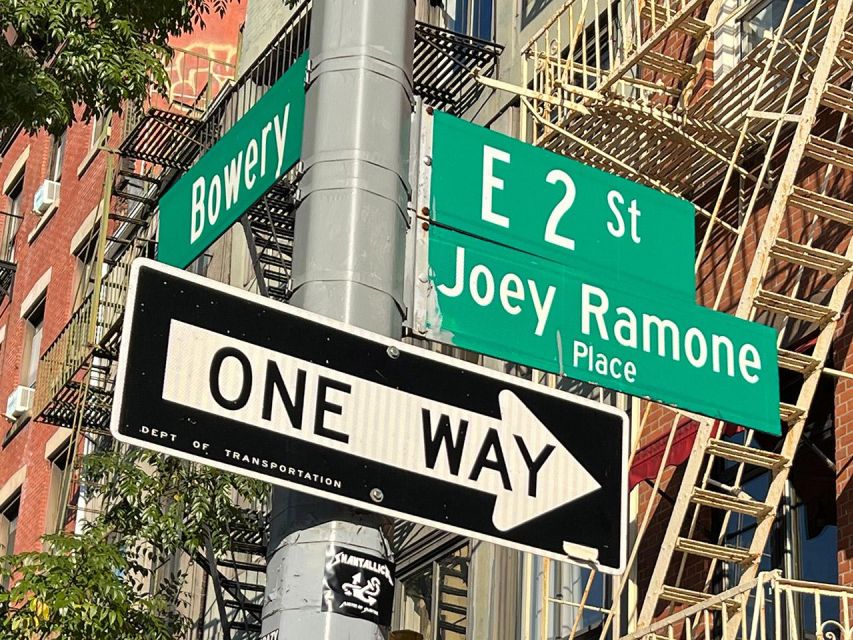
New York’s rock story is written into ordinary streets, old taverns, apartment buildings, and former club sites. This three-hour walk links the places where Bob Dylan and Jimi Hendrix got their starts with CBGB, the Fillmore East, the Pyramid Club, and the White Horse Tavern.
I like the maximum group size of six, which should make it easier to ask questions and hear the guide on busy city sidewalks. I also like the broad time span, from Buddy Holly and Dylan through punk, glam, Warhol, and the Velvet Underground. The main drawback is simple: you cover about three miles on foot, so this is not a good choice if walking is difficult.
Key points at a glance
- Start beneath the Keith Haring sculpture: Meet outside 101 Astor Place by the green statue of a man, with your guide wearing a white cap.
- Trace several generations of New York music: The route connects Dylan, Hendrix, Buddy Holly, the Velvet Underground, Ramones, Talking Heads, Blondie, Sid Vicious, John Lennon, and Yoko Ono.
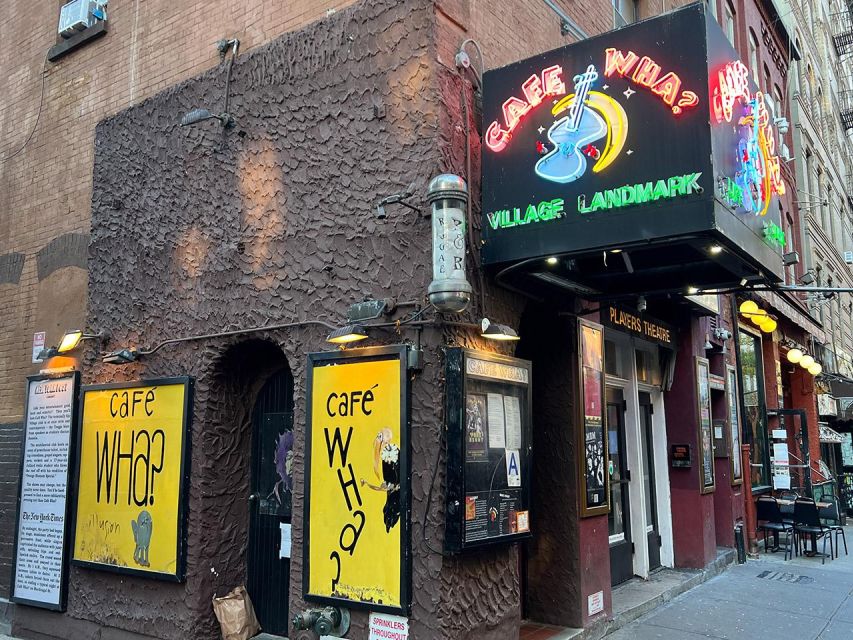
- See famous clubs, even when the music has stopped: CBGB, the Fillmore East, Cafe Wha?, the Pyramid Club, and the Exploding Plastic Inevitable all give the walk its shape.
- Expect a real city walk, not a museum tour: You see locations from the street and learn through stories, anecdotes, album-cover connections, and questions.
- Keep the group intimate: Six people is the limit, a useful advantage when the guide is explaining details in crowded neighborhoods.
- End at the White Horse Tavern: The final stop brings the tour back to literary New York and the tragic story of poet Dylan Thomas.
Why this three-mile route works
This tour is less about entering famous music venues than about understanding how New York’s neighborhoods fed one another. The route moves through the East Village, Greenwich Village, and West Village, areas linked by clubs, small apartments, artists, poets, and musicians.
That matters because rock history here is not confined to one building. A former club might now have a different use, or a famous address may look like an unremarkable storefront. A guide helps you connect the present-day street to the performance, recording session, album cover, or personal story that made the location famous.
You should expect a walking tour rather than a concert, museum admission, or backstage visit. The value comes from the route and the interpretation. The guide points out places that can be easy to miss and gives you the context needed to understand why they mattered.
The tour lasts three hours and covers roughly three miles, or 4.5 kilometers. That is a moderate distance, but New York sidewalks, crossings, and frequent stops can make it feel more demanding than the number suggests. Wear comfortable shoes, bring water, and avoid scheduling this immediately after another long walking activity.
More History Walking Tours in New York City
- Hamilton and Washington Revolutionary Walking Tour
★ 5.0 · 182 reviews - #1 Rated NYC Chinatown Food and History Walking Tour with FNYT
★ 5.0 · 171 reviews - Tribeca Architecture And History Walking Tour
★ 5.0 · 141 reviews
Starting at 101 Astor Place
The meeting point is outside 101 Astor Place, on the corner of 3rd Avenue. Look for the green Keith Haring statue of a man and a guide wearing a white cap.
Arrive 10 minutes early. The walk starts promptly, and you cannot join once the group has set off. This is especially important in Manhattan, where finding the right corner can take longer than expected if you are arriving by subway or walking from another neighborhood.
Astor Place puts you near the East Village, one of the most useful starting points for a tour about New York’s music culture. From here, the route begins with a neighborhood known for clubs, musicians, artists, and changing street life.
Because the group is limited to six people, you should have a better chance of hearing the opening explanation and asking questions. That small size also makes the experience feel more like a guided walk with a music-minded local than a large city procession.
Forty minutes in the East Village
The East Village section lasts about 40 minutes, giving it the longest single neighborhood segment on the early part of the route. This is where the walk begins to connect places and performers across different periods.
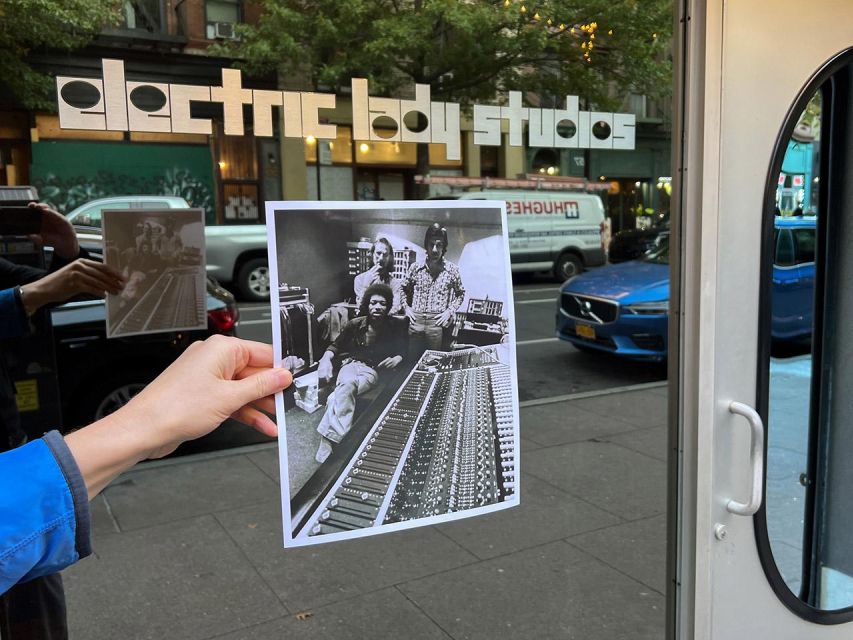
The focus is not limited to one style of music. You hear about the early careers of Bob Dylan and Jimi Hendrix, then move toward the punk and art scenes that later made the neighborhood famous. The guide also points out locations tied to classic album covers, giving you a reason to look closely at the buildings and street corners around you.
A useful part of this section is the way it shows that New York music was often made in small rooms and modest surroundings. The stories are about artists before they became icons, when a local club or rented apartment could matter more than a grand concert hall.
The tour also includes the place associated with Buddy Holly, where he recorded his last songs before his death. That stop adds a darker note to the walk. It is a reminder that the city’s music story includes loss as well as success.
CBGB and the birth of punk
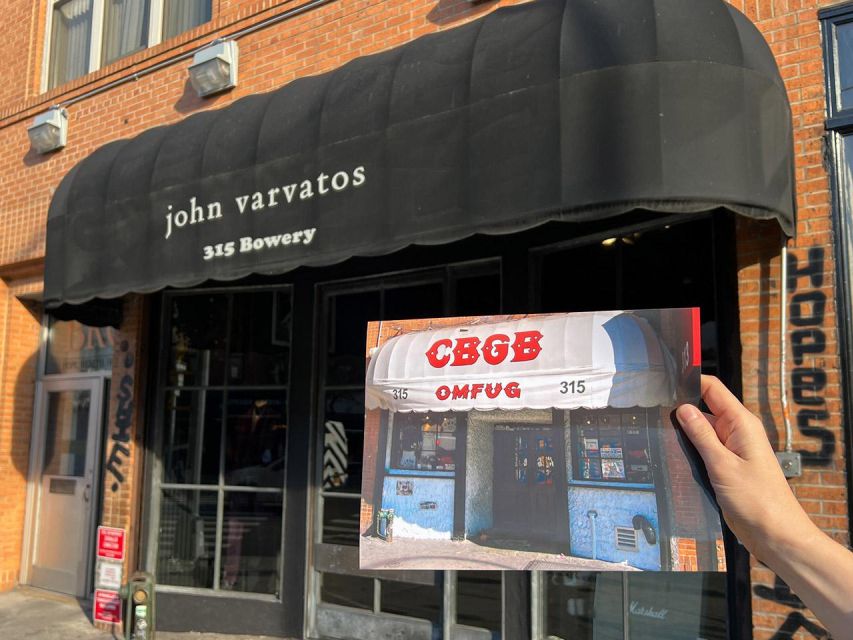
The stop at CBGB takes about 10 minutes. The club is no longer operating as the famous punk venue it once was, but the location remains one of the essential addresses on any New York rock route.
This is where the Ramones, Talking Heads, and Blondie are tied into the story. The guide explains the part the club played in punk rock and in the wider New York music scene. You are looking at a site rather than attending a show, so your enjoyment will depend on how much you like imagining the room as it once was.
CBGB is valuable because it brings together several names that later became internationally important. At the time, however, the appeal was not polished arena entertainment. It was a raw club setting and a local scene where new sounds could develop in front of small audiences.
For music fans, this is one of the key stops. For casual listeners, the guide’s anecdotes and clear explanation are important. Without that context, the address may look like just another downtown building.
More History Walking Tours in the USA
- Lower Manhattan Secrets And History Walking Tour
★ 5.0 · 96 reviews - NYC: History of Slavery & Underground Railroad Walking Tour
★ 4.7 · 87 reviews - NYC: Lower East Side Devour Food & History Walking Tour
★ 4.8 · 19 reviews - History and Hauntings of Salem Guided Walking Tour
★ 5.0 · 14,564 reviews
Greenwich Village, Cafe Wha?, and Washington Square Park
The route then moves into Greenwich Village, with about 30 minutes devoted to the neighborhood. Greenwich Village has long been associated with music, poetry, theater, and political culture, making it a natural bridge between the East Village and the West Village.
Cafe Wha? receives a 10-minute guided stop. It is linked to the early careers of musicians including Bob Dylan and Jimi Hendrix. The significance of the place is its role as a launching point, before these performers became household names.
I like this part of the route because it shows the Village as a working music district rather than just a pleasant area for cafes and brownstones. The stories give the streets a sharper edge. You begin to see how a performer could build an audience one small venue at a time.
The walk also stops at Washington Square Park for about 10 minutes. The park is an important public space in the Village and gives the group a chance to pause while the guide explains its connection to the neighborhood’s creative culture.
Do not expect a long rest break here. The stop is part of the commentary, and the tour continues on foot. Still, Washington Square Park is a useful change of pace after the club-focused stops.
The West Village and New York’s darker rock stories

The West Village section lasts about 40 minutes. This is another major part of the route, and it brings together music, art, poetry, apartments, and personal stories.
One stop is connected to Andy Warhol’s Exploding Plastic Inevitable, the multimedia project associated with the Velvet Underground. This part of the tour adds an art-world angle to the music story. It helps explain how New York rock was tied to visual art and performance, not only to bands playing in clubs.
The route also includes the Pyramid Club, where music and art came together in the 1980s. That stop broadens the tour beyond the best-known 1960s names. You move from folk and early rock into punk, post-punk, and the downtown art scene.
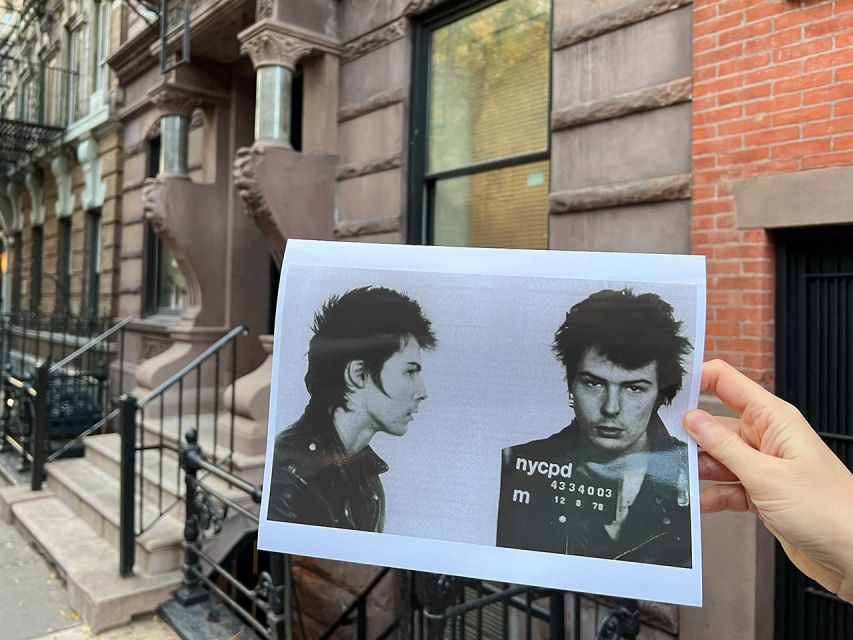
Another address is connected to Sid Vicious of the Sex Pistols and the circumstances of his death. This is a grim part of the walk, and the guide’s treatment matters. It is best understood as part of the complicated human story around rock fame, not as a sensational sideshow.
You also visit the humble apartment where John Lennon and Yoko Ono first made their home in New York. The modest setting contrasts with their fame and gives the walk a more personal feel. Not every important music address is a grand venue. Some are simply places where artists lived and worked.
Album covers you can find on foot
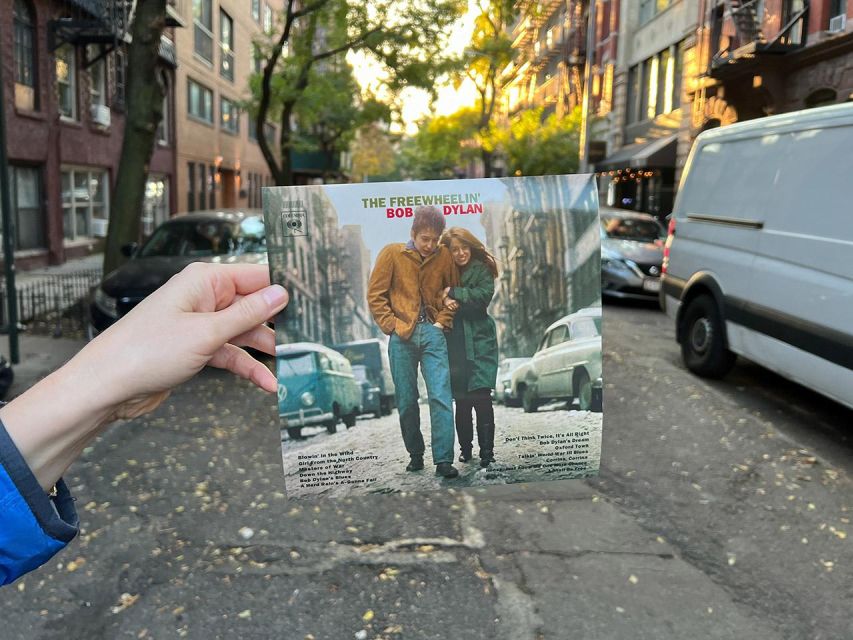
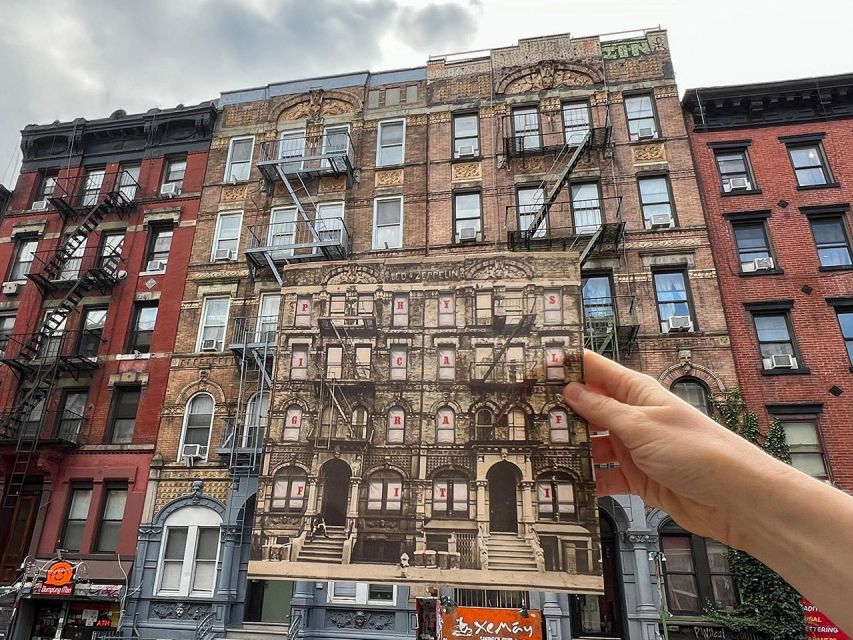
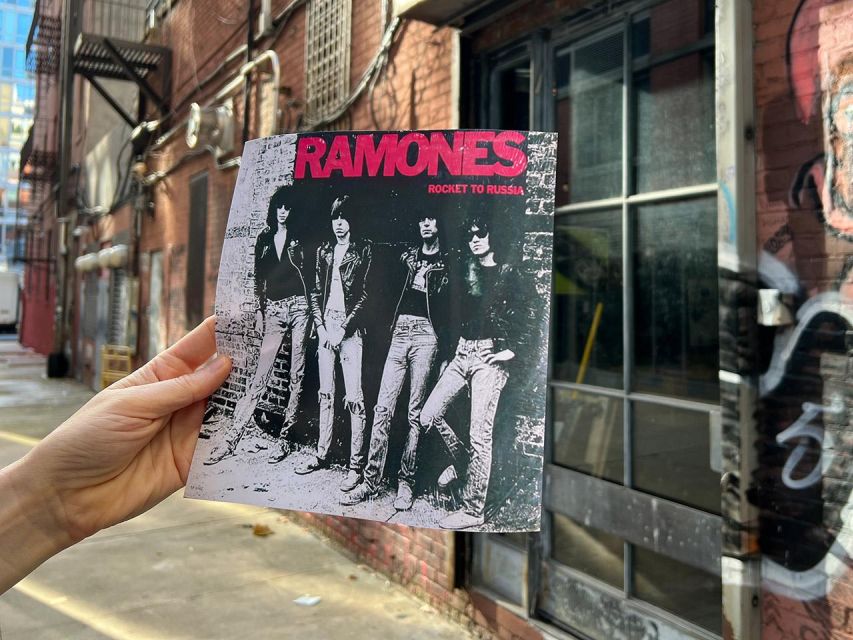
The tour includes locations immortalized on album covers by Bob Dylan, the Ramones, and Led Zeppelin. This is one of the most practical features for anyone who enjoys music photography or wants to compare old images with the modern city.
Album-cover locations can be surprisingly easy to miss. A photograph freezes one angle, one doorway, or one stretch of sidewalk, while the real city keeps changing. The guide gives you the connection so you know what to look for.
Bring your phone or camera if you like taking comparison pictures, but keep in mind that the tour is moving between stops. You may get a chance to photograph an address, but the experience is not designed as a dedicated photo session.
These locations also add a visual element to a tour that could otherwise become a long list of names. You are not only hearing about records. You are seeing the streets that helped shape their public image.
The Fillmore East and the Pyramid Club
The former Fillmore East is described as the Church of Rock and Roll of the late 1960s. The nickname captures its importance to the concert era, when major performers and devoted audiences gathered in a former theater setting.
The stop helps place the music in the context of live performance. A recording studio or apartment tells one kind of story. A concert venue tells another, showing how musicians built a following and how fans experienced the music together.
The Pyramid Club represents a later period. Its connection to 1980s music and art shows that downtown New York did not stop changing after the 1960s. The tour uses these locations to move through different eras instead of treating rock as one fixed style.
That range is a major strength. You get early career stories, classic rock, punk, art-rock, and downtown culture in a single afternoon. The tradeoff is that no one period receives the detailed treatment of a specialist tour devoted only to Dylan, punk, or the Velvet Underground.
Finishing at the White Horse Tavern
The tour ends at the White Horse Tavern, with about 10 minutes devoted to the stop. The tavern is tied to poet Dylan Thomas and the story of his heavy drinking and death.
Ending here gives the walk a literary finish. New York music history overlaps with poetry and writing, particularly in Greenwich Village and the West Village. The White Horse Tavern helps make that connection clear.
The final stop is also a useful place to decide how much more of the neighborhood you want to see. The tour itself ends here, so any food, drinks, or further sightseeing afterward would be separate from the activity.
The ending is not a grand concert finale. It is a final address and a story, followed by the freedom to continue exploring on your own.
What $45 buys you
At $45 per person, the tour is priced reasonably for a three-hour, small-group walking experience in Manhattan. You are paying for the guide’s route, explanations, anecdotes, and ability to link scattered locations. The maximum of six gives the price more value than it would have in a large group.
I would not book this expecting admission to clubs, private interiors, music performances, or transportation. The included service is the walking tour and guide. Much of the route takes place outside, and the appeal comes from the places and the stories.
The value is strongest for someone who already enjoys rock, punk, album art, or New York cultural history. If you only recognize a few of the names, the guide can still provide a useful introduction, but the three hours may feel long if the subject does not interest you.
The tour has a five-star rating from 22 bookings, and the strongest pattern is clear: the guide’s preparation, anecdotes, and ability to answer questions are central to the experience. One assessment praised the distance covered, while another described the walk as a highlight of a New York holiday. That fits the tour’s design: it is active, story-led, and packed with addresses.
English is the only listed tour language. If you are not comfortable following detailed spoken English, the music names and place connections may be harder to catch. One French-language assessment rated the experience four stars and noted that the language made it complicated, so this is worth considering before you book.
Practical advice before you go
Wear comfortable walking shoes. The route is about three miles, and the activity is not suitable for people with mobility impairments.
Pets are not allowed, although assistance dogs are permitted. Since much of the experience is outdoors, poor weather can affect the schedule. The tour may be cancelled because of bad weather or too few bookings, with a full refund in those cases.
You can cancel up to 24 hours before the start for a full refund. The reserve-now, pay-later option also gives you some flexibility when your New York plans are still shifting.
The meeting point is precise, but do not cut it close. Arrive 10 minutes early at 101 Astor Place, find the green Keith Haring statue, and look for the white cap. Once the guide leaves, you cannot join the group.
Who should book this walk?
You should book it if you want a compact introduction to New York’s rock and art scenes and prefer real streets to a standard museum display. It suits music fans who want to connect famous names with actual addresses, especially fans of Dylan, Hendrix, the Ramones, the Velvet Underground, the Sex Pistols, and classic album covers.
It also suits visitors who appreciate a small group and an active afternoon. The guide’s stories and answers are the heart of the experience, so arrive ready to listen and ask questions.
I would skip it if you dislike walking, need step-free access, want to enter every venue, or prefer one musician explored in great depth. For everyone else, $45 buys a focused route through three of Manhattan’s most important music neighborhoods, with enough variety to keep the afternoon moving.
FAQ
How long is the New York rock history walking tour?
The tour lasts three hours.
How far do you walk?
The route covers about three miles, or 4.5 kilometers.
What is the price?
The price is $45 per person.
How many people can join the tour?
The group is limited to a maximum of six participants.
What language is the tour offered in?
The live guided tour is offered in English.
Where does the tour begin?
Meet outside 101 Astor Place, on the corner of 3rd Avenue, by the green Keith Haring statue of a man.
How do I identify the guide?
Look for the guide wearing a white cap.
Where does the tour finish?
The tour finishes at the White Horse Tavern.
What should I bring?
Bring comfortable shoes. You should also arrive 10 minutes before the scheduled start because the tour leaves promptly.
Can I cancel or change my booking?
You can cancel up to 24 hours in advance for a full refund. You can also reserve now and pay later. The tour may be cancelled because of bad weather or too few bookings, in which case you receive a full refund.
More Local Culture and Traditions Tours in New York City
- Amsterdam Food and Cultural Tour with Tastings
★ 5.0 · 4,315 reviews - Sevilla Food Tour: Tapas, Wine, History & Traditions
★ 5.0 · 3,468 reviews - Tromsø: Reindeer Camp and Sami Cultural Tour with Lunch
★ 4.7 · 3,326 reviews - Half Day Dominican Republic Cultural Tour : Small Group
★ 4.5 · 1,862 reviews
Newest history tours we have reviewed in New York City
- Soul of Harlem: Strivers Row, Apollo Theatre, Gospel History★ 4.6 · 87 reviews
- NYC: Lower East Side Devour Food & History Walking Tour★ 4.8 · 19 reviews
- NYC: History of Slavery & Underground Railroad Walking Tour★ 4.7 · 87 reviews
- New York: Mafia and Gangster History Tour in Little Italy★ 4.6 · 79 reviews
- NYC: Night Out Prohibition History Bar and Speakeasy Tour★ 4.6 · 128 reviews
- New York City: Flatiron Food, History, and Architecture Tour★ 4.8 · 43 reviews
- NYC: New York City History of Stand-Up Comedy Tour★ 4.8 · 21 reviews
- NYC: Central Park Pedicab Tour and Natural History Access★ 4.7 · 52 reviews
Local Culture & Traditions Tours, compared.

Amsterdam Food and Cultural Tour with Tastings
Read our review →
Sevilla Food Tour: Tapas, Wine, History & Traditions
Read our review →
Tromsø: Reindeer Camp and Sami Cultural Tour with Lunch
Read our review →
Half Day Dominican Republic Cultural Tour : Small Group
Read our review →
Ultimate Melbourne Walking Tour: History, Laneways & Culture
Read our review →
Tromsø: Sámi Reindeer Sledding and Sami Cultural Tour
Read our review →
Kyoto Gion: 2-Hour Geisha Culture & History Walking Tour
Read our review →
Marrakech Historical and Cultural Tour – Half Day City Tour
Read our review →Browse the lists this tour appears in