
Review · SPAIN HISTORY TOURS
Málaga: 2h Walking Historical Tour–Art, Culture and Legends
Málaga’s past comes alive on this compact walk, from the Phoenician foundations beneath Puerta Oscura Garden to the Roman Theatre, Picasso’s birthplace, the unfinished cathedral, and the old market. Guide Igor Francisco Martínez brings an art historian’s eye and a local’s sense of humor, so the tour is more than a parade of façades.
I like the strong mix of major sights and local flavor, including candied almonds, artisanal nougat, restaurant tips, and a final surprise stop. I also like the easy pace and small-group feel reported by many participants, which makes it simple to ask questions and get your bearings.
The main consideration is timing. It is sold as a 1.5-hour tour, yet some outings have lasted two or even nearly three hours. That can be a bonus if you have time, but it may disrupt a tightly planned day.
Key points to know before booking
- Start with Málaga’s origins: Begin near Puerta Oscura Garden and the Alcazaba, close to the place where ancient Malaka was founded.
- See the old center’s essential sights: The route includes the Roman Theatre, Picasso-related landmarks, the cathedral, Constitution Square, and Atarazanas Market.
- Get history with humor: Igor explains architecture, politics, religion, and local customs in English, Spanish, or French.
- Expect more than a basic walk: Traditional sweets and a final local food or drink stop add a tasty side to the history.
- Plan for possible extra time: The advertised duration is 1.5 hours, but the walk may run longer.
- Best for first-time visitors: You finish with a useful map in your head and recommendations for places to eat and drink.
Starting beside Málaga’s ancient foundations
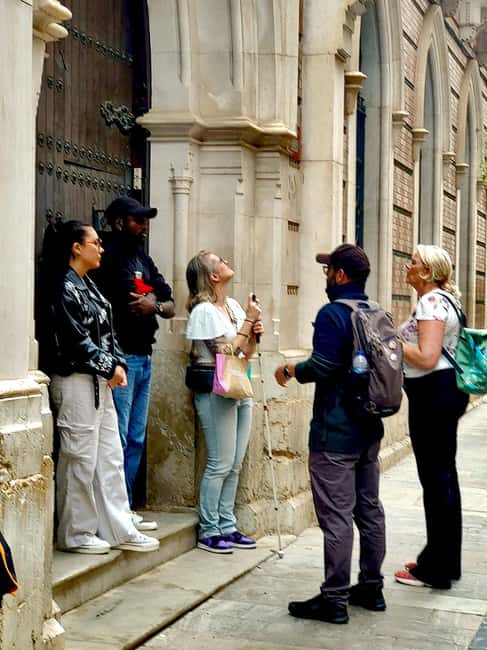
The meeting point is the white tourist information kiosk in Plaza de la Aduana, next to the Alcazaba. It is a practical place to begin, especially if you are already visiting the fortress or arriving from the Málaga Centro-Alameda train station or Muelle Heredia bus station.
From here, the walk heads toward Puerta Oscura Garden. This quiet corner is not just a pleasant patch of greenery. The tour connects it with the Phoenician foundation of Malaka in the sixth century BC, giving you a clear reason why Málaga developed in this location.
I appreciate this opening because it starts with a question of place. Instead of treating Málaga as a collection of monuments, Igor explains why the city began here and what lies beneath the modern streets. That makes the later Roman, Christian, and modern landmarks easier to understand.
The Alcazaba is part of the historical setting and is included in the tour description, but the listed route does not promise a full interior visit. If entering the fortress is important to you, ask Igor before the walk begins.
More History Walking Tours in Spain
- Barcelona: Tapas Walking Tour with Food, Wine, and History
★ 4.8 · 4,261 reviews - Barcelona Tapas Walking Tour: Food, Wine & History
★ 4.5 · 1,928 reviews - Madrid Historical Walking Tour
★ 5.0 · 721 reviews
The Roman Theatre and the city beneath the city
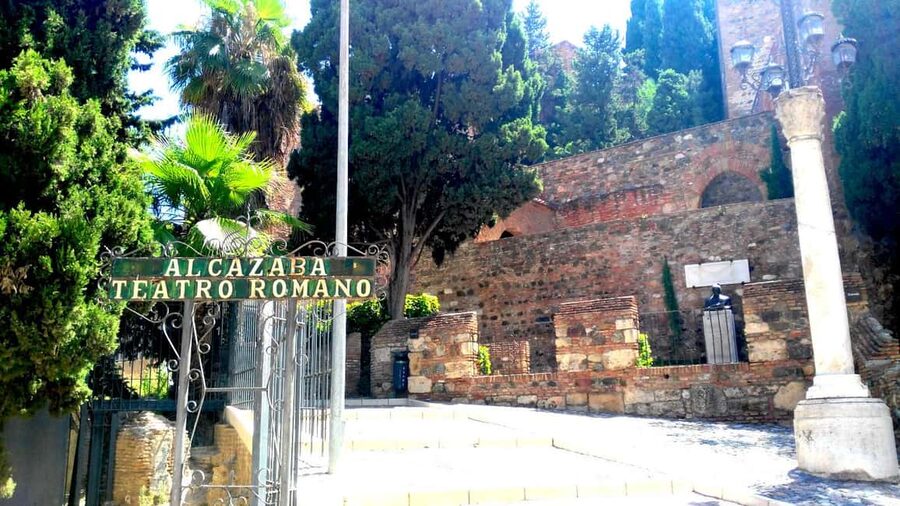
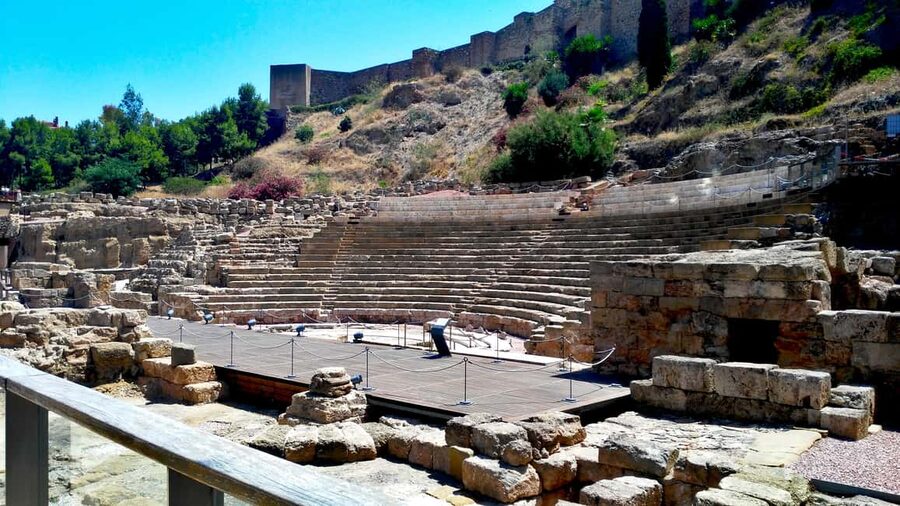
The Roman Theatre is one of the strongest stops on the route. Dating from the first century, it is described as Málaga’s oldest visible structure. You spend about 15 minutes here with an explanation of how Roman audiences used the space and what kinds of spectacles once took place.
The theater also offers a useful lesson in how cities change. It remained hidden for centuries before being uncovered, and its position near the Alcazaba shows how Málaga’s layers sit close together. Phoenician, Roman, Islamic, Christian, and modern stories are not scattered across distant neighborhoods. They overlap in this compact center.
The stop is a guided look rather than a full performance or extended archaeological visit. That matters if you want a detailed examination of every stone. For most first-time visitors, though, the short explanation gives enough context to make a later independent visit more rewarding.
Wear sensible shoes. The route is on foot, and even an easy city walk becomes tiring when you are stopping, standing, and listening in the sun.
Picasso’s Málaga, from birthplace to museum
The next section moves through Málaga’s artistic identity. The route reaches Plaza de la Merced, the birthplace of Pablo Picasso, and the Picasso Museum Málaga. The listed schedule allows about 15 minutes at the museum, so treat this as an introduction rather than a full museum visit.
That distinction is important. Picasso Museum Málaga deserves more time if you want to see its collection properly. This tour helps you place Picasso in the city where he was born and points out the surrounding streets and landmarks connected with his early life.
Plaza de la Merced also carries political history. Igor explains the obelisk dedicated to General Torrijos, giving the square a wider meaning than its cafés and open space suggest. The area works well as a bridge between Málaga’s older monuments and its modern cultural reputation.
I like this part because it avoids reducing Málaga to Roman ruins and church interiors. You get a sense of the city as a place that shaped an internationally important artist, while still learning about local political memory.
Calle Granada and the city’s layers
From Plaza de la Merced, the walk continues along Calle Granada. This old route is linked with the Catholic Monarchs’ victorious entry into Málaga in 1487, a turning point in the city’s Christian conquest.
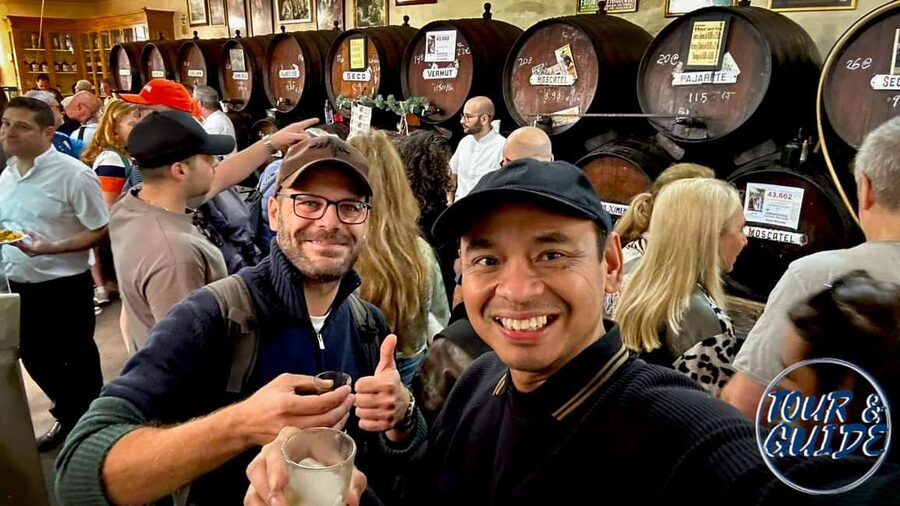
Along the way, you pass the Church of Santiago, one of Málaga’s oldest churches and the place where Picasso was baptized. You also see El Pimpi Winery and the Picasso Museum, along with narrow streets full of color and daily activity.
This is where a local guide adds real value. A map can show you the location of the church, museum, and winery, but it does not easily explain how the same street carries Roman, Islamic, Christian, artistic, and dining traditions. Igor’s role is to connect those pieces without turning the walk into a lecture.
The pace is generally manageable, with frequent stops for explanations. In hot weather, that makes a difference. Igor has been noted for finding shaded places when stopping to talk, and an evening departure may be worth considering during the hottest months.
More Local Culture and Traditions Tours in Spain
- Sevilla Food Tour: Tapas, Wine, History & Traditions
★ 5.0 · 3,468 reviews - Taste of Malaga Tour : Tapas, History and Local Customs
★ 5.0 · 758 reviews - San Sebastian E-bike trour: Basque History and Cultural.
★ 5.0 · 367 reviews - Tarragona and Sitges Small Group Tour – Roman History & Culture
★ 4.5 · 339 reviews
La Manquita and Málaga’s unfinished cathedral
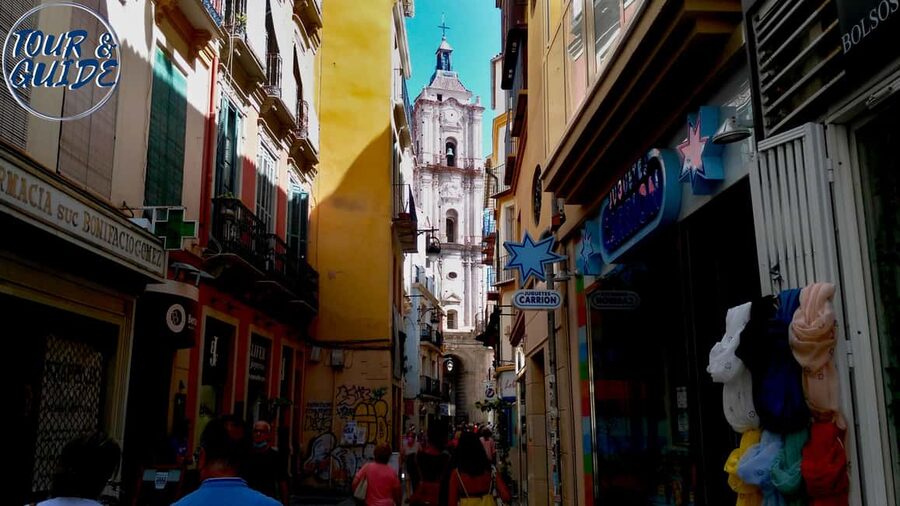
Málaga Cathedral, formally Catedral de la Encarnación, is one of the tour’s central sights. The Renaissance building is known locally as La Manquita, or the one-armed lady, because one of its towers was never completed.
The stop lasts about 15 minutes in the stated schedule. Igor explains why the cathedral remains unfinished, along with the legends and small architectural details that are easy to miss when you simply walk past.
As with the Picasso Museum, this is not a substitute for a full interior visit if you want to study the artwork, chapels, and structure at length. It is a useful orientation stop that helps you decide what deserves a return visit.
I especially like the focus on the building’s incomplete design. The nickname gives you an immediate visual clue, and the story makes the cathedral easier to remember. You leave with more than a photograph of a large church façade.
Constitution Square and Málaga’s social center

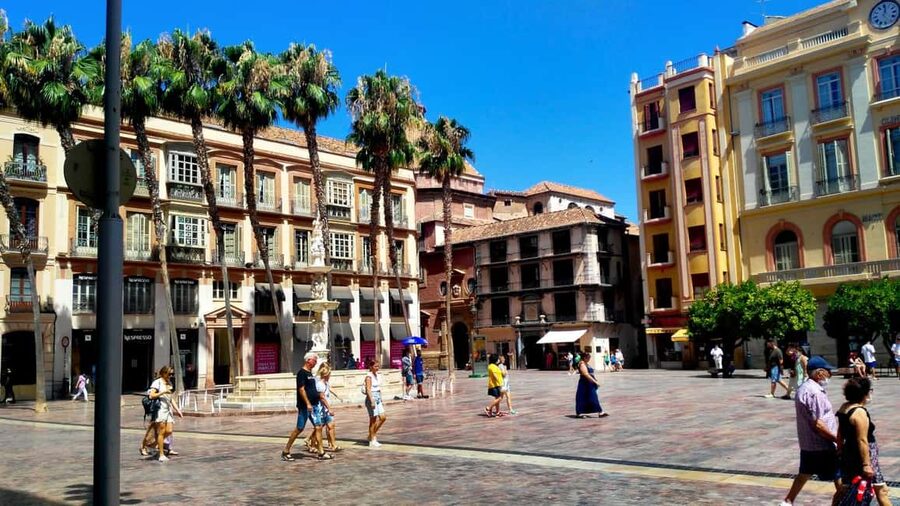
The walk continues to Plaza de la Constitución, often described as the social heart of Málaga. This is a good place to understand the city as a living center rather than an open-air museum.
Igor discusses the square’s role and points out the surrounding old-town streets. You then continue toward Plaza de las Flores and the Church of San Juan, a site tied to local tradition and devotion.
This section gives the tour a sensible rhythm. After the large Roman, artistic, and religious sights, the route shifts to public spaces and everyday Málaga. You see how people move through the center, where locals meet, and how the old streets connect.
The route is compact, but it covers plenty. If you prefer long, detailed stops at each monument, the pace may feel brisk. If you want a strong first look at the city before exploring on your own, the variety works well.
Traditional sweets and a taste of local Málaga
Food is not the main purpose of the tour, but it adds character. The experience includes tastings of local products such as candied almonds and artisanal nougat. Some outings have also included wine, tapas, a traditional café, or a local shop.
The exact food and drink experience can vary, so do not book this expecting a full meal. Food is not included as a separate meal, and additional drinks are not covered. Think of the tasting as a small introduction to Málaga’s flavors, followed by practical suggestions for where to eat later.
This is one of the most useful parts for a short visit. Igor gives recommendations for restaurants, bars, and shops, and several participants have used those suggestions during their stay. Names such as El Gallo Ronco and Las Chinitas have been specifically recommended as places to try afterward.
If you have dietary restrictions, ask before tasting. The available information does not list ingredients or alternatives.
Atarazanas Market and a fitting finish
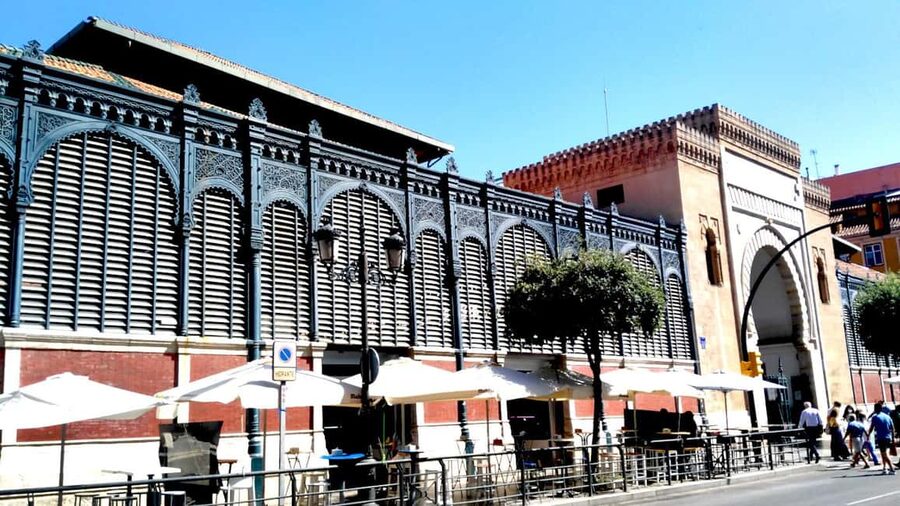
The final major sight is Mercado Central de Atarazanas. The building occupies a former shipyard, and today it is Málaga’s best-known central market. This is the place to pay attention to smells, colors, produce, seafood, and the city’s everyday food culture.
A market visit adds something that monuments cannot. You see how history continues in ordinary life, from the old maritime use of the building to its modern role as a place to shop and eat.
The tour ends with a surprise stop where you can sample local food and drinks. The exact location is not specified in advance, which is part of the appeal, but it also means you should not plan a precise activity immediately afterward.
The listed drop-off area is around Alameda Principal, making it convenient for continuing into central Málaga. The final stop may be more social than formal, so it suits people who enjoy ending a walking tour with a snack, a drink, and a few local suggestions.
What the $26 price gets you
At $26 per person, this is a good-value introduction to Málaga if you want several central sights explained in one outing. You get a live guide, a route through the historic center, historical context, food tastings, market orientation, and a final surprise.
The value is strongest for first-time visitors who might otherwise walk past the Roman Theatre, Church of Santiago, cathedral details, and market without understanding their place in the city’s story. It is also useful at the start of a stay because Igor’s restaurant and bar suggestions can shape the rest of your visit.
The price does not cover transport, a full meal, or extra drinks. Entry to every major attraction is not clearly presented as a separate admission experience, so confirm what you want to see inside before booking. The focus is primarily on guided outdoor stops and orientation.
The advertised duration is 1.5 hours, though actual walks have sometimes stretched well beyond that. I would leave at least two hours free, and more if you want to enjoy the final stop without watching the clock.
Languages, comfort, and group style
The tour is offered in English, Spanish, and French. Igor contacts you shortly before the start by WhatsApp or phone, and he wears an identification card at the meeting point.
The activity is listed as wheelchair accessible, but the historic center includes narrow streets and changing surfaces. If you use a wheelchair or have specific mobility needs, confirm the exact route and access arrangements before you go.
Bring comfortable shoes, water, sunscreen, and a sun hat. Málaga can be hot, and you will spend much of the tour outdoors. An evening option may be a sensible choice in summer, especially if you prefer cooler temperatures.
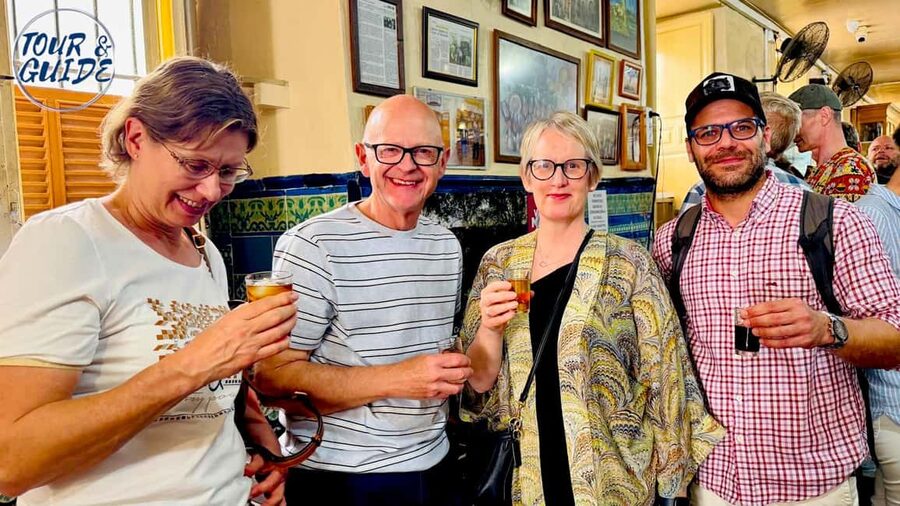
Group size can vary. Some bookings have been small enough to feel almost private, while others may include more people. Smaller groups make it easier to ask Igor questions and adjust the pace, but you should not assume every departure will be private.
Who will get the most from this walk
I would choose this tour if you want a lively introduction rather than a specialist architectural study. It suits couples, solo visitors, families with older children, and anyone who likes history delivered with humor and local advice.
It is particularly useful for a first day in Málaga. You can learn the shape of the center, identify places to revisit, and collect ideas for food and nightlife before spending the rest of your stay exploring independently.
You may want a different plan if you have already spent several days studying Málaga’s monuments or if you want long interior visits at the cathedral, museum, or Alcazaba. The tour touches many places, but its purpose is to connect them, not to replace dedicated visits.
Should you book it?
Book this walking tour if you want history, art, food, and practical local advice in one compact outing. Igor’s humor, clear explanations, and personal recommendations appear to be the main strengths, and the route covers the essential center without requiring transport.
Allow extra time beyond the advertised 1.5 hours, wear comfortable shoes, and treat the tastings as a bonus rather than a meal. For a first visit to Málaga, $26 is a sensible investment in getting your bearings and knowing which places deserve more of your time.
FAQ
Where does the Málaga walking tour start?
It starts next to the white tourist information kiosk in Plaza de la Aduana, beside the Alcazaba.
How long does the tour last?
The stated duration is 1.5 hours. Some outings have lasted two hours or longer, so leave extra time if your schedule is tight.
Who leads the tour?
The tour is led by Igor Francisco Martínez, an art historian and local guide.
Which languages are available?
The tour is available in English, Spanish, and French.
What sights are included?
The route includes the Roman Theatre, Picasso Museum Málaga, Málaga Cathedral, Constitution Square, and Mercado Central de Atarazanas. It also passes Plaza de la Merced, Picasso’s birthplace, Church of Santiago, Church of San Juan, Plaza de las Flores, and Calle Granada.
Is food included?
The experience includes tastings of traditional products such as candied almonds and artisanal nougat. A final local food and drink stop is also included, but additional drinks and a full meal are not covered.
Is the tour wheelchair accessible?
The activity is listed as wheelchair accessible. Contact the guide before starting if you need to confirm details about the historic center route.
What should I bring?
Bring comfortable shoes, water, sunscreen, and a sun hat. The tour takes place mainly outdoors and involves walking through Málaga’s historic center.
More Two-Hour Tours in Spain
- 2-Hour Gettysburg Battlefield Guided History Bus Tour with a National Park Guide
★ 4.5 · 2,201 reviews - Kyoto Gion: 2-Hour Geisha Culture & History Walking Tour
★ 5.0 · 1,186 reviews - 2 Hour LoDo Historic Walking Tour in Denver
★ 5.0 · 1,106 reviews - 2-Hour Historical Walking Tour from Dublin
★ 5.0 · 875 reviews
Newest history tours we have reviewed in Spain
- Bilbao Historical Tour in small group★ 4.7 · 52 reviews
- Barcelona Tapas Tour, Taverns, History & Local Culture★ 5.0 · 25 reviews
- Barcelona Historical 3-Hour Bike Tour★ 4.7 · 222 reviews
- Barcelona: Market, Tasty Tapas/Food and Gothic History Tour★ 4.7 · 48 reviews
- Barcelona: Cemetery Tour – Gothic Graves & Local History★ 4.9 · 33 reviews
- Barcelona & Chocolate Amatller History and Culture + Activity and Tasting★ 4.9 · 173 reviews
- Barcelona: The Spanish Civil War Historical Walking Tour★ 4.9 · 239 reviews
- Barcelona: 3-Hour Esoteric, Spiritual & Historical Tour★ 5.0 · 34 reviews
Local Culture & Traditions Tours, compared.

Amsterdam Food and Cultural Tour with Tastings
Read our review →
Sevilla Food Tour: Tapas, Wine, History & Traditions
Read our review →
Tromsø: Reindeer Camp and Sami Cultural Tour with Lunch
Read our review →
Half Day Dominican Republic Cultural Tour : Small Group
Read our review →
Ultimate Melbourne Walking Tour: History, Laneways & Culture
Read our review →
Tromsø: Sámi Reindeer Sledding and Sami Cultural Tour
Read our review →
Kyoto Gion: 2-Hour Geisha Culture & History Walking Tour
Read our review →
Marrakech Historical and Cultural Tour – Half Day City Tour
Read our review →Browse the lists this tour appears in