
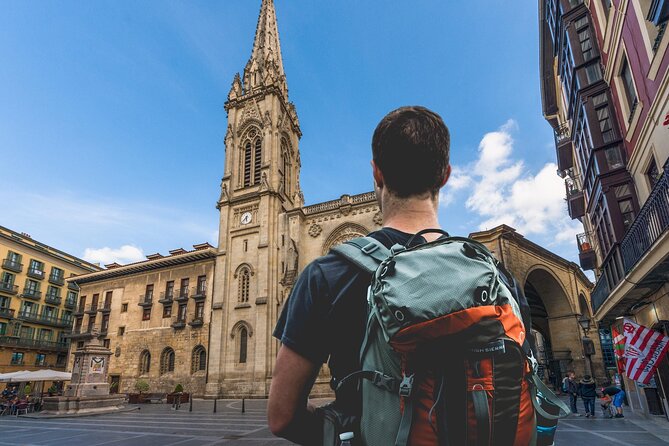
Review · SPAIN HISTORY TOURS
Bilbao Historical Small Group Tour
Bilbao’s old town is best understood on foot, one square, church, market, and riverside view at a time. This tour connects those pieces in about two hours, with local stories about Basque culture, the Basque language, sailors, food, and the city’s change from industrial port to modern cultural center.
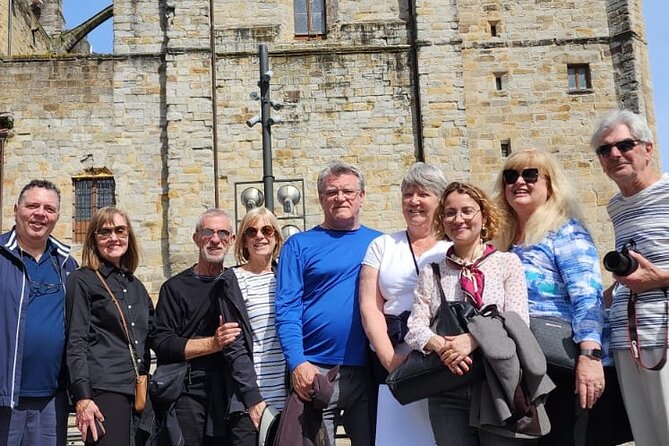
I like the small-group format, which gives you a better chance to ask questions, and the market visit at La Ribera, where the city’s food traditions become more concrete. I also like that guides such as Samuel, often called Sam, explain the city beyond the Guggenheim. The main drawback is that the historical story can feel slightly scattered, and one family reported a cancellation without advance notice.
Key points to know before you book

- Plaza Nueva begins the story in Bilbao’s old quarter, with Basque language, local customs, and the curious tale of La Bilbaina.
- La Ribera Market adds a food-focused stop to an otherwise historical walk.
- Samuel and Sam receive especially strong praise for clear English, humor, personal stories, and Basque cultural insight.
- The route lasts about two hours, making it easy to schedule on your first day.
- The group-size information is inconsistent: one section says a maximum of 10, while another says 12.
- The tour costs $31.03 per person, with free cancellation up to 24 hours before the start time.
Why this is a useful first walk in Bilbao
Bilbao can seem split between two cities. The Guggenheim and the newer parts draw most of the attention, while the Casco Viejo keeps the older street plan, churches, market traditions, and local stories. This walking tour focuses on that older side.
I think the timing is its greatest practical strength. Two hours is long enough to give you a working sense of Bilbao, but short enough to leave room for the Guggenheim, a meal, shopping, or a second neighborhood walk. I would schedule it early in your stay, since the route helps you understand where the historic center is and gives you ideas for what to revisit later.
The tour is offered in English and begins at Arriaga Theater on Arriaga Plaza. It returns to the same meeting point, so you do not need to plan a separate way back. The meeting area is near public transportation, which makes it a sensible starting point if you are coming from elsewhere in the city.
The advertised group limit needs a little care. The highlights describe a maximum of 12 people, while the additional information lists a maximum of 10. Either way, this is intended to be a small group rather than a large city walk. A smaller group matters in Bilbao’s older streets, where a guide can pause for questions without losing half the group around a corner.
More Small-Group History Tours in Spain
- Madrid Tapas & Taverns Small Group Food & History Tour
★ 5.0 · 2,664 reviews - Ultimate Seville Tapas, Wine & History Small Group Tour
★ 5.0 · 1,766 reviews - Alicante Historic Small Group Tour with Tapas Tasting
★ 5.0 · 559 reviews
Plaza Nueva and the first taste of Basque culture
The tour opens at Plaza Nueva, a central square in the Casco Viejo. This is a good starting point because it introduces both the physical setting of the old town and several ideas that return during the walk.
You will hear about the square’s past, the Basque language academy, and local culture. The guide also brings in the secret myth of La Bilbaina, giving the first stop a lighter, more personal tone than a simple list of dates and architectural facts.
This is where a guide like Samuel can make a real difference. His strongest quality, based on the experience described by participants, is his ability to connect place with culture. He explains not only what a building is, but also why Basque identity matters in Bilbao and across the Basque Country.
The stop lasts about 15 minutes. That is enough time for an introduction, though not enough for a full lecture on Basque politics or language. If you arrive with little background, listen for the basic framework and save detailed questions for the guide. If you already know the region well, you may find this opening fairly introductory.
Plaza Miguel de Unamuno and Bilbao’s literary side
The next stop, Plaza Miguel de Unamuno, shifts from public square to literature and architecture. The guide explains the buildings around the plaza and introduces Basque literary figures, including Miguel de Unamuno.
The scheduled stop is about 10 minutes, so expect a compact explanation rather than a long examination of each building. I like this part because it shows that Bilbao’s identity is not only about food, industry, or famous museums. Books, language, and public figures also help explain the city.
The short timing can work well for most people, especially if you are trying to see a lot in one day. Families with older children or teenagers may appreciate the pace, although one participant felt the information became too bookish for two teens. The guide’s style appears to matter here. Samuel is often praised for being entertaining and good with children, but the experience may feel more academic if your guide presents the material in a formal way.
The old wall, the Nervión, and San Antón
The route then moves toward the oldest wall and the place where Bilbao began. You will also stop near the Nervión, known locally as La Ría de Bilbao, to consider how the city developed around its waterway.
This is one of the most useful transitions on the walk. Bilbao is easier to understand when you see the relationship between the old settlement, the river, the bridges, and the port city that grew around them. The guide points out San Antón Bridge and San Antón Church, two landmarks that help anchor the story in the old quarter.
The riverside also provides a pause from tightly packed streets. You can take in the water and think about the contrast between the historic center and the later version of Bilbao that many people first notice from the Guggenheim. Several participants valued guides who explained how the modern museum affected the city’s newer development. That wider context is one of the tour’s best features.
The supplied schedule does not give a time for every stop in this part of the route, so the pace may vary. You should expect a walking explanation rather than a formal church or museum visit. Admission is listed as free at the stops, and the professional guide is included.
Same streets, a different century:
- Madrid Essential: Historic Center, Plaza Mayor & Royal Palace
★ 5.0 · 6,416 reviews - Barcelona: Tapas Walking Tour with Food, Wine, and History
★ 4.8 · 4,261 reviews - Sevilla Food Tour: Tapas, Wine, History & Traditions
★ 5.0 · 3,468 reviews - Valencia Old Town Tour with Wine & Tapas in 11th Century Historic Monument
★ 5.0 · 3,234 reviews
La Ribera Market and the city’s food traditions
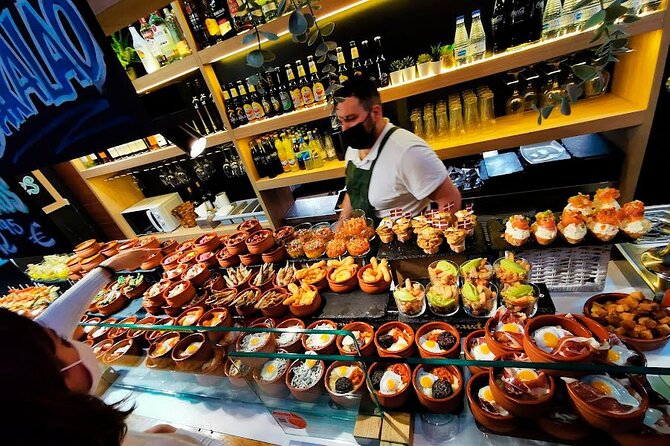
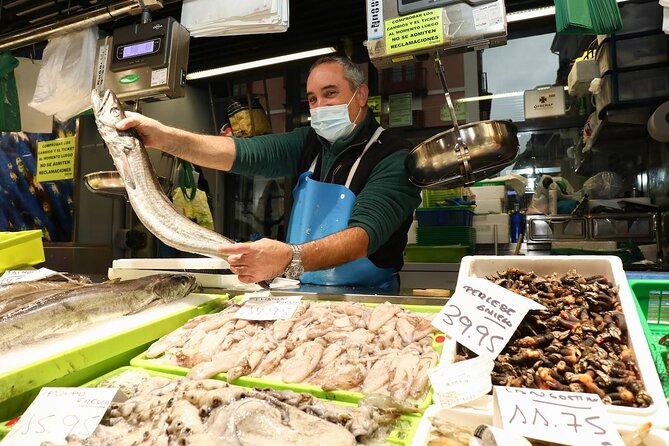
La Ribera Market is the tour’s most appealing change of rhythm. After squares, buildings, churches, and literature, you go inside the market to look at Bilbao’s food culture.
The guide gives a tour of the market, explains the building, and points out popular local gastronomy. The scheduled stop is about 15 minutes. That is enough for a useful orientation, but it is not a full food tour or cooking class. You should not book this experience expecting tastings to be included, since none are listed.
Still, the market adds real value. Food is one of the easiest ways to connect with a place, and this stop can help you decide what to try later. It also gives you a practical place to return to if you want to explore Basque ingredients and market life at your own pace.
I would pay attention to the guide’s recommendations here and ask specific questions about where to eat later. Participants particularly appreciated receiving suggestions about food, places to go, and things to do during the rest of their stay. That makes this more useful than a walk that only covers monuments.
Fuente del Perro and Bilbao’s everyday traditions
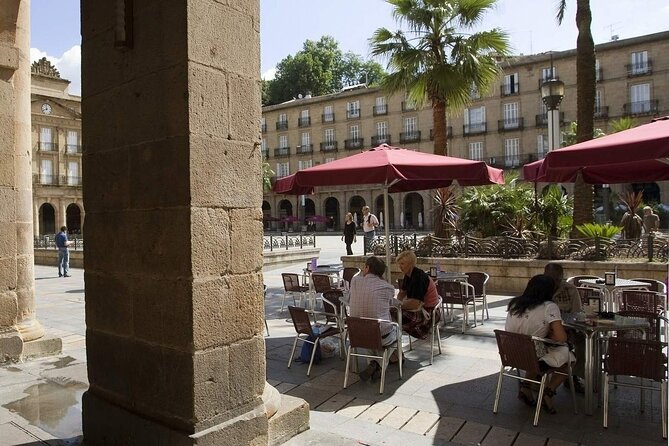
At Fuente del Perro, the guide explains the history of the fountain and introduces the tradition of the txikiteros. This is the kind of small detail that can make an old-town walk feel local rather than purely historical.
The stop lasts about 10 minutes. You will learn about a Bilbao custom connected with social life and local drinking traditions, alongside the fountain’s own story. The subject gives the guide a chance to explain how people use the old quarter, not just how it looked in the past.
This is also a good example of why a local English-speaking guide can be worthwhile. A plaque can give you a name and a date. It rarely explains the customs that still give a place its character. Samuel is repeatedly praised for sharing those cultural details and for answering questions patiently.
The cathedral area and Bidebarrieta Library
The walk continues to the cathedral area, where the guide discusses the cathedral and nearby buildings. The exact timing is not specified, but this section appears to be part of the same continuous stroll rather than a separate admission visit.
You should expect exterior history and architectural context. No entry ticket is listed, and the tour does not promise an interior visit. If seeing the cathedral inside is important to you, ask the guide what access is possible on the day rather than assuming it is included.
At Bidebarrieta Library, the focus turns to one of the old town’s notable buildings. The guide covers its architecture and history, with about 15 minutes set aside for the stop. This gives the route a useful range: public squares, religious buildings, a market, a fountain, and civic architecture.
I like the library stop because it keeps the tour from becoming a procession of churches. It shows how Bilbao’s public life took shape through cultural and civic buildings as well as religious ones. You also get a stronger sense of the Casco Viejo as a working neighborhood, not just a preserved backdrop for sightseeing.
Sailors, churches, and the Arriaga Theater
The remaining stops add two more strands to the story. One concerns Basque sailors and a church, while another points out the attractive architecture of the theater.
Because the details for these stops are brief, you should expect short explanations rather than extended visits. The theater architecture is especially fitting at the end of a route that begins at Arriaga Theater. Returning to the starting point makes the walk simple to plan, and it means you finish where you began rather than at an unfamiliar corner of Bilbao.
The sailor story also widens the tour beyond the immediate old-town streets. Bilbao’s connection to the water, trade, and seafaring helps explain why the Nervión matters so much. Along with the market and the old wall, it gives you several ways to connect the city’s physical setting with its social past.
How much value do you get for $31.03?
At $31.03 per person, the tour is reasonably priced for a two-hour guided walk, particularly if you are new to Bilbao. You are paying for an English-speaking professional guide, a planned route, local context, and the chance to ask questions in a small group.
The value is strongest if you would otherwise walk through the Casco Viejo without knowing what you were seeing. The route covers enough ground to provide a framework, and the guide’s tips may save you time later. The market stop also gives the walk more substance than a sightseeing loop focused only on façades.
The value is weaker if you already know Bilbao’s old town well or prefer to explore without a fixed pace. This is not a tasting tour, a museum tour, or a long architectural study. It is a quick orientation with cultural stories and practical suggestions.
The overall rating is 4.5 from 159 ratings, but the important point is the pattern of praise: the guide’s English, friendliness, humor, local knowledge, and personal stories receive the most attention. One person found the historical sequence less orderly, and another felt the presentation was too bookish for teenagers. Those comments are useful reminders that the guide’s delivery shapes the experience.
Who will enjoy this walk most?
I would recommend it most strongly to first-time visitors, couples, solo participants, and families who want a simple introduction before exploring alone. It also suits anyone who wants more context for Bilbao than a visit to the Guggenheim can provide.
The route is described as an easy walk, and most people can participate. Still, it takes place on foot for about two hours, so you should be comfortable walking through the old town. The tour is near public transportation, but it does not include transport between stops.
Families can enjoy it, especially with a guide who engages children. However, teenagers who dislike historical explanation may lose interest if the presentation is formal. Ask questions and use the market, river, and local customs as points of connection.
The walk also works well in wet weather if it proceeds, as one participant praised the guide for continuing in heavy rain. The experience requires good weather, though, and poor conditions can lead to a different date or a full refund.
Practical booking advice and cancellation terms
Your confirmation arrives at booking, and the tour is offered in English. Tips are not included, so bring a little extra if you want to thank the guide.
The published group limits differ, with one description saying 12 and the additional information saying 10. If group size matters to you, confirm the limit before booking. The activity begins and ends at Arriaga Theater, Arriaga Plaza 1.
You can cancel for a full refund up to 24 hours before the start time. Changes or cancellations inside that 24-hour window are not accepted for a refund. The local start time controls the cutoff.
There is also a minimum number of participants. If that minimum is not reached, you can be offered another date or experience, or receive a full refund. One past booking had a cancellation communication problem, so I would check your messages before leaving for the meeting point and contact the operator if anything seems unclear.
Should you book the Bilbao Historical Small Group Tour?
Book it if you want a quick, human introduction to the Casco Viejo and prefer learning through stories rather than reading plaques. It is especially useful on your first day, before the Guggenheim and before you make plans for meals and further exploring.
The strongest reason to choose it is the guide. Samuel, also called Sam, is praised for clear English, humor, patience, personal stories, and explanations of Basque customs and politics. The route itself is solid, but the guide turns a basic old-town walk into a better introduction to Bilbao.
Skip it if you want an in-depth museum visit, included food tastings, or a perfectly chronological lecture. Also think twice if your group dislikes walking or if a cancellation risk would cause major problems with your schedule. For most first-time visitors, though, $31.03 buys a useful beginning, a few local ideas, and a clearer sense of why Bilbao is more than its famous modern museum.
FAQ
How long does the Bilbao Historical Small Group Tour last?
The tour lasts approximately two hours.
Where does the tour begin?
The tour begins at Arriaga Theater, Arriaga Plaza 1, Ibaiondo, 48005 Bilbao, Bizkaia, Spain.
Where does the tour end?
The activity ends back at the meeting point at Arriaga Theater.
Is the tour offered in English?
Yes. The tour is offered in English.
What locations are included?
The route includes Plaza Nueva, Plaza Miguel de Unamuno, the oldest wall area, the Nervión riverside, San Antón Bridge, San Antón Church, La Ribera Market, Fuente del Perro, the cathedral area, Bidebarrieta Central Library, a church connected with Basque sailors, and the Arriaga Theater area.
Is food included?
No food or tastings are listed as included. The tour does visit La Ribera Market and discusses local gastronomy.
What is included in the price?
The price includes local tax and a professional guide. Tips are not included.
Can I cancel for a full refund?
Yes. You can cancel at least 24 hours before the experience start time for a full refund. Cancellations or changes made less than 24 hours before the start time are not accepted for a refund.
Newest history tours we have reviewed in Spain
- Visita Guiada Por El Casco Histórico De Cuenca Y Su Catedral★ 5.0 · 45 reviews
- Mosque of Cordoba History Tour in English Tickets included★ 5.0 · 257 reviews
- Jerez de la Frontera History and Art Walking Tour★ 4.5 · 49 reviews
- 2 Hours Tour around Cádiz: History, anecdotes and curiosities★ 5.0 · 89 reviews
- The Authentic Bilbao Pintxos, Food & Wine Tour with a Local★ 5.0 · 360 reviews
- Barcelona Jewish & Gothic Tour★ 5.0 · 18 reviews
- Andorra Original History and Sightseeing Tour (Private, Pickup)★ 5.0 · 350 reviews
- Savor Spain: Food, Wine, History & Culture Small Group Tour in Old Barcelona★ 5.0 · 140 reviews
Small-Group History Tours, compared.
Freedom Trail History Small Group Walking Tour
Read our review →
Madrid Tapas & Taverns Small Group Food & History Tour
Read our review →
Hidden Alleyways and Historic Sites Small-Group Walking Tour
Read our review →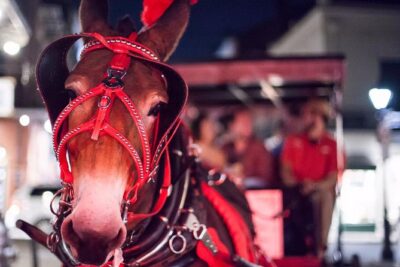
New Orleans Small-Group Haunted History Carriage Tour
Read our review →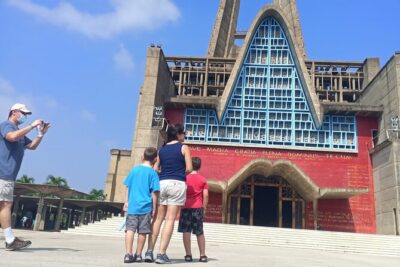
Half Day Dominican Republic Cultural Tour : Small Group
Read our review →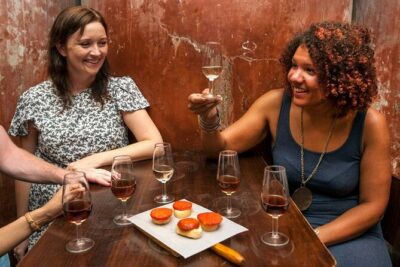
Ultimate Seville Tapas, Wine & History Small Group Tour
Read our review →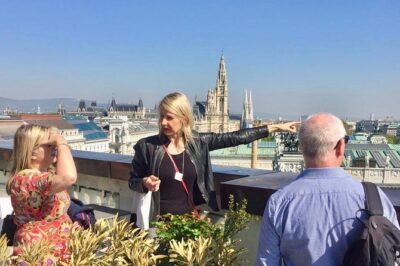
Vienna Historic Center Small Group Walking Tour
Read our review →Browse the lists this tour appears in