
Review · SPAIN HISTORY TOURS
Visita Guiada Por El Casco Histórico De Cuenca Y Su Catedral
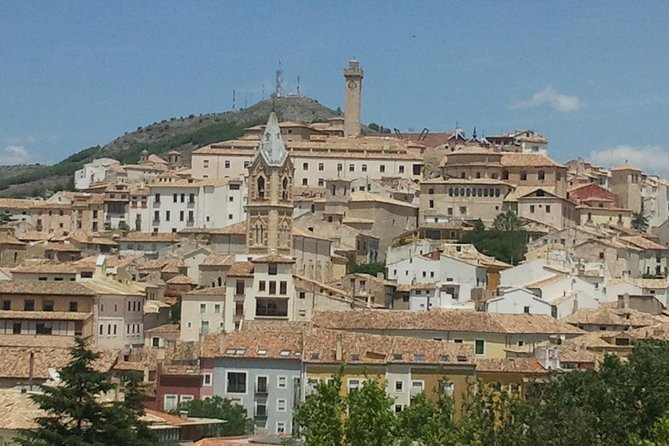
Cuenca’s old town is most memorable where it seems to ignore ordinary building rules. Medieval houses cling to the Huécar Gorge, the San Martín skyscrapers rise in narrow tiers, and the cathedral brings the visit indoors with a fine look at Spain’s first Gothic cathedral. This tour connects those sights in one well-planned walk.
I like the small price for a substantial route and the chance to enter the San Martín skyscrapers, which many visitors only see from outside. I also like the clear focus on history, architecture, and local stories, with guides such as Guillermo keeping the facts lively and easy to follow.
The main consideration is pace. In 2 hours 15 minutes, you cover many landmarks and spend about 35 minutes in the cathedral, so you will not have much time to linger at every square or viewpoint. A group can include up to 50 people, which may also make it harder to hear in narrow streets.
Key points to know before booking
- The San Martín skyscrapers are part of the experience: You enter the tall historic homes, not just photograph their outside walls.
- The cathedral visit lasts about 35 minutes: This gives you enough time to look beyond the exterior and understand why the building matters.
- The route covers Cuenca’s main historic sights: Expect the Plaza Mayor, Mangana Tower, Jewish quarter area, churches, convents, bridge, Hanging Houses, and viewpoints.
- The tour starts at 11:30 am: It begins at Calle Alfonso VIII, 1, and ends at Cuenca Cathedral in Plaza Mayor.
- The price is $18.58 per person: For more than two hours, several free-entry sights, and two included interior visits, that is a solid value.
- The group may reach 50 people: Arrive early and stay close to the guide, especially around busy viewpoints and inside the cathedral.
Why Cuenca’s old town works so well on foot
This is a tour about contrasts. Cuenca’s historic center has formal squares, grand religious buildings, and colorful facades, but it also has houses that appear to hang over empty space. The best moments come when the guide explains how these pieces fit together.
The route moves through the medieval center rather than keeping you in one grand monument. That matters because Cuenca’s character is spread across its streets, towers, bridges, and steep river gorges. You get a sense of how the city was built and defended, not just a series of isolated photo stops.
The tour also visits the area once associated with Cuenca’s Jewish quarter and points out several churches and viewpoints. The supplied information does not give the full detail of every stop, so you should think of these as part of the broader walking commentary rather than separate long visits.
The guides are official tourism professionals, and the company says its team has led more than 10,000 tours. Guillermo is the guide named in the available feedback. His approach is described as both educational and entertaining, a useful balance in a city where a dry list of dates would miss much of the fun.
More History Tours in Spain:
- Madrid Essential: Historic Center, Plaza Mayor & Royal Palace
★ 5.0 · 6,416 reviews - Barcelona: Tapas Walking Tour with Food, Wine, and History
★ 4.8 · 4,261 reviews - Sevilla Food Tour: Tapas, Wine, History & Traditions
★ 5.0 · 3,468 reviews
Starting at Plaza Mayor and Plaza de la Merced
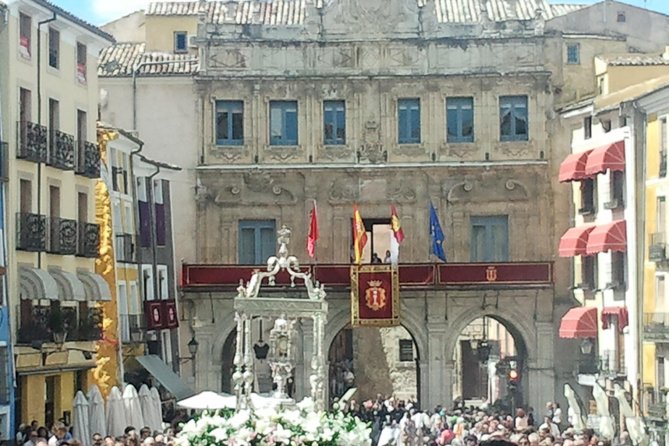
The tour begins at Calle Alfonso VIII, 1, at 11:30 am. From there, it reaches the Plaza Mayor, Cuenca’s natural stage. Colorful facades surround the square, many dating from the 16th century. The Baroque town hall adds a more formal note, while the huge Convent of Las Petras gives the plaza its imposing religious presence.
This is a good opening stop because you can read several layers of Cuenca at once. The square shows the city’s old civic center, its religious power, and its fondness for tall, close-set buildings. The stop is free, so the value comes from the explanation and the way the guide helps you notice details you could easily pass without context.
Next comes Plaza de la Merced, a smaller and more intimate space. Three Baroque facades face the square, including the seminary, a church, and a cloistered convent. I like this stop because it shifts the mood from public square to enclosed religious quarter.
You should expect exterior commentary here rather than a long interior visit. The tour has a lot to cover, and these short stops help build the story without using up the time reserved for the cathedral.
Mangana Tower and Cuenca’s high points
Mangana Tower is one of the route’s strongest visual stops. The 16th-century tower has two clocks near the top and offers broad views across the city. A tower with clocks is easy to understand at a glance, but its real value is the way it helps you orient yourself.
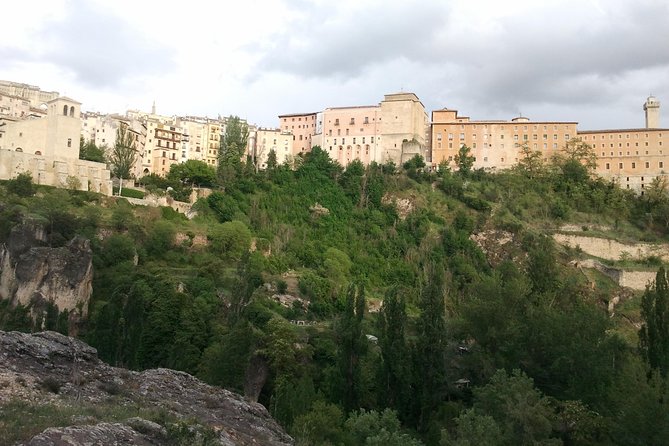
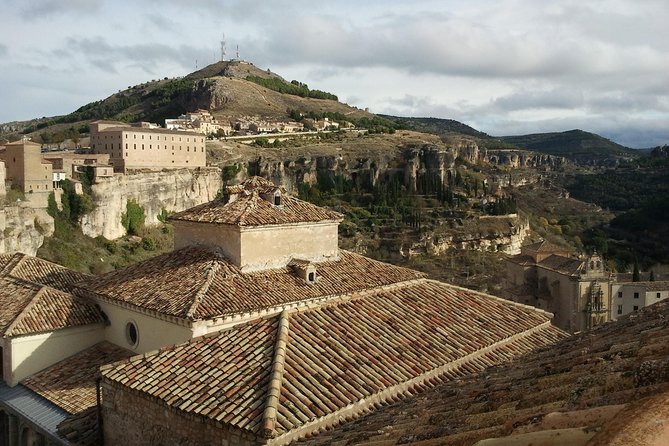
From here, you can better grasp Cuenca’s unusual setting and the relationship between the old center, the ravines, and the buildings packed onto the heights. The tour information describes the views as exceptional, but your actual view can depend on where the group gathers and how much time the guide has available.
This is one place where staying close matters. With a possible group of 50, the best position may go quickly, especially if people stop for photos. Listen first, then take your pictures when the group begins moving.
The route also includes the former Jewish quarter area, though no separate entrance or timed visit is specified. This is a reminder that the experience is primarily a guided city walk. You are paying for a connected account of Cuenca, not a series of long museum visits.
Entering the San Martín skyscrapers
The San Martín skyscrapers are the tour’s most unusual feature. In the 16th century, these homes reached 12 levels, making them among the tallest houses in Europe at the time. Their nickname can sound modern, but the buildings are historic homes shaped by Cuenca’s tight urban space.
You visit both the exterior and the interior, with about five minutes specifically allocated to this stop. That is not a long inspection, but it is enough to make the buildings more than a distant backdrop. Seeing the inside helps you understand how people lived in tall, narrow structures instead of wide city blocks.
This is also the clearest reason to choose this tour over a basic old-town walk. The cathedral is a major attraction, but many tours can show you its facade. Access to the inside of these San Martín houses gives the route a more distinctive local detail.
Do not expect a full house museum visit. The short timing means the guide must keep things moving, and you will probably get the main architectural explanation rather than a long exploration of every floor. Still, for $18.58, this included entry adds real value.
Same streets, a different century:
- Valencia Old Town Tour with Wine & Tapas in 11th Century Historic Monument
★ 5.0 · 3,234 reviews - Madrid Tapas & Taverns Small Group Food & History Tour
★ 5.0 · 2,664 reviews - Barcelona Tapas Walking Tour: Food, Wine & History
★ 4.5 · 1,928 reviews - Ultimate Seville Tapas, Wine & History Small Group Tour
★ 5.0 · 1,766 reviews
San Pablo, the iron bridge, and the Hanging Houses
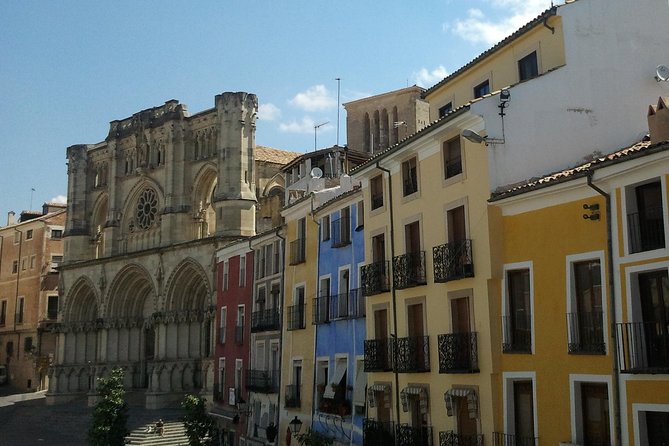
The Convent of San Pablo now serves as a Parador, a hotel in a historic building. Its position beside the gorge is the key point. The building appears to sit at the edge of the drop, showing how Cuenca uses its dramatic setting rather than hiding it.
The tour lists the stop as free, but it does not specify an interior visit to the Parador. You should expect to see and hear about the building from the route, not assume that you will tour hotel rooms or private spaces.
The nearby San Pablo Bridge gives you one of the best connections between architecture and geography. The present iron bridge dates from 1903 and replaced an earlier stone bridge. Fragments of the old bridge remain, adding a small but useful reminder that Cuenca’s crossings have changed over time.
The bridge is also a practical photo stop, with the gorge and old buildings around you. It can feel exposed, so keep your attention on the guide and the route rather than treating it only as a picture platform.
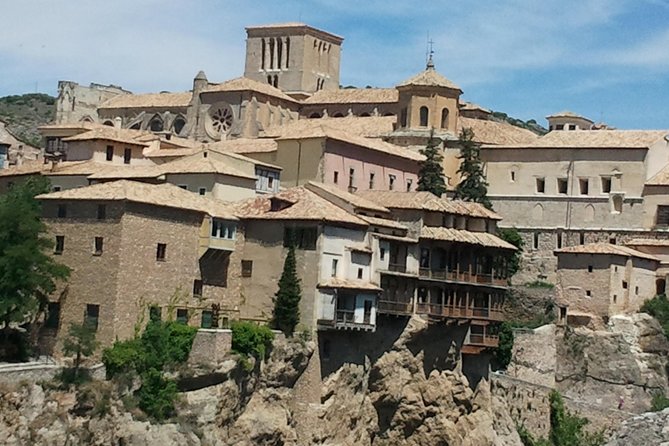
Then come the Hanging Houses, among Cuenca’s most recognizable sights. These noble homes date from the 14th century and project over the Huécar Gorge. Their wooden balconies are the feature everyone wants to see, but the guide’s explanation gives the buildings more meaning than a quick photograph can.
The houses show how Cuenca’s topography shaped daily life and construction. They also make an excellent late-route stop because, by this point, you have already seen the squares and towers that explain the old center. The Hanging Houses then provide the memorable visual payoff.
Alfonso VIII and the cathedral finale
A bronze sculpture honors Alfonso VIII, the Castilian king who ruled for 44 years. He is remembered for his victory at the Battle of Las Navas de Tolosa, an event presented as a turning point in Spanish history.
This is a short stop, but it gives the guide a chance to connect Cuenca with the wider political story of medieval Castile. You do not need to be a history specialist to follow it. The statue works as a simple marker for a larger chapter in the city’s past.
The tour ends at Cuenca Cathedral in Plaza Mayor, with about 35 minutes inside. The cathedral is described as the first Gothic cathedral in Spain and one of the country’s most surprising. That claim gives the visit real weight, especially for anyone interested in early Gothic architecture.
The interior visit is the most substantial included entry on the route. Thirty-five minutes is enough for a focused look, though not enough for a slow study of every chapel, detail, and artwork. I would save questions for the end and use the time to look both at the overall structure and the smaller features the guide points out.
Ending inside the cathedral is smart. It brings the walk to a clear finish and leaves you in the center of Cuenca, where you can continue exploring on your own. Since the end point is Plaza Mayor, you are already positioned near one of the city’s main gathering places.
Is $18.58 a fair price?
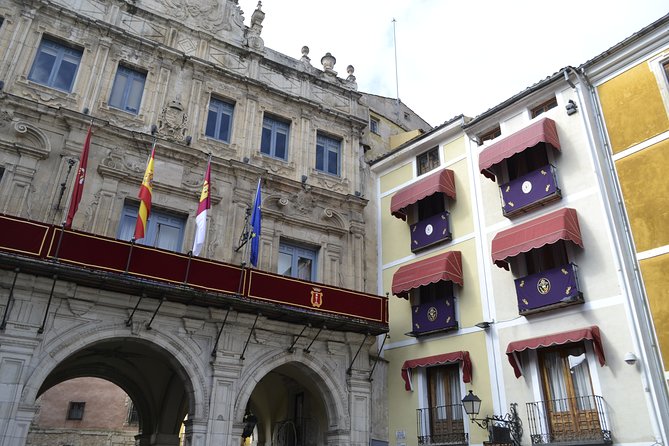
At $18.58 per person, this is a strong-value introduction to Cuenca. You get about 2 hours 15 minutes with an official guide, access to the San Martín skyscrapers, and cathedral admission. Most of the other stops are free public spaces, but that does not make them filler. The route uses them to explain how the city developed.
The value is highest if this is your first serious look at Cuenca. You will see the main landmarks, learn the basic historical framework, and finish with two interiors that add depth to the walk.
The value is lower if you prefer to move at your own speed or spend a long time taking photographs. The schedule has many stops, and the group can reach 50 people. A private guide or a smaller tour would likely offer more flexibility, but the supplied details do not provide pricing for those alternatives.
The tour is also a useful choice for a short visit. If you have only part of a day in Cuenca, this route gives you a broad introduction without requiring separate bookings for each major sight.
Timing, group size, and practical details
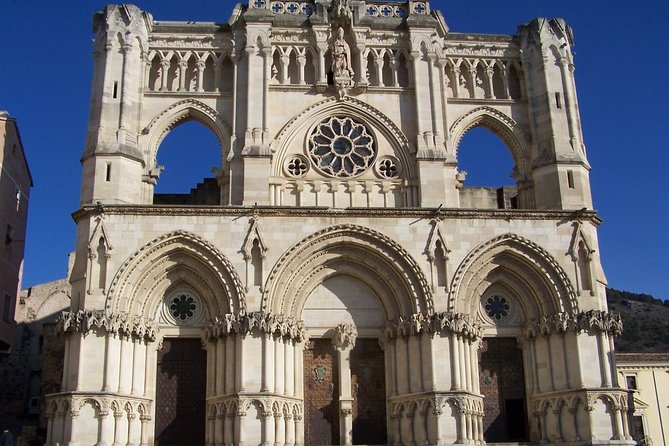
The start time is 11:30 am, and the meeting point is Calle Alfonso VIII, 1. The tour ends at Cuenca Cathedral, Plaza Mayor. That point-to-point design is convenient because you do not need to return to the beginning.
The activity is near public transportation, and service animals are allowed. Most people can take part. The available information does not state a specific accessibility route, surface type, or level of assistance, so contact the provider if those details matter to you.
The maximum group size is 50. That is not a small group, and you should arrive early enough to locate the guide and stay within earshot. In narrow streets, around Mangana Tower, and near the bridge, a large group can spread out.
Confirmation arrives when you book. Free cancellation is available until 24 hours before the start time for a full refund. Cancellations or changes made less than 24 hours before the tour are not accepted for a refund, with cut-off times based on local time.
Who will enjoy this Cuenca walk?
I would recommend it most strongly to first-time visitors, short-stay visitors, and anyone who wants the old town explained rather than simply photographed. The mix of public squares, dramatic buildings, a tower, bridge, gorge-side homes, and cathedral gives you a reliable overview.
It also suits people who like history delivered in a lively way. The available feedback highlights Guillermo’s ability to make the visit both instructive and fun, and the strongest praise goes to the clear explanations and the cathedral visit.
Families and mixed-age groups may appreciate the variety. You are not inside a single museum for two hours. The route changes setting often, and the Hanging Houses and San Martín buildings give the walk visual interest.
You may want something else if you have already spent several days exploring Cuenca and want specialist detail on one subject. The tour is broad by design. It gives you a well-connected introduction, not an exhaustive study of Gothic architecture, Jewish history, or medieval domestic life.
Should you book this tour?
Book it if you want Cuenca’s major sights placed into one readable story, especially if the San Martín skyscrapers and cathedral appeal to you. The combination of a low price, included interior visits, an official guide, and a 2-hour-15-minute route makes it an efficient first tour.
Skip it if you dislike fixed pacing or large groups. You will have limited time at each stop, and a group of up to 50 can feel less personal.
For most first visits, I would book it early, especially since it is commonly reserved about 28 days ahead. Guillermo’s lively style, the unusual house interiors, the views from Mangana Tower, and the cathedral finale give this tour more substance than a basic walk around the old town.
FAQ
How long does the guided visit last?
The tour lasts approximately 2 hours and 15 minutes.
What time does the tour start?
It starts at 11:30 am.
Where does the tour begin?
The meeting point is Calle Alfonso VIII, 1, 16001 Cuenca, Spain.
Where does the tour end?
The tour ends at Cuenca Cathedral in Plaza Mayor, Cuenca.
Is cathedral admission included?
Yes. Admission to Cuenca Cathedral is included, with about 35 minutes allocated for the visit.
Can you enter the San Martín skyscrapers?
Yes. The tour includes a visit inside and outside the historic San Martín homes, with about five minutes allocated to that stop.
How far in advance can you cancel for a full refund?
You can cancel at least 24 hours before the experience start time for a full refund. Cancellations or changes made less than 24 hours before the start time are not accepted for a refund.
Newest history tours we have reviewed in Spain
- Mosque of Cordoba History Tour in English Tickets included★ 5.0 · 257 reviews
- Jerez de la Frontera History and Art Walking Tour★ 4.5 · 49 reviews
- 2 Hours Tour around Cádiz: History, anecdotes and curiosities★ 5.0 · 89 reviews
- The Authentic Bilbao Pintxos, Food & Wine Tour with a Local★ 5.0 · 360 reviews
- Bilbao Historical Small Group Tour★ 4.5 · 159 reviews
- Barcelona Jewish & Gothic Tour★ 5.0 · 18 reviews
- Andorra Original History and Sightseeing Tour (Private, Pickup)★ 5.0 · 350 reviews
- Savor Spain: Food, Wine, History & Culture Small Group Tour in Old Barcelona★ 5.0 · 140 reviews
Spain History Tours, compared.
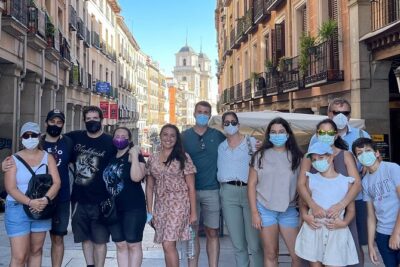
Madrid Essential: Historic Center, Plaza Mayor & Royal Palace
Read our review →
Tapas Walking Tour with Food, Wine, and History
Read our review →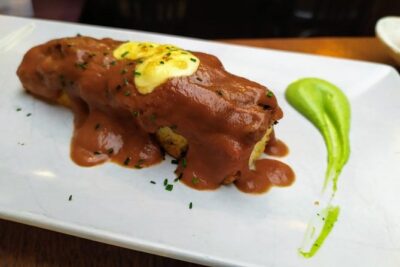
Sevilla Food Tour: Tapas, Wine, History & Traditions
Read our review →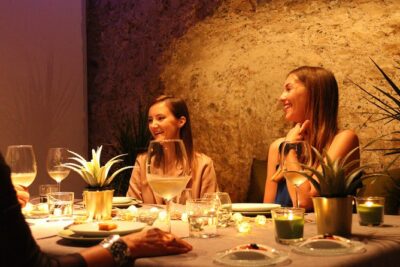
Valencia Old Town Tour with Wine & Tapas in 11th Century Historic Monument
Read our review →
Madrid Tapas & Taverns Small Group Food & History Tour
Read our review →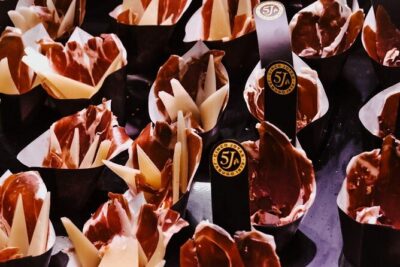
Barcelona Tapas Walking Tour: Food, Wine & History
Read our review →
Ultimate Seville Tapas, Wine & History Small Group Tour
Read our review →
Córdoba: Skip-the-Line Great Mosque-Cathedral History Tour
Read our review →Browse the lists this tour appears in