Review · BARCELONA HISTORY TOURS
Tarragona and Sitges Small Group Tour – Roman History & Culture
Tarragona’s Roman aqueduct is the star here. You can walk across the top of a 1st-century BC water bridge, then wander through a modern city built over Roman walls, a circus, forum, and amphitheater. I like the strong mix of ancient sites and Mediterranean coast, and I like that a minivan lets you reach three very different places in one day.
I also like the small-group format and the free time in Sitges, where you can eat beside the water or swim. The tradeoff is time: Tarragona has enough Roman remains to fill a full day, but this tour also gives three hours to Sitges. If Roman archaeology is your main goal, you may wish for longer at the ruins.
Key points to know before booking
- Walk across a 2,000-year-old aqueduct: Pont del Diable is an active, memorable first stop.
- Tarragona blends Roman, medieval, and modern Spain: See the cathedral, forum, circus, city walls, and amphitheater in one walk.
- Roc de Sant Gaieta is a quick coastal pause: Its small white houses and rocky shoreline offer a change of pace.
- Sitges gives you three hours: Plan for lunch, shopping, a beach stop, or a quick swim.
- The day runs from 8:30am to about 7pm: You get a lot, but expect a long day with plenty of walking.
- The guide makes a real difference: Sergio, Rod, Xavier, Enrique, Stephen, and Jordi have all led highly praised departures.
Why this Barcelona day trip works
Barcelona can easily fill several days, but the coast south of the city offers a different kind of reward. This outing takes you first to Tarraco, the Roman city now called Tarragona, then to two seaside communities with very different personalities.
The trip costs $119.48 per person. That is a fair price if you value door-to-door transport between several places, an English-speaking guide, and a small vehicle. You avoid arranging regional trains, local buses, and taxis on your own. Food, drinks, and paid entry to museums or monuments are extra, so the final cost depends on how you spend your free time.
The day begins at 8:15am at the operator’s office beside the Palau de la Música in central Barcelona. The minivan leaves at 8:30am. You will hear a short introduction to Barcelona as you pass through the Eixample district, followed by about 90 minutes on the road to Tarragona.
The vehicle is air-conditioned and described as comfortable, though space is naturally more limited than on a coach. The tour is advertised as small group, with one set of details stating a maximum of 15 people and another stating a maximum of 8. I would confirm the expected group size when booking. In either case, the format should feel more personal than a large bus tour.
More Local Culture and Traditions Tours in Spain
- Barcelona & Chocolate Amatller History and Culture + Activity and Tasting
★ 4.9 · 173 reviews - Barcelona Tapas Tour, Taverns, History & Local Culture
★ 5.0 · 25 reviews - Sevilla Food Tour: Tapas, Wine, History & Traditions
★ 5.0 · 3,468 reviews
Pont del Diable and the first Roman surprise
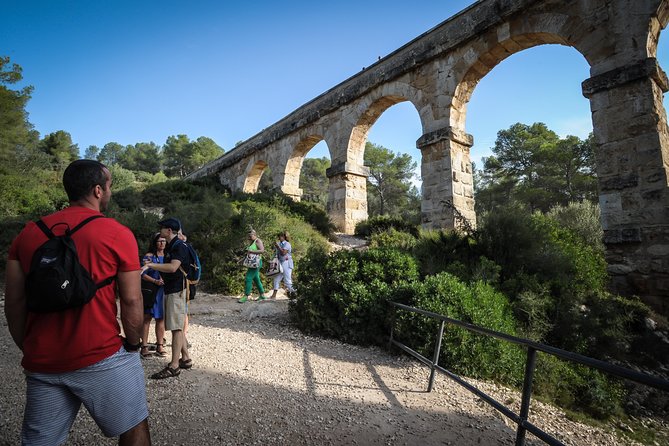
Around 10am, you reach the Pont del Diable, also called the Les Ferreres Aqueduct. The aqueduct formed part of Tarragona’s Roman water system and remains in remarkably good condition.
The special part is not just seeing it from below. You can walk across the top from one side to the other. It is a simple activity, but the age of the structure gives it real force. You are walking on stonework built nearly 2,000 years ago, above the surrounding countryside.
Allow about 40 minutes here. Wear shoes with a secure sole, since the tour involves walking rather than a quick photo stop. Bring sun protection, too. The aqueduct has no mention of food service or shade, and the operator specifically advises suitable clothing, footwear, and protection from the sun.
This stop is one reason the minivan format earns its keep. The aqueduct lies just beyond Tarragona, and reaching it independently would require more planning than simply riding there with the guide. It is also a good opening act: striking, compact, and easy to understand before the longer walking tour begins.
One limitation is the short visit. If you love Roman engineering, 40 minutes may feel brief. The tour gives you enough time to cross the structure and take in the setting, but not enough for a slow archaeological study.
Tarragona’s cathedral, circus, and amphitheater
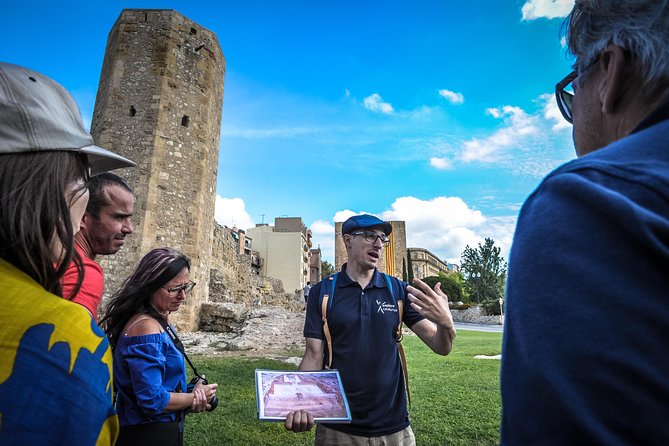
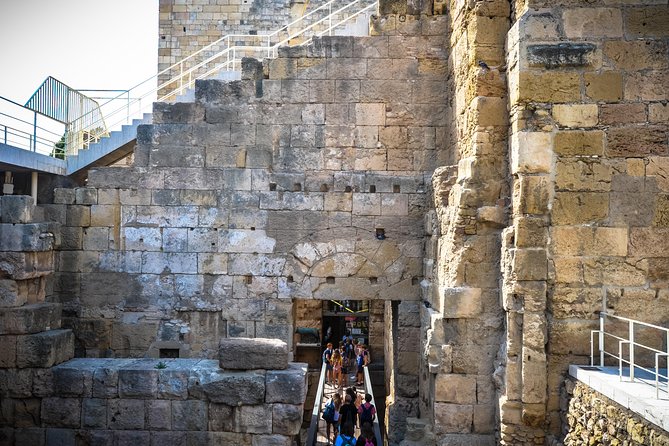
At about 11am, you enter Tarragona’s old quarter through a narrow gateway in the ancient walls. This part of the walk is valuable because the Roman remains are not isolated in a museum park. They appear between medieval buildings, streets, restaurants, and ordinary city life.
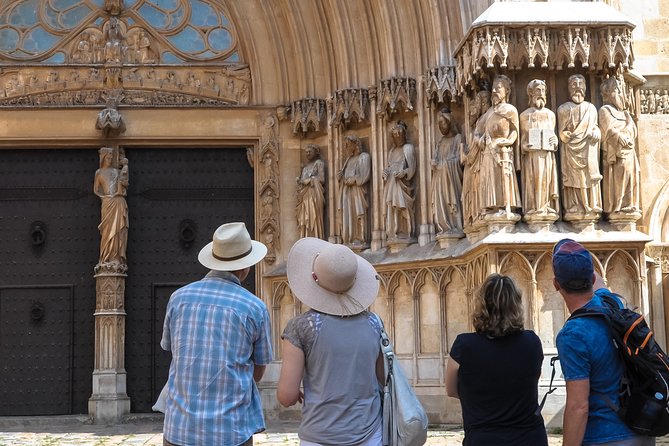
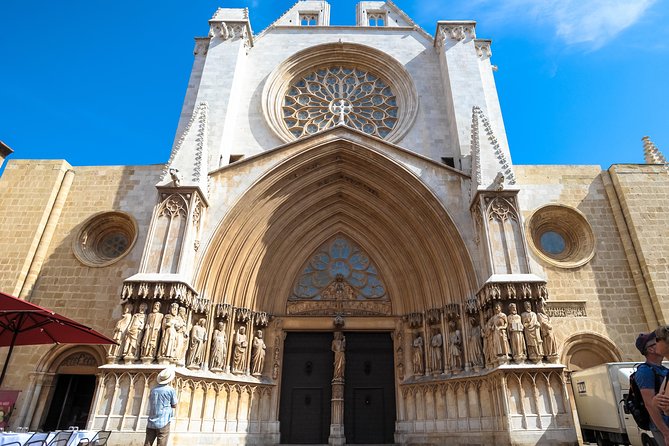
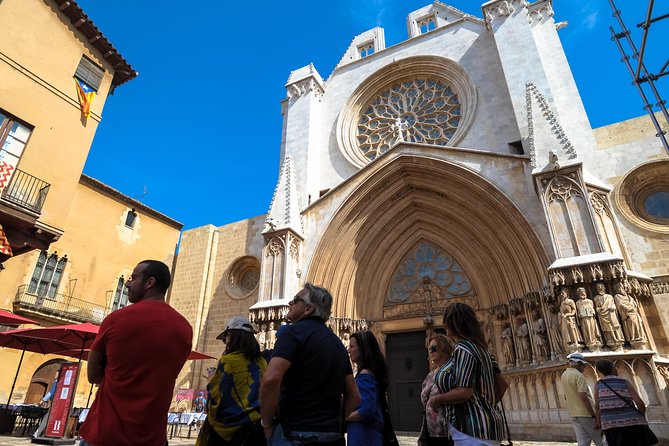
The route begins along the Archaeological Walkway, where you see sections of the old stone walls. You then pass the medieval hospital and reach Tarragona Cathedral. A Sunday morning antique market may be set up near the cathedral, adding a local layer to the historic setting.
From there, the walk continues downhill through the old town to the Roman Forum and Circus. The circus once held public spectacles and chariot races. Today, pieces of it survive under and around the city, including underground passageways that supported the stands. The Plaça de la Font sits within the former circus area, which makes the modern square feel unexpectedly tied to the Roman plan beneath it.
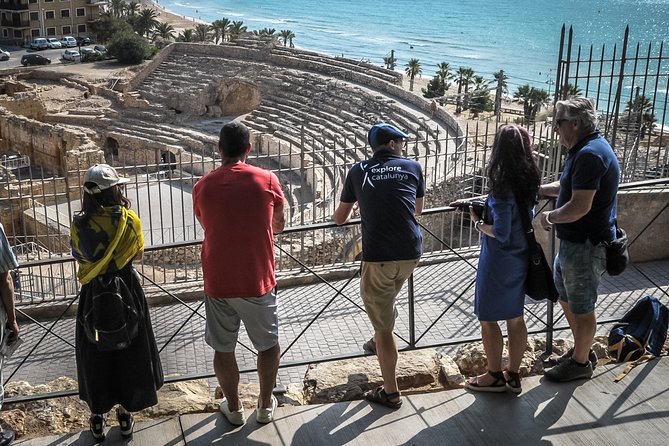
The amphitheater is one of the strongest sights of the day. From the overlook, you can see the arena and the Mediterranean beyond it. A later Christian church was built in the center of the stage using blocks from the amphitheater. That mixture of Roman public life, Christian memory, and present-day Tarragona gives the site more meaning than a simple pile of ruins.
The guided portion lasts about two hours. Guides such as Sergio, Rod, Xavier, Enrique, Stephen, and Jordi have been praised for clear explanations, good pacing, and willingness to answer questions. The best guides on a site like this help you picture the city as a working Roman capital instead of leaving you to identify scattered stones.
There is a practical catch. Paid admission to museums and monuments is not included. The tour schedule lists the main outdoor sights and guided walking route, but you should not assume that the price covers entry inside every monument. If you want more time in the circus or amphitheater, ask the guide how the available free time can be used.
The walk also includes hills, old paving, and stairs or uneven surfaces. Most people can take part, but this is not a sit-and-watch excursion. Comfortable shoes matter more here than stylish footwear.
A short stop at Roc de Sant Gaieta
Around 1:30pm, the minivan pauses at Roc de Sant Gaieta for roughly 20 minutes. This is a small coastal settlement built on rocky shoreline, with tiny white houses and a design influenced by Mediterranean and Roman-Greek styles.
The stop is short, so think of it as a breath of sea air rather than a full visit. You will have time to stroll, take photographs, and enjoy the unusual architecture before returning to the vehicle.
I like this pause because it breaks up the archaeological walking. Tarragona is dense with history and stone, while Roc de Sant Gaieta is about shoreline, white walls, and a quieter mood. Still, 20 minutes is not enough to explore at leisure. If you prefer longer visits at fewer places, this may feel like an unnecessary interruption.
More Small-Group History Tours in Spain
- Madrid Tapas & Taverns Small Group Food & History Tour
★ 5.0 · 2,664 reviews - Ultimate Seville Tapas, Wine & History Small Group Tour
★ 5.0 · 1,766 reviews - Alicante Historic Small Group Tour with Tapas Tasting
★ 5.0 · 559 reviews - Bilbao Historical Tour in small group
★ 4.7 · 52 reviews
Three hours in Sitges
The final major stop begins around 2:30pm in Sitges, with departure scheduled for about 5:30pm. That gives you the longest block of free time on the tour.
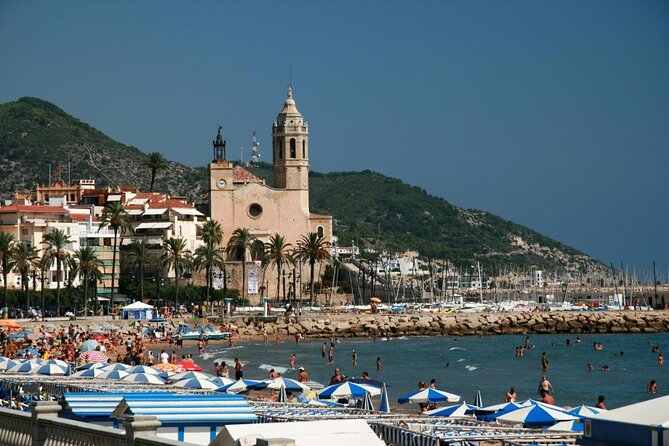
Sitges began as a fishing village and later became a fashionable seaside community. You can walk through narrow side streets lined with whitewashed fishermen’s houses, then head toward the seafront for cafes, restaurants, shops, and beaches.
The town offers a useful contrast to Tarragona. Instead of following a tight guided route, you can decide how to spend the afternoon. Have lunch by the water, browse boutiques, sit in a cafe, or head to one of the town’s 17 beaches. Swimming is allowed as part of your free time, so bring a swimsuit and beach towel if that appeals to you.
The beach opportunity is a real strength for warm-weather visitors. After several hours of walking around Roman sites, even a short swim can reset the day. The water may be cold, and the schedule allows only a limited beach visit if you also want lunch and shopping, so plan your priorities before leaving the minivan.
Sitges can also be crowded, especially on a Sunday. A long restaurant meal could take up much of the three-hour stop. If you want to see the streets and swim, choose lunch efficiently. If you prefer a slow meal, accept that you may have little time for the beach.
The town is not only about sand. Its cafes, boutiques, and old houses give you a taste of modern coastal Catalonia. You will have enough time to get a feel for the place, but not enough to see every attraction. That is fine if you view Sitges as a relaxed finale rather than a full sightseeing tour.
The guide and group size matter
The guide is central to the value of this experience. The best part of Tarragona is not simply looking at ruins. It is understanding how the Roman city, medieval quarter, cathedral, and modern streets overlap.
Several guides have received especially warm praise. Sergio is described as engaging and clear, Rod for strong historical explanations, and Xavier for a cheerful and patient manner. Enrique has been praised for detailed commentary and good recommendations, while Stephen and Jordi have also been singled out for friendly, well-organized guiding.
A small vehicle lets you ask questions more easily than you can on a large coach. It also keeps the day flexible when traffic or group needs affect the timing. The downside is that a minivan has less room to stretch out, and ten and a half hours is a long day.
The experience operates in English only. It is not recommended for children aged four and under. Most people can participate, but you should be ready for walking, sun, old stone surfaces, and a full schedule.
Timing, meeting point, and the return to Barcelona
The meeting point is C/ Palau de la Música, 1, beside the Palau de la Música. Arrive before 8:30am so you have time for the restroom and a quick coffee. There is no hotel pickup or drop-off.
The return is scheduled for about 7pm to 7:15pm at Plaça de Catalunya. Depending on traffic and group size, the vehicle may instead finish at the operator’s office or Arc de Triomf, about a 10-minute walk from the office.
That timing matters if you plan dinner, a show, or another timed activity in Barcelona. I would not schedule anything important immediately afterward. Traffic can stretch the return, and the tour already includes a long road day.
Pack light but sensibly:
- Comfortable walking shoes
- Sun protection
- Water
- A swimsuit and beach towel if you want to swim
- A small amount of cash or a card for food and drinks
Free cancellation is available up to 24 hours before the start time. A late cancellation or change is not refundable, and the tour requires a minimum number of participants. If that minimum is not met, an alternative date or experience, or a full refund, is offered.
Who should book this Tarragona and Sitges tour?
I would choose this tour if you want Roman sites without giving up a coastal afternoon. It suits couples, families with older children, and curious first-time visitors who want to see more of Catalonia than Barcelona’s center.
It is particularly good for you if:
- You enjoy guided history but also want free time.
- You do not want to arrange several transport connections.
- You like mixing ruins, town streets, sea views, and a possible swim.
- You prefer a small group to a large coach.
- You can manage a long day and several hours on foot.
I would look elsewhere if you want a full archaeological day in Tarragona, extensive interior visits, or a slow beach holiday. The tour covers a lot of ground, and the Roman sites receive less time than a dedicated Tarragona excursion would allow.
Should you book it?
Book this day trip if the combination is what attracts you: a Roman aqueduct you can cross, Tarragona’s circus and amphitheater, a brief coastal village stop, and three flexible hours in Sitges. At $119.48, the transport and guiding make the price reasonable, especially if you would otherwise need to arrange the route yourself.
Skip it if you know you will resent leaving Tarragona before you have seen every Roman site. The best choice depends on your balance. For Roman history plus sea air, this is a well-planned full day. For Roman history alone, choose a longer Tarragona visit.
FAQ
How long is the Tarragona and Sitges tour?
The experience lasts about 10 hours and 30 minutes. It leaves Barcelona at 8:30am and usually returns around 7pm to 7:15pm.
Where does the tour begin?
You meet at C/ Palau de la Música, 1, in central Barcelona, beside the Palau de la Música. Hotel pickup is not included.
What transport is used?
Transport is provided in an air-conditioned minivan. The tour is offered as a small-group experience.
Is food included?
No. Food and drinks are not included, so you will pay separately for lunch, snacks, and drinks in Sitges or elsewhere.
Can I swim in Sitges?
Yes. You have free time in Sitges and may swim at one of its beaches. Bring a swimsuit and beach towel if you plan to enter the water.
Is the tour suitable for young children?
The experience is not recommended for children aged four and under. Most other people can participate, but the day includes walking, sun exposure, and uneven historic surfaces.
More Small-Group History Tours in Barcelona
- London Small Group Tour of Historical Pubs
★ 5.0 · 10,422 reviews - Boston: Freedom Trail History Small Group Walking Tour
★ 5.0 · 6,450 reviews - Hidden Alleyways and Historic Sites Small-Group Walking Tour
★ 5.0 · 2,335 reviews - New Orleans Small-Group Haunted History Carriage Tour
★ 4.5 · 2,289 reviews
More Local Culture and Traditions Tours in Barcelona
- Amsterdam Food and Cultural Tour with Tastings
★ 5.0 · 4,315 reviews - Tromsø: Reindeer Camp and Sami Cultural Tour with Lunch
★ 4.7 · 3,326 reviews - Half Day Dominican Republic Cultural Tour : Small Group
★ 4.5 · 1,862 reviews - Ultimate Melbourne Walking Tour: History, Laneways & Culture
★ 5.0 · 1,451 reviews
Newest history tours we have reviewed in Barcelona
- Barcelona Tapas Tour, Taverns, History & Local Culture★ 5.0 · 25 reviews
- Barcelona Historical 3-Hour Bike Tour★ 4.7 · 222 reviews
- Barcelona: Market, Tasty Tapas/Food and Gothic History Tour★ 4.7 · 48 reviews
- Barcelona: Cemetery Tour – Gothic Graves & Local History★ 4.9 · 33 reviews
- Barcelona & Chocolate Amatller History and Culture + Activity and Tasting★ 4.9 · 173 reviews
- Barcelona: The Spanish Civil War Historical Walking Tour★ 4.9 · 239 reviews
- Barcelona: 3-Hour Esoteric, Spiritual & Historical Tour★ 5.0 · 34 reviews
- Barcelona: 3-Hour Sips, Sites & Bites Food & History Tour★ 4.8 · 33 reviews
Local Culture & Traditions Tours, compared.

Amsterdam Food and Cultural Tour with Tastings
Read our review →
Sevilla Food Tour: Tapas, Wine, History & Traditions
Read our review →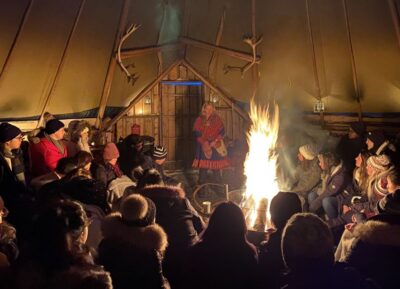
Tromsø: Reindeer Camp and Sami Cultural Tour with Lunch
Read our review →
Half Day Dominican Republic Cultural Tour : Small Group
Read our review →
Ultimate Melbourne Walking Tour: History, Laneways & Culture
Read our review →
Tromsø: Sámi Reindeer Sledding and Sami Cultural Tour
Read our review →
Kyoto Gion: 2-Hour Geisha Culture & History Walking Tour
Read our review →