
Review · LISBON HISTORY TOURS
Lisbon: African History and Heritage Walking Tour
Lisbon’s African story is not tucked away in a museum. It runs through Alfama’s old streets, the former waterfront, grand Praça do Comércio, the Baixa grid, and Rossio. This 3.5-hour walking tour follows those links, from Moorish foundations and the first African slaves brought to Europe to African life, work, faith, and identity in Portugal.
I like two things right away. First, the route puts difficult subjects into real places rather than treating them as a detached lecture. Second, it gives African influence a full place in Lisbon’s story, including architecture, religion, trade, and daily life. The main caution is practical: the walk includes uphill streets and is not suitable for people with mobility impairments.
Key points to know before booking
- The route covers Alfama to Rossio: You’ll walk through Lisbon’s oldest neighborhood, the old port area, Baixa, Praça do Comércio, and central Rossio.
- The subject goes beyond the slave trade: Expect discussion of Moorish influence, African integration into Portuguese society, Catholic life, colonial ambition, and the Berlin Conference of 1884.
- The guides shape the experience: Al, Jose, Alcides, and Alfie are among the guides associated with particularly strong departures, with praise for clear explanations and thoughtful storytelling.
- It is a serious but human tour: The history includes slavery and colonialism, but also African achievements, culture, faith, and long-term contributions.
- Bring good walking shoes: Alfama’s hills are part of the route, and the tour lasts three and a half hours.
- The price is $176 per person: That is a considerable cost for a walking tour, so the value depends on how much you want this focused historical perspective.
Why this walk fills a gap in Lisbon sightseeing
Many Lisbon tours focus on viewpoints, tiled buildings, explorers, and the city’s imperial high points. This walk asks you to look again at the people and systems behind that story.
You’ll hear about the beginning of the transatlantic slave route in Lisbon, the arrival of African slaves in Europe, and the way African people became part of Portuguese society. The tour also connects Lisbon with North Africa, West Africa, Spain, Rome, and the Americas, giving you a wider frame than a simple neighborhood walk.
I especially like that the route does not stop at tragedy. It also considers African contributions to religious life, architecture, commerce, and the character of the city. That balance matters. You are not asked to admire Lisbon’s past without asking who paid the price for its wealth and status.
The experience has earned a 4.9 rating from 21 ratings, and the praise centers on the guides’ command of the subject, their kindness, and their ability to link local places with global events. Al has been singled out for connecting architecture, religion, politics, and African heritage. Jose has also been praised for his friendly manner and useful local restaurant advice. Alcides and Alfie have led departures noted for clear explanations of African history and Moorish influence.
Guide assignments can change, so you should not book expecting one particular person. Still, the repeated emphasis on the guide’s ability to explain complex material is important. This is a conversation-based history walk, not simply a procession from one photo stop to the next.
More History Walking Tours in Lisbon
- Lisbon: History, Stories and Lifestyle Walking Tour
★ 4.8 · 10,902 reviews - Lisbon: Private Dark History Walking Tour with Drinks
★ 4.8 · 387 reviews - Lisbon Essential Walking Tour: History, Stories and Lifestyle
★ 5.0 · 316 reviews
Alfama: beginning with Lisbon’s Moorish connections
The tour begins in Alfama, the oldest neighborhood in Lisbon. Its name and character point to the city’s Moorish foundations, making it a natural place to begin a discussion of Africa, the Iberian Peninsula, and the movement of people and ideas across the region.
Here, the setting does much of the work. Alfama’s narrow lanes and steep streets make you aware that Lisbon was shaped long before the modern Portuguese capital took form. Your guide uses the neighborhood to introduce African roots, connections with other peoples, and the long relationship between Portugal and the African continent.
This opening section is useful because it prevents a common mistake: treating African history in Lisbon as something that begins only with the Atlantic slave trade. The tour places that later period within a much longer story involving Moorish rule, cultural exchange, conflict, and movement across North Africa and southern Europe.
Alfama is also the route’s first physical challenge. You will be walking uphill, and the pavement can make the going slower than a flat city stroll. Wear comfortable shoes, take your time, and do not expect the pace of a sightseeing bus.
Chafariz D’El Rei and the social order of medieval Lisbon
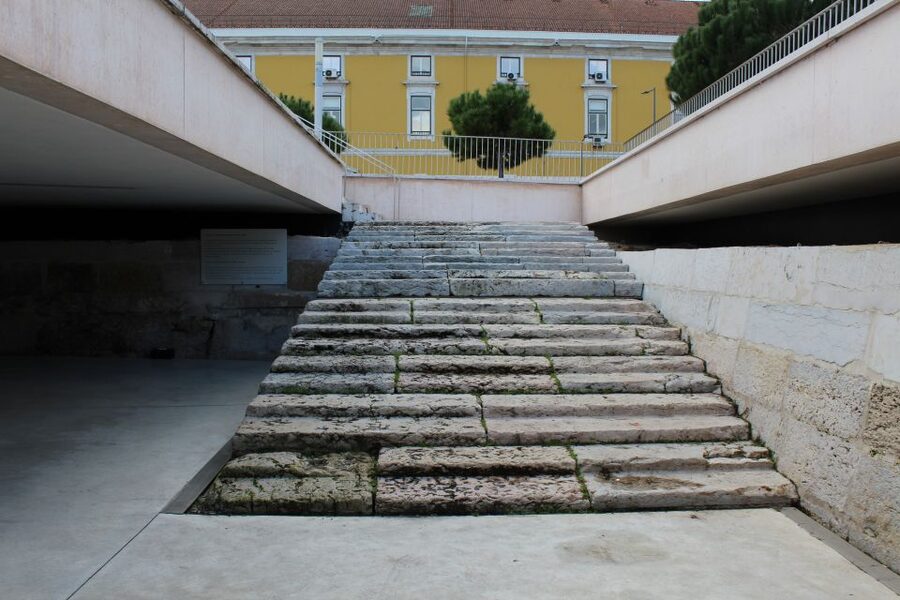
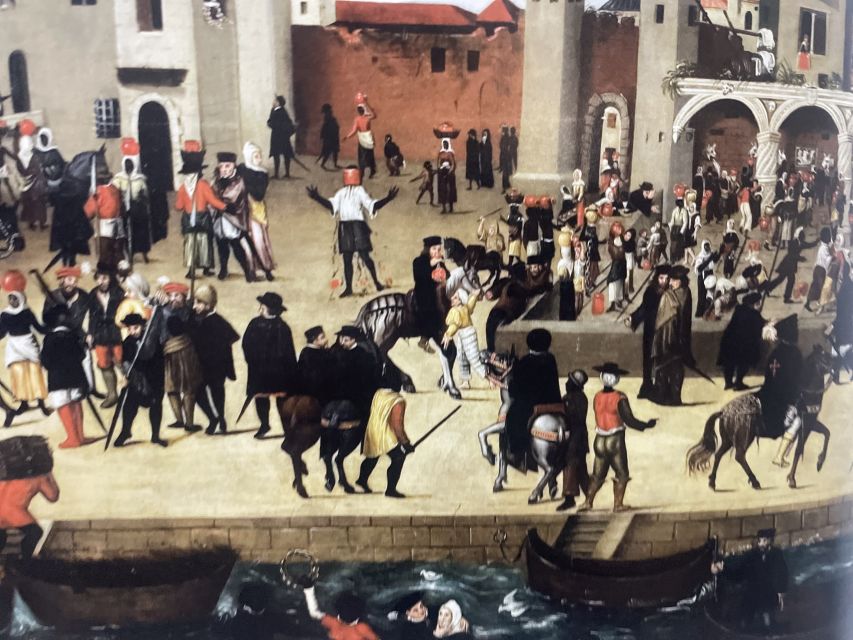
At Chafariz D’El Rei, the focus turns to a fountain that illustrates social divisions during the Middle Ages. Africans are represented within this setting, giving the guide a concrete point from which to discuss class, status, and the presence of African people in Lisbon.
This stop is valuable because it moves the subject away from broad labels. Instead of hearing only about kings, merchants, and empires, you begin to consider how social order appeared in ordinary public spaces. A fountain served practical needs, but it also reflected who shared the city and how people were separated within it.
The stop also helps connect the city’s visual details with its social history. You may pass the fountain without understanding what it suggests. With a guide, it becomes evidence for a discussion of African presence and medieval Lisbon’s divisions.
Do not expect a large museum display here. The interest is in the explanation and the way the stop fits into the wider route. This is one reason the guide matters so much.
Campo das Cebolas and the old port of Lisbon
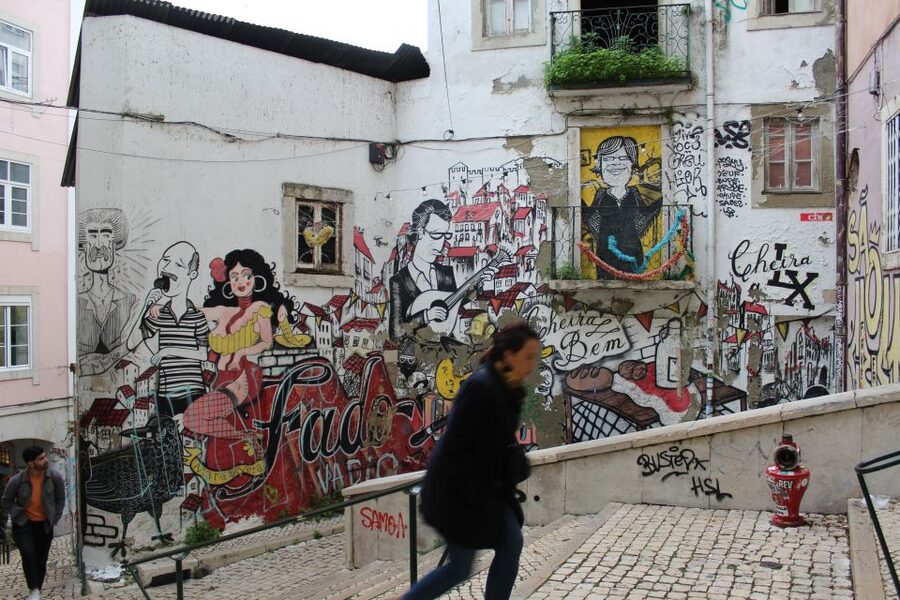
The route then reaches Campo das Cebolas, part of Lisbon’s old port. This is where the tour addresses the arrival of the first African slaves in Europe and the port’s place in the early slave route.
The setting makes the subject especially difficult, and appropriately so. Ports are often presented as symbols of discovery, trade, and national success. This stop adds the human cost that those familiar stories often leave out.
You will not be looking at a preserved slave market as part of the information provided for this tour. Instead, your guide uses the former port area to explain the movement of enslaved Africans into Europe and Lisbon’s role in that process.
I find this kind of place-based history more useful than a general statement that Portugal participated in slavery. Standing in an old port district, you can better understand how trade connected the city to Africa and how the wealth of an empire depended on people being treated as property.
The tone here is serious. That is a strength for anyone who wants historical honesty, though it may not suit someone looking for a light introduction to Lisbon. The tour asks you to give difficult material your full attention.
More History Walking Tours in Portugal
- Historic Walking Tour Through Lisbon’s Oldest Neighborhood
★ 5.0 · 233 reviews - Lisbon: 3-Hour The Slave Trade – An Historical Walking Tour
★ 4.9 · 179 reviews - Lisbon Fado History Cultural Walking Tour
★ 5.0 · 118 reviews - Lisbon: Historical Walking Tour with Jeronimos Monastery
★ 4.5 · 71 reviews
Praça do Comércio and the power behind Lisbon’s grand center
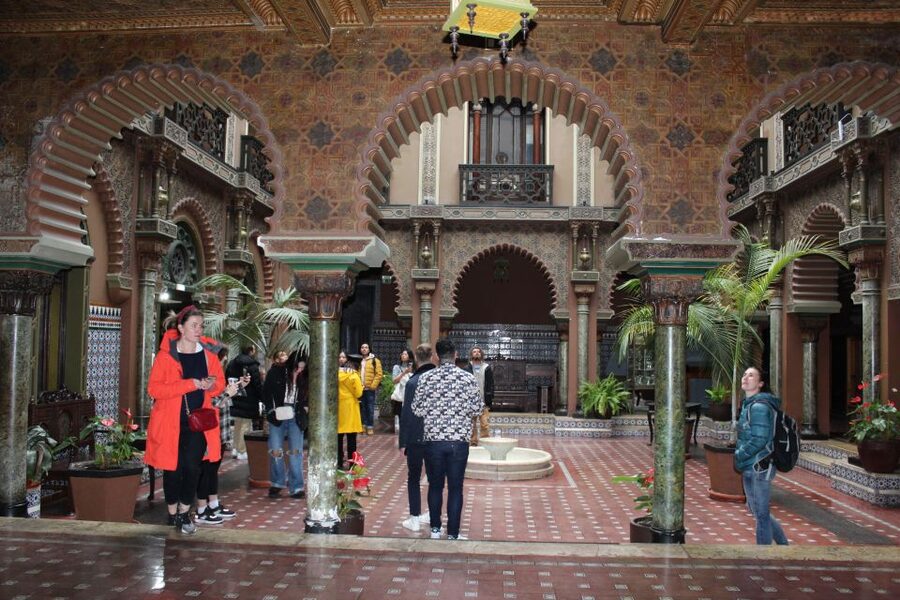
Praça do Comércio is one of Lisbon’s best-known public squares and one of the route’s most important stops. Major events in Portuguese history took place here, and the square also connects directly to the country’s role in the slave trade.
Its grand scale can make it easy to think only about architecture and national pride. The guide adds a harder question: what systems of trade, labor, and power helped create Portugal’s place in the world?
This is where the tour’s global approach becomes clear. Lisbon’s waterfront was not isolated from Africa or the Americas. It was part of a network that moved people, goods, money, and ideas across the Atlantic.
You’ll also see how public spaces can carry several meanings at once. Praça do Comércio can be a beautiful place to photograph, a symbol of rebuilding after disaster, and a site tied to Portugal’s imperial past. A good guide does not ask you to discard one meaning for another. Instead, you learn to see the square with more than one historical lens.
Baixa after the 1755 earthquake
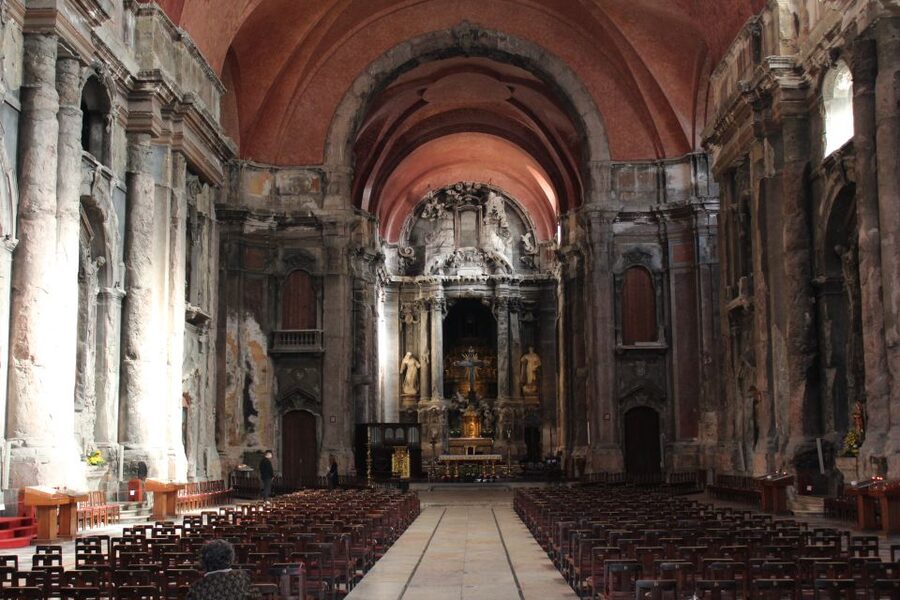
Baixa is Lisbon’s central district, rebuilt after the 1755 earthquake. On this part of the walk, the discussion turns toward African interaction with Portuguese society.
The rebuilt streets offer a useful change of subject. Earlier stops emphasize origins, ports, and trade. Baixa lets the tour consider how African people lived within Portuguese society and how their presence affected the capital beyond the waterfront.
The information provided for the tour does not promise a fixed list of buildings or individual stories in Baixa, so the exact emphasis may depend on your guide. You can expect the area to serve as a setting for discussion rather than a single landmark with a long stop.
That flexibility can be a plus. Guides such as Al have been praised for explaining the city’s built environment alongside its religious and political past. You are likely to get more than names and dates, with attention to how urban space reflects the people who used it.
Rua Cor de Rosa and the overlooked work of African women
Rua Cor de Rosa brings the route into a more specific and uncomfortable part of Lisbon’s social history. It is identified as a place where several African women provided services.
The wording is deliberately broad, and the tour uses this location to discuss work and the presence of African women in the city. This is an important addition because grand accounts of empire often focus on men, rulers, sailors, and merchants. The route makes room for women whose labor and lives were also part of Lisbon’s story.
You should expect this stop to be handled as part of the wider discussion of African integration and social life. It may not offer a polished monument or a large interpretive sign. Its value comes from recovering a part of the past that can be easy to pass without noticing.
This is also a reminder that African heritage in Lisbon is not limited to formal institutions. It appears in work, neighborhoods, religious practice, and everyday contact between communities.
Rossio and the changing meaning of African integration
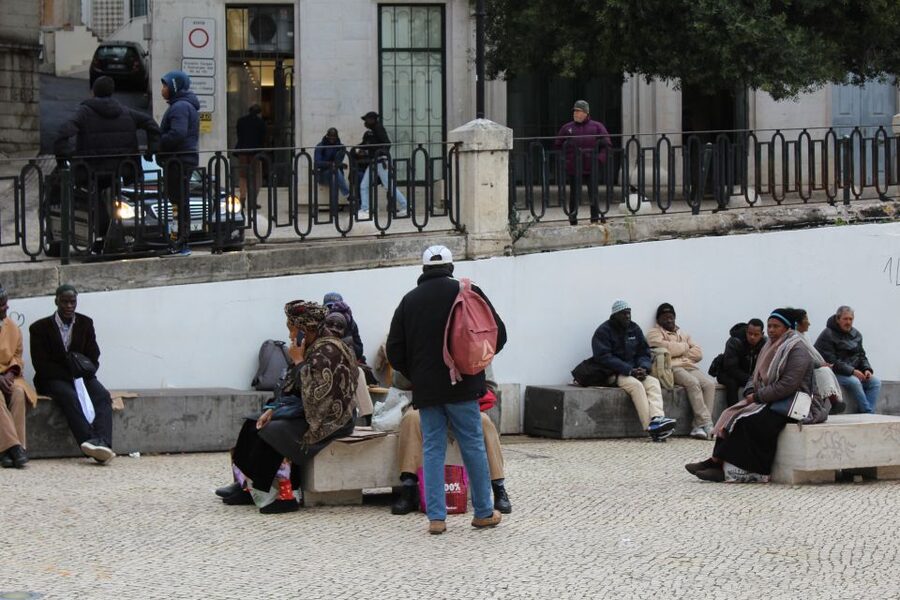
Rossio is one of Lisbon’s central and busiest areas. Here, the tour turns to African integration and the creation of colonies.
The subject brings together two sides of Portuguese history. On one side, African people became part of life in Portugal. On the other, Portugal built and maintained a colonial system in Africa. Those facts existed at the same time, and the tour encourages you to examine that tension.
This is a helpful place for the discussion because Rossio is not a remote historical site. It remains a major city center, where the past and present sit close together. You can think about how a society incorporates people while also exercising power over African territories.
The tour’s strongest theme is the connection between personal lives and large political systems. Instead of treating colonization as an abstract chapter, the route keeps bringing the discussion back to streets, squares, workplaces, churches, and public buildings.
São Domingos Church and African Catholic life
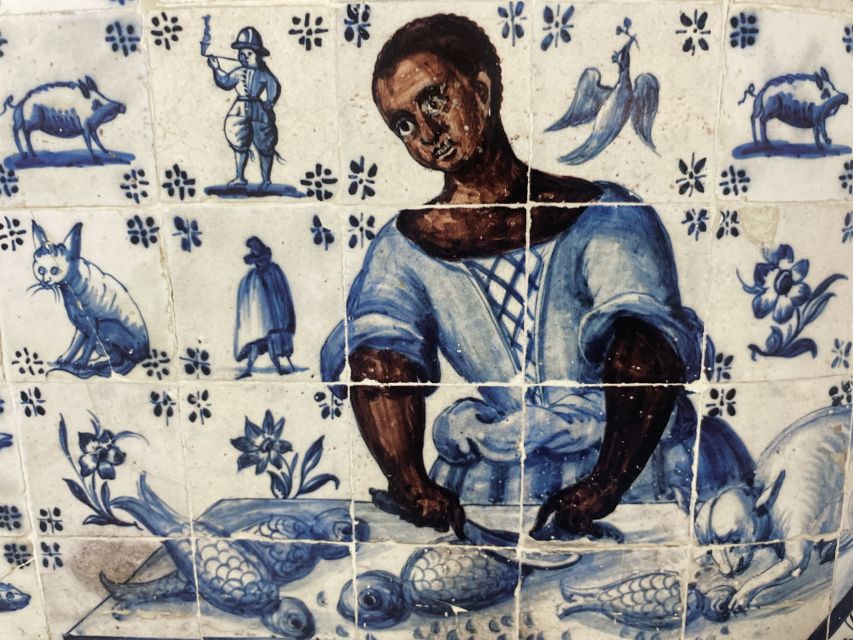
At the Church of São Domingos, you’ll learn about the integration of Africans into Catholic religion and the achievements associated with that process.
Religious history can easily become a list of institutions and dates. This stop gives it a human dimension by asking how African people entered, used, and shaped Catholic life in Portugal.
The church also reinforces the tour’s effort to show African influence in more than one category. African history here is not only about forced labor or colonial policy. It includes faith, organization, achievement, and participation in a major institution of Portuguese society.
The available details do not promise a special interior access arrangement, a service, or a long visit inside the church. Plan to experience it primarily as a historical stop along the walking route, with the guide explaining its relevance.
Rossio Station and Portugal’s imperial image
The final listed stop is Rossio train station, built in the 19th century in the Manueline architectural style. The station represents Portugal’s period of national confidence and its wish to claim a place among European powers dividing Africa into colonies.
This is a sharp ending because the building itself projects ambition. Its decorative style points back to the age of Portuguese overseas expansion, while its 19th-century setting points toward a later period of competition among European colonial powers.
The station is tied to the Berlin Conference of 1884, when European powers formalized their claims and rivalries over African territories. The tour uses the building to discuss how Portugal presented itself in relation to other European countries.
You’ll finish with a clearer sense of how architecture can serve political purposes. A grand station is not only a transport building. It can express national pride, imperial memory, and a country’s desire to be treated as a major European power.
Is $176 a fair price for three and a half hours?
At $176 per person, this is expensive for a walking tour. The cost is much higher than a basic city orientation walk, so I would not choose it if you simply want to see Lisbon’s main sights or get a quick introduction to the center.
The value depends on the subject. You are paying for a focused African heritage tour, a live guide, a three-and-a-half-hour route, and sustained interpretation across several neighborhoods. The experience also includes a bottle of water, though food and other drinks are not included.
I would compare this with the cost of building the same historical route yourself. You could visit Alfama, Praça do Comércio, Baixa, Rossio, São Domingos, and Rossio Station without paying for a guide. What you cannot easily recreate is the connected explanation of Moorish influence, slavery, African integration, religion, and colonial politics at the exact places where those subjects matter.
The price makes most sense for you if historical context is a main reason for visiting Lisbon. It makes less sense if you prefer a casual stroll, a large number of interior visits, or a tour built around photographs.
Who should book this Lisbon walk?
I would choose this tour if you want to understand Lisbon through African history and are willing to spend several hours on serious subjects. It suits curious visitors who feel that a standard monument tour leaves too much out.
It is also a good early-in-your-stay choice. One participant specifically found it useful on the first day because it supplied information missing from other tours. Taking it early can shape how you read Lisbon for the rest of your visit.
You should be ready for hills, uneven walking, and a lot of listening. The tour is not suitable for people with mobility impairments, and there is no hotel pickup or drop-off.
The guide speaks English, Spanish, or Portuguese. Recent guides have included Al, Jose, Alcides, and Alfie. If you have a strong preference for one language or want to ask about the guide on your date, check availability before paying.
Should you book the African History and Heritage Walking Tour?
Book it if you want a serious, place-based account of Lisbon that gives African people and African influence a central role. The route covers slavery, Moorish connections, religious life, social integration, women’s work, colonialism, and the political meaning of architecture. That is a lot to fit into one walk, but the structure gives the subjects a clear geographic path.
Skip it if you want a low-cost overview, a flat route, or a tour focused mainly on beautiful buildings and scenic stops. At $176, the history needs to be your priority.
For the right reader, this is a valuable corrective to the usual Lisbon story. Wear supportive shoes, bring an open mind, and allow the guide’s explanations to change how you see familiar places.
FAQ
How long does the Lisbon African History and Heritage Walking Tour last?
The tour lasts 3.5 hours.
How much does the tour cost?
The listed price is $176 per person.
What languages are available?
The live guide can conduct the tour in English, Spanish, or Portuguese.
Where do I meet the guide?
The meeting point is A Padaria Portuguesa.
What does the price include?
The tour includes a guide, the walking tour, and a bottle of water.
Is food included?
No. Food and drinks other than the included bottle of water are not included.
Does the tour provide hotel pickup and drop-off?
No. Hotel pickup and drop-off are not included.
Is the tour suitable for people with mobility impairments?
No. The experience is listed as unsuitable for people with mobility impairments, and the route includes uphill walking.
Can I cancel for a full refund?
Yes. You can cancel up to 24 hours in advance for a full refund. You can also reserve now and pay later, subject to the booking terms.
Newest history tours we have reviewed in Lisbon
- Lisbon: Historical Walking Tour with Jeronimos Monastery★ 4.5 · 71 reviews
- Lisbon Sunset Sailing – Small Group (max 10) Wine & History★ 4.8 · 41 reviews
- Queer Lisbon History Tour: scene/history★ 4.9 · 20 reviews
- Lisbon: Private Historic Tour by Eco Tuk Tuk★ 5.0 · 78 reviews
- Lisbon: Sunset Sailing with Portuguese Wine and History★ 5.0 · 270 reviews
- Lisbon with Tukxi: Historical Secrets by Tuk-Tuk★ 4.8 · 96 reviews
- Lisbon: Tuk-Tuk Tour Historical Alfama old town private tour★ 4.7 · 30 reviews
- Lisbon: Private Guided Tour of Historical Center by Tuk Tuk★ 4.7 · 67 reviews
History Walking Tours, compared.
History and Hauntings of Salem Guided Walking Tour
Read our review →
Freedom Trail History Small Group Walking Tour
Read our review →
Historic Charleston Guided Sightseeing Walking Tour
Read our review →
Tapas Walking Tour with Food, Wine, and History
Read our review →
Savannah History and Haunts Candlelit Ghost Walking Tour
Read our review →
A History of Terror – Belfast City Centre Walking Tour
Read our review →Browse the lists this tour appears in